“Now I Lay Me Down…”

We used to teach children to say bedtime prayers by rote:

Now I lay me down to sleep;
I pray the Lord my soul to keep.
If I should die before I wake,
I pray the Lord my soul to take.

prayermotherdaughter

I don’t actually remember praying this exact prayer at bedtime– partly because it seemed morbid and conjured the stuff of nightmares more than peaceful rest.  Thankfully, my parents taught me more about praying than just this little prayer.  We learned the Lord’s Prayer, and to lift up our friends and family to God’s care.  We prayed for family stationed far from home, family members who were ill or suffering in some way, and for neighbors and classmates we cared about.  We prayed for missionaries and the people and places that called them far away.  We prayed for our nation and leaders. And we prayed confession, and thanksgiving, and worship, and intercession.

cheetahs-cubs-two-together-162318.jpeg

But I was reminded of this old prayer when I watched a video our aunt sent us the other day.  It was a short documentary about a nature photographer who spent over 18 months building up trust with a wild cheetah in order to get “close up” shots of her in the wild– hunting, eating, resting, bathing.  All was going well, until she disappeared on him.  Several months later, a park ranger located her– and her five newborn cubs! The photographer knew he was taking a huge risk, but he drove his jeep (known to the mother cheetah) and went to the area where she was now caring for her young.  He got out of the jeep and sat down in the grass nearby.  Mother cheetah was nervous, but she did not attack.  Hoping this was a good sign, the photographer did the unthinkable– he lay down in the grass, helpless, to show that he was not a threat.  As he moved from the sitting position, the mother cheetah stood up and watched.  As he lay sprawling on the ground, she too lay down, letting her cubs know that they were free to explore.  They came over to the photographer– they bit at his toes, climbed all over him, and let him pet them and poke at them with his finger.  He never sat up, lifted his head, or played rough with them.  He never grabbed them by the nape or spoke.  When they got tired of “the new thing” and returned to their mother, the photographer was able to sit up, move close to the family, and take some incredible photos of the whole group.

animal animal photography big cat carnivore

Why did this remind me of a child’s prayer?  The photographer kept saying in the voice-over that it was all about trust– he was patiently building a relationship with this single cheetah for over a year and a half, showing her that he could be trusted.  And he was rewarded by her reaction when he signaled that he wanted to be close to her cubs.  His act of lying down and essentially putting his life in the balance caused her to respond with a similar act showing her trust was complete.  And her act of trust signaled to her cubs that this “new thing” was safe to approach– he could be trusted.  Gaining her trust was a matter of life and death for the photographer. A mother cheetah in the wild can run faster than a sports car and kill without a second thought to protect her young.

But she lay still and rested in her trust of this man.

How often do we “lay down” in our trust of God– stop brooding, worrying, fidgeting, and fighting to make sense of things, to build a safety net, to get ahead, to keep up with the neighbors, to feed our dreams and aspirations?  The Psalmist in Psalm 23 says, “He makes me to lie down in green pastures…”

high angle view of lying down on grass

Trust isn’t just about lying down and resting– we are commanded to “Go” to “run the race” and to “stand firm in the faith”.  But what would it look like if people could see followers of Christ at rest in the certainty of God’s provision and power?   What if we opened our eyes to see God patiently building a relationship with us, waiting for the day that we would trust Him enough to enter our daily life?  How much more might our children learn to trust God if they saw parents who followed God’s cue to lie down in peace and hope, instead of scurrying around trying to do God’s work in their own (used up) energy?   What if, instead of praying with a morbid expectation of dying, we lay down to sleep, knowing that our soul is eternally safe, and that our future is secure and blessed because of the One who hears our prayer?

man person cute young

“Now I lay me down to sleep;
I know the Lord my soul will keep.
If I should live another day,
He then will light my every way!”

Dance With Me

Have you ever had an “earworm”? You know– a popular song, often one that’s been overplayed, and you stopped liking it ages ago– “that” song pops into your head and you can’t seem to make it stop. Maybe it’s the theme song from The Flintstones, or a Celine Dion ballad that was wonderful the first fifty times you heard it on the radio; maybe it’s a commercial jingle, or Darth Vader’s theme from Star Wars. Whatever it is, it seems to follow you all day, or even all week.

I had an earworm the other week. It was a song that was popular a few years ago by a group called “Walk the Moon.” My husband and I took a brief vacation, and it seemed like every time we stopped to get a bite to eat, this song was playing. It’s called, “Shut Up and Dance With Me.” It’s a peppy, upbeat tune about a young man who meets his dream girl at a dance and decides that he and the woman are destined to be together forever. But instead of listening to his protestations of instant love, she simply pulls him onto the dance floor, saying, “Shut up and dance with me.” Pop music magic.

I say all this to set up an unexpected revelation. With this earworm playing in my head, it seemed to be distracting me even as I was trying to pray and read my Bible each morning last week. “Please, LORD, make this go away!” But there it was, just the same. Certainly not a song that Jesus would want me singing–even silently, right?

But then, I thought about the subtle message of the song– beyond the “love at first sight” and slightly pushy feminist vibe– “Stop talking. Stop trying to analyze everything. Just enjoy this. Engage with me. BE with me in the moment. Follow my lead.”

And suddenly, I could hear Jesus calling me. He would never use rude language, but how often does He gently ask me to stop fretting or trying to learn more about Him, when I could enjoy being with Him in the moment? When He invites me to “follow” Him, do I think of it as a summons to trudge along behind Him in grim obedience? Or do I see it as an invitation to let Him lead me in a dance? Last week, I wrote about following Jesus “more nearly.” Am I letting Him lead me through the valley of the shadow of death (Psalm 23) or lead me in a dance at the Wedding Feast of the Lamb (Revelation 19)? I think He asks us to do both.

Prayer doesn’t have to be solemn all the time. Yes, I need to acknowledge that Christ is far more than a dance partner at a discotheque. But Jesus wants to celebrate our relationship, to revel in it. There will be days of sorrow, pain, and grieving in this life. But there will be other days, now and throughout eternity, when Christ’s simple request is “dance with me!” Accept my blessings. Choose to revel in My Presence! May today be one of those days!

The Good Shepherd

Yahweh is my shepherd;
    I shall lack nothing.
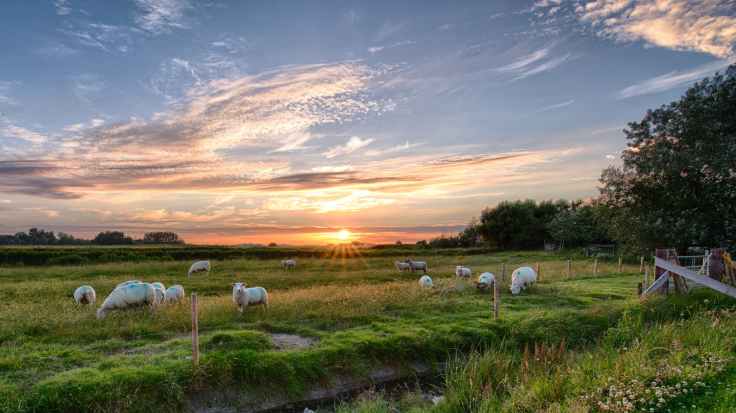
He makes me lie down in green pastures.
    He leads me beside still waters.
He restores my soul.
    He guides me in the paths of righteousness for his name’s sake.
Even though I walk through the valley of the shadow of death,
    I will fear no evil, for you are with me.
Your rod and your staff,
    they comfort me.
You prepare a table before me
    in the presence of my enemies.
You anoint my head with oil.
    My cup runs over.
Surely goodness and loving kindness shall follow me all the days of my life,
    and I will dwell in Yahweh’s house forever. Psalm 23 (World English Bible)

 “I am the good shepherd; I know my sheep and my sheep know me— just as the Father knows me and I know the Father—and I lay down my life for the sheep. I have other sheep that are not of this sheep pen. I must bring them also. They too will listen to my voice, and there shall be one flock and one shepherd. The reason my Father loves me is that I lay down my life—only to take it up again. No one takes it from me, but I lay it down of my own accord. I have authority to lay it down and authority to take it up again. This command I received from my Father.” John 10:14-18 (NIV)

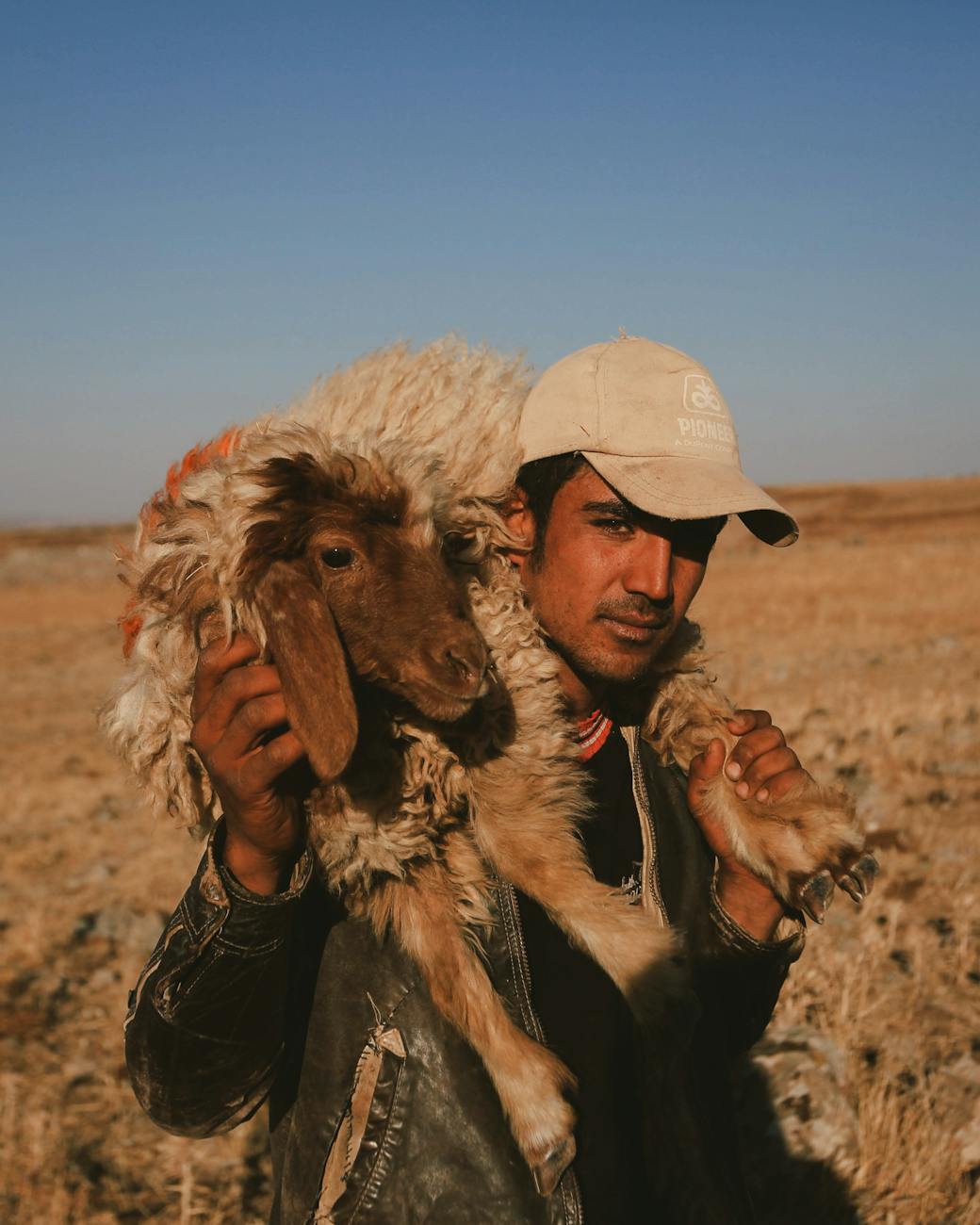
Yahweh is my shepherd…The LORD Almighty is my caretaker and protector. I don’t need to fear danger, lack of resources, darkness– even the shadow of Death!

God is Mighty and has all Authority. Yet He chooses to guide me, guard me, and provide for me. Not because of who I am– I am a wayward lamb– but because of His Loving Character. It’s literally who He IS and what He Does!

God is not distant. I may not see Him, but He surrounds me. I may not audibly hear His voice, but He speaks to me. I may not see a hand reaching down from Heaven, but He is at work all around me, and His Spirit lives inside of me! God is my Shepherd, not my “boss” or my jailor. He sees both dangers and delights which are along the path of my life, and He knows how to navigate the road ahead. And He is not a hired “master” or overseer. He is my Creator and Sustainer. He is the one who knows me, and when I follow Him, I know His voice. I know both the Authority of His voice, and the Love He has for me.

As we go through Holy Week, it is worth remembering that He is also the Shepherd who lays down His LIFE for His sheep. Willingly, lovingly sacrifices what we cannot, so that we may have the LIFE that He gives us. He is our guardian, our guide, our benefactor, and the Lover of our Souls.

When I pray to the Good Shepherd, I am praying to someone who knows all about me; my past and future, my strengths and weaknesses, every challenge I will face, and every blessing He is waiting for me to receive from Him. My prayers cannot surprise Him or baffle Him or stretch Him beyond His capacity to answer. And His answers will be wise and perfect in their scope, their timing, and their resources.

That’s my King! That’s my Shepherd!

Green Acres

Psalm 23:2a King James Version (KJV)
He maketh me to lie down in green pastures

Photo by Michael Block on Pexels.com

Many years ago (never mind how many..) there was a television show called “Green Acres.” It was a comedy about a couple from New York City, who moved to a small town in the country. The husband was excited about the move– he was tired of the rat race and bustle of the city; his wife, however, was reluctant to leave all the opportunities– she missed the shops and activity.

Green Acres was one of a group of shows that both celebrated and poked fun at rural life in America in the sixties and early seventies. The shows were very popular among viewers, but were panned by critics, and cancelled by network executives, even at the height of their popularity. https://www.closerweekly.com/posts/cbs-rural-purge-mayberry-rfd-green-acres/

More than fifty years later, you can often see these shows on networks like TV Land. They are still popular among some viewers, who like the nostalgia and the gentle humor. These shows all have happy endings. They don’t involve grotesque murders, lots of foul language, preachy lectures on social issues like homelessness, domestic abuse, or drug addiction, or copious amounts of sex, violence, or nudity. They don’t talk about war and gangs, poverty or prejudice, or urban sprawl. They celebrate family, fresh air, hard work, community, truth, justice, kindness, and humility.

What does “Green Acres” (or Andy Griffith or any other old TV show) have to do with Psalm 23 and Pursuing Prayer? Not a lot, but I would like to look at the phrase in verse 2– “He maketh me to lie down in green pastures..” Not the same as “Green Acres,” but I think the green pastures of God are viewed by the world in much the same way as “Green Acres;” scorned by a small and vocal group, but quietly cherished by many others.

Our Shepherd causes us to lie down– to find rest and nourishment and refreshing– in green pastures. That doesn’t mean that He won’t lead us through times of bustling stress, struggle, anxious moments, or rugged paths. But He will make us lie down. He will cause us to stop our frantic rushing, and renew our strength in green pasture. He doesn’t offer green pastures as an “escape from reality”, but as a reminder that dealing with reality requires us to see beyond the immediate stresses of the day and listen beyond the distracting noises around us.

Photo by Anna Shvets on Pexels.com

God’s green pastures won’t look like “Green Acres” with old tractors and fresh-mown hay. They may not look like the small town simplicity of Americana. In fact, God’s green pastures may not be places at all, but practices– spending time in Scripture, time in prayer, times in fellowship and encouragement, time in meditation, even time in service to others. You may find green pastures in the heart of a barrio, or in the quiet of a walk in the forest, or in praying as you climb a flight of stairs or fold laundry. But you will find spiritual nourishment and renewal in God’s green pastures, wherever they are and whatever they look like. https://www.biblestudytools.com/commentaries/treasury-of-david/psalms-23-2.html

Photo by Matheus Bertelli on Pexels.com

God’s green pastures will have many critics, who will ask that you cancel these practices. They will call them old-fashioned, failed practices– naive, simplistic, even laughable. But as we respond to God who make us lie down in green pastures, others are watching– and taking heart. The critics in our life may be loud and insistent. It may seem like they have the power to “cancel” our rest, and pave over the green pastures to build another fast food restaurant. But others are watching in silence, longing to experience the kind of rest and refreshment they see in us– the kind that cannot come from sophisticated treatises on war or crime, or harsh critics’ disdain, or yet another trip to an upscale shop or fast food restaurant or spa. God may ask us to stay in Manhattan, or Tokyo, or Nairobi, but He doesn’t want us to live in the same way as many of our neighbors. We are to stand out and stand apart. And that will make us targets for criticism, but it will also make us shining examples!

Photo by Emre Kuzu on Pexels.com

A few years ago, I left a full-time job– a job I loved–to help my husband open up a second-hand store that also sells amateur radio equipment. Most people would look on our store as a failure–it doesn’t make a lot of money; we don’t have hundreds of sales in a week; it hasn’t made us famous or important. But it gives me the opportunity to spend time talking and listening to the customers we do have, many of whom are lonely. It gives David the opportunity to do the same. And it gives me time to pray more, spend more time in God’s word, and write and edit this blog. It has allowed me more flexibility to spend time with my family. And it has reminded me that God is our provider and protector in ways I took for granted when I drew a bigger salary and had a more prominent position. From a worldly perspective, this is a move I would never have chosen. I spend most of my days unnoticed and unpaid–hardly a recipe for worldly fulfillment. And many days, I actually miss the bustle of deadlines, the drama of staff conflicts, and the extra money in the bank. Some days I am frustrated and ungrateful and restless–God has led me to the green pastures, but I refuse to lie down and receive the rest He wants to give me. I’d rather be shopping, or running the rat race. And God may choose to make me get up and move through valleys, up hills, or over rocky paths to the next pasture. But for this season, in this pasture, He is teaching me to lie down–to be less busy about my business, and more open to His.

Photo by Binyamin Mellish on Pexels.com

The world may offer us Times Square; God offers us fresh air. The world may offer us clever ways to spend our time and money– God gives us peace that passes all understanding. God’s “Green Acres” is the place to be–resting where and how our Shepherd leads us.

Praying the Perimeter

I love puzzles–jigsaw puzzles, crossword puzzles, Sudoku, logic puzzles, etc.

This may seem like a strange way to begin a blog on prayer, but stick with me…

Photo by Pixabay on Pexels.com

Puzzles can be fun, but they can also be very frustrating, especially if you approach them with no strategy. If you dump 1,000 pieces of a jigsaw puzzle on a table, and begin by trying to find any two pieces that fit, you may be able to eventually solve the puzzle, but it makes more sense to look for the “edge” and “corner” pieces first, and build a framework. Depending on the puzzle picture, you may also be able to work on colors or patterns that stand out– sky/clouds, a patch of red or blue, a dog in the foreground, etc.

Photo by Magda Ehlers on Pexels.com

The same is true of word and logic puzzles. There is usually a strategy when you approach each puzzle that can help make it easier and more rewarding. Words have patterns of letters– vowels and consonants; logic puzzles depend on deduction– narrowing down the possible by eliminating the impossible. Sudoku, and its cousin, Kakuro, involve simple math and numbers 1-9 in changing patterns. Start with the strategy, and you will find even the most challenging puzzles a little less challenging.

Photo by Dziana Hasanbekava on Pexels.com

Some puzzles seem impossible; and some are beyond my ability to solve, even with the best of strategies. That’s life. We don’t know all the answers, and we can’t always “see” the solution, or make all the pieces fit.

Sometimes, our lives seem like a challenging puzzle. Nothing seems to “fit” a pattern or make sense, and we end up lost and frustrated. Our most basic need is to trust God. But God does not leave us without a strategy. Prayer (along with reading God’s word and keeping in fellowship with other Christians) is part of an excellent strategy. Just like putting the “edge” pieces together in a jigsaw puzzle, praying “the perimeter” of our problems can put them in the proper frame.

What does that mean? Jesus gave us a perfect example in “The Lord’s Prayer.” When His disciples asked Him how they should pray, He started with the “frame.” “Our Father, who art in Heaven, hallowed be Thy Name.” God should be at the center of our life and trust, but He also needs to be the “edge” and framework of our life. There is no problem or worry that is outside of His control and awareness, no need that He cannot meet, and no problem that can take Him by surprise or leave Him frustrated and “stumped.”

Photo by Pixabay on Pexels.com

“Thy Kingdom come, Thy will be done in earth as it is in Heaven.” God already has the right strategy, and solution for our need. We can’t see it; we may not have a clue how to pay our bills, or deal with that devastating diagnosis, or make peace with our enemy–we may never find “the solution” on our own or in our short lifetime. But God sees the entire picture, and He has the power to make all the pieces “fit”– in His time and in His perfect will.

Photo by Levent Simsek on Pexels.com

“Give us this day, our daily bread, and forgive us our trespasses as we forgive those who trespass against us.” Sometimes our “puzzles” seem too big because we try to tackle everything at once, or we try to tackle things from the wrong end. God’s strategy is to rest in Him daily, letting tomorrow’s troubles wait for tomorrow, and letting go of yesterday’s struggles. That doesn’t mean that we don’t make plans or budgets, or that we don’t take responsibility for our health, or the mistakes we’ve made. But it means that we stop focusing on what we can’t control, and focus on the present. Instead of worrying, I can be thankful for what I have right now. Instead of focusing on what others think of me, or the threat they pose, I can concentrate on my own attitude and actions, making sure that I am practicing trust and obedience. Instead of getting angry when things don’t make sense, I can rest, knowing that God knows the end from the beginning.

Photo by Element5 Digital on Pexels.com

“And lead us not into temptation, but deliver us from evil.” God is our “Good Shepherd” (See Psalm 23 and John 10). He “leads us beside the still waters” and “makes us lie down in green pastures.” “He restores my soul.” (Psalm 23:3a) If we let God determine our “edges” and boundaries, we will still have to travel through troubled times and valleys “of the shadow of death.” But we need not fear evil, when we trust that God will deliver us. We need not fear the shadows and uncertainties within the boundaries of God’s will. And even when we have taken the wrong path, and “messed up” the puzzle we are in, God is in the business of redemption and restoration! He will deliver us– if we confess and seek His solution. He will wipe away the “wrong” answers and rearrange the pieces of our life, so that we can find wholeness.

Photo by Miguel u00c1. Padriu00f1u00e1n on Pexels.com

When we develop the pursuit of prayer– daily meeting with God, acknowledging who He is, and seeking His wisdom and grace– we will meet the challenges of life with the right strategy. We will still face the frustration of not knowing all the answers, or not seeing the whole picture. We will still have to deal with struggles, shadows, grief, and pain. But we will have a stronger “framework” and a God-given strategy to help.

Forever!

Psalm 23:6– And I will dwell in the house of the Lord, forever.

Forever is a concept we acknowledge, but we don’t fully understand. We talk about difficult circumstances, like the current pandemic, lasting “forever.” But they won’t. Such circumstances may last longer than we would like; they may be more difficult than anticipate; they may bring more pain and grief than we think we can bear, but they will pass. Even if they last throughout our lifetime, they will not continue indefinitely.

But God IS forever– He is eternal. And He has created US to be eternal– to live with Him (or apart from Him) FOREVER! Our experience does not prepare us fully for this reality– we only know an existence that is limited by time and space. But deep within, we have an awareness that there is MORE– more than our brief time here; more than the difficulty and disappointment we experience. God has planted this awareness in each of us; this desire to know what comes “after” death; what “forever” really means.

Photo by Pixabay on Pexels.com

David reminds us that forever is not just a desire for those who follow our Good Shepherd– it is the reality He has planned for all of us.

Photo by Pixabay on Pexels.com

And that should give us abundant hope and comfort in times like these. What we face today is temporary. This is the “valley of the shadow of death.” We cannot see what is directly in front of us. It continues to bring anxiety and pain, and even death. But, death is not the end. It is only a shadow hiding the light of Eternity. And “Forever” cannot terrify us; it cannot hold terror for those who belong to the one who holds forever in His hands!

Photo by Sachin C Nair on Pexels.com

Someday, we will not need calendars. We will not need to worry about next week, or our 5-year plan, or deadlines. We will have unlimited opportunities, unlimited possibilities, unlimited life with the source of all good things!

…And I Will Dwell In the House of the Lord..

During the global COVID-19 pandemic, churches are being asked to suspend meetings– worship services, Bible studies, prayer meetings–all must be conducted via internet, or some other remote broadcasting option. This will be the first Easter in modern memory when millions of people will be unable to celebrate in church.

I miss going to church. I miss seeing and talking to my friends. I miss singing as a congregation, and praying together. I miss my weekly Bible study group, my Sunday School group, and I miss seeing the kids jumping and twirling and full of energy. I miss visiting the “house of the Lord.”

But there are three very important things this time is teaching me:

Photo by Pixabay on Pexels.com
  • I miss “visiting” the house of the Lord, not “dwelling” there. There is a huge difference. As a member of the “body” of Christ (1 Corinthians 12), I live and move and have my being (Acts 17:28) IN Him. I do not “visit” the body– I AM part of the body– which brings me to..
  • The building is NOT the “Church.” Our church is still operating– just in different ways for the different circumstances. Members are making phone calls, sending e-mails, greeting cards, and creating web content to help share resources, provide encouragement and prayer support, and inspire others. We’ve been praying for those who are battling COVID-19— some are suffering from the disease; others are on the front lines– doctors, nurses, emergency workers, “essential” services workers in groceries, post offices, truckers, and more; some are suffering financially from lay-offs and losses. We are sharing specific names and needs as they arise–church members, neighbors, extended family, needs close to home or around the globe. Even if we are not meeting face-to-face in a particular building, we are still The Church, and I am “dwelling” there.
  • We have been asked to “shelter in place”– to stay in our dwellings. And that is precisely what God asks of us, as well. We need to dwell in the House of the Lord through this crisis. He is our shelter, our place of safety, and our rest. Instead of seeing this as a negative, or a set-back, we can use this time to celebrate the safety of our eternal dwelling place– safe in the arms of our Savior!
  • Finally, I WILL dwell in the House of the Lord– I already am a member of the body; I already dwell in unity with the Church; I already live in the presence of God and with His Spirit– someday I will dwell with Him face-to-face in the same kind of intimacy I am missing now with my fellow believers. What I am missing now should cause me to be joyful! This is temporary– what will be is eternal and will never be interrupted by disease, distance, or the imperfections of our current fallen world.
Photo by Tookapic on Pexels.com

COVID-19 is the visitor– unwelcome, scary, dangerous, yes, but as a child of God, I dwell in the House of the Lord– and COVID-19 can’t change that for me or for anyone else who calls on the name of Jesus! Ever!

My Cup Runneth Over

“Are you the type of person who sees the glass half-full, or half-empty?” Amateur psychologists like to ask questions like this, to determine if others are optimists or pessimists. But what happens when you realize your cup or glass is really full to overflowing?!

Photo by Bran Sodre on Pexels.com

Often, we look at our lives and circumstances with a pessimistic attitude. “I’m stuck at home during the pandemic– I can’t be with my friends, I can’t visit the gym, I can’t go to work..” We think of our “full” lives just weeks ago, and we miss all the things we took for granted– even the things we were complaining about before! And we worry and panic about tomorrow, or next week, or later today! But this is not God’s view. All that we are “missing” right now, God knows. He knows what we need, what we want, and what is best for us to have (or not have) during these days. Even if we are suffering from COVID-19, or waiting and praying for a loved one who is isolated and struggling, God knows. He listens for every breath– even the labored ones; He knows all that has come before this moment, and all that will happen in the next. If our glass is truly half-empty, we need only ask, and God will give us wisdom, patience, strength, and whatever He knows we need for the next breath; the next step.

Photo by Bia Sousa on Pexels.com

Sometimes, we carry an overly optimistic mindset–taking pride in our half-full glass, and not allowing God to finish filling it. We sit safe in our houses, confident that we will survive any threat and defeat any enemy, especially a tiny virus. We don’t need God’s help; His abundance of wisdom and grace. We’ve got everything covered with our half-full arrogance. But this is also not God’s view. God doesn’t want to fill our cup so that we can be smug and self-satisfied. God wants to fill us to overflowing, so that we can bless others, and see the incredible riches of His mercy and love! Some people look like they are “half-empty” from the outside– they are poor, or tired, or weak– but they are overflowing with God’s love; gushing with grace, lavish with love, exuding excitement, and overflowing with joy. Meanwhile, the optimist who is smug and self-serving, may seal up her “half-full” glass, refusing to share her hope and joy with others who need it.

Photo by Andrea Piacquadio on Pexels.com

God is never stingy with His riches. Paul reminds us that God’s Grace is sufficient https://www.biblegateway.com/passage/?search=2+Corinthians+12%3A6-10&version=NIV, that God can meet all our needs out of His abundance https://www.biblegateway.com/passage/?search=Philippians+4%3A19&version=NIV, and that God is able to do more than we can possibly imagine https://www.biblegateway.com/passage/?search=Ephesians+3%3A20-21&version=KJV; the Apostle James writes that every good and perfect gift is from above https://www.biblegateway.com/passage/?search=James+1%3A17&version=ESV . However, we must be open to accept them, and open to share them with those around us! This is especially true when God’s riches may be hidden by clouds of doubt, worry, and fear.

Photo by Alin Luna on Pexels.com

So today, I need to see, not whether my cup is half-full or half-empty of energy, or money, or health– I need to see where my cup is overflowing with God’s Grace, His Peace, and His Love!

Thou Anointest My Head With Oil

When I was just over a year old, I became very ill. Several doctors were consulted, but no one seemed to know what was wrong. I was losing weight, growing weaker, lost the strength to walk (something I had just started doing), and losing the will to thrive. I cried and moaned throughout the day, and had trouble falling asleep normally– demanding constant attention and comforting, but not showing any signs of fever or infection.

Photo by Sam K on Pexels.com

Our minister at church anointed my head with oil for healing. Everyone prayed fervently. Mom and Dad took turns staying with me at the hospital, trying to calm my fears and hope that I would get better. Finally, one of the doctors (a third- or fourth-opinion at that point) suggested that I might have a protein deficiency–that my body was not processing proteins correctly, as I had just started eating meat and more complex dairy. He suggested a course of booster shots that lasted well into my fifth year; it was one part nightmare, and three parts miracle– daily, then weekly, monthly, and quarterly trips to get the dozens of booster shots, but I lived, grew, and was able to live a normal life. My childhood was filled with nightmares and many sleepless nights, even after my health began to improve. But I learned to love meat and dairy, trust the doctor and nurses who administered the dreaded shots, and embrace life.

Photo by Pixabay on Pexels.com

I tell this story in relation to Psalm 23:5, not to make a plug for anointing as a miracle “cure” or magical ritual. I realize that healing comes in God’s time and will, and that not everyone who prays for (or anoints for) healing receives it in this life. But I DO believe in the power of prayer, and I do believe in the act of anointing. It is not the oil, or the ritual involved that brings about powerful healing, however. It is a representation of God’s power to heal– and it brings with it an awareness of His presence and sovereignty.

Photo by Jonas Ferlin on Pexels.com

When David talks of anointing, he speaks from multiple layers of experience. As a shepherd, David would pour oil over the heads of his sheep. This served two purposes– it would keep insects from burrowing in and around the eyes, nose, ears, and necks of the sheep, where they could do untold damage, and where sheep could not dislodge them; and it would help them as they grazed among briers and rocks where they might get snagged, cut, or scraped. Oil brought protection and healing.

Photo by julie aagaard on Pexels.com

But David was also a King. He had been anointed by Samuel to be the next King of Israel as a young man. Even though he had to wait through years of danger, war, and exile, he had been chosen and set aside by God. God had seen him through and raised him to prominence, and He had signaled all that through anointing.

Photo by Mike Bird on Pexels.com

God is our Good Shepherd. He anoints our heads with oil– for protection, for healing, for service, and for ordination. Our Shepherd cares deeply for our physical and spiritual needs. And He appoints us to His service–He has a purpose and a position for each of us in His kingdom.

In days of confusion and suffering, we can forget to look for the Shepherd’s presence and His provision. We may lose strength, and even the will to thrive. But God can and will strengthen us with “spiritual protein” in His word and through fellowship. He will provide us with “booster shots” of blessings– friends who pray for us and with us; scripture that inspires and convicts; hymns and songs that remind us of His amazing grace and love; moments of prayer and meditation that carry us through the day. God will provide the daily anointing we need– and when we turn our face toward His, we will see eyes of love and feel His gentle hands of grace as He gives us all we need.

For more on Biblical anointing– it uses, meanings, and symbolism, check out these resources:

https://www.biblestudytools.com/bible-study/topical-studies/why-is-anointing-oil-important-in-the-bible.html

https://www.christianity.com/wiki/christian-terms/anointed-definition-anointing-oils.html

https://equipherlife.com/2011/06/23/the-shepherds-oil/

Blog at WordPress.com.

Up ↑