I Can’t Do All Things

 I can do all things through Christ which strengtheneth me. (Philippians 4:13 KJV)

I remember memorizing this Bible verse (in the King James version above) as a child. It is one of the most quoted (and, I think, misunderstood) verses I know. Taken out of context, it seems to promise unlimited potential for the Christian. I can… perform miracles, do six impossible things before breakfast, leap over a tall building, bring about world peace, and finish folding the laundry from last week!

The reality is that I can’t do ALL things. There are many things I simply cannot do– even as a Christian. I cannot grow six inches taller or shed 45 pounds overnight. I cannot cure cancer. I cannot bring about world peace. Christ CAN do any of that and more; and He can work through me to accomplish great things– more than I can do in my own power. But if I expect to do whatever I imagine or aspire to– I will be disappointed. Even with God’s Power working in my life.

But God is not only a source of power– He is the source of wisdom and love. And in His wisdom and love, he often limits what He will allow me to do. So, there are supernatural things I cannot do without God’s help and power, and there are seemingly ordinary things I cannot do without God’s permission and grace, because doing those things will go against God’s perfect plan.

I was speaking recently with a friend of mine from church. We were speaking of infertility– a problem we have both experienced. Most of the women I know who experience infertility, barrenness, multiple miscarriages, etc., have to come to terms with the ache of being “abnormal.” We assume that “normal” women can become pregnant and have children. We accept that sometimes a woman will lose a child in the womb. But when it happens over and over again, or when a woman can’t seem to get pregnant, it causes a woman to question her identity and worth. “Am I even a ‘real’ woman?” “What kind of woman can’t do the most basic “womanly” thing– give life?” We also have to come to terms with the fact that God has chosen to allow this in our lives. Does God still love me, or is He angry with me or punishing me for being “not enough”? How can God love me and let me suffer such emptiness?

And we’ve all heard stories– amazing stories in the Bible and elsewhere– of women who DID get pregnant through a miracle. Sarah, Mary, Elizabeth, Rachel, Hannah…In fact, we hear nothing of women who are barren in the old Bible stories…or do we? Anna in Luke chapter 2 is an old widow who lives in the temple. There is no mention of any children, only of her devotion to the Temple and to her God. Dorcas, who was raised from the dead by the Apostle Peter in Acts 9, is praised, not for her motherhood, but for her charitable deeds among her neighbors. Deborah, the prophetess and judge who led the Israelites into battle along with their general Barak, is mentioned as a wife, but not a mother. In ancient societies, very few women were singled out for praise outside of their roles as wives and mothers.

As women, we may question many aspects of our “role” in society. Some of us chafe at the traditional roles we are expected to perform, while others question why their traditional roles seem to be denied. I spent decades questioning why I remained “on the sidelines”– unmarried, lackluster dating opportunities, out of step with other women my age. When I first was diagnosed with Stein-Levinthal syndrome and told that it would almost eliminate any chance that I could become a mother, it was almost a relief. At least I could “congratulate” myself for not disappointing a husband I didn’t have, or go through the pain of watching him question his manhood when no children came, not knowing if the “problem” was his or mine. Other friends of mine question their role as “the weaker sex,” going to great lengths to prove that they don’t need a man in their life, or that they can compete with men for jobs, status, wealth, and power.

But God didn’t just create me to “DO” things. God created me to BE. And He created me to be in relationship with Him. And my experience gives me the opportunity to speak into the lives of other women who are hurting. I have found purpose and comfort, love and abundant joy, challenge and opportunity in the midst of infertility. And now that I’m in my sixties, I find it easier to reconnect with women my age who are empty-nesters, grandmas, widows, and “maiden aunts.” God has allowed us to DO many things.

I am struck by the fact that Philippians 4:13 was written by the Apostle Paul. Paul was in prison when he wrote this letter. “I can do all things” did not mean that Paul was able to escape prison walls or the sentence he was under. It didn’t mean that he could compel his friends to stay and attend to his needs. It didn’t mean that he could escape this “thorn in the flesh” that he wrote about in 2 Corinthians or defy the aging process. Paul didn’t mean that he could literally do “all” things. But he was reminding the Philippian believers of all the amazing things that he could and did do in his work as a missionary. He didn’t cheat death altogether, but he cheated it several times, living through beatings and shipwrecks and snakebites. He didn’t escape the thorn in the flesh, but he persevered in spite of it. And remarkably, though Paul never married or had biological children, he built relationships with people like Timothy, whom he considered a son. And He accomplished amazing things for the Kingdom of God!

So, no, I cannot do ALL things– I cannot do some of the miraculous things I want to do. Sometimes, it is even God’s will that I should be prevented from doing such things– even good and “normal” things– in order that God can mold me into a shape and for a purpose that is just right for HIS perfect plan. I may not see it in my lifetime or understand it perfectly. I will still grieve for what “might have been” in my life. But I will continue to experience joy in the journey the God has mapped out for me. And whatever He asks– well, I CAN do that! Not on my own, but beyond what I can imagine!

Time Flies

Yesterday had 24 hours, the same as every other day. Yet it seemed to zoom past, leaving me “behind” in getting my blog ready for today. So here I am, writing “under the gun” so that I can publish today.

Blogs like this don’t have “deadlines” in the sense of print publications or broadcasts. I don’t have advertisers or managers demanding that I have content by a certain time or date. There are no editors to determine the length of any particular blog post. This one is likely to be shorter than most, in fact. And God isn’t standing by waiting to scold me for being late today. It is my own sense of expectation that gives me grief.

But God has placed all of us in time and space with a purpose. We do not have the power to “stretch” time, to reclaim it, or to bargain for more of it. Time “flies”–and what we do in the time we have flies, too. And He wants us to give our time to Him first of all.

Falling behind on a blog entry is not a life-or-death matter. Falling behind in life is another matter.

I pray that today will be a productive day, a restful day, even a challenging day– and that, as it flies by, we will fulfill God’s purpose in it. And He’ll take care of the timing!

For God So Loved…

Today is March 16. In my area of the world, we abbreviate it as 3/16/26, or just 3/16. So it reminds me of the most quoted verse in the Bible– John 3:16– “For God so loved the world, that he gave his only Son, that whoever believes in him should not perish but have eternal life.” (ESV) This verse is so famous and so quoted, that many times, people just skip the actual verse and just use the reference. In fact, if you just see a poster or sign of reference that says 3:16, it almost always means this verse.

Recently, I saw a short video of a person complaining about seeing such a reference on their soft-drink cup at the fast food chain In-N-Out Burger. The chain prints “John 3:16” on the inside of the bottom of their cups. They’re known for it. They don’t print out the entire verse, just the reference. It’s not blatant or over-bearing– just a modest note on the bottom of their cups. But this person wanted none of it. They started out by liking the food, but they were offended by this tiny reference to a Bible verse. “Keep your John 3:16,” they sneered. “I don’t want your John 3:16.” Apparently, it left a bad taste in their mouth just to see any reference to the Bible. They felt judged and oppressed, I guess.

But John 3:16 is not about judgment. It’s all about Love! For God SO LOVED the WORLD–take a minute to reflect on that. God, the Holy One, who created the world, only to have mankind reject Him over and over again, didn’t destroy it. He didn’t turn His back on the world. He didn’t leave us as a footnote and move on. Instead, He GAVE His ONLY begotten SON. He didn’t come up with a cheap plan for salvation that was just adequate to cover our worst sins and leave us enslaved to our old guilt and shame. He didn’t send a half-hearted emissary to show us what Heaven and Holiness were like. He sent His SON– the heir of the Universe–to live among us, show us how to love and live and worship. And that Son GAVE all of Himself as a sacrifice– not for a select few, but for WHOSOEVER would trust in Him and submit to His Lordship!

WHOSOEVER believes in Him will not perish, but have ETERNAL LIFE! How does that offend and oppress? The message of John 3:16 sums up the whole Gospel of Christ. It is NOT judgment, but Salvation. It is not oppression, but freedom from Sin and Death!

So today, I am thrilled to celebrate 3:16! It is a message of hope, joy, renewal, abundance, purpose, power, and LOVE!

The Ghost of Christmas Past

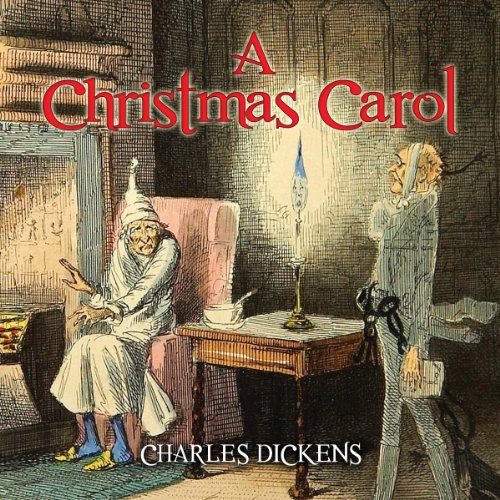
Charles Dickens wrote “A Christmas Carol”– a (literally) haunting tale of greed, bitterness, and, in the end, redemption. Set in Victorian England, the story involves a miser named Scrooge, his business partner, Marley, who has been dead for seven years, and three mysterious spirits: The Ghost of Christmas Past, the Ghost of Christmas Present, and the Ghost of Christmas Yet to Come…

Scrooge and Marley

Scrooge doesn’t really hate Christmas. He considers it a Humbug– an annoying and worthless distraction from the “reality” of making money. What bothers Scrooge– what eats at him and rules his actions– is the fear of poverty and powerlessness. He avoids relationships so that he cannot be hurt or abandoned. He avoids spending money– even for common comforts like coal to heat his office–for fear that he will fall into poverty. He does not like people because he will not trust anyone enough to risk getting hurt or used.

Scrooge’s only “friend,” his former partner Marley, lived by similar principles during his lifetime. He “visits” Scrooge on Christmas Eve to warn him of the fate that awaits those who fail to realize that there is more to life than making and keeping money. “Mankind was my business. The common welfare was my business; charity, mercy, forbearance, benevolence, were all my business. The dealings of my trade were but a drop of water in the comprehensive ocean of my business!” Marley has managed to arrange for Scrooge to be haunted by memories of the past, visions of the present, and shadows of what may be in the future.

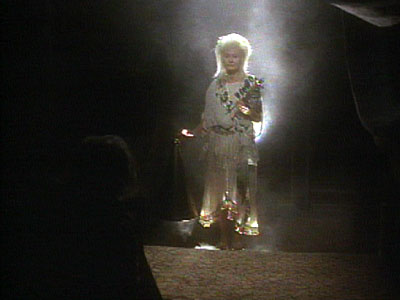
The first of these “spirits” reminds Scrooge of Christmases from his childhood and early adulthood. Some of the memories are sad– Scrooge is left to spend the holiday alone at school, as his cold and distant father refuses to show him love, mercy, or guidance. Later, Scrooge is reminded of how his decision to pursue wealth alienated the woman he could have married. But there are happier memories, too. His first boss, Mr. Fezziwig, brought happiness and a sense of camaraderie and purpose to Scrooge’s early employment. He celebrated both hard work and the joy of fellowship with his employees. Scrooge sees visions of his beloved sister and is reminded that he has a family (his sister’s son) with whom he could make and share happy memories– if only he would choose to do so.

I will write about the other visitations later, but I want to camp out here for a little bit.

What memories would the Ghost of Christmas Past bring to me? To you? Are there sad or painful memories of Christmases without loved ones? Christmases that included anger or rejection? Christmases spent with poverty, uncertainty, or sickness? Would you feel bitterness? Fear? Guilt? Regret? Or would there be nostalgia for days gone by? Longing for family members who have passed? Questions about what might have been?

It is tempting sometimes to shove our memories of Christmas past in a closet or an old trunk and try to forget them. In Dickens’ story, Scrooge ends up desperately trying to snuff out the light of Truth that the spirit is holding. He doesn’t want to remember; doesn’t want to know or deal with the pain and loss of his past.

But before we can truly live in the present, we must confront the past. We do not have to live there. Our memories– good and bad– are but shadows of the things that have been. But they can cast long and devastating shadows if we let them. Denying past pain or trauma can give us a false sense of control. Burying ourselves in work or pleasure or entertainment may feel like a solution. Being cautious and angry and cynical may seem like wisdom. We can blame others, blame ourselves, even blame God for our feelings of hurt and fear of being hurt again and again. OR we can, with the light of truth, revisit our past. We can discover the healing power of redemption and forgiveness. We can– we must– still acknowledge the pain, the injustice, the grief that lies on our past. But we also must see that the shadows of the past only fall behind us. However the past may have shaped us, damaged us, challenged us, or forged us, the present and the future can be turned in a new direction.

And that is possible because of Christmas– because of Christ!

When Scrooge first visits his past with the Ghost of Christmas Past, the first image he experiences is of his classmates from school riding in sleighs and wagons singing Christmas carols. Singing! He could not join in. As an adult he has chosen not to join others as they sing of the wonder of Christ’s birth. But the carols echo– their message endures! Christ is Born! Glory to the Newborn King!

My prayer today is that Christmas past holds some happy memories for you. But the very Good News of Christmas is that it isn’t just about the past. And our past Christmases don’t have to haunt us. Because the Light of Truth– The True Light of the World (John 1:9) –that came on that first Christmas so long ago leads the way forward!

“The Willing Suspension of Disbelief”

It’s been nearly 45 years since I first heard this phrase, but it has resonated with me ever since.  Samuel Taylor Coleridge wrote of it over 200 years ago, speaking of how readers interact with literature, especially when it contains fantastical or supernatural elements.  Our high school English teacher and drama coach, Mrs. Barr spoke of it not only in the context of literature but in the context of the theater.  In fact, in all art, the artist depends on at least some willing suspension of disbelief on the part of his/her audience. 

 In visual art, we must believe that a few strategic blobs of color, or carefully shaped pieces of marble or wood have captured something timeless and true about a single moment in time– that movement and emotion and life can be held immortal on a canvas or a statue or a tapestry.  We must suspend our disbelief that paint, or wood, marble or stone exists only as itself– in the artist’s capable hands, mere matter transcends its ordinary form to touch our very soul.   In music, we can hear, in the well-played notes of an instrument, the sounds of birds, the falling rain, the crashing of thunder, the marching of armies, or the buzzing of bees.  Music doesn’t just touch our ears, it can touch our souls. Shakespeare also alluded to this in a comical way: “Is it not strange that sheep’s guts should hale souls out of men’s bodies” (Much Ado About Nothing– Act II, Scene 3) We can listen to a symphony without being moved, but in the willing suspension of disbelief, we can be transformed and inspired by notes on a page and breath being blown into wood or brass or fingers or bows being drawn over “sheep’s guts”.

 In literature or in the movies, we must suspend our disbelief that mythical creatures, aliens, monsters, and talking animals live among us as a normal occurrence– for the duration of the story…Dragons must be vanquished, Fairy Godmothers must be allowed to help poor Cinderella to the ball, and The Raven must repeat his ominous line, “Nevermore.”  Frodo must hide from orcs and Nazgul in order to reach the Fires of Doom and destroy the One Ring. Charlotte must spin her wordy webs and Papa Bear must exclaim, “someone has been sitting in my chair.”  As children, we shed our disbelief readily and enter into the story, falling in love (or having nightmares about) imaginary characters. As adults we become cynical, and lose some of our ability to enter into imagination and other-wordly realms.

I was recently reminded of this concept of the willing suspension of disbelief in two different contexts– loss of Faith, and the deception of the internet– including “fact checking” and AI.  Very different experiences, but I think they both tie in.

First, in the loss of Faith.  I know so many people, family, friends, even strangers, who write passionately about their loss of Faith.  Oh, they don’t call it that.  They have other terms, other catchphrases– they talk about their “Deconversion” or their “Awakening”.  They are too smart, too savvy, too enlightened to give credence to Faith in Jesus, or in any “god” or divine being.  After all, they cannot see “Him” or “it”; they cannot prove His existence (they can’t prove His non-existence either, but that’s another story). Believing in God, they claim, is the same as believing in fairy tales.

And yet…Keats once posited, “Beauty is truth, truth beauty– That is all ye know on earth, and all ye need to know” (Ode on a Grecian Urn).  Earlier in his poem, he also says, “Heard melodies are sweet, but those unheard are sweeter;  therefore, ye soft pipes, play on; not to the sensual ear, but, more endear’d, pipe to the spirit ditties of no tone…”  There is an acknowledgement that we do not just exist in a physical plane, but in a world of metaphysical marvels– memory, hope, and yes, even “fairy tales”.

Of course, we know that there is no Cinderella– no “happily ever after” in this world.  Life is not a fairy tale story.  But our lives ARE stories– we have a beginning and an end.  We want to find a purpose, a reason for being who we are, where we are, and even when we are.  We search for our “true” identities.  We dream dreams and harbor hopes.  We battle evil forces– the demanding boss, the annoying neighbors, blizzards and tornadoes, cancer…And we believe very strongly in concepts of justice and injustice, fairness and unfairness, goodness and evil–metaphysical concepts.  We long to be understood, accepted, “seen,” and loved (ever after!).  And we must suspend our disbelief in the face of evil to search for the good.  We must suspend our disbelief in our own worth to make choices that preserve our health and develop our latent talents.  Indeed, we must believe and cherish what we do NOT see or have never experienced, or we will be crushed by our (often temporary) realities.  When cynicism and disbelief BECOME our belief system, we become the living dead.  Oh, we can continue doing “good” things without believing in God; we can espouse a code of “good living”, we can take care of our bodies and emotions within a framework of humanism and self-esteem.  But we will not experience the fullness of Truth, or Beauty, or majesty, that lives in Faith.

Loss of Faith represents, what I would call an “unwillingness” to suspend disbelief, or a tendency to cling to only that which can be experienced on a physical plane. But there is another danger– that of an “unwilling” suspension of disbelief–believing things that are deceptive, because they are presented as “truth.” This includes such things as “fake news” on the internet, “fact checkers” who tilt the truth and “throw shade” on inconvenient or uncomfortable truths, and AI-generated stories meant to “create” truth  where none exists.

I would like to say that I am immune to such things; that my knowledge and dependence on truth cannot be subjected to manipulation.  But that is not always true.  I see a touching story on Facebook about a young person who is missing– please spread the word– only to find out that the post is several months out of date.  I see a meme that accuses one political big-shot or a celebrity or even a corporation or business of being corrupt, unfair, evil, etc., and I am outraged– until I realize that the original post was generated by a person or group that is completely unknown to me.  I don’t know their true experience, or their motivation in spreading this information (or false information).  It MAY be true, it MAY be completely false, but it is most likely somewhere in between– not nearly as bad as portrayed, or as every bit as bad as other politicians, celebrities, or companies who aren’t mentioned in the meme or article.

Outrage— especially outrage that is deliberately and manipulatively generated– is the suspension of not just disbelief, but of discernment. We immediately judge.  We immediately feel our blood pressure rise, our cheeks flame, and our breathing accelerate.  We become passionately angry, but we also become instantly indignant and self-righteous.  I would never I cannot tolerate… But what have we done on a smaller scale? Are we SO innocent? Do we have the authority to judge based on a single article or photo?

But it is not just outrage that can be deliberately and manipulatively generated.  AI and bad actors on the internet and other media sources can also manipulate our hopes, our disappointments, and our beliefs in what has happened and what is happening around us.  Stories appear online that sound authentic, narrated by well-modulated voices (many of which seem familiar), telling us that this event took place and changed someone’s life, or that this celebrity has finally “spilled the dirt” about beloved co-stars who died a couple of decades ago.  Others purport to give “wise words” from aging actors or writers or recently dead corporate gurus.  We suspend our disbelief, or our suspicions, because we trust the voice or the photoshopped picture.  We choose to believe the worst of people we already dislike.  We choose to believe only the best of people we like.  If a stranger came up to me on the street with a story like this, I would be suspicious.  Who are they? Why are they telling me this?  Why should I trust them?  But we suspend our disbelief if we see it in print with what looks like credible photos and when narrated by what we assume to be a credible voice.  If we bother to look at the source, even that seems credible– I may not have heard of this news service, but it has the word “news” in its heading…

We put our Faith in things seen– even if they are false, while we hold truth and beauty to be suspicious, because we have lost the ability to hope and trust in something beyond our own wisdom and personal perceptions.  

We need dreamers and artists and writers who see truth and beauty in the universal and metaphysical realities of faith and hope and majesty.  And we need people with the discernment to disbelieve what strangers claim to “show” and “tell” us with their clever manipulations.

Both Faith and “the willing suspension of disbelief” depend on the Will.  We have to make choices in what we are willing to believe and how far we are willing to search for the truth– both in what we can see, and in what we cannot.

Declaration of Dependence

Today, America marks the 249th anniversary of the signing of the Declaration of Independence. In it, colonial leaders listed several reasons why they no longer held allegiance to the British Crown. Many of their reasons involved abuses by the King or by Parliament in relating to their colonial citizens. Taxation without representation; passing unjust laws; requiring people to quarter (feed and house) soldiers who often harmed and cheated them; refusing to hold the soldiers accountable for their offenses– even murder; refusing to allow the colonials to trade with other nations, etc. But there was something more.

We hold these truths to be self-evident, that all men are created equal, that they are endowed by their Creator with certain unalienable Rights, that among these are Life, Liberty and the pursuit of Happiness.–That to secure these rights, Governments are instituted among Men, deriving their just powers from the consent of the governed, –That whenever any Form of Government becomes destructive of these ends, it is the Right of the People to alter or to abolish it, and to institute new Government, laying its foundation on such principles and organizing its powers in such form, as to them shall seem most likely to effect their Safety and Happiness.

In drafting and ratifying these words, the founders of the United States did something unique. They did not just establish an independent government; they established a model for both independence and dependence IN government. Government is not independent of certain inalienable rights, nor of the Creator of those rights. Governments are not the highest authority in the land. Governments are instituted and derive their power, not by their own actions and decisions, but from the consent of the governed. Governments DEPEND on their ability and willingness to serve the people.

Of course, there are wicked and improper governments, and Britain’s rule in 1776 was not the worst example of tyranny or despotism the world had ever seen. The United States has not always lived up to the ideals and principles of the Declaration of Independence. Less than a century after the Declaration was adopted, the United States was engulfed in a war that tested its ideals. The nation was divided by the issue of slavery. Nearly half of the states still practiced slavery, meaning that hundreds of thousands of people were being treated far worse than the “rebellious” colonists of previous generations. Our nation as a whole was not delivering on its promised declaration that “all men are created equal” or that they were endowed by their creator with rights to “life, liberty and the pursuit of happiness”.

But when our nation has remembered its Dependence– our need for God and our need to care for the safety and opportunity for those under our jurisdiction–remarkable things have happened. The union was “saved.” Voting rights were not just extended but enshrined in our Constitution. Americans joined the fight in Europe and around the world on more than one occasion to secure rights for people who were being oppressed, tortured, and even exterminated. The “Promise of America” draws people from diverse nations and cultures and stands as a model for the rest of the world.

Sadly, today, many here in the United States want Independence from America. Our culture has devalued life, exchanged liberty for conformity, and traded the pursuit of happiness for indulgence and selfishness. We want to be independent of responsibility– to our families, to our neighbors, to our nation, and to God. We do not want a government that protects those rights that are endowed; instead, we want a government to give us assumed “rights” that are really permissions to defy God’s laws. We want to be free to redefine morality, escape the consequences of our own poor choices, and feel virtuous without pursuing virtue.

What will happen to our country if this trend continues? On the eve of celebrating our 250th year, we may be on the brink of falling apart. Issues like abortion, immigration, health care mandates, and transgenderism threaten to divide our country, just as slavery did over 150 years ago. Americans are divided on political, economic, religious, and cultural issues. We can’t seem to agree on what we mean by “rights, ” “freedom,” or “pursuit of happiness.” We can’t even seem to define what a “woman” is or decide how many genders to fight for. Everyone wants to speak out, but no one seems willing to listen– except to find another point of disagreement. We are no longer “united” states– we are warring factions in a series of culture wars.

But what happens when American Christians declare our Dependence on God and on His Word? Many around us have declared their independence from God’s laws–even to the point of denying His existence. Many people live in a self-imposed despotism; they are enthralled by a false “freedom” from morality, reverence, and even common sense. But Christians– wherever they live– are called to submit to the authority of Christ above all. We depend on Him– not on our customs, not on our history, not even on the words of the Declaration of Independence. And we are to lean on God, not on our own understanding or our superior morality or our ability to shout louder than the next person! Our Freedom comes through Christ alone!

True “freedom” comes from dependence, not independence. When we depend on Christ’s finished work on the Cross, we are free from the weight of Sin and the power of Death. When we depend on God’s wisdom, we find understanding. When we depend on God’s guidance and discipline, we gain freedom from guilt and shame. When we depend on God’s power to channel our emotions and energy, we find purpose and joy.

Today, I declare my utter dependence on God– on the Salvation He provided through Jesus Christ, and on the power of His Holy Spirit to lead me through this life. I am glad to be an American, but my ultimate citizenship is in Heaven. The “promise of America” is a good thing: the promise of Heaven is glorious and life-changing!

I Wonder…

Advent is a time of waiting. It is a time of wonder. But it is also a time to wonder–to ponder and reflect on the meaning of Jesus Christ. Why did He come? Why did He choose to be born where and when and how He did? The Bible gives us some of the “big” answers– He came to give His life as a ransom for many (Matthew 20:28, Mark 10:45); He came to “bear witness to the truth” (John 18:37); He came to fulfill the law and the prophets (Matthew 5:17); He came to give salvation and everlasting life (John 3:16)–and more. But there are still many things to ponder.

I wonder why Jesus came as a helpless infant. He could have taken on flesh and appeared as a full-grown man, and a king at that. He chose to come in weakness and in need– the Lord of all Creation needing to be fed and clothed and carried from place to place.

I wonder about His early life. Jesus had to learn how to crawl, to walk, to talk, to run, to write. Imagine, the eternal Word of God having to learn to speak! The One who would one day walk on water had to learn to take His first steps on land. He was once toothless! Did He lisp when He was first learning to talk? Did He fall down as He learned to walk? Did He run too fast, and skin His knees? Were there foods He didn’t like, or others He preferred? Did the other kids tease Him and hurt His feelings? Did He suffer from headaches or toothaches or upset stomach (or even diarrhea)? Did He get splinters working with Joseph in the carpenter’s shop? Did He have a favorite teacher? When did Joseph die, and how did this change Jesus’s family situation?

Jesus was fully human, and He lived as a baby, and a child, and as a man. His ministry spanned only a short three years– less than a tenth of His earthly life. What did He see in those years? What did He learn? What did He “wonder?”

I wonder.

What if part of the process of Jesus’s earthly life was to remind us that God is with us from our earliest, neediest, and most vulnerable moments to our last breath? What if it was to remind us that even Jesus had “bad hair days” and skinned knees? That He came to experience ALL that is part of being human, including the long wait to grow to maturity and to fulfill His mission, and the hundred little obstacles of everyday life? Or maybe it was to remind us that there is awesome wonder in the ordinary–that even God found it worth marveling over those little moments with family or friends, or watching a glorious sunset, or catching a firefly.

It’s so easy for us to lose the wonder of the Christmas season. But it’s also easy to lose the wonder of those ordinary moments–a shared smile or tear, the excitement of someone else’s birthday, the taste of fresh-baked bread, the way the sun sparkles on the lake. Jesus came to redeem us. And in the process, He came to redeem our sense of Wonder, too.

Meaningless?

I denied myself nothing my eyes desired;

    I refused my heart no pleasure.

My heart took delight in all my labor,

    and this was the reward for all my toil.

 Yet when I surveyed all that my hands had done

    and what I had toiled to achieve,

everything was meaningless, a chasing after the wind;

    nothing was gained under the sun.

Ecclesiastes 2:10-11 (NIV via biblegateway.com)

The persistent theme of Ecclesiastes is that everything done “under the sun” is meaningless–wisdom, riches, hard work, morality, pleasure–it all ends in death and futility. In the end, the author (presumed to be Solomon, the wisest king who ever lived) concludes that the whole “duty” or purpose of mankind is to fear God and keep His commandments, because God will judge every deed and hidden thought.

Sometimes, it can be difficult to pray when life seems “meaningless.” I was reminded recently of a time when my life seemed pointless and pathetic. I was nearing 40, single and childless. I had a good job, and enough to live comfortably, but I wasn’t a “success” by many people’s standards. I owned a car, but it was getting old. I did not own a home, and I hadn’t taken a vacation in years (although I had traveled for work, and counted that as something). I had a cat. I was a single, frumpy, middle-aged cat lady. And when I prayed, I often asked, “Why, God?” And when I read Ecclesiastes, I got depressed.

But Solomon is writing about life from a distinctive point of view. He sets out to find a purpose for life “under the sun.” When I was looking at my life from that perspective, everything DID seem meaningless. It was meaningless for me to save up for a house if I had no one to leave it to; meaningless to pursue higher career goals or travel, when I had no one to share it with.

A very wise co-worker noticed my depression and dissatisfaction. She pointed out that purpose, happiness, and satisfaction came from God, but that I had to choose my perspective. God had given me life, and purpose– a job, shelter, comfort, family and friends. I could grump and grouse about what I didn’t have, or the meaning I couldn’t find– OR I could trust that God would reveal meaning and purpose as I kept pursuing Him.

Instead of asking, “Why, God?”, I began asking other questions. “What do You want me to continue doing?” “How can I serve You right where I am?” “Who can I bless and encourage, today?” And even, “How can I use these experiences and feelings to honor You?” My prayers included fewer gripes and regrets. I stopped asking “what if?” and started asking, “what next?”

God stepped in and offered me the opportunity to change my circumstances. It didn’t happen right away, but after a few years, I became a wife, a stepmother, and a grandmother. I left my job–I made even less money, and I had to learn new skills and deal with new challenges, but I also learned more trust in God’s wisdom and timing. What also happened was that I gained a renewed sense of purpose and a new focus. I wasn’t doing things “under the sun,” but “under the Son!” Somehow, I had forgotten to look for my meaning and purpose in being a child of God and had turned my eyes inward.

It seems like a bone-headed mistake in retrospect, but, then again, even Solomon wasted some of his life looking for meaning and purpose in all the wrong places! And those years were not meaningless or wasted. I learned patience, perspective, compassion, and wisdom to pass on to others who may be in similar circumstances.

Recently, my husband and I decided to close up our shop. We have to reevaluate our circumstances– will we have to sell our store? Our home? What will happen as we near retirement? I will have to look for another job, and I will probably have to learn yet another set of skills. And our family dynamics have changed a lot, too. My mom passed away last year, and my mother-in-aw has had some health issues. Our son’s family is dealing with divorce, so we don’t get to see the grandchildren as often as we used to. But I’m ready to ask, “What next!” My purpose and meaning don’t come from my circumstances. God’s plans are bigger and better than mine, and I can trust that He has a purpose in every circumstance I face.

“Father, today, may I focus on the meaning and purpose that can only come from seeking You. You are the author of purpose, of wisdom, and of wholeness. And as You reveal Yourself to me, help me to reflect and share Your wisdom and character to others. Amen”

Finding Beauty in the Broken

The other day, a local artist stopped by our shop. He commented on the giant mirrors we have lining the north wall of the store. I explained that when we first moved in, the mirrors were left over from a dance studio that had once inhabited the space. They left the mirrors and the barres on the opposite wall. We liked them and left them in place. The mirrors bring in a lot of extra light, and they make our space look bigger than it actually is. The barres make convenient spaces to hang linens and other items for display.

The artist nodded. I went on to explain that we hated the thought of someone removing the mirrors (four panels that run about 7 feet in height and stretch about 30 feet along the wall) because of the risk that they would be shattered and ruined. Then, the artist told his story. One of his early studios was in a small garage lined with large mirrors. Like us, he liked that the mirrors made the small space feel lighter and larger. The extra light was also helpful in creating his art. But when he moved to another studio, the panels were removed, and they broke into several pieces. Instead of throwing them out, however, he glued them into a new pattern on the walls of his now larger studio. He used the broken mirrors to create light and beauty– different from before, but with new meaning and renewed purpose.

And it reminded me of what Jesus does for us. We were created to reflect the light of God’s love, to bring light into a dark world. But often, we feel shattered and useless. Sometimes, God is trying to move us into a different space; different circumstances; a different outlook. From our perspective, it looks like failure. We might even try to glue ourselves back into the same old pattern, but without success. And often, we expect God to see us as just so many shattered pieces, ready to be swept up and thrown out. Or something so broken that we no longer have the power to reflect His light.

But God is an artist. He delights in rescuing those of us who are broken. God redeems our purpose and our worth, giving us new and abundant life. He finds beauty in the broken, and a message in our mess. The prophet Jeremiah speaks to this through the artistic metaphor of the Potter and the clay. (see Jeremiah chapter 18) God molds us and shapes us; He has the power and authority to reshape us for new beauty and usefulness. God was speaking to Jeremiah about the nation of Israel. They had broken their covenant with God, and He was about to punish them. But God still had plans for their renewal and their future– including their ultimate redemption at the hands of His Son! God doesn’t give up on us. Of course, God’s message through Jeremiah is not only about renewal, but about submitting to His design and purpose for us. We cannot reshape ourselves– whether clay pots or shattered mirrors. Only God has the power to shape our purpose.

But more than that, God can reshape our outlook, so that WE too can see the beauty around us, in spite of the brokenness. We see people differently; we see situations differently. We see possibilities where we used to see only problems. We see hope, where there used to be despair. And we are empowered to reflect that hope to those around us. Even though we have been broken, we can still fulfill our God-given purpose of reflecting light and love and beauty.

God has been preparing me for a big move lately. After several years, David and I will be closing our shop at the end of this year. Someday, another renter or owner may remove the lovely mirrors that line our north wall. And part of my heart feels broken at the thought of “moving on” and starting a new chapter. But my artist neighbor reminded me that there is often great beauty in the broken– if we have the eyes to see it. God isn’t finished with me– I will find a meaningful way to serve and share and reflect His love. It may be in a different way or a different place. And our shop will go on to be used for another purpose at some point. And even if the lovely mirrors are no longer in place, the north wall will have beauty and purpose for someone else.

You-nique!

Have you ever read through a passage in the Bible and been astonished, or even annoyed, at the long lists of names? Genesis, Chronicles, Ezra, even some of Paul’s letters contain genealogies and long strings of names– people whose life stories and deeds we will never know. Yet they are included in the greatest story of all time! God knows each name. He knows who they were, what they did, their hopes and dreams, their fears and disappointments– even the number of hairs on each of their heads!

“And the very hairs on your head are all numbered…”– Jesus Christ in Luke 12:7a (New Living Translation)

God knows you in the same intimate way. In the entire history of the universe, and in all the future years to come, there has only ever been, and only ever will be ONE of YOU. Your fingerprints, your retinas, your DNA are all unique to YOU. Even if you are a twin or triplet– even if you are the “spitting image” of one of your ancestors or relatives, NO ONE else can ever share your life story. Even if you were cloned, and there was another person who shared your exact physical nature, they would not share your soul– your thoughts, emotions, ambitions, griefs, and experiences.

And you are uniquely qualified in prayer. No one else can share your thoughts and feelings, your praises and confessions, your requests or petitions. Thirty people can pray for the same situation, the same person; there will be thirty different prayers! Even if you say the same words, or stand in agreement with another’s spoken words, you will not pray with the same exact thoughts. Your heart-cry is different from everyone else’s.. and God hears and understands each unique prayer. Out of all the prayers rising to heaven every second of every day, God can distinguish and delight in YOURS!

Some days it is frustrating to feel like “just another number” or “lost in the shuffle” of other people waiting in line, or trying to conduct business over the phone, or scrolling though social media. But you are never just a number to God. He knows your name– he has known it from eternity past! Your prayers are not put “on hold,” or filed away for later review, or answered with a form letter. God is personal– eight billion times over! He doesn’t just celebrate your uniqueness– He designed it!

What unique and amazing prayer will you pray today? How can you live out your unique personality and purpose this week? Who might be encouraged by your unique smile, your prayers, or your personal touch as you go through your day? Just remember, no one else can be you– no one else can show God’s character and His love exactly like you can! God didn’t send someone else to do what only you can. But He will be there each moment to help you do it– in your own YOU-nique way.

Blog at WordPress.com.

Up ↑