Hidden Among the “Baggage”

I am always drawn by the stories in the Bible. Stories of ordinary and extraordinary people used by God– sometimes in spite of themselves–to rescue others, to teach others, to serve as examples, and to show how God wants to interact (or discipline) those He loves.

Photo by Tima Miroshnichenko on Pexels.com

One such person was a man named Saul, son of Kish. Of all the young men of Israel, God chose Saul to be their first king. This was a mixed blessing for the nation. In asking for a human king, they were saying that the did not want to be “ruled” by God or His prophets. God warned Israel through the prophet Samuel that they might come to regret having a human king. They were rejecting the pattern established by God under Moses, and asking for a system of leadership that matched the surrounding nations. This would make it easier to make treaties, do business, and interact with neighboring countries, but it would also bring some of the same problems (succession, power struggles, greed, etc.) that plagued all the other monarchies and empires around them. The choice of Saul reveals not only God’s character, but the character of Israel. God chose a man from one of the least of the families of the least of the tribes of Israel. Saul’s father, Kish, was a man of some power and wealth, but his family line was one of younger sons of younger sons. God often chooses the “least” among us to lead. He is not a respecter of rank or birth, wealth or experience. However, God also chose Saul as a man who “looked” the part. Saul was “head and shoulders” taller than others. He was good-looking and well-educated. Wasn’t this exactly was Israel wanted in a king?

Photo by fabio.tsu on Pexels.com

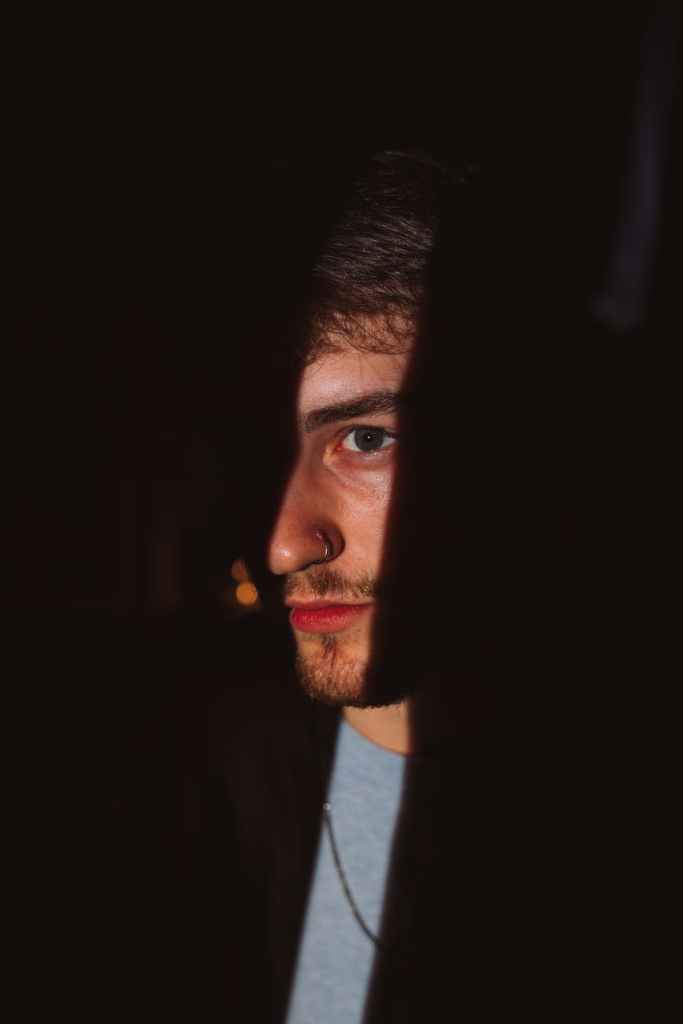
On the day Samuel called a great assembly to publicly anoint the new king, lots were cast to show God’s choice. Among the 12 tribes of Israel, the tribe of Benjamin was chosen– the youngest of the sons of Jacob, and the smallest of the tribes. A lesser family among the tribe was then selected. Finally, the choice was narrowed down to Saul, son of Kish. But Saul could not be found! A search ensued, and he was eventually found– hiding among the baggage! The tallest man in the kingdom– the one who already had been confirmed as God’s choice– tried to hide from his own coronation! And it was God who revealed Saul’s hiding place and forced him to face his exaltation!

The ongoing story of Saul’s reign as king is filled with both triumph and tragedy. Time and again, Saul tries to “hide” behind excuses. He fails to obey God’s command, but blames his weakness on others. God takes away His favor, and His spirit leaves Saul, who descends into paranoia, anger, and madness.

But today, I want to look at the idea that Saul thought he could hide “among the baggage.” (1 Samuel 10:22) Other translations say he was “among the stuff” or “among the supplies.” Saul did not run away from the assembly altogether; he did not reject his role. Yet he tried to hide from the gravity and responsibility of kingship. In many ways, this shows good qualities of humility and an understanding of his own limitations. Saul’s problem wasn’t that he thought he was “born to be king.” Saul wasn’t born to be king– it was an honor thrust upon him. Saul’s problem was that he wasn’t prepared to let God rule through him. Saul would be the titular King of Israel. But who would be the King over Saul’s own life and heart? Saul, like the nation he ruled, ended up rejecting God’s rule. He tried to follow the letter of the law, and the traditions of his people, but he did not always choose to follow the God who had created them, nor did he humble himself to accept God’s correction.

Photo by Pixabay on Pexels.com

We may not be chosen for a position of leadership. But what responsibilities are we hiding from today? Are we surrounding ourselves with baggage? Do we hide in the busyness of our hobbies or our job? Do we cover ourselves with “obligations” that leave us drained to no real purpose? How many hours do we spend hiding in chit-chat, or watching television, or shopping, or daydreaming? How many times are we volunteering to work with strangers in order to avoid spending time with difficult relatives or neighbors? How often do we offer up the sacrifice of generic worship instead of the sacrifice of a teachable spirit?

Saul had many gifts, which he used to strengthen his nation and expand its territory. He had the opportunity to do even more great things for God and for Israel. But he is mostly remembered for his failures– his defiance of Samuel’s orders and excuses about disobedience; his ongoing murderous pursuit of his anointed successor, David; his consultation in the dead of night with the witch of Endor; his ignoble death in battle… We too, have opportunities to do great things with God’s help and in His power. We cannot hide forever among the “stuff” of life. God will reveal our hiding places– to others, even if we don’t acknowledge them!

Today, I pray that I will come out from behind the baggage of my everyday activities, and be available for God’s good purposes!

Photo by Munmun Singh on Pexels.com

Please see these other links for more commentary:
https://jentezenfranklin.org/daily-devotions/what-are-you-hiding-behind#:~:text=%E2%80%9CHe%20is%20hiding%20among%20the%20baggage.%E2%80%9D%201Sa%2010%3A22,tackling%20the%20job%20God%20appointed%20you%20to%20do.
https://www.thekingdomcollective.com/spurgeon/sermon/3322/

Dust in the Wind

Several years ago, there was a popular song lamenting that, “all we are is dust in the wind.” The song evokes a feeling of hopelessness– we are weak, small, and helpless as dust in the wind. It speaks of impermanence, brevity, sadness, and despair in the face of forces greater than ourselves, and offers a warning not to “hang on” to earthly vanities.

The Bible speaks to this –God told Adam in the Garden of Eden that he would die and return to the dust from which he was formed (Genesis 2:7 and 3:19). Abraham was told that his seed would be “like the dust of the earth;” spread out across the earth and unable to be counted. The book of Job is filled with images of dust and ashes, as Job, homeless and afflicted, sits covered in them, talking of his life and death, and the emptiness of loss.

Photo by Skitterphoto on Pexels.com

But there are surprisingly few references to dust in the New Testament. Jesus tells his disciples to visit cities, and where the people will not listen, the disciples are to leave and “shake the dust from (their) feet” as a testimony against them (Matthew 10:14; Mark 6:11; Luke 9:5)

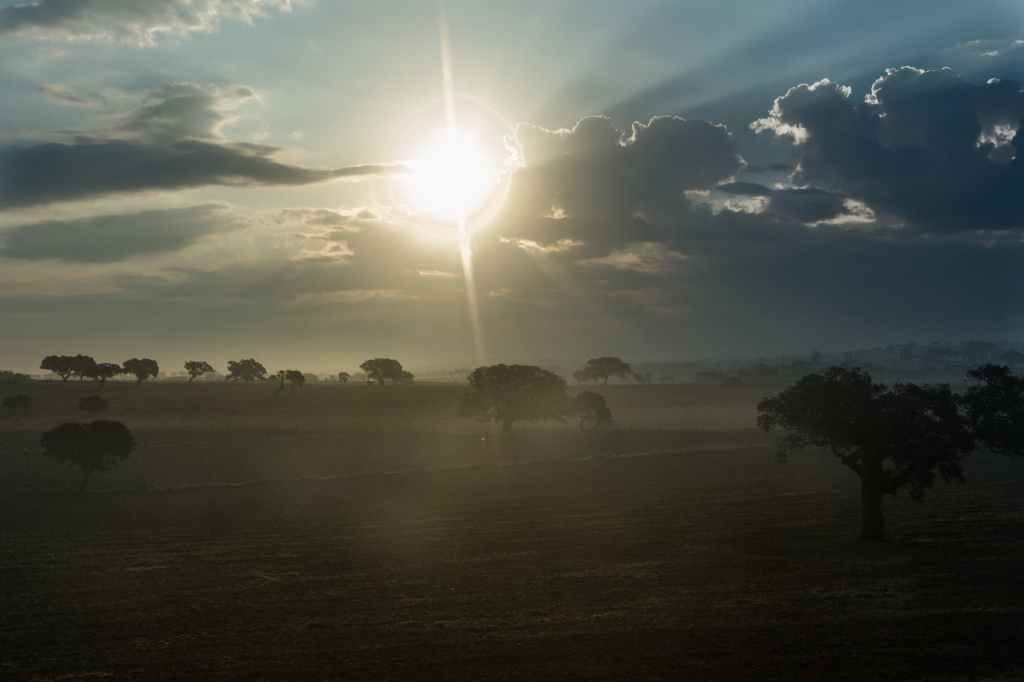
There are two aspects of dust I want to look at today. First, as the song suggests, dust is carried along by the wind. It has no permanence, no weight, no importance, no resistance, and is swept away by a chance wind, or by design with a broom or dust cloth. Dust is not cherished, but discarded. But dust is not destroyed by the wind– it is carried, lifted, moved, and dispersed, but not destroyed. The dust of today will be somewhere else many generations from now, and the dust that settles on our floors, tables, and under the bed may have been blown there from thousands of miles and centuries away! In just such a way, our lives– fragile and brief, leave traces of words spoken, kindnesses shared, and sacrifices made, that live long after our bodies return to ashes and dust. There is an amazing glory in a mote of dust carried by the stillness into a beam of sunlight. It sparkles and dances and drifts in a graceful spiral, suspended in light and air. And there is glory in a life lived in the light, seeking stillness and grace, being carried by the slightest whisper of God’s eternal love.

Secondly, dust that is not in motion, not in the light, IS discarded, unwanted, corrosive, and dead. There is no glory in layers of accumulated dust covering the beauty of an antique dresser or building up in the corner of a room. Dust that is NOT carried on the wind sits, worthless and destructive. It gets absorbed into an unsightly pile of sad, dead matter, and it sits– going nowhere, doing nothing. We shake it off, brush it off, wash it off, sweep it away, and get rid of it.

Photo by Darius Krause on Pexels.com

Dust comes from death– dead skin cells, dead plant and animal matter–and I think there is a very real reason it is mentioned so often in connection with sin, sickness, unbelief, judgment, and death (though not in all cases). God does not want to leave us unmoved and dead– He wants to bring us to glory and give us new life in Him. We are dust in the wind– but that is not all we are. Instead, it is what we are for a brief moment in time– being carried to a new destination, or sinking and settling into despair.

Photo by Анна Васильева on Pexels.com

I pray that we will be lifted up in prayer and faith today, to dance in the light of God’s glorious grace, and carry our mote of glory and grace to wherever God my send us.

Fearfully and Wonderfully Made

I just finished reading a book about atheism– or more accurately, a book about the unreasonableness and faulty logic of modern atheism as espoused by many scientists and philosophers. https://www.goodreads.com/book/show/56614922-is-atheism-dead One of the arguments concerns the view, held by many atheists, that life exists only in the material– in other words, that only “matter” “matters.” They argue against the existence of the soul, or the uniqueness of mankind in relation to other living things. There is nothing beyond science and whatever science can explain. Therefore, there is no God. If there is no God, and we were not created in His image, they argue, then there is no Heaven or Hell, and nothing beyond what we can experience with our senses. There is no purpose for our lives; no consequences for our thoughts or actions; no higher power or authority than our own. We are simply a product of the evolutionary process and a sum of our material components. Our thoughts are simply products of brainwaves firing in a certain pattern; our emotions conditioned and triggered by no more than a series of chemical and physical reactions to stimuli.

Photo by Pixabay on Pexels.com

It is not my intention to argue or take the time to explain in the same detail that was in the book I finished, but I was struck by one of the points the author made. Without a belief in the God of creation, it is illogical and inexplicable that we should be affected emotionally by ANYTHING outside of the realm of material experience and scientific study. That means that we cannot fully explain or appreciate art, music, the grandeur of the night sky, the softness and warmth of a baby’s cheek, the thrill of a perfect sunset, the memory-evoking smell of a loved-one’s perfume or after-shave…our senses should not “move” our emotions. We can analyze a piece of artwork– it’s color or composition, the balance of light and dark, or the perfection of its perspective. But we cannot explain why it is “art,” or why it “speaks” to us (or turns us off!) We can discuss sound waves and tonality in music, but we cannot explain why certain songs move us to tears or cheer our spirits. We cannot say what makes a poem “connect” to something in our psyche, such that its lines come to us almost unbidden in times of distress.

Photo by Aron Visuals on Pexels.com

But all of this makes amazing sense in a world where God exists– a God that is the Author of Creation; of Glory; of Compassion and Wonder. God not only exists– He makes Himself known in the music of a waterfall, in the gentle fall of snowflakes, in the scent of lilacs, and in the smile of someone we love. And He has given us the ability to feel awe, and to strive to add beauty, art, and meaning to the world around us. This is unique among His creation. Birds sing; dogs romp and play; flowers bloom– but they do not fall to their knees in worship; they do not compose sonnets or build cathedrals in acts of sheer adoration. They are not moved to tears or stunned into silence by sun glinting on a spider’s web– even the spider ignores the beauty of its own functional creation.

Photo by Chase McBride on Pexels.com

We are fearfully and wonderfully made–and wonder-ful-ly made! Today is a great day to look and listen for God’s glorious touches all around us. And it’s a great day to reflect back to Him all the wonder and glory of Who He Is in praise!

The heavens declare the glory of God; and the firmament sheweth his handywork.  Day unto day uttereth speech, and night unto night sheweth knowledge. There is no speech nor language, where their voice is not heard. Their line is gone out through all the earth, and their words to the end of the world. In them hath he set a tabernacle for the sun, which is as a bridegroom coming out of his chamber, and rejoiceth as a strong man to run a race. His going forth is from the end of the heaven, and his circuit unto the ends of it: and there is nothing hid from the heat thereof.

Psalm 19:1-6
Photo by Pixabay on Pexels.com

Blessed Are the Pure in Heart..

“Blessed are the pure in heart, for they shall see God.” (Matthew 5:8)

“Create in me a pure heart, O God, and renew a steadfast spirit within me.” (Psalm 51:10)

Photo by Min An on Pexels.com

I’ve been looking through the Beatitudes and how they relate to prayer. Jesus said that the pure in heart are blessed, for they shall “see God.” Have you ever spoken to someone who wasn’t looking at you? They looked past you, or around you, or down at their device, but they didn’t attempt to make or maintain eye contact. It can be disconcerting, and even rude. And yet, there are times when, with our divided hearts, we come into prayer without really looking for, or at, God.

Photo by RODNAE Productions on Pexels.com

At other times, our hearts cloud our vision, giving us a distorted view of God. We harbor sin or guilt, and we see God as unforgiving or unfair. We are holding on to our own will, and we see God as restrictive or demanding.

Photo by Andrea Piacquadio on Pexels.com

The pure in heart see God as He really is– Glorious, Merciful, Wise, and Just. They see evidence of His lovingkindness and faithfulness all around them. They see themselves through His eyes– beloved and forgiven–and they see others through the eyes of Grace.

This is not our natural state. We are NOT pure in heart. We are self-centered, self-absorbed, and self-conscious. King David recognized this profoundly when he was caught in his great sin of adultery and murder. In his own lust and selfishness, he had seduced the wife of another man, and when she became pregnant, David arranged to cover up the first sin–by having the man murdered. David was not a notorious scoundrel. He was even called, “a man after God’s own heart.” But when he was confronted with his guilt, David “saw” himself as he really was– not a victim of circumstance, or a martyr to passion, or a king who was above the law, but a man who had committed evil against others, and against a Holy and Sovereign God.

Photo by Nicola Barts on Pexels.com

David’s prayer was in line with his vision. Not only did he see himself as he really was; he saw God as HE really is: Holy and Just, but willing and able to restore David’s purity of heart. David’s God is the same today as He ever was. He longs to make us clean; to restore to us the joy of our salvation (see Psalm 51:12), and give us the power to pursue our purpose and leave our past sins behind.

Photo by Edu Carvalho on Pexels.com

When we desire to “see God,” we must desire this cleansing and restoration of purity. We can pray without it, but we cannot look at a Holy God with an unclean spirit. All we can do is look elsewhere– talking to the wall or the floor. God still hears us, but he wants to have a real conversation; one full of intimacy and understanding.

So, today, will I make “eye contact” during my prayer time?

Whiter Than Snow

Winter has arrived full force in my part of the world– snow, falling temperatures, ice, and freezing winds make travel difficult and even dangerous. But snow brings about some good things–and one of those things is its color. The white of the snow helps reflect every small bit of light during the short, gray days of winter. When there is no snow cover, some of us can suffer from a condition called “seasonal affective disorder” (SAD). We don’t get enough exposure to sunlight, which can lead to depression, diminished immunity, and other health-related issues. And, while snow doesn’t contain vitamin D or create sunlight, it does reflect it and sometimes that is enough.

Photo by Maria Orlova on Pexels.com

I am enjoying the whiteness of the new-fallen snow as I write this. Even though it is late afternoon, and normally, it would seem dark by now, the snow makes it lighter; I can actually see better because of the snow! (Of course I couldn’t say this if I were driving and the snow was blowing about or covering my windshield…)
Many people in my community are rejoicing in the snow and cold– it means they can go skiing, snowmobiling, sledding, and build snowmen and snow forts. Some of the children (and their teachers) are hoping to have a “snow day” today. And some people are hoping to make some money from shoveling or plowing driveways and parking lots!

Photo by Jill Wellington on Pexels.com

There will be many people praying for snow; and others praying for the snow to end! And in a few days, the pure white snow may end up dingy and gray from being exposed to unclean air particulates, vehicle exhausts, smoke from chimneys, animal tracks, tire tracks, boot tracks, and trash. But for now, it has a purity and beauty that brightens the spirit.

Photo by Josh Hild on Pexels.com

God uses the imagery of snow to speak of His Salvation. In Isaiah 1:18, He says, “Come now, let us reason together, says the Lord: though your sins are like scarlet, they shall be as white as snow; though they are red like crimson, they shall become like wool.” The psalmist David says to the Lord, “Purge me with hyssop, and I shall be clean; wash me, and I shall be whiter than snow.” (Psalm 51:7) And the Apostle John writes, “And everyone who thus hopes in Him purifies himself as He is pure.” (1 John 3:3)

I don’t feel particularly pure most of the time– I know my past; I know my own failings, and the times I have NOT sparkled, or reflected God’s perfection. And God’s salvation doesn’t ignore any of that. God doesn’t declare that I have never sinned–instead, He takes the dirt, shame, and guilt that I deserve, and swallows it up in His grace. In its place, He gives me a renewed mind, a clean heart, and the power to make choices that reflect His heart and mind.

In a “SAD” world that is cold and gray, depressed and weak, God offers redemption that can make us purer, lighter, and fresher than new-fallen snow. We can reflect His light to a darkened world. And, even though the world is filled with contamination and filth, God has the power (and the desire!) to purify us, protect us, preserve us, and give us a sparkling purpose.

Photo by David Dibert on Pexels.com

Esprit de Corps

Photo by Paulo Mu00e1rcio Dos Santos on Pexels.com

It is important to spend time alone with God, but it is also necessary that we spend time with others. This may not always be possible in a physical sense. This past year of pandemic and lockdowns has kept many of us apart. Even church services, Bible study groups, and “fellowship” events have been limited or suspended. But we have other ways of being “together.” Phones, internet, and letters are just a few of the ways we can stay in touch. And prayer is another. This is nothing new, but I’ve been reminded recently that prayer is more than just a personal pursuit. It is also a corporate pursuit. We do not live alone, and we do not pray in a vacuum.

It can be tempting to feel isolated and even apathetic when we are forced by circumstances to spend more time alone. We often succumb to the lure of “escapism”– binge-watching, gaming, or other forms of mindless entertainment to pass the lonely hours. It is not “wrong” to relax or be entertained for a time, but we can lose sight of our purpose and “sleep-walk” through our days, losing opportunities to connect with others and be a blessing (and be blessed in return)!

Photo by Kampus Production on Pexels.com

The term, “esprit de corps” is used by tight-knit groups– military units, dance and theatre groups, etc.–to describe their unity, devotion, and camaraderie. It should be natural for us to apply this same phrase to Christ-followers. After all, we are the “corps”– the body– of Christ! To pray for and with one another should be a given, and a “core” feature of the Church. To stay in touch, to build up and encourage one another, to forgive, accept, and protect one another, to defend the honor of the Church and ALL its members– this should go without saying. But I’m saying it here, because I see so many examples of division, in-fighting, finger-pointing, shaming, and other nonsense. And I’m saying it because I see so many examples of people like me, who withdraw, stay silent, and allow ourselves to become weary and jaded, instead of reaching out and pulling together. (Hebrews 10:23-25)

Photo by Public Domain Pictures on Pexels.com

I pray everyday for people from around the world– but am I willing to pray for those down the street who hurt my feelings last week? Am I willing to risk reaching out to call or write to someone who may be discouraged, or having doubts and struggles? Do I pray with gusto; eager to lift others up and bring blessing to them, even in difficult times? Do I cheer on fellow believers, even if we disagree about politics or music? Do I champion the Church, even when some believers or even congregations bring momentary shame to the name of Christ?

“Esprit de corps” is not a phrase of apathy, or discouragement. It is not just an idealistic motto. It is not a phrase of grudging duty to a group or idea. It is bold, and forward-looking. It is united and strong. Just as the Body of Christ must be in the days ahead.
For more info on corporate/group prayer, see https://www.compellingtruth.org/corporate-prayer.html

Photo by Luis Quintero on Pexels.com

BTW– There are several terrific prayer groups online–Groups that pray for your requests; groups that share requests locally; groups that pray globally for healing or intercession; groups that will connect you to local churches or Bible studies.
*As with any online activity, please be careful. Not every group that calls itself “Christian” or talks about prayer is legitimate. Avoid sites that seek to get personal identifying information, or ask you to send a fee to join their group. Many local churches will be happy to add you to their “prayer chain” to pray for (and/or encourage or visit) people in your own community. Other church groups may have “Zoom” or “Skype” prayer meetings, or other corporate prayer opportunities.

Time Flies

Yesterday had 24 hours, the same as every other day. Yet it seemed to zoom past, leaving me “behind” in getting my blog ready for today. So here I am, writing “under the gun” so that I can publish today.

Photo by Ivan Samkov on Pexels.com

Blogs like this don’t have “deadlines” in the sense of print publications or broadcasts. I don’t have advertisers or managers demanding that I have content by a certain time or date. There are no editors to determine the length of any particular blog post. This one is likely to be shorter than most, in fact. And God isn’t standing by waiting to scold me for being late today. It is my own sense of expectation that gives me grief.

But God has placed all of us in time and space with a purpose. We do not have the power to “stretch” time, to reclaim it, or to bargain for more of it. Time “flies”–and what we do in the time we have flies, too. And He wants us to give our time to Him first of all.

Photo by Rakicevic Nenad on Pexels.com

Falling behind on a blog entry is not a life-or-death matter. Falling behind in life is another matter.

I pray that today will be a productive day, a restful day, even a challenging day– and that, as it flies by, we will fulfill God’s purpose in it. And He’ll take care of the timing!

I Can Do All Things..

I know many Christians who cite Philippians 4:13 as their favorite verse: “I can do all things through Christ who gives me strength.” And while this is a powerful verse, and holds great promise, I think it has been misused and taken out of context too often in recent years.

The Apostle Paul wrote this– from a prison cell as he awaited trial and a likely sentence of death! And this thought is a summary statement. It follows a list of circumstances in which Paul had experienced needs, and questions, and setbacks, and lack of provision.

Photo by Nandhu Kumar on Pexels.com

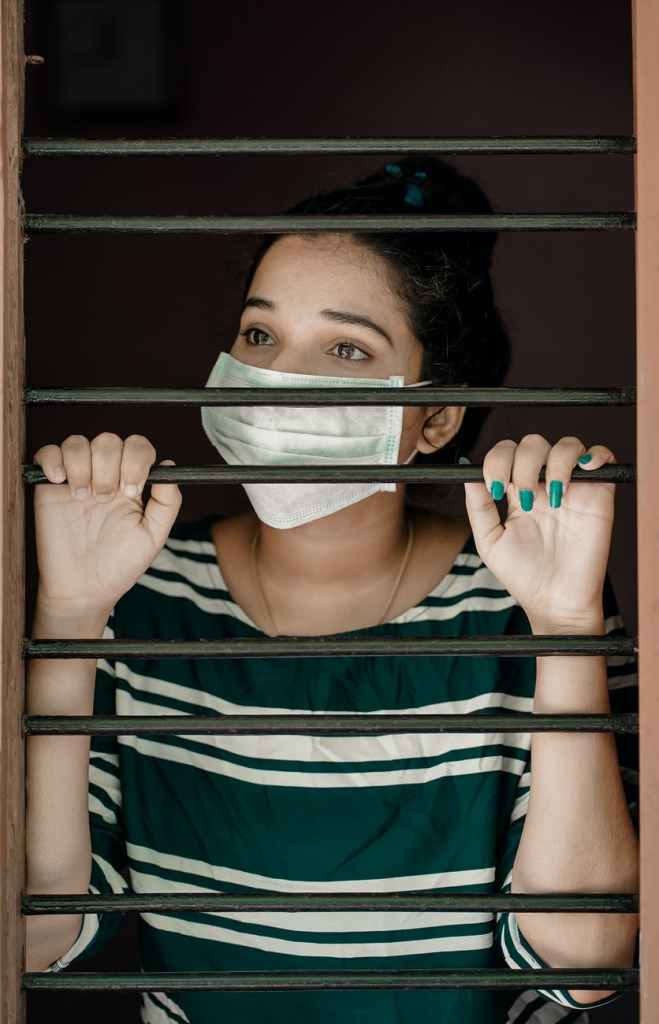
In this season of “sheltering in place,” I have a new appreciation for Paul’s letter. I am not in jail, but there are many restrictions (temporary, but seemingly endless) on where I can go and what activities I can pursue in light of the COVID-19 pandemic. I cannot “do all things” in any normal sense. My family could not gather for Mother’s Day this year. We cannot have friends over for a meal, or take our grandchildren to the movies, or meet together for a traditional church service on Sundays. I cannot open my little shop to customers. I can’t go and get a haircut or hang out at the bakery or coffee shop.

Photo by Cliff Booth on Pexels.com

And there are others who are struggling, not just with restrictions, but with increased expectations. They cannot “do all things” to help a dying patient, or stop the spread of infection in their nursing home or hospital ward. They cannot answer frenzied questions about timelines and protocols. They cannot work effectively from home and still be available to their children as both parent and surrogate teacher. Or, they cannot meet the needs of their students without face-to-face interaction.

But Paul is not talking about the mere completion of a worldly task, or achieving a personal goal. Paul isn’t suggesting that he (or anyone else) can do anything and everything he might want to do or that others might wish him to do. He has just finished talking about times of lack, of wants and needs and facing uncertainties. Paul did not (even with Christ’s help) skip lightly around Asia Minor, making friends and influencing people.

Photo by Ylanite Koppens on Pexels.com

So what DID he do? What did he mean by “all things?”

Paul speaks often throughout his letter of “running a race.” Paul learned that in all circumstances, with whatever resources, whatever restrictions, and whatever obstacles, he could “run” his race. Under persecution or in times of great success; in times of plenty, or in times of hunger; in prison or on the road (or seas); in Jewish synagogues or Greek amphitheaters; alone or in crowds– Paul could worship God. He could proclaim the Gospel. He could spread the love and grace of Christ Jesus. If he couldn’t travel, he could still speak. If he couldn’t speak, he could write. If he couldn’t write, he could pray. He could do “all things” that were necessary to accomplish his one goal– to run the race; to finish strong; to live a life of purpose and worship.

Photo by Pixabay on Pexels.com

May we do the same today, through Christ, who gives us strength. I may not be able to gather with friends, but I have the blessing of being able to call, or e-mail, or IM, or send encouragement. I can still write this blog. I can still pray– in fact I have more time to do so! I can do “all things” that will fulfill my purpose and bring honor to God. And so can you. What a privilege–no matter where we are or what our circumstances!

Photo by Porapak Apichodilok on Pexels.com

Consider the Lilies..

We just celebrated a most unusual Easter– traditions, like gathering at church for sunrise services or grand cantatas, big family meals, Easter Egg hunts, and parades had to be re-imagined, or cancelled. And one Easter tradition that didn’t get a lot of press attention was the damage done to the Easter flower market. Lilies, hyacinths, daffodils, and other spring flowers–some grown locally, others imported from around the world–were unable to be shipped or sold as people are in quarantine. Churches and restaurants, two of the largest consumers of Easter Lilies, had to cancel their orders for this year. People who normally buy lilies from garden centers or florists were unable to do so, and those who grow them were unable to ship them out or sell them. Literally millions of flowers had to be burned, composted, and destroyed during this season of “new life.” Flowers for funerals, weddings, and birthdays were also lost, and millions more will be lost as we approach Mother’s Day next month. What a waste of beauty and life!

Photo by Alena Koval on Pexels.com

And yet..

Some will say that it is a waste of time to mourn the loss of flowers when we should be mourning the loss of human life to COVID-19. I don’t think it is an “either/or” kind of mourning. There is a lot to mourn during these days, and we should not be ashamed to mourn–loss of connection, loss of beauty in the form of flowers, loss of jobs and prosperity, loss of opportunities– many of which we take for granted.

Photo by Italo Melo on Pexels.com

But Easter is not about our loss– in fact, it is not about loss at all. It is about victory and hope and ETERNAL life– not the life of a lily or even a human body– eternal, joyful, victorious life given to us as a gift for all who will receive it! If we are missing a beautiful symbol of that victory this year, we can never be deprived of the reality the Lilies represent!

Photo by Pixabay on Pexels.com

I am reminded that Jesus (and others in the Bible) had a lot to say about Lilies..and grass, and other plants, and their relation to human life. https://www.biblegateway.com/passage/?search=Matthew+6%3A25-34%2CLuke+12%3A22-32&version=ASV https://www.biblegateway.com/passage/?search=Psalm+103%3A15-17&version=ESV
https://www.biblegateway.com/passage/?search=1+peter+1%3A22-25&version=ESV

Photo by Simon Matzinger on Pexels.com

In this season, many of us are feeling very much like the “lilies of the field.” Our lives seem uncertain, our days unproductive, even futile as we wait for this crisis to pass. We miss these symbols of beauty and new life, but we must not place our hope in the symbols. We must not place our hope in what we know or what we do or what we own. Jesus reminds us that we are– our souls, our lives, our hopes, our thoughts, and our longings– worth far more than lilies or sparrows– God knows what we need, and His love for us doesn’t depend on our being “essential”, or healthy, or having all the answers.

Photo by Porapak Apichodilok on Pexels.com

This season reminds us that our lives here are precious, and temporary as the grass. But our existence is both precious and eternal–and thanks to the very God who clothes the lilies of the field, we need not worry or fear what lies ahead. All who turn to Him will be saved. We are not destined to be burned or composted or forgotten. We may face uncertain days ahead, but God has a purpose and a plan for us to bloom– not just for a season, and not just to adorn a building or a home, but to bloom for eternity in His very presence!

Blog at WordPress.com.

Up ↑