What Would Jesus Pray?

Several years ago, it became incredibly fashionable (literally) to wear t-shirts, necklaces, and especially bracelets with the four letters, WWJD– which stood for “What Would Jesus Do?”  This was supposed to serve as a reminder that the wearer was an ambassador of the Kingdom of God, and was supposed to be a follower of Jesus, and thus should act in accordance with what Jesus would do in any given situation.  Stuck in traffic–What would Jesus do?  Presumably, we would not lose his temper, honk and scream obscenities, or rudely try to cut or push others off the road.  Tempted by the scantily clad actors and actresses in a new R-rated movie– What would Jesus do?  Presumably, he would not attend R-rated movies filled with sexual situations in the first place, or, finding himself tempted, he would leave the movie.

I think the intention was good in the beginning– even scriptural in a sense.  The Children of Israel were commanded, in Deuteronomy 6: 8 to “tie them (God’s commandments, laws, and decrees) as symbols on your hands and bind them on your foreheads.  Write them on the door frames of your houses and on your gates.”  Throughout the Bible, the patriarchs, prophets, Jesus, and the apostles, often spoke of keeping God’s Word in our hearts and on our minds as we go through our daily routines.  This short reminder should help us do just that– redirect our thoughts to the One we are to follow.  As far as it achieved that goal, it was a good thing.

The problem is that it didn’t work that way for most people.  The jewelry or the t-shirt didn’t serve as a reminder to the wearer, but as a symbol to everyone else.  “Hey, look at me!  I’m wearing a fashionable accessory with a cryptic message that lets you know that my thoughts and actions represent Jesus here on earth!”  Ironically, Jesus would have been the last person to wear such an item– not only because he wouldn’t have to ask the question (BEING Jesus, and all), but because his focus was on others–Jesus didn’t wear his heart on his sleeve, or his wrist, and he didn’t call attention to his own righteousness.  Instead, he spoke to outcasts, and touched lepers.  He acted in accordance with God’s wishes, not because he had decided what he thought God would want him to do, but because he knew who God wanted him to become.

One of the worst casualties of the WWJD craze is that many people substituted their own wisdom for a study of God’s word– in other words, they imagined what Jesus would (or might) have done, instead of learning and following what he DID.  Of course, Jesus was never stuck in a traffic jam.  But he did face demands on his time, and stressful situations.  He was never tempted by movies or internet porn, but he was surrounded by a culture that had “religious”  “temple” prostitutes, along with sexual immorality not that different from what we see today.  The Bible doesn’t give us a picture of Jesus planning and executing a strategy for specific temptations– it DOES give us specific examples of people over a long period of time who failed or triumphed over temptations, big and small, and of people who turned to God for strength to overcome temptation and grace when they had fallen.  It also gives us a picture of Jesus living a life that was perfectly pleasing to God– including a life of prayer.

What would Jesus pray?  Look at John 17.  Look at Luke 11:1-4 or Luke 22: 39-48.  Look at Mark 14: 32-42.  There are many examples of Jesus’ prayers– prayers that pour out his heart to his Father– in faith, in pain, in grief, and in hope.  In fact, it would be appropriate to say in answer to the question, “What would Jesus do?”– Jesus would take it to God in Prayer! Look at the way He taught His disciples to pray:

“And when you pray, do not be like the hypocrites, for they love to pray standing in the synagogues and on the street corners to be seen by others. Truly I tell you, they have received their reward in full. But when you pray, go into your room, close the door and pray to your Father, who is unseen. Then your Father, who sees what is done in secret, will reward you. And when you pray, do not keep on babbling like pagans, for they think they will be heard because of their many words. Do not be like them, for your Father knows what you need before you ask him.
“This, then, is how you should pray:

“‘Our Father in heaven,
hallowed be your name,
your kingdom come,
your will be done,
    on earth as it is in heaven.
Give us today our daily bread.
And forgive us our debts,
    as we also have forgiven our debtors.
And lead us not into temptation,
    but deliver us from the evil one.
For if you forgive other people when they sin against you, your heavenly Father will also forgive you. But if you do not forgive others their sins, your Father will not forgive your sins. (Matthew 6:5-15 NIV)

Jesus did not ask the Father to give His disciples a blueprint of “Holy” activities or attitudes. He asked for fundamentals– that God’s Kingdom would come; that God would meet our daily needs; that God would forgive us as we forgive others; and that God would steer us away from temptations and evil. For everything else, Jesus directed His disciples to DO what He did, not ask what He would do. Reach out to those who are needy and hurting with love and practical help. Forgive. Tell the Truth. Worship God above all else, and go to Him in prayer.

Jesus didn’t come to earth and live his life to make us great, or successful, powerful or popular by the world’s standards.  He came to seek and to save those who were lost.  He asks us to do the same– not in our own strength or success, but in the overflow of the grace and power he has poured into us.  T-shirts and jewelry are nice, but Jesus used his life–his time, his love, his talents, his words and his actions in accordance with God’s will and God’s wise commands to bring people to himself.  Then he did what none of us could do– he fulfilled God’s law, becoming the perfect sacrifice for our sins, and conquering Sin and death.  What would Jesus do?  He DID IT!  It is FINISHED!  Our part is not to do what only God can do, but to what he has asked of us and trust him to do the rest.

bow down

This is also true in our pursuit of prayer.  I often get side-tracked in wondering if my prayers match up to what Jesus might have prayed in the same situation– and that shouldn’t be my immediate focus.  Prayer is, as I have to keep reminding myself, a pursuit.  It is a process and a journey, and an ongoing, deepening conversation with the one who loves me best.  And it is not a one-sided conversation– God answers my prayers, not just by meeting immediate needs or changing circumstances.  He speaks through his law, through the Psalms and prophets, through the Gospels and the Epistles, and through the godly wisdom of friends and counselors and ministers of his Grace.  And in doing so, he teaches me to pray.

May I stop worrying so much about the length or the style or the “worthiness” of my prayers.  May I instead listen, and learn, and continue the pursuit.

“Little” Prayers

I was challenged the other day by someone who suggested that my prayers are “too little.” Well, not precisely “my” prayers– I head up a small prayer group at church, and we pray for people in our congregation and our community. We keep a running list of people who are suffering from various health issues or housing issues, relationship issues, etc. We also pray for our church staff, for missionaries that our church supports, for upcoming ministry opportunities and programs, and other seemingly “small” requests. These are posted on a list and shared with some of our church members who are shut in or who want to lift up their neighbors in very specific ways.

I don’t think this person meant to be insulting but I see our prayer group quite differently. These “little” prayers are heartfelt, and I believe they reflect the heart of our Savior. Yes, Jesus offered salvation through His death and resurrection to “whosoever believeth” (John 3:16) throughout all the ages, but in His ministry, Jesus was extremely personal and intimate. Among His disciples, Jesus taught them to ask for “our daily bread” and for simple forgiveness as “we forgive” those who have hurt us. (Matthew 6:9-13) And I think our prayer group reflects that aspect of prayer. So, even though our list may seem “small” as we pray for Ned’s pneumonia, or Clarice’s upcoming CAT scan, next week’s teen outing, or Chris’s continuing housing issue, it is also showing compassion and worth to each individual, sharing in their “burdens” (Galatians 6:2) because God loves each of us without condition or limit!

On the other hand, I think I know what this individual was trying to convey. We are also called to pray “big” prayers. Jesus encouraged His disciples to have “big” faith– the kind that moves mountains (see Matthew 17:20– although Jesus says that even faith as small as a mustard seed can result in this kind of answer!) “Little” prayers can be the result of “little” faith. We pray for God to intervene in ordinary things without asking Him to unleash His power and majesty. God is able to do infinitely more than we ask or imagine (Ephesians 3:19-20) through the power of Christ in us! So are we tapping into that promise, or limiting our prayers to what we think God might do on a small scale?

I don’t think our prayer group is doing this at all. We often pray for peace in the Middle East and in other war-torn regions. We pray that the spirits of Anger, Lust, Deception, and Rebellion will be bound and that the eyes of the lost will be opened; that hearts will be softened toward the Gospel, and that our brothers and sisters facing persecution will be, strengthened, emboldened, and protected/rescued. We pray for Revival and renewal across nations and continents. And we pray that in these “little” situations, God’s love, wisdom, and power will be shown clearly– even to those who deny His existence.

Prayer is a huge topic, and a lifelong pursuit. I was challenged by this comment the other day to look closely at how our group functions; at how I present prayer each week; at how we perceive the calling and responsibility of prayer. In the Proverbs, we are told that “As iron sharpens iron, so one person sharpens another.” (Proverbs 27:17) Comments like the one that challenged me the other day are golden opportunities to learn, review, and grow in our daily pursuit. The Church is strengthened when we allow for each member to speak– especially if it stretches our view of things we take for granted!

I don’t believe there are any prayers that are “too little” to bring to God– He delights in our smallest steps of Faith; in our complete and simple dependence on Him. But I also don’t believe that our prayers can or should be limited by the mundane and ordinary. We should come boldly to the throne of Grace– not because of who we are or what we’ve done, but because of the Awesomeness and perfect Sufficiency of the God we serve!

Words Are Not Enough

When tragedy happens, words are not enough to bring justice, resolution, and immediate peace to the situation. “I’m so sorry,” or “I’m here for you,” or “I’m praying for you…” In themselves, the words have no power to change circumstances. Words cannot bring back a lost loved one or undo a fire or earthquake or violent attack.

Yet, when we say that we are sorry, or that we are “here,” or that we are praying, we are offering more than just the words we speak. We are offering to share someone’s grief; to help in practical ways that can ease even some of the suffering; to call attention to God’s presence in every situation, no matter how dire.

Prayers are more than just the words we speak. In Romans 8:26, the Apostle Paul says, “We do not know what we ought to pray for, but the Spirit himself intercedes for us through wordless groans.” Prayer often involves our entire being– body, soul, mind, and spirit–as we bow our heads or lift our hands, sweat, groan, go through a range of emotions from grief to praise, and try to express our heart cry in muddled words.

But prayer is not about US. It is not about our words or our emotions or even our desires. Prayer is about staying connected to God. In ourselves, we will always be insufficient. We may be able to take actions that will help others (or ourselves) achieve some measure of relief or understanding when things go terribly wrong. But we cannot bring complete justice; we cannot reverse what has already happened; we cannot guarantee outcomes. In prayer, we give outcomes and justice to the Only One who can bring true healing, justice, and peace out of our tragedies. We give up on the idea that our own thoughts and actions can overcome all the things that are beyond our control. And we lift up our questions, our fears, and our deepest hurts, with whatever measure of Faith we have, to the one we trust to make all things right. And we relinquish the idea that God MUST give us what we desire in the moment to believe that He gives us what is best according to His eternal plan.

Prayer isn’t simple. It isn’t a “cop-out.” It is a sacrifice. God may never answer our desire for an explanation, or for revenge in this life, or for a re-instatement of all that we think we deserve. But prayer connects us to the Sovereign Heart of God. Prayer doesn’t change our circumstances. It changes the way we respond to them. It changes the way we see ourselves and our own limited power. It changes the way we see others– even those who would harm (or have harmed) us.

Words are not enough– but Prayer taps into the all-sufficiency of God. That is more than enough. And the more we pursue and practice Prayer, the more we will understand its power and sufficiency.

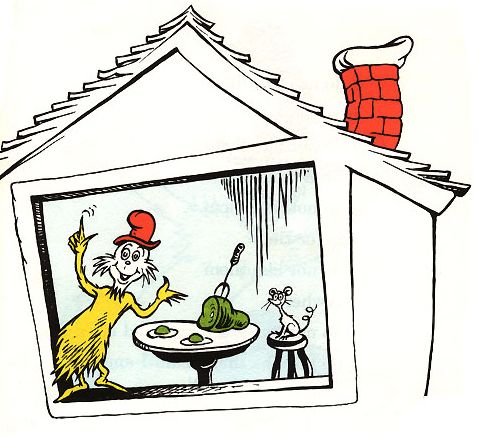
Green Eggs and Prayer?

Have you ever read the Dr. Seuss classic, “Green Eggs and Ham”? In this early childhood reader, the narrator (nameless) is accosted by an enthusiastic character named Sam (Sam I Am), who wants him to try a dish called green eggs and ham. But the narrator refuses. Sam keeps offering, but the narrator continues to refuse, saying he does not like green eggs and ham, and will not try them under a variety of circumstances (in a box, with a fox, on a train, in the rain, etc..) offered by the optimistic Sam.

Finally, Sam’s persistence wears down the narrator’s resistance, and he agrees to try the dish. To his surprise, he LOVES them. In his newfound enthusiasm, he declares he WILL eat them in a box, with a fox, in a tree, in a boat, with a goat, on a train, in the rain, here or there…in fact, he WILL eat them anywhere! He ends by thanking Sam.

So what does a children’s book have to do with prayer?

Well, I believe that the pursuit of prayer as an integral part of living a Christ-like lifestyle is kind of like green eggs and ham. Most people who dismiss the power of prayer have never really pursued it. They have seen it, heard about it– maybe even gotten a whiff of it. They may have “sampled” prayer many years ago as a child or in a single moment of desperation. And the result was disappointment or confusion. Prayer didn’t solve all their problems in an instant. They didn’t get the miracle they hoped for. They didn’t get the bike for Christmas. Their neighbor’s leukemia wasn’t cured. Their situation at work got even worse. Their wife still left and filed for divorce. “Prayer” left a bad taste in their mouth. And they have heard others dismiss prayer and faith as obsolete, ignorant practices, designed for backward and unenlightened people. Like the slightly nauseating color of green eggs and ham, prayer has been deemed unappetizing and best avoided.

And now, when someone mentions a lifestyle of prayer– when someone talks about praying as a daily habit, or a natural part of their worship–the reaction is scorn and suspicion. Prayer doesn’t look powerful. It doesn’t look appetizing. How can something so simple and tame have any effect? Why is the world still suffering so much injustice and evil if there are people out there praying every day? And why do Christians (and others with a prayer tradition) cling to prayer as though it will solve life’s problems?

But prayer, like eggs, can have a bad reputation. For years, we were told that eggs were awful for you– high in protein, yes, but also high in cholesterol, and likely to contribute to diabetes and colon cancer. Recent studies contradict each other, but many now say that eggs are actually good for you. Similarly, during times of crises or disasters, prayer is often derided as inactive and ineffective, and we get mixed messages about people who offer to pray for victims and their families.

Recently, I was challenged about my pursuit of prayer. What good does my prayer do in the face of injustice and disease, death and suffering that people experience? Why do I pray to a God that allows bad things to happen? I have been challenged before, and my answer remains the same. I pray because I have known the peace that comes from trusting God’s wisdom, HIS timing, and His Love for each of us. I don’t have answers for all the “what-ifs” or the “whys.” But I continue to trust that God DOES! And daily prayer is not about “me,” or my questions or what I wish for. It’s about communing with the God who has been faithful all my life and continues to be faithful in every season. The God I love, and the God who knows the end from the beginning.

So what if more of us prayed daily– not just as a reaction to disasters– but pro-actively? What if we prayed, not in anger or bitterness, not transactionally, expecting a particular outcome, but with gratitude for who God is, what He has already done, and what He will choose to do in His loving sovereignty? What if we prayed with open minds and hearts, trusting that we are talking to a God who loves us and knows what is best, not just in the temporary, but in the eternal scope of our lives? We would still see evil in this fallen world, but what if our prayers DO make a difference– we just don’t see the whole scope of what God has provided, or the evil He has NOT allowed to touch us?

I speak as one who has pursued prayer for more than half a century. I’m not perfect. Sometimes, I get frustrated when my desires don’t align with God’s answers. But that’s not the fault of Prayer. Prayer DOES change things– maybe not instantly, and maybe not in the ways I imagine in the short term– but I have seen and experienced the power of prayer. I have felt it in my own life, and I have seen in in studying history and talking to people whose lives were radically transformed by their prayers and the prayers of others.

Philippians 4: 6 says: “Do not be anxious about anything, but in every situation, by prayer and petition, with thanksgiving, present your requests to God.” After this, Paul promises in verses 7 and 8 “And the peace of God, which surpasses all understanding, will guard your hearts and minds through Christ Jesus. Finally, brethren, whatever things are true, whatever things are noble, whatever things are just, whatever things are pure, whatever things are lovely, whatever things are of good report, if there is any virtue and if there is anything praiseworthy—meditate on these things.” (taken from the King James Bible online).

In every situation, we can pray. So, to paraphrase Sam I Am, I WILL pray here and there! I will pray most anywhere (except I won’t close my eyes if I am driving!) So to end:

“I’ll be praying in a boat,
I could be praying with a goat.
I may be praying in the rain.
Or in the dark. Or on a train.

And in a car (eyes open of course). And in a tree.
Because Prayer, it is so good, you see!


So I would still pray in a box.
And I would still pray with a fox.
I will pray inside my house.
And I will pray beside a mouse.

And I will write “Pursuing Prayer”
Because I serve a Lord who Cares!

What if we all had the same enthusiasm for prayer as Sam had about Green Eggs and Ham? What if we keep praying “without ceasing” (1 Thessalonians 5:17) and with confidence (1 John 5:14-15) each day?

“Try it! Try it!”

You’ll be so glad you did.

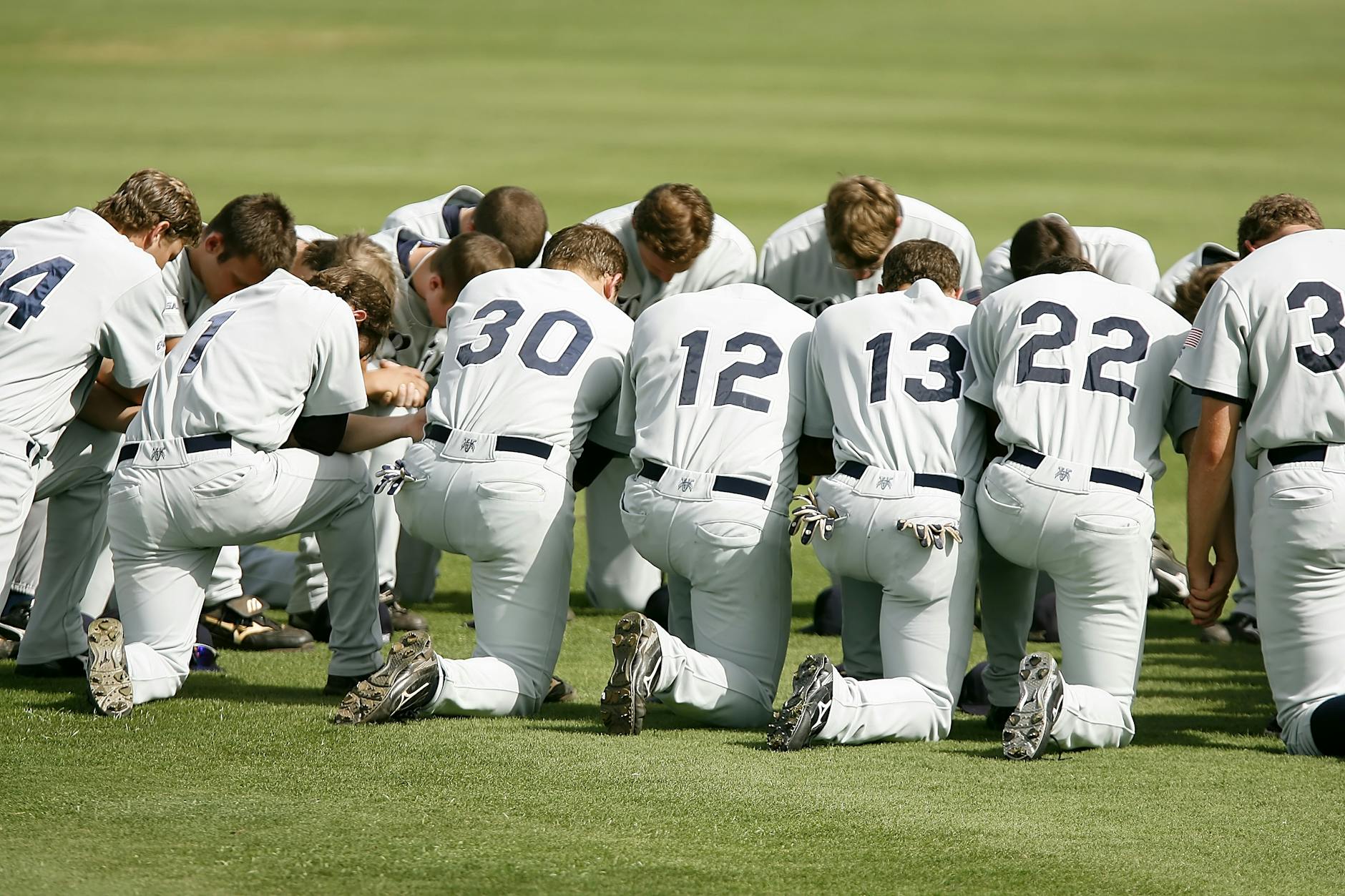
Batting Averages

It’s Baseball season, and one of the statistics that many people follow is the batting average. The batting average is the number of hits achieved over the number of times “at bat.” So, if a batter hits the ball once over the course of three times “at bat” during a typical game, he is batting at 33% or .333. Batting averages may fluctuate during the season. A typical batting average is around .250, or one hit for every four times at bat. That means the average player fails to get a fair hit 75% of the time! A really great hitter may reach a temporary batting average of .500! That means he is still failing at half of his attempts.

I don’t like to fail. I don’t like the feeling that my first efforts are sometimes just not good enough to succeed. But often my first efforts are not my best efforts. And it is better for me to fail and to learn, than to have easy success and grow proud and complacent. Failure means that I still have something to learn; I still have room for improvement; and I still need “coaching.” I can’t have success on my own.

I have a “prayer batting average.” And to outward appearances, my “average” is pretty low. For each time I pray, I may get a “hit”– an instant, positive, definitive answer– for one of ten or so of my many requests. That’s just the way it goes. I may pray for six people to be healed or have their health restored; two people to resolve relationship issues; one person to get a job or find a better apartment; and three lost souls to be saved. God will not immediately grant all those requests. That’s not because I am a failure at praying, however. Prayer is not a “magic bullet.” Prayer is a dialogue with God. When I pray over a long period of time for a certain outcome, God may be working to change the situation in His own way and in His own time. And He may also be working to change MY perspective or outlook on a particular situation.

Like the baseball player who practices his swing, I pursue prayer with a goal of becoming better at it–better at understanding how it works, and why it is so important to a closer relationship with God. My goal is not to have God automatically answer prayer “my way.” Rather, it is to understand how God is working in, and through, and around the situations I can see. In His wisdom, He works in ways I cannot see to accomplish His perfect will.

And as I continue to pursue prayer, God allows me to participate in that perfect will– even when my “batting average” seems low or inefficient. Life is filled with “fast balls” and “wild pitches.” I must learn when to swing, how to swing, and how to work as a “team player” in the Kingdom.

So today, let’s not get discouraged if our prayers don’t seem to be “hits.” Our job is not to be perfect– our job is to pursue fellowship with the One who IS!

Photo by Pixabay on Pexels.com

A Prayer “Bucket List”

Have you ever considered making a “bucket list?” A bucket list is a list of experiences or goals you want to fulfill before you “kick the bucket.” Many people challenge themselves to do 212 adventurous things or visit 100 exotic places or reach 25 life goals (or a combination of several different experiences).

Such lists can be helpful as a way to challenge ourselves to come out of our comfort zone and try new things or visit new places. But they can also produce stress, as we try to achieve some goals or challenges that may be unrealistic or overly selfish.

In pursuing prayer, I have challenged myself to do certain things. It is a sort of “prayer bucket list.” And I find it helps keep my pursuit of prayer vital and exciting.

What does a “prayer bucket list” look like? For me, it involves some key challenges to stretch the way I think about, and practice, prayer:

  • Develop and keep a Prayer Journal– this helps me track my prayers throughout the year. Each day, I pray for a certain region of the world. It may be a nation, a state or province, a major city, or even a major geographical feature. I also pray for people I know who are celebrating a birthday or anniversary. And I keep a running list of current requests for health issues, family issues, etc. Finally, I leave plenty of space to track God’s answers to these prayers! Over the years, I can see how God has led me to pray, and how He has responded to those prayers. See more here : Prayer Journal
  • Make a consistent time each day to pray– I try to pray and do Bible study first thing in the morning. But you can do it at night, or on your lunch hour, or any other time. But it helps to be consistent in taking dedicated time out of each day to visit with God one-on-one
  • Pray corporately–I belong to a weekly prayer group that meets for an hour every Wednesday to pray for local concerns, our church leadership, the needs of people in our church and in our families, as well as national and global issues. While prayer is also a solo endeavor, it is amazing to pray with other Christians, whether in person, or on a streaming prayer service, or at a prayer event.
  • Learn about and practice different “methods” of prayer– I’ve challenged myself to pray a Psalm or a hymn, to write out prayers, to pray using the ACTS method (adoration, confession, thanksgiving, and supplication) and other outlines for prayer, reciting or reading a prayer like the Prayer of St. Francis or The LORD’s Prayer, and many others.
  • Pray “around the neighborhood”– literally walk around the block (or drive down the street or lane) praying for the households, businesses, people, or even the trees, fields, flowers, streams, etc. that you pass along the way. For your safety, it is best to say these prayers with eyes wide open! If weather or mobility prohibits this, you can draw a map or list and pray over that instead.
  • Pray the phone book– (I used to do this, but we don’t have phone books like we used to, so any random list will do)–pray for people on the list. You don’t have to be acquainted with them, just pray for the name. God already knows them far better than we do, anyway!
  • “Thank you for…”prayers–instead of closing your eyes for prayer, keep them open and thank God for everything you can see around you: the walls of the room, the furniture, the clothes you are wearing, your fingers and hands, the floor or carpet, the ceiling or roof– if you’re outdoors, you can thank God for the grass, trees, sidewalk, cars, buildings… I’m always amazed at how much I take for granted when I do this– pencils and breath mints and stamps in my desk, for instance.

And there are a lot of other “bucket list” items you can add:

  • Travel prayers–say a prayer in a cathedral in a foreign city; pray while traveling in a bus or on an airplane..
  • Rhyming prayers–try to make your prayer rhyme– at least some of the time!
  • Raised hand prayers– keep your hands raised to heaven for the entirety of your prayer. You’ll end up developing some arm muscles!
  • “Campfire” prayers– pray in a natural setting. This is especially meaningful near sunset or in a setting with a spectacular view of God’s amazing creation.
  • Prayer retreat– get away for an entire day to pray and commune with God
  • School yearbook prayers– go through one of your old yearbooks from school. Pray for all your classmates! Thank God for your teachers (or thank Him that you passed out of their class!) This also works for staff lists and bosses at your current place of employment.

Ultimately, prayer is not about a particular list or method or “experience.” But it should be part of the challenge of the Christian Life, and something that we pursue with intention and enthusiasm. If making a “bucket list” helps, then we should consider it as a way to build our prayer life and become part of our legacy.

Recipe for Prayer

I love to cook. I’ve been cooking for most of my life, and sometimes, I don’t use a recipe. Often, it’s a dish I’ve made so many times, I make it from memory. Other times, I’m adapting for ingredients I have, or substituting one cooking technique for another.

But I don’t recommend creating a new dish without a recipe or guideline. Cooking is a lot like chemistry– too much of one ingredient, or leaving out another one entirely, can result in disaster! You can’t just throw together a little of this and a little of that, cook it for who knows how long, and expect good results.

The same can be said for pursuing prayer as a lifestyle. I use a “recipe” for prayer. And yes, there are times when I vary from it. But a good, healthy prayer LIFE should contain the following four ingredients:

Praise/Worship/Adoration: After all, we are not praying to an unknown being with unknown qualities. We are praying to the One True God, whose marvelous attributes are worthy of unending praise. If I am praying regularly, and NOT praising God, what is the purpose of my prayer? It can devolve into a laundry list of my complaints, worries, wishes, and whims, instead of being a conversation between a child and her Beloved and Faithful Father.

Confession/Repentance/Review: This ingredient is a stumbling block for many people. If we have been forgiven, why do we need to confess or repent? God already knows our deeds, and Jesus’ death and resurrection have already removed our sins as far as the East is from the West, right? Right. But Confession is not about beating ourselves up over wrongs we cannot undo. Rather, it is simply agreeing with God about our condition and actions. Yes, Jesus has forgiven me. But I need to acknowledge who I am before Him. I am forgiven, not by being better than someone else, or even better than I was before, but because God has extended His Grace and Mercy. And if I don’t remind myself of this fundamental truth, I may forget, and begin to believe that I no longer “need” God’s mercy in my life.

Asking/Requests/Supplication: Supplication is an old word that means asking or pleading. Once again, this can be a stumbling block in a couple of different ways. As with confession, God already knows what we are going to ask. He already knows our needs. Saying them isn’t about making God aware; it’s about giving us a chance to seek HIS mercy, HIS will, and HIS answer. And it’s about acknowledging HIS sovereignty in all aspects of our life. I can’t count the number of times I have asked God for something, and realized that I was not really asking, but rather trying to dictate to God what I wanted to have happen. If I’ve started with the first two ingredients above, I quickly realize that, while God knows what is in my heart, He also knows what is best– and often that is much larger or better than I can imagine!

Thanksgiving/Responding/Yielding: The last ingredient in a healthy prayer life is a heart bursting with Thanksgiving and willing response to God’s Love and Care in my life. Prayer is, at heart, a conversation we have with God. And part of any good relationship is affirming that bond. If I talk with my friend, and even ask a favor, or share some of my burdens, I don’t just walk away without acknowledging how much their friendship and love mean to me– regardless of whether they respond immediately to my request. And I don’t listen to their loving advice and support and walk away as though they never spoke. Prayer should include a time of saying, “YES!” to our relationship with Jesus. YES, I trust you. YES, I gladly accept Your will and all the blessings You have provided in my life. YES, I will obey you and follow you!

Of course, every prayer and every pray-er is unique. Some prayers will have more asking than confessing; others will be “heavy” on Thanksgiving (especially those coming up later this month!). But it is good to stop and consider how the “ingredients” of prayer are producing a harvest in the way we live and the way we pursue a Godly lifestyle. For more about this topic, see https://www.dailyeffectiveprayer.org/prayer-acronym/ and also https://proverbs31mentor.com/acts-prayer/.

Building Blocks of Healthy Prayer

When I was in elementary school, we learned about nutrition. Back then, we were taught that there were four basic food groups (nutrition education has gone through several “cycles” since then– food pyramid, healthy plate, “eating the rainbow”, etc.). Eating a healthy balance of foods is essential to good health. If I only eat meat, or only sweets, I will not be healthy. If I just eat whatever or whenever I feel like it, my body won’t get all the necessary nutrients to grow, fight off diseases, and stay strong.

Pursuing a healthy prayer life includes essential “building blocks” or nutrients, as well. Over the course of many years, I have seen various guidelines and acronyms to help include different building blocks in prayer. I want to share a couple of them again today. These guidelines are just that– guidelines. But they can help balance our prayer life, and help it grow.

The first acronym I learned, and the one I have used for decades, is ACTS. Here’s how it works:

  • Adoration/Acknowledgement– begin each prayer by acknowledging God’s Sovereignty, His Holiness, His Goodness, and other qualities worth worshipping. This helps put you in the right frame of mind when talking to God. I am not just talking to a neighbor or a “good buddy”– I am speaking with the One who holds all of Creation in His hands! And He WANTS a relationship with me! He is all-powerful: there is nothing I can ask that He cannot do! His is all-loving: there is nothing I can ask that He won’t filter through His loving wisdom and will. Even if I don’t know what to ask for; even if I ask for the “wrong” thing– God will only allow those things that He can use for good. God is beyond space and time: He knows all that has happened– all the triumphs and tragedies of my life so far, and all that is to come. He is LORD: He is in control– now and forevermore. Whatever seemingly impossible circumstances I face, they are nothing compared to the eternal, almighty plans of God.
  • Confession–This doesn’t mean an endless repetition of all my failures and sins from six months ago, or raking myself over the coals for not being “holy enough.” This is an honest assessment of who I am in relation to God. God is Holy and perfect. I am not. If I acknowledge God’s goodness, I must also acknowledge that I fall short. I don’t know everything. I don’t always act with the right motives. I NEED the Holy Spirit’s guidance, and I DEPEND on Christ’s finished work on Calvary for my Salvation. This should naturally lead to
  • Thanksgiving/Trust– I can trust God to save me, NOT because of who I am, but because of what He has done. I can see God’s hand working in and around and through me as I yield to His Spirit in me. I can recall, and acknowledge so many of the ways that God has blessed me and others around me. Once I have these building blocks in place, I can bring burdens to God through
  • Supplication– this is just a fancy term for asking God to work His will in specific areas– healing, guidance, encouragement, strength, understanding, submitting to His will, and following Him. I can ask for personal help, or lift up family members, neighbors, friends, and yes, even enemies! I can pray about situations great and small–from wars and famines to lost keys and short tempers.

I learned about ACTS when I was in college, and I have found it to be a great guideline. While I don’t use it for every prayer– sometimes an issue calls for immediate and direct supplication, for instance– I find that using this in daily prayer helps me grow in faith, patience, endurance, and hope. When I come to God in panic or stress, and I haven’t built up a healthy, consistent practice of prayer, my words can be anemic– lacking in faith and based on my fear or anger. I pray with my focus on problems, rather than on God’s power to overcome any circumstance. Using ACTS helps me remember that it is GOD who “acts,” and always for the best!

The second acronym I have used is PRAY. It is very similar to ACTS, but the end focus is slightly different:

  • Praise/Adoration– once again, it begins with praising the God who is worthy; the God who hears me, sees me, loves me, and knows what is best. I cannot live victoriously without remembering the source of hope and victory, and putting my heart in HIS hands.
  • Repentance– as with Confession above, this is not an act of groveling and rehearsing past shame. It is acknowledging anything that I might be holding on to that gets in the way of my worship of and submission to God’. E.M. Blaiklock, the Christian apologist from New Zealand once said: “God alone knows how to humble us without humiliating us and how to exalt us without flattering us.”  Repentance is not about humiliation or holding on to guilt, but rather about staying humble and honest about our need for God’s Grace and Power. And turning from anything that might get in the way of following Jesus Christ.
  • Ask– once we have a right view of who God is, and who we are, we are free to ask Him whatever is on our mind, and share our questions, fears, burdens, etc., with the One who has all the answers!
  • Yield/ “Yes, LORD!”– The final step is making sure we are ready to listen and respond to God as we expect His answer. No matter what God’s answer may be, we should trust and obey His wisdom above our own.

I have come to value PRAY as a wonderful tool to help in my pursuit of prayer, and in my broader pursuit of Christlikeness. Both ACTS and PRAY help me pray “better.” It’s not that God grades my prayers or listens more or responds differently: but it helps me to better appreciate the power of prayer, and the power behind prayer. Individual prayers can change circumstances, but the pursuit of prayer is meant to change US as well. Prayer that shapes us, helps us grow– if that isn’t at least part of our pursuit of prayer, we are missing out on what God wants to do through us, and not just for us.

It is important, just as with nutrition, that we have a healthy balance in our prayer life. That balance consists of worship, repentance, sharing our burdens, showing gratitude, and offering ourselves in humble service. Prayer is too important to just “wing it.” We need to pursue it with the same (or better!) dedication that we give to our physical health.

Tips for Praying Scripture

At least once each month, I want to give some practical tips I have learned that have improved my pursuit of prayer over the years. Today, I want to talk about praying scripture.

On its surface, praying scripture just means reading or saying Bible verses back to God. Of course, some Bible verses or passages lend themselves to this practice, while others do not. (Lists of genealogies in the Chronicles come to mind…) Sometimes, it requires that we change a pronoun or verb tense, or otherwise personalize the scripture, but we are echoing God’s “Word” back to Him in an act of worship. We may be echoing God’s literal words, or repeating words of worship spoken centuries earlier. Some examples:

“Lord, in the beginning YOU created the heavens and the earth”…(from Genesis 1:1)
“Give praise to the Lord, proclaim his name;
    make known among the nations what he has done.
Sing to him, sing praise to him;
    tell of all his wonderful acts.
Glory in his holy name;
    let the hearts of those who seek the Lord rejoice.
Look to the Lord and his strength;
    seek his face always.” 1 Chronicles 16:8-11

Create in me a pure heart, O God,
    and renew a steadfast spirit within me.
Do not cast me from your presence
    or take your Holy Spirit from me.
Restore to me the joy of your salvation
    and grant me a willing spirit, to sustain me.
(Psalm 51:10-12)

“On my bed I remember you; I think of you through the watches of the night” (Psalm 63:6)

“Search me, God, and know my heart; test me and know my anxious thoughts. See if there is any offensive way in me and lead me in the way everlasting” (Psalm 139: 23-24)

Now to YOU who are able to do immeasurably more than all we ask or imagine, according to Your power that is at work within us, to You be glory in the church and in Christ Jesus throughout all generations, for ever and ever! Amen. (taken from Ephesians 3:20-21)

There are some benefits of doing this, but also some pitfalls. First the benefits:

  • Praying scripture can help us when we just don’t know what to say. Sometimes, we are so burdened or so exasperated, or so overwhelmed with emotion, that our words are swallowed up. But a remembered passage of scripture may allow us to speak our emotions in a way that our own words cannot. Sometimes, scripture will give us a focus that we lack, allowing us to put aside distracting thoughts, as well.
  • Praying scripture can help us memorize or review scripture. It can be helpful to read scripture aloud as a prayer, or even repeat key verses as prayer. Sometimes, we will be studying scripture and it speaks to us in a way that causes us to stop and pray it back.
  • Praying scripture can keep our prayers grounded. When we are tempted to pray selfish, momentary requests, scripture reminds us of God’s majesty, sovereignty, and timeless nature. Scripture magnified God and puts our petty worries and desires in their proper perspective.
  • In a group setting, praying scripture can help others focus better, or inspire them to remember another scripture passage that relates to what you have just prayed!

There are many other benefits of praying scripture, but there are also a few pitfalls:

  • Beware of using scripture as a substitute for your own thoughts and concerns. It is powerful to pray the Bible as it relates to your own worship and emotions, but God doesn’t want to hear only the echo of His words– He wants to hear them coming from your heart, as well as your lips. The ancient prophets warned against those who used a form of worship that lacked conviction and submission to His will.
  • Don’t feel bad when you say a prayer that does not contain a direct scriptural quotation– praying scripture is a tool and a guide, not a ritual or requirement. Don’t feel arrogant or superior when you DO pray scripture– it is a tool and a guide, but it does not make your prayer more effective or more Godly than an earnest prayer without a scripture reference.
  • Don’t “cherry-pick” scripture to pray in a way that is out of context or goes against the overall flow of scripture. Two of the most overused and misused scripture passages are Romans 8:28 and Jeremiah 29:11. They are both verses of promise and encouragement, and certainly can be used in prayer. But in context, they are meant to encourage those who are in the midst of anguish and despair, NOT promises to make life carefree or answer a selfish desire for an immediate good outcome.

If you have never (or rarely) tried praying scripture, I hope you will incorporate this tool into your pursuit of prayer. Whether you use a print Bible, scroll through a list of verses on line, or draw upon memory, you will find God’s words to be uplifting, convicting, encouraging, and wholly sufficient as you pour out your heart to your Maker. And if you already use this practice, I hope these tips will help you remember to use scripture wisely and appropriately as you pursue and practice a closer walk with God.

Blog at WordPress.com.

Up ↑