When God Asks a Question…

We often fear questions. We are afraid to ask questions; we are afraid of being questioned; we are afraid of asking the wrong questions or not asking the right ones. And we are often afraid of the answers, too.

Photo by samer daboul on Pexels.com

God is not afraid of our questions. In fact, He wants us to ask, to seek, and to knock (Matthew 7:7, Jeremiah 33:3, and others). God knows the answers to our questions– He even knows our motives in asking them! God may not give us the answers we expect, or answer in the manner or time we expect. But God encourages us to ask anyway, and to trust in His ability and His desire to give us what we need in the moment we most need it.

Photo by Munmun Singh on Pexels.com

God also asks questions–not because He doesn’t already know the answers, but because we can learn from the questions He asks, and the answers we give. Some of God’s questions seem self-evident; others are probing. Some are rhetorical; others are anguished. Let’s take a look at just a few, and see what we might be able to learn from them:

  • In Genesis 3, God asks some very obvious questions of Adam and Eve after they hide from him. “Where are you?” Adam and Eve had not successfully hidden from God. He knew exactly where they were and even why they were hiding. But instead of storming into the Garden of Eden with condemnation and instant judgment, God asked a simple question, giving them both the opportunity to confess, and a clear reminder of their broken relationship. There had never been a need (on either side) to ask “Where are you?” After Adam responds with the excuse of being naked and ashamed, God asks his second question, “Who told you that you were naked?” God knew the answer to this, as well, but He added a third question that forced Adam to get to the heart of the matter and tell Him the truth– “Have you eaten from the tree…?” God could have asked condemning questions– “How could you disobey me like this?” “Do you have any idea what you’ve done?!” But God isn’t asking questions to overwhelm Adam and Eve with their guilt and shame. He’s asking for truthful acknowledgment of their disobedience, so their broken relationship can begin to be repaired. God assigns punishment, but He does not bring additional questions and condemnation
Photo by Chinmay Singh on Pexels.com
  • In the very next chapter, God asks Cain a probing question, “Why are you angry? (And why has your countenance fallen?)” God knows the answer. He knows how Cain feels and what Cain is thinking. God knows it so well, that He challenges Cain to master his anger and turn his face upward (i.e. seek God’s counsel over his own emotions). We don’t like probing questions, because they reveal our selfish motives and dark impulses. But God actually WANTS us to be aware of our own tendencies–and our need for His wisdom and grace! God is not afraid of our darkest thought– He doesn’t want to expose them for our shame, but enlighten us for our own good!
  • In Genesis chapter 18, the Lord asks a rhetorical question, “Shall I hide from Abraham what I am about to do…” (concerning the destruction of the cities of Sodom and Gomorrah). God had already determined that they should be destroyed; He had no need to share this information with Abraham. But in asking the rhetorical question, God gave us a glimpse into His character (as well as a window into Abraham’s character!) God does everything with purpose. He is not willing to hide information we need, nor to waste time or energy on useless information. Imagine if we knew everything–everything!- that would happen to us for the next year? If we knew about that near miss at the intersection on May 22, or the toothache on June 2, or the “surprise” birthday party in October? But when God does choose to open a window, He gives us a chance to respond. Abraham did not choose to argue that Sodom and Gomorrah were not wicked cities, or that God had no business destroying them. His heart was driven to discover if God would destroy the innocent with the wicked. He got his answer (several times over!) And even when God did not find ten innocent people in the cities, He still offered rescue for Abraham’s nephew, Lot, and his family.
Photo by Pixabay on Pexels.com

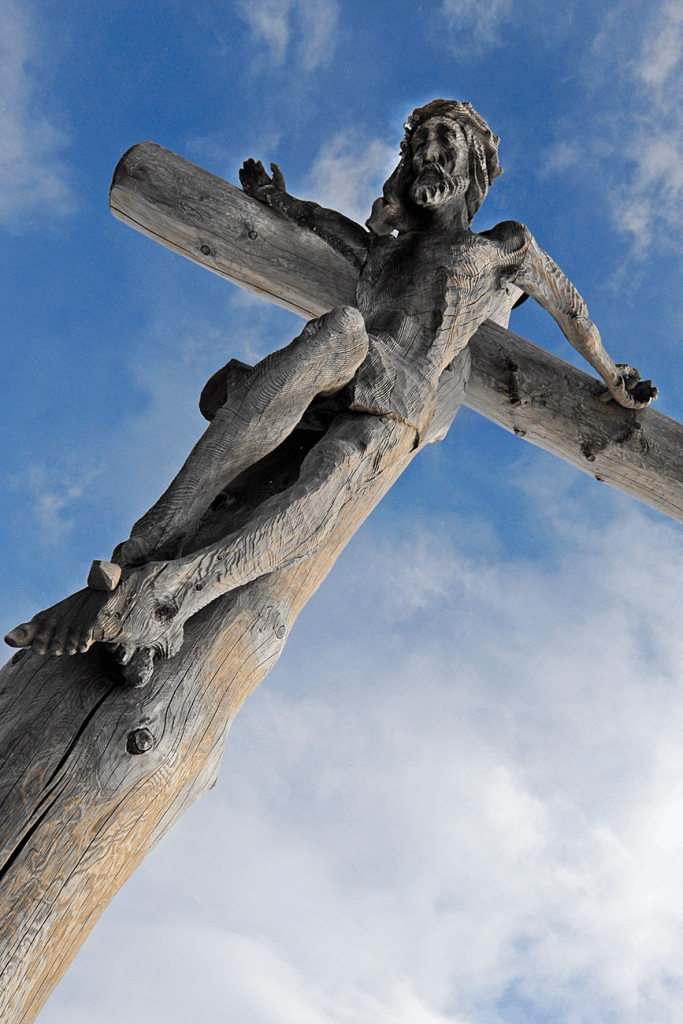
  • It isn’t only God the father who asks questions. Jesus the son asked two agonizing questions in the New Testament. While He was dying on the cross, He asked the Father, “My God, My God, why hast Thou forsaken Me?” (Matthew 27:46). Jesus knew, intellectually and spiritually, why God had forsaken him; but His question echoed the one found all the way back in the Garden of Eden– “Where ARE you?” The ultimate anguish of being separated from God’s presence was felt by God himself! The agony of loneliness that comes from sin and shame and guilt– God knows it intimately from both sides!
  • Jesus also asked and anguished question of Saul of Tarsus– “Saul, Saul, why are you persecuting Me?” (Acts 9:4) Just as God asked Cain to look carefully at his motives and emotions, so Jesus challenges Saul to reexamine his activities and ambitions. Jesus knew, of course, why Saul was hunting down those who were preaching the Good News. He knew Saul’s ambition and his zeal for the Law. He knew that it had blinded him to the truth. And in Saul’s physical blindness, Jesus could “open his eyes” to a greater ambition and zeal–to preach this same Good News to the Gentiles– the same Gospel that is opening eyes around the world to this day to see the Awesome, Eternal, Victorious, and All-Encompassing Love of God.

Today, may we ask, seek, search out, study, cry out, knock on doors, and pursue this truth–God wants to meet with us! He wants to talk to us, to listen to us, to share closeness, to increase our Joy and be joined to us in our Grief, to lift up our countenance, end our isolation, and be the ultimate answer to our questions.

Photo by Saulo Zayas on Pexels.com

“What Must I Do?”

18 And a ruler asked him, “Good Teacher, what must I do to inherit eternal life?” 19 And Jesus said to him, “Why do you call me good? No one is good except God alone. 20 You know the commandments: ‘Do not commit adultery, Do not murder, Do not steal, Do not bear false witness, Honor your father and mother.’” 21 And he said, “All these I have kept from my youth.” 22 When Jesus heard this, he said to him, “One thing you still lack. Sell all that you have and distribute to the poor, and you will have treasure in heaven; and come, follow me.” 23 But when he heard these things, he became very sad, for he was extremely rich. 24 Jesus, seeing that he had become sad, said, “How difficult it is for those who have wealth to enter the kingdom of God! 25 For it is easier for a camel to go through the eye of a needle than for a rich person to enter the kingdom of God.” 26 Those who heard it said, “Then who can be saved?” 27 But he said, “What is impossible with man is possible with God.” 

Luke 18:18-27 ESV via biblegateway.com

I love that Jesus didn’t just give pithy answers to questions, but often went in roundabout ways to explore the motives behind them. I also love how He would use others’ questions, mixed with parables, metaphors, or other figurative language to stimulate further thought. And His parables and word pictures, while short and simple, have layers of meaning that cause us to ponder deeper issues.

The “Rich Young Ruler” in the above story came to Jesus with a question. “What must I do to inherit eternal life?” Instead of answering the question, Jesus seems to get distracted by the young man’s greeting. “Why do you call me ‘Good?'” Did the young man really think that Jesus was better, or wiser, or more righteous than the religious leaders of the day? Or was he trying to flatter Jesus? Or did he think that Jesus would see him as an equal (or even superior) when he found out how righteous the ruler was? Jesus got to the heart of the greeting– “No one is good except God alone.” And therein lies the true answer to the ruler’s question, as well. There is nothing anyone can do to be “Good” enough to inherit eternal life.

Photo by Anna Tarazevich on Pexels.com

Jesus could have said this, but would the young ruler have accepted this answer? Probably not. His question betrays an assumption that he WAS good enough– that he had already done all that was required and that Jesus would surely be impressed and announce to the crowd that here was an example of someone who was worthy of eternal life. Instead, Jesus led the man through his pride by naming a few of the commandments– the very ones the ruler was so sure of. Indeed, this seemed to be exactly what the ruler was hoping to hear– proof that he had “passed the test.” Ironically, he was addressing Jesus as “Good teacher, ” but seemed to miss that fact that he was also addressing the only One who is truly Good! Jesus–God in the flesh — the very one whose death would guarantee that anyone would “inherit” eternal life. This young ruler doesn’t want Jesus to be his “Lord” and “Savior,” he just wants Jesus’s opinion.

Photo by Bryan Catota on Pexels.com

But then, Jesus pulled the rug out from under this man’s assumptions. “One thing you still lack.” One thing…I’m sure the young ruler thought it would be a fine point in the laws or traditions he know so well– some minor point that could be cleared up with a gift or a small offering. I find this a fascinating statement, because it is followed by “sell all you have and distribute to the poor…” It seems like such an oxymoronic statement. You lack one thing, therefore, you must give away all that you have. How is that possible? Because the “one thing” the rich man lacked was not an object; not something he could check off a list of “things I can do to impress the religious leaders.” This man lacked humility; he lacked a self-awareness of his own need. And he lacked the understanding of what it means to “inherit” eternal life. No one “earns” an inheritance. Even someone who is rewarded with an inheritance must trust in the goodwill of the person writing the will, and will only inherit under the terms of the will. Jesus’s “terms” were not that the man had to become destitute or spend the rest of this life as a beggar. But faced with the choice of his comfortable life in the here and now, or eternal and abundant life in heaven on God’s terms, this man chose earthly wealth and spiritual poverty.

Photo by HASSAN YAR JANJUA on Pexels.com

Almost lost at the end of Jesus’s surprising answer are the last two phrases, “and you will have treasure in heaven; and come, follow me.” This man wanted eternal life as an extension of his comfortable life on earth. He did NOT want eternal life enough to sacrifice his present comforts or his preconceived notions of “goodness.” He did not want to follow Christ– he only wanted to consult with Him.

Photo by Anna Shvets on Pexels.com

I find it uncomfortable to hear about the young ruler’s rejection of Christ. I understand the initial shock of the disciples as Jesus uses the illustration of a camel going through the eye of a needle to compare with a “rich” person coming into the kingdom of God. Wasn’t Abraham wealthy? Wasn’t Solomon rich? What about King David? If riches make it impossible to follow Christ, who can gain eternal life? Thankfully, Jesus redirects the focus– it’s not about the riches; and it’s not about what we “do”– it is God’s “Good” pleasure to give eternal life to those who choose to “follow” Him.

Photo by Tima Miroshnichenko on Pexels.com

“Good Teacher and Lord, help me to remember this lesson as I come before you in prayer. You have not asked me to ‘earn’ my inheritance. It is your gift to answer my prayers as you see fit; to be the Lord of my life; to be merciful and gracious to me; to prepare a place for me to live with You for eternity. What you ask of me is that I ‘follow’ you– that I listen to your call; that I accept Your “terms” of inheritance; that I share Your Grace and Mercy with those around me.”

Don’t Lose a Minute…

5-9 So don’t lose a minute in building on what you’ve been given, complementing your basic faith with good character, spiritual understanding, alert discipline, passionate patience, reverent wonder, warm friendliness, and generous love, each dimension fitting into and developing the others. With these qualities active and growing in your lives, no grass will grow under your feet, no day will pass without its reward as you mature in your experience of our Master Jesus. Without these qualities you can’t see what’s right before you, oblivious that your old sinful life has been wiped off the books.

2 Peter 1: 5-9 (The Message)
Photo by Liza Summer on Pexels.com

The Apostle Peter was writing to people in the early church– people who were under enormous pressures and persecution. The Epistles of 1 and 2 Peter are filled with dire warnings– and urgent calls to action! Earlier in his first letter, Peter spoke of prayer: “Give all your worries and cares to God, for he cares about you.” (1 Peter 5:7 New Living Translation). Prayer is primary, but it must be paired with action. In this passage, Peter lays out a progression of characteristics to pursue. We must actively chase after a Godly character. It will not develop in a vacuum. We must build on our foundation, and keep building up– so that we can build up others as well!

Photo by SHVETS production on Pexels.com

The foundation is basic Faith. We need a bedrock, solid and sure; unmoving and capable of handling stress and pressure. In our own power and our own wisdom, we will crumble under the kinds of stress and persecution we may face in modern circumstances. We need to trust God– and seek to trust Him more completely–before we can advance in Christlikeness. We will be tempted to doubt– that is normal in a broken world. But we must continue to bring those doubts before the power of the Holy Spirit’s guidance. Doubts, like other challenges, will test us. The challenge of doubt is particularly tricky, because the more we try to wrestle in our own mind, the more doubt (aided by pride) can take hold. It is counter-intuitive. The more I try to answer every doubt and every contradiction– the more evidence and reassurance I require before I am willing to trust, the less I am likely to find faith. Faith is like a muscle– if you never exercise it– you will hardly know it’s there. But when you need it, you’ll wish you had worked out more! Faith is not fully developed overnight. God will NOT answer every question, settle every niggling doubt, solve every seeming contradiction. But He HAS promised not to leave us alone, without hope or help. And when we do exercise Faith, we will learn to trust more. As we learn to trust God’s wisdom and provision, we will develop our other muscles…like goodness, self-discipline, and self-sacrificing love!

Photo by Niko Twisty on Pexels.com

I like the above translation, because it stresses the urgency that is a core of all Peter’s writings. “Don’t lose a minute…” Don’t waste time in second-guessing, excuse-making, distractions, or empty arguments. Don’t lose the opportunity to see God’s work unfolding as you take baby steps of Faith! Don’t become complacent, and lag behind, losing momentum and focus! Chase after Faith! Cling to the “hem of His garment”

20 Then suddenly a woman who had been suffering from hemorrhages for twelve years came up behind him and touched the fringe of his cloak, 21 for she said to herself, “If I only touch his cloak, I will be made well.” 22 Jesus turned, and seeing her he said, “Take heart, daughter; your faith has made you well.” And instantly the woman was made well.

Matthew 9:20-22 (NRSV)
Photo by Andrea Piacquadio on Pexels.com

We may not see the instant miracle of this woman, but our faith WILL make us “well.” It will change our perspective, open our eyes, and chase away doubts like a breeze chases away a cloud of smoke.

Peter’s list is worth exploring more deeply. I’ve looked at Faith today…next time, I want to explore good character (also translated as “goodness,” or “moral excellence.”) Today, I pray that I would build on the gift of Faith, and strive for a deeper faith, aided by the Holy Spirit, as I face whatever challenges life brings.

Suing God

I have a friend who wants to sue God. She’s not entirely serious, but she has a lot of anger toward God. She feels that God “owes” her an explanation for her life circumstances, as well as a general justification for war, famine, and other evils that she reads about in the paper or sees on the news. She believes He (or She or S/he or It– my friend isn’t sure that God exists, but cavils at the idea of calling God “Father” or “He”–she finds it sexist) is being unfair in a thousand different ways.

Photo by Alex Green on Pexels.com

My friend doesn’t read the Bible, and is only vaguely familiar with the story of Job. Job wanted to take God to court. His life had crumbled around him, and he wanted God to explain why, especially as he didn’t “deserve” the circumstances he faced. Amazingly, in the Biblical account, we learn that Job was “right.” He didn’t deserve to lose his family, wealth, and health. He had done nothing “wrong.” That doesn’t mean that he was sinless. But he confessed any sins, made atonement– he even sacrificed to make atonement for any sins his children might have committed. Job was a “righteous dude!” My friend– not so much. Like most of us, she would probably be ready to admit that she’s made some mistakes here and there, though she doesn’t feel that they are particularly heinous. She’s more than willing to “let bygones by bygones” for herself and others– shouldn’t God do the same, without making us confess and humble ourselves? Who does God think He is, anyway?!

Photo by Craig Adderley on Pexels.com

But this is the point. God is GOD–He is not a man, or even a superman, that He is compelled to explain Himself to us; to seek our approval or accommodate our whims, wishes, or plans. In the story of Job, God never gives Job the explanation he’s looking for (again, amazingly, WE the readers are given a “behind the scenes” look and told exactly why Job is being tested and allowed to suffer). Nor does God justify Job’s circumstances or spell out his list his “rights.” Instead, He presents Job with a few keen questions to remind Job (and us!) of who God is, and who Job is not!

Photo by Keenan Constance on Pexels.com

Like my friend, I am often disturbed, puzzled, and saddened by some of life’s circumstances, and by the evils I see around me. But when I begin to question why, the Bible reminds me to ask a few keen questions: Did I create the world? Do I have the power or authority to re-create or re-order the world around me? Can I change my own circumstances, or those of others? Can I change nature, weather, geography, biology? Can I make times and seasons obey my instructions? Can I see a thousand years into the future, or remember a thousand years in the past? Am I immortal? Omniscient? Omnipotent? Holy?

Photo by Yunus Tuu011f on Pexels.com

But more than that, I have to ask: If God never gives me answers or explanations for what has happened or is happening, or will happen– what will change? If God answers all my questions– what can I say or do about it? Can I teach God how to oversee the Universe? Can I explain to God what He already knows better than I do? Job’s ultimate response was worship. I have a choice to rage against my creator, or I can trust Him with my past, present, and future. I can worship God right now, in my “not-knowing,” or I can rebel against the one who gives me life and breath– the one who created everything around me, before me, behind me, under and over me– the one who is sovereign over the entire universe.

Photo by Andrea Piacquadio on Pexels.com

My friend wants to sue God– or at least demand answers from Him. I hope she will consider pur-suing Him, instead. He is big enough to meet our anger and our questions, and He is big enough to handle all the things we don’t know or understand.

Selective Hearing

Ninety years ago today, my grandparents were married in a small ceremony in Elkhart, Indiana. Thirty-one years later, my parents were married in another small ceremony in Cassopolis, Michigan. My grandparents were married almost 63 years before my grandmother passed away. My parents were married over 35 years before my dad passed. My mother, when I was preparing to marry, passed on some of the advice she had received from her grandparents (who were married over 50 years themselves!) . It involved what my great-grandmother called “selective hearing.”

Photo by Kevin Malik on Pexels.com

My great-grandmother, my grandfather, and my mother were all “fussers.” They tended to fret and stew over little things. They liked to “vent” their feelings in the moment when they felt them. Their spouses learned to listen without comment, or even walk away and let their partners “get it out of their system.” Later, they could have a calmer discussion if the situation warranted it. Similarly, if the “fretting” partner was impatient about something, the other would sometimes selectively “ignore” a summons or critical remark. It wasn’t that they were bad listeners– in fact they were excellent listeners–but they learned the wisdom of not immediately responding or reacting to things said in moments of emotion or frustration. They were listening beyond just the words that were being spoken– especially when the words were many and emotional!

Photo by Alex Green on Pexels.com

God is always listening to us. He hears our every cry for help, and also all of our complaints! In His wisdom, He also practices “selective hearing.” He may sometimes seem silent or even indifferent; but often He is letting us “talk it out of our system.” He remains with us, ready to give us the help we need, but not willing to indulge our emotional tirades or snits.

Photo by Andrea Piacquadio on Pexels.com

One of the greatest examples of this can be found in the Psalms. David (and other psalmists) often poured out all their fears and frustrations– “where are you, God?,” “why do the wicked prosper?,” “when will you rescue me?” Amazingly, many of their complaints and questions are not answered with a specific action. Yet these same psalms end with hope and assurance–as the psalmist “talks it out,” he is reminded of God’s essential character and faithfulness through the years. God’s steady and gentle presence, though silent, communicates His commitment and Love.

I tend to be a “fretter,” and my loving husband has learned to have “selective hearing” around me. His faithful presence and willingness to let me “talk it out” without judgment and recrimination is very freeing. David very seldom “frets,” but when he does, I am learning to respond with wisdom and selectively hear what is in his heart, and not just what comes out of his mouth in a moment of frustration.

Photo by Leah Kelley on Pexels.com

I am so thankful for the wisdom of God (and the wisdom of my husband), that doesn’t immediately jump into my occasional emotional whirlpool, but waits to pull me out and set me on calmer, solid ground! I am grateful for God’s “selective hearing!”

Qualified

Recently, we’ve been dealing with a lot of bureaucratic red tape. There are forms to fill out, forms to gather and certify, appointments to make and meet, and various qualifications. We must file paperwork for our business, for our income taxes, for our vehicles, our health insurance, our banking, –even a fishing license! We have to fill out paperwork to prove who we are, where we were born, where we live, how much money we make (or don’t make!), what we own, how much it is worth, how much we spend, whether or not we are ill (or have been ill, or might become ill!), whether we are legally married, etc.. Some processes are simple, only requiring a few questions and proof of ID, but most are not. Forms to be filled out on-line are often confusing, and there is no one to help explain the terminology. Forms that must be submitted often require supporting evidence that must be gathered from several different agencies and locations, signed, printed on certain paper, notarized, stapled (or NOT stapled), and sent by mail, faxed, delivered in person, or scanned and e-mailed. And if any one of the steps is not followed to the letter, we are not “qualified” to do business, receive payments, be properly licensed, receive medical treatment, etc. Regulations often run to hundreds of pages, and while there are experts who understand all (or most) of the fine details, most of us are overwhelmed by the “red tape” involved in living from day to day. We are not “qualified” to prove we are qualified to exist!

Photo by Sora Shimazaki on Pexels.com

I’m so glad I don’t have to make an appointment and prove that I am qualified to talk to God! The bottom line is that I KNOW I’m not qualified–not in my own power or wisdom or achievements. Instead of trying to prove something so impossible, God invites me to come– just as I am!– to meet with Him. He qualifies me through the shed blood of Christ. Jesus Christ fulfilled every qualification I could not– He lived a perfect life, never breaking God’s just laws, never falling short of God’s standards. And then, He paid the price of my failures by taking the death that should have been mine, and defeating it! All the “red tape” has been handled, all the forms filled out, the I’s dotted and the T’s crossed– my name is written in the Lamb’s Book of Life, with no need for me to re-apply or be approved all over again.

Photo by ANTONI SHKRABA production on Pexels.com

There is only one thing I must do to be “qualified” for a right relationship with God– with all it’s privileges and benefits–I must accept God’s terms for the qualification process. I must accept that I cannot qualify myself; I cannot earn God’s acceptance through my own efforts, I cannot buy my way into His good graces, and I cannot inherit the qualifications from my parents, neighbors, ancestors, or countrymen. I must also accept that Christ’s life, death, and resurrection are sufficient– even extravagant–to meet the requirements. Finally, I must trust that God’s ways are true and right and better than my own. I cannot accept Christ’s qualifications, and still do life “my way.”

Photo by Ivan Samkov on Pexels.com

In this life, it can be very frustrating to get “qualified” to do the things we wish to do. But we can be qualified for eternity through Jesus Christ. We are pre-approved to visit any time, to speak to Him– even pour out our sorrows and frustrations and failures. And there is no need to wait for an appointment!

Photo by Andrea Piacquadio on Pexels.com

Commissioned Prayer

Have you ever been part of something– some project or task– SO monumental and far-reaching that you wonder whether your efforts made any difference? Did you end up with “grunt” work– a seemingly insignificant part of the larger project that left you with lots of questions and very few (or no) answers? Something so tiny that most people would never even know if you did it?

Photo by Anna Shvets on Pexels.com

A couple of years ago, I took a temporary job as an enumerator for the U.S. Census Bureau. I was part of a vast team of workers who conducted “follow-up” visits, mostly to addresses that had not responded by April 1. I was excited, and a bit apprehensive; after all, the Census is a pretty big deal. These names and numbers will be part of our nation’s collective history. As someone who loves doing genealogy, the Census is invaluable for discovering information about my family history– names, ages, locations, occupations, origins and ethnicities, and so much more can be learned from Census records.

However, I soon discovered that most of my job consisted of traveling to out-of-the-way locations, and knocking on the doors of empty houses, or trying to find addresses that no longer existed. “Non-response follow-up” usually involves checking on rentals, second homes, vacation homes, and homes that have been vacated, condemned, or even demolished in the years since the previous census. It is a lonely and often frustrating exercise in trying to find what “isn’t,” rather than counting what “is.” Each day, I was given a new list of locations (including some I had already visited without success). But I was commissioned by the U.S. Government to trace each address on that list to the best of my ability, and, wherever possible, to get information about anyone who might have been in residence at that location on April 1.

Photo by Darya Sannikova on Pexels.com

Sometimes, I was able to get an interview, and document names and ages, or correct information that had been collected earlier. But much of what I did will never be included in the final Census report for 2020. My name will not appear and I will receive no recognition for my efforts(unless as a footnote with the thousands of others who did the same thing). I did get paid for my work, for the time I spent traveling and knocking on doors. And some interviews were not just fruitless, but bordered on abusive. Homeowners were annoyed, or even outraged when I showed up. They had sent in their Census form– for their primary address! Worse yet, there were some times when I showed up after ANOTHER enumerator had come– I had been sent to follow-up on the follow-up! But I was under strict orders about where to go, when to go, what to say (or not say), how to report on each interview (or non-interview). I was under a commission. I took an oath, and I followed orders, just like being commissioned in the military. Looking back, I feel good about the experience. I served my country, and I learned a great deal about the local geography, AND about human nature. For every cranky homeowner, there were others who were friendly and helpful. At the time, though, I often felt drained and dazed at the end of a shift.

Photo by Andrea Piacquadio on Pexels.com

As Christians, we are also commissioned. We are to go into all the world and preach the gospel, making disciples of every nation, teaching and baptizing, and being witnesses for Christ. (Matthew 28:16-20/Mark 16:15-18, etc.) Our commission is not to force everyone around us to become Christians, or to demand that they respect us or our message (that is the work of the Holy Spirit– our job is to go and to be witnesses, disciple-makers, teachers, encouragers, and helpers). And part of our commission is to pray–fervently and consistently– to pray for our nation and its government officials (1 Timothy 2: 1-2); to pray for believers around the world, especially for those under persecution (Hebrews 13:3), to pray for those who persecute, ridicule, or despise us (Luke 6:28; Matthew 5:44), to pray for, and interact with grace toward, those who have rejected Christ (Colossians 4:5-6), to pray for the healing and restoration of others (James 5:13-20).

Photo by Ian Panelo on Pexels.com

At times, we may not feel like praying for certain people or situations. We may not understand why God allows for corruption in our government or for neighbors to mock our faith or treat us unfairly. We may not understand why some of our prayers seem to be more about what “isn’t” that about what is. We may not understand why God sends us, where God sends us, or when God sends us to go, to act, and to pray. But God IS listening. He knows our every thought, and He sees every need– not just our needs, but the broader needs of our community and our world. May we be faithful with the commission we have been given. It’s a much bigger deal than any Census!

Could You Repeat That?

“Peter, do you love me?” Three times asked. Three times answered. (See John 21) Once for each time Peter had denied his Lord. You’d think the lesson had been learned. But when Peter had a vision filled with food that he refused to eat, it took another three times before he got the message.(Acts 10) We could say that Peter was consistently stubborn. But maybe Peter is not so different from us.

Photo by Ketut Subiyanto on Pexels.com

Fear not. Do NOT be afraid. Be strong and courageous. The Bible is filled with such messages. Over and over, God’s people need reminders to look beyond fear and find faith. Go and preach the Gospel. Go out into all the world. Go make disciples. Love one another. Love your neighbor. Love your enemies. Pray without ceasing. Run the race. Don’t give up. Ask. Seek. Knock.

Photo by RUN 4 FFWPU on Pexels.com

God is not annoyed or afraid of repetition. He uses it when speaking patiently to us. He welcomes it from us in prayer. Sometimes, I feel like I’m “nagging” God about certain things. After all, He already knows my needs, so why am I bringing the same request for the 19th time this month? Except God not only knows about my need, He knows my tendency to get discouraged and distracted. God doesn’t need to hear my request again, but He wants to hear me ask. More than that, He wants to hear me ask with confidence, knowing that He HAS heard and WILL provide– in ways and times I cannot know.

Photo by Arina Krasnikova on Pexels.com

God hears. God knows. God cares. It’s worth repeating! It’s worth asking– again!

The Work is “Donne”

Wilt Thou forgive that sin where I begun,
Which is my sin, though it were done before?
Wilt Thou forgive those sins through which I run,
And do them still, though still I do deplore?
When Thou hast done, Thou hast not done,
For I have more.
Wilt Thou forgive that sin by which I have won
Others to sin? and made my sin their door?
Wilt Thou forgive that sin which I did shun
A year or two, but wallowed in a score?
When Thou hast done, Thou hast not done,
For I have more.
I have a sin of fear, that when I have spun
My last thread, I shall perish on the shore;
Swear by Thyself that at my death Thy Sun
Shall sine as it shines now, and heretofore;
And, having done that, Thou hast done,
I have no more.

A Hymn to God the Father John Donne, 1623
John Donne

I enjoy studying the poetry of John Donne. https://www.biography.com/writer/john-donne Even though he lived 400 years ago, he wrote about very timeless and personal topics. Donne lived during a time of religious tumult and persecution. Born into a Catholic family, he later converted to Anglicanism and became a powerful preacher, as well as a poet, and lawyer. Throughout his life, he wrestled with deep theological questions of sin, guilt, redemption, and death. Yet he did so with wit, humor, and passion. The poem above, written during a long illness and near the end of his life, is filled with puns on his last name, Donne. Would God’s redemptive work ever be “done” in “Donne?” He struggles with the knowledge that his sins, having been forgiven, must be forgiven again and again. Does God never say, “Enough! I am done!?” What about stubborn sinful habits? What about sins that have led others to sin? What about last-minute, unconfessed sins?

Photo by Teona Swift on Pexels.com

The real question is, “How sufficient is God’s Grace?” Does God sprinkle out Grace sparingly on each sinful act, or does Christ’s blood cover All? Do our stubborn, habitual acts of rebellion pile up to a point where God cannot forgive? Having forgiven us once, twice, seventy times seven– is there a limit to His willingness to pour out Mercy? Theologically, the Bible is clear. The answer is a resounding, “NO.” God will not withhold His Grace from those who have sought it. God will never be “Done” with “Donne.” Nor will He be “done” with any of us who have chosen to follow Him. But in his all-too-human logic, Donne jokingly suggests that though God “hast” done/Donne, He “hast not” done/Donne. In other words, while Donne “belongs” to God– he has confessed his sins, and eagerly seeks to follow Christ, he still wrestles with fears that his small sinful acts prove that God does not fully “have” him– that He still lives separated from God.

Photo by Sinitta Leunen on Pexels.com

But the final sin of the poem is fear– fear that somehow, at the last, Death will prevail, and Donne will “perish on the shore,” rather than be taken into Heaven. He pleads that Christ’s blood (“Thy Sun/Son”) will be sufficient; that God’s promise of eternal life will indeed hold true, and that the work of salvation is indeed “done.” In the end, the poet hopes that “Thou hast Donne.” And he must trust that God’s promises will hold, for “I have no more.” Donne cannot stop death, he cannot do anything to save himself from sin, but he can be “done” with worry and trust in “Thy Sun/Son.”

Photo by Samuel Theo Manat Silitonga on Pexels.com

I am strangely encouraged by Donne’s poem. We all have moments of questioning and niggling doubts. And even though we “Know” the truth, our fears and emotions can play tricks on our mind. But Donne, even while putting such doubts and fears on paper, takes them to the Source of Hope. This is not a poem of accusation or despair. It is an honest and passionate desire to hear God’s calm assurance. And it is part of a long tradition that runs through the Bible. Jacob literally wrestled with an angel of the Lord (Gensis 32), Moses argued with God about going back to Egypt (Exodus 4), David questioned God (Psalm 10); even Jesus asked God, “Why have you forsaken me?” (Matthew 27). But in our doubts and questions, God’s still, small voice echoes, “I will never leave you nor forsake you.” (Hebrews 13:5), “My Grace is sufficient for you.” (2 Corinthians 12:9), and “Neither height nor depth, nor anything else in all creation, will be able to separate us from the love of God that is in Christ Jesus our Lord.” (Romans 8:39).

Photo by S Migaj on Pexels.com

God’s work is ongoing, but it is also “done”– it is complete, whole, sufficient, and eternal. And even if we occasionally wonder and even question, we can choose to rest in His promises. Just as the poet concluded, if God “hast” done/Donne, “I have no more”– he needed to have no other fear of sin or sin of fear. And through Donne’s poetry, God’s assurance is being passed on– the work continues to be “Donne!”

Photo by Nicholas Githiri on Pexels.com

Praying From the Ash Heap

Last week about this time, I was miserable. Feverish, achy, somewhat nauseous, and doubting my own sanity. I had chosen, along with my husband, to get the COVID vaccine– even though we already had the disease earlier this year! We should have a built-up immunity, and medically, there is no compelling reason to get the vaccine and take the risk of suffering all the symptoms I suffered last week.

Photo by Pavel Danilyuk on Pexels.com

Fever and pain have a way of making people cranky, impatient, and rebellious. Especially when they come as a result of trying to do “the right thing.” I was reminded of the Biblical character of Job, who suffered intense pain and suffering through no fault of his own. While my suffering was nothing compared to his– or to many of those who have suffered worse from COVID than I did– it brought some of the same thoughts and complaints. “What did I do to deserve this?” “Why me?” “Don’t you care about my suffering?” “How much longer must I be in pain?” “Wouldn’t it be better if I could just escape this fever and achiness?”

Photo by Klaus Nielsen on Pexels.com

Most of us are not “good patients.” No one likes to suffer, even for a short while. And it can be easy to let our pain determine our prayer life. Our focus narrows to our own circumstances, and how we wish them to change. We tend to go to God with indignation–how could He let us suffer like this?! And yet, even in his indignation and self-centered moaning, Job never lost sight of God’s essential goodness and justice.

Photo by RODNAE Productions on Pexels.com

Job’s friends started out with a sincere desire to offer help and comfort. They heard of his sufferings, left their homes and traveled to visit and comfort their friend. When they arrived, they wept, tore their clothes, and sat, silent and supportive, for seven whole days! (Job 2:11-13) This is in contrast to Job’s embittered wife, who told him to “curse God, and die!” There is no other mention of her throughout all of Job’s suffering–which may have been one of the unheralded mercies of God!

Photo by Tima Miroshnichenko on Pexels.com

Job’s conversation with his friends may not sound much like prayer, but we see into Job’s heart and mind through these conversations. As his friends remind Job that God is Just, and that He punishes those who are wicked and rebellious, Job defends himself. But he also defends God–God IS Just; but He is also merciful and loving. What is happening to Job is not consistent with all that Job has experienced of God. In fact, it seems capricious and unfair. Job’s confusion and his questioning are not only coming from his pain and suffering, but from his surprise at God’s silence and seeming absence. Job’s friends see Job’s circumstances as confirmation of his sin. But though Job is confused by sudden change of circumstances, he is convinced that God will continue to be Just– that He will hear Job’s complaint, even if He has decided against Job for reasons Job may never understand. In fact, Job is still convinced of God’s goodness, declaring that “I know my redeemer lives…I myself will see him with my own eyes…how my heart yearns within me..” (Job 19:25-27), and that “the fear of the Lord–that is wisdom”(Job 28:28)

When we face the “ash heap” of despair, pain, grief, and doubt, whether we are isolated or surrounded by well-meaning friends, we have a choice in our response. We can praise God from the ashes, we can bring Him our doubts and questions. Or we can “curse God and die”– choosing to see only our circumstances and losing sight of who God is (and always has been).

The same God who brought David and I through our bout with COVID brought us through last week’s reaction to the vaccine. He is the same God who has comforted families who lost loved ones to this disease, and who has kept still others healthy throughout this crisis. I don’t know why or how we got sick back in February; I don’t know why I had such a bad reaction last week. I don’t know what the future holds, or what other pains and struggles we may face in the weeks and months ahead. The same God who finally appeared to Job–even though He never answered Job’s questions!–is the same God who holds the universe in His hand. He is the same God who never lost sight of Job. He is the same God who parted the Red Sea, healed lepers and kings, raised the dead, and promises everlasting life with Him.

Photo by Min An on Pexels.com

So I may not know what troubles I will face tomorrow, and I may not have the answers to all my questions. But, like Job, I know that my redeemer lives! I know that whatever happens, God will remain Faithful, Good, Just, and Holy. And one day, “I myself will see him with my own eyes…how my heart yearns within me”!

Blog at WordPress.com.

Up ↑