I Can’t Do All Things

 I can do all things through Christ which strengtheneth me. (Philippians 4:13 KJV)

I remember memorizing this Bible verse (in the King James version above) as a child. It is one of the most quoted (and, I think, misunderstood) verses I know. Taken out of context, it seems to promise unlimited potential for the Christian. I can… perform miracles, do six impossible things before breakfast, leap over a tall building, bring about world peace, and finish folding the laundry from last week!

The reality is that I can’t do ALL things. There are many things I simply cannot do– even as a Christian. I cannot grow six inches taller or shed 45 pounds overnight. I cannot cure cancer. I cannot bring about world peace. Christ CAN do any of that and more; and He can work through me to accomplish great things– more than I can do in my own power. But if I expect to do whatever I imagine or aspire to– I will be disappointed. Even with God’s Power working in my life.

But God is not only a source of power– He is the source of wisdom and love. And in His wisdom and love, he often limits what He will allow me to do. So, there are supernatural things I cannot do without God’s help and power, and there are seemingly ordinary things I cannot do without God’s permission and grace, because doing those things will go against God’s perfect plan.

I was speaking recently with a friend of mine from church. We were speaking of infertility– a problem we have both experienced. Most of the women I know who experience infertility, barrenness, multiple miscarriages, etc., have to come to terms with the ache of being “abnormal.” We assume that “normal” women can become pregnant and have children. We accept that sometimes a woman will lose a child in the womb. But when it happens over and over again, or when a woman can’t seem to get pregnant, it causes a woman to question her identity and worth. “Am I even a ‘real’ woman?” “What kind of woman can’t do the most basic “womanly” thing– give life?” We also have to come to terms with the fact that God has chosen to allow this in our lives. Does God still love me, or is He angry with me or punishing me for being “not enough”? How can God love me and let me suffer such emptiness?

And we’ve all heard stories– amazing stories in the Bible and elsewhere– of women who DID get pregnant through a miracle. Sarah, Mary, Elizabeth, Rachel, Hannah…In fact, we hear nothing of women who are barren in the old Bible stories…or do we? Anna in Luke chapter 2 is an old widow who lives in the temple. There is no mention of any children, only of her devotion to the Temple and to her God. Dorcas, who was raised from the dead by the Apostle Peter in Acts 9, is praised, not for her motherhood, but for her charitable deeds among her neighbors. Deborah, the prophetess and judge who led the Israelites into battle along with their general Barak, is mentioned as a wife, but not a mother. In ancient societies, very few women were singled out for praise outside of their roles as wives and mothers.

As women, we may question many aspects of our “role” in society. Some of us chafe at the traditional roles we are expected to perform, while others question why their traditional roles seem to be denied. I spent decades questioning why I remained “on the sidelines”– unmarried, lackluster dating opportunities, out of step with other women my age. When I first was diagnosed with Stein-Levinthal syndrome and told that it would almost eliminate any chance that I could become a mother, it was almost a relief. At least I could “congratulate” myself for not disappointing a husband I didn’t have, or go through the pain of watching him question his manhood when no children came, not knowing if the “problem” was his or mine. Other friends of mine question their role as “the weaker sex,” going to great lengths to prove that they don’t need a man in their life, or that they can compete with men for jobs, status, wealth, and power.

But God didn’t just create me to “DO” things. God created me to BE. And He created me to be in relationship with Him. And my experience gives me the opportunity to speak into the lives of other women who are hurting. I have found purpose and comfort, love and abundant joy, challenge and opportunity in the midst of infertility. And now that I’m in my sixties, I find it easier to reconnect with women my age who are empty-nesters, grandmas, widows, and “maiden aunts.” God has allowed us to DO many things.

I am struck by the fact that Philippians 4:13 was written by the Apostle Paul. Paul was in prison when he wrote this letter. “I can do all things” did not mean that Paul was able to escape prison walls or the sentence he was under. It didn’t mean that he could compel his friends to stay and attend to his needs. It didn’t mean that he could escape this “thorn in the flesh” that he wrote about in 2 Corinthians or defy the aging process. Paul didn’t mean that he could literally do “all” things. But he was reminding the Philippian believers of all the amazing things that he could and did do in his work as a missionary. He didn’t cheat death altogether, but he cheated it several times, living through beatings and shipwrecks and snakebites. He didn’t escape the thorn in the flesh, but he persevered in spite of it. And remarkably, though Paul never married or had biological children, he built relationships with people like Timothy, whom he considered a son. And He accomplished amazing things for the Kingdom of God!

So, no, I cannot do ALL things– I cannot do some of the miraculous things I want to do. Sometimes, it is even God’s will that I should be prevented from doing such things– even good and “normal” things– in order that God can mold me into a shape and for a purpose that is just right for HIS perfect plan. I may not see it in my lifetime or understand it perfectly. I will still grieve for what “might have been” in my life. But I will continue to experience joy in the journey the God has mapped out for me. And whatever He asks– well, I CAN do that! Not on my own, but beyond what I can imagine!


When “Mother’s Day” Hurts

baby-boy-child-cute-40998.jpeg

Yesterday was Mother’s Day here, celebrating and honoring the mothers in our lives. Mother’s Day can be a wonderful day of celebration.  But it can also be one of the most painful days of the year.  Millions of women each year face acute heartbreak on this day– instead of celebration, they face the haunting memories of abandonment or separation, infertility, miscarriage, infant deaths, broken relationships, missed opportunities, regrets, suicide, and the loss of their own mothers.  There are no cheery greeting cards or perky flower baskets that can erase that kind of gut-wrenching pain– no pithy words or consolation gift that makes this day easy or comfortable.

I have an awesome mother-in-law, the world’s best sister, world-class sisters-in-law, a remarkable step-daughter, daughter-in-law, granddaughter, and a host of other wonderful women in my life.   I love being an auntie, step-mom, daughter-in-law, (step) grandma, great-aunt, and great-grand-aunt! I love that I am still in touch with former students and story hour kids, Sunday School and Bible School attendees, and others I have had the honor to mentor.  So I celebrate Mother’s Day and honor those people and all the ways their lives have impacted mine, and (hopefully) my life has connected with theirs.

But none of that chases away the ache of never having a child of my own– never knowing the joy of tucking my own child into bed; never being able to kiss away a boo-boo or a bad dream and say the words, “Mommy loves you.”  None of that will bring back my beloved mom or grandma my favorite aunts, mentors and friends who are gone.  I miss them more each year; I miss their wisdom, their strength, their comfort.

Maybe because of my own experience, I’m more attuned to it, but I see and hear a lot of pain around this time each year.  My heart goes out to all of the women with empty arms– the women who had to bury a huge chunk of their heart along with a child they can never hold; the women who had to say goodbye to the only one who could ever reassure them that, “Mommy loves you.”

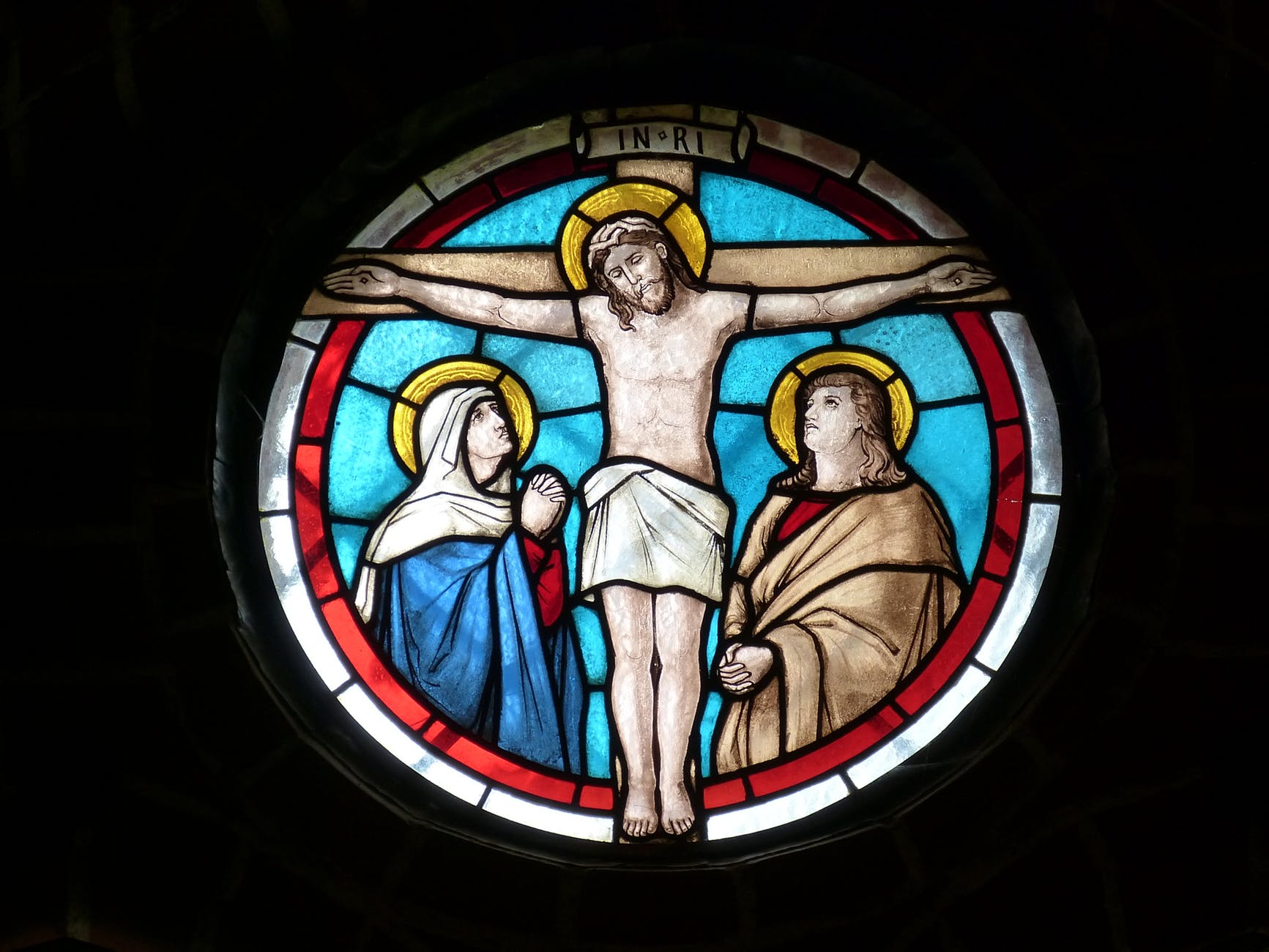
My prayer today is that you would know that even in those moments when your heart is crushed, and your arms ache to hold or be held, that you are not alone; you are not forgotten.  God knows the aching loss of seeing his only son on the cross as he took his last gasping breath before he died.  Jesus experienced the sting of rejection from the people who should have called him brother, and “Father.”  Throughout the Bible, God gave us examples of women (Eve, Sarah, Hagar, Rebecca, Leah, Rachel, Hannah, Elizabeth, Mary and others) who knew the ache of barrenness, rejection, strife, and loss of children.  God saw their pain; he heard their cries of distress and their prayers.  He sees you too.  He hears you.  He loves you beyond anything you can imagine, and beyond where any grief, guilt, or despair can take you.

More than this, he has promised to be close to the poor in spirit, those who mourn, the broken-hearted, and to those who need rest and comfort.  He promises his presence, and he promises to turn our mourning into joy and bring us peace.  He is eager to restore us, to renew our strength, and to reassure us that we are loved with an everlasting love.  God created us in his image– and that includes the image of a mother hen gathering chicks, It includes the image of Mary who wrapped the God of the Universe in swaddling cloths and tucked him into a manger of hay, and who watched as that same God of the Universe died for her.

church-window-church-window-stained-glass-46154.jpeg

God knows the passion, the pain, and the pure love of a woman’s heart– even when “Mother’s Day” hurts.

Jacob Meets His Match–Part two

In the last post, we looked at how Jacob worked for 20 years for his corrupt father-in-law. Jacob has changed from the scheming young man who cheated his brother, lied to his father, and was sent away for his own safety. But that’s not the end of the story…

After 20 years of keeping Laban’s flocks, establishing his family, playing referee to his squabbling wives, and dealing with Laban’s greedy and capricious nature, Jacob is ready to leave. But we have a couple of curious incidents yet to explore in this relationship. In Genesis, chapter 30 https://www.biblegateway.com/passage/?search=Genesis+30%3A25-43&version=NIV we are given a detailed plan by Jacob to develop and increase his flocks. Jacob outlines part of his plan to Laban, and Laban agrees. Jacob’s flocks will be speckled and spotted, while Laban’s will be “pure.” On the surface, it looks like Laban is getting the better end of the bargain, and, as Jacob points out, there will be no way he can “cheat” by claiming Laban’s animals as his. But Jacob’s plan has a couple of twists and turns.

Photo by Quang Nguyen Vinh on Pexels.com

As Jacob follows his plan, he ends up with the strongest and best of the flocks, while Laban’s flocks are weaker. Once again, Jacob uses a clever scheme to advance at the expense of someone close to him. At the beginning of chapter 31, we see the result– Laban and his sons are angry and resentful– they feel they have been cheated, and plan to retaliate. Jacob leaves in the middle of the night with his wives, children, and livestock, planning to return to his father in Canaan. Jacob explains to his wives that his “plan” was inspired by a dream in which God told him what to do to increase his flocks and then told him to return home. https://www.biblegateway.com/passage/?search=Genesis+31%3A4-13&version=NIV

But is Jacob telling the truth? Has he really changed, or is this just another case of Jacob using his wits to get what he wants?

The Bible doesn’t give us direct confirmation, but indirectly, the story seems to back up Jacob’s statements. Though the Bible says that Jacob “deceived” his father-in-law by sneaking away in the night, and not telling him that he was going, it never says that he deceived Laban by separating the flock as he did, or by preparing to return to Canaan. Furthermore, when Laban pursues Jacob, God warns him in a dream to say nothing to Jacob (advice he quotes, but doesn’t actually take)! Laban also confessed (back in chapter 30) that, via divination, he has learned that he was blessed on account of Jacob.

Why am I taking time to dissect this relationship between Jacob and Laban a second time? What else can we learn from this story?

I think there is a great lesson about deception, and how it often backfires. But just as powerful, I think there is a lesson about how God looks beyond our actions to see our heart.

Photo by Pixabay on Pexels.com

Laban was not only Jacob’s father-in-law– he was also Jacob’s uncle. They shared similar character traits– both were ambitious, clever, and driven to take advantage of any “edge” that might be to their advantage. God did not “choose” Jacob because of any of this– but neither did he condemn him for any of it. Instead, God appeared to Jacob, and Jacob responded in awe, worship, and obedience. God didn’t change Jacob’s nature; his drive to succeed, his innovation, his ambition. But he did change Jacob’s heart–Jacob didn’t leave his uncle in ruins, in spite of the treatment he and his family (Laban’s own daughters and grandchildren!) had received. Jacob used his cleverness to build a strong flock, but he also used it to prove to his uncle that he was not the liar or thief he had been labeled back in Canaan. Jacob listened to God in formulating his plans– both his clever plan to build the flock, and the plan to return home.

Laban, on the other hand, had seen the hand of God at work blessing him on account of Jacob. Years before, he had seen the hand of God leading his sister, Rebekah to be Isaac’s wife. He had seen how God had blessed his daughters. He even saw that his ill-treatment of Jacob, Leah, and Rachel led to a loss of God’s blessing. But at no time is there any evidence that Laban ever acknowledged God, worshiped Him, thanked Him, or obeyed Him. https://www.biblegateway.com/passage/?search=Genesis+31%3A14-55&version=NIV

Photo by Pixabay on Pexels.com

In their final encounter, Laban accuses Jacob of theft and duplicity– Jacob confesses that he fears Laban, but then, he gives him a blistering rebuke. Laban’s response is a feeble argument that all Jacob has belongs (or should belong) to him– Laban! “All you see is MINE” (emphasis added). He also claims (even after God tells him to say nothing to Jacob) that he has the power to hurt Jacob. Laban is a controlling user– a bully and a manipulator. Laban is a powerful man who is ruthless in using that power to get what he wants. But all that power is not enough to challenge God– the same God who blessed Laban because of Jacob; the same God who warned him not to act against Jacob. The real power does not belong to Laban or to Jacob. Jacob has been learning this lesson–Laban never will. The most he learns is that Jacob will no longer be under his control and submit to his corrupt authority.

Perhaps you have been in a relationship with someone who is controlling and manipulative. Perhaps they have convinced you that they have all the power to keep you enslaved to their manipulation. There are two essential truths you need to remember:

  • God sees you. He sees the injustices done to you– and your response to them. He sees your heart– even when it is breaking under the weight of oppression. He asks that you trust HIS power and HIS timing as you are going through this deep valley. Abusers thrive on clever lies– that you can’t make it without them; that no one else will help you, love you, believe you…; that their actions are in your best interest…even going so far as saying that they are making sacrifices for you and that you “owe” them. Don’t let their lies overwhelm God’s truth–
  • God desires you to submit to HIM. Even when the road is tough and we don’t understand circumstances, God is making a way for you, just as He did for Jacob. God allowed Jacob to grow his flocks in spite of Laban’s crooked ways– He allowed Jacob to be both the agent of Laban’s success and the instrument of Laban’s downfall. Submission to God does NOT mean abject submission to an abuser or a manipulator. If God has shown you a way of escape (even running away without warning) or shown you a way to flourish under harsh circumstances– listen and obey!

And keep praying to the “God of Jacob!”

Jacob Meets His Match–Part One

The Biblical patriarch, Jacob, is known for many things– He was the son of Isaac and Rebekah, and grandson of Abraham. He was the brother of Esau. He cheated and/or schemed his way into taking both the blessing and birthright that belonged to his older brother. For this, he was sent away to live with his Uncle Laban, and told to choose a wife from among his extended family.

Jacob’s life took a dramatic turn when he left his small (but slightly dysfunctional) family behind to begin this new chapter. Growing up, Jacob had been the quiet one, the one who stayed around the house. This was no longer an option. Jacob faced a long journey, and years of work to establish his own family and career. On the way to Paddan Aram and the house of Laban, Jacob had his first encounter with God– the vision of “Jacob’s Ladder” at the place he would call “Bethel.” There, God confirmed his promise to establish Jacob, increase his family, and bless all people through him. No longer was Jacob a second son with only his wits to help him succeed (or cause trouble)– God had promised to be with him and watch over him wherever he may go! https://www.biblegateway.com/passage/?search=Genesis+28%3A10-22&version=NKJV

With that promise and the hope of finding a welcome, Jacob arrived at the well where his uncles flocks were watered. Jacob would take over the work of herding and watering the many flocks of Laban. He worked for the first month without wages–setting a dangerous pattern. After the first month, Laban “generously” offered to pay Jacob, and even let Jacob set the terms! Jacob demanded no monetary wages; he wanted only to marry his beautiful cousin, Rachel, with whom he was deeply in love.

Photo by Vera Arsic on Pexels.com

Seven years pass– Jacob has worked for almost nothing but the food he has eaten, and the promise of marriage with the daughter of Laban. And in a scene that seems strangely familiar, Jacob is presented with a feast, and his promised blessing– his wife. But Laban tricks him, substituting one daughter for another. Instead of Rachel, Jacob is bound to her sister, Leah.

When Jacob confronts his new father-in-law, he is given an excuse– tradition says the older daughter must be married first. Laban had seven years to explain this to Jacob, seven years to “break the bad news”, seven years to offer Jacob an alternative. Yet Laban chose to deceive his nephew and use his love for Rachel to get seven years of cheap labor. Worse, he chose to string Jacob (and Rachel) along for another seven years. The Bible gives us a clue as to one ulterior motive of Laban– Leah had “weak” or “delicate” eyes. It is possible that she had been rejected by other men or deemed ineligible for marriage. Without a prospective husband, Leah will be dependent on her father for life. But married to Jacob, Leah becomes one less responsibility for Laban. https://www.biblegateway.com/passage/?search=Genesis+29%3A14-30&version=NIV

Photo by Ivandrei Pretorius on Pexels.com

Laban gambles his daughters’ fate on Jacob’s character. Jacob could have cast Leah aside easily and forced her to return to her father’s house a ruined woman. He could have treated her as a servant, rather than a wife– he could have beaten her or “given” her to someone else. And Jacob could have decided Rachel was not worth another seven years of labor, or that he could not trust Laban to keep his word. He could have walked away. He could have taken his anger and frustration out on Leah or on the flocks. He could have returned to his father and started another family quarrel.

But this Jacob is not the same as the one who left Canaan. He serves another seven years, marries Rachel, and then works yet another six years for flocks to call his own. All the time working for a man who is greedy, deceitful, capricious, unjust, selfish, and oppressive. He doesn’t complain, doesn’t rebel, and doesn’t cheat, lie, sabotage or steal from this horrible boss and indifferent father-in-law. Instead, he shows that he has been transformed from the young Jacob who caused so much trouble for his brother and father back home.

Photo by Alexandria Baldridge on Pexels.com

May we choose to submit today to the God of Jacob, and remember that His promise to Jacob extends to all who trust Him– He will not leave us; He will see us and be with us wherever we go!

Blog at WordPress.com.

Up ↑