Just 10 Percent

Bible teacher and author Chuck Swindoll is credited with saying, “I am convinced that life is 10 percent what happens to me and 90 percent of how I react to it. And so it is with you. We are in charge of our attitudes.” When I was younger, I liked this quote, but I quibbled with the numbers. Surely, we are in control of our reactions and attitudes. And our circumstances don’t determine our lives completely. But just 10%?! What about those whose circumstances are overwhelmingly tragic?

I thought of some of my father’s experiences, and it seemed as though what happened to him in four short years should have had a greater impact on his life. During the four short years that my father was in high school (1945-1948), his family experienced at least three tragedies. Dad grew up on a farm. His dad was a dairy farmer, as was his grandfather. Dad grew up expecting that he would, along with his father and brothers, spend the rest of his life as a farmer. But then, everything changed. First, Dad’s oldest brother was drafted into the Army at the very end of World War 2. Though my uncle was not in combat, he was badly wounded in Germany, as his unit was sent in to find unexploded bombs and land mines, and ordered to clear out rubble. Dad had lost one cousin in the war, and several others had come home wounded or changed, but my uncle’s situation was post-war, and unexpected. It meant more work for my grandfather and the two younger sons, even as they were still in school. It meant uncertainty, as they waited for word from thousands of miles away over several months.

Uncle Jack recovered and returned to the farm. But then, on Christmas Eve, there was a house fire. While the family escaped without major injuries, the house was a total loss. Furniture, clothes, pictures, heirlooms, farm records and financial papers– all gone. Dad moved in with his aunt and uncle to continue his education. But two weeks before graduation, his father died suddenly from complications from emergency gall bladder surgery. My father’s world had been turned upside-down in just a few short years and at a critical juncture in his life.

Photo by Pixabay on Pexels.com

However, as I’ve matured and thought about it over the years, those events, among other tragedies and triumphs in Dad’s life, really DID only amount to a small percentage of his life. Even numerically/chronologically, those four years were less than ten percent of Dad’s time on earth. Dad couldn’t control the events of those years. He couldn’t have predicted them, and he couldn’t erase them or go back and undo them. But he chose how to respond and react to those events. He learned from them.
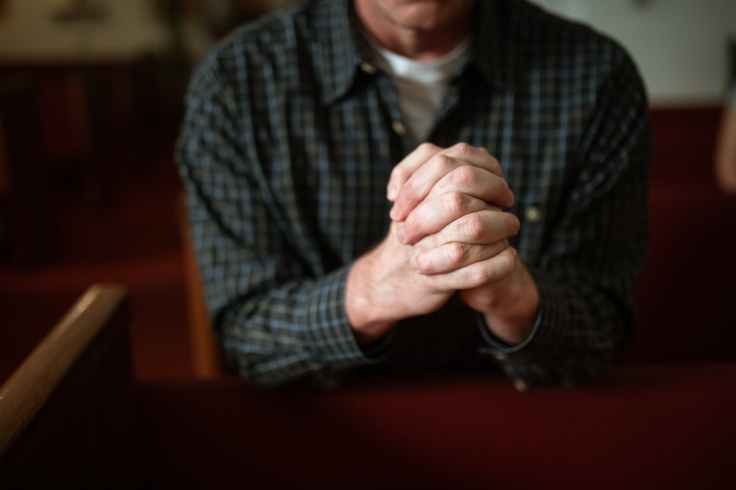
Circumstances in our lives, whether tragic or terrific, present us with choices. Will we turn to God, or away from Him? Will we become better, or bitter? Will we seek to assign blame, or seek solutions? My dad and his brothers were not able to continue the dairy farm their father had built up. Without the records and registration papers for the various cows, without their father’s experience and acumen, without money to upgrade their facilities and equipment, they had to sell most of what their father had built up. Uncle Jack kept the farm land, but he took a second job. Dad was drafted and sent to Korea for his own post-war odyssey, and came home to work at the local feed mill, and later in a factory job. He passed away several years ago, partly as a result of complications from gall bladder surgeries.

My dad’s life was impacted and shaped in part by tragic circumstances. But Pastor Swindoll is right– at least 90 percent of my dad’s LIFE was shaped by his attitude and character. My father was a man of faith and integrity. He cherished his family and his role as a father– partly because of the loss of his own dad; but also because of the lasting legacy his father had passed on. He spoke often of his wonderful memories growing up on the farm. He lost out on his dream of being a farmer. But he also made wonderful memories with the life he chose to pursue off the farm– picnics and vacations, family reunions, family devotions, watching baseball (live or on TV), sharing laughter and tears, and making sure we knew we were loved and protected. He ministered to people in the community, mowing lawns for widows, or visiting shut-ins. He taught us to love music, baseball, and animals. He taught us the value of prayer, reading the Bible, and living a life of faith. Dad could have been bitter. He could have chosen to wallow in self-pity or anger. He could have become obsessed with rebuilding the life he “lost” to circumstances. He could have decided that God had “robbed” him of the future he had expected to have. But he chose to believe that God had a plan for his life; one that was bigger than his boyhood dreams and bigger than his expectations. Dad didn’t rise to great wealth and power. In the world’s view, his life was not a great success. He never became rich or famous; he wasn’t powerful or important in politics or business. But the memories he treasured and the relationships he developed were far more than 10% of his life!

As I get older, and look back on the circumstances of my own past, I am encouraged and challenged to think that they represent only a small fraction of my life. I can’t control many of my circumstances– health setbacks, financial struggles, accidents and tragedies. But I can control my attitude and my response. I wanted to marry young and have children and raise a family. But that never happened. I married late, I was barren, and my step-children were already grown. I wanted to live in a big farmhouse; instead I live in a small apartment. But I would not go back and undo the circumstances that have shaped my life. I have marvelous step-children and grandchildren. I have had opportunities that were only possible because I was single for so long and because I was childless. I have a better appreciation for the family I have– including nieces and nephews and cousins– than I might have had if I had been wrapped up in my own smaller family. Dad taught me to trust God’s plans for my tomorrows. That’s what he did. And I choose to do the same– after all, God controls 100% of my future!

Over There…

Over there, over there,
Send the word, send the word over there,
That the Yanks are coming, the Yanks are coming,
The drums rum-tumming everywhere.
So prepare, say a prayer,
Send the word, send the word to beware,
We’ll be over, we’re coming over,
And we won’t come back till it’s over over there.

“Over There” by George M. Cohan, 1917

In 1917, as war was raging in Europe, songwriter George M. Cohan wrote a song urging young men in America to take up arms and fight in a war that seemed remote and unconnected with American interests (at that time). Americans were reading about the atrocities and massive numbers of dead and dying in the fields and trenches of France, Germany, Belgium, and Russia (among other places), and they were moved to do something bold and dramatic. Little could they imagine the true horror that awaited them in the mud- and blood-covered lands across the sea. Driven by emotion, rage, and a certain optimism that came from being an emerging “world power,” the “Yanks” swept into Europe, and they fought and died to bring an end to “the war to end all wars.”

Of course, they didn’t abolish war– less than a generation later, Europe and Asia were engulfed in World War II. Wars have been almost constant– somewhere in the world– throughout history. Violence, vengeance, terror, torture, oppression and lawlessness well up and spill over all the time. Just over the past weekend, terrorists carried out vicious attacks on Israel, and Israel has responded with vicious retaliation.

The soldiers who went “over there” in WWI and WWII were no safer or braver or smarter than the many thousands who had already died. They arrived, and they were forced to march through mud, suffer through trench warfare, breathe in deadly mustard gas, and risk dying in order to bring peace–just like their European counterparts. Many of them died within days, never knowing the outcome of their sacrifice. And many of them were too young to remember first-hand stories of our own horrible Civil War and the devastation in our own land, or the full-scale destruction of the Napoleonic, Germanic, and Crimean wars of the nineteenth century.

I have seen memes and posts, sent from Americans, asking for prayers for Israel, prayers for Gaza, prayers for Palestine, and prayers for peace in the Middle East. We are moved and horrified by what we see and hear on TV or over the internet. Some of us are moved to pray; some are moved to seek governmental or even military intervention. And this is natural– we can only imagine what horrors have already taken place, and what others await as the violence continues to escalate.

But, in another sense, it is all happening– “Over There.” We see footage of atrocities– families being ripped apart or slaughtered in front of cameras– many recorded precisely to amplify the terror of their actions. But we sit in comfort and safety. We imagine that such viciousness would not happen in our own neighborhood; would not affect our own families–not that it NEVER could; but that it would not– not here; only “over there.” The Middle East, or central Africa, or Eastern Europe.

Among American Christians, there is a dangerous mindset that such atrocities might not happen here because we are a “Christian” nation, or just because of our geographical distance from some of the current “hot spots.” But God has no sacred contract with the United States. There is nothing sacred about the North American continent that God will not allow terror to overwhelm us (We should know this from 9/11)! He does not “owe” us His sovereign protection; we do not “deserve” a pass on hard times, violent conflict, or upheaval. And we must resist the urge to “explain” away such horror. “Oh, they’ve always had conflict in the Middle East.” “Well, if ________(event) hadn’t happened, this wouldn’t have been necessary.” There were many here in America who tried to rationalize the wars of the 20th century by referring to colonialism and reparations– as though war and violence, genocide and massive destruction are rational acts.

We SHOULD be praying for the region of Israel and Gaza– as well as the conflicts going on elsewhere around the world. We should speak out against the horrors and atrocities of terrorism and war– wherever we find them. But we must do so with the humility and humanity that recognizes the following:

  • God is still sovereign– these attacks and retaliations have not taken God by surprise. The chaos and bloodshed break His heart– but they do not change His plans, or alter His Holiness, or nullify His mercy. We can pray with hope and confidence in His timing and judgment, but we cannot pray in our own “righteous” opinions or knowledge. He is God– We are NOT.
  • God sends rain and sunshine on both the “righteous” and the “wicked.” We can take sides in any conflict, but we cannot know God’s full plan or His purposes in letting conflict arise, or letting it continue. Our prayers should reflect that, even as we pray for peace.
  • God’s message to us is the same as always– Trust Him and Obey His Word. Go, and preach the Gospel; make disciples, and BE disciples. Whether we are called to fight, to provide help and support, or even to wait in silence, we need to seek God’s wisdom, not our own.
  • God Loves Israel with an everlasting covenant–that does not mean that God does not love other nations and peoples, but it should cause us to remember that His covenant is with the descendants of Abraham and Isaac– not because they are holier or more worthy of His love, but because God chose them to be an example of His Mercy and His Wrath.
  • God is omnipresent– He is WITH all those who are suffering during this time. He is not willing that any should perish, not willing that any should succumb to hatred and destruction. Yet He is willing to allow for free will and giving people a chance to repent and turn from the path of violence and death. And, if such horrors rise up “over here,” God will still be the same God, the same all-knowing, all-seeing, all-powerful, and all-gracious God He is now, and always has been.

Justice? Or Vengeance?

When violence strikes, I want justice. I want action. I want to make the evil stop.

Just the other day, there was another school shooting in the news. At least six innocent people lost their lives, and another community was ripped apart by grief, shock, and anger.

Photo by cottonbro studio on Pexels.com

But is it really justice that I am seeking? Or is it vengeance?

Justice is permanent. Justice is final. Justice takes time. Vengeance is visceral and immediate. Vengeance is a reaction; a retaliation. Justice, on the other hand, is blind to the emotions of the initial event. Vengeance is driven by emotion. Justice comes through the objective application of the law.

Justice is God’s business. I do NOT understand why or how God allows evil to happen in the first place. It hurts. It doesn’t make sense. It is destructive. But it is the nature of Sin. And Sin infects the entire world. We cannot escape from it. We cannot deny its existence. We cannot put an end to it. We can only follow the arduous and imperfect justice systems that are in place for our community or our country. We cannot achieve perfect justice. But God can. And He has promised to do so– in His time, and in His way. This can be comforting, but it can also be frustrating.

Vengeance is also God’s business. God has emotions, just like we do. But His are always under perfect control. God’s wrath is frightening in its power, and paralyzing in its purpose.

Beloved, never avenge yourselves, but leave it to the wrath of God, for it is written, “Vengeance is mine, I will repay, says the Lord.”

Romans 12:19 (ESV)
Photo by Pixabay on Pexels.com

As imperfect as our systems of justice may be, they are still systems, with order and time to look at the total situation. Vengeance doesn’t stop to count the cost. It doesn’t stop to listen to the full story. It seethes and coils like a rattlesnake, waiting to inject venom into the first victim to cross its path. Human vengeance never leads to peace.

Also, vengeance is limited to the strength and resources of the avenger. If a shooter takes the life of my loved one, my vengeance is limited to the actions I can take. I may kill the shooter; I may take the life of their family members; but I cannot bring my loved one back, nor can I guarantee that the killer will suffer the same amount or the same way I do. Vengeance never looks forward, and it never offers a solution to move forward. It lives in bitterness and anger and discontent.

Photo by Andrea Piacquadio on Pexels.com

As followers of Christ, we are asked to take a stance that seems impossible from a human standpoint. We are asked to keep our hands clean, to keep our minds at peace, and to give our grief, our anger, and our craving for vengeance over to God with no reservation and no option to set the limits or timelines.

To the world around us, this seems weak and even unjust. What if the evildoer “gets away” with her/his crime? What if the victim never gets “justice” in their (or our) lifetime? What if we never “see” justice done? What if God “fails” to avenge us or our loved one? What does the Christian “do” in the face of evil? Nothing?! Fall on our knees and pray?! Offer lukewarm assurances and empty promises?

Photo by Pete Johnson on Pexels.com

The problem with evil– especially shocking violent events– is that we can’t see beyond the immediate shock and pain. That doesn’t mean that there IS no pain or shock or anger or frustration if we choose not to react with vengeance. The pain is still very real, and overwhelming. But we choose to make room for faith that sees the larger picture. Faith makes room to see not just justice, but mercy. It allows us to see the overall tragedy of Sin, beyond our immediate tragedy of an individual act. Faith sees beyond our helplessness to God’s Sovereignty. It sees beyond the present pain to future healing.

Photo by Gvexx on Pexels.com

I pray for the families of the victims in this latest shooting– and for all those who have experienced such violence. And I pray that God will show me what I can do to make a positive difference going forward. I pray for the strength and the faith to let go of hatred, bitterness, malice, and outrage. Finally, I praise God, even in the middle of pain and shock, knowing that He can be trusted to bring perfect Justice– and perfect vengeance–the kind that leads to a peace beyond our understanding. These are not “easy” prayers. They are not blind prayers, or prayers prayed without tears and groaning and questions. But they are real prayers, not empty wishes that I could avoid all unpleasantness or that I could exempt myself (or others) from tasting sorrow, grief or pain. Rather they are prayers that acknowledge that Life is more than struggle; that Love and Mercy are stronger than despair, and God has already won the ultimate victory.

Praying From the Ash Heap

Last week about this time, I was miserable. Feverish, achy, somewhat nauseous, and doubting my own sanity. I had chosen, along with my husband, to get the COVID vaccine– even though we already had the disease earlier this year! We should have a built-up immunity, and medically, there is no compelling reason to get the vaccine and take the risk of suffering all the symptoms I suffered last week.

Photo by Pavel Danilyuk on Pexels.com

Fever and pain have a way of making people cranky, impatient, and rebellious. Especially when they come as a result of trying to do “the right thing.” I was reminded of the Biblical character of Job, who suffered intense pain and suffering through no fault of his own. While my suffering was nothing compared to his– or to many of those who have suffered worse from COVID than I did– it brought some of the same thoughts and complaints. “What did I do to deserve this?” “Why me?” “Don’t you care about my suffering?” “How much longer must I be in pain?” “Wouldn’t it be better if I could just escape this fever and achiness?”

Photo by Klaus Nielsen on Pexels.com

Most of us are not “good patients.” No one likes to suffer, even for a short while. And it can be easy to let our pain determine our prayer life. Our focus narrows to our own circumstances, and how we wish them to change. We tend to go to God with indignation–how could He let us suffer like this?! And yet, even in his indignation and self-centered moaning, Job never lost sight of God’s essential goodness and justice.

Photo by RODNAE Productions on Pexels.com

Job’s friends started out with a sincere desire to offer help and comfort. They heard of his sufferings, left their homes and traveled to visit and comfort their friend. When they arrived, they wept, tore their clothes, and sat, silent and supportive, for seven whole days! (Job 2:11-13) This is in contrast to Job’s embittered wife, who told him to “curse God, and die!” There is no other mention of her throughout all of Job’s suffering–which may have been one of the unheralded mercies of God!

Photo by Tima Miroshnichenko on Pexels.com

Job’s conversation with his friends may not sound much like prayer, but we see into Job’s heart and mind through these conversations. As his friends remind Job that God is Just, and that He punishes those who are wicked and rebellious, Job defends himself. But he also defends God–God IS Just; but He is also merciful and loving. What is happening to Job is not consistent with all that Job has experienced of God. In fact, it seems capricious and unfair. Job’s confusion and his questioning are not only coming from his pain and suffering, but from his surprise at God’s silence and seeming absence. Job’s friends see Job’s circumstances as confirmation of his sin. But though Job is confused by sudden change of circumstances, he is convinced that God will continue to be Just– that He will hear Job’s complaint, even if He has decided against Job for reasons Job may never understand. In fact, Job is still convinced of God’s goodness, declaring that “I know my redeemer lives…I myself will see him with my own eyes…how my heart yearns within me..” (Job 19:25-27), and that “the fear of the Lord–that is wisdom”(Job 28:28)

When we face the “ash heap” of despair, pain, grief, and doubt, whether we are isolated or surrounded by well-meaning friends, we have a choice in our response. We can praise God from the ashes, we can bring Him our doubts and questions. Or we can “curse God and die”– choosing to see only our circumstances and losing sight of who God is (and always has been).

The same God who brought David and I through our bout with COVID brought us through last week’s reaction to the vaccine. He is the same God who has comforted families who lost loved ones to this disease, and who has kept still others healthy throughout this crisis. I don’t know why or how we got sick back in February; I don’t know why I had such a bad reaction last week. I don’t know what the future holds, or what other pains and struggles we may face in the weeks and months ahead. The same God who finally appeared to Job–even though He never answered Job’s questions!–is the same God who holds the universe in His hand. He is the same God who never lost sight of Job. He is the same God who parted the Red Sea, healed lepers and kings, raised the dead, and promises everlasting life with Him.

Photo by Min An on Pexels.com

So I may not know what troubles I will face tomorrow, and I may not have the answers to all my questions. But, like Job, I know that my redeemer lives! I know that whatever happens, God will remain Faithful, Good, Just, and Holy. And one day, “I myself will see him with my own eyes…how my heart yearns within me”!

Blog at WordPress.com.

Up ↑