Pursuing Discipline

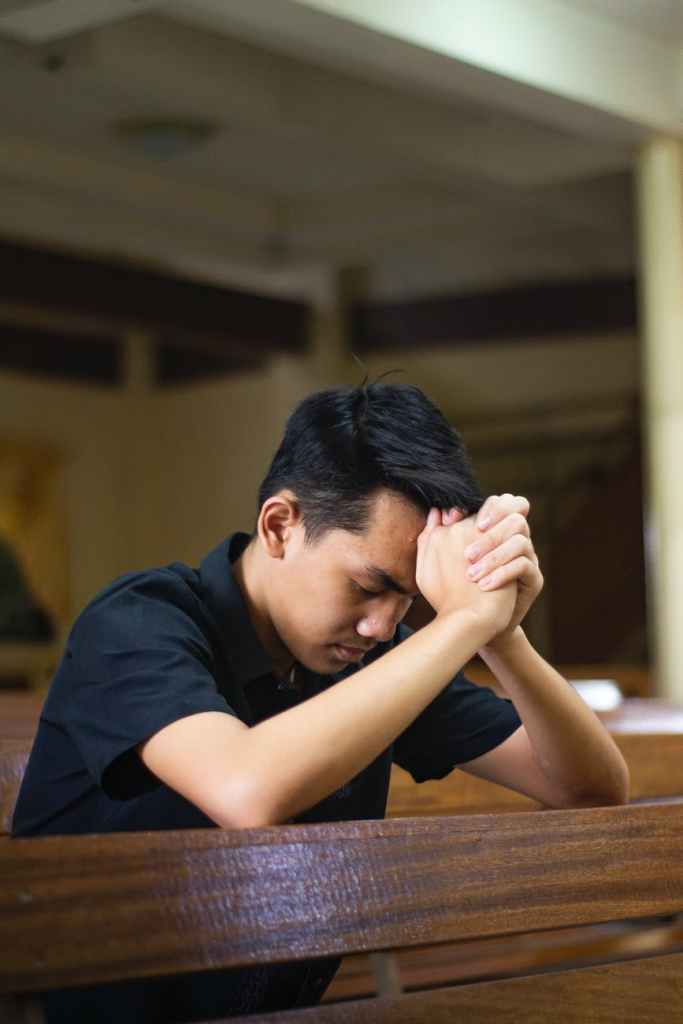
Prayer can take many forms and be many different things. I write about prayer as a pursuit– something done with purpose and with some kind of discipline. Prayer is not meant to be just another discipline in the life of a believer. “Pray without ceasing,” Paul says in 1 Thessalonians 5:17; but this is not meant as an exercise to pursue quantity of prayer over quality, or to spend every waking moment consumed with prayer to the exclusion of all else.

Photo by Karolina Grabowska on Pexels.com

However, we are called to be disciples– and that necessarily entails learning discipline. Any activity taken on without discipline can’t really be called a pursuit. It may be a hobby or an entertainment, but pursuit involves direction, dedication, and focus. And this includes our prayer life.

I want to be very careful in discussing this aspect of prayer, because I believe that there is a real danger of letting the discipline overshadow the purpose of prayer. HOW we pray is never more important than WHY we pray, or to WHOM we pray! But failing to make a plan for prayer can cheat us of the benefits of learning to pray deeply, consistently, and with greater focus.

Photo by Claire Morgan on Pexels.com

With this in mind, I want to spend some time each month talking about ways to “grow” a life of prayer. Today, I want to focus on journaling as a way to pursue prayer.

As with any discipline, the key is consistency. That’s why journaling can really help. Keeping a record every day of things to pray about, of reasons for praise, of people or issues to bring before the throne of Grace, can keep us focused. It can also help us chart God’s answers and His work in our lives and the lives of others. I keep four separate notebooks– one for each quarter of the year. But there are wonderful daily journals and notebooks that can work as well. Some come pre-printed with scripture or prayer prompts for each day. Some people use a pocket calendar or calendar app on their phone or computer. The method isn’t as important as having a planned approach.

Photo by Bich Tran on Pexels.com

I recommend having a daily focus that is consistent from week to week. For instance, on Sunday, I focus on The Church– missions, local church congregations, persecuted churches, evangelism effort, etc.. On Monday, I focus on Family and Friends. Tuesday, I pray for the Government– local, state, federal, and leaders of other nations. Wednesday is Community–community services, schools, businesses, neighbors, even roads and parks and utilities! Thursday is Global Day– things like war and drought, natural disasters and diseases. Friday, I focus on business and finances– my own, and others. Saturday is a day to pray about cultural issues, like abortion, marriage, gender issues, etc. That doesn’t mean that I don’t pray about family members on Thursday, or about a school shooting on Sunday. But it means that I pay special attention to those matters on particular days. Here are some reasons why:

  • God wants to hear from me about everything. But without a plan, I tend to pray about the same few things over and over. I pray about whatever is worrying me in the moment. And only that. God wants me to be aware of all that He is doing. He also wants to remind me that He is LORD of everything; big and small, immediate and long-term, far away or around the corner.
  • God wants me to be consistent and persistent in praying. But that doesn’t mean praying obsessively. Obsessive prayer can become nagging, doubt-ridden, desperate pleas. God listens to our prayers. And we can trust Him, even when we don’t get immediate answers or relief. We don’t stop praying, but we also don’t stop trusting Him for the next step in the journey. God is bigger than just one aspect of my life– no matter how urgent or overwhelming that aspect may seem today. My focus needs to be on God’s sovereignty, and not just my immediate circumstances.
  • God works in mysterious ways. I may not feel like praying for my Governor, or my neighbor, but it may be that my faithful prayer today is what God will use to make changes in some other aspect of my life. Praying for what I have on my list, rather than just what pops into my mind may actually remind me of something else, and help me see how God is working in an area I might have missed otherwise!
  • By practicing this discipline in prayer, I am learning discipline in other areas of my Christian walk.

I read an interesting article on-line the other day about the late Duke of Windsor. Born as the heir to the throne of Great Britain, he was trained from an early age. His father, the King, wanted him to learn discipline and honor, so as to be prepared to assume his role. But Edward despised his father’s training. He found his father to be harsh and critical, prim and joyless. And he rebelled. He took little interest in the affairs of state, preferring to focus on his own pleasure. As his father grew older and weaker, Edward was asked to take on more royal duties. He enjoyed making appearances at parties, but despised many of the other tasks– letter writing, or visiting factories or various parts of the Commonwealth. He refused to settle down and marry, until he met Wallis Simpson, who was twice-married, and separated from her second husband. She was also an American citizen.

Edward VIII wanted to defy the laws and traditions of his own nation in order to marry. When this proved to be contentious, he decided to abdicate his throne, marry Mrs. Simpson, and live abroad. Instead, his brother became the next king (George VI), guiding his nation and the commonwealth through the difficult days of the second world war.

For many years, the myth of a king who gave up his throne to be with “the woman I love” has prevailed. But there was more to Edward’s abdication than blighted love. Edward was not incapable of ruling, but he was unfit to rule it well. His lack of dedication to his duties and citizens became evident in the very first crisis. Those who were working with him during his short reign witnessed his lack of care or concern about paperwork, and his selfish insistence on doing what he wanted to do, and not what was expected of him or of benefit to his people. He was a man without discipline and without a clear moral compass https://www.dailymail.co.uk/news/article-417388/Prince-Charmless-A-damning-portrait-Edward-VIII.html.

Photo by nappy on Pexels.com

The Bible is filled with many examples of kings throughout the history of Israel and Judah who also failed to learn discipline or restraint. Their desire to reap the benefits of their position without learning to fulfill their responsibilities led to the moral, and eventually the physical and political collapse of their nations. They did not make a habit of seeking God, or of listening to His prophets. They sneered at good advice, and defied the laws of Moses and the rules God had given for the kings. Some of them worshiped other gods; some even sacrificed their own children to foreign gods or goddesses. They failed to keep the sacred holidays; they failed to read the Word of God; they failed to pray– except as a last resort!

We often perceive prayer as a personal practice– and it is. But how we choose to develop our prayer life may be tied to how we choose to develop the rest of our lives. We don’t need to be rigid and legalistic about it. But we do need to live– and pray– with purpose, if we wish to follow the example of Jesus and grow in our walk with Him. Not only does it impact our life and growth– it impacts our witness and our influence as well. Pursuing prayer in a disciplined way may have a far-reaching impact on our life and the lives of others– even in the generations to come. For more, see the page Why I Keep a Prayer Journal

The Lord Does Not See Us..

In the sixth year, in the sixth month on the fifth day, while I was sitting in my house and the elders of Judah were sitting before me, the hand of the Sovereign Lord came on me there. I looked, and I saw a figure like that of a man.  From what appeared to be his waist down he was like fire, and from there up his appearance was as bright as glowing metal. He stretched out what looked like a hand and took me by the hair of my head. The Spirit lifted me up between earth and heaven and in visions of God he took me to Jerusalem, to the entrance of the north gate of the inner court, where the idol that provokes to jealousy stood. And there before me was the glory of the God of Israel, as in the vision I had seen in the plain. Then he said to me, “Son of man, look toward the north.” So I looked, and in the entrance north of the gate of the altar I saw this idol of jealousy. And he said to me, “Son of man, do you see what they are doing—the utterly detestable things the Israelites are doing here, things that will drive me far from my sanctuary? But you will see things that are even more detestable.” Then he brought me to the entrance to the court. I looked, and I saw a hole in the wall. He said to me, “Son of man, now dig into the wall.” So I dug into the wall and saw a doorway there.And he said to me, “Go in and see the wicked and detestable things they are doing here.” 10 So I went in and looked, and I saw portrayed all over the walls all kinds of crawling things and unclean animals and all the idols of Israel. 11 In front of them stood seventy elders of Israel, and Jaazaniah son of Shaphan was standing among them. Each had a censer in his hand, and a fragrant cloud of incense was rising. 12 He said to me, “Son of man, have you seen what the elders of Israel are doing in the darkness, each at the shrine of his own idol? They say, ‘The Lord does not see us; the Lord has forsaken the land.’” 13 Again, he said, “You will see them doing things that are even more detestable.” 14 Then he brought me to the entrance of the north gate of the house of the Lord, and I saw women sitting there, mourning the god Tammuz. 15 He said to me, “Do you see this, son of man? You will see things that are even more detestable than this.” 16 He then brought me into the inner court of the house of the Lord, and there at the entrance to the temple, between the portico and the altar, were about twenty-five men. With their backs toward the temple of the Lord and their faces toward the east, they were bowing down to the sun in the east. 17 He said to me, “Have you seen this, son of man? Is it a trivial matter for the people of Judah to do the detestable things they are doing here? Must they also fill the land with violence and continually arouse my anger? Look at them putting the branch to their nose! 18 Therefore I will deal with them in anger; I will not look on them with pity or spare them. Although they shout in my ears, I will not listen to them.”

Ezekiel 8 (NIV) via biblegateway.com

We make a big fuss in our culture about privacy. What I do in my own home, with my own life, in my own time, is private. And, for many of us, our privacy is sacred. We rage and fight and panic about who may be invading our privacy– listening in or watching us when we least expect it.

Photo by Andrea Piacquadio on Pexels.com

I must admit, I don’t like the idea of anyone spying on me or listening in on my private moments. I especially don’t like the thought of someone manipulating or using my private words, images, or ideas without my knowledge or consent.

Photo by Rene Asmussen on Pexels.com

But there is a danger in our quest for privacy– we are inclined to believe that anything we do in private CANNOT ever be discovered; that we are safe to do whatever we please, regardless of the consequences. The internet has made this idea even more dangerous–we can be private and anonymous behind the screen. We can say things we know we shouldn’t; we can view things we would be ashamed to acknowledge watching; we can explore fantasies, mask our inadequacies, pretend to be who and what we are not; all behind the “safety” of the screen.

Photo by Andrew Neel on Pexels.com

And this is nothing new. In Ezekiel’s day, the moral, legal, political, and religious leaders of the day thought they were “safe” to indulge in idol worship behind closed doors. But more than that, they believed that God would never see as they practiced divination, witchcraft, ritual prostitution, violent orgies, even child sacrifice! They had built hidden rooms where they practiced vile rites and indulged in the very behaviors they taught others to avoid. Worse, they condemned and vilified others when they “got caught” doing the same things they practiced with impunity. And when prophets came to them with warnings–the very words of God– they had them ruined, imprisoned, tortured, and killed.

Photo by Oleg Magni on Pexels.com

In the eighth chapter of Ezekiel, God shows his prophet a vision. He allows Ezekiel to “go behind closed doors” and see the priests and leaders at their worst–over and over again–secret rituals, detestable practices, flagrant disobedience, arrogant rebellion…And all of this was happening as the nations of Israel and Judah had collapsed, and many thousands had died from war, disease, and starvation. People had been sent into exile– defeated, starving, enslaved. Yet their leaders were keeping up an image of righteousness and proud endurance, instead of turning to God for help and hope.

Photo by Jigar Maru on Pexels.com

God was very clear–Jerusalem WOULD be captured and destroyed. Babylon WOULD take God’s people captive and send most of them to the sword or to exile. Defiance and pride– especially relying on the great victories of the past– would not save them. Rebellion and violence would not hold back God’s judgment.

Photo by Andrea Piacquadio on Pexels.com

The same is true today. It is easy to write about praying and walking closely with God–I’m hidden behind a screen. I can sound righteous and Godly for a few minutes three times a week. And it is easy to point fingers and call out the bad behavior of others behind the anonymity of a computer screen. We need to speak up, speak out, and defend the cause of those who are oppressed, abused, enslaved, and silenced. But we also need to beware that we are not crying, “Shame on you!” from a locked closet, while waving banners or buying merchandise supporting the abusers.

And God sees all of it. What we may find shocking and reprehensible, God has already seen through to its conclusion! God WILL bring judgment and punishment for those who shed blood and bring violence and injustice. But God also sees what I do in the watches of the night; when I’m alone with my thoughts; when I’m not on my guard against what I view on Facebook or YouTube. God knows what celebrity gossip I crave, or what I’m “watching” on eBay. He knows if I am ignoring or justifying evil happening all around me. He watches over my shoulder when I’m reading that new novel, or I’m driving down the road (hopefully not at the same time!), or when I’m wallowing in self-pity or jealousy or anger.

Photo by Ivan Samkov on Pexels.com

When I read about Ezekiel weeping over the behavior of Israel’s leaders, I am convicted. How often do I weep and seek God’s mercy over the behavior of our leaders–all of them, and not just the ones I voted for? Or do I just fume and post about how awful “they” are (whoever “they” my be) and how “they” need to be punished? How often do I ignore my own bad behavior? I may not have a “hidden room” filled with detestable images and idols, but God is still watching how I react to challenging times. He knows if I am obeying His voice or merely pretending to follow Him while leaning on my own understanding or my own image of self-righteousness. He knows if I have made money, politics, status, safety, health, or even “religion” into idols, hoping that one or more of them will carry me through tough times. He knows if I am condemning others for their bad behavior, while hiding or justifying my own.

I want everyone to see me when I am noble and righteous–but I need to see myself as He sees me every day–His much-loved, and ever-needy, child.

Photo by Brett Sayles on Pexels.com

Father, may I be quick to remember that You ALWAYS see me– and that You ALWAYS want me to see You as well. Help me to see You in the middle of challenging times. Help me to see You when I interact with others. Help me to obey You in the private moments when no one else is watching.

What Is It Worth?

My husband and I own a small shop. It’s actually a two-part shop, with used items, antiques and collectibles in the front, and amateur radio gear in the back. We have a few “new” radios, books, and other items, but most of our items are second-hand. This sometimes creates a problem in pricing.

Photo by Skitterphoto on Pexels.com

New items usually come with a manufacturer’s recommended price, based on what the item costs from the factory or warehouse. Sometimes, price is based on what we pay at a wholesaler. But used items aren’t coming from a wholesaler or a factory warehouse. Often, we pick up pieces from an estate sale or another shop like ours. Sometimes, we are selling items that were salvaged or even donated.

Photo by Leticia Ribeiro on Pexels.com

So how do we determine a price on a used item? For that matter, how are prices determined for some of the new items that we sell? Of course there are a few guidelines:

  • Basic costs– what did it cost to produce the item (or procure the item)? How much for the materials? Labor? Shipping? Packaging? Also, what are the basic costs of running the store– will the sales of these items be enough to cover expenses like the light bill and rent and miscellaneous supplies as well as covering the cost to replace them?
  • Supply and Demand– how rare is this item? How easily can someone find a similar item at a similar price? How easily can we find more of this item (or something similar)? Do we have “too many” of the same item? Which items are selling “too fast” at a lower price?
  • Quality– some items involve more craftsmanship. Some contain sturdier or more expensive materials–real copper wiring, metal gears instead of plastic, silver v. silver-plate, hand-carved instead of mass-produced, etc.
  • “Aesthetics”–Antiques are often valued for their condition. But it varies from one piece or type of piece to another. Glass and ceramics are more valuable if they are unchipped. Old magazine ads carefully cut out and attractively framed can be more valuable than the entire magazine from which they came. Certain colors of glass are worth more than others. Wooden items that have been repainted, repaired, or refinished can actually lose value over those left in their original condition. Some items sell better with a “patina,” while others do better if they are polished and clean.
  • Ultimately, however, the items in our store are “worth” only what we decide, and what our customers are willing to pay for them. If we are “wrong” about the worth of an item, it may sit on the shelf collecting dust– either because we have priced it too high, or because the price is so low that a customer mistrusts our judgement about the quality of the product.
Photo by cottonbro on Pexels.com

Why am I writing about this on a blog about prayer?

We have a tendency to place values on people and situations, as well as items. Sometimes, we think it “isn’t worth it” to pray about a minor problem that we face, or someone we don’t know very well, or don’t think of very highly. Perhaps we think that our requests are too ordinary, or too small, or too chronic to bring before God. Lost keys; that lingering pain in the elbow; the barking dog that keeps us up at night; the sibling that hasn’t spoken to us in 15 years–we wonder if they are worth making the effort (or continuing to make the effort).

Photo by Meruyert Gonullu on Pexels.com

But, in God’s economy, every person–and each moment in each person’s day–is of enormous value! God uses the small things of life to make a big impact. Every prayer that is lifted to God from a sincere heart and with even the tiniest grain of faith can have unbelievable consequences. There are hundreds of examples throughout the Bible, and hundreds of thousands of other testimonies to illustrate this truth The same is true for “big” prayers– the impossible situations– that plague us. War, famine, disease, corruption and injustice are NOT too big for God to handle. Just because they are too big for us to solve (or even understand) does not make them too big for us to pray about, or our prayers too little to make a difference.

Photo by Tima Miroshnichenko on Pexels.com

I was reading in 2 Samuel 16 the other day. King David faced betrayal– from his son, Absolem, and also from one of his counselors, Ahitophel. David prayed– almost as an afterthought– that Ahitophel would give Absolem bad advice. And he did! But God also prompted David to send another counselor, Hushai, as a secret agent. At first, Absolem followed the advice of Ahitophel without question, and it seemed to work in his favor. But at a crucial moment, Absolem hesitated and asked for a second opinion. Ahitophel’s advice, according to the writer of 2 Samuel, was actually the better advice. But Absolem chose to follow the clever but ineffective advice of Hushai instead! David’s prayer was answered, and even when it seemed that David’s prayer “wasn’t enough,” God protected David, frustrated Ahitophel, and brought judgment and punishment to Absolem, ending in his death. There is no record of either Absolem or Ahitophel praying at all during the rebellion.

Photo by Ian Panelo on Pexels.com

God won’t judge the quantity or quality of what we pray for, or who we pray for, or how we pray– He values it all. Prayer is truly “priceless!”

The Whale and the Worm

Photo by Daniel Ross on Pexels.com

God keeps calling my attention to the book of Jonah. It’s not a very lengthy or in-depth book. It has only four chapters, and it tells a single story of the prophet Jonah and his mission to preach to the people of the Assyrian capital of Nineveh. But it is filled with lessons about prayer, obedience, gratitude, repentance, and Grace. https://www.biblegateway.com/passage/?search=Jonah%201&version=NIV And we learn four important things about God: He sends, He saves, He sustains, and He suspends.

  • FIrst: God sends. The book of Jonah reminds me of reading Ernest Hemingway. It is compact, terse, and to the point. The very first verse reads, “The word of the Lord came to Jonah, son of Amittai.” There is no other intro, no back story, no conversation between Jonah and God… Yet there IS a back story: elsewhere in the Bible, Jonah is mentioned as a prophet of God. Jonah wasn’t an unlikely choice to take a prophecy to Nineveh. He wasn’t new to the whole “prophet” gig– he wasn’t a farmer or a fisherman or a young shepherd boy. He was an experienced seer and prophet.
    I mention this because God sends who HE wants to send. He didn’t have to give this message to Jonah. And when Jonah ran away, God didn’t have to chase him down and give him a second chance. There were other prophets who might have delivered the message without any fuss or drama. There were priests, soldiers, merchants, and shepherds who could have done the job (and likely done a better job!) The book of Jonah reminds us that God’s purposes are often multi-faceted. God’s purpose in sending Jonah wasn’t just about the Ninevites– He wanted to work in and around and through Jonah to reveal His character. He also sent the big fish (the Bible never says it was actually a whale), and later a gourd vine and a worm– all to minister to Jonah. They all appear in the story, but only to Jonah, not to any of the others!
    God will send us–or He will send people (or big fish) TO us. He will send people and things to bless us; and to test our patience! But God sends us what is meant for our good and His glory.
  • God saves: Each chapter contains an example of God’s salvation– In chapter one, God not only saves Jonah from drowning by sending the big fish; He also saves everyone else on the ship. An entire crew of hardened seamen are stunned by God’s power and grace. In chapter two, God rescues Jonah from the fish’s belly, and gives him another opportunity to fulfill his mission. In chapter three, God sees and hears the pleas of the Ninevites–He withholds His judgment and showers the city with amazing Grace. In the final chapter, Jonah wants to die (twice!), yet God provides comfort, compassion, and correction in response. At the end of this book, in spite of storms and raging seas, prophecies of doom and destruction, dangerous journeys, scorching sun, and disobedience, rebellion, and evil– NO ONE DIES!
Photo by Scott Webb on Pexels.com
  • God Sustains: God could have rescued Jonah without the “whale.” He could have calmed the storm. He could have caused Jonah to walk on water. He could have created a path of dry land for Jonah to walk on… But God caused Jonah to be in the belly of the fish for three days– a circumstance that Jesus used to foretell His own death and resurrection. God sustained Jonah even in the midst of his bitterness, anger, depression, and rebellion. He gave Jonah a miraculous rescue– one Jonah could have shared with the Ninevites to illustrate God’s Mercy. I find it curious that the King of Nineveh invites everyone to fast and pray, saying “Who knows..” Jonah KNEW! He was a living example of God’s Grace and Power. He could have shared this wonderful news with the people of Nineveh, yet he chose to share only the message of God’s wrath. Jonah had the biggest “fish story” in history, and he chose to keep it a secret! In spite of this, God sustained Jonah’s life– against Jonah’s own wishes! How has God sustained us in moments of crisis, doubt, and infidelity?
  • God Suspends: What does that mean? Well, in this book, it means several things. God suspends His judgment against the city of Nineveh–in later Bible books, we see that the people of Nineveh and Assyria return to their evil ways. They do not turn completely from their worship of idols and their detestable practices. Within a couple of generations, they experience the total destruction that Jonah predicted. God is Gracious and Merciful; He is also Righteous and Just. Jonah’s mistake was to despise God’s Mercy toward his enemies; the Ninevites’ mistake was to forget God’s Holiness. But God also suspends Jonah’s life– three times Jonah expresses a passive desire to die: he asks to be thrown into the sea (he does not know or expect that God will rescue him); he asks to die after the Ninevites are spared; and he asks to die when the worm destroys the gourd vine. But Jonah’s desire to die goes unfulfilled. God’s purpose is not that Jonah should die, but that Jonah should learn to LIVE and love: love his life; love his God (better); and love his former enemies. Sadly, we never find if Jonah ever learned his lesson. The author of Jonah leaves us “suspended” as well.
Photo by Artem Bali on Pexels.com

Our God sends “whales” to rescue us from our rebellious wandering, and “worms” to take away those comforts that keep us from seeing our real needs. He saves us, even though we don’t deserve a second (or third or thirtieth) chance. He sustains us, even in times of failure. And He suspends us, withholding His wrath and giving us loving compassion and correction.
Jonah is not a very lovable character– and that is a great comfort to me in times when I am faced with my own failures and missed opportunities. The people of Nineveh were despicable! They deserved justice and judgment. But God loved Jonah; and He loved the people of Nineveh. And He loves us– more than we deserve; more than we can imagine. He loves the unlovable. He loves the despicable. He loves those who cannot love themselves, and those we are convinced we cannot love.

Photo by Luis Quintero on Pexels.com

May we learn a lesson today from the “whale” and the “worm”– we can trust God for Mercy and for Justice. We can trust Him to save and sustain us; to send us and suspend us. And we can rest in His love and care–whether we find ourselves in a raging sea or caught in the scorching heat, or sent on a mission that tests our heart and soul to its limit.

Where Can I Hide?

Psalm 139 New King James Version (NKJV)

For the Chief Musician. A Psalm of David.

139 O Lord, You have searched me and known me.
You know my sitting down and my rising up;
You understand my thought afar off.
You [a]comprehend my path and my lying down,
And are acquainted with all my ways.
For there is not a word on my tongue,
But behold, O Lord, You know it altogether.
You have [b]hedged me behind and before,
And laid Your hand upon me.
Such knowledge is too wonderful for me;
It is high, I cannot attain it.

Where can I go from Your Spirit?
Or where can I flee from Your presence?
If I ascend into heaven, You are there;
If I make my bed in [c]hell, behold, You are there.
If I take the wings of the morning,
And dwell in the uttermost parts of the sea,
10 Even there Your hand shall lead me,
And Your right hand shall hold me.
11 If I say, “Surely the darkness shall [d]fall on me,”
Even the night shall be light about me;
12 Indeed, the darkness [e]shall not hide from You,
But the night shines as the day;
The darkness and the light are both alike to You.

13 For You formed my inward parts;
You [f]covered me in my mother’s womb.
14 I will praise You, for [g]I am fearfully and wonderfully made;
Marvelous are Your works,
And that my soul knows very well.
15 My [h]frame was not hidden from You,
When I was made in secret,
And skillfully wrought in the lowest parts of the earth.
16 Your eyes saw my substance, being yet unformed.
And in Your book they all were written,
The days fashioned for me,
When as yet there were none of them.

17 How precious also are Your thoughts to me, O God!
How great is the sum of them!
18 If I should count them, they would be more in number than the sand;
When I awake, I am still with You.

19 Oh, that You would slay the wicked, O God!
Depart from me, therefore, you [i]bloodthirsty men.
20 For they speak against You wickedly;
[j]Your enemies take Your name in vain.
21 Do I not hate them, O Lord, who hate You?
And do I not loathe those who rise up against You?
22 I hate them with [k]perfect hatred;
I count them my enemies.

23 Search me, O God, and know my heart;
Try me, and know my anxieties;
24 And see if there is any wicked way in me,
And lead me in the way everlasting.

We can’t hide from God. We can ignore Him, deny His existence, even rage against Him. But we cannot escape His Spirit. We cannot hide who we are or what we think from Him. And we cannot flee from His goodness or mercy; we cannot run beyond His ability to restore us, heal us, or save us. He knows the worst about us, and He calls us to the very best we can be. Which begs the question– Why would we want to escape from God? Why do we try to hide from Him? What is it about God that would give us a reason to flee?

Photo by EVG photos on Pexels.com

There are many terrifying things in this world–right now, we are faced with a global pandemic; a plague that brings sickness and death. Now THAT is something worth hiding from! Many of us are “sheltering in place,” trying to hide out until it is safer to interact with others. The disease seems to be everywhere–but it really isn’t– it cannot go where there are no hosts to carry the virus. It can be spread wherever we find other people who are infected, or where the virus lingers on surfaces. The disease does not seek us out or come searching for us if we stay put. Unfortunately, “sheltering in place” comes with its own dangers. We cannot survive long in a bubble. We are interdependent. We need food, medicine, fresh air, and interaction with family and friends to survive and thrive. Hiding away from a tiny virus is only effective in the short term. And there are other diseases from which we cannot hide– cancer and heart disease, and even other viruses that are active, but haven’t been traced or identified.

Photo by Nandhu Kumar on Pexels.com

There are other terrors that we try to escape by fleeing– hurricanes, fires, floods, war, etc. And we may escape immediate danger from such terrors–if we have advance warning or if we have the means to escape. But there is no place of absolute safety: no place on earth where such dangers cannot exist. There is no Utopia– no earthly dwelling, community, or settlement where there is only goodness, harmony, peace, and plenty. There is no place to hide, and no place of escape.

Photo by Johannes Plenio on Pexels.com

It is understandable that we should want to hide from danger or flee bad things, even if such escape is impossible in life. But why should we wish to hide from a loving and merciful God? Is He as bad as COVID-19? Is He as threatening as a hurricane or an air raid?

Certainly, He is as powerful (and even more) than any of the dangers we fear. God has the power, and the authority, to judge, punish, and destroy all who live on the planet. He has the power to obliterate all of His creation, and none of us could stop Him or challenge His right to do as He pleases. And if we should challenge God’s authority, we would be wise to want to run away, hide, or escape the consequences of such foolishness.

Photo by Luis Aquino on Pexels.com

Adam and Eve tried this long ago. After they sinned by eating the Fruit of the Knowledge of Good and Evil, they hid from God. And God’s response was not instant obliteration. He didn’t storm through Eden, destroying everything in His righteous anger before torturing Eve, making Adam watch in horror before He killed them both. Nor did God negate His Holiness by changing the consequences of sin. Death DID enter creation– along with disease, pain, guilt, envy, hatred, lying, greed, destruction– they all exist, persist, and continue to plague all of God’s creation to this day.

But God’s first act–His first words to Adam and Eve after their rebellion– was to seek their presence. God came to walk in the Garden; to meet with Adam and Eve. He called out to them, “Where are you?” He wasn’t asking because He didn’t know that they were hiding. He knew where they were, and why. And even in assigning their punishment, God did not throw extra guilt and recrimination at the fallen couple. He didn’t shout, “How could you do this to ME?!” “How dare you!” “I wish I’d never made you!” “You’re worthless. What a waste of time and energy. Get out of my garden! I never want to see you or hear from you again!”

Photo by Josh Willink on Pexels.com

God’s Spirit is always seeking reconciliation, communion, restoration, and love. God is Holy, and God is Merciful. Holiness desires Whole-ness. Mercy desires Peace. God pursues us, not because He wants to infect us or devour us or destroy us– God wants to hold us, heal us, and give us Life.

The danger is not in God’s presence, but in our ability to reject it. God is everywhere, but not everyone will see Him, accept His authority, or welcome His mercy. Some will spend a lifetime hiding and fleeing, only to discover that God will, reluctantly, give them what they want– an eternity without Him. Without Grace, without Love, without Peace, without Wholeness, without Hope.

Photo by Mitja Juraja on Pexels.com

That is a fate far worse than waking up to “shelter in place,” or even suffering through a virus that can separate us from loved ones for weeks, months, or even a short lifetime.

There are many things worth fleeing in life– But we can find joy, hope, and peace in the presence of a Loving and Omnipresent God.

Photo by Simon Matzinger on Pexels.com

…And I Am Not.

In my last post, I talked about “When God Doesn’t Answer..” Of course, there are times when God seems silent, and I spoke about a couple of times when that was true in my life. God’s timing and wisdom are reminders that He is God– and I am NOT.

I want to revisit that theme for a bit. I was reading the post and realized that I spoke of the waiting and hoping and God’s faithfulness in sending an answer in the person of David, who became my husband. I spoke of God’s ways being higher and better than our ways– and they are. But I left out one aspect of God’s character. Forgiveness.

Photo by Josh Willink on Pexels.com

It is tempting, and I gave in to the temptation, to focus on my feelings, and my positive actions during those years of waiting– taking good advice and making good use of my time as a single to volunteer and serve. But I also did plenty of wallowing in self-pity, of questioning God’s goodness and His timing. I slipped into bad habits that I had to break as a married woman– selfish habits and indulgent thought patterns. And I find myself battling new bad habits, slipping back into depression and isolation, or taking for granted the blessings of married life.

I don’t say this to negate God’s goodness in answering my longing for a husband and family, nor to suggest that God’s long silence and eventual answer were any less gracious and loving. Instead, I want to thank Him for being patient with me, for extending both mercy and grace in His good time, and in spite of my bad behavior.

Photo by u0410u043du043du0430 u0412u0430u0441u0438u043bu044cu0435u0432u0430 on Pexels.com

God’s mercy and his goodness surround us–especially when we don’t see them. When we doubt His presence, when we accuse Him of not caring, when we pout, and posture, and resent the road He has us traveling. God’s word is full of stories of people who waited– some patiently, some not so much– and people who wandered, and even rebelled. And many of them perished without ever seeing God’s answer or without repenting. But I cannot think of any instance where someone who sought God’s face or His forgiveness and was turned away– EVER. God followed the grumbling nation of Israel for forty years, His anger breaking out against them multiple times, but He remained faithful to His promise to bring them to the Promised Land. https://www.biblegateway.com/passage/?search=Deuteronomy+1&version=NCV God went so far as to remove His Spirit from King Saul, but He allowed Saul to continue to reign, even when Saul tried to kill God’s anointed one and his own son-in-law. https://www.biblegateway.com/passage/?search=1+Samuel+19-24&version=NIV God followed David from his days as a shepherd boy through his reign as Israel’s king– in spite of David’s sins, in spite of the drama and chaos of his household, in spite of betrayal by his own sons and generals.https://www.biblegateway.com/passage/?search=1+kings+2%3A1-10&version=CSB God chased down Saul on the road to Damascus– after Saul had hunted and hounded faithful followers of the Messiah.https://www.biblegateway.com/passage/?search=acts+8%3A1-3%3B+9%3A1-18&version=ESV

God is patient and faithful with us– whether we have grumbled at His timing, or turned our back on Him for a season, or actively rebelled against His sovereignty and kindness.

Photo by Artem Beliaikin on Pexels.com

When God seems silent, we often forget that He also remains silent in the face of our grumbling. He withholds His righteous judgment, giving us ample opportunities to rethink, repent, and return. His silence reminds us that He is God– and we are not. He does not owe us an answer– nor does He owe us a second chance. But He will give us both in His time. Because He is God– in His sovereignty, in His boundless Love, and in His mercy–and I am not. I am not God. I am the (sometimes) grateful recipient of all that He gives.

May I be grateful today, not just for the blessings and gifts and answered prayers, but for the patience, grace and mercy I don’t deserve.

Blog at WordPress.com.

Up ↑