More Than the Watchmen Wait for the Morning…

The author of the 130th Psalm cries out to God for mercy. He pleads for God to hear his voice and be attentive to his cry. https://www.biblegateway.com/passage/?search=Psalm+130&version=NIV

But then, he does three important things: He recounts what he knows of God’s character, he waits, and he hopes.

Sometimes, when I cry out to God, I expect God to reveal Himself to me with an immediate and positive answer. And, occasionally, God does answer prayer with a dramatic and instant result. But most of the time, God answers first with silence. Not because He is cruel or uninterested or too busy to acknowledge my cry. He gives me time to reflect– on His nature, and the nature of my need. And He gives me time to find peace and trust in the middle of the storm.

Photo by Collis on Pexels.com

I spent much of yesterday crying out– I am frustrated with the uncertainty surrounding COVID-19. I am angry at the misinformation and conflicting reports; I don’t know what to believe about staying put or venturing out–is it allowed? Is it safe if I wear a mask? Can I go to the park or beach? When can I re-open my shop? Can I make the payments until it can be re-opened? When can I safely see my family and friends again? Will it be safe to hug them? And I am frustrated with the way I see people treating each other– yelling, screaming, eager to condemn everyone else’s behavior while justifying their own. And I find myself saying and doing the same thing from the relative safety of my computer screen– after all, I can’t yell at anyone to their face if I can’t leave the house, right? But I can let my 300 closest friends know how heartless and selfish they are if they don’t see things my way! They’re KILLING people! They’re betraying family members! They’re living in fear! They have no compassion! And I cannot make them do what I think is right!

Photo by Matej on Pexels.com

But when I stop the crying and carrying on, and justifying, and finger-pointing; when I stop to remember who God is, and who I am, I remember that God IS attentive. And not just to my frustration, but to everyone’s needs– the person who is living in terror; the person who is suffering pain, grief, agony, and loss; the person who is defiant and uncaring and angry. God is attentive, but He is also overflowing with mercy. If He kept records– if He only looked upon mankind to find evidence of our guilt or to pour out shame and punishment– who could stand? Who would have the authority to tell God how He should direct the universe? Who could say that they were more capable of dispensing life and death, health and sickness, mercy and justice? Would I? It is no little thing to cry out to the God of the universe. And yet, God listens attentively to our every cry. Especially when we cry out to Him for mercy, for wisdom, for peace, and for healing. His answer may not look like what we expect, but He never fails to listen in Love.

Photo by Pixabay on Pexels.com

And as I contemplate God’s power, wisdom, compassion, grace, and authority, I can wait. And that doesn’t mean that I sit in a lotus position and stop seeing the pain and chaos and death. Or that I count to ten and hold my breath. Or that I set a timer and think happy thoughts for 20 minutes. No. I wait like a watchman– like a sentry waiting for whatever may happen– alert and ready to do my duty. And I wait like a watchman for the dawn– for the light of day to see clearly; for the end of my watch, when there will be rest.

This season is difficult, but it will end. It will give way to a new dawn– with new challenges! But just as the Psalmist tells Israel, I know I can put my hope in the Lord, for “with the Lord is unfailing love and with him is full redemption (v. 7). If I cry out, knowing that God is willing to listen and able to save, but I don’t stand firm in hope, I can still be swept away by the winds of doubt and the current of angst.

Photo by Luis Quintero on Pexels.com

Cry out–then reflect, wait, and hope.

Your Life Matters

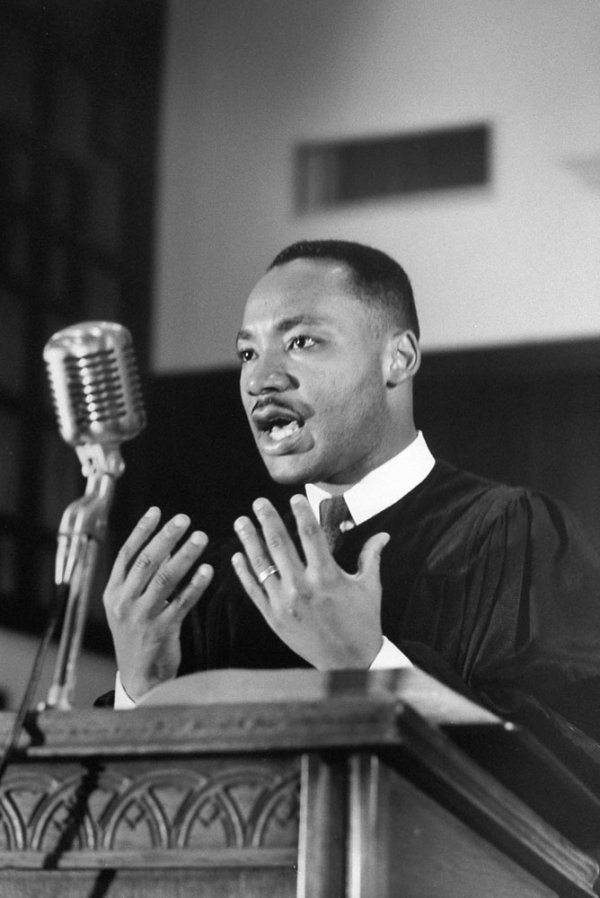
Last week in America, we marked two important dates. We celebrated the birth of a great hero, patriot, and statesman, Martin Luther King, Jr. And we marked the 47th anniversary of the Supreme Court decision, Roe v. Wade, which effectively legalized abortion across the land.

The life of Dr. King was marked by hardship, oppression, violence, and assassination at the age of 39. Dr. King was a brilliant student and gifted speaker. He led peaceful protests and civil rights marches calling for justice and equality under the law for all people. More than 50 years after his death, there are still issues of racial discrimination and racial tensions in this country. The disproportionate loss of life and liberty among blacks in urban areas has led to a new round of protests, some of which go under the name of “Black Lives Matter.” There is a feeling that, especially with the police and government officials, black lives don’t matter– that black lives are devalued and dismissed as less deserving of respect and protection.

Photo by Collis on Pexels.com

In light of this, there has been “push back” from those who argue that “ALL Lives Matter”, or that “Blue Lives Matter” (blue for police who have become victims of mob violence and angry crowds who feel that the police are responsible for racism and corruption). The argument is that groups like “Black Lives Matter” are not so much about bringing awareness or promoting justice, but are meant to divide us as a nation and exact revenge for past offenses, slights, and perceived slights.

There is speculation about what might have happened if Dr. King had not died when he did. Would he have continued leading non-violent protests? Would the Civil Rights movement of the sixties gained more momentum under Dr. King’s leadership? Would our nation have achieved a new dawn of equality, freedom, and unity, greater and stronger than what we have seen in the last five decades? Would Dr. King be pleased with the progress we have made, or ashamed? Did his life make a difference? Yes. But was it “enough” of a difference? Does it matter to a young person of color growing up in Baltimore or Chicago that Dr. King spoke out, marched, and died for a dream that seems frozen in time and unfulfilled?

Photo by nappy on Pexels.com

Just two days after our nation wrestled with that uncomfortable memory, we marked one even more controversial. In 1973, our Supreme Court ruled that no state could prohibit abortion. The decision also limited the ability of states to restrict abortion. Since that decision, an estimated 60 million Americans http://www.numberofabortions.com/ (not to mention infants around the world) have been denied the right by legal practice to be born. This is roughly equal to the number of people killed in World War II, though estimates of both numbers vary by source (https://www.nationalww2museum.org/students-teachers/student-resources/research-starters/research-starters-worldwide-deaths-world-war)

Photo by Pixabay on Pexels.com

In looking at abortion, we see millions of lives who were determined NOT to matter. They didn’t deserve respect, protection, liberty, education, dreams, food, shelter…not even breath and a heartbeat!

Oh God– let us see life as YOU see it. Every life matters infinitely to You. You have created all life–unique, precious, priceless, glorious, fragile, and yet eternal. You walked among people, healed the sick and broken, reached out to the outcast and isolated, welcomed children, and brought the dead back to life. In Christ, you took on human life– breathed the air, knew joy and pain, weariness, hunger, and strife.

Photo by nappy on Pexels.com

One life– every life– matters. It matters, not because we are important to the world, but because we are precious in the eyes of our creator. We celebrate the life of Dr. King, because we was considered important in the history of our nation. But God celebrated Dr. King’s life from the moment of his conception. God knit him together in his mother’s womb, just as He does for each of us. God knew the moment of Dr. King’s birth. He saw every tear, heard every laugh, felt every bruise that Dr. King experienced. And God knew the moment of Dr. King’s assassination. He knew the shock and horror it would be for his family. He knew that years later, we would quote Dr. King’s words and even argue about his relevance and impact. But Dr. King’s life mattered to God even if it had been a life of obscurity or failure.

Similarly, and incredibly, every one of those 60 million lives that have been lost to abortion “mattered” to God. He knew and loved them from the moment of conception. And He knew– He KNEW– that they would be aborted; thrown away and discarded by those who should have loved and protected them. And He LOVES those who killed them– their lives “matter” to God as well. Dr. King’s dream was that his children would be judged by the content of their character. God will judge us one day on that basis; but He offers to judge us by the content of HIS character, if we will trust Him to forgive us for the past, and transform us as we live for Him.

Photo by namo deet on Pexels.com

Your life matters to God. It has worth and meaning. You are infinitely precious– so much so that God sent His only son to live and to die for your sake. What an incredible love He has for you! What an incredible love He has for every person you will encounter today!

Come Home

It’s Football season again here in the U.S. (American Football, that is). High Schools and colleges across the country are having “homecoming” festivities, as their teams return “home” after playing games on the road. Elaborate floats, dress-up days, pep rallies, parades, ceremonies, homecoming princes and princesses, dances, tailgate parties..homecoming is a big deal. There is something about the idea of returning home that captures our emotions and brings out joy and excitement.

Photo by Joe Calomeni on Pexels.com

One of the most famous of Jesus’ parables involved a son who comes home after living a life of dissipation, folly, and dishonor. https://www.biblegateway.com/passage/?search=Luke+15%3A11-32&version=NIV. As he is making his way home, but is still “a long way off,” his father sees, him, has compassion on him, and runs to meet him and welcome him. He then commands that clothes should be brought, and a feast prepared to welcome his son back home.

Photo by Pixabay on Pexels.com

What a beautiful picture of God’s love for us–it overcomes shame and disgrace, dishonor, and ruin. God watches for us to change directions and seek His face. But He doesn’t demand that we crawl home in defeat and beg Him to take us back. He runs to meet us with joy and excitement even greater than all the parades and floats and dances of any homecoming celebration. All of Heaven rejoices over every one who comes to repentance!

Photo by Pixabay on Pexels.com

But there are two sons in this story. The “other” son does not want to join in the celebration– he is resentful and bitter over his brother’s behavior and his father’s willingness to celebrate. We do not get to know all the reasons why he might be resentful, but his father gently reminds him that he is loved and secure, and still has his inheritance. The return of the brother doesn’t change any of that.

In prayer, we should remember this parable and some of the lessons it can teach. Let’s ask ourselves:

  • Am I making some of the same mistakes as the “prodigal son?” Am I running away from “home” and God in selfish pursuits? Am I asking God for an “advance” on my inheritance–wanting blessings and rewards before God’s time or outside of God’s will? Am I wasting time or resources or talents that God has given me? Am I stubbornly refusing to return home, even when it’s obvious that “my” way isn’t working? Do I think I need to work my way back to God by bargaining my good works?
Photo by Pixabay on Pexels.com
  • Am I making some of the mistakes of the “other” brother? Do I resent God’s mercy toward people I think of as “unworthy?” Do I refuse to celebrate and welcome my brothers or sisters who have come “home?” Do I blame God for “withholding” blessings, even though I never sought them? Do I doubt God’s love for me because my life story isn’t dramatic or filled with miraculous demonstrations of grace (apart from the ultimate miracle of the Crucifixion and Resurrection!!!)
  • Am I watching and running with the Father to welcome others “home?” Am I joining in the Homecoming festivities for those who are being rescued from ruin and death? Am I filled with joy and excitement about the Gospel?
  • Am I anticipating the ultimate “Homecoming” –the indescribable joy of spending eternity with the Father, Son, and Holy Spirit, along with all the saints in Glory?

Lord, help me to see the faces of my neighbors and friends, and enemies, and even strangers, as you do–help me to delight in their redemption, ready to celebrate and share in the joy; help me to search for them, run to them, and lead them to You! And help me to never take for granted the amazing love you have for me–even me!

Photo by Munmun Singh on Pexels.com
  1. Softly and tenderly Jesus is calling,
    Calling for you and for me;
    See, on the portals He’s waiting and watching,
    Watching for you and for me.
    • Refrain:
      Come home, come home,
      You who are weary, come home;
      Earnestly, tenderly, Jesus is calling,
      Calling, O sinner, come home!
  2. Why should we tarry when Jesus is pleading,
    Pleading for you and for me?
    Why should we linger and heed not His mercies,
    Mercies for you and for me?
  3. Time is now fleeting, the moments are passing,
    Passing from you and from me;
    Shadows are gathering, deathbeds are coming,
    Coming for you and for me.
  4. Oh, for the wonderful love He has promised,
    Promised for you and for me!
    Though we have sinned, He has mercy and pardon,
    Pardon for you and for me.

Jacob Meets– His Maker

It is fascinating to study the life of Jacob. His story is rich with contradiction and confrontation. But it is also a magnificent story of God’s grace, protection, and redemption.

We’ve spent a lot of time discussing Jacob’s relationship with Laban, his uncle/father-in-law, and a man who made Jacob’s lies and duplicity look like child’s play. (See https://pursuingprayer.blog/2019/07/01/jacob-meets-his-match-part-one/ and https://pursuingprayer.blog/2019/07/03/jacob-meets-his-match-part-two/ ). While Jacob learned a lot from this stormy relationship, God was not finished putting Jacob to the test. As Jacob moved his family away from Laban, bringing them to their new home in Canaan, he encountered his estranged brother, Esau. (See https://pursuingprayer.blog/2019/06/28/jacob-the-brother-of-esau/). But, just before the encounter, Jacob encountered someone else. https://www.biblegateway.com/passage/?search=Genesis+32%3A22-32&version=ESV He wrestled all night with “a man”, and he refused to let go until he received a blessing. “The man” touched his hip joint, so it was wrenched out of its socket, and gave him a new name, Israel. When Jacob asked the man’s name, he returned with a strange question: “Why do you ask my name?” He never answered Jacob’s question, but he didn’t need to. Jacob acknowledges that he wrestled with God– he met him, spoke to him, and grappled with him face-to-face– and his life was not only spared, but blessed!

I love this story of Jacob, and it gives me a great deal of hope for many reasons:

  • Jacob got a new name. This is significant throughout the entire Bible. Whenever someone gets a new name, it indicates that he/she has a new nature, a new future, a new relationship with God. Jacob was named for all the worst of his character attributes– he literally came out of the womb grabbing his brother’s heel, and his name means “heel-grabber” and “cheat”. But his new name, Israel, turns all of that on its head–Jacob “grabbed” hold of God and would not let go! He “struggled” with God, and God promised to be with him in all his struggles; to protect him, to bless him, to be on his side. When we come to Christ in faith, we may not get a new name, but we get a new nature, and a new relationship with God. Christ promises to be our advocate– he will struggle with us, uphold us, strengthen us, and bless us–all we need to do is grab hold of the grace that is offered!
  • God met with Jacob where he was– literally and figuratively. Sometimes, we meet someone who “struggles”– with every thing and everyone. Jacob had contentious relationships with nearly everyone in his life. He was accused, abused, cheated, hated, passed over, fought over, lied to, and aggravated. God didn’t come to him in glory and splendor– he came and wrestled with Jacob–down and dirty, gritty and unannounced. And when Jacob hung on and kept fighting, God let him. He even “cheated” by putting his hip socket out of joint to end the match. God could have showed up and overwhelmed Jacob with his glorious presence. He could have visited him as he did Abraham–stopping by for a meal and a visit. He could even have appeared in another dream. But he knew Jacob from the inside-out– he knew Jacob’s character and temperament; he knew Jacob’s fears and deepest needs. He grappled with a grappler, twisting and turning in sweaty combat. And when it was over, Jacob KNEW his God. He knew that God would not let go– would not send him away, would not let him sneak away in the middle of the night, would not destroy him. Instead, this God would hold him, struggle WITH him, and bless him afterward. I think we often forget that God is not just Holy and Awesome; he is not just a God who loves in a vague and universal way. God is very personal and intimate. He will engage with our doubts, our fears, our high-spirited, strong-willed natures, and he will embrace us with all the fierceness of death–even death on a cross.
  • God’s timing doesn’t always make sense, but it is always perfect. Jacob was leaving horrible situation, on the eve of a difficult confrontation with his brother, and, ultimately, on a difficult journey to reconciliation with his father. God didn’t need to give Jacob a pep talk, or a list of do’s and don’t’s. He gave him a new name and a new blessing to replace the past hurts and inspire Jacob to build a new life. Jacob was able to face his brother and father with renewed confidence that God would see him through.
  • Finally, it is in this story that God literally becomes “the God of Jacob” in a personal and profound sense. God still longs to be the God of __________”– fill in the blank with your own name! If you have been wrestling with God or against God, or just avoiding God, let this be the day that you receive the blessing of God’s grace. It’s yours for the asking. And likely, it will be less painful than Jacob’s encounter!
Photo by Public Domain Pictures on Pexels.com

Jacob the Cheater

Why do we pray to, sing praises to, and trust in the fortress of “the God of Jacob” (Psalm 46; Psalm 75, etc.)? Isn’t Jacob the one who cheated his brother and tricked his father to steal an inheritance? Wasn’t he a liar, and a thief?

Last time, https://wordpress.com/read/feeds/78948359/posts/2322587905, I wrote about Jacob as the “other son”, the one in the shadows. But Jacob wasn’t content to stay in the shadows. He waited and schemed, and used his brother’s and father’s character traits against them and to his own advantage. Jacob was crafty, and sly, and devious. These are not characteristics designed to build trust or inspire admiration. They are, however, characteristics many of us secretly admire. Jacob tricked his way to the top! He didn’t exactly “steal” his brother’s inheritance– he tricked his brother into giving it away! No bloodshed or fighting…Jacob simply used his brother’s weakness and vanity to get what he wanted. Some might say that Esau didn’t deserve to keep an inheritance he was willing to barter away for a measly bowl of stew. (https://biblia.com/bible/nlt/Ge25.27-34) Even the Bible says that Esau despised his birthright!

Photo by Buenosia Carol on Pexels.com

Later, Jacob steals his brother’s blessing, too. This time, he lies and deceives his dying father in the process. This Bible story is curious, and much has been written about whether Jacob and his mother set out to deceive Isaac, and why. Was Rebekah trying to cheat her own son, Esau, out of his blessing, and lie to her husband in the process? Why would Jacob want to steal a blessing from his brother when he already had “taken” the birthright?

The Bible doesn’t always give us easy answers and complete explanations. What it does, however, is give us glimpses into the lives of real people and their very real encounters with God. Jacob’s family was a divided family. Isaac was prepared to give everything to Esau when he died. There is no evidence that he was prepared to give Jacob any kind of blessing– it had all been reserved for Esau. Whether this was in retaliation for Jacob’s earlier “trick”, we are not told. Whether Jacob and Rebecca intended for Jacob to appease his father with meat and get “a blessing” , and things got out of hand, or whether they intended that Esau should be cut out of both blessing and birthright, we don’t know. What we see is that Isaac meant to bless only Esau. When the “real” Esau showed up too late, there was nothing left for Isaac to give as a blessing. There was no plan for a secondary blessing– for either son. (Ironically, because Jacob was sent away, Isaac had a “going away” blessing for him that was also denied to Esau.. (see Genesis 28:1!)

Photo by Pixabay on Pexels.com

Jacob’s days of cheating and using deception were to leave a lasting impact on his life. He was sent far away from his family, fearing his brother’s anger. He missed years of being with his mother and father; of having their advice, or letting them spend time with their grandchildren. Jacob ended up finding, in his Uncle Laban, a bigger cheat and liar than he had ever dreamed of being; a man whose craftiness cheated Jacob out of years of labor and saddled him with family problems for the rest of his life. Jacob’s heart was broken by the deception his own sons would perpetrate on him when they sold their brother, Joseph, into slavery. Cleverness, deceit, and crafty schemes may offer a temporary ticket to victory, power, and “the good life.” But such schemes have consequences that cause lasting pain and punishment.

But that’s not the end of the story. We see Jacob rise above his own earlier mistakes. Jacob never loses his cleverness or his desire to succeed, but he learns how to “cheat the cheater”– he becomes so successful and hard working that Laban can’t fault Jacob for having larger flocks and becoming rich. Jacob could rightfully show that he had not stolen any of his uncle’s flocks, and he made Laban rich, too. Jacob’s cleverness was not the problem– it was how he had used it; with lies and deception against his father and brother. Later in life, he uses the same cleverness to appease his brother, provide for his family, and establish his own growing dynasty.

Photo by Quang Nguyen Vinh on Pexels.com

And, at the end of his life, Jacob had blessings for each of his sons. Even though he had “favorites”, he made sure each son knew that he was loved and blessed by both his earthly and heavenly father. God also confirmed this by giving each “son” an inheritance among the burgeoning nation of Israel when they returned to the land of promise after their time in Egypt.

What caused this change? Some might say that Jacob “learned his lesson” (and he did!) at the hands of his uncle and with the passage of time. Some might say he matured with the responsibilities of fatherhood and his career. But the Bible gives us one other important factor– Jacob encountered God. Jacob even wrestled with God. But God cannot be cheated. God cannot be outwitted or tricked. God cannot be grabbed by the heel and tripped up by any scheme of man. Yet God blesses even the cheater. God loves even the liar. God chooses even the thief. God’s love and grace are greater by far than any birthright or blessing we can “grab” for ourselves. God doesn’t bless us because we are clever, and certainly not because we lie or cheat. But he gives us intelligence, cleverness, and, if we ask for it, the wisdom to know how to use our gifts in ways that please him and help others.

Photo by Pixabay on Pexels.com

We can take refuge in the “God of Jacob”, because even in our sin, God wants to rescue us from ourselves and give us a better way.

Blog at WordPress.com.

Up ↑