
Search Terms, Algorithms, and Prayer Requests

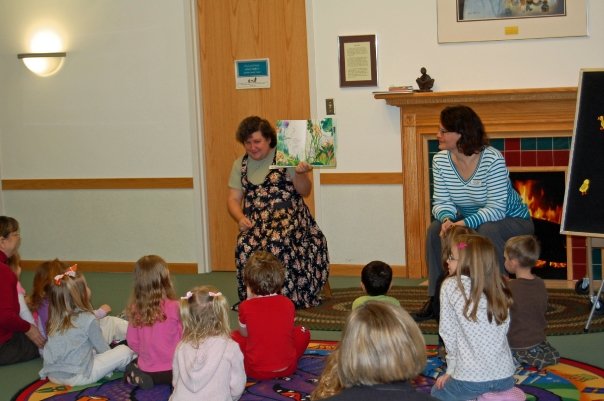
I used to work in a public library. I was the Youth Services Librarian, which meant that most of my time was spent working on building up the collection of children’s books, planning and presenting programming and story times, and going into schools to do book talks and promote library offerings. But I also spent time at the reference desks– both in the Children’s Area and the Adult Services area– and some of my time was spent finding answers to a wide range of questions:
  • Does the library have books or articles about Okapis (for a 4th grade report)?
  • Do you carry tax forms for my out-of-state business?
  • What are the school colors for _______ college (a small community college in Nebraska)?
  • Do you have a picture of the Egyptian queen Hatshepsut?
  • What is the title of a children’s book that featured muskrats making chicken soup?
  • My great-aunt left me a set of dishes and I want to know if they’re worth anything.
  • Do you have a recipe for pemmican?
  • What color is yak’s milk?
Photo by Andrea Piacquadio on Pexels.com

Some questions were easy to answer. Some required a little research within the library’s resources. Some were next to impossible and required hours of searching databases, or calling on expert help. Searching a database can be tricky. You need to find solid key words and search terms. For instance, our computer catalog did not recognize the the search term “cooking” or “cookbook.” You had to use the term “cookery” to get the best results. You could also use “cook***” to force the algorithm to look at all words that contained the letters c-o-o-k and any other letters that followed, such as cooks, cookies, cookery, etc. (Many library databases have since been updated, so searches will automatically redirect or refine common terms like this.)

Photo by Pavel Danilyuk on Pexels.com

Databases and search engines are amazing things, but they have limitations. They will only search for what you type in, and they will only search in the way they are programmed to do so. Computers (currently) “think” laterally–they do not make leaps of imagination, nor do they second-guess what you might have meant to ask but didn’t. If I want to know about pemmican, but I misspell it, the search engine may not find what I’m looking for.

Photo by Pascal Renet on Pexels.com

That’s where algorithms come in. If I misspell pemmican by leaving out the second “m”, the algorithm will look for words close to what I typed, based on thousands of other inquiries. It may ask if I meant to search for pelican, instead. Or it may ask if I want pemmican. But if my spelling is really bad, or if the word I type in is actually another word, the search engine may miss my real inquiry altogether, and send me on a fruitless search. If I’m searching for a children’s book with muskrats and chicken soup, and the search engine doesn’t find both terms in a description, the algorithm will usually stick with the first term, and give me a list of children’s books with muskrats. Hopefully one of them also includes chicken soup… If I type the key words in reverse, I will get a list of children’s books with chicken soup…hopefully one of them includes muskrat characters! And algorithms can be skewed by advertisers or other interest groups that pay to have their information appear more often or first whenever certain search terms are entered.

Photo by Pressmaster on Pexels.com

How does any of this relate to prayer requests?

When people request prayer, they are usually focused on what they perceive as their greatest need. They are searching for an answer; a solution to a specific problem or situation. “Pray for complete healing.” “Pray that my son/daughter will…” “Pray that I get this job.” And it is tempting to pray very specifically. This is not wrong. But sometimes, it limits how we see prayer and how we look at God’s answers. The opposite is also true. Sometimes, we pray so broadly, that we may not see God’s answer for what it is. Sometimes, we pray, hoping to change some sort of algorithm and get to the “top of the list” or get the “right” answer. This is not what prayer is about…we know this, but sometimes, our wants blind us to what we are actually asking (or asking others to ask for).

Photo by Luis Quintero on Pexels.com

So what are some of the key words we can use in our prayer requests and prayers? Jesus gives us a fantastic blueprint in The Lord’s Prayer (Matthew 6:9-13):

“Our Father”–remembering to whom we are praying is vital. We are not praying to a distant, absent-minded, shadowy figure; He is our Father. He knows what is necessary, and what is best.

“Who art in Heaven”–God is Omnipotent. There is nothing we can ask or imagine that is too big, too difficult, or too much to ask. That doesn’t mean that God will give us whatever we want, whenever we want it, but it does mean that God is not limited by the same things that limit us!

“Hallowed by Thy Name.”–God is not our “genie in a bottle.” He doesn’t work for us, or at our command. God is sovereign; He commands the Universe. And even though He makes Himself known and wants a relationship with us, He is not like anyone else–He ALONE is GOD. When His answers seem “wrong,” or don’t make sense, it isn’t because He didn’t hear us, or because He doesn’t love us, but His ways are not our ways (Isaiah 55:8-9).

“Thy Kingdom come, Thy will be done on Earth as it is in Heaven”–There are a lot of “good” things that are NOT part of God’s best will for us. There are a lot of difficult and painful things that God can use for our good. He wants to hear the cry of our heart–“I want to be healed.” But He also wants to hear our willingness to accept that healing may not be immediate or easy.

Photo by sergio omassi on Pexels.com

“Give us this day our daily bread”– It is not “wrong” to pray for things in the future, or to pray for “big” or complex things, but our dependence on Him is shown best when we acknowledge our everyday basic needs are met by Him.

“And forgive us our debts as we forgive our debtors, And lead us not into temptation, but deliver us from evil”–Don’t be fooled. God will not ignore our hidden resentments, hatred, disdain, rebellion, and unforgiveness. Our requests can be sidelined by holding on to grudges and harboring secret doubts about God’s essential fairness, as well as hanging on to sinful habits.

Photo by Foss Valentine on Pexels.com

God doesn’t need algorithms or special prayer “search terms”. We can come to Him with our requests, and He knows precisely what we want and what we need. But we will learn more about ourselves and about who God truly is when we refine our hearts and our prayer life.


I Don’t Know…

I spent a good portion of my adult life working in positions where my value rested in my ability to impart knowledge and answer questions. As a teacher, my job was to guide students into a base of knowledge about the English language (and especially spoken communication) so that they would be prepared to adequately speak, read, write, explain, defend, and use it. I was expected to know enough about grammar, spelling, connotations of words, nonverbal communication, sound logic (and fallacies to avoid), presentation, tone of voice, etc., to enable students to improve their communication and use language more effectively in their careers, academic endeavors, business dealings, and even in personal relationships. If they had questions about word choices, written or spoken directions, propaganda techniques, advertising tricks, euphemisms, or a hundred other topics, I was expected to have an answer– and one that would shape their ability to succeed.
When I made the transition to working in a public library, my job was to have answers– which books were at the appropriate reading level for various elementary students; where could someone find information about manatees; who wrote the Captain Underpants books (Dav Pilkey); did our library loan out encyclopedia volumes or sets of early reader books; could our library borrow a rare book from another library; what was the capital of Uganda (Kampala); did we have books that might help a child coping with the loss of a pet, or a parent struggling with toilet-training their toddler; where could someone find … the list was endless and extraordinarily varied. My job was to have an answer– or know where to find it.

Photo by Pixabay on Pexels.com


At no time was it expected that I would simply answer “I don’t know.” Even if I didn’t know in the moment, I was expected to search until I found an answer that was sufficient and satisfactory. However, in each case, I found situations where my “answer,” while satisfactory to me, and even to everyone else I had dealt with, was not enough to satisfy the person in front of me. Sometimes, I had misunderstood the question and given an answer to what I heard or assumed I had heard. I needed to listen some more, or ask for clarification before I could answer the question correctly. Sometimes, the other person was looking for an answer that didn’t exist– either they wanted confirmation of a falsehood they believed to be true, or they wanted a single, absolute answer to a question that was complex and open-ended. In rare cases, there were questions for which I could find no satisfactory answer– it doesn’t mean that there was none, but I had not found it, nor had I found someone else who could find it in the time allowed. I might find an answer that was not satisfactory, or I might find seven possible answers, but not one that stood out from the others, or I would find nothing but dead ends.


The Apostle Peter tells each follower of Christ:

15 But in your hearts revere Christ as Lord. Always be prepared to give an answer to everyone who asks you to give the reason for the hope that you have. But do this with gentleness and respect, 16 keeping a clear conscience, so that those who speak maliciously against your good behavior in Christ may be ashamed of their slander.

1 Peter 3:15 & 16 (NIV via biblegateway.com)–emphasis added
Photo by bruce mars on Pexels.com

This does not mean that we must completely satisfy everyone who asks– the curious neighbor who knows nothing of the Bible and has dozens of confusing questions, or the nay-saying agnostic with a single “gotcha” question. Nor must we fight and fuss and pound the Bible until we “win” every theological and metaphysical argument–because we won’t! There are many things about the Bible, about Spiritual matters, etc., for which we will not have absolute or definitive answers–and neither will they! (That’s why they ask, sometimes.) And those things that satisfy our longings, our questions, our doubts– sometimes don’t meet the needs of the one who is asking, not because the answers are deficient, but because we are all different in our needs, and understanding, and experiences.

Photo by Vera Arsic on Pexels.com

Some people will listen to us merely to scoff and try to make us lose heart or make us look foolish. Others are afraid that our answer will make them feel lost or guilty. Some people have been hurt by others who have used the Bible as a cudgel or a whip– bringing shame, judgment, and contention wherever they go. We must not expect that our answers, our arguments, even our favorite scripture verses– that WE are enough to satisfy the questions, the doubts, and the spiritual needs of everyone we meet.

Photo by Akshar Dave on Pexels.com

What we should always have is an answer for the hope that is in us– why have we chosen to believe? Why do we choose to trust when we do not know all the answers? And our answers should be given with gentleness and respect– not arrogance and snide judgment. I don’t have hope because I know answers to tough questions. In order to have that kind of hope, I would need to know all the answers to all the questions– even those I haven’t asked or imagined! I don’t know about the future– I can’t explain why God allows evil (there are compelling arguments for some reasons, but no absolute answer that stops the question)–I don’t know how God’s Spirit moves, or why He drew me to Himself. I cannot “prove” God to someone who is determined to deny Him– not because God doesn’t exist, but because He will not force anyone to accept Him in this life, and especially not because I said a few words based on my limited understanding. My job is not to explain God–only God is big enough and wise enough to do that– but to reflect His character in a changed nature, and to explain what God has done in my life to effect that change. My hope is in the ONE I choose to trust– the ONE who does have the answers! God has not promised to answer all our “what ifs” or our “whys”– but He has promised to answer all our needs, and to BE the answer in every situation, no matter how daunting.

Blog at WordPress.com.

Up ↑