The Ones Jesus Didn’t “Save”

(Please note–I have been on vacation. This is an older post from a couple of years ago. I will return with new posts later this week.)

“For God so loved the World, that He gave His only Begotten Son, that Whosoever believeth in Him should not perish, but have everlasting Life.”

John 3:16 (KJV)
Photo by Rafael Cerqueira on Pexels.com

This is probably the most well-known verse in the Christian Bible. It has given hope to millions, as it explains that the death and resurrection of Jesus Christ allows anyone to find forgiveness, faith, and new/eternal life. But what about those who don’t believe; those loved ones (and others) who die without the hope of salvation? Doesn’t God care about them? Why does he let them die without hope? Why do they go to eternal suffering, instead of being forgiven?

Photo by Saeid Anvar on Pexels.com

I can’t give a complete answer to those questions…I don’t comprehend the entirety of God’s plan or His mind. But I do know this– God understands our heartbreak and our grief over our unsaved loved ones. After all, Jesus spent three years preaching and announcing the Gospel, yet He was betrayed by one of His closest friends. Jesus– God in the Flesh; Emmanuel; the Perfect Son of God–didn’t “save” everyone He knew. We have the wonderful story of the conversion of Saul on the road to Damascus– what about others who didn’t “see the light?” There may have been hundreds, even thousands who heard Jesus preach; who watched Him hanging on the Cross; who heard the rumors that He had risen, only to reject His message–what about them? Jesus had met them. Maybe He had healed them, or eaten at their house, or studied with them at the Temple when they were younger. Some may have been His brothers, or cousins, or mentors and teachers.

On the night before He was crucified, Jesus was in agony in the Garden of Gethsemane. He was in anguish about what He would have to face, but some of His anguish and grief had to be in knowing that, while His death and resurrection would save so many, there were still others who would choose to turn away and reject the Life and Hope and Peace that He suffered to bring.

Even during His ministry, Jesus didn’t heal everyone who was diseased or lame or blind. He even made reference at one point to the kinds of disasters that often leave us questioning God’s mercy:

There were some present at that very time who told him about the Galileans whose blood Pilate had mingled with their sacrifices. And he answered them, “Do you think that these Galileans were worse sinners than all the other Galileans, because they suffered in this way? No, I tell you; but unless you repent, you will all likewise perish. Or those eighteen on whom the tower in Siloam fell and killed them: do you think that they were worse offenders than all the others who lived in Jerusalem? No, I tell you; but unless you repent, you will all likewise perish.”

Luke 13:1-5 (ESV)

Jesus could have “saved” those Galileans from having their sacrifices desecrated; He could have provided a miracle to save those who were killed by the tower that fell in Siloam. And just as we grieve today for the senseless loss of life in places like Afghanistan and Haiti, or New York City on 9/11/2001, Jesus felt the loss of innocent strangers. Just as we plead with friends and loved ones to repent and seek God’s face, Jesus preached the need for all people to confess and seek forgiveness.

Jesus could have forced Judas to turn from his plan to betray the Master. He had the authority to cast out demons and demand that angels come to honor, protect, or comfort Him. He has the authority to make every knee bow down and every tongue confess that He is the Sovereign Lord of the Universe. And someday, He will! But Jesus won’t save people against their will– even those close to him. He doesn’t compel grudging obedience, or demand abject servitude. There are some who choose to serve Him in that way, but that is not His desire. Instead, He compels us with His mercy. We choose to love Him because He first Loved us– sacrificially, unreservedly, without limits or conditions. (See 1 John 4:19)

Photo by Magda Ehlers on Pexels.com

Jesus patiently spoke to Nicodemus in the dead of night. He chased Saul down on the road to Damascus and gave him three days of blindness to reconsider the direction of his life. He called His disciples and asked them to Follow Him– even Judas. He invited Himself to the house of Zacchaeus. He spoke with compassion to those who were broken, and outcast, and lost. And just like Judas, they had to make choices– some of His friends and followers abandoned Him when He needed them most. Some of them stumbled. But they HAD followed Jesus. They had learned from Him, and they came back and persevered.

Being loved by God comes without conditions and without reservations. Being “saved” by Christ’s atoning blood comes with a price–not just the price He paid on the cross, but the price of our repentance and acceptance of His Lordship, and yes, even the mysteries of His Grace.

Photo by Munmun Singh on Pexels.com

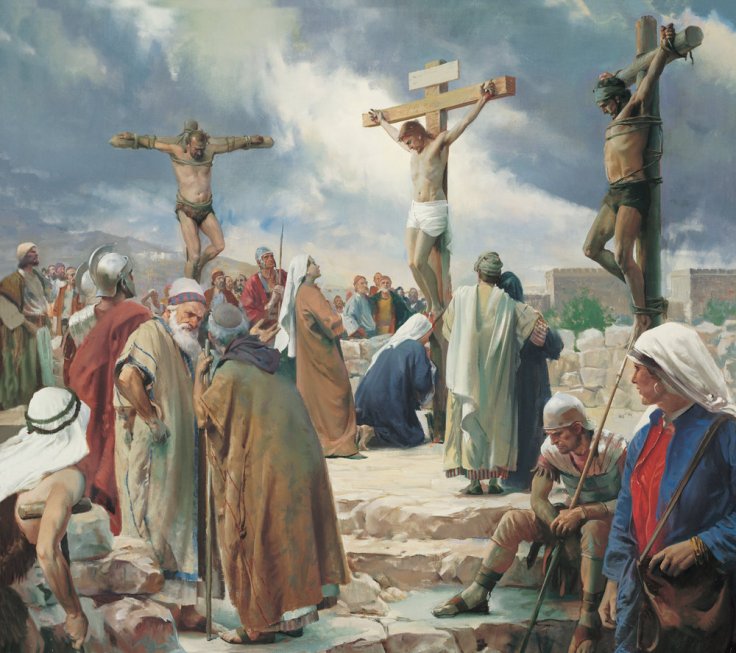
As Jesus hung on the Cross, He was positioned between two convicts who were justly condemned. Both were sinners; both were paying the penalty for their crimes. One cried out to a dying Savior, and was saved. The other mocked and cursed. Jesus had the power to save him. He did not desire that the other man should suffer. But the other man chose to reject who Jesus was, and so rejected all the mercy and power He could have shown.

Jesus died to save “whosoever” would believe. He did not die to save “howsoever.” We may not fully understand why He chose to offer Salvation in this way, but we believe it to our everlasting joy, or reject it to our everlasting anguish.

“I Don’t Want Your Prayers!”

Have you ever offered to pray for someone– maybe they’re going through a Cancer journey or they’ve just lost their job– and they reacted with anger and indignation? I have; and it’s a very uncomfortable feeling.

Often, they may say they don’t need prayer; they don’t believe in God, therefore, they don’t believe that prayer has any power or effect. Sometimes, they feel that prayer is only for those who “can’t make it on their own,” or for those who are weak and needy– and they don’t wish to think of themselves (or to be thought of) in that way. Some people even fear prayer– that they will get their hopes up, only to have them dashed when God doesn’t give them the answer they expect or hope for.

But sometimes, they are angry– not so much at you or me, but at God. Even those who say He doesn’t exist often subconsciously “blame” Him when things go wrong. Others believe that God exists only to punish them or to make their lives miserable. They hate God and they hate anything to do with Him, including prayer. And some people have been hurt by other Christians– those who use their own perceived righteousness as a weapon. Their offer, “I’ll PRAY for you.” rings hollow, smug, and superior. Such experiences can leave such a bad impression that all offers of prayer sound ugly to them.

It is natural to be upset or hurt when someone refuses offered prayer. It can be tempting to respond by granting their wish– “Ok, I won’t pray for you!” But remember the following:

  • God doesn’t listen to our prayers based on someone else’s wishes or their attitude. God listens to OUR heart. If you feel compassion, and want to pray, and you DON’T do it, you are letting another person quench your spirit-driven desire.
  • God loves everyone. It is not His desire that anyone perish, or that they suffer needlessly. And if they won’t pray for themselves, that doesn’t mean that God can’t or won’t intervene. Don’t let their unbelief determine your level of trust!
  • “A soft answer turns away wrath, but harsh words stir up anger.” (Proverbs 15:1 ESV) Don’t match anger for anger or resentment for resentment. Hurting people hurt other people– they lash out from a place of pain. A gentle response from you may not quell their anger, but it WILL keep from adding fuel to the fire!
  • It is not our job to change people’s minds and hearts– it is our job to be witnesses of God’s love for them. Don’t withdraw your offer of prayer, but likewise don’t pummel someone else over the head with it. Simply express your empathy and your desire for their healing, or for their situation to improve, and your willingness to pray as part of that.
  • Remember that we are commanded to pray for others– it is not a suggestion. Nor is it a “strategy” meant to disarm, charm, or convict others into submission. Pray for their salvation, certainly, but don’t pray for that without also praying for their situational needs.

I know of numerous examples of people who have been led to Christ because of the faithful prayers of family or friends–even when they were in rebellion against God and angry with the Christians in their lives. That doesn’t mean that you will see immediate results– God’s timing is not ours; we may never see the results of our prayers in ways we recognize. But prayer IS powerful. Perhaps that is why so many people are afraid of it. It is beyond our power to predict; beyond our power to control; beyond our power to understand.

“Fruit-ful” Prayers

Our church has been presenting a series of sermons on being a BLESSing to our neighbors. BLESS is an acronym for Begin with Prayer; Listen with Care; Eat Together; Serve like Jesus; and Share Stories. We were challenged the first week to choose four close neighbors. We were to pray for them, and if we didn’t know them well, to reach out and make contact. This has been a true challenge for David and I, because we live in an apartment above our shop. Most of our neighbors are not residential, but commercial! Nevertheless, we decided on a couple of commercial “neighbors” and a couple of non-traditional “neighbors.” We started praying– praying for opportunities to get to know our neighbors a little better, and praying for their health, well-being, etc. We’re getting to know some of the workers at the two commercial locations, and getting to know our chosen “families” a little better. We’ve been more intentional about stopping to visit or chat, and making sure we listen and respond sincerely– this is not just a short-term “project” but an opportunity to build closer relationships. And we’ve been praying for opportunities to develop closer friendships.

So this week was the sermon I’ve been dreading– “Eat together.” You might wonder why this is so fearsome–doesn’t everyone like to eat? And I love meeting over a nice meal. I love to cook, as well. The problem? Our apartment is tiny and upstairs– NOT conducive to inviting people over for a warm, comfortable meal shared around a large table. We have two mismatched chairs around a small table in our tiny kitchen, and two more mismatched armchairs in the living room. No couches, no designated dining room, no space to “entertain” guests. I want to serve others. I want to grow friendships. But I’m not a hostess. Not in a cracker-box-sized apartment upstairs. I know this seems petty– I’ve known amazing hostesses who live in shacks and invite guests to sit on a dirt floor. I know. But I still struggle with the idea of entertaining others in my current circumstances.

I knew it was coming– we looked at all the examples in the Bible of good and even sacred things happening around the table and/or involving food– Passover Seders, Communion, the Wedding Feast of the Lamb (among others)… “But Lord,” I prayed, “I can’t invite the entire staff next door to my home for a meal. And some of the “residential” neighbors we are praying for are elderly and can’t manage the stairs to our apartment even if we had the room to host a meal. And it’s too expensive to invite some of the families or staff to a restaurant. How are we going to be able to bless others and “Eat” together?”

But God isn’t bound by conventional ideas– even when it comes to hospitality. At the end of the service, we were surprised by an announcement from our pastor– one of the families in our church owns a fruit farm. Last year, they had a bumper crop of apples, and they donated several bags of the apples to the church. There were enough apples for each family to take several bags to “BLESS” our neighbors! No meal to fix. No apologizing for the smallness and shabbiness of our living space. But a chance to share FOOD with my neighbors and bless them with wonderful apples! Thank you, God!

David and I wasted no time– we delivered most of the apples yesterday afternoon! And we had so many apples, we were able to bless more than just the four locations we had decided on earlier in the series. We were able to bless at least 13 different families/ businesses with at least one full bag of apples! We blessed families with small children, a retired couple; a single person on a fixed income; an extended family of four generations; we blessed people who go to another church; we blessed people who don’t attend church at all. We blessed the staffs at a couple of local businesses, and shared laughter (and concerns) with several friends, old and new.

Not everyone wanted the free apples. One family turned down our offer. Some people are suspicious of free gifts; some are too proud to accept food as a gift; some are simply not interested, or too busy. It is the same with the Good News. Some people do not want what we have to offer in Christ. Some are suspicious; some are too proud or even too ashamed to believe that God has Good News for them. Some are too caught up in their problems or their ambitions. We must not be discouraged, though. God has not given us such a precious gift without also giving us the opportunity share it with others. And we will see how God continues to work in mysterious ways. Some people were surprised and confused by the concept of “apples of blessing.” They wondered what we might ask for in return. We smiled and said there were no strings attached– we just wanted to share our blessing with them! Some people took more apples than we had planned to give them– that’s ok, too. Others wanted to bless us in return– we received over two dozen eggs in gratitude for a couple of bags of apples! Today, I’ll be delivering the last few bags to businesses that were closed yesterday (to share with their staff). I’m excited to share this gift–and I’m reminded of how good it is to share the free gift of the Gospel!

God didn’t change the circumstances of our apartment. I worried that I would be asked to host an elaborate meal, or that I would miss out on blessing others because of our circumstances. But in God’s economy, we can show hospitality, love, generosity, and compassion on the street. We can share food in a way that opens up opportunities to make memories, share stories, communicate prayer requests and concerns, serve others’ needs, and make new friends. There are dozens of ways we can open our hearts and our lives to our neighbors, serve them, and pray for them…

We kept one bag of apples– maybe someone in our neighborhood would like a pan of apple crisp! And now, David and I have a few extra eggs! Anyone interested?

How Can You?!

14 But even if you should suffer for righteousness’ sake, you will be blessed. Have no fear of them, nor be troubled, 15 but in your hearts honor Christ the Lord as holy, always being prepared to make a defense to anyone who asks you for a reason for the hope that is in you; yet do it with gentleness and respect, 16 having a good conscience, so that, when you are slandered, those who revile your good behavior in Christ may be put to shame.

1 Peter 3:14-16 (ESV) via biblegateway.com

I was approached years ago by an angry non-believer, who asked me in disdainful tones how I could possibly believe in God, Jesus Christ, heaven and hell, and other Biblical tenets. At the time, I was taken aback by the vehemence and anger. I stammered an answer, heart-felt and, I hoped, theologically “correct”–I think I quoted scripture and gave a short version of my personal testimony. The other person was not impressed or convinced. I felt like I had failed. The other person sneered at my belief–and at God!

I spent weeks going over in my mind what else I might have said. I came up with clever arguments, gripping counter-questions, self-deprecating “homey” zingers, I read books on apologetics, and studied the words of great thinkers…I would be ready next time. I would not be left looking or sounding naive and unprepared. I would have the tools to “win” the argument, and God would be proud of me.

But in the years since, I have done more thinking (and reading, and praying!) And this past month, as I’ve been reading through the Old Testament prophets, I have found a new perspective. Prophets like Isaiah, Habakkuk, Amos, and Malachi spoke the very words of God to people around them. They spoke to ordinary people, and to the religious and political leaders of their day. And almost none of them listened! In fact, the prophets were hated, sneered at, smeared, imprisoned– some of them were even killed.

These prophets were prepared. They were not being ambushed with “gotcha” questions, because they were the ones presenting and challenging people with the truth. The truths they spoke were often harsh and offensive. They were truths about coming judgment and destruction, followed by restoration and revival. There was nothing “welcoming” or attractive about their message. But the people remained stubborn, sinful, and unimpressed.

We live in the post-Resurrection age. Our message contains warnings about judgment and destruction– but unlike the prophets of old, we have a message of immediate and eternal Hope and Salvation. We have centuries of prophecies that have been fulfilled; of testimonies to the power of a risen Christ and the Holy Spirit. Yet even Jesus warned us that “..in the world (you) will have tribulation. But take heart; I have overcome the world.” (John 16:33b ESV)

We often feel that if we cannot “win over” those who challenge us–if we cannot prove to their satisfaction that we are “right” in our beliefs–that we have failed. Yet we have so many examples of faithful witnesses who suffered and died without seeing the results of their faithfulness. God does not ask us to “win” every battle in convincing and decisive fashion. That’s HIS job! What He does ask is that we should be prepared to give an answer– and that we do it with gentleness and respect.

I don’t have to silence the critics. I don’t have to have “mic-drop” moments. I don’t have to “win” every debate. God calls me to be faithful, honest, and humble. My words may not change someone else’s mind. But my changed life and God-honoring attitude may plant a seed that someone else’s words and life, and the power of the Holy Spirit will cause to grow into faith– even if I never live to see it!

In answer to the question, “How can you believe?” The answer often lies, not only in what we say about our belief, but how we live it out!

Hidden Among the “Baggage”

I am always drawn by the stories in the Bible. Stories of ordinary and extraordinary people used by God– sometimes in spite of themselves–to rescue others, to teach others, to serve as examples, and to show how God wants to interact (or discipline) those He loves.

Photo by Tima Miroshnichenko on Pexels.com

One such person was a man named Saul, son of Kish. Of all the young men of Israel, God chose Saul to be their first king. This was a mixed blessing for the nation. In asking for a human king, they were saying that the did not want to be “ruled” by God or His prophets. God warned Israel through the prophet Samuel that they might come to regret having a human king. They were rejecting the pattern established by God under Moses, and asking for a system of leadership that matched the surrounding nations. This would make it easier to make treaties, do business, and interact with neighboring countries, but it would also bring some of the same problems (succession, power struggles, greed, etc.) that plagued all the other monarchies and empires around them. The choice of Saul reveals not only God’s character, but the character of Israel. God chose a man from one of the least of the families of the least of the tribes of Israel. Saul’s father, Kish, was a man of some power and wealth, but his family line was one of younger sons of younger sons. God often chooses the “least” among us to lead. He is not a respecter of rank or birth, wealth or experience. However, God also chose Saul as a man who “looked” the part. Saul was “head and shoulders” taller than others. He was good-looking and well-educated. Wasn’t this exactly was Israel wanted in a king?

Photo by fabio.tsu on Pexels.com

On the day Samuel called a great assembly to publicly anoint the new king, lots were cast to show God’s choice. Among the 12 tribes of Israel, the tribe of Benjamin was chosen– the youngest of the sons of Jacob, and the smallest of the tribes. A lesser family among the tribe was then selected. Finally, the choice was narrowed down to Saul, son of Kish. But Saul could not be found! A search ensued, and he was eventually found– hiding among the baggage! The tallest man in the kingdom– the one who already had been confirmed as God’s choice– tried to hide from his own coronation! And it was God who revealed Saul’s hiding place and forced him to face his exaltation!

The ongoing story of Saul’s reign as king is filled with both triumph and tragedy. Time and again, Saul tries to “hide” behind excuses. He fails to obey God’s command, but blames his weakness on others. God takes away His favor, and His spirit leaves Saul, who descends into paranoia, anger, and madness.

But today, I want to look at the idea that Saul thought he could hide “among the baggage.” (1 Samuel 10:22) Other translations say he was “among the stuff” or “among the supplies.” Saul did not run away from the assembly altogether; he did not reject his role. Yet he tried to hide from the gravity and responsibility of kingship. In many ways, this shows good qualities of humility and an understanding of his own limitations. Saul’s problem wasn’t that he thought he was “born to be king.” Saul wasn’t born to be king– it was an honor thrust upon him. Saul’s problem was that he wasn’t prepared to let God rule through him. Saul would be the titular King of Israel. But who would be the King over Saul’s own life and heart? Saul, like the nation he ruled, ended up rejecting God’s rule. He tried to follow the letter of the law, and the traditions of his people, but he did not always choose to follow the God who had created them, nor did he humble himself to accept God’s correction.

Photo by Pixabay on Pexels.com

We may not be chosen for a position of leadership. But what responsibilities are we hiding from today? Are we surrounding ourselves with baggage? Do we hide in the busyness of our hobbies or our job? Do we cover ourselves with “obligations” that leave us drained to no real purpose? How many hours do we spend hiding in chit-chat, or watching television, or shopping, or daydreaming? How many times are we volunteering to work with strangers in order to avoid spending time with difficult relatives or neighbors? How often do we offer up the sacrifice of generic worship instead of the sacrifice of a teachable spirit?

Saul had many gifts, which he used to strengthen his nation and expand its territory. He had the opportunity to do even more great things for God and for Israel. But he is mostly remembered for his failures– his defiance of Samuel’s orders and excuses about disobedience; his ongoing murderous pursuit of his anointed successor, David; his consultation in the dead of night with the witch of Endor; his ignoble death in battle… We too, have opportunities to do great things with God’s help and in His power. We cannot hide forever among the “stuff” of life. God will reveal our hiding places– to others, even if we don’t acknowledge them!

Today, I pray that I will come out from behind the baggage of my everyday activities, and be available for God’s good purposes!

Photo by Munmun Singh on Pexels.com

Please see these other links for more commentary:
https://jentezenfranklin.org/daily-devotions/what-are-you-hiding-behind#:~:text=%E2%80%9CHe%20is%20hiding%20among%20the%20baggage.%E2%80%9D%201Sa%2010%3A22,tackling%20the%20job%20God%20appointed%20you%20to%20do.
https://www.thekingdomcollective.com/spurgeon/sermon/3322/

The Door Will Be Opened…

Ask, Seek, Knock

“Ask and it will be given to you; seek and you will find; knock and the door will be opened to you. For everyone who asks receives; the one who seeks finds; and to the one who knocks, the door will be opened.

“Which of you, if your son asks for bread, will give him a stone? 10 Or if he asks for a fish, will give him a snake? 11 If you, then, though you are evil, know how to give good gifts to your children, how much more will your Father in heaven give good gifts to those who ask him! 12 So in everything, do to others what you would have them do to you, for this sums up the Law and the Prophets.

(Matthew 7:7-12 NIV via biblegateway.com)

Photo by Curtis Adams on Pexels.com

A couple of years ago, I took on a part-time, temporary job with the Census Bureau in which I had to make visits to various households and ask to conduct an interview. I knocked on a lot of doors. Few of them were ever opened. Many of the houses were unoccupied– either the family wasn’t at home, or the home was vacant or even abandoned. At others, there were clearly people at home, but they wouldn’t come to the door. At still others, a person would come to the door, or respond via intercom or speaker, but they would not open up or consent to do the interview. This occurred during the height of the pandemic, so some of the fear and evasion was expected. But even though I was wearing a mask and promised to practice social distancing; even though the interview was less than 10 minutes, and would help their community and country, they would not speak to me or let me step up to or across the threshold. *(For the record, I was not required to actually enter anyone’s home to conduct an interview; most took place across the threshold or through a screen door or even out on the front steps.) A select few, however, were gracious and welcoming. They opened the door, invited me in, offered me a seat, and refreshed my spirit. I knocked on the doors of the wealthy, and those in extreme poverty. I knocked on fancy doors with cyber-security, and doors that were hanging off their hinges. I knocked on the doors of large families, and lonely widows. I knocked on the doors of the dying, and the doors of families with newborns. I knocked on the doors of mobile homes, and lake cottages, and apartments, and old farm houses. Some of the kindest people I found were in so-called “bad” neighborhoods. Some of the people who were the most gracious were those who were in the most pain, and had the least to gain by being kind. Those who were threatening and rude were quick to point out that their time was more valuable than mine– that they were too important, or too comfortable, or too busy to answer a few simple questions. In a couple of cases, I had to leave because I was threatened with harm or faced verbal abuse.

Photo by Jermaine Ulinwa on Pexels.com

My job required me to knock on a lot of doors! And throughout our lives, we will have to “knock” on doors– seek out opportunities, ask for needed help, go to places outside our comfort zone– and many of the doors will remain closed. Others will require that we knock several times, or even return another day to knock and seek entrance. But God will never turn away those who knock at His door. God will never tell us we must stand outside or come back at a more convenient time. He will never have a sign that says “No Trespassing,” or “Keep Out!” In fact the only thing keeping us from entering His Courts is our own refusal to accept His invitation; our own pride or guilty conscience, or resentment and rebellion; our own reluctance to approach the door, let alone knock. We don’t need an appointment, or an official summons to “Come!” The invitation is always open, and the door is not locked.

Photo by Meruyert Gonullu on Pexels.com

God is not “too busy”, and our questions, requests, and praises are not “too small” to get His attention. God is gracious. God is available. God is accessible. And God’s opened door is so much more than an entry to someone’s hallway or front room or kitchen. God opens the doors to His very throne room! He invites us to “Enter His gates with thanksgiving and His courts with praise”! (Psalm 100) He invites us to the wedding feast of the Lamb (Revelations), and to everlasting life (John 3:16).

Photo by Augustinus Martinus Noppu00e9 on Pexels.com

Jesus also “knocks” at the door of our hearts, asking to “come in.” (Revelation 3:20) What does He find? Are we “away from home”– so busy chasing after foolish things that we don’t even inhabit our own hearts? Are we ignoring Him, hoping He’ll go away? Are we telling Him to come back another time, or coming up with excuses why we don’t need to speak with Him? Do we try to chase Him away with our anger or bitterness? Or do we open the door, invite Him in, and offer Him a seat?

Jesus urged His listeners on the Mount to Ask, Seek, and Knock. And then, He challenged them to “do to others what you would have them do to you.” How are we treating those who “knock” at our door? Those who need a friend, or a listening ear? Those who need to hear the truth, and the hope that is in us? Trust me– how we answer that “knock” at our door will leave an impression. It will testify to our true nature.

Photo by Pixabay on Pexels.com

God doesn’t just hear us knocking, He opens the door and gives us all we need for life and godliness (2 Peter 1:3). What are we giving to those who knock on our door?

Commissioned Prayer

Have you ever been part of something– some project or task– SO monumental and far-reaching that you wonder whether your efforts made any difference? Did you end up with “grunt” work– a seemingly insignificant part of the larger project that left you with lots of questions and very few (or no) answers? Something so tiny that most people would never even know if you did it?

Photo by Anna Shvets on Pexels.com

A couple of years ago, I took a temporary job as an enumerator for the U.S. Census Bureau. I was part of a vast team of workers who conducted “follow-up” visits, mostly to addresses that had not responded by April 1. I was excited, and a bit apprehensive; after all, the Census is a pretty big deal. These names and numbers will be part of our nation’s collective history. As someone who loves doing genealogy, the Census is invaluable for discovering information about my family history– names, ages, locations, occupations, origins and ethnicities, and so much more can be learned from Census records.

However, I soon discovered that most of my job consisted of traveling to out-of-the-way locations, and knocking on the doors of empty houses, or trying to find addresses that no longer existed. “Non-response follow-up” usually involves checking on rentals, second homes, vacation homes, and homes that have been vacated, condemned, or even demolished in the years since the previous census. It is a lonely and often frustrating exercise in trying to find what “isn’t,” rather than counting what “is.” Each day, I was given a new list of locations (including some I had already visited without success). But I was commissioned by the U.S. Government to trace each address on that list to the best of my ability, and, wherever possible, to get information about anyone who might have been in residence at that location on April 1.

Photo by Darya Sannikova on Pexels.com

Sometimes, I was able to get an interview, and document names and ages, or correct information that had been collected earlier. But much of what I did will never be included in the final Census report for 2020. My name will not appear and I will receive no recognition for my efforts(unless as a footnote with the thousands of others who did the same thing). I did get paid for my work, for the time I spent traveling and knocking on doors. And some interviews were not just fruitless, but bordered on abusive. Homeowners were annoyed, or even outraged when I showed up. They had sent in their Census form– for their primary address! Worse yet, there were some times when I showed up after ANOTHER enumerator had come– I had been sent to follow-up on the follow-up! But I was under strict orders about where to go, when to go, what to say (or not say), how to report on each interview (or non-interview). I was under a commission. I took an oath, and I followed orders, just like being commissioned in the military. Looking back, I feel good about the experience. I served my country, and I learned a great deal about the local geography, AND about human nature. For every cranky homeowner, there were others who were friendly and helpful. At the time, though, I often felt drained and dazed at the end of a shift.

Photo by Andrea Piacquadio on Pexels.com

As Christians, we are also commissioned. We are to go into all the world and preach the gospel, making disciples of every nation, teaching and baptizing, and being witnesses for Christ. (Matthew 28:16-20/Mark 16:15-18, etc.) Our commission is not to force everyone around us to become Christians, or to demand that they respect us or our message (that is the work of the Holy Spirit– our job is to go and to be witnesses, disciple-makers, teachers, encouragers, and helpers). And part of our commission is to pray–fervently and consistently– to pray for our nation and its government officials (1 Timothy 2: 1-2); to pray for believers around the world, especially for those under persecution (Hebrews 13:3), to pray for those who persecute, ridicule, or despise us (Luke 6:28; Matthew 5:44), to pray for, and interact with grace toward, those who have rejected Christ (Colossians 4:5-6), to pray for the healing and restoration of others (James 5:13-20).

Photo by Ian Panelo on Pexels.com

At times, we may not feel like praying for certain people or situations. We may not understand why God allows for corruption in our government or for neighbors to mock our faith or treat us unfairly. We may not understand why some of our prayers seem to be more about what “isn’t” that about what is. We may not understand why God sends us, where God sends us, or when God sends us to go, to act, and to pray. But God IS listening. He knows our every thought, and He sees every need– not just our needs, but the broader needs of our community and our world. May we be faithful with the commission we have been given. It’s a much bigger deal than any Census!

We Didn’t Know Who You Were…

Jesus was born in obscurity– yet he was also born during a Census year…

 And it came to pass in those days that a decree went out from Caesar Augustus that all the world should be registered. This census first took place while Quirinius was governing Syria. So all went to be registered, everyone to his own city. Joseph also went up from Galilee, out of the city of Nazareth, into Judea, to the city of David, which is called Bethlehem, because he was of the house and lineage of David, to be registered with Mary, his betrothed wife, who was with child. So it was, that while they were there, the days were completed for her to be delivered. And she brought forth her firstborn Son, and wrapped Him in swaddling cloths, and laid Him in a manger, because there was no room for them in the inn.

Luke 2:1-7 (NKJV via biblegateway.com)
Photo by TheWonderOfLife on Pexels.com

This is a Census year in the U.S. (something that has largely been forgotten in the wake of the COVID pandemic.) I actually worked for the Census Bureau for a few weeks this year, doing follow-up interviews for addresses which had not responded for various reasons. Census taking is much different now than it was in Jesus’ day. I had a script, and a smart phone, and several different forms to fill out or hand out to explain what we were doing–one form contained information in at least 14 different languages, and all of them had phone numbers and web addresses where people could “respond” electronically without ever leaving the comfort of their living room, let alone traveling over dangerous hills and trying to find room at crowded inns. I was the one who had to travel– mostly around my small town and within a 20-mile radius. One interview required me to travel 100 miles; another required me to utilize my ability to speak and understand Spanish. Otherwise, the interviews were simple and straightforward. Except when they weren’t.

Photo by Vera Arsic on Pexels.com

“Everyone Counts,” the Census Bureau told us, and I did my best to get names and ages for everyone at every address I visited. But many of the addresses were abandoned buildings– even demolished. Others were summer homes or vacation rentals–I had to be careful not to count the same people twice! Often, I could tell that people were living at the residence, but either they weren’t home at that time or they would not come to the door. Some houses required several attempts before I got any response, and it wasn’t always positive or cooperative.

Photo by David Garrison on Pexels.com

I imagine the scene in Bethlehem, though lacking the technology and ease of travel of our modern age, wasn’t so very different. There were people who wanted to do their civic duty; those who were annoyed at the inconvenience and general bureaucratic chaos; those who hated the Roman Government and everything it represented; and some who just wanted to get it all over with and go back to “normal life.”

We know that Joseph was called up to go to Bethlehem because is was his ancestral home. And we know that Joseph would have been counted as the head of the household. But is it possible that Jesus was counted in that census? That he was numbered among his people and with his family? That the God of all creation became a simple hash mark among thousands of others that year? “Jesus, son of Joseph of Nazareth.” “Infant son.” “Male child.” Jesus was counted. But He was also lost in the shuffle; discounted and ignored.

Photo by Jeswin Thomas on Pexels.com

10 He was in the world, and the world was made by him, and the world knew him not. 11 He came unto his own, and his own received him not.

John 1:10-11 (KJV via biblegateway.com)

This season, it’s easy to feel left out, discounted, passed over. This year, especially, it can be lonely and discouraging as we look out on the world from lockdown, or look at faces covered by masks, unknown or unrecognizable. It’s easy to feel that no one sees us. Rest assured, Jesus knows what it is like to get lost in the numbers. He knows what it is to be discounted and misunderstood, rejected, and scorned.

Photo by Ken Ozuna on Pexels.com

And He knows exactly who you are and who I am– better than we know ourselves! We count! Not because of who we are, but because He is the creator and author of all life. No matter where you are, no matter who has rejected you in the past, no matter how dark and grim things look– God sees you; God loves you; God has taken you into His count. He doesn’t need a census count to find you, and you can’t get “lost” or hide in the crowd.

Photo by Johan De Jager on Pexels.com

He knows you– Do you know Him?

Three Words

Essential

We’ve been hearing a lot lately about people who are “essential.” In times of crisis, certain skills and services are necessary to preserve or protect life. In times of war, soldiers, medics, makers of tanks and arms, helmets, planes, boots, and armor become essential. In times of famine, farmers, and anyone with reserves of food or water become essential. In times like these, doctors, nurses, EMTs, and those who make or distribute medicines, PPE (personal protective equipment), ventilators, etc., are essential.

Photo by Anna Shvets on Pexels.com

Being “essential” may sound wonderful, but it comes with a heavy price. Doctors and nurses are stretched and stressed, working ridiculously long shifts and scrambling to find ways to arrest the progress of COVID-19 among their patients who test positive. Meanwhile, their neighbors are complaining about being told to stay home and do nothing because their skills, their businesses, and their contributions are considered “non-essential.” Grocers and the cashiers, restaurant owners, farmers, and truckers are risking their lives to keep people supplied with food, only to have people complain about prices and temporary shortages. And any one of their customers could be spreading the virus– not just to them, but to their other customers. Police officers, already putting their lives on the line, are now asked to interact with those who may be carrying and spreading this virus, as well as dealing with an angry and frustrated population chafing under orders to stay home and stay inactive. And those who are “essential” are also vulnerable– tired and frightened and inadequate to meet every need–they are not infallible or indefatigable.

Photo by Alexander Dummer on Pexels.com

There are really only a few things in life that are actually essential–breathing (which is one of the reasons COVID-19 is so scary, because it attacks the lungs), water, food, and basic shelter (protection from excessive heat or cold). And, while many around the world are facing more extreme shortages than others, most of the chafing and complaining has less to do with not having the essentials than with being (or not being) labeled “essential” with very little notice or guidance, and asked to bear the brunt of a crisis they cannot predict or control.

Redundant (non-essential)

For every person who is feeling the pressure of being “essential” in a time like this, there are others who have been labeled “non-essential”– redundant, expendable, “in the way.” “Stay home!” “Stay away!” “Don’t!” Don’t shake hands, or hug, or visit friends or loved ones (unless you can do so via phone or internet). Don’t touch– don’t touch door knobs or counters or surfaces– don’t even touch your own face!

Photo by Engin Akyurt on Pexels.com

The intent of these messages is a positive one–“help stop the spread of this virus”–but the message often gets lost in the tone of fear and panic that accompanies it. “If you don’t (go away, stay away, stop touching, stop asking questions, stop being in the way…) other people, especially ‘essential’ people, will get sick and die.” “If you could just go away, disappear, be quiet, etc., until this crisis dies down…” Feeding your family, keeping your business open, earning a living, using or developing your skills, offering your services or products– none of that is “essential” right now. You have nothing to offer in a time of crisis– you are expendable. Perhaps not forever, but just now– just for a few more days, weeks, months?…

Jesus offers us a shocking view of what is/who is “essential” or “redundant.” In his encounter with the “rich young ruler,” (see https://pursuingprayer.blog/2020/02/07/a-miss-is-as-good-as-a-mile/) Jesus listens as the young man seeks to justify himself. He has done everything he deems “essential” to inherit eternal life. But Jesus challenges him with one “essential”–sell what he has in order to serve the poor and “redundant.”

Jesus had frequent encounters with lepers– the most “redundant” and expendable people of his day. They were contagious, “unclean,” unwanted. And Jesus also encountered those with great power and prestige–priests and rulers, centurions and tax collectors. Many of them were also considered “unclean,” and unwanted! Those for whom Jesus had the sternest warnings were those who refused to accept, respect, or help those they preferred to judge.

Photo by Lukas on Pexels.com

Whosoever-

Jesus, the only One who actually has the right to judge, didn’t come to further the division of people into categories and labels. While he didn’t turn a blind eye to sinful activities, neither did he point fingers. And while he celebrated faith and service when he found it, he didn’t flatter or fawn over those whose service was more “essential” than others’. Instead, Jesus invited “whosoever” to believe in him (John 3:16), to follow him, and to become part of the Kingdom of God. (Revelation 22:17). Someday, He will judge us, and we will be separated. But the one “essential” will be whether or not we have chosen to depend on Him and trust Him for the wisdom and strength to do His will in service to “whosoever” we encounter.

Photo by Streetwindy on Pexels.com

There is no one so “essential” that God is required to accept her/him into the Kingdom. This may be a strange notion to some of us, who have fallen into thinking that we earn our salvation through good works or memorizing doctrinal statements. But NO person is essential in Heaven. And that’s not bad news or meant to condemn–it is simply a reminder that God’s standard is level and fair. We don’t have to strive and stress; we don’t have to have all the right answers, or do all the “right” things– in fact, we can’t.

And there is no one so “redundant” that God cannot accept him/her into the Kingdom. Again, this may be a strange notion, that we cannot “out-sin” God’s salvation. We can’t mess up, wash out, face-plant, or fail such that God cannot redeem, rescue, or revive us. God will never tell us to “stay away,” “wait,” “don’t get too close.” Instead he says, over and over again, “Come!”

Photo by Artem Beliaikin on Pexels.com

Whosoever is struggling with exhaustion, or impossible expectations, panic, fear, sickness, anger, depression, loneliness, hunger, rejection, injustice, confusion, or emptiness– let them come!

Blog at WordPress.com.

Up ↑