Got Jesus?

In the beginning was the Word, and the Word was with God, and the Word was God. He was in the beginning with God. All things were made through him, and without him was not any thing made that was made. In him was life, and the life was the light of men. The light shines in the darkness, and the darkness has not overcome it, 10 He was in the world, and the world was made through him, yet the world did not know him. 11 He came to his own, and his own people did not receive him. 12 But to all who did receive him, who believed in his name, he gave the right to become children of God, 13 who were born, not of blood nor of the will of the flesh nor of the will of man, but of God.14 And the Word became flesh and dwelt among us, and we have seen his glory, glory as of the only Son from the Father, full of grace and truth.

John 1:1-5; 10-14 (ESV)
Photo by James Wheeler on Pexels.com

I memorized this passage as a child. And one part of this passage stands out to me today, because the wording of the verse has not changed, but our cultural reading of it has changed a bit. I remember churches, and evangelists, using the phrases like, “Have you accepted Jesus Christ as your personal Savior (or Lord, or Lord and Savior)?” “Are you ‘born again?'” “Have you asked Jesus into your heart?”

I know in certain circles these phrases are considered “old fashioned”, “evangelical”, and even offensive. Some of us don’t identify as Christians anymore– many of us prefer the term, “Christ-followers.” “Born-again” Christians are seen as hypocritical, overbearing, judgmental, and intolerant– even violent! And there are individuals and groups who give evangelical Christianity a “bad name” by their behavior.

Photo by Alex Green on Pexels.com

Evangelicals have a reputation for putting people’s backs up, and putting people “on the spot.” They want to know, “have you GOT Jesus?” As though Jesus is a product and you either own Him or you’re missing Him. Can you get Jesus at the corner store? Do you “get” Him the same way someone “gets” a virus? Is He infectious? Can you sell Him? Lose Him? Trade Him away?

The Apostle and Gospel writer, John, was an evangelical. He was keenly concerned that His readers, friends, listeners– basically everyone he met, GOT Jesus. He wasn’t trying to sell a product, force a certain doctrine down others’ throats at the end of a sword, or offend those he met. But he DID want to make sure that people didn’t miss out on the GLORY, the incredible WONDER, the eternal GIFT of LIFE that had lived and walked and dwelt among us.

Photo by Kyle Karbowski on Pexels.com

Today, there are many who claim to “follow” Christ– they have great respect for His teachings; they want to live a “good” and even “righteous” life just as Jesus did; they believe He was a great role model. But they haven’t “received” Him. They believe what they have heard about Him; they believe “in” Him, but they don’t believe “in His Name.” Truly becoming a “follower” of Christ is to become a “Christian”– willing to be called by His name and identified with Him. Not just as a wise teacher or a gentle soul, but as a sacrifice–despised and rejected, misunderstood– and obedient even unto death. Not just the physical death of a martyr, but the social death of an outcast, the death of selfish dreams and worldly success through compromise, the loss of relationships, property, status, freedom… John knew all of this first-hand. He was standing by during the trial and crucifixion of Jesus Christ. He watched as his brother and friends were beheaded, tortured, crucified upside-down, and driven into hiding. He spent the end of his life in exile for the privilege of being a “Christian.”

Photo by Gabriela Palai on Pexels.com

Calling oneself a Christian, or a Christ-follower, or “born again,” doesn’t mean anything in and of itself. I can call myself a doctor, or an artist, or a prophet. I may have studied medicine, or created a painting, or made a prediction and be completely hypocritical. I may end up giving a bad name to myself, and causing people to be cautious about other doctors, artists, or prophets. That doesn’t make THEM hypocritical, and it shouldn’t cause them to stop doing what they do well. What matters is not what I say I am, or even what others say about me, but what and who I demonstrate that I am. I want to let my words and actions declare my relationship to Christ. At times, I would like to avoid the ridicule and misunderstandings. I’d like to be able to distance myself from the “bad examples,” but, like John, I long to testify to the GLORY of the one I follow and trust, more than I want to justify my own self at the expense of others. Yes, there are some “fake” Christians, and some who are sincerely wrong in how they attempt to live– and if someone were to catch me in a bad moment on a bad day, and show only that moment to the world, I would be counted among them– but my goal is not to ask if others have a perfect track record, or if they know all the right Bible verses or even if they have the “right” answers. My goal is to ask, ” Have you GOT Jesus?” “Do you KNOW Him– not just about Him?” When you pray, are you praying to an aloof idea or to a personal Savior? If He called you, would you answer, or let it go to voice mail? Would you scroll through and “like” His social media posts, or would you actually DO what He said?

Jesus came. He walked among ordinary people. Crowds “followed” Him, hanging on His parables, excited about His healings, and impressed by His miracles. But very few of them actually became His disciples and “received” Him. But to those who did, like John, He gave them the privilege to be called Children of God– not because they were smarter or wiser or more righteous in their own knowledge or efforts, but because they were made new, “born” again, and transformed by their relationship with Him. May that be so for all of us!

Why I Keep a Prayer Journal

I keep a journal of my daily prayer life. I have found it useful, and I recommend it as you pursue a lifestyle of prayer. Why?

  • It helps me keep organized and disciplined as I pray. Not everyone needs help in these areas, but I find that I do, and keeping a journal helps. It helps remind me to pray specifically for certain people, issues, locations, etc. That doesn’t mean that I don’t pray “in the moment.” But it means I have a focus when I sit down to start the day or finish the day in prayer.
  • It provides a place to document God’s answers to prayer. I leave space in my journal, and I go back through and note the ways God has answered prayers for various needs. It is a great reminder of God’s faithfulness and even His attention to detail!
  • It reminds me how BIG God is–I am amazed at how many different items end up in my journal. I pray for a lot of people each day, and a lot of different situations– needs, praises, confessions, worship, “unspoken” items, continuing issues…God hears them all. He knows them all before I even pray! Yet He delights in hearing them on my lips or in my mind.
  • It helps me focus on others. Life can be full of “self” distractions–“my” finances, or aches and pains, scattered thoughts, etc.. A prayer journal reminds me that others need prayer, that our lives are intertwined and impact each other, and also that others are praying for me. In that sense, it makes prayer a very unifying and “communal” activity.
  • It also makes my prayer very personal–conversely, using a journal means that my private thoughts and goals and relationships are in a journal for my eyes (and God’s!) only. I may write down a poem or someone else’s written prayers as well, but I’m not praying someone else’s heart-cry or someone else’s thoughts in place of my own.
Photo by Ian Panelo on Pexels.com

Keeping a prayer journal doesn’t make me a “better” prayer than anyone else. It doesn’t impress God or bring me closer to Him because I have a journal of my prayer life. And I don’t recommend it for any of those reasons. But I have found it easier to be more consistent and more confident as I pray. I am not journaling just my words or even my thoughts– I am journaling a relationship.

Photo by MART PRODUCTION on Pexels.com

How can you develop a prayer journal?

  • Do what works best for you–this is YOUR journal, not mine. I keep mine in four simple notebooks– one for each season, one page for each day of the year. But you could use index cards, or a calendar, or your smartphone or computer calendar. Use whatever works– it may take a few tries before you find what works best.
  • Pray! Ask God to give you wisdom about what to include or how to organize your journal. I use birthdays and anniversaries to remind me to pray for certain people, but I leave plenty of space for “spur of the moment” requests and ongoing issues. I also pray for various geographic regions, but you can organize it around cultural issues, family members, etc. There are even websites and books that can help you learn about various topics or people groups to pray for..
  • Start simple. You don’t need to have a year-long journal to begin the process. Try journaling for a month first, if that will help you keep with it.
  • Don’t let the journal become bigger than your prayer life. This is a pitfall I landed in early on. I had the ambition to have a “perfect” prayer journal– and it ended up so convoluted that I wasn’t actually praying! Starting small allows you to build the habit first, and add the discipline of journaling in a more natural way.
  • Ask for help– just remember that you don’t have to do it “just like” anyone else, and you shouldn’t do it just to impress someone else.
  • See the attached pages on keeping a prayer journal on this blog..

Pursuing a lifestyle of prayer is a great way to start a new year. And continuing is a great way to look forward in the new year!

Lord, Lord!

21 Not every one that saith unto me, Lord, Lord, shall enter into the kingdom of heaven; but he that doeth the will of my Father who is in heaven. 22 Many will say to me in that day, Lord, Lord, did we not prophesy by thy name, and by thy name cast out demons, and by thy name do many mighty works? 23 And then will I profess unto them, I never knew you: depart from me, ye that work iniquity.

Matthew 7:21-23
Photo by Pixabay on Pexels.com

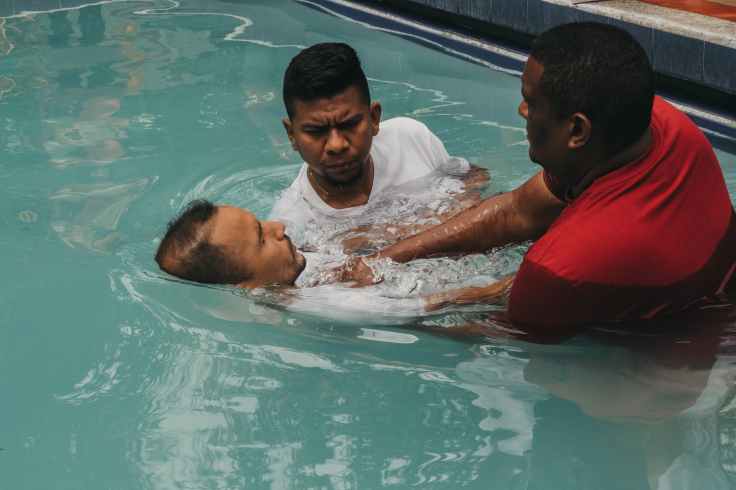
In just the past three weeks, three of my family members and one of my friends have made the decision to be baptized as a public declaration of their decision to live for Christ. All of them (and the others who were baptized at the same times) were baptized by immersion, signifying that they have, spiritually, died to self, been buried, and are raised with Christ to eternal life. This is not a step to be taken lightly, and I have confidence that all four (and more) of those I know are serious in their passion to follow the Lord.

Photo by Ali Arapou011flu on Pexels.com

When I write about prayer as a pursuit, I hope to convey that prayer is part of a larger pursuit of seeking God. And seeking God must include acknowledging Him as Lord above all– especially self. Jesus warned about people who claim to follow Him in word, but do not obey Him. It is, unfortunately, very easy to “speak Christian-ese”: to sound righteous and reverent when we are around others who claim to believe, but justify behaviors that may or may not stem from selfish motives.

There are obvious examples of hypocrisy in our world, but in His famous “Sermon on the Mount,” Jesus warns that many who seem to be doing good deeds, and “talking the talk” will not be part of God’s eternal kingdom. We are not to be seduced into thinking that God will be impressed by charitable giving, memorizing Scripture, or working on the Mission field if we are not willing to repent of our “secret” sins and false attitudes. And it is not for us to point fingers at “other” hypocrites– it is for us to humbly assess whether or not we are truly acting in obedience and submission to our Lord, or satisfying our own selfish desires and hoping for God’s stamp of approval.

Prayer should be a two-way communication. We pray to God, but we also listen for God’s guidance, wisdom, conviction, and encouragement. And we must act in obedience, and confess our disobedience if we want to “keep the slate clean” and keep a close relationship. When we refuse, we are just giving God lip service, and using His name to impress others and deceive ourselves. Others may judge us on appearances, but God sees what is in our heart. And “in that day” (v. 22), He will not let imposters through the gates of Heaven.

Photo by Foss Valentine on Pexels.com

The Good News is that Jesus doesn’t leave us hanging in verse 23. He goes on to say, “Therefore everyone who hears these words of mine and puts them into practice is like a wise man who built his house upon the rock..” (Matthew 7:24) Jesus is our Lord, but also our Savior and our Advocate. When we call on Him AS our true Lord, He is faithful and just to forgive our sins (1 John 1:9), and His divine power has given us everything we need for life and godliness (2 Peter 1:3a)

Photo by Transformation Films on Pexels.com

The act of Baptism alone does not have the power to save us. The practice of prayer alone has no saving power. But the pursuit of a relationship with Christ depends on such acts of obedience, humility, and trust. And the other good deeds that come from that relationship will not only help others, but will please God and strengthen that relationship. Instead of hearing, “I never knew you,” we can hear, “well done!” Not because of what we’ve done, but because of the partnership we’ve developed in God’s work.

Photo by Artem Beliaikin on Pexels.com

May God bless all those who have recently taken the step of Baptism. And may we all continue to pursue that relationship of dying to self, being buried with Him, and rising to new life in Christ!

The Greatest Commandment

36 “Teacher, which is the great commandment in the Law?” 37 And he said to him, “You shall love the Lord your God with all your heart and with all your soul and with all your mind. 38 This is the great and first commandment. 39 And a second is like it: You shall love your neighbor as yourself. 40 On these two commandments depend all the Law and the Prophets.”

Matthew 22:36-40 (ESV via biblegateway.com)
Photo by cottonbro on Pexels.com

This is a familiar Bible passage, and one that Jesus quotes from the ancient writings (in Deuteronomy and Leviticus). All the laws and regulations of history boiled down to two commands. And they are not what one might expect. The greatest commandment isn’t to believe; it isn’t a “shalt not”; it isn’t even to “obey.” Instead, the greatest commandment is to LOVE– love God wholly and without reserve, and love your neighbor “as yourself.”

It sounds so simple, but we don’t do it. In fact, we spend countless hours and waste energy trying to make the commandments MORE complicated and adding conditions, additions, interpretations, excuses, and critiques.

There is not enough time or space to list all the ways we try to avoid the greatest commandment, but here are a few I struggle with:

Photo by Engin Akyurt on Pexels.com
  • My heart–I love the Lord, but I don’t always love Him with my whole heart. I love His creation; I love His promises; I love the “idea” of God. But I also love my comfort zone; I love my own moods (especially happiness and self-esteem); I love the admiration of my peers; I love God, but…I don’t always pray to God the way I would talk to my best friend. I don’t seek Him out ahead of everyone else. I don’t always seek His correction or welcome His Lordship.
  • My soul–Most of us would claim that we are “spiritual” on some level. But many of us (including me) don’t do a very good job of tending to our souls. We assume that behaviors and habits and a list of beliefs are “enough.” We spend very little time in prayer, worship, and Bible study (compared to the time we spend on chores, sleep, entertainment, driving around, daydreaming, etc.). I’m not suggesting that we all need to go into a cloister (especially in light of the second great commandment to love our neighbor). But souls, like bodies and minds, need to be nourished, exercised, and cared for. Very few of us make it a priority to nourish our soul-connection with God–to Love Him with all our soul. We skim over this part of the commandment, assuming it is much the same as loving Him with all our heart or all our mind.
Photo by Rakicevic Nenad on Pexels.com
  • My mind– My mind wanders– a lot! And I spend a lot of time learning “about God,” instead of learning “from God.” I want to know what God is like– to be able to explain Him or comprehend Him. But God is bigger than my ability to “know” or even to imagine. And yet, He invites me to “know” Him, not just know about Him. In fact, He invites me to “follow” Him, to be His disciple, to model my character and my thoughts after His own.
  • My neighbor–I want to love humanity. I want to love “everybody”– from a comfortable distance! But God calls me to love my neighbor– that person who cuts in front of me at the grocery store, or revs their car engine outside my bedroom window at 3 in the morning, or laughs at me when I’m having a bad hair day. And not just “love” them in the sense of tolerating them– God wants me to love them “as myself.” To value them, reach out to them when I might rather avoid them, or seek peace when they are “pushing my buttons.” God wants me to offer them grace and forgiveness, when I might expect to demand justice or recognition.
Photo by Keira Burton on Pexels.com
  • “As Myself”–Sometimes, I don’t love myself. Sometimes, I idolize myself. Other times, I despise myself. And the attitude I have rubs off on to others. God doesn’t call me to idolize my neighbor; to lie to my neighbor about Sin and its consequences, or to let my neighbor’s wicked behavior go unchallenged. Just as God wants to call me to repentance, He wants me to lovingly reach out to my neighbor, not enable her/him to live a lie. But if I am living a lie–not dealing with my own sin– I cannot demand from my neighbor what I am not willing to give to God. Similarly, I can’t give honest love to my neighbor when I despise myself– God created us both and loves us with an everlasting love! How can I give love I am not willing to receive?
  • My understanding of “commandment.” God has the authority to command my attention, my obedience, my worship, and my loyalty. But my “love?” God has given us the CHOICE to Love Him, and to Love others– He also gives us the imperative to live our lives filled with Love. It is not God’s will that we Love out of coercion, robot-like and against our own free will. Rather, God commands us to submit our will to Love in every situation. We are slaves to Sin, powerless to love perfectly–even when we try, or think we are doing well, we will fall into faulty thinking, ungoverned emotions, and uninformed, unloving reactions. We WILL break this greatest commandment, just as we will break other, lesser commandments. But God has also promised to listen to our confession and forgive us, redeeming our soul, cleansing our heart, and renewing our mind as we follow Him. God does not command us to Love perfectly in our own power. He does command us to choose Love–first and foremost for Him, and then for those around us whom He loves. In so doing, we will grow to understand the power of God’s commands as we experience the power of His Love!
Photo by Anna Shvets on Pexels.com

Thank You For “Wee” Things…

Photo by Tetyana Kovyrina on Pexels.com

For the sound of my husband breathing
For the tick of the clock on the wall
For daffodils peeping through the sleepy earth
For the robins’ cheerful call

For the scent of frying bacon
For wrinkles and gray hair
For dishes in the drainer
For memories to share

Photo by Magda Ehlers on Pexels.com


I thank You for the “wee” things
And I thank You for the “WE” things
I thank You for the fleeting things
And for the “barely see them” things

For times of laughter; times of tears
For times of loneliness and fears
For so many times throughout the years
You’ve proved Yourself “The God Who Hears”

Photo by Josh Sorenson on Pexels.com

For bedtime stories and toddler sighs
For strangers met on planes and trains
For warm “hellos” and teary “good byes”
For Easter eggs and candy canes

For rainbows, sunsets, and gentle waves
For snowflakes and fragile butterflies
For echoes in mountains, and woods, and caves
For hands to hold and twinkling eyes

Photo by nappy on Pexels.com


Thank You, Lord for loving me
For Hope and Faith and Peace
Thank You for Salvation Free
Your promises to believe.

“I Never Knew You”

21 “Not everyone who says to me, ‘Lord, Lord,’ will enter the kingdom of heaven, but only the one who does the will of my Father who is in heaven. 22 Many will say to me on that day, ‘Lord, Lord, did we not prophesy in your name and in your name drive out demons and in your name perform many miracles?’ 23 Then I will tell them plainly, ‘I never knew you. Away from me, you evildoers!’ Matthew 7:21-23 (NIV)

Photo by Raphael Brasileiro on Pexels.com

In my life I have met “important”people– people with money, or power, or fame, (or all three!) And I have met “forgotten” people, “ordinary” people, “special” people, flamboyant people, even repugnant people.

I know hundreds of people’s names; recognize their faces; carry memories of laughter created, or goals accomplished, or griefs shared. As I get older, I sometimes meet up with people I should remember or know, but I can’t place their name, or their face has changed out of recognition since we last met. And of course, the same thing sometimes happens in reverse– I expect to be recognized, but the other person has no memory of me. It can be distressing; this feeling of not remembering or not being acknowledged.

Photo by omar alnahi on Pexels.com

I know many families who have journeyed through Alzheimer’s or other forms of dementia. Loving someone who no longer remembers looking into your eyes, no longer reacts to the tone of your voice, no longer knows your intimate secrets…who searches your face and sees only a stranger. Hoping for even a glimmer of recognition; a moment of memory–it’s heart-breaking and harrowing and exhausting.

Photo by burak kostak on Pexels.com

But imagine hearing those words from your creator– “I never knew you.” In all your life, never having made time to create memories with the God who formed you in the womb, who counts the very hairs of your head; hearing HIM say, “I never knew you. I made you; I was as close as your next breath through every moment of your life. I heard every laugh; I saw every tear– yet I never KNEW you. You never let me in; you never reached out or looked in my direction. You pretended to others that you knew me. You ‘name-dropped.’ You told others that we were friends. That you spoke with me every day. I heard you. I wept. But I never knew you. And you never knew me. Oh, you learned about me. You knew enough to convince some others that you knew me. You even said elaborate prayers and quoted many of my words. You put on a good show. But you lived your life as though you never met me; as though I were no more than a myth or a shadow. And now, now that you see me for who I AM; now that your eternal life depends on it–you have to hear the most frightening words I will ever speak: ‘I never knew you.'”

Photo by Andrea Piacquadio on Pexels.com

10 I want to know Christ—yes, to know the power of his resurrection and participation in his sufferings, becoming like him in his death, 11 and so, somehow, attaining to the resurrection from the dead.
12 Not that I have already obtained all this, or have already arrived at my goal, but I press on to take hold of that for which Christ Jesus took hold of me.
Philippians 3:10-12

Of all the people I have met; of all the people I know– Lord Jesus, let me recognize Your voice above all. Let me cherish your presence in every moment of my life, and in every relationship. Grant me grace and wisdom to follow you and live in joyful obedience. And let me invite others into your presence. Let me know you and be known by you. Let me be eternally yours as you are mine.

Photo by Munmun Singh on Pexels.com

Jesus Calls Us

I was at worship yesterday. We sang some wonderful hymns and songs of worship. Still, I miss some of the “old” hymns we used to sing in the small country church of my youth. This was one of them:

In case the video does not show up, here are the words:
Jesus calls us: o’er the tumult of our life’s wild, restless sea,
Day by day His sweet voice soundeth, saying, “Christian, follow Me.”
Jesus calls us from the worship of the vain world’s golden store,
From each idol that would keep us, saying, “Christian, love Me more.”
In our joys and in our sorrows, days of toil and hours of ease,
Still He calls, in cares and pleasures, “Christian, love Me more than these.”
Jesus calls us: by Thy mercies, Saviour, may we hear Thy call,
Give our hearts to Thine obedience, serve and love Thee best of all. Amen.

Photo by Victor Freitas on Pexels.com

Prayer is never just a one-way communication. We may not “hear” from God in an audible voice, but He calls us into communion with Him daily. He wants to hear from us; He wants to speak to us–through His word, through our experiences, through friends and neighbors and even chance encounters. We may not have a deep spiritual burden to bring before the throne of grace– does that keep us from needing to share a quiet moment with the lover of our soul?

Suppose the only time you ever spoke to your spouse was when you desperately needed her/his help? What would that say about your relationship? The same holds with our spiritual walk. God wants to speak to us; to have us notice the beauty of the sunrise, or the grace of moonlight in the mist. He wants to bring us hope and comfort in the stories and psalms of scripture. He wants us to share our nagging worries and our minor triumphs– not because He doesn’t know or cannot see–because He wants to share in our struggles and our joys, our deep grieving and our small amusements.

He wants all of this because of His great love for each of us. If we could just see His eyes light up with love when we walk into a room…and if we could hear the love in His voice– we would be undone. Someday, we will be– undone, and remade, and able to catch His eye without shattering in the light of that love.

But for now– He is calling…

Jacob Meets– His Maker

It is fascinating to study the life of Jacob. His story is rich with contradiction and confrontation. But it is also a magnificent story of God’s grace, protection, and redemption.

We’ve spent a lot of time discussing Jacob’s relationship with Laban, his uncle/father-in-law, and a man who made Jacob’s lies and duplicity look like child’s play. (See https://pursuingprayer.blog/2019/07/01/jacob-meets-his-match-part-one/ and https://pursuingprayer.blog/2019/07/03/jacob-meets-his-match-part-two/ ). While Jacob learned a lot from this stormy relationship, God was not finished putting Jacob to the test. As Jacob moved his family away from Laban, bringing them to their new home in Canaan, he encountered his estranged brother, Esau. (See https://pursuingprayer.blog/2019/06/28/jacob-the-brother-of-esau/). But, just before the encounter, Jacob encountered someone else. https://www.biblegateway.com/passage/?search=Genesis+32%3A22-32&version=ESV He wrestled all night with “a man”, and he refused to let go until he received a blessing. “The man” touched his hip joint, so it was wrenched out of its socket, and gave him a new name, Israel. When Jacob asked the man’s name, he returned with a strange question: “Why do you ask my name?” He never answered Jacob’s question, but he didn’t need to. Jacob acknowledges that he wrestled with God– he met him, spoke to him, and grappled with him face-to-face– and his life was not only spared, but blessed!

I love this story of Jacob, and it gives me a great deal of hope for many reasons:

  • Jacob got a new name. This is significant throughout the entire Bible. Whenever someone gets a new name, it indicates that he/she has a new nature, a new future, a new relationship with God. Jacob was named for all the worst of his character attributes– he literally came out of the womb grabbing his brother’s heel, and his name means “heel-grabber” and “cheat”. But his new name, Israel, turns all of that on its head–Jacob “grabbed” hold of God and would not let go! He “struggled” with God, and God promised to be with him in all his struggles; to protect him, to bless him, to be on his side. When we come to Christ in faith, we may not get a new name, but we get a new nature, and a new relationship with God. Christ promises to be our advocate– he will struggle with us, uphold us, strengthen us, and bless us–all we need to do is grab hold of the grace that is offered!
  • God met with Jacob where he was– literally and figuratively. Sometimes, we meet someone who “struggles”– with every thing and everyone. Jacob had contentious relationships with nearly everyone in his life. He was accused, abused, cheated, hated, passed over, fought over, lied to, and aggravated. God didn’t come to him in glory and splendor– he came and wrestled with Jacob–down and dirty, gritty and unannounced. And when Jacob hung on and kept fighting, God let him. He even “cheated” by putting his hip socket out of joint to end the match. God could have showed up and overwhelmed Jacob with his glorious presence. He could have visited him as he did Abraham–stopping by for a meal and a visit. He could even have appeared in another dream. But he knew Jacob from the inside-out– he knew Jacob’s character and temperament; he knew Jacob’s fears and deepest needs. He grappled with a grappler, twisting and turning in sweaty combat. And when it was over, Jacob KNEW his God. He knew that God would not let go– would not send him away, would not let him sneak away in the middle of the night, would not destroy him. Instead, this God would hold him, struggle WITH him, and bless him afterward. I think we often forget that God is not just Holy and Awesome; he is not just a God who loves in a vague and universal way. God is very personal and intimate. He will engage with our doubts, our fears, our high-spirited, strong-willed natures, and he will embrace us with all the fierceness of death–even death on a cross.
  • God’s timing doesn’t always make sense, but it is always perfect. Jacob was leaving horrible situation, on the eve of a difficult confrontation with his brother, and, ultimately, on a difficult journey to reconciliation with his father. God didn’t need to give Jacob a pep talk, or a list of do’s and don’t’s. He gave him a new name and a new blessing to replace the past hurts and inspire Jacob to build a new life. Jacob was able to face his brother and father with renewed confidence that God would see him through.
  • Finally, it is in this story that God literally becomes “the God of Jacob” in a personal and profound sense. God still longs to be the God of __________”– fill in the blank with your own name! If you have been wrestling with God or against God, or just avoiding God, let this be the day that you receive the blessing of God’s grace. It’s yours for the asking. And likely, it will be less painful than Jacob’s encounter!
Photo by Public Domain Pictures on Pexels.com

Blog at WordPress.com.

Up ↑