Hannah and Her God

The story of Hannah is filled with a network of complex relationships– Hannah and her husband, her rival, her spiritual leaders, her son’s foster-parent, and the son she desired and yet gave away. But Hannah’s most complex and important relationship was with her God.

What can we learn by looking at this relationship?

  • Even when we don’t understand it, God has a plan, and it is always bigger than “us.” God closed Hannah’s womb– that was part of His plan. But it was not the end of the plan, or the point of the plan, or a hitch in the plan. Hannah’s barrenness was not a punishment for anything that she had done, but Hannah’s response to it (and the response of all the others) provides us with an example of faith, persistence, and obedience. Hannah didn’t know the end of her own story– she didn’t know that her son would play such an important role in the history of his nation or in the history of God’s ultimate plan of salvation for the human race. Hannah didn’t know her story would be contained in the pages of scriptures to encourage people centuries into the future. How would our response to current circumstances change if we considered that God may be using us them to bless, challenge, or encourage others through our stumbling steps of responding in faith? The results of our faith (or lack of faith) will have an impact far beyond just our immediate lives.
  • God is sovereign. Nothing happened to Hannah outside of God’s sight; nothing was beyond his control; nothing about this story took God by surprise. Hannah, even in her despair and frustration, could trust her all-knowing, all-seeing, all-powerful God.
  • God is more interested in our wholeness than our “happiness.” Our culture (and our selfish nature) tends to focus on our comfort, our accomplishments, and our happiness. When we are not happy, when we are frustrated in our goals, when we are restless or oppressed, we tend to think that God has turned His back on us. But it is often during times of grief, pain, loss, and darkness that we are stretched and reshaped to be stronger and wiser, growing closer to God and others. God doesn’t want us to wallow in despair and self-pity; but He will lead us through the very “valley of the shadow of death.” But, as Hannah experienced, God sees our sorrow, hears our cry, and answers our call.
  • God is trustworthy and faithful. God knew Hannah’s heart. He knew her longing for a child. In Hannah’s case, He had caused her to be barren for a season, and then He gave her the desire of her heart and much more. But even if He had not given her a child of the womb, God gave her a loving husband, a compassionate (if imperfect) spiritual leader, a rival who could not triumph over her, and most of all, His presence and love.

Hannah’s Prayer

Then Hannah prayed and said:

“My heart rejoices in the Lord;

    in the Lord my horn is lifted high.

My mouth boasts over my enemies,

    for I delight in your deliverance.

“There is no one holy like the Lord;

    there is no one besides you;

    there is no Rock like our God.

“Do not keep talking so proudly

    or let your mouth speak such arrogance,

for the Lord is a God who knows,

    and by him deeds are weighed.

“The bows of the warriors are broken,

    but those who stumbled are armed with strength.

Those who were full hire themselves out for food,

    but those who were hungry are hungry no more.

She who was barren has borne seven children,

    but she who has had many sons pines away.

“The Lord brings death and makes alive;

    he brings down to the grave and raises up.

The Lord sends poverty and wealth;

    he humbles and he exalts.

He raises the poor from the dust

    and lifts the needy from the ash heap;

he seats them with princes

    and has them inherit a throne of honor.

“For the foundations of the earth are the Lord’s;

    on them he has set the world.

He will guard the feet of his faithful servants,

    but the wicked will be silenced in the place of darkness.

“It is not by strength that one prevails;

10     those who oppose the Lord will be broken.

The Most High will thunder from heaven;

    the Lord will judge the ends of the earth.

“He will give strength to his king

    and exalt the horn of his anointed.”

1 Samuel 2:1-10 (NIV) taken from BibleGateway.com

Hannah and Her Rival

Hannah is a Bible heroine. Her story is an inspiration to many women who suffer, whether from infertility, depression, or being misunderstood. Hannah is a popular girl’s name.
Peninnah, on the other hand, is a name you rarely hear today. No one wants to name their child after a bully, and a rival to a Biblical matriarch.

As we read through the story in 1 Samuel, https://www.biblegateway.com/passage/?search=1+Samuel+1&version=NIV it seems hard enough that Hannah is barren. Especially as it is revealed that God is responsible for her condition. It seems unfair and harsh. But her trouble doesn’t end there. She has a rival–Elkanah’s other wife– who provokes, irritates, and taunts her, making her cry and keeping her in a state of anguish and stress. Peninnah has many children. She has reason to be joyful and proud. Yet she spends her time harassing and hurting Hannah, a woman who is already “beneath” her in society.

Rivalries tend to bring out the worst in us. Catfights, gossip, taunting, undermining others–books, movies, and even TV series have been built on such pettiness. Whether rivals at school, rivals in romantic relationships, rivals in business, or rivals in our own inflated egos, we allow our world to be narrowed to focus on two people who don’t even exist! We magnify our rival’s faults, twist her motives, and hold grudges over what she “probably” meant when she said “that.” And we justify our overreactions, our grievances, and our tendency to see ourselves as innocent victims.

In the case of Hannah and Peninnah, their world was already small. They were sharing a husband and a household, and likely somewhat isolated from the kind of society with which we are familiar. We live in societies where polygamy is illegal and wives do not (generally) live together. Our families tend to live in single units of husband, wife, and children. However, we also live in a society where fidelity is becoming more rare. Marriages break down, couple break up, and “sharing” a husband, if not a household, is more common than we might admit. Even in divorce and remarriage, we may find a rival in our husband’s ex-wife, or our ex-husband’s new partner, or our partner’s ex-mother-in-law (or our current mother-in-law) or among our step-children.

Elkanah is not an innocent bystander in all this. We don’t know why he has two wives, and the Bible doesn’t say that Elkanah did NOT love Peninnah, but it makes a point of saying that Elkanah DID love Hannah (suggesting that he might have been indifferent to his other wife). Also, the Bible is silent about whether or not Elkanah was aware of the rivalry going on under his roof. He seems totally oblivious and largely absent. Even though he loves Hannah, he doesn’t take care to protect her from Peninnah’s spite.
Once again, we find parallels in our own situations– husbands who feel overwhelmed or blind-sided by the rivalries going on around them; husbands who ignore the firestorms; even men who revel in being the focus of so much attention.

But, before we label Peninnah the great villain of this story (or turn our anger on Elkanah for letting their rivalry continue), let’s be careful not to rush to judgment. The Bible doesn’t call Peninnah a villain, merely a rival. It says that she provoked Hannah, and taunted her, and even made her cry. However, the story is focused on Hannah. Her reaction to this taunting was to do what so many of us do– to let it heap up on her and push her down into anguish. Hannah doesn’t fight back. But neither does she stand up to her rival. If Peninnah is trying to make Hannah feel worthless and depressed, she succeeds because Hannah allows herself to believe it.

I think there are several key lessons here, and I think God tells us the whole story because He wants us to see these lessons:

  • Rivalries and conflicts WILL arise in our lives. We shouldn’t pretend otherwise or refuse to deal with them. If you have a rival in your life at this moment, stop and think of ways you can seek peace. Pray, reach out, seek help. This is especially important where children are involved. If you have a rivalry with in-laws, ex-spouses, your children’s step-parents, it WILL impact all your relationships. It will be the way your children learn to relate to others. Whether you are the “bully” or the “middle man” or the “doormat”, you have a responsibility to make an effort to restore harmony. You cannot change the other person, but you can (with God’s help) change the way you build your legacy. And God can change everyone involved.
  • While Hannah did well not to react to Peninnah with her own spite and malice, she let her rival “win” by saying and doing nothing. Jesus teaches us that we are not to ignore those who hate or despise us, but to love them and pray for them. Hannah could have offered to reach out to Peninnah and her children, but she remained isolated. Maybe that was because of Peninnah’s actions or bitterness, but the Bible doesn’t say that Hannah made any effort to end this rivalry, either. She didn’t seek help from her loving husband, and she didn’t seek help from her loving God until she was at the end of her rope.
  • Spite, malice, bitterness, or even self-righteousness (or whatever else may have prompted Peninnah’s nastiness) not only hurts others, it hurts us and blinds us to the opportunity to do good. Peninnah had many children and lived in the same household with Hannah. Instead of taunting her and causing her grief, she could have opened up her heart to allow for a happy, unified family. Peninnah’s hurtful actions are her legacy to every generation that reads this story. She may have been a wonderful mom, a talented women, a real beauty– but she will always be known as the rival who made Hannah miserable. Our actions, even in our own household, have eternal consequences. Small acts of pettiness and spite can follow us for the rest of our lives, destroying our reputations, and blotting out all our other “good works”.
  • Our abilities, skills, talents, status, or fertility DO NOT define our worth. God closed Hannah’s womb– he never closed His heart toward her. He gave her a husband who loved her and provided for her. He kept his eyes on her until the time was right to bless her in a supernatural way. God had opened Peninnah’s womb, but she kept her heart closed, and bragged about her children as though she alone were responsible for them. God had provided Peninnah with a husband who provided for her and created a family with her. She had children and a secure home, and reason to sacrifice to God with thanksgiving, yet her focus, even during her visit to the tabernacle, seems to have stayed on destroying her rival.
  • What makes Hannah a heroine in this story is NOT the way she bears up under bullying. Even though she didn’t get sucked into anger and malice, she fell victim to despair and depression. Hannah’s victory comes ONLY after she turns everything over to God in prayer. Peninnah’s pettiness is crushed by God’s miraculous provision.
  • We should also learn from Peninnah’s actions. Peninnah, even though she has been blessed with children, watches as her husband gives a double portion to his “other” wife– because he loves her. The Bible doesn’t say that he loves Hannah more or better than Peninnah, but Peninnah seems to be resentful of whatever love he gives to anyone else. How often am I envious of someone without considering the pain or grief they may be experiencing? How often do I provoke others by “showing off” my blessings or rubbing in what I perceive to be God’s favor? God loved Peninnah. He blessed her with a loving husband and children. But she seems to be ungracious and mean-spirited. Am I a secret “bully” to others, instead of seeing them as precious and loved by our Heavenly Father?

God’s love can change relationships and rivalries. God’s blessings are “enough.” And when we focus on God’s provision, instead of our rivals’ provocation, we will experience peace and productivity. That’s what happened for Hannah. May this be true in our lives, too– That we would turn to God, and replace bitterness, pettiness, pain and rivalry with His joy, fulfillment, and grace.

Hannah and Her Husband

There was a certain man from Ramathaim, a Zuphite from the hill country of Ephraim, whose name was Elkanah son of Jeroham, the son of Elihu, the son of Tohu, the son of Zuph, an Ephraimite. He had two wives; one was called Hannah and the other Peninnah. Peninnah had children, but Hannah had none.

3 Year after year this man went up from his town to worship and sacrifice to the Lord Almighty at Shiloh, where Hophni and Phinehas, the two sons of Eli, were priests of the Lord. Whenever the day came for Elkanah to sacrifice, he would give portions of the meat to his wife Peninnah and to all her sons and daughters. But to Hannah he gave a double portion because he loved her, and the Lord had closed her womb. Because the Lord had closed Hannah’s womb, her rival kept provoking her in order to irritate her. This went on year after year. Whenever Hannah went up to the house of the Lord, her rival provoked her till she wept and would not eat. Her husband Elkanah would say to her, “Hannah, why are you weeping? Why don’t you eat? Why are you downhearted? Don’t I mean more to you than ten sons?”

We don’t normally spend much time studying Samuel’s father, Elkanah. Yet the story of Hannah and Samuel begins with this man. Not only that, but it begins with a lesson in his genealogy and heritage. We learn that Elkanah was from Ramathaim (a town in the hill country of the tribal lands of Ephraim). As a Zuphite, however, Elkanah (and thus his son, Samuel) were also descended from the Kohathites, and were of the Levitical priestly line.

Hannah was one of two wives of Elkanah. We don’t know why Elkanah had two wives, but we know that the other wife, Peninnah, had children; likely several (see verse 4). Hannah, however, was barren– and this was “because the Lord had closed her womb.” There is nothing to indicate that this a result of any sin on the part of Hannah or Elkanah–there is no reason given for God’s decision to keep Hannah from becoming a mother. There is also no reason to believe that Elkanah was angry or disappointed or embarrassed by Hannah’s condition. In the society of that time, a man could divorce his wife for minor offenses; in this society, barrenness would be seen as a major defect, a stigma, and grounds for divorce. Hannah faced the possibility of rejection, abandonment, and condemnation from her husband. Yet Elkanah loved Hannah, and honored her with a double portion for their yearly offering.

Even with a loving and supportive husband, however, Hannah is inconsolable. And it is here that I think many of do a disservice to Elkanah. The Bible tells us that Peninnah taunted Hannah and drove her to tears. When she would not eat, Elkanah asked some basic questions. Why are you weeping? Why don’t you eat? Why are you downhearted? and the one that always makes me cringe– Don’t I mean more to you than ten sons?

These questions always bothered me. It seemed to me that Elkanah was either clueless or in denial about the bitter rivalry going on under his very roof. And his questions seemed to underline his ignorance.

A closer look at the context, however shows that Elkanah may be more a victim of our modern cultural understanding than a victim of any deficiencies as a husband. It says on the day that Elkanah was to sacrifice– an indication that he was inside the tabernacle and on duty –that Peninnah was taunting Hannah. If Elkanah was ignorant of the torment Hannah faced, it may very well be that it was being kept from him by Hannah herself.
As a woman, I’m also guilty of expecting that my husband will “pick up” on non-verbal clues, or otherwise intuitively “understand” why I am depressed, or tired, or angry. Husbands, as loving and attentive as they may be, are not mind readers, and I have been guilty of making mine play a frustrating guessing game as he seeks to offer help. Men are also more likely to start by asking questions to “get to the root” of the problem, when we are seeking comfort and understanding, before we seek a solution. Elkanah and Hannah are no different in this respect than most of us today. Hannah is not a superwoman–she cries at the party and won’t eat. Elkanah is not a superman–he can’t “fix” Hannah’s sadness, nor can he feel the total depth of her despair.
Finally, Elkanah asks a question that gives us a window into his own secret anguish. “Don’t I mean more to you than ten sons?”
I want to rest here for a minute. I think we tend to get caught up in the words, and miss the heart of this plea. What is he really expressing? I don’t think Elkanah is trying to exaggerate his worth, nor is he trying to minimize Hannah’s desperation. But there is a heartfelt cry to be “enough.”
So many times, when we face infertility, miscarriage, or the loss of a child, we focus on the mother’s feelings of loss and emptiness. In this story, we look at Hannah as being an outsider in her own family– the wife who “can’t”–the one who is in distress. Elkanah’s question may even seem insensitive and arrogant. Listen to it again, though, and you can hear the broken heart of a man who loves his wife, even as she is pulling away and allowing her grief to consume her. “Don’t I mean more to you?” “Am I not enough to keep you from despair?” Yes, Elkanah has children with Peninnah, but he longs for happiness and fulfillment in his relationship with Hannah. The Bible never says how many children Peninnah had, but it seems clear that in Elkanah’s eyes, Hannah was worth far more than “ten sons.”


I am broken as I think of times when I have been so consumed in my own grief and “neediness” that I have pushed away those who love me most, shutting them out, and making them question their own worth.

How many times have I done the same to the Lover of My Soul?

How many times do I focus on the one thing I don’t have, or the two annoying people in my life, and ignore the blessings God has poured out? When was the last time I made an extra effort to communicate to my husband how much he DOES mean to me, instead of leaving him to wonder? How many tears have I poured out with my face turned away from my Loving Father?

Hannah’s husband asks some leading questions– they lead Hannah to collapse before the only one who can bring healing and joy. Hannah’s prayer comes from a point of being broken– far more than needing a child, Hannah needs the love and understanding her husband longs to give her, and the joy and blessing her Heavenly Father has been waiting to offer.

Elkanah’s heart is to have joy and oneness with Hannah– with or without children. God’s heart is to have a joyful and trusting relationship with you. And with me. Today, I want to be open with God about whatever is breaking my heart– even though He already knows. Hiding my hurt, wallowing in it, and saying to God, “No. You are NOT enough!” will keep me in a downward spiral. Letting God prove that He IS enough is the way forward into healing, joy, and peace.

We know the end of this story– Hannah pours out her heart to God and God responds with compassion and blessing. He opens Hannah’s womb, giving her and her husband a son who will go on to play a key role in Israel’s history and God’s story of redemption. He continues to bless Hannah and Elkanah with other children, and, hopefully, a renewed relationship of joy and commitment.

May our prayer journey today lead us toward the Love of our Good Father– whether from a place of brokenness, need, confusion, joy, frustration, or victory.

Prayer and Marriage

As a young girl, I prayed about being married. Most of my prayers were pretty shallow– more about the wedding than the marriage. I dreamed of dresses and decorations, flowers and a shadowy “prince charming” type of groom, whisking me off into the sunset and living happily, dreamily ever after.

The years went by…MANY years! I prayed and dreamed through my twenties; I prayed and hoped through my thirties; and I prayed with less hope and more desperation in my early forties! But my prayers changed as I saw marriages around me. I saw many marriages that were solid, even through tough times. And I saw many “fairy tale” marriages crumble. I saw a lot of heartbreak, anger, and tears, as people who had once vowed to love one another “’til death us do part” fought over furniture and who got the kids over minor holiday weekends. I heard from frustrated wives who felt like they had made a huge mistake, marrying the “man of their dreams.” Some of them compounded the mistake by looking around for a replacement “Mr. Right.”

Instead of praying about a wedding, I began praying about marriage. Instead of praying for “Mr. Right,” I started praying that God would help me become “Mrs. Right.” And I prayed that God would show me what I should do for others during the time that I was single, as well as what I could do for him in a marriage relationship.

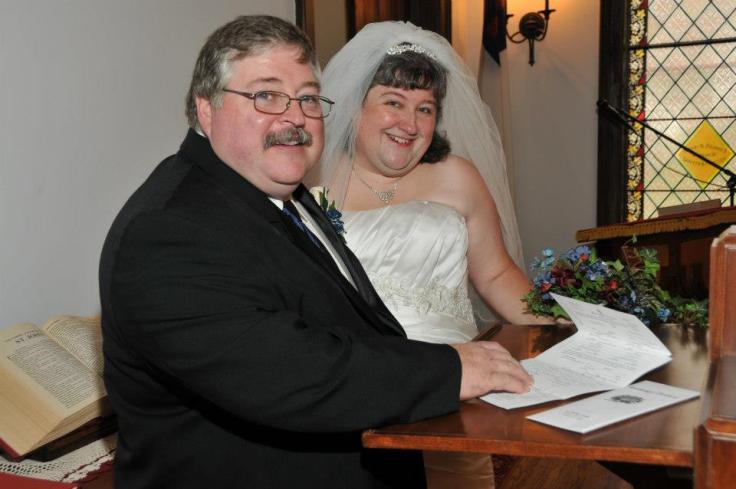
Thirteen years ago, I married my husband, David. He isn’t “Prince Charming,” though he can be charming and noble at times. He is, as I am, a flawed human being. David was married before, and he carries the hurt of betrayal and loss of trust from the past. I carry the hurt of being rejected and passed over for so many years. Marriage doesn’t make the past disappear. Marriage is not a “cure” for such hurts.

But marriage is more. God instituted marriage from the beginning for a man and woman to come together in a mysteriously intimate relationship that models what God’s love is like. (See Genesis 2:24; Matthew 19:5; Ephesians 5:31 and others.) David and I don’t exist to “complete” each other. We don’t cease to be our own individual selves. And yet, we are not the same as we were before our marriage. We are more than the sum of our parts– we are ourselves, yet we are one– the Fairs. He is David Fair, and I am Lila Fair, but WE are THE Fairs. And spiritually, we are also one WITH Christ– as individuals and as a couple. We walk forward as One. We make decisions together. We share hopes and dreams, as well as struggles and disappointments. We fight sometimes– not against each other, but against differences or misunderstandings that could weaken US as a couple and weaken our relationship with Christ.

I don’t pray any less often or less fervently now that I am married, but I pray daily about my marriage. I thank God that He was with me through all the “single” years. I thank God that He continues to work in our marriage– that David and I know more about love and faith, hope and fulfillment than we did 13 years ago! I pray that David and I will grow together for many years to come. I pray that we will impact our family as we live out what a Godly marriage is supposed to be. I pray that our marriage will inspire young men and women who are looking (as I once was) to see what a solid marriage involves– that the way we talk to each other, and behave, and work, and live will give hope to future couples, and glory to God.

Marriage and prayer go hand in hand. Prayer cannot guarantee that marriage will be easy–or even than it will survive. Marriage takes two people praying and walking in the same direction! But marriage–and life– without prayer will never be all that God intends it to be.

Two Women

Based on Proverbs 9

photo of women taking picture

“Let all who are simple come in here.”

Two women, so alike in some ways–
Both attractive and energetic,
Both young and vivacious.

But

One has prepared a table; the other has prepared her bed,
One talks of virtue and honor; the other whispers secrets.
One requires commitment; the other promises no strings.
To enter either door is to be changed.

architectural design architecture brick wall bricks

A man entered the door of the wise woman.
He was simple, uncomplicated, straightforward;
A man of few words, but noble heart.
He ate at her table, put his boots outside the door–
Carried her over the threshold.
Time passed, children came.
They added on to the house.
Put in a garden; got a dog.
Others took note.
There were gatherings–
Holidays, barbecues, reunions.
The house was a home.
He never looked back.

man standing beside his wife teaching their child how to ride bicycle

Years later, the man died.
His neighbors and family all spoke
Of his honesty, integrity, and wisdom.
His wife mourned and was comforted.
He was the father of three,
The grandfather of seventeen.

adult affection baby child

Another man entered the door of the foolish woman.
He was simple, uncomplicated, straightforward.
A man of few words, but a yearning heart.
He ate her food and drank her wine; slept in her bed–
Wallowed in her perfumed sheets.
He laughed at her coarse jokes,
Reveled in her catfights with the other girls,
And the stares of other men.


He bought her jewelry.  She bought him a car.
They lived the dream: parties and vacations;
Dancing ’til dawn and no responsibilities.
They forgot to pay the bills; they wrecked the car.
Others took note and shook their heads.
Time passed.


She moved in with someone else.
He moved into a hotel.
There were other women
And other hotels.
There were neighbors, friends–
Cars, jobs, bright lights and
Stolen pleasures.
But he was never the same.

woman holding ceramic mug while smiling photo

Years later, the man died.
His neighbors and friends
Spoke of the loss
In passing, over a beer.
The woman had almost forgotten him.

When someone brought up his name,
She said, “Such a simple, stupid man.
I wonder what ever happened to him.”

“Let all who are simple come in here.”


What God Didn’t Give Me

I’m very grateful for all the many blessings that God has given me– for Salvation, most of all. But God has blessed me with family, health, freedom, and so many other wonderful things. But there are several things God didn’t give me. Some of them are things I wanted (or thought I needed!) Others are things I never even imagined.

God didn’t give me a pony when I was younger. God didn’t give me blonde hair. God didn’t give me the genetics to be 5’9″ tall, athletic, and thin– I never became a ballerina or a model. God didn’t make it possible for me to study in France my junior year of college like I had wanted. God didn’t see fit to make “Mr. Right” fall in love with me in high school or college. God didn’t give me children to raise. God didn’t let my father live long enough to walk me down the aisle when I finally got married. And I never won the lottery (probably because I don’t play!– but still…)

It’s very human to look around and see what others have that we might desire– things that God did not choose to give us; even things that God has taken from us–and feel resentment, envy, and even anger. But we rarely look at those things others have that we would NOT desire. And we rarely look back and see how things we thought we wanted would not have been good for us, or how God removed things from our lives–even good things–for a better purpose. Sometimes, we cannot know or understand such things this side of heaven. But it might be a good practice once in awhile to look back and see what God DIDN’T give us– and thank Him for His wisdom and provision!

God allowed me to get chicken pox as a child– but He didn’t let me get Polio, or Diphtheria, Scarlet Fever or Whooping Cough. God didn’t give me blue eyes like my dad– but He didn’t give me Dad’s color-blindness, either. God prevented me from going on a date with one cute and popular boy who asked me out in high school. And the one in college. And the one I worked with. But God delivered me to my husband a virgin, and free of the guilt and shame of a string of failed relationships. God took my father at age 68. But He healed my father after a heart attack at age 50 (the reason I never got to study in France). We had and “extra” 18 years with Dad, and while Dad was sick most of the last years of his life, we didn’t have to see him suffer years of pain, misery, and helplessness. And about that semester in France? Some of my friends went that year– and they were plagued by injuries, nationwide strikes, and other issues. God knew what I wanted in each case; He also knew what was best for me.

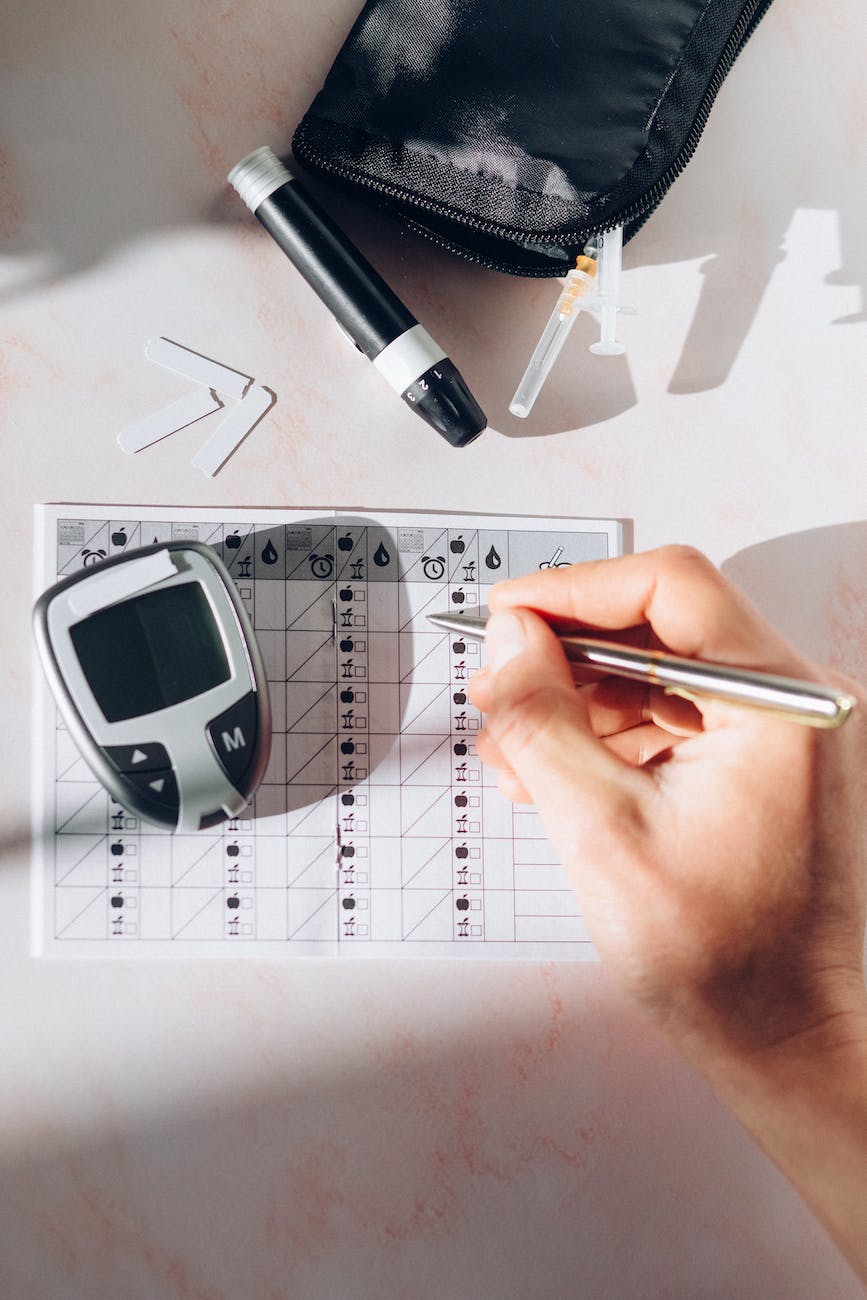
A couple of years ago, I was diagnosed with Diabetes. God did not “give” me Diabetes. (That’s another mistake we often make.) God gives good gifts. (James 1:17) But we live in a fallen and imperfect world. Disease, injustice, pain, and heartache are part of this world. Someday, God will redeem the world and put an end to all of these, but for now, there is no guarantee that God will keep us in perfect health or happiness. So, I’m Diabetic. I’m not grateful because I have the disease, but I am grateful for so many things related to it. I am grateful that I live in a time when treatments are both available and accessible. I am grateful that I was diagnosed, rather than suffering a coma or dying without help. I am grateful that I have access to healthful foods and the ability to exercise– two things necessary to keep the Diabetes under control. I am grateful that I lived for so many years without the disease. I am grateful for a supportive husband and family members who help keep me motivated. And I am grateful that nothing about having Diabetes changes IN ANY WAY God’s love for me, and His plans to give me eternal life in Him!

Are there things, people, or situations in your life that God DIDN’T give you? Healing that was denied, or blessings withheld? Hurtful things that He allowed to happen in your life? That He took away from your life? God doesn’t want us to pretend that all is perfect in our world. He knows the pain of NOT getting what we wanted, and the agony of losing what we did want. But He also knows the joy that we haven’t yet experienced– the joy of renewal; the joy of restoration; and the joy of completion.

God didn’t give me a pony– nor the hard work of caring for it, or the heartbreak of losing it. God didn’t let me date the popular boy– but He gave me a man of gentleness and integrity. God didn’t give me children to raise, but He gave me grown children, and grandchildren to love. God didn’t “give” me the semester in France, but He did give me opportunities to meet people from France. He gave me opportunities to use the French language I studied– in Florida, Texas, and even the Dominican Republic! God didn’t let my father walk me down the aisle at my wedding. But He allowed Dad and David to meet and even know each other– years before we were married. God didn’t give me perfect health here on Earth– but there will be no disease or death in Heaven.

Thank you, God, for all that you have given me– even Diabetes–and for all that you have allowed to shape my life. Help me see You in every detail of my life– the pleasant, the painful, the difficult, and the mysterious– and to praise You in every circumstance. Thank you for today, and for all the plans you have for it, and for me. Thank You for being You!

I Just Called to Say…

Near the end of 2020, my mother took a bad fall and broke her hip. Because of COVID, we were not allowed to visit her while she was recuperating. Thankfully, she had her cell phone and was able to make and receive phone calls. My mom was a very independent sort, but she loved to be “in the know” about all that was happening in the neighborhood and among our family members– births, deaths, hospitalizations, relocations, etc.. But, for all her interest in “what’s new,” Mom was completely computer-illiterate. She didn’t text, she didn’t have e-mail, and she knew nothing of social media. She relied on her phone and her desk calendar and notepad. Being trapped in a nursing home for six weeks was torture for her, even though she needed to recover and do physical therapy there. I tried to call her every day, and each time, she would ask, “Do you have any news?”

Sometimes, I had “news” for her; someone had tested positive for COVID, or a new baby had been born. But most days, I had to tell her– “I just called to say I love you, and I’m thinking of you.” And I could “hear” her smile on the other end of the line as she replied, “well, that means a lot. I just love to hear your voice.”

I don’t know why, but it struck me the other day how often we pray about circumstances– we “call” on God because we have “news”– situations that we want to bring to His attention– as if He didn’t already know! We pray because we want to lift up someone who is ill or suffering; we pray because we need to make a confession and ask forgiveness; we pray because we are facing an unknown future, and we desire God’s guidance and wisdom. Other times, we pray because we have a specific praise or thanks to offer. These are all legitimate reasons to reach out to God in prayer, and we certainly SHOULD pray in all circumstances, but how often do we call on God just to say, “I love you and I am thinking of you!” In fact, how often do we take the time to disconnect from social media and all the other distractions of our day to really focus on spending time with God?

Mom went back in a nursing home a couple of years after her first fall…she fell again and broke her other leg! So, I called her nearly every day– with or without “news.”

I marvel that God is every bit as eager to hear from me– even me– every day, “just because.” I’m so glad that I had the ability to talk to Mom; to hear her voice–and yes, even to share the “news.” She has been gone almost two years now, but what precious memories of our time together on the phone! How much greater my joy that I can talk to my creator; that I don’t have to worry about a busy signal or dropped call; that I can read His words to me any time of day; that His presence–even though I can’t see Him or hear His voice–follows me everywhere. And that He sends special people to call me, or text, or e-mail– “just because.” And no matter how I feel about my circumstances, God is so very glad to hear from me. And you!

This isn’t a hymn, but the music was running through my head as I wrote this. How often to we hear a ballad or a love song, and suddenly realize that God sings love songs over us?! (See Zephaniah 3:17!)

Why Do You Love Me?

One of my very favorite bedtime stories when I was growing up was about a little bear cub. ( “Why do you love me?” by Mabel Watts) He and his mother were on a walk, and the little bear kept watching other little bears. Some were getting in trouble–running away to play in the brier patch, or climbing trees to get honey–and meeting up with bees! Little bear knew that sometimes he was like that. Other bear cubs were kind and helpful. He knew that sometimes he was like those bears. At one point, the cub was confused and asked his mother, “WHY do you love ME?” After all, he realized that he was helpless and accident-prone. Without his mother, he would be lost, hungry, and in danger. Yet his mother was always there when he needed her– even when he said he didn’t! His mother’s answer provided solid assurance– “Because you’re MY little bear!” The story book is almost impossible to find now. It is long out of print, and has been crowded out by newer books with similar titles. But for 50 years, I have cherished this story of unconditional love, because it echoes the Biblical story of God’s love for each of us.

We find many reasons to question God’s love. We find ourselves in trouble, and we are afraid to ask for help or forgiveness. After all, we have done nothing to earn it. We don’t deserve it. Even our good behavior cannot save us from our own limitations. And our bad decisions can hurt others in ways we cannot “fix.” We may have walked away from God or sneered at His care of us. We may be lost and hopeless without God’s intervention on our behalf. Why would He help? Why should He look kindly toward us?

But God’s answer is the same as that Mother Bear–You are MINE! I Love you with an everlasting love!

Even when we wander and try to do things we shouldn’t or can’t, God is near, and ready to help. He wants us to walk with Him and follow Him; He wants us to turn to Him in our need. Why? Because we belong together; we belong to HIM. And when we see others behaving badly–even when their actions hurt us–God still loves them, too. He created each one of us to walk with Him, trust Him, learn from Him, and experience His loving care.

In fact, as children of God, we should be showing the same kind of unconditional love to others. That does not mean that we condone wicked or dangerous behaviors. But we should love in such a way that people may even question it– “Why do you love me?” Instead of sharing our anger, or our own self-righteousness, what if we shared compassion and held to the truth without arrogance or disdain? What a great opportunity to share the reassurance and hope we know in Our Father’s great love!

“Fruit-ful” Prayers

Our church has been presenting a series of sermons on being a BLESSing to our neighbors. BLESS is an acronym for Begin with Prayer; Listen with Care; Eat Together; Serve like Jesus; and Share Stories. We were challenged the first week to choose four close neighbors. We were to pray for them, and if we didn’t know them well, to reach out and make contact. This has been a true challenge for David and I, because we live in an apartment above our shop. Most of our neighbors are not residential, but commercial! Nevertheless, we decided on a couple of commercial “neighbors” and a couple of non-traditional “neighbors.” We started praying– praying for opportunities to get to know our neighbors a little better, and praying for their health, well-being, etc. We’re getting to know some of the workers at the two commercial locations, and getting to know our chosen “families” a little better. We’ve been more intentional about stopping to visit or chat, and making sure we listen and respond sincerely– this is not just a short-term “project” but an opportunity to build closer relationships. And we’ve been praying for opportunities to develop closer friendships.

So this week was the sermon I’ve been dreading– “Eat together.” You might wonder why this is so fearsome–doesn’t everyone like to eat? And I love meeting over a nice meal. I love to cook, as well. The problem? Our apartment is tiny and upstairs– NOT conducive to inviting people over for a warm, comfortable meal shared around a large table. We have two mismatched chairs around a small table in our tiny kitchen, and two more mismatched armchairs in the living room. No couches, no designated dining room, no space to “entertain” guests. I want to serve others. I want to grow friendships. But I’m not a hostess. Not in a cracker-box-sized apartment upstairs. I know this seems petty– I’ve known amazing hostesses who live in shacks and invite guests to sit on a dirt floor. I know. But I still struggle with the idea of entertaining others in my current circumstances.

I knew it was coming– we looked at all the examples in the Bible of good and even sacred things happening around the table and/or involving food– Passover Seders, Communion, the Wedding Feast of the Lamb (among others)… “But Lord,” I prayed, “I can’t invite the entire staff next door to my home for a meal. And some of the “residential” neighbors we are praying for are elderly and can’t manage the stairs to our apartment even if we had the room to host a meal. And it’s too expensive to invite some of the families or staff to a restaurant. How are we going to be able to bless others and “Eat” together?”

But God isn’t bound by conventional ideas– even when it comes to hospitality. At the end of the service, we were surprised by an announcement from our pastor– one of the families in our church owns a fruit farm. Last year, they had a bumper crop of apples, and they donated several bags of the apples to the church. There were enough apples for each family to take several bags to “BLESS” our neighbors! No meal to fix. No apologizing for the smallness and shabbiness of our living space. But a chance to share FOOD with my neighbors and bless them with wonderful apples! Thank you, God!

David and I wasted no time– we delivered most of the apples yesterday afternoon! And we had so many apples, we were able to bless more than just the four locations we had decided on earlier in the series. We were able to bless at least 13 different families/ businesses with at least one full bag of apples! We blessed families with small children, a retired couple; a single person on a fixed income; an extended family of four generations; we blessed people who go to another church; we blessed people who don’t attend church at all. We blessed the staffs at a couple of local businesses, and shared laughter (and concerns) with several friends, old and new.

Not everyone wanted the free apples. One family turned down our offer. Some people are suspicious of free gifts; some are too proud to accept food as a gift; some are simply not interested, or too busy. It is the same with the Good News. Some people do not want what we have to offer in Christ. Some are suspicious; some are too proud or even too ashamed to believe that God has Good News for them. Some are too caught up in their problems or their ambitions. We must not be discouraged, though. God has not given us such a precious gift without also giving us the opportunity share it with others. And we will see how God continues to work in mysterious ways. Some people were surprised and confused by the concept of “apples of blessing.” They wondered what we might ask for in return. We smiled and said there were no strings attached– we just wanted to share our blessing with them! Some people took more apples than we had planned to give them– that’s ok, too. Others wanted to bless us in return– we received over two dozen eggs in gratitude for a couple of bags of apples! Today, I’ll be delivering the last few bags to businesses that were closed yesterday (to share with their staff). I’m excited to share this gift–and I’m reminded of how good it is to share the free gift of the Gospel!

God didn’t change the circumstances of our apartment. I worried that I would be asked to host an elaborate meal, or that I would miss out on blessing others because of our circumstances. But in God’s economy, we can show hospitality, love, generosity, and compassion on the street. We can share food in a way that opens up opportunities to make memories, share stories, communicate prayer requests and concerns, serve others’ needs, and make new friends. There are dozens of ways we can open our hearts and our lives to our neighbors, serve them, and pray for them…

We kept one bag of apples– maybe someone in our neighborhood would like a pan of apple crisp! And now, David and I have a few extra eggs! Anyone interested?

May Day Mishaps

Today is the first of May– May Day. May Day has a long history, with pagan origins tied to the celebration of late spring or early summer. In many European nations, there would be dancing around a May Pole, or May bush, floral garlands, and floral bouquets offered at various shrines, including to the Virgin Mary. In some communities, girls vied to be crowned the “May Queen,” while stories were told of fairies. May Day was popular in the United States for many years around the turn of the 20th century– with parades, flower baskets, and more. It is less popular in modern times, and many of the floral parades and festive outings take place around Memorial Day, instead.

When I was a child in elementary school, we made paper “flowers” and a small paper coronet with a loop handle for May Day. I remember making daffodils, hyacinths, and tulips out of construction paper and other craft materials, and making the coronet “baskets” out of decorated paper cones. We glued or stapled the pieces together to take home. Then, we were encouraged to loop the handle over the door knob at the front door of our house when we got home, knock, and run and hide around the corner. Presumably, our mothers or babysitters would see the gift of flowers and wonder who could have left them there. It was a fun game to play, and a way to celebrate the season of wonderful spring flowers.

Unfortunately, when we did this in kindergarten, my flowers got trampled on the bus. It was a rainy day, and my flowers fell in the aisle, where a boy stepped on them with muddy sneakers. They were ruined. I cried and cried, and another boy on the bus gave me the flowers he had made. It was a thoughtful gesture– one I’ve never forgotten– but I remained desolate. I told my mother the whole sordid story, and she told me that, in her day, they had picked wildflowers, such as violets and even clovers, and tied them with a string to leave on someone’s porch. Then she took me outside, and we made a small bunch of violets with a couple of “Dutchman’s Breeches.” I didn’t get to surprise her, but we had such fun looking for wildflowers together.

I loved this game so much, I decided to go a step further the next year. We made paper “bouquets” at school, just like the previous year. Mine stayed clean and dry, and I hung it on the doorknob and mom pretended to be surprised. But later, I took one of our juice glasses from the cupboard, and picked a nice bunch of my mom’s live daffodils and hyacinths, a couple of her irises, and a tulip. I tried to arrange them in the juice glass, but it was too short and small to hold all the flowers I had picked. I left it on the porch, near the door, and knocked and hid, waiting to see my mom’s delight at her “surprise” bouquet. But instead of delight, I heard her wail– “Oh, no! My flowers!” The glass had tipped over, the flowers lay limply all over the porch, and the glass had rolled onto the ground. I thought I had made a wonderful surprise. Instead, I had made a mess. I had picked almost all of Mom’s best daffodils, and all of her pink hyacinths. I had trampled some of her other irises to get to the one I wanted. She only had a few tulips, and I had picked the only red one.

My intentions were good, but my execution was poor. And the result was disappointing and hurtful to us both. Mom didn’t realize I was right around the corner hearing her dismay, and I didn’t realize my “gift” would fall so flat.

It’s been over 50 years since my “May Day Mishap,” but there are some lessons I have never forgotten:

  • Picked flowers die! Mom wasn’t angry with me for wanting to pick flowers, but she knew that picked flowers would wilt and die. In later years, Mom loved receiving hanging flower baskets, and planters with live flowers. And we had many memories of planting live annuals in the front yard or at graves near Memorial Day– flowers that might take root and spread joy throughout the summer months. In the same way, there are so many “showy” projects that vie for our attention– projects that may seem urgent or offer quick rewards like status or money. We are tempted to “pick” projects that will make us look good or feel good in the moment. But the really important projects are those that have lasting impact, even if they don’t “show” as well. We are wise to invest in “little” things that have lasting impact over “big” but fleeting activities and investments.
  • When giving gifts, it really is the thought that counts! My mom was just as delighted by the “second-hand” flowers I got from my classmate as she was by the the ones I made the next year. Not because his were “better” than mine, but because they demonstrated that I had a good friend at school with a kind heart. My “mishap” gift came, in part, because I wanted to give a “better” gift, not because I wanted to delight my mom, but I wanted to impress her. My mom was a saver– she saved all my old school papers, old valentines, birthday cards, and more. And she saved letters from her friends and family– over eighty years of them! Not because the cards and letters themselves were so wonderful, but because each one came with good wishes. She had an entire farmhouse of good wishes and thoughtful memories when she passed away in 2023.
  • Relationships are more important and more valuable than resources. I loved looking for wildflowers with my Mom that year of kindergarten. It’s one of my favorite memories of May Day. And I still remember the kindness of my friend, Ken, whose heart has since led him to the mission field on more than one occasion. No May Day flowers will last over fifty years, but friendships and relationships can and do!
  • Forgiveness is sweeter than flowers. I was so astonished to think that my error in judgment had caused my mother pain– and yet, when she found me, she hugged me tight and gently offered both forgiveness and correction. She demonstrated exactly the way our Father loves us. So often, I want to come to God with a bouquet of praise, or a basket of good works, leave it before His Throne and run away and hide. But God isn’t impressed by my flowers or my grand gestures. He wants to spend time with ME. Every year, he sends fields of wild flowers; in every season of life He sends friends, helpers, and other blessings. And, more than anything, He wants to share all of it with me. Not because I deserve it, but because He is so full of love and forgiveness. He wants to remind me to “come home” to His gracious arms. He is not waiting to scold me, punish me, or make me feel small. He wants to hug me, and with patience and gentleness, He will offer His Love, and correction. No matter what “May Day Mishaps” I may have.

This May Day, I am encouraged by God’s faithfulness, His forgiveness, and the power of His love. I hope you are, too!

Blog at WordPress.com.

Up ↑