
Who Are My Enemies?

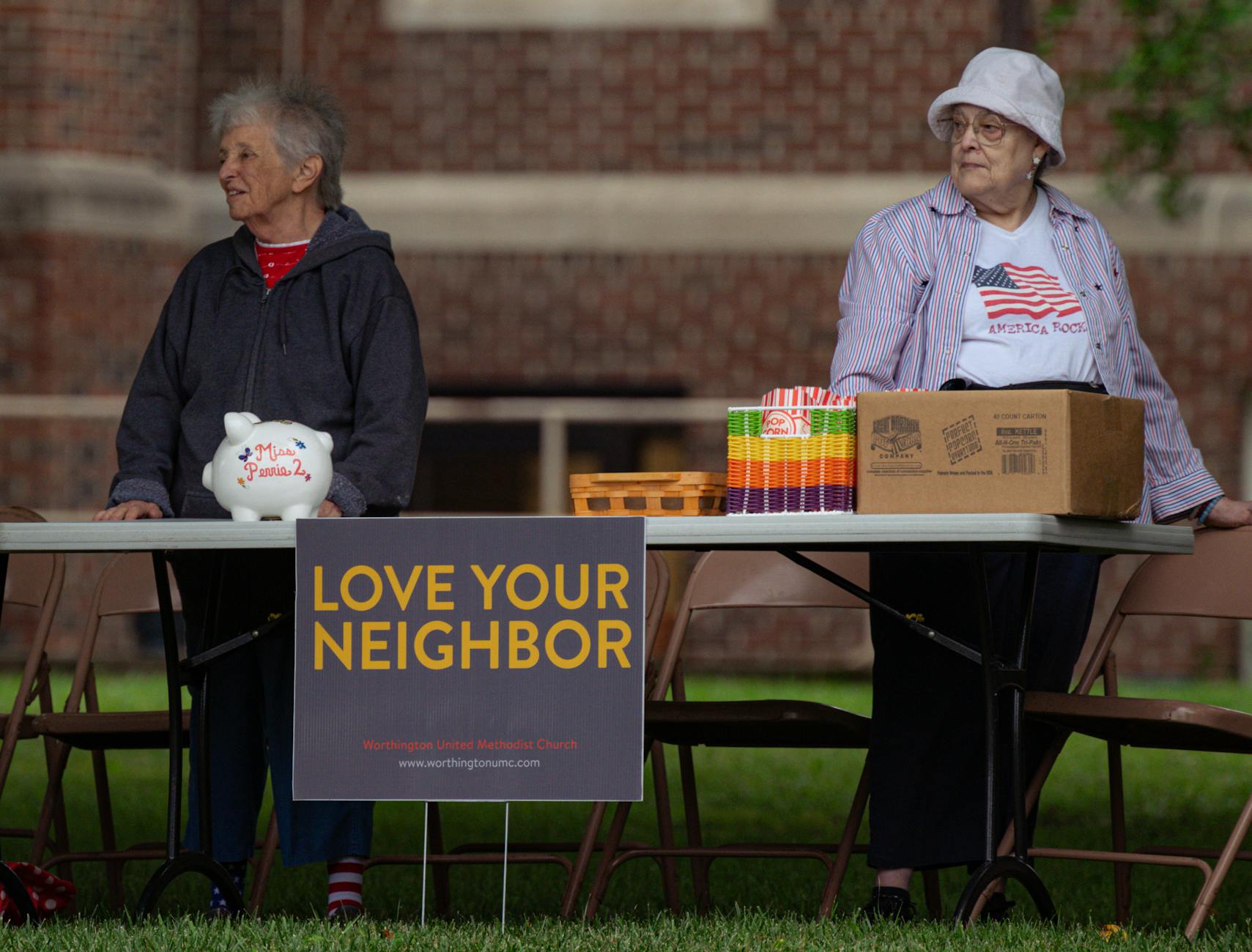
In the Parable of the Good Samaritan (see Luke 10:25-37), an expert in the law asks Jesus, “What must I do to be saved?” Jesus, as he so often does, answers with a question of his own. “What is written in the law? How do you read it?” Of course, the expert in the law answers with confidence, and Jesus commends him for his answer. But the law expert isn’t mollified by Jesus’s affirmation. The law is clear, but it is not necessarily specific. “Love the Lord your God with all your heart and with all your soul, and with all your strength, and with all your mind.” That seems pretty clear. But the rest– “Love your neighbor as yourself”– Just who IS my neighbor?

Jesus answers with the famous parable about a man who is beaten and left for dead on the side of a dangerous road. Two religious leaders see him, but each refuses to help. Instead, a Samaritan (despised by the Jews) offers help and compassion, beyond what the law would dictate. Thus, the expert in the law must conclude that a “neighbor” is one who shows mercy and kindness to those whose path he crosses.

In another instance, Jesus talks about enemies:

“You have heard that it was said, ‘Love your neighbor and hate your enemy.’  But I tell you, love your enemies and pray for those who persecute you, that you may be children of your Father in heaven. He causes his sun to rise on the evil and the good and sends rain on the righteous and the unrighteous.” Matthew 5:43-45 (NIV)

So, who is my enemy? If my neighbor is anyone who crosses my path, who is left to hate? Jesus IS more specific here. He commands us to pray for those who persecute us; that God causes the sun and rain (and other good and life-giving things) to happen for both the evil and the good; both the righteous and the unrighteous benefit from His mercy. God loves sinners so much that Jesus came to die for them! Jesus met a lot of needy people. He also met some nasty characters who never sought His forgiveness or His help. Yet He did not march in protest against oppression by Roman soldiers. He did not campaign to have the hypocritical Pharisees removed from their positions of power. He did not advocate stealing from the greedy tax collectors to pay for welfare programs. He allowed Himself to be arrested and even (unfairly) convicted and sentenced to death on a cross. His “enemies” were allowed to win a battle. But Jesus Christ has won the war. And when the war is over, there are no “enemies” left to fight!

There is a lot of talk today about enemies, and how they should be treated. We see enemies among our own neighbors who disagree with us politically, or who practice a different religion (or none at all). We see enemies in those who taunt us, or those who live more lavishly, or those whose position in life causes us to think of them as unfairly privileged, or unworthy of certain benefits. And, in many regions of the world, we see as enemies those who are causing war or inciting violence and damage against another nation. These are battles, indeed, but they are battles that, in God’s eyes, have already been won!

Jesus commands us to pray–even for those we may view as enemies! And we are to show mercy and love toward those who view US as the enemy! Not smug self-righteousness, or cold indifference. Not vengeful action or hateful rhetoric. Not name-calling or “cancelling,” “doxing,” or “ghosting” people. We are to pray for their well-being. We are to love them as we love ourselves!

In our own power, we cannot do this. It goes against our nature. We want to be “right.” We want to “win” our battles. We want to see justice done– NOW! We want to be able to dismiss and condemn those who are unrighteous. We want to see them pay. We want to be proved and justified. We want them to be found wanting in comparison with our own righteousness.

We do have a very real enemy– one who does not deserve our love or prayer. But it is not a person. Our enemy is Sin. Our “enemies” are godless spirits– of rebellion against God, of pride, of greed and rage and chaos. People may display behaviors and cling to false teachings; their actions may threaten us, horrify us, or disgust us. But there is a priceless soul involved– a soul who is in slavery to Sin. There is no person on earth who was not created in God’s image, or who is so far from God’s love and forgiveness that we are allowed to condemn. Therefore, there is no person for whom we cannot pray or show love.

Let me be very clear, however. There are certain actions that require us to stand up for truth and justice. Condoning dangerous, violent, unjust, evil actions– worse yet, promoting or participating in such actions in the name of kindness, empathy, “social justice,” equity, vengeance, or solidarity with a particular group–is not loving. We may defend the vulnerable, prosecute the violators of law, or work to remove ourselves from relationships that are abusive or oppressive, while still praying for our oppressors, persecutors, or self-described enemies. We may still show them forgiveness, work toward peace, and even treat them with respect without compromising our own dignity and adherence to the truth. We may (and should) continue to pray for justice. We may pray that the true enemy’s plans will be frustrated and ineffective, and that healing and righteousness will prevail.

Praying for our “enemies” is hard work. It requires us to be humble. It requires us to remember that we, too, are sinners saved by Grace, and not by our own actions or beliefs, but by God’s intervention and design. It requires us to see that our enemy is also our neighbor.

God, grant me the loving eyes to see others as You see them, and the wisdom to see my actions as others experience them.

These Three Remain–Faith

(I will be working at our church’s Vacation Bible School all this week, so I am re-posting three entries from a couple of years ago on Faith, Hope, and Love. I will be back with new posts next week.)

If I speak in the tongues of men or of angels, but do not have love, I am only a resounding gong or a clanging cymbal. If I have the gift of prophecy and can fathom all mysteries and all knowledge, and if I have a faith that can move mountains, but do not have love, I am nothing. If I give all I possess to the poor and give over my body to hardship that I may boast, but do not have love, I gain nothing.Love is patient, love is kind. It does not envy, it does not boast, it is not proud. It does not dishonor others, it is not self-seeking, it is not easily angered, it keeps no record of wrongs. Love does not delight in evil but rejoices with the truth. It always protects, always trusts, always hopes, always perseveres.Love never fails. But where there are prophecies, they will cease; where there are tongues, they will be stilled; where there is knowledge, it will pass away. For we know in part and we prophesy in part, 10 but when completeness comes, what is in part disappears.  11 When I was a child, I talked like a child, I thought like a child, I reasoned like a child. When I became a man, I put the ways of childhood behind me. 12 For now we see only a reflection as in a mirror; then we shall see face to face. Now I know in part; then I shall know fully, even as I am fully known.13 And now these three remain: faith, hope and love. But the greatest of these is love.

1 Corinthians 13 (NIV) via http://www.biblegateway.com

I love reading God’s word. I spent much of my youth memorizing scripture, and much of my adulthood trying to recall what I learned then! One chapter I memorized was 1 Corinthians 13– commonly known as the “Love” chapter.

But near the end of the chapter, Paul talks about what remains, and what doesn’t–he says that prophecies and knowledge will pass away, and things that are incomplete will disappear. He lists three things that will remain. We often spend a lot of time on Love (and I will get there eventually), but I want to talk about all three, why they must remain, and why they are connected in prayer. I will begin today with Faith.

Faith, as we learn in Hebrews 11:1, is “the substance of things hoped for, the evidence of things not seen.” Faith is foundational. Faith gives us roots. Faith is an anchor. Faith keeps us grounded and strong. But Faith, as the above metaphors suggest, is deep and unseen. I can’t “show” you an anchor when it is in use. If I pull up a tree to see its roots, or tear down a building to show off its foundations, I will destroy the very thing I am trying to illustrate.

And Faith demonstrates itself best under testing. I have to admit, the last couple of years have been a difficult test of my Faith, and that of many others. Do I REALLY believe that God exists? That He cares? That He listens to prayer? That He answers? It is easy enough to say all that, but when everything around looks murky and uncertain, do my actions match my words? Do I live as though God is in control? Is His word still an anchor for me when it doesn’t seem to “work?” Do my prayers reflect confidence and praise in the midst of unrest, disease, and death? Are my prayers filled with Faith that God is who He says He is, and that He will do what He has promised? Or are my prayers timid and empty– wispy wishes, instead of honest heart-cries?

Where is my faith? Is it in myself? My words? The words of other people?My actions and deeds? In powerful groups? Governments? Money? Chance? Even Religion? Does my Faith rest in following the laws of the Bible? Does it rest in knowing the “right” picky points of theology? Or does it rest in the One who is unchanging, eternal, and all-powerful?

The world is screaming. The world is filled with fire, smoke, flashing lights and violent voices. Is God silent? Is He being drowned out or hidden by the chaos we’re walking through? Or am I listening to wrong voices, and focusing on smoke and fog?

I can’t show you the roots of my Faith in this moment. I can’t see them, and sometimes, I feel shaken. But, as Job declared, “I know my Redeemer lives” (Job 19:25a)! I will continue to declare that God DOES exist. He DOES care. He DOES listen. And He WILL answer. And I will continue to Hope and Love in light of this Faith. I will continue to seek patience, and kindness, humility, truth, justice, and perseverance as I reach out to others. And I must continue to develop Faith in the midst of difficult times. It is the anchor upon which Hope and Love rest.

I’m a Believer!

When I was much younger, I was a huge fan of the Monkees. I loved their TV show, and their songs. One of my favorites was called “I’m a Believer!” It’s a catchy tune about instant infatuation– “Then I saw her face; now I’m a believer!”

YouTube video of “I’m a Believer!” (Written by Neil Diamond; performed by The Monkees)

Years after it was a hit song on the radio, it was used in the soundtrack of the movie “Shrek!”, where it found another generation of listeners. The tune is over fifty years old now, but I still think the tune is catchy, and I love to sing along when I get the chance. However, when I hear the phrase “I’m a Believer!” it means something immeasurably more than just a great pop hit..

It can be very easy to fall into the thinking behind this song. We all are looking for something positive to believe in– Love, music, friendship, success, religion. We all want to be believers in “something” beyond the mundane and the present. And we want a belief that will uplift us, sustain us, and make us want to sing along.

But singing about belief and having a real, sustaining Faith are not the same. The singer of the song claims that he wouldn’t leave– couldn’t leave– the object of his affection. Yet most infatuations are temporary. This love hasn’t matured and been tested by hardship and trials. We can feel good about new “love” in the moment, but we can also be disappointed and betrayed by it. Believing in romance and happily-ever-after can make us feel like singing, but the feeling cannot sustain us through grief and pain. Songs and movies may have a sappy, happy ending, but real life is a struggle.

Faith– real faith in a real and Loving God–is different. We may still be inspired to sing and worship, but we will also be inspired to serve and persevere in good times and bad. It brings strength and lasting peace. And it doesn’t depend on seeing God’s face– it is knowing that He is present, even in the darkest moments; knowing that our lives are in His hands, in spite of our circumstances or surroundings. True faith doesn’t even depend on the strength of our will to believe. It will survive momentary doubts and struggles, until there is “no doubt in my mind” that can triumph! And we can rest assured that God will keep HIS promise never to leave us. That’s what brings me hope and joy when I say, “I’m a Believer!”

It’s fun to sing along with The Monkees, or dance along with the characters in Shrek, but genuine Faith sounds more like this:

“What Must I Do?”

18 And a ruler asked him, “Good Teacher, what must I do to inherit eternal life?” 19 And Jesus said to him, “Why do you call me good? No one is good except God alone. 20 You know the commandments: ‘Do not commit adultery, Do not murder, Do not steal, Do not bear false witness, Honor your father and mother.’” 21 And he said, “All these I have kept from my youth.” 22 When Jesus heard this, he said to him, “One thing you still lack. Sell all that you have and distribute to the poor, and you will have treasure in heaven; and come, follow me.” 23 But when he heard these things, he became very sad, for he was extremely rich. 24 Jesus, seeing that he had become sad, said, “How difficult it is for those who have wealth to enter the kingdom of God! 25 For it is easier for a camel to go through the eye of a needle than for a rich person to enter the kingdom of God.” 26 Those who heard it said, “Then who can be saved?” 27 But he said, “What is impossible with man is possible with God.” 

Luke 18:18-27 ESV via biblegateway.com

I love that Jesus didn’t just give pithy answers to questions, but often went in roundabout ways to explore the motives behind them. I also love how He would use others’ questions, mixed with parables, metaphors, or other figurative language to stimulate further thought. And His parables and word pictures, while short and simple, have layers of meaning that cause us to ponder deeper issues.

The “Rich Young Ruler” in the above story came to Jesus with a question. “What must I do to inherit eternal life?” Instead of answering the question, Jesus seems to get distracted by the young man’s greeting. “Why do you call me ‘Good?'” Did the young man really think that Jesus was better, or wiser, or more righteous than the religious leaders of the day? Or was he trying to flatter Jesus? Or did he think that Jesus would see him as an equal (or even superior) when he found out how righteous the ruler was? Jesus got to the heart of the greeting– “No one is good except God alone.” And therein lies the true answer to the ruler’s question, as well. There is nothing anyone can do to be “Good” enough to inherit eternal life.

Photo by Anna Tarazevich on Pexels.com

Jesus could have said this, but would the young ruler have accepted this answer? Probably not. His question betrays an assumption that he WAS good enough– that he had already done all that was required and that Jesus would surely be impressed and announce to the crowd that here was an example of someone who was worthy of eternal life. Instead, Jesus led the man through his pride by naming a few of the commandments– the very ones the ruler was so sure of. Indeed, this seemed to be exactly what the ruler was hoping to hear– proof that he had “passed the test.” Ironically, he was addressing Jesus as “Good teacher, ” but seemed to miss that fact that he was also addressing the only One who is truly Good! Jesus–God in the flesh — the very one whose death would guarantee that anyone would “inherit” eternal life. This young ruler doesn’t want Jesus to be his “Lord” and “Savior,” he just wants Jesus’s opinion.

Photo by Bryan Catota on Pexels.com

But then, Jesus pulled the rug out from under this man’s assumptions. “One thing you still lack.” One thing…I’m sure the young ruler thought it would be a fine point in the laws or traditions he know so well– some minor point that could be cleared up with a gift or a small offering. I find this a fascinating statement, because it is followed by “sell all you have and distribute to the poor…” It seems like such an oxymoronic statement. You lack one thing, therefore, you must give away all that you have. How is that possible? Because the “one thing” the rich man lacked was not an object; not something he could check off a list of “things I can do to impress the religious leaders.” This man lacked humility; he lacked a self-awareness of his own need. And he lacked the understanding of what it means to “inherit” eternal life. No one “earns” an inheritance. Even someone who is rewarded with an inheritance must trust in the goodwill of the person writing the will, and will only inherit under the terms of the will. Jesus’s “terms” were not that the man had to become destitute or spend the rest of this life as a beggar. But faced with the choice of his comfortable life in the here and now, or eternal and abundant life in heaven on God’s terms, this man chose earthly wealth and spiritual poverty.

Photo by HASSAN YAR JANJUA on Pexels.com

Almost lost at the end of Jesus’s surprising answer are the last two phrases, “and you will have treasure in heaven; and come, follow me.” This man wanted eternal life as an extension of his comfortable life on earth. He did NOT want eternal life enough to sacrifice his present comforts or his preconceived notions of “goodness.” He did not want to follow Christ– he only wanted to consult with Him.

Photo by Anna Shvets on Pexels.com

I find it uncomfortable to hear about the young ruler’s rejection of Christ. I understand the initial shock of the disciples as Jesus uses the illustration of a camel going through the eye of a needle to compare with a “rich” person coming into the kingdom of God. Wasn’t Abraham wealthy? Wasn’t Solomon rich? What about King David? If riches make it impossible to follow Christ, who can gain eternal life? Thankfully, Jesus redirects the focus– it’s not about the riches; and it’s not about what we “do”– it is God’s “Good” pleasure to give eternal life to those who choose to “follow” Him.

Photo by Tima Miroshnichenko on Pexels.com

“Good Teacher and Lord, help me to remember this lesson as I come before you in prayer. You have not asked me to ‘earn’ my inheritance. It is your gift to answer my prayers as you see fit; to be the Lord of my life; to be merciful and gracious to me; to prepare a place for me to live with You for eternity. What you ask of me is that I ‘follow’ you– that I listen to your call; that I accept Your “terms” of inheritance; that I share Your Grace and Mercy with those around me.”

“Thoughts and Prayers”…Revisited

One of the reasons I began a blog about prayer over eighteen months ago was in reaction to a scathing op-ed article about prayer written in the wake of a mass shooting. Well, here we are again. Two highly publicized (and several “smaller”) mass shootings occurred over the last week in the U.S., and the outrage and anguish is overwhelming and completely understandable. The senseless violence and subsequent loss of life stops us in our tracks. Why? Why would anyone do this? How? How could this happen? In the wake of such evil, millions of people rush to distance themselves from such evil; many of them resort to angry protests and calls for action. Many point their fingers at this leader, that group of people, that philosophy, that industry–any entity (other than oneself) that can be held responsible and made to “pay.” Many offer earnest condolences for the families of the victims– often with the phrase “thoughts and prayers.”

Photo by Kat Jayne on Pexels.com

But what good are any of these responses? Nothing we say or do can turn back time and undo the events of the past week. No amount of protesting, legislating, avenging, or moralizing will guarantee that everyone lives in peace and safety as long as evil lurks in human hearts– whether by vigilante gun violence, war, terror attacks, economic and political unrest, rioting, looting, domestic violence, brutality, assault, murder, or suicide. “Banning” guns (or “assault weapons”, “military-style” weapons, etc.) sounds like a sensible action to take, but it is not practical in the face of evil people who will not follow the law, and corrupt governments who will not enforce the law, or worse, who use their power to oppress their own citizens.

Finding, and even punishing a scapegoat may make us feel morally superior and bring a false sense of closure, but it will not break the cycle of anger, hatred, injustice, or lack of respect that is at the root of violence.

But there is something equally repugnant about hearing the phrase “thoughts and prayers”, no matter how earnestly it may be expressed, in the wake of inhuman tragedy. The “thoughts and prayers” of strangers have no warmth, no solidity, no promise, and no strength. They are wisps and vapors of selfish and graceless bystanders, who want to ward off the evil that has befallen someone else. They are nothing more than a pseudo-spiritual appeasement offered to the nameless, faceless fates.

Photo by Pixabay on Pexels.com

And the greater tragedy is that such empty phrases, expressed as reactions to great evil, cheapen the very real power that should be found in the pursuits of thinking/meditating and praying.

Prayer is not a knee-jerk reaction to bad news. It is not a gesture meant to signal to others that you are beyond the touch of whatever forces have just hurt someone else, or that by your thirty second of piety you can alter the consequences of a catastrophe or change the course of the future.

Where were the “thoughts and prayers” of others two weeks ago? Where will they be tomorrow or next week? What quality of “thoughts and prayers” go out to the families of victims whose names we have not even bothered to learn? Such superficial public expressions, sent with seven teary-eyed and five or six high five/praying hands emojis, mean very little to anyone except the sender. They change nothing from the past, and offer nothing going forward.

Photo by Pixabay on Pexels.com

I am as guilty of this kind of meaningless virtue-signaling as anyone. I want to feel as though I can, by such empathetic expressions, encourage and strengthen those who have been touched by horror, tragedy, survivor’s guilt, trauma, grief, etc. But I can’t. Nor can my anger, frantic attempts to “fix the world”, or brilliant analyses of all the root causes of violence prevent the next bombing, drive-by shooting, hijacking, arson, political uprising, or disappointing election result. I cannot change the hearts or minds of those with whom I disagree. I cannot “make” a better world.

But that is why I write this blog. It is through a lifestyle of prayer– real prayer, difficult and sometimes agonizing prayer, joyful and grateful prayer, pleading and gut-wrenching prayer, consistent and obedient prayer–that I engage with the only One who CAN bring hope, justice, change, renewal, and salvation to this world. And it is through a lifestyle pursuit of prayer–daily seeking God’s face, asking for His wisdom, accepting His mercy when I fail, reflecting on His character, acting in obedience–that He can change me. That power, that hope, and that renewal is available to ANYONE who will ask. It sustains us when tragedy strikes, and it empowers us to offer far more than empty “thoughts and prayers”– it causes us to pray, not just after a tragedy, but unceasingly– not just for our own comfort and safety going forward, but for the well-being of our enemies, not just for those who look like us or think like us, but for those who scream at us and tell us to stop already with the “thoughts and prayers!” That power causes us to seek peace where there is hatred, justice where we find corruption, and humility when we are surrounded by narcissism.

Photo by Pixabay on Pexels.com

And if we are not doing those things– if we are not tapping into that power– we should be taking a closer look at those “thoughts and prayers” we are hiding behind.

The prophet Jeremiah lived in violent times. His city was besieged by the Babylonians, and his king was a prisoner in his own palace. God had sent messages of judgment and punishment for the entire nation. Jeremiah prayed diligently, and spoke out against the injustice, pride, and idolatry all around him. In response, he was arrested, beaten, thrown into a pit, and abandoned. God even told him to stop praying for his countrymen, because they were unwilling to accept the truth about their condition, or prepare for the punishment to come. But in the middle of the violence and bad news, God offered hope and promises of restoration, justice, renewal, and peace. He also gave this warning to Jeremiah, that he should stand firm– he should, by his example of consistent obedience and hope– influence others, NOT let himself be influenced by the anger and arrogance of those around him.

Lord, I need to stop offering cheap thoughts and empty prayers that do nothing to honor You and little to help others. Give me the strength and grace to stop reacting to tragedy by reflecting the anger and self-righteousness around me. YOU are my hope, and the best hope I can offer to anyone else. Help me to serve others in truth and love, not judge them, dismiss them, or honor them above You. Help me to seek and stand for justice that is consistent with Your character and Your word, even if I stand alone.

Blog at WordPress.com.

Up ↑