Praying For the Persecuted

One of the questions I often face as a Christian involves why God allows people to suffer– especially “good” people. Why is it that God allows His followers to go through suffering, oppression, and persecution? If He loves us; if He is powerful enough to stop injustice and suffering, why DOESN’T He put an end to it? Why does He allow it to happen? To continue?

I’m not here to provide a definitive answer today. But I will give three possible reasons, and some practical suggestions when praying for those who face persecution.

Jesus said that His followers would face trials and persecution– not because He was powerless to stop it, but because it is part of God’s ultimate plan. In John 16, Jesus is talking to His disciples just before His betrayal. He speaks of betrayal, persecution, and suffering to come– for THEM, as well as Him. And He repeats the phrase, “I have told you these things…” each time with a reason. In verse 1, “..to keep you from stumbling (falling away).” In verse 4..”when the time comes, you will remember (my warnings) …” In verse 25…”I have told these things to you in figures of speech (figuratively/cautiously), but a time is coming when I will tell you plainly…” and in verse 33, “..I have told you these things that in Me you might have peace…” So, we know that even trials and struggles have a purpose in God’s plan, and that one day, we will know the reasons, even if we don’t understand now.

What are some possible reasons? Here are three:
  • Persecution/struggle builds strength, perseverance, and faith. It also “weeds out” the weak, faithless, and uncommitted. Churches may grow in number during times of stress and persecution, but they grow deeper and more powerful in times of persecution.
  • Enduring persecution baffles bystanders and confuses skeptics. It is the most powerful kind of witness to stand firm in the face of persecution. Many millions have come to Christ because of the faithful witness of the persecuted (and martyred) Church.
  • Persecution gives a unique opportunity to show the incredible, lavish, amazing and enduring love of God. “Bless those who persecute you; bless and do not curse” Romans 12:14. Not only does persecution strengthen the believer and baffle the bystander. It also convicts the persecutor when their cruelty is met with patient endurance and even mercy.

Do these reasons make suffering “easier”? No. But we can find peace, strength, and even growth during seasons of persecution, when we shift our focus from the pain to the promise. God will never leave us. He WILL bring perfect justice and peace in His time. He will use even our worst situations to bring grace, redemption, and glory.

Now, how can we pray for those who face persecution for their faith? We need to pray for God’s will to be done. Of course, we want persecution to stop and those who are being persecuted to be safe, and for justice to prevail. But what does God want? He does not WANT evil to flourish and people to suffer. But His plans and outcomes may include a season of great suffering in order to cause a season of great harvest and ultimate glory. There is no exact “formula” for prayer in the face of suffering, but here are a few suggestions:

  • Pray that God will strengthen those who suffer and help them to endure. Pray that they would be encouraged by the Holy Spirit to hold on to hope, to find the “peace that passes understanding”, and to keep their eyes on Jesus, even in the harshest of circumstances. Pray that they would not fall away or compromise but remain true and faithful.
  • Pray that Christians will not “return evil for evil.” Christ sent His disciples “into all the world” to make disciples through teaching and witnessing and living like Him. We are NOT to repay or take vengeance on our enemies– God will repay, and He will make all things new and right.
  • Pray that others will take notice. Pray that justice will prevail, and that those who see what is happening will be called to consider the truth of the Gospel, and the evil of those who so cruelly oppose it.
  • Pray that the Holy Spirit will work in the hearts of the persecutors. Remember, our real enemy is not flesh and blood, but powers and principalities– not the people who have hurt us, but the Sin that causes them to lash out, rebel against the Truth, and become consumed by hatred, bitterness, and envy.
  • Pray that WE will be faithful and not lose hope because of their suffering. Pray also that WE will be prepared to suffer when the time comes, without losing heart or giving in to fear or despair.
  • Pray that God will end the persecution in His timing and His mercy, bring healing and restoration, and that His glory will be revealed!
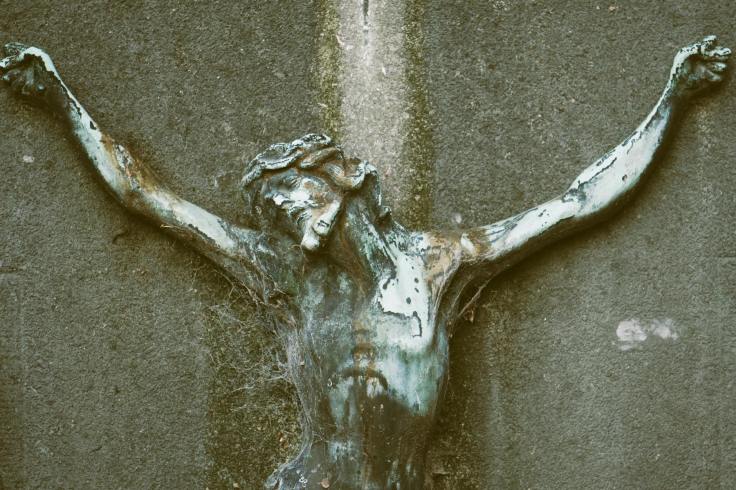
  • Pray that we will be reminded of the suffering that Christ endured to redeem all who will accept Him. We can be encouraged to know that we serve a Savior who is familiar with our suffering, and who will never leave us to suffer alone or unseen.
Persecution is not easy or happy. Suffering breaks our hearts. But our prayers should reflect the reality of suffering– that in a fallen world, “there will be trouble.” But we can take heart and carry on because, as Jesus promised, “I have overcome the world!” (John 16:33)

Things That Make You Wonder…(Daniel, Chapter 3)

The Biblical book of Daniel can be difficult to read. It contains stories, but they don’t seem to tie together. And sprinkled among the stories are visions, dreams, and prophecies. In chapter two, King Nebuchadnezzar threatens all the wise men of Babylon in his fear over a disturbing dream. (https://pursuingprayer.blog/2019/07/17/daniel-prayer-under-pressure/ and https://pursuingprayer.blog/2019/07/19/daniel-prayer-under-pressure-part-2/) At the end of the chapter, Nebuchadnezzar falls prostrate in awe of the God of Daniel, and rewards Daniel with a high position. He even rewards Daniel’s friends who prayed for him.

None of this context seems to carry over into the next chapter. If Nebuchadnezzar listened to Daniel’s interpretation; if he was in awe of the God of Daniel (the God of Israel– the God of Jacob), he forgot it all. The events of chapter three may have happened months or even years after the earlier episode; they may even have happened before(!)– we don’t know. But chapter three feels almost like a wholly disconnected story. Another thing that makes this story perplexing is the absence of the central character of Daniel. His name never appears in the story, and his friends are only given by their Babylonian names (unlike in chapter 2, where both the Hebrew and Babylonian names are given).

The story in Daniel chapter 3 is a familiar one to many children. (https://www.biblegateway.com/passage/?search=Daniel+3&version=MSG) Nebuchadnezzar orders an enormous statue to be built in Babylon. When it is complete, he orders all the administrators of his kingdom– minor rulers, judges, treasurers, advisers–to come to the dedication, where they are to fall prostrate and pay homage to the statue as soon as they hear the music that has been commissioned for the event. This is not a suggestion, it is an order, and anyone who fails to do this will be thrown into a fiery furnace.

Suddenly, there is a group of troublemakers (some translations call them astrologers or fortune tellers, others list them as Chaldeans–a people whose empire predated the Babylonian dynasties and whose culture and religion had produced great scholars and sorcerers). These men come forward with a single purpose– to denounce the Jews. Oddly, they only mention three names– Shadrach, Meshach, and Abednego. They don’t mention Daniel, nor do they mention any of the other Jewish captives who were in service to the king as administrators. Not only are Shadrach, Meshach, and Abednego accused of disobeying the king’s order, they are described as being disrespectful and contemptuous of the king (and the ancient gods of Babylon and Chaldea).

Much is made about the amazing things that happen next–Shadrach, Meshach, and Abednego are called before the king, who gives them a chance to answer the charges and he offers to give them another chance to bow down before the great image. When the three men refuse, Nebuchadnezzar is furious and orders the fire to be made seven times hotter. Men are killed in the process of stoking the flames, but Shadrach, Meshach, and Abednego are thrown in, and begin walking around unfazed. Not only so, but Nebuchadnezzar is astounded to see a fourth figure walking with them, and looking like “a son of the gods.” He calls the three men out, and everyone is astonished to note that they are completely unharmed. Their clothes and hair are not singed or scorched, they are not hot, and they don’t smell of fire.

Just as in the previous story, Nebuchadnezzar’s reaction is emotional and immediate. He gives praise to the God of Shadrach, Meshach, and Abednego, and makes orders that will protect them from future harassment. But there are some interesting undertones in this story that I think we ought to consider, and things we can learn about prayer in the process.

  • We called Daniel’s dilemma in Chapter two “Prayer under Pressure”. The pressure was not just on Daniel, though he stepped up to face the king. When Shadrach, Meshach, and Abednego prayed with Daniel–when they stood apart with him during their training– when they took a stand to follow the God of Israel in a land of ancient and powerful ‘gods’, they did so knowing that there would be pressure, powerful enemies, and potential persecution. God asks us to be faithful to him, regardless of our circumstances. Nebuchadnezzar had promoted Daniel and his friends to positions of power and privilege. They were grateful to the king, and loyal and devoted to serving him– except when that service called them to dishonor God. Many of us today face the pressure of honoring rulers or leaders who do not acknowledge or serve God; leaders who are corrupt or seem unworthy of our honor. We are to serve faithfully and show respect for their authority unless we are asked to disobey God’s laws or to disown or dishonor God. HE makes rulers to rise and fall. As we will see, Nebuchadnezzar’s power is far more precarious than it looks.
  • Following God will always bring confrontation and bring false accusations. Jealousy, guilt, envy, greed, anger, and malice will come to those who prosper under any circumstances. How much more to those who prosper at the hand of God? Those who have not schemed, stolen, or crushed others, and yet have been elevated to power, wealth, or honor– such people baffle and frustrate those who are grasping and clawing their way “to the top.” Those who deal in lies and stealth cannot accept truth and integrity. They will seek to twist others’ words, deeds, and reputations– sully names, destroy legacies, start rumors, invent grievances. We can let these little “fires” distract us from the “fiery furnace.” We can spend so much time defending ourselves, retaliating with our own rumors and grievances, or seeking revenge, that we become no better than our enemies. I know this from shameful personal experience. We can destroy ourselves in the struggle to justify ourselves. God doesn’t listen to rumors! God ignores false accusations, because He KNOWS the heart of every person. No matter how hot the “fire” gets, God is with us. He may not put the fire out. He may allow it to get seven times hotter, but He will be with us. If we are trusting Him, we will still have to walk around in the flames, but He will see to it that (ultimately) we are not singed or scorched!
  • Frequently that attacks we face (see above) are not about us at all. They are about people in rebellion against the God we serve. The men who spoke against Shadrach, Meshach, and Abednego may have had a personal grudge, but the Bible story points out a bigger plot. Daniel’s friends may have “felt the heat”, but the fire was not burning just for them. Daniel, Shadrach, Meshach, and Abednego were recent captives from a conquered nation who rose very quickly to power by openly serving their “foreign” God. The Babylonians (and the Chaldeans before them) had risen to power through violence, intrigue, and reliance on sorcery, sacrifice, and ancient rituals that were abhorrent to the God of Israel. He had allowed them to do so to be the agents of punishment against His own rebellious people. But the power of the Babylonian empire was not of their own making, nor was it greater than God’s power to deliver the remnant of His faithful servants. Many times, we are oppressed by others whose anger and viciousness hide their rebellion against God. They fear those who serve Him, because they fear His justice and His wrath. They hate those who serve Him, because they hate Him. When we pray for deliverance from their schemes and violence, we need to know that God hates injustice; He hurts with us as we suffer; but He wants two things for our tormentors and bullies– 1) to see God’s example of faithfulness in our lives, so they have no excuse for their rejection; and 2) to give them an opportunity to repent and receive mercy. He also wants to do two things for us–1) to refine us and show us how faithful He is; and 2) to use our struggle to encourage and embolden others. Very few people would have noticed that three men out of several thousand disobeyed the king’s command. But because of the opposition they faced, and their total commitment to follow God in the face of it, crowds witnessed their vindication and God’s salvation.
  • Notice that Nebuchadnezzar, while he acknowledges that God has saved Shadrach, Meshach, and Abednego, does not tear down the statue, humble himself to serve their God, or abandon his arrogance. Twice, God has shown His awesome power to this proud and powerful ruler; twice Nebuchadnezzar has been impressed, even awed– but he hasn’t been changed. Yet!
  • Where is Daniel? We don’t know. He may have been sent to one of the distant provinces and wasn’t in attendance for the dedication ceremony. He may have had a moment of weakness and joined the others in bowing down to the statue! All we know is that he is absent from one of the great miracles of his day. (He’ll have his own scary confrontation with a different king later in life.) This baffles me, but it also gives me hope. If Daniel DID bow down and worship the statue while his friends were faithful, God obviously forgave him and used him in a mighty way for the rest of his life. If he missed this fiery trial, perhaps God’s mercy was in it. God does not ask all of us to suffer the same trials, or have the same triumphs. God’s plan for each of us is unique. He doesn’t ask all of us to be “spiritual superstars.” He DOES ask each of us to be faithful for the fiery trials that come our way– whether fiery furnaces of persecution, or wildfires of hectic distractions and temptations, or the sudden flames of disaster or tragedy.

Today, as we pray, let us remember to thank God that, even when trials and fires come into our lives, He knows why. He knows how hot they will get. He knows how long we will be in the flames. And He is right there with us, so that we, too, may walk around, unbound and unharmed by the fires meant to destroy us.

Blog at WordPress.com.

Up ↑