Why Do I Pray?

I pray every day. But why? There are short, glib answers– “Prayer works,” or “The Bible tells me to.” Or I could say that it’s just a “good” habit, or that it “does something” for me. But prayer is more complex than that. I can give a lot of generic reasons for someone to pray. I can list (and have listed) many benefits of regular prayer. But what are my personal reasons for praying?

Prayer does “do something” for me– lots of somethings. Not every time; not always in the same measure, but prayer can:

  • Put me in a better mindset; it changes my focus and my attitude. When I pray, the world around me shrinks, along with all the worries and distractions it presents. Instead, I begin to focus on “God” things– the metaphysical reality that I am not the center of the universe, and my limited understanding is not enough to navigate life in its fullest sense. Jesus offers “abundant life” (See John 10:10)– life to the full. And prayer ignites that, taps into that, and lifts me from futility and confusion to meet with One who sees the end from the beginning.

  • “Recharge my batteries.” Prayer, meditation, “quiet time”– they are all similar, and they all have a physical benefit. Spending time in prayer can lower blood pressure, promote clearer thinking, and increase a person’s ability to withstand stress. Prayer can improve mood, but it can also improve the body’s ability to fight off depression, infection, and other stress-related issues. This is very personal for me, because I have struggled with stress and depression at various times in my life, and prayer can calm me, help me to change negative thought patterns, and endure hardship better than anything else. (Please note this does not mean that I don’t also need to do other things– proper diet, plenty of sleep, hydration are all necessary. Some people may require medication– prayer is not a substitute for good health advice, rather it is an integral part of being physically and spiritually healthy.)

  • Deepen my faith. God doesn’t always give immediate and clear answers to my prayers. In fact, it may feel sometimes as though He has forgotten me. So why continue to pray? Because God DOES answer prayer. Often, He answers in surprising and unexpected ways. Sometimes His answers come so slowly, so subtly, that I might miss them– if I weren’t keeping track. This is one of the great benefits of keeping a prayer journal or diary…I will often see an old entry, one that I had given up on or forgotten, and realize that God answered it weeks ago without any startling revelation or dramatic rescue. If I only pray when I expect God to do the impossible immediately, I may miss the development of something even more amazing that I imagined!

  • Become a vital part of my discipleship. Being a disciple literally involves discipline…I can’t say that I follow Christ part-time. Ignoring daily habits, like prayer and Bible study; failing to make time for fellowship with others; depending on my feelings instead of God’s Truth to guide my life– is hypocritical. Also, prayer should open my heart and mind to others who need to BE discipled. And this leads me to another benefit…Prayer can
  • Help me develop empathy for others. As I pray for others, I learn more about the struggles they face; I learn about their deeper needs. For instance, I may begin praying for someone with a chronic illness to be healed. And that is good. But as I pray for them daily, I learn that along with healing, they desire help with everyday chores that they can no longer do, or they need support and encouragement. Maybe they need rides to doctor appointments and tests. If I am praying for someone struggling with past mistakes or addictions, I learn to see with eyes of compassion and encouragement, rather than judgment and self-righteousness. It’s not just about praying for the “big” needs but learning to pray for (and find ways to help with!) intermediate needs as well. Finally, prayer can…
  • Remind me that I am never alone! I don’t pray to a brick wall, nor do I pray in a vacuum. I LOVE meeting with our local prayer group every week. I love hearing the others pray. I love being reminded that God listens to my prayers– The Father listens; The Son is my intercessor; The Spirit translates even my groans and mumbles–God delights in hearing from me! (See Zechariah 3:17; Hebrews 13:5; others)

So, Yes, I would say that “Prayer works.” But not in the sense that I can show that God has answered my requests exactly how or when I wanted. There are prayers I have prayed for most of my life that have not been answered “my way” yet. Reckoning with hurtful words and deeds from my past; family members who still haven’t accepted Christ; friends who are still facing the consequences of sinful life choices; situations and circumstances that I would like to see changed. And I don’t have any jaw-dropping evidence that my prayers can cure cancer or end world hunger or make my life problem-free. Quite the opposite. But I DO have evidence that Prayer has made a difference in my life; that I HAVE seen lives changed in ways that are impossible to explain away; that prayer is worth pursuing.

And that is why I pray.

Batting Averages

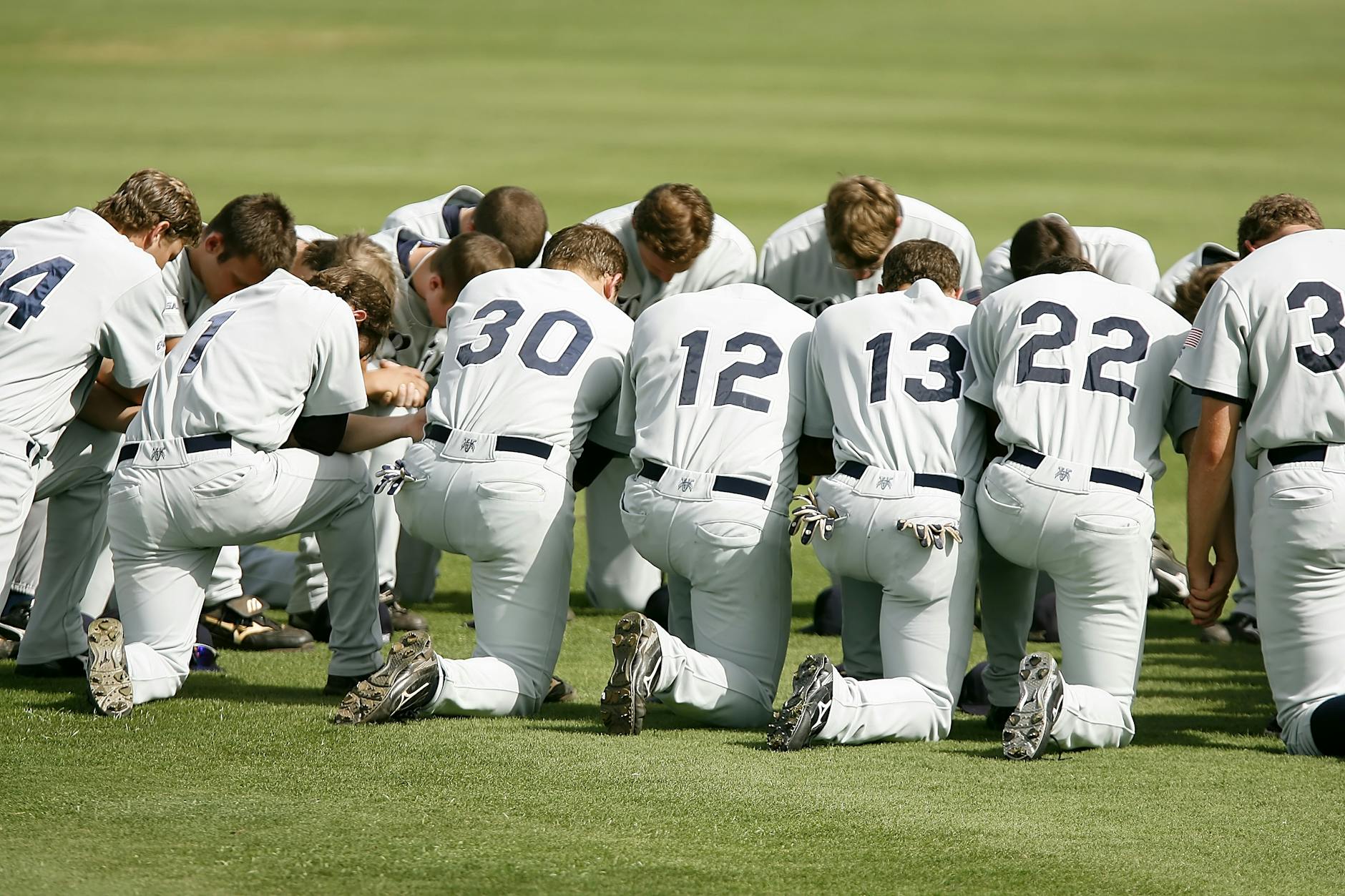
It’s Baseball season, and one of the statistics that many people follow is the batting average. The batting average is the number of hits achieved over the number of times “at bat.” So, if a batter hits the ball once over the course of three times “at bat” during a typical game, he is batting at 33% or .333. Batting averages may fluctuate during the season. A typical batting average is around .250, or one hit for every four times at bat. That means the average player fails to get a fair hit 75% of the time! A really great hitter may reach a temporary batting average of .500! That means he is still failing at half of his attempts.

I don’t like to fail. I don’t like the feeling that my first efforts are sometimes just not good enough to succeed. But often my first efforts are not my best efforts. And it is better for me to fail and to learn, than to have easy success and grow proud and complacent. Failure means that I still have something to learn; I still have room for improvement; and I still need “coaching.” I can’t have success on my own.

I have a “prayer batting average.” And to outward appearances, my “average” is pretty low. For each time I pray, I may get a “hit”– an instant, positive, definitive answer– for one of ten or so of my many requests. That’s just the way it goes. I may pray for six people to be healed or have their health restored; two people to resolve relationship issues; one person to get a job or find a better apartment; and three lost souls to be saved. God will not immediately grant all those requests. That’s not because I am a failure at praying, however. Prayer is not a “magic bullet.” Prayer is a dialogue with God. When I pray over a long period of time for a certain outcome, God may be working to change the situation in His own way and in His own time. And He may also be working to change MY perspective or outlook on a particular situation.

Like the baseball player who practices his swing, I pursue prayer with a goal of becoming better at it–better at understanding how it works, and why it is so important to a closer relationship with God. My goal is not to have God automatically answer prayer “my way.” Rather, it is to understand how God is working in, and through, and around the situations I can see. In His wisdom, He works in ways I cannot see to accomplish His perfect will.

And as I continue to pursue prayer, God allows me to participate in that perfect will– even when my “batting average” seems low or inefficient. Life is filled with “fast balls” and “wild pitches.” I must learn when to swing, how to swing, and how to work as a “team player” in the Kingdom.

So today, let’s not get discouraged if our prayers don’t seem to be “hits.” Our job is not to be perfect– our job is to pursue fellowship with the One who IS!

Photo by Pixabay on Pexels.com

ACT-ing On Prayer

Pursuing a lifestyle of prayer means more than just coming to God with a list of requests and a couple of scattered “Thank You’s” every now and again. Prayer is a discipline– that means being a disciple of prayer! How can I learn to pray for effectively? Commune with God in a richer and more satisfying way? There are many tools and methods that can help with this. One of them is called the ACTS method.

ACTS is an acronym for Adoration, Confession, Thanksgiving, Supplication. And praying in this order can radically transform the way we enter into prayer and the way we respond to God’s answers. On a busy day, I often start prayer with my supplications– my requests, my needs, my hopes and desires. I may be approaching God, but my thoughts and heart are all about “what’s in this relationship for me!” “I want healing for ______, and protection for my family, and a resolution to this problem at work, and…”

But the ACTS method flips this order–it starts with Adoration. It begins by coming to God and acknowledging who HE IS. Worship will outweigh worry. Adoration accentuates God’s Ability and His Authority over whatever is on our mind. It also leads naturally into

Confession. Not the kind that masks false humility– “Woe is me, I’m so unworthy. I am a worm, and I don’t deserve to be happy or free or victorious in Christ.” Rather, confession comes as we recognize who we are in relation to God. We are not worthy of God’s blessings in our own righteousness, but IN CHRIST, we are able to come boldly before God in dependence and joyful acceptance of HIS righteousness. And we can’t accept it if we are still hanging on to old habits and sinful ways of thinking. We must agree with God, let go of whatever is holding us back, and gladly prepare to move forward!

Now we are in Thanksgiving mode. We are reminded of God’s mercy, and His faithful care of us. He has been faithful to answer prayers in the past, and to be with us, even in times of trouble and seeming silence. He IS there. He DOES listen. His mercies are new every morning! (Lamentations 2:22-23)

NOW, we are ready to present our Supplications. In fact, we are ready to follow the direction of the Apostle Paul, when he told the Philippian believers: “Do not be anxious about anything, but in every situation, by prayer and petition, with thanksgiving, present your requests to God.  And the peace of God, which transcends all understanding, will guard your hearts and your minds in Christ Jesus.” Philippians 4:6-7 (NIV).

There are many times when we pray in desperation or in a hurry about a specific need, when this approach can be modified. But for deep prayers during a quiet time, or in a small group, the ACTS method can really boost our connection with the Holy Spirit. We begin by thinking we are praying about “something,” and are amazed to re-discover that prayer is really about “someone!”

I have found that such prayers also cause me to more readily ACT in the matters I bring up for request. I’m not just turning them over to God because I am helpless and He is my last resort. Even when I “know” that is not the case, when I focus on the problem and not the Provider and Protector, I forget that He can give me the power to “do all things” (see Philippians 4:13) in Christ’s strength and for His Glory!

Coming Out of the Closet

For anyone who is reading this expecting a big announcement or a shocking confession– please don’t read too much into the title…this is a blog about a lifestyle of prayer, not about gender identity or sexual orientation.  I want to talk about the benefits of communal prayer as opposed to prayer that is deeply personal, and takes place in isolation.

There is a time and place for solitary meditation and prayer, and it should become our habit and practice to meet with God daily.  But we are told that we should also meet with and interact with others– and this includes sharing our prayer life.  For many years, I was one of the “lone rangers.”  I rarely met with others specifically to pray or even share prayer concerns.  I would get notices on FB or e-mail, or in the church’s weekly newsletter, but it wasn’t the same.  Just as God wants to hear our hearts and share communication and communion with us, he wants us to share closeness with others.

gracelady

Why isn’t it enough to just go into the closet (or other quiet space) to pray?  What are the benefits of praying with a small group?  Here are some:

  • We need social interaction– FACE-TO-FACE interaction.  God did not create us to live in isolation. We need to have eye contact, hear inflections and tones of voice from others, and to have others listen to ours.  We need to share more than just stories on a screen– we need to share laughter, tears, and common ground.  We make deeper friendships when we share concerns (not gossip), struggles, and triumphs (not bragging).  And we can share burdens, recipes!, helpful tips, jokes, and more
  • Meeting with others helps us keep our perspective–when we are alone, our problems become bigger; our joys fade, and our talents waste away.  Meeting together helps shrink our worry and pride, ignite our hope, and drive our confidence.  It also opens up our world to the experiences and concerns of others and teaches us about differences and commonalities
  • Our faith is strengthened to hear from others who are “in the same” place in their walk; it encourages us to hear from others who have been “through the fire”; it reminds us to be grateful, and gives us an opportunity to build someone up if we have been in their shoes; and it amazes us to hear again what a mighty God we serve, and how he has been faithful
  • Communal prayer creates a time to break us out of our routine– whether that routine is zooming or “glooming”– we need to mix things up and get out of our rut
  • God commands us to meet together, to live in unity, and to lift each other up

Can you think of other benefits?  Are you in the habit of praying with others?  If not, you may be wondering– how do I find others?  What are the ground rules (if any)?  Are there issues I should be aware of?

Once again, I can list a few that come to mind or that have arisen from experience:

To find others:

  • Join an existing group– a Bible study group that includes prayer time; a weekly or monthly prayer meeting group; a special interest group within a local church– Moms of Pre-schoolers, or a Dorcas group, or a volunteer group that includes prayer
  • Start up a group!  Meet weekly, twice a week, monthly– whenever, wherever, and whatever works for you and a few others.  If you don’t have a space in your home or don’t want to meet at a church, be creative– meet at a park or a local coffee house, or take turns hosting a prayer meeting with others in your group.  Don’t be discouraged if there are only two in your “group”; and don’t feel bad about keeping your group limited– you may find enough interested people to form two or three groups in your neighborhood!
  • Think outside the box– you may stumble on to a group during your commute to work each day; in your child’s play group; at the gym; at a neighborhood church you have never visited (it doesn’t mean you are being “unfaithful” to your church to reach out to fellow brothers or sisters throughout the week!)

Ground rules:

  • Groups should have some structure, leadership, and accountability
  • Participants (including leaders) should be careful not to confuse gossip for “concerns”, or use the group for a sounding board, on-going therapy, or a captive audience for their personal drama or their political or social agenda
  • Group leaders need to create boundaries, so participants feel free to share real burdens and concerns but take responsibility for others’ privacy and vulnerability
  • Groups should be open to visitors, new members, and seekers of all backgrounds
pexels-photo-754769.jpeg

Issues to watch for–Any group that is made up of humans can fall victim to unhealthy and unwholesome practices.  Just because a group meets with good intentions and calls itself a prayer group doesn’t mean that it is a “safe” place to meet.  Keep your eyes and ears open for the following:

  • Groups that make you feel uncomfortable for showing up, or for sharing (or not sharing every one of) your authentic concerns, your questions, or your feedback.  Sometimes, we can feel uncomfortable sharing about ourselves because we feel shame or guilt about our past or about our lack of knowledge or experience; sometimes we’re defensive or hypersensitive because we’re in a new situation.  But if you are being made to feel ashamed or isolated or patronized, especially if you are being labeled or discriminated against, get out.  LEAVE– shake the dust off of your shoes as you go  (One caveat here– there are groups that meet for specific issues (see below)…if the group is meeting to pray as parents of toddlers, and you aren’t a parent or grandparent or aunt or uncle of a toddler– not only will you feel uncomfortable, but so will the rest of the group.  You should still leave this group, but you can forego the shoe shaking…)
  • Groups that have one or two members who dominate and intimidate the other members.  Leaders need to provide boundaries and structure, but they should not squash authentic dialogue or force everyone to listen to someone else’s “true confessions” (especially if it’s a repeat of the last meeting!)  This is more a “comfort zone” issue than the first one– some groups just have a couple of “talkers” and a couple of “listeners”–the point here is that there needs to be a balance so that all members have a chance to contribute
  • .
    arrogant
  • Groups that get “taken over” or sidetracked by a single issue– unless that is what you signed up for.  If you are a group whose purpose is prayer, it’s not safe to assume that everyone in your group will also want to go on a protest march or volunteer an entire Saturday at the soup kitchen.  There’s nothing wrong with other activities, but it shouldn’t be a requirement of your prayer group (see above)
  • Groups that are only “token” prayer groups–they may “share” what’s going on in their families as “requests” but they don’t actually take time to pray about them in the group setting.  They talk and eat, and maybe even say “spiritual” things.  There’s nothing wrong with friends getting together, whether they pray or not, but if you’re going to call it a prayer group or a prayer meeting….
  • pexels-photo-618544.jpeg
  • That brings me to the group that uses “prayer” as a cover for gossip or grumbling.  Prayer should be constructive and God-centered.  If it isn’t either, it isn’t really prayer.  Even if it sounds positive and holy, if it is centered on how “blessed” you are, or what you know God needs to do in someone else’s life– it isn’t really prayer unless His name is magnified and ours is minimized.
  • Any group that does not honor God’s word, God’s sovereignty, or God’s goodness–Not every group that prays is praying to Almighty God, in the name of Jesus Christ, or for His will to be accomplished.  While prayer groups should be open to all people, and there are wonderful opportunities for ecumenical and all-faith prayer in the public forum, a weekly or monthly prayer group is probably not the best venue.  That being said, I recommend exposure to various Christian prayer styles and practices– formal and ritual prayer, spirit-filled worship prayer, gospel-infused crying out, simple “popcorn” utterances, and eloquent prayers that roll off righteous tongues in an engaging crescendo, punctuated with holy hushes.
pexels-photo-267559.jpeg

Journaling Prayer

Full disclosure– I’m not any type of expert on either prayer or journal writing.  But I do keep a prayer log of sorts, and I want to share how that works for me, and why I think it is helpful.

My prayer “journal” is actually a set of four standard notebooks I picked up on sale about two and a half years ago at an office supply store.  Each notebook has 100 pages.  I have labeled each page with a day (February 12, for example) at the top– three months to each notebook.  Below the date, I list people I know who are celebrating birthdays or anniversaries that day, as well as people who died on that day.  Below that, I save space for urgent prayer requests as I become aware of them.  To the side, I list a place (a country, city, or community) to pray for that day.  In the front cover or each notebook, I have a list of focus areas to pray for each day of the week, as well– things like family, leaders and authority figures, cultural issues, missions, etc.  The back side of each page is left to record answers, results, and updates.

The journal/notebook approach is not meant to lock my prayer life into a fixed routine; it is not a checklist of what I must pray for each day (and nothing else or added to everything else).  I don’t take the notebook with me everywhere– instead, I have a small notepad in my purse to jot down thoughts or requests. Sometimes, I record these in the larger notebook later, but not always.  I review the journal once a day, but I pray throughout the day– sometimes raising the names and places in the journal, other times people or situations as they come to my heart or mind.  The point is not to make an unnecessary burden of prayer.  The point is to remind me that prayer is a pursuit–an ongoing discipline as well as an intimate pouring out of my heart to God.

I’ve come to delight in turning the pages to see:

  • who is having a birthday/anniversary today– who might be encouraged with a FB post, a call or card or e-mail message
  • where in the world can I lift up people I may or may not know?  There are enough days in the year to pray for every country in the world, every U.S. state, and several major world cities or local communities–and while my list is in alphabetical order, I could have organized by geographic location, or simply listed random places for each day.  Some days, the places are familiar; other days I am inspired to look up information on places like Burkina Faso or find out more about West Virginia…
  • what was I praying about a year ago? Often, I find that my prayers have fallen into a particular pattern– and maybe I need to redirect my focus. Have I been mostly coming to God with burdens, or do my prayers reflect a heart of worship? Humility? Dependence on Him?
  • how faithful God has been over the years! Maybe there’s a burden that I’ve been praying about over many months or years, but far more often, I have forgotten the “urgent” need I was praying about just a few months ago–God answered in ways I did not anticipate. And those requests that are still “unanswered?” God HAS an answer. I just don’t know it yet.


Does the journal make me a better person or a better pray-er?  Well, prayer isn’t a competition, so while I would hope that it helps me develop perseverance, compassion, faithfulness, hope, trust, and wisdom in the practice and pursuit of prayer, it doesn’t make me or my prayer life “better” than someone else’s.  It is, however, a tool that is helping me chart the progress in this pursuit, and so I recommend it based on that experience.

If you feel (like I did for so many years) that your prayer life is haphazard and you want to grow in prayer, I encourage you to start with a simple journal– you don’t have to write out every thought or every request.  You don’t have to have a plan for every day.  But keep a remembrance of your prayer life –even a single item each day for a week, or a month–to look back on, and to move you forward.

For more detailed information, see my page about prayer journaling. Or do a search for “prayer journals.” You may find a system that works better for you– not because prayer needs to be systematic, but because prayer is a journey, and every journey can benefit from a journal!


Prayer Requests

As someone who pursues prayer passionately, you might suspect that I hear a lot of prayer requests. And I do. And even so, it’s not enough. I always look for more! I admit to trolling on Facebook for prayer requests; following the church newsletter for prayer requests; and even asking friends if they have any requests when we chat. But what about prayer requests that aren’t exactly requests–

“Oh. It’s really nothing. I’m not worried about it or anything…”
“We’re just going through a rough patch. Nothing to be really concerned about…”
“It’s just something I have to deal with..”
“The doctor says it’s a chronic condition, so it’s just something I have to get used to…”
“I know so many other people who are hurting worse than we are…”

Sometimes, prayers are shortened or even missed because we are looking for prayer requests instead of prayer opportunities. Prayer is an opportunity to talk to God about anything that is on MY mind or in MY heart. Often, it comes in the wisp of a stray thought about someone else. Maybe I haven’t heard from them in weeks (or even years!), but suddenly, they are on my mind. Suddenly, I have an opportunity to pray for them. Do I know what is on their heart or mind? Probably not. But God knows! That schoolmate from fifth grade? Pray for them. So what if I only remember their first name– or their maiden name or their childhood nickname–God knows! That former co-worker who was having a rough time with her teenage son ten years ago? Ten years have passed! I know the son is now an adult. I don’t know if the relationship is better or worse now than it was a decade ago. I don’t even know for sure that the co-worker or her son are still alive. But God knows! My neighbor who seems to be doing fine, but I keep thinking about them, and I don’t know why– God knows! Each one is an opportunity to pray– nothing elaborate or specific– just to lovingly lift them up before God’s throne!

And what about the “actual” requests that I hear or see on-line? Sometimes, there are no details or specifics about “what” I am praying for. But it doesn’t matter. Because God already knows. Even more, He knows the end from the beginning, even if it isn’t exactly what is being requested. I can lift up in prayer situations about which I know very little– because God knows. And for those situations that seem dire or impossible– God knows those, too. And I can lift them up with confidence, even when I have no answers and the problems seem overwhelming.

This sounds easy, but it’s not. It forces me to step away from each request, each situation in which I might try to stake my own “claim.” Yes, I want my friend’s cancer to disappear, or my co-worker and her daughter to have a repaired and healthy relationship. But I don’t have the first clue how to make that happen. I don’t have any answers. I don’t know what GOD has planned in those situations. And while I know what sounds or feels good in the moment, I don’t know what is best in the grand scheme of things. But God knows! He doesn’t want me to solve each problem; He doesn’t need me to offer my “best” suggestion of how He should solve it. All He wants is for me to trust HIM to care for each need. In HIS way, in HIS time, and in the fulness of HIS love!

During Jesus’ ministry here on earth, He prayed many times, but His prayers rarely dwelt on details about specific situations. In fact, in teaching His disciples how to pray, He included the phrase, “THY kingdom come, THY Will be done in earth as it is in Heaven.” (Matthew 6:10) And that is a perfect phrase to exercise, whether I have a specific request, or a flash of memory, or a nagging worry about someone or something.

The same is true when it is my turn to request prayer. There are many times I find myself like the people I quoted above– trying to make light of a situation or avoid actually requesting prayer. It may sound humble and self-deprecating, but there is an element of arrogance in saying “I don’t need prayer for …”(whatever situation). We ALL need prayer. We ALL need to live in the assurance that we can “cast all our cares upon Him, for He cares for us” (1 Peter 5:7 paraphrased). And we need to acknowledge that we should share our cares with others as they share their cares with us. And that we need to allow for God to involve others in the way He cares for us. Asking for prayer is a way of allowing others to share our concerns– and share in our joy of receiving answers to prayer! Requesting others to pray for us is not a weakness. We are not being a burden on others when we allow them to pray for us.

That is not to say that I need to publish every problem and concern on Facebook or in the Church Newsletter! Nor should I try to dictate how or when or what others should pray for me. But it does mean that I must be open to sharing the very real struggles I have with trusted friends, especially if they ask how they can pray for me. Even the “chronic” ones; even the “silly” ones. Because I don’t know how God may use that opportunity in THEIR life; nor do I know how God may use their prayers to bless my life.

But GOD knows!

Nacho Prayers

Have you ever ordered nachos at a restaurant? I’m not talking about just tortilla chips with sauce– I mean the loaded, deluxe, supreme nachos that some with everything but the kitchen sink. There are several layers of goodness: crispy tortilla chips, smothered in rich, gooey nacho cheese sauce, and piled with spiced meat, tomatoes, green onion, black olives, salsa, chilies, beans, more cheese (shredded), maybe even some mango or avocado, and sour cream. Each flavor is distinct– different textures, different temperatures–yet they come together as they land on your taste buds. And each bite is just a little different– a different ratio of cheese to meat to veggies to chips in each taste.

And that means that my nacho is “not ‘cho” nacho. Even with all the same ingredients, my nacho experience will never be exactly the same as yours.

In a strange way, prayers are kind of like nachos. Prayers have many distinct “ingredients”– confession, praise, anguish, supplication, thankfulness, even questions. And many people can pray with the same ingredients and still offer up unique prayers. My prayer is “nacho” prayer– and your prayer is not mine; even when we are praying together about the same thing.

God loves the variety and uniqueness of our individual prayers. He never tires of “nacho” prayers. And He never compares my “nacho” prayers with yours, or your prayers with mine. Indeed, He loves tasting the individual ingredients in their unique ratio of flavors and elements. He loves hearing our gooey, cheesy emotions, as well as our crisp list of needs; He appreciates the savory outpouring of our praise, as well as the spicy and even bitter tang of our grief.

Can you imagine the tantalizing aroma of our prayers as they rise to Heaven? What satisfaction it brings to God as we pour out our thoughts and concerns to the One who loves us best? God isn’t looking for gourmet prayers. Our prayers may be neatly arranged or completely sloppy. They may contain lumps of worry, or be soggy with emotion; they may be spiced with urgency, or smothered in majestic outpourings of praise. God is still hungry to hear from us!

Please Pray for Me

How do I respond when someone asks me to pray for them? That may seem like a silly question. It seems obvious that if someone asks for prayer, my response would be to pray. But is that what I am really doing?

I caught myself a few years ago on Facebook saying one thing and doing another. Someone would post a prayer request. I would reply in the comment section that I would pray, that I was “sending prayers”, or that I was praying for them– but then I wouldn’t. I would forget; or I would sort of send up a quick, “God help so-and-so” and move on. It doesn’t mean that I never prayed at all about their situation. But I felt that my comments were more about being “seen” as a prayer warrior than actually being faithful in prayer.

There are many people who have said they are praying for me at certain times in my life. And maybe all of them have. But there are some people who stop whatever they’re doing and pray NOW. They don’t just pray FOR me, they pray WITH me. And they enter into my situation. They pray specifics. They pray for God’s will to be done– even if it isn’t pretty or easy. They pray for my growth and not just for my immediate relief.

I don’t always pray that way for others. I can’t always drop what I’m doing to enter into someone else’s situation. But I’ve stopped being so glib on Facebook. If I have the time to comment, I have the time to stop and say more than a quick prayer. I may not know specifics and details, but when I do, I can lift those up to God. And I can always spend time lovingly asking God to work His Perfect Will in the lives of those who are seeking prayer support. After all, God knows ALL the details, and far better than I do!

Keeping a prayer journal really helps. Especially when I keep it close at hand. I can easily jot down the name or request of the person who has asked for prayer. And having it in my journal means that I will see it again; I will revisit the request, pray about it again, or write in how it was answered (if I know).

So what?

None of this makes me a better person or a better prayer warrior than my neighbor. That’s not the point. The point is it makes me a better prayer warrior than I was before. It helps me see how interconnected we all are– we ALL need prayer, and we ALL need to seek help sometimes. It helps me to be more consistent and disciplined in my prayer life. It keeps me grateful– grateful that I can do something to help others; grateful for the gifts and blessings I have; grateful that God listens and answers prayer; grateful that God has given me so many friends and family to love. And it helps me to be more transparent about my own needs and struggles.

On that note, I am asking for prayer today, as David and I have some decisions to make as we get older. Some decisions are about finances; others relate to our health and lifestyle changes we may need to make. We want to honor God with our “golden” years, whether that involves continuing to live upstairs above our store, or moving and selling the store.

So please pray for me.
Thank you.

Recording God’s Answers

I keep a prayer journal. Every day, I have a list of people, places, and issues that prompts me to pray. Of course, I can pray about other things, as well. I can praise God for the day’s blessings, the weather (or provision in spite of the weather); I can confess failings and ask for God’s forgiveness. I can lift up things that are not on “today’s” list. But the list reminds me of so many things– the blessings of family and friends; the richness and vastness of God’s power and sovereignty; His faithfulness over so many years…

In my journal, I also keep a “running tab” of God’s many answers to prayers. Some of the answers bring joy; some bring wonder; some even bring tears. I have prayed for several people battling cancer. Many have gone into remission, but most have eventually died. I prayed for people during COVID. Many recovered– some slowly, some miraculously– but many others died. I have prayed for “little” things, like finding my keys (YES!), or making a sales goal at the store (NO). And some prayers have yet to be answered–I don’t know why or when, but I trust God has heard them all, and that His will and His answers will come– in His good time.

Often, I will look at the front side of the journal page (requests and reminders), and some of the requests are a year or more old. Then, I turn to the back side and look for the answer. Sometimes, in my haste, I have neglected to write the answer, so I will add it, with a small prayer of thanks. Sometimes, I have forgotten the exact outcome. Sometimes, I am encouraged to keep praying for a clear answer or outcome for an ongoing situation. But I am amazed at the number of prayers I have prayed over a year’s time, and how God has provided answers, big and small.

It is sometimes easy to forget the answered prayers amidst the worries of daily life. We are more concerned with the next crisis or the immediate needs before us. But it is helpful to record God’s answers (even the “NOs”) as we receive them. When we “count our blessings,” we can often stand amazed at some of the ways that God has “moved in mysterious ways” to answer things we once thought impossible, or overwhelming in the moment. Looking back, we can sometimes see how, and even why God has allowed us to go through experiences that seemed strange or unwelcome. And we can be reminded that the same God who answered all those prayers is listening to our current requests (and praises!).

God DOES answer prayer. He IS faithful. And when we keep a record of it, it increases our faith for the moments when we are still waiting on His answers!

Prayer in the Cyber Age

I attend a weekly prayer meeting at our church. A small group of us meets one morning a week to share prayer concerns, pray for our pastors and church workers, missionaries, community members in need, etc. It usually lasts just about an hour. On a “good day,” we have about seven people.

I grew up in a small rural area, and our little country church had a weekly Wednesday evening prayer service. On a “slow night,” we might have seven people. Sometimes, we had thirty or more (nearly half the church congregation)! They lasted about an hour and a half. When I was in college, we had groups that met once a week for prayer. It wasn’t always the same group, but it met at the same time, and, again, we sometimes had as many as thirty in attendance– for prayer. Often, we met in a dorm room, so it was cramped, and many of us were sitting or kneeling on the floor. Once, we had a fire drill, and my feet had “fallen asleep” and I had to be helped as we walked to the exit!

I don’t say this to disparage our current small group, but to point out some of the differences between life in the 1970s, 1980s and today. My current church has activities every Wednesday evening, and much larger attendance than the little country church ever attained. And prayer is still a small part of the Wednesday evening programming. Prayer is encouraged in small groups, individually, and we pray during service. But sustained time set aside for prayer– what the old hymn refers to as “Sweet Hour of Prayer”–in a group setting is becoming more of a rarity.

There are many reasons for it– some good, some not so good.

On the “good” side, it must be noted that corporate prayer today has expanded far beyond the traditional in-person prayer meeting. Prayer can be skyped, group-chatted, zoomed, and conference-called. Prayer can be “hosted” in one location, with satellite groups around the world praying in real time together. In such ways, thousands, and even millions of people can be joined in prayer. This is an amazing development!

And, along with such developments, prayer has become far more global, and far more immediate. I can receive a text or e-mail notifying me of a prayer request from nearly anywhere in the world, and know that I am joining with a host of other Christians when I stop and take a few moments to pray right then.

So what’s the “downside” of cyber prayer?

Speaking as one who has lived the experience of meeting with the same people at a dedicated time over many years specifically to pray, I have observed the following benefits:

In-person prayer meetings offer a more intimate time of fellowship, compassion, and service. I’m not just seeing other people on a screen, reading a text message, or even filling an auditorium seat as part of a huge “movement”– I’m sitting in a circle, breathing the same air, hearing the same hum of the furnace or fluorescent lights, the sound of others breathing, sighing, or even crying quietly around me. Sometimes, I’m holding another person’s hand, or giving them a hug. I am not just among fellow believers, I’m with family. We get to know one another in a deeper way. I know their families, their personal struggles and victories. I learn the rhythm of their prayers, and the issues closest to their hearts– and they know mine! And that can be a scary thing at first– building the kind of trust that intimate fellowship demands. But it pays off a thousand-fold!

In-person prayer meetings are also focused in a different way. Cyber prayer usually focuses on a specific need– sometimes an immediate, or even temporary issue. In-person prayer focuses on the long term discipline of praying. I have prayed with groups over years for lost relatives or unresolved health issues. And while that may seem depressing to read about, in practice it teaches patience, and deepens faith. As a group, we see God’s answers develop according to HIS timing and HIS plan. Sometimes, we see issues resolved quickly; other times, we see how God strengthens us in our trials; and still other times we see God do surprising and miraculous things just as we’ve almost given up hope. And there are some answers we may never “see.” But, primarily, we are not praying for an outcome– we are praying as a pursuit of Christian living; developing a life of prayer, faith, and obedience. We spend much of our time in prayer lifting up requests, but we also spend much of our time in praise, worship, adoration, confession, and thanksgiving– because prayer is a holistic pursuit.

Which brings me to another benefit, one that may not seem obvious at first. Meeting consistently and weekly for prayer is a habit. It builds a character of faithfulness and true compassion like very little else I’ve encountered. God can “show up” wherever two or three are gathered (see Matthew 18:20), and because God is beyond time and space, He can be present in a church meeting room, in cyberspace, or in outer space! But we are temporal. We have to learn patience, hope, and faithfulness. We learn to be trustworthy of the feelings and confidences of others by sharing our hearts. We learn to serve by the practice of serving those around us over an extended period of time. We learn patience by waiting on the Lord, stopping our busy, deadline-driven, goal-oriented lifestyle to make time for the development of our faith.

Finally, in a post-COVID society, sustained, regular, corporate prayer is also sustained, regular, corporate fellowship. We live in an increasingly isolated society. With more people on the earth than ever before, we are more lonely, depressed, anxious, and self-absorbed than ever before. Even in Church! Many people attend service regularly, but still feel unconnected and uninvolved. And others get “involved” in every activity, often burning themselves out trying to “outdo” themselves (or others). Activities that promise fellowship can sometimes fall “flat” in the face of social expectations. We attend, hoping to “get something” out of an experience. We want to be entertained, challenged, encouraged, uplifted, etc. But often, our expectations are not met. We don’t feel included, or we feel overwhelmed. We imagine we are being compared to others (or we do the comparing!), and feel that we fall short. We don’t know enough, do enough, are not “enough.” And we give up. We give up on the church, on other Christians, on God.

Committing to attend a weekly prayer meeting pulls us “out of ourselves.” We learn to pray for the needs of others. We learn to share our own needs and allow others to pray for us. We learn to be transparent and authentic. We learn to forgive.

Prayer is amazing– in any form. Communicating with the God of the Universe is an unspeakably miraculous opportunity, made possible BY God, THROUGH God, for OUR benefit. Prayer in the cyber age is diverse, global, immediate, and effective. But let’s consider the blessing of old-fashioned Prayer Meetings, and not forsake the practice of meeting together (see Hebrews 10:25) , in person, with no other goal than to spend a sweet hour in prayer!

Blog at WordPress.com.

Up ↑