“Powerful” Prayers

Are any of you suffering hardships? You should pray. Are any of you happy? You should sing praises. Are any of you sick? You should call for the elders of the church to come and pray over you, anointing you with oil in the name of the Lord. Such a prayer offered in faith will heal the sick, and the Lord will make you well. And if you have committed any sins, you will be forgiven. Confess your sins to each other and pray for each other so that you may be healed. The earnest prayer of a righteous person has great power and produces wonderful results.  Elijah was as human as we are, and yet when he prayed earnestly that no rain would fall, none fell for three and a half years! Then, when he prayed again, the sky sent down rain and the earth began to yield its crops. James 5:13-18 (NLT)

I heard someone the other day claim that a friend of ours “has a direct line to God.” The implication was that our friend’s prayers are more powerful and more effective, because she has an “in” with God that others just don’t have. The friend in question was quick to point out that God does not have “favorites.” He loves us all the same, and He listens to all our prayers with the same loving care and goodness.

There are, however, some prayers that are more “powerful” than others. There is an oft-quoted verse from James, chapter five that says, “The earnest prayer of a righteous person has great power and produces wonderful results.” James goes on to present the example of the great prophet, Elijah, whose prayers caused God to stop the rain for three and a half years and then caused the rain to fall again. Unfortunately, the lesson we often take from this passage is that Elijah was a powerful pray-er. If we were a great prophet like him, maybe we would pray powerful prayers as well. But James is clear– “Elijah was as human as we are”–in fact, this same Elijah, after his “powerful” prayer that brought the rain back, ran and hid in a cave and begged God to let him die!

There are two things that make prayer powerful, and neither of them have to do with WHO is speaking! The first is that prayer has to be earnest. Prayers that are sincere, heartfelt, and consistent with God’s will are powerful– regardless of the words used, the length of time the speaker has been following Jesus, or the “importance” of the subject. God looks at the heart; He sees (and hears) right through the words! He sees the motives. And if our motives are impure or selfish, our prayers will still be heard and answered, but perhaps not with the miraculous flourish that we expected.

Secondly, powerful prayers are lifted up by “a righteous person.” And this is where many people miss the blessing of this verse. Who, exactly, is “a righteous person”? NO ONE! At least, not on our own. If we think that our prayers will be powerful because of who we are, what we have (or haven’t) done in the past, or how religious we claim to be, our prayers will actually be LESS effective. Like so many things in the Christian Life, this concept is counter-intuitive and counter-cultural. Powerful prayers are not the ones delivered by those who think they are powerful. Powerful prayers come from those who accept that all power, and all righteousness as well, comes from Christ alone. Such people know they are not innately “righteous.” Their righteousness comes from Christ– through His death and resurrection– alone. And such prayers reflect a wholehearted trust that God knows best and will answer in His own loving and wise way.

Truly powerful prayers come from anyone who is fully trusting in God– not because of who they are, but because of who GOD is. My friend does have a “direct line to God”– but so does anyone who trusts Him completely! You don’t have to be an Elijah to have a powerful prayer life. And that’s a great comfort, because even Elijah wasn’t always a mighty prophet. Sometimes, he was frightened, defeated, and depressed. Sometimes, he was hurt and sullen. Sometimes, he was just plain worn to a frazzle! But God still heard him and used him to inspire a nation.

“Better-than” Prayers

I know a lot of “Prayer Warriors”– people who pray often, and fervently, and are known for their prayer habit. But I often hear a very disturbing statement in relation to such people. The thinking goes that if someone is a “Prayer Warrior” they get results. They have a direct line to Heaven– different and “better” than normal pray-ers. There are people who will hunt down a prayer warrior, believing that this action will be more effective than praying about an issue or problem themselves. Others try to emulate or copy the praying style of “prayer warriors,” thinking that the way someone words their prayers will make a difference in whether or not God will hear them. Still others will refuse to pray in public, because they say their prayers are not good enough. And this should not be!

We have a terrible tendency to compare. We compare our appearance, our social or economic status, our skills and abilities, and even our spirituality. “She’s so close to God!” “He knows the Bible so much better than I do!” And we think this determines whether or not God will listen to and act on our prayers. And Christians who could pray more often, more joyfully, and, yes, more effectively, simply give up on pursuing prayer, because they think others are so much “better” at it.

God is not a respecter of persons. His willingness to listen to our prayers does not depend on how many Bible verses we can quote or how many church services we attend each week, or how eloquently we can pray. God does not play favorites– He does not respond more quickly or more powerfully to some people because they call Him “Heavenly Father” instead of “Almighty God” or because they kneel instead of sitting, or because they are somehow “holier” than their neighbor.

God wants to hear from YOU. And yes, it can be a blessing and a comfort to know that others are praying for you or with you, but we should not measure our prayers against those of others around us. Especially if we allow ourselves to get discouraged in our pursuit of “better” prayer.

That said, there are a few things that can make our prayers “better”:

  • Be sincere– God doesn’t play games. He doesn’t respond to flattery, falsehoods, foolishness, or exaggerations. God already knows what you need, what you’re thinking, and who you are– who you REALLY are. Prayer that tries to cover up your real emotions or thoughts; prayer that tries to make you sound pious, needy, devout, etc., are not fooling anyone but you…
  • Be still–take time to get quiet before God– so that you can listen as well as speak! Meditate on WHO it is you are talking with, instead of just what you want to say.
  • Be submitted– Prayer is not about getting God to “deliver” on your wish list. Don’t just pretend to be pious, but determine that you will accept God’s perfect will and timing. And that you will accept God’s correction when you are having trouble accepting His will!
  • Be faithful–don’t give up. Pursuing Prayer means practicing prayer. You may find it gets easier to pray as you stumble through awkward prayers, instead of trying to be perfect out of the gate. Most “Prayer Warriors” started out the same way. Anyone–ANYONE–can be a prayer warrior!

Such “better” prayers will not impress God. God isn’t about being impressed. He IS about being personal, loving, wise, and sovereign. But such prayers will be “better than” those prayed in pride, or prayed inconsistently, or without fully acknowledging God’s character and authority.

My goal is not to be a “better” pray-er than someone else. I may never be acknowledged by others as a “Prayer Warrior.” But my goal is to be disciplined and trained in the pursuit of Prayer. Every day, we face spiritual warfare– in that sense we are all prayer “warriors.” And I may be a foot soldier in this war, but I want to be the best foot soldier I can be! I want to be “better than” I was yesterday, and even better tomorrow!

It’s Not Enough!

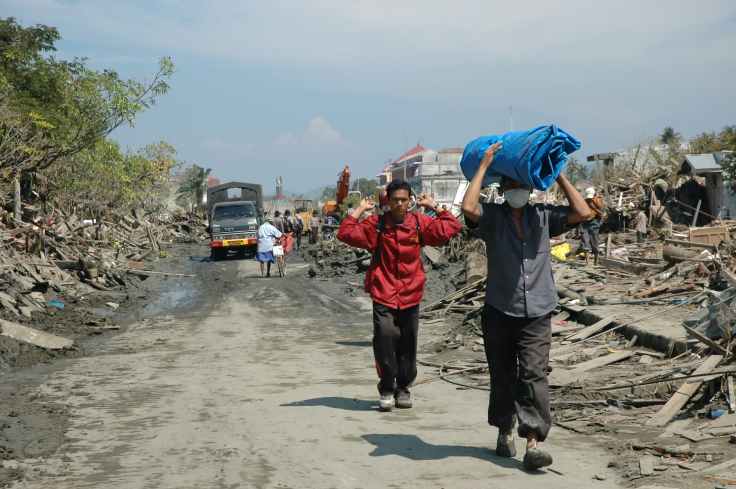
Often, when there is a disaster– especially one that seems preventable and senseless, like a mass shooting or a horrible crash–thousands of people reach out with “thoughts and prayers” for the victims and their families. And, predictably, others will angrily comment that thoughts and prayers are “not enough.” What good are thoughts and prayers in the face of senseless violence or preventable dangers? Shouldn’t we be driven to action? Shouldn’t we focus our efforts on justice or working to guarantee that such disasters can never happen again?

Such anger is natural, and such sentiments may seem more virtuous than offering nebulous emotional support. What, after all, can thoughts and prayers really DO in the face of evil, injustice, pain, and grief?

Well, I can’t speak for “thoughts”, but I have studied prayer for most of my life. I would offer the following words about the effects of prayer:

  • First, prayer reminds me that I am NOT in control of my circumstances– only my reaction to them. I cannot control what happens, what HAS happened, or what WILL happen. And my anger will not change what has already happened, nor will it prevent future disasters from happening. And while I may not be able to prove to others that prayer CAN prevent future disasters or heal present grief, I have known it to do both in my life and in the lives of others.
  • Second, prayer reminds me that there is Someone Bigger than me– Someone Bigger than my circumstances– who has the wisdom and the power to do what even thousands of well-meaning people cannot. Thousands of people coming together can make a difference over time, but God can do miraculously more than we can imagine!
  • Third, praying for others is something I CAN DO— anywhere, anytime– across distances, cultures, time zones, and circumstances. Prayer doesn’t cost anything. It doesn’t require that I have specialized skills or access to physical resources. It may not seem very active, like ranting or screaming, marching or protesting, but it isn’t the same as inaction or apathy.
  • Lastly, praying for others is a first step in helping others. My prayer alone may not seem like “enough”, but prayers have a way of multiplying, and inspiring, and intensifying in positive and impactful ways.

But more than just talking about the effectiveness of prayer, I’d like to pose a couple of questions for those who dismiss prayer as “not enough.”

  • What are you offering (instead of prayers)? Will your thoughts, plans, and actions have immediate or eternal results? Do you have the solution to all the world’s problems? Will you be able to control what happens in the future, or make sense of what has happened in the past? Will your solutions be perfect– no unintended consequences or necessary casualties?
  • If you are so angry about others praying, why waste your energy complaining about it? Go ahead with your own solution/reaction/plan.
  • Is your solution “enough?” Is your anger “enough?” Are your good intentions “enough?” Ultimately, you must wrestle with the existence of evil and injustice in this world. Senseless things happen. Good people suffer, and guilty people enjoy “success.” And nothing we offer is ever “enough” to change the world around us.

Our efforts and actions will never be “enough.” But prayer taps into the reality that God IS ENOUGH. His Grace is sufficient; His Love endures forever; His wisdom is higher than ours, and His power is boundless. He doesn’t always remove us from the chaos and suffering of this world, but He redeems us, and He enters into the circumstances of our own suffering and grief. He gives us courage, strength, hope, and a sense of purpose that goes beyond what we can find in ourselves.

The Prayers of the Righteous

James 5:16 Modern English Version (MEV)

16 Confess your faults to one another and pray for one another, that you may be healed. The effective, fervent prayer of a righteous man accomplishes much.


Romans 3:10-11 Modern English Version (MEV)

10 As it is written:“There is none righteous, no, not one;
11 there is no one who understands;there is no one who seeks after God.

adult back view bald crowd
Photo by David Whittaker on Pexels.com

Anyone can pray.  God hears our prayers.  God answers prayer.  But He doesn’t answer all prayers equally.  That doesn’t mean that God is unfair or unjust.  It means that God listens beyond our words and prayers– He knows our thoughts, He perceives our motives and inmost desires.  He also knows the consequences of all that we ask.

James 5:16 (above) is sometimes misused by Christians to boast in their “effectiveness”: in essence, saying “If God answers my prayers for a comfortable lifestyle or good health, it proves that I am righteous.”  But this is putting the cart before the horse.  The last phrase is contingent upon the first– “Confess your faults to one another, and pray for one another, that you may be healed.”  It is the effective (prayers designed to effect others), fervent (heart-felt, committed) prayer of a righteous (cleansed, renewed in spirit and mind and heart) man (or woman) that accomplishes much (for the kingdom, for healing, for grace, unity, or renewal).  The effectiveness comes after the confession; after the renewal, and through the Holy Spirit.  If we are boasting about our effectiveness, we’re missing the point.

photo of a hippie woman
Photo by Pete Johnson on Pexels.com

It is the humble seeker who prays for and with others, pours herself/himself out for “one another” who accomplishes much.  Such men and women spark movements and revivals, not in their own power or wisdom, but in allowing the Holy Spirit to work in their lives, and in their prayers for others.  Which is more “effective”– getting what I want for myself, or bringing lost souls to new life?

lion sleeping beside rock
Photo by Aldo Picaso on Pexels.com

If your prayers seem to lack power, consider the following:

Who am I praying for today?  What am I praying for myself?  For others?  For the Glory of God?  Am I praying fervently?  Diligently?  Righteously?  In confession and gratitude, as well as supplication?

girl-praying-hands-eyelashes-41942.jpeg

Next, consider what it means to be “effective.”  Are you praying for a healing that doesn’t happen immediately or completely?  God may be using your prayers to great effect in ways you do not expect.  God can bring spiritual and emotional healing even in physical suffering.  He can also bring healing to others as they see our faith and hope at work in difficult circumstances.


woman wearing sleeveless dress
Photo by nappy on Pexels.com

Finally, ask if there is something else you should be doing in addition to praying about the situation.  Are you ignoring a clear call from God to do something (or stop doing something) in obedience to His Word?  Are you harboring a grudge against someone?  Do you need to make things right with someone?  With God?

The effective, fervent prayer of a righteous person WILL accomplish much more than we can imagine.  What would our neighborhood look like if we spent more time on our knees than pointing fingers or shaking fists?

prayermotherdaughter 

Blog at WordPress.com.

Up ↑