Flee!

As we bid goodbye to September and enter October, we are entering the season of Halloween and horror movies. I’m not too fond of this cultural phenomenon–I don’t like horror movies, and, while I don’t mind handing out candy to kids dressed up in clever costumes, I’m not thrilled about kids and adults “celebrating” witches, vampires, zombies, etc..

Photo by Yaroslav Shuraev on Pexels.com

While I don’t watch horror movies, or read horror novels, I have noted what others have told me about them. One of the strangest phenomena they report is the seeming inability of innocent people to escape the horror stalking them. This is sometimes part of the horror and the plot, but often, the “victim” has many chances of running away– but never does! (Or they wait until it is too late.) In fact, movie-goers often report the audience will sometimes yell at the characters to, “Run!” But they simply stand, fascinated or paralyzed by fear, waiting for their doom to catch up to them. Of course, this adds to the suspense of a fictional scenario, but it sets a terrible example for real life.

Photo by Trinity Kubassek on Pexels.com

Recently, I heard an interesting and disturbing parallel in reports about real “victims” from a public safety official. He said that in various crime scenes, like those involving a violent confrontation or an active shooter, many people who could reach safety, don’t. This is because they continue to watch the horror unfolding around them. They do nothing to stop it; nothing to avoid it; nothing to protect themselves. In fact, some of them take out their phones and start filming it–creating their own “real-life” horror movie. Instead of taking common sense precautions, they seem more interested in watching the “story” unfold, as if it had no power to touch them. Normally compassionate people will watch someone else being bullied, tortured, harassed, and even killed without calling for help or protecting themselves or others who could be pulled into the violence.

Photo by cottonbro on Pexels.com

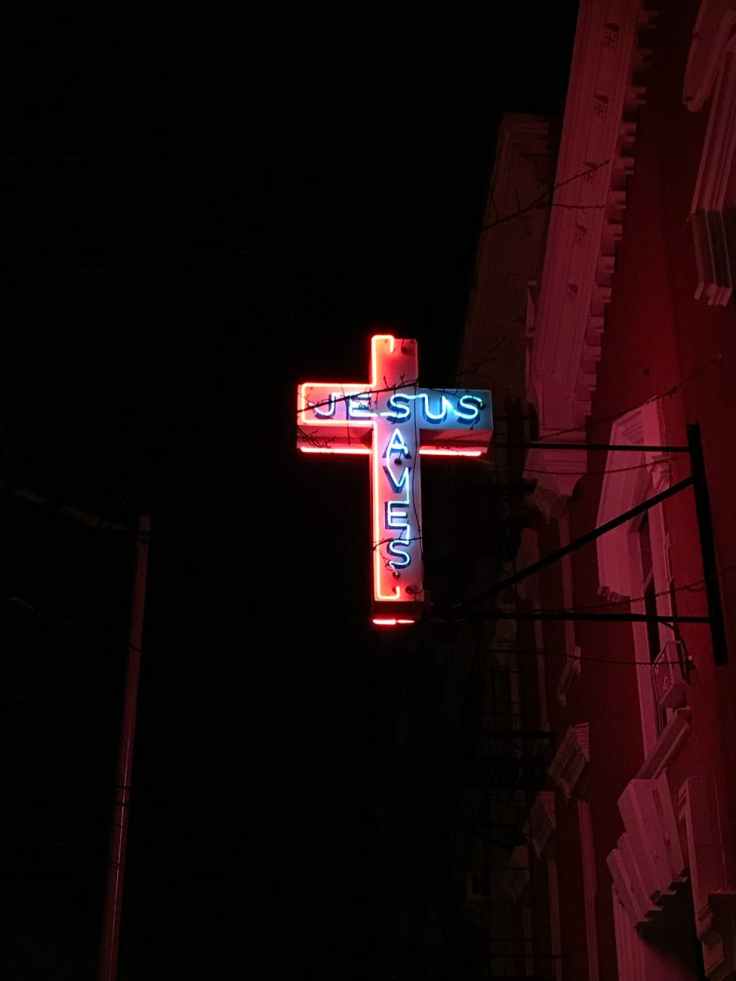
There is nothing “entertaining” about violence and evil. There may be something instructive about watching evil being defeated, or violence being stopped, but there is greater wisdom in avoiding evil and violence in the first place. Evil should not make us curious– it should repulse us, and make us want to flee. Seeing a rattlesnake coiled and hissing should not cause us to reach out and try to pet it! Watching someone waving a loaded gun around should not cause us to whip out our phone and record it for later viewing.

Photo by Daniel Reche on Pexels.com

As Christians, we are warned to “flee from temptation” in the same way we are urged to flee from danger and horror. When we know something is evil, harmful, unwholesome, corrupt, poisonous, and unholy, we are to have nothing to do with it. This is not because we feel powerless in the face of evil. God is with us in any situation. But we are to stay away from situations and relationships that threaten our ability to do what we know to be honest, compassionate, and “right.” Jesus warned His disciples to “watch and pray, that you may not enter into temptation. The spirit indeed is willing, but the flesh is weak.” (Matthew 26:41 ESV) And in The Lord’s Prayer, He prayed that we would not be led into temptation, but delivered from evil. (Matthew 6:13) Jesus wasn’t saying that we should live in perpetual fear; rather that we should make it a priority to avoid ANYTHING that would draw us away from the goodness and mercy of God. Even in our prayers, we should ask God to keep us on the path of righteousness and keep us away from temptation and failure. Common sense alone will not keep us from dangerous behaviors like flirting with sin or dabbling in danger. God will provide a way out (1 Corinthians 10:13), but how much better to avoid the need for constant rescue!

Photo by Guy Kawasaki on Pexels.com

As this season approaches, I pray that God would keep me far from the path of evil. I don’t want to be like the “victim” in a horror film, paralyzed by fear or fascination, while sin and death come stalking. Nor do I want to be the bystander, filming someone else’s pain and torture instead of seeking help and protection. The spirit indeed is willing– willing to fight against evil; willing to grapple with it; willing to learn more about it; willing even to flirt with it. But the flesh is weak and vulnerable to deception, traps, and failure.

We are not to follow after the empty promises of temptation–“thrills and chills,” titillation, “secret” knowledge, “spine tingles,” etc.. Instead, we are to seek the sure promises of a Loving God– His guiding presence, His joy, His eternal Love, and His abundant Life.

Photo by Patricia McCarty on Pexels.com

Flee temptation; Run to Jesus!

For Righteousness’ Sake

Blessed are those who are persecuted for righteousness’ sake,
For theirs is the kingdom of heaven.

Matthew 5:10 (NKJV)
Photo by Meruyert Gonullu on Pexels.com

Yesterday was Easter (in parts of the world)–the celebration of Christ’s resurrection and victory over Sin and Death. We have much to celebrate. But we also have a mission. We have the assurance of eternity in Heaven, but in THIS world, Jesus warned us, “you will have trouble.” (John 16:33). We will be misunderstood, mocked, and persecuted. We will have to face the temporary consequences of living in a fallen world– anger, greed, abuse, violence, betrayal–even bad weather and natural disasters!

In giving the Beatitudes, Jesus turned common expectations upside-down. Blessed are the poor in spirit; blessed are the meek; blessed are those who are persecuted for righteousness’ sake… We don’t consider poverty, powerlessness, suffering and persecution blessings to be desired. Yet Jesus, the One we follow, gladly endured all of these for our sake! Notice that the “blessing” is the same here as in the first of the Beatitudes– “for theirs is the kingdom of heaven.” The Kingdom of Heaven is not reserved for those who are victorious in their own power or through force of will or extraordinary effort. But it is reserved for those who persevere in the face of evil–those who lean, and those who rest, and those who stand IN THE POWER of God.

Notice, too, that we are blessed if we are persecuted “for righteousness’ sake.” There is no blessing for suffering due to our own stubbornness or foolishness. There is no blessing for those who are persecuted for their own pride and judgmental nature and unforgiveness toward themselves or others. (see 1 Peter 3) https://www.biblegateway.com/passage/?search=1+Peter+3%3A8-17&version=CEV

Photo by MART PRODUCTION on Pexels.com

We live in a culture that celebrates “victimhood.” Those who suffer injustice– even perceived of implied injustice–are considered to have a special status. Those who claim to have been offended or hurt by individuals or groups often demand recognition for their “bravery” or retribution for their suffering. This happens even among certain Christians, who claim to be “persecuted,” when they are merely suffering the consequences of their own hubris and self-righteous posturing. This is a monstrous injustice to fellow Christians who are truly suffering persecution “for righteousness’ sake.”

Photo by Cameron Casey on Pexels.com

My prayer today is that I will emulate the example of Christ– that I will serve, humbly, willingly, sacrificially, enduring any persecution that comes as a result, and lifting up fellow Christians who are suffering, as well as their persecutors! For righteousness’ sake– for the sake of the Kingdom of Heaven.

Blessed Are Those Who Hunger…

“Blessed are those who hunger and thirst after righteousness, for they will be filled.”(Matthew 5:6) I’m looking at the Beatitudes and how they can relate to our prayer life. Today, I’m looking at the fourth in the series, shown above.

Photo by Adrienn on Pexels.com

I recently found out that I am diabetic. I’m trying to lose weight and eat in ways that will help manage my body’s response to carbohydrates. And I find that when I feel hungry, I seem to crave all the wrong things! I miss pasta and chocolate and a large sized Coca Cola from the drive-thru. I don’t normally crave steamed cauliflower or unsalted nuts when I’m hungry. There’s nothing inherently wrong or “evil” about pasta, or chocolate chip cookies, or even sugary drinks. But they can crowd out the nutrients that my body needs, making me bloated and yet feeling like I didn’t get “enough” to eat. I don’t crave the nutrients– I crave the taste. I don’t hunger for the fuel my body needs; instead, I hunger for the flavors I want, or the quick burst of energy I feel from sugar and carbs.

Photo by Andres Ayrton on Pexels.com

And the same can be said for Righteousness. Most of us do not truly hunger or thirst for righteousness on our own. We crave comfort, or affirmation, or control of our circumstances. Even in our prayer life– even as we say the words, “Thy will be done”– we are usually asking for our own wishes or desires to be fulfilled. “Help me get this job.” “Change my neighbor’s attitude.” “Fix the problem…” We want to BE righteous, but our appetite leads us to compromise and complacency. The end result is that we feel unfulfilled, even resentful and restless.

Photo by Teona Swift on Pexels.com
Photo by ROMAN ODINTSOV on Pexels.com

Jesus promises that those who hunger and thirst after righteousness will be filled. We will not be left with the gnawing feelings of guilt and shame and regret, or left feeling unfulfilled and dissatisfied. What kind of diet will lead to this “filled” feeling? Chewing on God’s Word! Have you ever noticed how often in the Bible God uses food imagery in relation to His Word? “Taste and see that the Lord is good” (Psalm 34:8). “How sweet are Thy words unto my taste! Yea, sweeter than honey to my mouth” (Psalm 119:103) “Man shall not live by bread alone, but by every word that proceedeth out of the mouth of God” (Matthew 4:4b). And there are dozens of other examples throughout both Testaments.

Photo by cottonbro on Pexels.com

When I come to prayer wanting more of God and less of my own “cravings,” it changes my perspective– and my appetite. My desire is no longer for convenience or temporary comfort, but to be closer to God– to enter into His Righteousness. My other desires start to change to align with His will. Instead of praying to get a particular job, I begin to pray that God will lead me to do my best at whatever job I have (or that I will eventually get). Instead of wanting my neighbor to change, I will begin to look for ways God wants me to change my response to my neighbor. Instead of just wanting to lose weight, I will begin praying about ways I can honor God in the way I eat (and exercise and take care of my body).

So I need to ask, “What am I really hungry for today?”

Whiter Than Snow

Today, I am choosing to be thankful for snow. I don’t really like driving in it, or shoveling it, but there are some wonderful things about snow. God made it– in fact, the Bible says He has storehouses full of it (Job 38:22)! So what are some of the wonders of snow?

Photo by Haoshuang Lou on Pexels.com
  • Snow acts as a natural insulator of soil, roots, and underground bulbs and plants. When temperatures plummet, the snow acts as a blanket, protecting all that lies below ground.
Photo by Maria Orlova on Pexels.com
  • Snow– especially new-fallen, clean snow, reflects light and brightens the landscape. With less natural sunlight, this is very important, not just for plants, but for people. Physical and mental health is enhanced when we get adequate amounts of light. Visibility is also enhanced– even at night!– when there is a snowy ground-cover.
  • Snow is a better way to add moisture to the air and ground in winter–when winter rainfall freezes, it is much heavier and more dangerous than snowfall.
  • Snow can be fun! Skiing, sledding, making snowmen, and snow forts– it’s not just fun for children.
Photo by Jill Wellington on Pexels.com
  • Snow can be good for business! Ski resorts, plowing services, parks with cross-country ski trails, and many others depend on snow.
  • Snow accumulates– especially in mountainous regions– and refreshes rivers and lakes as it melts in the spring. Running water from snowmelts feed brooks and streams, and replenishes underground springs and wells as it seeps in. In this way, God gently wakes up mountainside forests and glens, turning them from white (or gray) to vibrant green.
Photo by David Dibert on Pexels.com
  • Snow is beautiful! (Especially if I don’t have to drive in it or shovel it.) It glistens on the bare tree branches and settles in mounds on the fields. It sparkles in the moonlight and glories in the sunrise. It delights us as it dances on the air, swirling and hovering and settling on our eyelashes or fingertips, only to melt away like a dream. We hear often about the marvel of snowflakes– each one is completely unique in its design and makeup. We may even take it for granted– especially after a particularly large snowstorm! But God chooses to lavishly pour out His creativity and love into each tiny flake that falls to the ground and melts with a mere breath. How much more does He pour out His love on each one of us!
  • God uses snow as a metaphor for His forgiveness. See Psalm 51:7, Isaiah 1:18. “Snow” white is considered pure, radiant, and refreshing. In just such a way, God can take our failures and mistakes, and replace them with His righteousness, making us pure, radiant, and able to be refreshed and to offer refreshment to others!
Photo by Liza Summer on Pexels.com

No, Not One…

I would like to be thought of as a good, honest, decent sort of person. I think most people would say the same; some might claim flippantly that they don’t care, but very few people are indifferent to public opinion. We want to be liked and respected by others– we want to be included. But we also want to be “right.” There is a confidence that comes from knowing that our opinions and morals are shared by those around us, and that we are accepted.

Photo by Kampus Production on Pexels.com

We live in a world full of “right-ness”, but much of what used to be considered good, right, and moral, is now seen as intolerant, mired in sexist or racist traditions, hateful, and “wrong.” And the temptation is to rise up in defense of what we know to be right– to be identified with it, and to claim it as our own. It is tempting to pray that others will “see the light” or even “get what is coming to them” in light of where they stand on moral issues.

Photo by Andrea Piacquadio on Pexels.com

But God’s standard is much higher. God loves us all with an unfathomable and everlasting love, but He is not impressed by our self-proclaimed righteousness. Nor does He declare us “better” or “more righteous” than our neighbors based on what we believe or how we argue. “There is NONE righteous, no not one.” (Romans 3:10) Our righteousness comes from Grace by Faith (Ephesians 2:8).

Just because God loves us all, and just because none of us can earn God’s favor by what we do or say, doesn’t mean that morality is relative or even irrelevant. We should still fight to correct faulty characterizations of God and His Righteousness. But we must be careful not to let it become a personal crusade; to let self-righteousness blind us to our own dependence on God’s Grace.

Photo by Nikita Krasnov on Pexels.com

If we spent as much time learning humility as we spend trying to humiliate our rivals, we might see that our reputation is safe in God’s hands!

In the Presence of My Enemies

“Thou preparest a table before me in the presence of my enemies..” (Psalm 23:5a)

I don’t like confrontation. I don’t like dealing with opposition. I don’t like having enemies. However, God’s word is very clear– I can’t avoid them or deny their existence. No matter how hard I try to make peace or stay on good terms with others, there will always be some who disagree, who dislike me, who stand against me.

Photo by Engin Akyurt on Pexels.com

So it should not come as a great surprise that God, the Good Shepherd, promises that He will prepare a table before me in the very presence of those enemies. He does not expect me to stay hidden; He does not give His blessings in secret. Instead, He allows my enemies to see that I am never alone or abandoned to their power. He showers me with blessing, meets my every need, binds my wounds and comforts my sorrows right before their eyes. They may have limited access to hurt me or frighten me, but God will bring His justice– and they will be made to see it. (see Psalm 37 https://www.biblegateway.com/passage/?search=Psalm+37&version=HCSB)

But more than that, God invites some of those very enemies to see His peace and blessing. God’s desire is that we would all share in the wedding feast of the Lamb; that the table He sets before us would be a chance to turn enemies into brothers and sisters. And He gives us the opportunity, through His blessings, to extend that invitation of Grace and inclusion–to Love our Enemies!

Photo by Sarah Jane on Pexels.com

Not all will accept this invitation– some will choose to watch in resentment, rebellion, and pride as we enjoy communion with our Shepherd; but they will be unable to disturb or destroy the joy and refreshment He brings. And not all “enemies” are the people who oppose us. God blesses us in the presence of those enemies who oppose Him. They may seek to hurt us, and turn us away from our Shepherd. But He will never turn from us. Even when we turn away, or doubt His presence or His purpose– even in the presence of our enemies–God is with us.

Photo by Josh Willink on Pexels.com

In troubled times like these, that is especially comforting to know. Chaos, disease, doubt, fear, guilt, and in the “valley of the shadow of death:” our enemies may be present and looming, but God is laying out a table, preparing to anoint our heads with oil, and showing us with Goodness and Mercy, Justice and Righteousness– all in their presence. And they are powerless to stop Him!

G.P.S.

Psalm 23:3 English Standard Version (ESV)

3     He restores my soul.
He leads me in paths of righteousness
    for his name’s sake.

Photo by Amelie Lachapelle on Pexels.com

Many phones, tablets, even vehicles, come with a GPS– Global Positioning System–which uses satellite technology to tell you where you are. Combined with a satellite navigation system, the GPS helps tell you how to get from point A to point B– mapping out various routes, including estimated travel times, and information about road construction, detours, and traffic patterns. Applications like Google Maps or MapQuest can show you details and even images of the roads on which you are traveling. Such systems and apps can be very helpful, but they are not perfect. A GPS may be a few yards “off,” leading you close to your destination, but leaving you slightly lost and confused. If you type the wrong coordinates or address into a navigation system, you may end up far from where you expected to be!

Photo by Leonardo Gonzalez on Pexels.com

As Christians, we have a GPS– God’s Provision and Sovereignty. God promises to lead us in the paths of righteousness. God’s direction and leadership are sure and good. We still have the responsibility of listening and adjusting our course, however. We can still miss a turn, go off in the wrong direction, or set the wrong coordinates for our destination.

But, unlike a satellite navigator, God’s provision is eternal and supernatural. God knows all the roads we can take, could take, should take, (or shouldn’t take), and will take– He knows every curve, every bump in the road, every traffic jam, and every scenic lookout and rest stop along the way! God’s MapQuest sets us on a course of righteousness– paths that will not only bring us safely to our ultimate destination of eternal life with Him, but do so in a way that brings honor and glory to Him. After all, it’s His reputation at stake as our Shepherd. He is the Good Shepherd– He won’t lead us down the wrong path; He WANTS us to reach our destination. And our full potential!

Photo by Vlad Cheu021ban on Pexels.com

When we travel these paths, with our Shepherd leading the way, we will become familiar with the best roads; able to help others navigate the sharp turns and steep grades we have already traveled. We can share the glory of that sweet stretch of road beside the cool stream, or the view from the hidden rise. And we can share the blessings of being on the road with the one who owns it!

Photo by Drew Rae on Pexels.com

Sometimes, we pray for a different path– a short cut, or a road with more adventure (or less!)–God hears our prayers, and He knows where the road leads. When we look back, we may be amazed– not only at the road God laid out for us to follow, but the roads we didn’t take. We see a short-cut; God sees missed opportunities for growth. We see a detour; God sees the dangerous wash-out we were spared. But if we walk by faith, and not by sight (or intuition, or emotion), we will begin to see the goodness of the path we are on, no matter how difficult or how different from our expectation. And we will begin to pray, not for the path to change, but for wisdom to follow where our Shepherd leads.

Photo by Aleksejs Bergmanis on Pexels.com

The best part of God’s GPS is that no matter how lost we are; no matter which path we have chosen against His good will– God can get us back on course and to the right destination. He can turn our dead-end roads around, help us make the right turns, and help us reconnect with the paths of righteousness.

Photo by rawpixel.com on Pexels.com

Whatever path you and I find ourselves on today, I pray that we will turn on our GPS, and follow God’s directions for the road ahead.

The Prayers of the Righteous

James 5:16 Modern English Version (MEV)

16 Confess your faults to one another and pray for one another, that you may be healed. The effective, fervent prayer of a righteous man accomplishes much.


Romans 3:10-11 Modern English Version (MEV)

10 As it is written:“There is none righteous, no, not one;
11 there is no one who understands;there is no one who seeks after God.

adult back view bald crowd
Photo by David Whittaker on Pexels.com

Anyone can pray.  God hears our prayers.  God answers prayer.  But He doesn’t answer all prayers equally.  That doesn’t mean that God is unfair or unjust.  It means that God listens beyond our words and prayers– He knows our thoughts, He perceives our motives and inmost desires.  He also knows the consequences of all that we ask.

James 5:16 (above) is sometimes misused by Christians to boast in their “effectiveness”: in essence, saying “If God answers my prayers for a comfortable lifestyle or good health, it proves that I am righteous.”  But this is putting the cart before the horse.  The last phrase is contingent upon the first– “Confess your faults to one another, and pray for one another, that you may be healed.”  It is the effective (prayers designed to effect others), fervent (heart-felt, committed) prayer of a righteous (cleansed, renewed in spirit and mind and heart) man (or woman) that accomplishes much (for the kingdom, for healing, for grace, unity, or renewal).  The effectiveness comes after the confession; after the renewal, and through the Holy Spirit.  If we are boasting about our effectiveness, we’re missing the point.

photo of a hippie woman
Photo by Pete Johnson on Pexels.com

It is the humble seeker who prays for and with others, pours herself/himself out for “one another” who accomplishes much.  Such men and women spark movements and revivals, not in their own power or wisdom, but in allowing the Holy Spirit to work in their lives, and in their prayers for others.  Which is more “effective”– getting what I want for myself, or bringing lost souls to new life?

lion sleeping beside rock
Photo by Aldo Picaso on Pexels.com

If your prayers seem to lack power, consider the following:

Who am I praying for today?  What am I praying for myself?  For others?  For the Glory of God?  Am I praying fervently?  Diligently?  Righteously?  In confession and gratitude, as well as supplication?

girl-praying-hands-eyelashes-41942.jpeg

Next, consider what it means to be “effective.”  Are you praying for a healing that doesn’t happen immediately or completely?  God may be using your prayers to great effect in ways you do not expect.  God can bring spiritual and emotional healing even in physical suffering.  He can also bring healing to others as they see our faith and hope at work in difficult circumstances.


woman wearing sleeveless dress
Photo by nappy on Pexels.com

Finally, ask if there is something else you should be doing in addition to praying about the situation.  Are you ignoring a clear call from God to do something (or stop doing something) in obedience to His Word?  Are you harboring a grudge against someone?  Do you need to make things right with someone?  With God?

The effective, fervent prayer of a righteous person WILL accomplish much more than we can imagine.  What would our neighborhood look like if we spent more time on our knees than pointing fingers or shaking fists?

prayermotherdaughter 

Blog at WordPress.com.

Up ↑