Jesus Rocks!

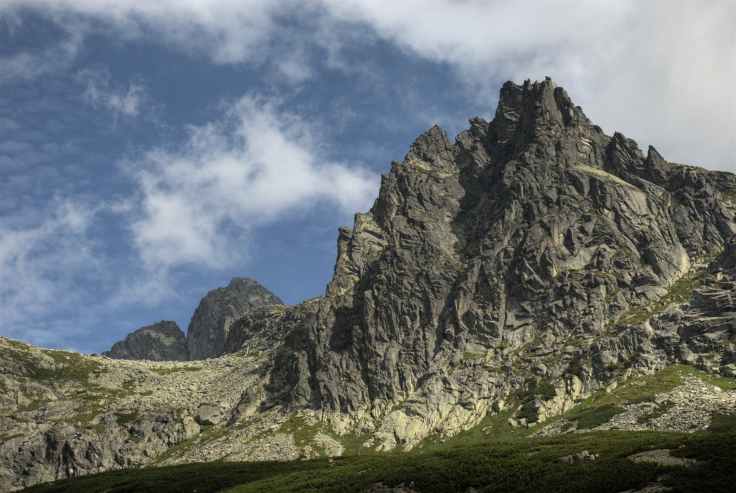
We’ve been cleaning out my Mom’s house for sale, and we came across a couple of shoeboxes of old rocks. I’m not sure which of us kids gathered them up, or when, but at some point, one of us excitedly gathered and saved some “pretty” rocks, thinking they might contain gold or crystals or some other special treasure. And Mom saved them.

I still like rocks– gemstones, geodes, fossils, etc. I like interesting and unusual rocks. My husband and I have several boxes of “pretty” rocks around the house. Some of them we polish and tumble to bring out more of their inner beauty; others we leave in their natural state.
When I was in college and early in my teaching career, it was common for young people to say that something “really rocks!” if they were impressed or excited. Of course, this phrase wasn’t referring to rocks and stones, but to rock and roll music, but the phrase has stuck with me. There is very little about most rocks that would cause me to say that they “Rock!” But that is my point. Jesus thinks a lot about rocks– even ordinary ones.

I was reminded today about some of what Jesus said about rocks and stones:

 When he came near the place where the road goes down the Mount of Olives, the whole crowd of disciples began joyfully to praise God in loud voices for all the miracles they had seen:
 “Blessed is the king who comes in the name of the Lord!”
“Peace in heaven and glory in the highest!”|
Some of the Pharisees in the crowd said to Jesus, “Teacher, rebuke your disciples!”
 “I tell you,” he replied, “if they keep quiet, the stones will cry out.”
 As he approached Jerusalem and saw the city, he wept over it and said, “If you, even you, had only known on this day what would bring you peace—but now it is hidden from your eyes.  The days will come upon you when your enemies will build an embankment against you and encircle you and hem you in on every side.  They will dash you to the ground, you and the children within your walls. They will not leave one stone on another, because you did not recognize the time of God’s coming to you.”

Luke 19:37-44 NIV (emphasis added)

And do not presume to say to yourselves, ‘We have Abraham as our father,’ for I tell you, God is able from these stones to raise up children for Abraham.

Matthew 3:9 ESV

But all those who come and listen and obey me are like a man who builds a house on a strong foundation laid upon the underlying rock. When the floodwaters rise and break against the house, it stands firm, for it is strongly built.

Luke 6:47-48 The Living Bible (emphasis added)

We spend most of our lives surrounded by rocks, but we rarely take notice. Rocks are generally ugly, hard, and inconvenient. We stumble over them (see many other scripture references!), pile them up, remove them from our gardens and fields, and throw them or kick them out of our way. But Jesus sees rocks just as He does all of His creation. Rocks serve as an enduring foundation for buildings– making them a visual reminder of God’s enduring strength and faithfulness. And did you know that rocks may literally “cry out” in testimony of God’s power?! https://www.templeton.org/news/can-the-rocks-cry-out https://www.icr.org/article/stones-cry-out-what-rocks-fossils-say/

Photo by Ihsan Adityawarman on Pexels.com

As I was thinking of rocks and stones– how common and ordinary they seem– I was also reminded that Jesus relished in using the ubiquitous and ordinary things around us to teach lessons. Seeds, rocks, sheep, trees– all were used in Jesus’ parables to give us practical ways of understanding God’s mysterious nature. And the same is true today. I often learn more about God by interacting with ordinary people and performing humble tasks than I sometimes do at “religious” retreats or doing “holy” work.

There are days when I don’t feel very “successful” in sharing the Gospel message or helping shape disciples for Christ; when I feel like I’m writing to an invisible audience of one or two people, and saying the same things over again. And yet, God called Peter a “Rock” upon which He would build His church– Peter the fisherman; Peter the one who denied Christ three times during His moment of greatest crisis; Peter who had no formal training in theology. And this same Peter calls us “living stones” building up the Church. I am not called on to be sparking like a gem, but I am called on to be like a stone– resting on Jesus the Cornerstone (see 1 Peter 2 :4-8). So God calls me to continue to write, even as I go about my other daily work.

Photo by Michael Judkins on Pexels.com

And God can use the “rocks” in our lives– the things we stumble over, the things that seem hard and even useless–to do amazing things. That neighbor who seems stubborn and resistant…that problem that just doesn’t seem to go away… that nagging pain…those voices telling us that we are not enough. God can turn them into “children of Abraham.” God can use them to build us up. God can change hearts of stone into hearts of flesh, overflowing with compassion (see Ezekiel 36:26) God can cause even the rocks to cry out in praise!

And in all that I do, I too want to “cry out”– both in prayer TO God and in testimony ABOUT God. And my testimony is that Jesus ROCKS!

Of Lighthouses, Watchtowers, and “Friendly” Reminders…

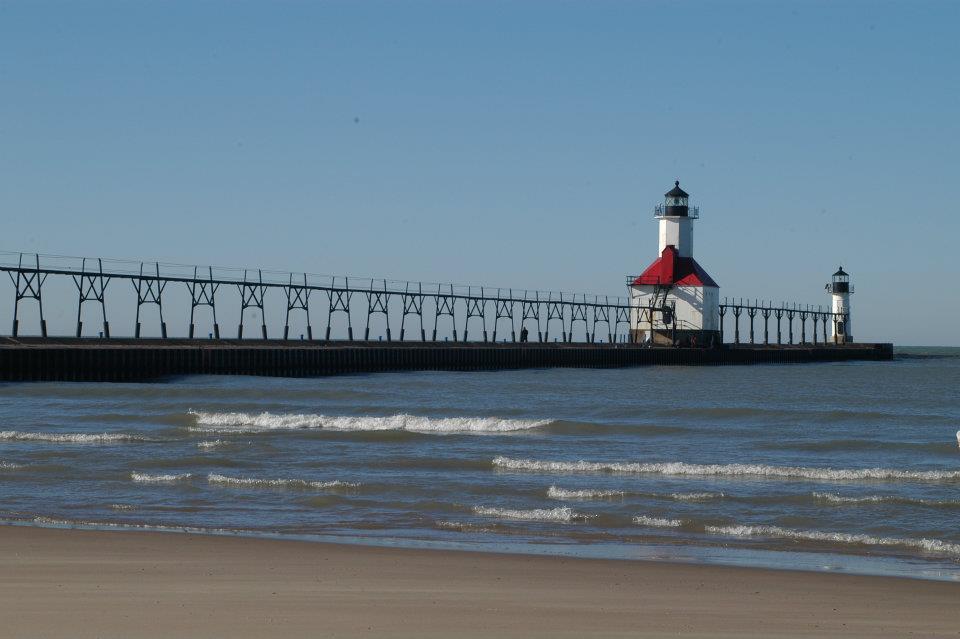
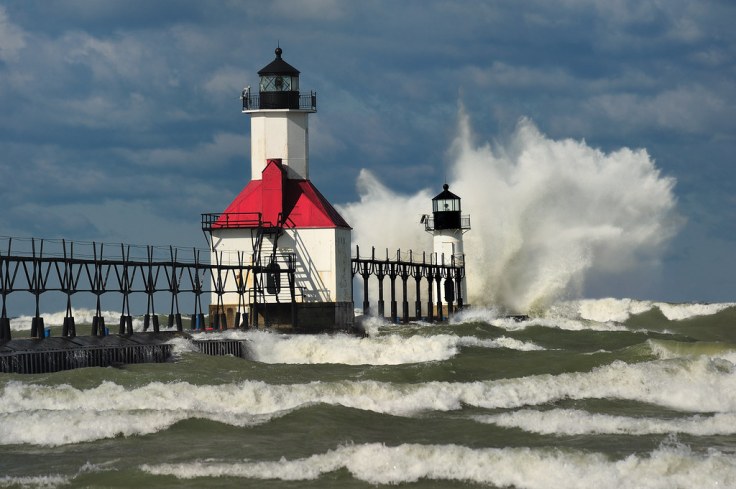
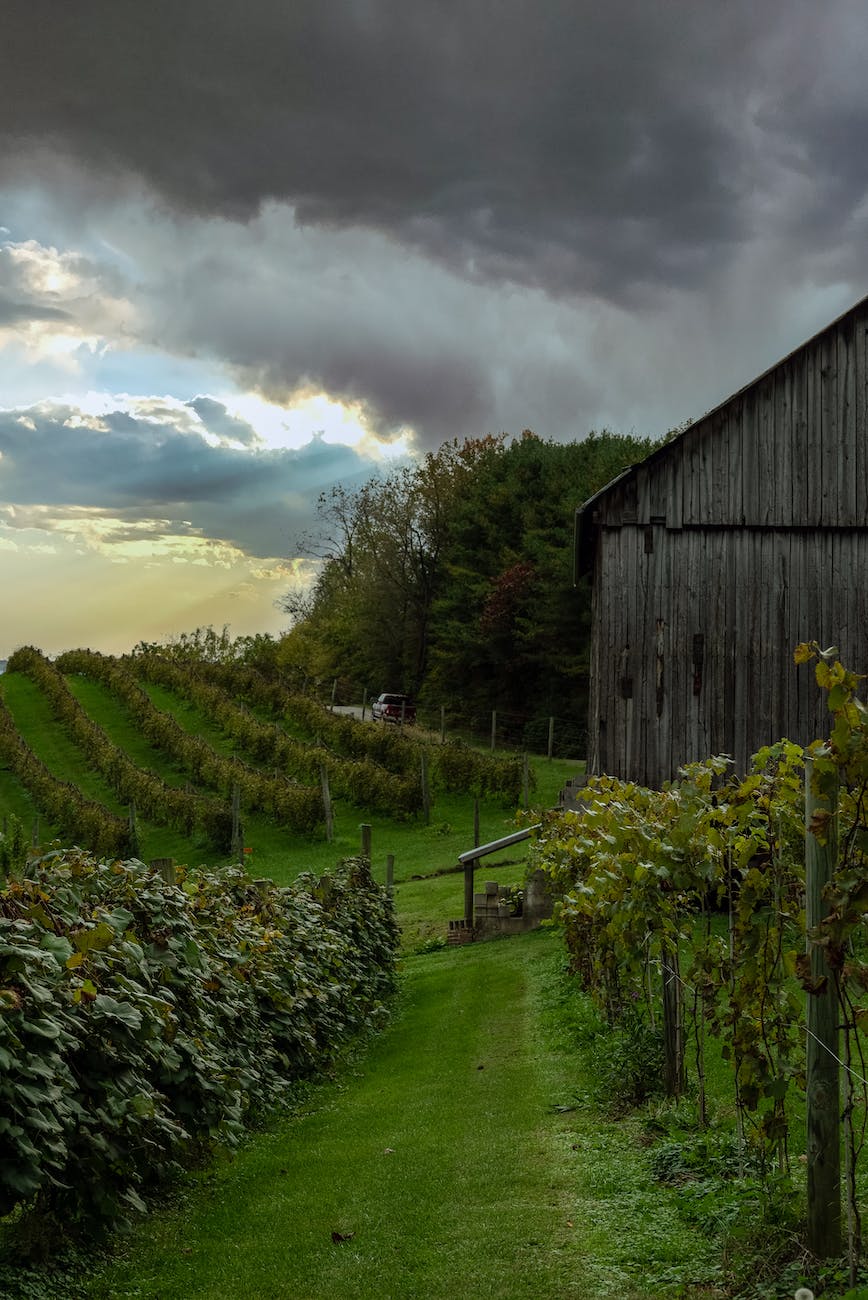
I live just about an hour away from one of the Great Lakes. Within a comfortable driving distance, there are at least three beautiful lighthouses along the lake. Driving to or from the lighthouses, we pass through an area known as the “Fruit Belt.” Orchards, vineyards, and croplands are bursting this time of year–the very air is redolent with the smell of ripening apples, grapes, corn, beans, berries, wheat, and more. Some of the orchards and vineyards still have old watchtowers, though many have been removed or replaced with digital cameras.

Photo by Chris F on Pexels.com

Lighthouses and watchtowers serve a purpose– one that is still important today. Lighthouses help ships and other lake traffic avoid dangerous reefs and rocks along the shore, as well as sandbars. They guide travelers in the dark, and through storms. Watchmen in towers protect crops from dangers such as fire and predators. They watch for storms, and signs of draught and frost. Both lighthouses and watchtowers are fixed, steady, visible, and convey safety and security.

Photo by Travis Rupert on Pexels.com

I’ve been reading through the prophets lately– Isaiah, Jeremiah, Ezekiel…the prophets were sending out a warning to the rebellious people of Israel and Judah. Even though the imagery is often graphic and stark, the message was one of steady love and warning from God. God loves us enough to guide us through the rocks and perils of life. He sends warnings– not to harm us but to keep us from harm. He sends faithful friends and other messengers to stand firm with us through the storm and drought and danger around us.

Photo by SHVETS production on Pexels.com

Just like the light from the lighthouse, or the sound of a foghorn, the message may be glaring and unpleasant, sometimes. We may be sailing along with no notion of the rocks ahead. Or we may be strolling through the vineyard, unaware of a prowling animal or a fire just over the next rise. We may even resent the warnings we read in the Bible or hear from friends. We may be afraid to BE the one giving out the warning– afraid of being misunderstood or resented or even rejected.

God asks us to be watchmen– to be lighthouses– ready to shout out a warning to those who may be in danger. He also asks us to be vigilant and ready to heed the warnings He sends through others.

Photo by Monstera on Pexels.com

How do we know when “friendly” reminders and warnings are true? How can we be sure that they are not just petty criticism or overreactions?

Check them against Scripture. And check them in the context of Scripture. A single verse, taken out of context, that seems to contradict other passages should always be suspect. But a general principle, found throughout the Old and New Testaments should be heeded.

Look for consistency. Lighthouses and watchtowers don’t bend and sway with the winds of change. “Warnings” that change with circumstances, or seem relative to certain situations should be suspect.

Listen for (and speak with) Love. Friends may speak words of warning, but they will also speak of mercy and hope.

Listen for (and speak) truth–warnings should contain specifics, rather than vague fears or blanket accusations.

Listen (and speak) with humility. That doesn’t mean that we cannot speak in our defense, but we should not be defensive or resentful– even if the warnings are spurious. Remember, Jesus was accused of being “from Satan” during His own ministry, yet He answered firmly and gently, not with anger or hatred.

Give Thanks! Give thanks that God sends us warnings, and gives us opportunities to recognize danger and error, and opportunities to repent and change course, and encourage others to do the same!

The Rocks Cry Out

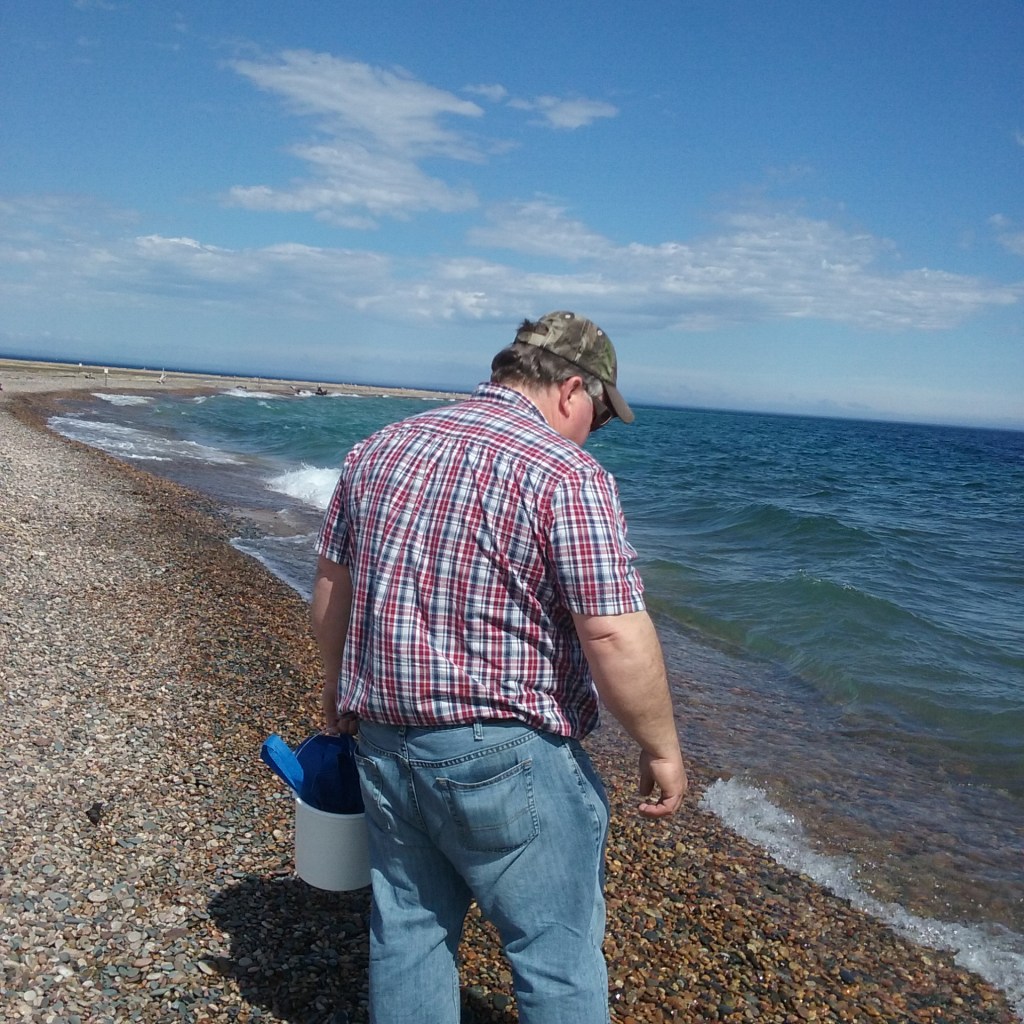
A couple of days ago, while the weather was still cold, but clear, my husband and I visited one of the many beaches along the eastern coast of Lake Michigan.  The beaches are popular throughout the summer months, especially those with lots of dunes and smooth sand for sunbathing and picnics and beach volleyball.  We’re the sort of odd ducks who like to visit in the off-season, bundled in parkas and combing the rocky shores looking for unique stones and beach glass.

I was reminded of Jesus’ parable of the two men– one who built his house upon the rock, and the other who built his on sand.  https://www.biblegateway.com/passage/?search=Matthew+7%3A24-27&version=ESV.   Sandy beaches are wonderful to visit in the summer, when the weather is perfect, the sun is shining, and the lake is calm.  But over the winter months, people avoid sandy beaches (as we did) because the wind and waves can erode great patches of sand, moving it about and changing the shoreline considerably.  On the bigger public beaches, crews put up fences to keep the winter gales from blowing sand away from the shore and into the parking lots and streets.  The fences also trap the sand and snow on the shore.  Snow banks that form on the beach can melt and carry the sand back into the lake, forming new sand bars that can cause damage to small boats.  Even in the summer, large waves can produce undertows and dangerous currents for the unwary. 

Photo by Miro Alt on Pexels.com

In many ways, sand is like sin.  Sand is attractive– smooth and glistening in the sun.  It is warm and seems to yield to the touch.  But sand shifts; it blows and drifts easily, but it sticks in place where we least want it, tiny grains getting into hair and clothes, shoes, and beach towels.  It slips away, slides from under our feet, fails to hold its shape, unless we wet it down and pack it, and then it crumbles under the action of the waves.

Photo by Pixabay on Pexels.com

Rock, on the other hand, is secure.  It takes centuries to erode; it doesn’t shift or fall away.  A rocky coast may not seem as inviting for pleasure, but it makes a far better foundation for a home or a lighthouse.  Even the smaller stones along the beach do not blow around in a strong wind, nor do they melt away with the snow.

Photo by Pixabay on Pexels.com

Beach stones can offer further illustrate how God works in our lives.  Stones on the beach start out with sharp edges.  They are cold and hard and uneven.  But over time, the rocks are slowly churned by the waves and the movement of smaller rocks and sand, and they are smoothed and polished by their environment.  Among the sharp rocks are beautiful agates and quartz, their varied colors seeming to absorb sunlight and heat.  Just so, we are transformed from hard and cold isolated individuals as we absorb the Son’s character.  And, as we are churned up against others, and the hard edges get smoothed away, His beautiful character is revealed in us, and we shine.  With further polishing, the stones reveal the kind of strength and beauty that make them worthy of being displayed or set in jewelry.  Not every rock along the beach will go through this transformation..some will remain hard and sharp; others will be ground into sand.  But some will cry out in their beauty and strength as testimonies of  God’s eternal process of redemption.

Blog at WordPress.com.

Up ↑