The “Curse” of Proverbs 31

If you are a woman who has grown up “in the church,” you are probably familiar with Proverbs 31. It is the chapter about a virtuous woman. She is the role-model that is held up for young girls and older women alike. And she is, like Mary Poppins, “practically perfect in every way.” She gets up before the sun, stays up late into the night–always busy, always productive; she never slows down. She never has a bad hair day, never loses her temper, never forgets to pack a lunch or fold the laundry. She never nags, never scolds, never pouts, and never has to raise her voice.
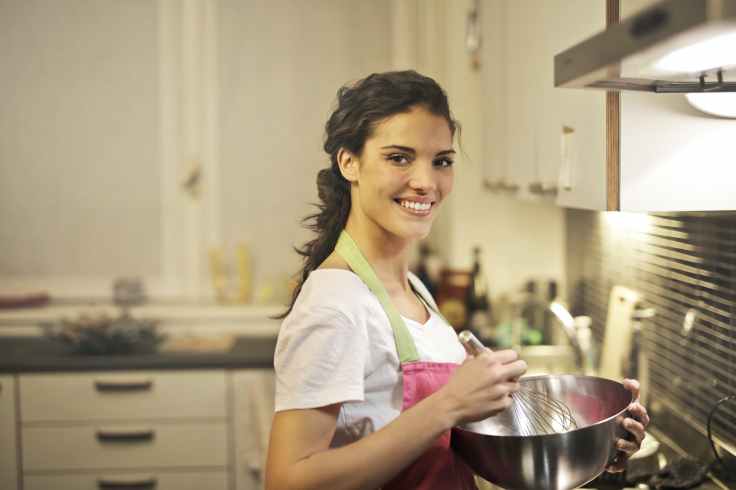
Photo by Andrea Piacquadio on Pexels.com

It helps that she has serving girls to do her bidding, and has her own business. She appears to be independently wealthy and active, yet she has time to raise children who “rise up and call her blessed,” and satisfy her husband, who “lacks nothing of value.”

I would love to say that I am just like that woman. Most days, however, I feel nothing like her. I don’t have money to buy a new field. I don’t get up before the sun and my hands are not eager to work. I don’t make and sell linen garments. No one is running around calling me “blessed” or singing my praises… I can never measure up to this woman. I feel cursed.
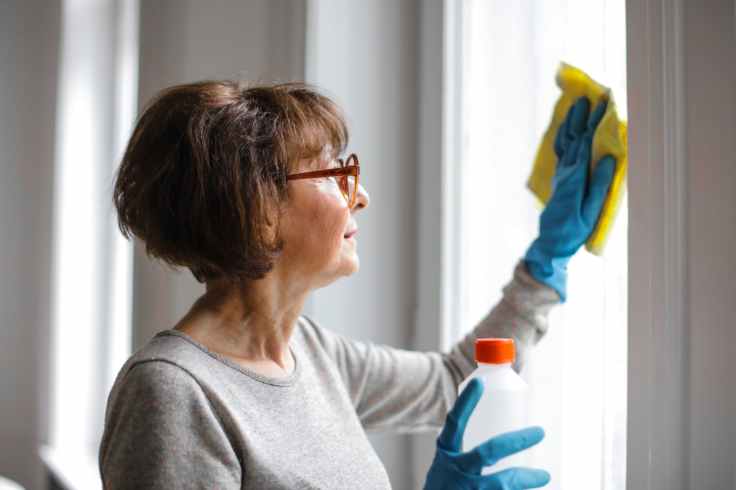
Photo by Andrea Piacquadio on Pexels.com

But a closer reading of this chapter makes me think again.

While the woman described in this chapter is a model to emulate, she is not the norm. Nor is she the standard to which I must adhere to “earn” my way into God’s good graces. Indeed, God’s Mercy is the richer and His Grace more precious for knowing that I cannot “measure up.”

Instead of using Proverbs 31 to beat myself up for not being perfect (or using it to discourage or intimidate others), I need to learn from it. Here are a few things I’m hanging on to as I read through it this week:

Photo by Luis Quintero on Pexels.com
  • “She brings him (her husband) good, not harm…” (v. 12) What are some ways I can bring good, not harm, into my home and marriage? How can I listen more, nag, less, be more available, and otherwise show love and care? I won’t be perfect, but I can look for ways to improve!
  • “She works with eager hands..” (v. 13) “She sets about her work vigorously…”(v. 17) I may not be spinning wool or flax in the early light; I may not have serving girls to order, but I have hands and work to do throughout the day. How can I do a better job of seeing chores as opportunities, rather than oppression and drudgery? How can I bring a greater sense of purpose to my tasks? I may not have serving girls, but I have appliances–am I “ordering” them properly by taking care of them, instead of just taking them for granted? And am I grateful for their help?
  • “She opens her arms to the poor and extends her hands to the needy…” (v. 20) What can I do to “give” more–donate, volunteer, provide hospitality and encouragement? How can I keep in mind that during various seasons of life the “poor” and “needy” may be in my own home and family–children or grandchildren needing nourishment and discipline; parents needing care and support…How can I be more available to those outside of my home, or during my work hours? Can I send an e-mail or make a call to offer encouragement? Can I share a recipe with a friend, or invite them to come with me shopping or to church? Can I make time to pray with a neighbor? Can I clean out a closet and donate clothes or linens?
  • “She speaks with wisdom, and faithful instruction is on her tongue..” (v. 26) What a challenge!? What is “on my tongue?” Gossip? Criticism? Complaining? Idle chatter? Do I speak too much? Do I remain silent when I could offer needed instruction, encouragement, or correction? Do I speak with gentleness and compassion? With conviction and truth?
Photo by Andrea Piacquadio on Pexels.com
  • “…she does not eat the bread of idleness..”(v27). Ouch! Everyone needs to rest– even the seemingly indefatigable woman of Proverbs 31! But am I becoming “fat” on leisure time? How much time to I waste on distractions and entertainment that could be put to better use?
  • “Charm is deceptive, and beauty is fleeting, but a woman who fears the Lord will be praised..” (v30) I may strive to be an “accomplished” woman– someone who is poised, talented, successful in business and society, with a picture-perfect house and garden, children on the dean’s list or the winning sports team; I can be will-traveled and well-educated, someone who seems to “have it all”–and still NOT be a woman of noble character. God isn’t impressed by my clothes or my achievements; He doesn’t give me credit for being “better” than my next door neighbor, or having the best kitchen on the block; God will not love me any more for being more successful or productive than anyone else. If my house is cluttered, my hair is untame-able, my kids have public melt-downs, and I don’t belong to the “in” club; if my business fails, my car is rusty (or I don’t have one), and my husband and I wear second-hand clothes, God still sees my heart. I can still be a woman who fears, trusts, and serves the Lord– one who is loved, accepted, and even “praised” by the One who matters most!
  • Finally, I can Pray to become a woman/wife of noble character (v.10), striving for good habits, rather than fretting over and wallowing in bad ones. I can trust God’s willingness and ability to transform my life and my attitudes. In fact, I am reminded of a seemingly unrelated portion of scripture from Philippians:

8-9 Summing it all up, friends, I’d say you’ll do best by filling your minds and meditating on things true, noble, reputable, authentic, compelling, gracious—the best, not the worst; the beautiful, not the ugly; things to praise, not things to curse. Put into practice what you learned from me, what you heard and saw and realized. Do that, and God, who makes everything work together, will work you into his most excellent harmonies.

Philippians 4:8-9 (The Message)
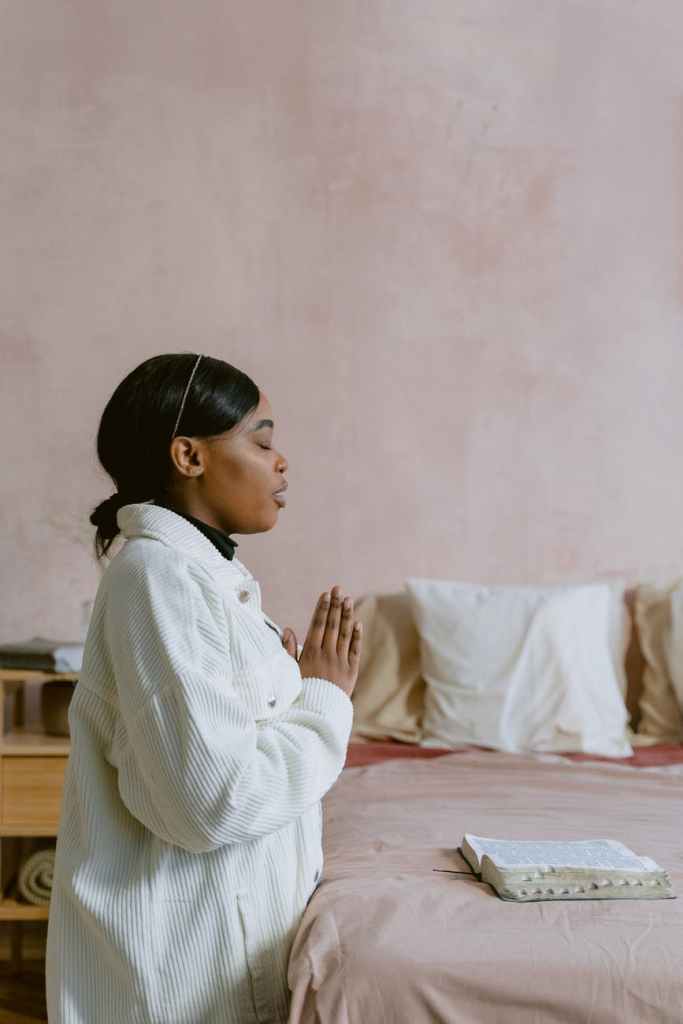
Photo by Tima Miroshnichenko on Pexels.com

I need to spend less of my time worrying about getting things “done”, than getting them done God’s way! I don’t need to fear the “curse” of Proverbs 31– failure to measure up to a model– instead, I need to see the opportunity to become a woman after God’s own heart– one who accepts God’s help and wisdom to become the woman HE wants me to be. I pray that God will give me the chance to develop–and help others–today and each new day.
Mothers and others..

Sunday will be Mother’s Day. People are already talking about how this year will be “different” because of COVID-19. They say it will be more difficult because of the social distancing measures in place. And it will be for many families. There will be few family gatherings, few long and happy discussions around a dinner table, fewer flowers, fewer hugs…Many will still have the opportunity to see their mothers/children via skype or zoom or through a window. Many can still hear a familiar and much-loved voice over the phone, and send messages via text, email or even a letter or card. But it’s not the same. There is something about a mother’s presence– her touch, her voice, her smile, the subtle scent that belongs to no one else– that we cherish and celebrate.

Photo by kelvin octa on Pexels.com

But for many people, this Mother’s Day will be no different. Sadly, there are many who will spend Mother’s Day alone. There is a visceral, painful place– a gaping wound– where there is no “Mother” on Mother’s Day. Maybe it’s caused by death–either the death of our mother, or the death of our child/children. Maybe it’s some other wrenching separation– Alzheimer’s, a ruptured relationship, addiction, mental illness, abandonment, deployment, rejection… We miss what once was, or we miss what we never had. COVID-19 may bring this horror to some this year, and it may leave some with that horror for years to come, but the pain and loss is no different for being caused by a virus. The pain of losing (or not having) a Mother runs deep. It may be felt more keenly on this day, but it aches and gnaws every day. Mothers give life. They nurture. They are the safe arms in which babies find peaceful rest (..eventually). They are the kissers of boo-boos; the proud recipients of our first attempts at writing, and drawing; our first audience for concerts and dances; our first teachers and nurses, police officers, drill sergeants, and life coaches; often our first playmates, too.

Photo by Katie E on Pexels.com

For many years, I have lived on “the other side” of motherhood. I am a daughter– blessed with an amazing, kind, strong, wise and Godly mother. I cherish the relationship we have, and look forward to the time when I can visit with her in person, instead of over the phone. She spent long nights rocking me to sleep; hours praying and crying by my hospital bed when I almost died as a toddler; listened patiently while I ranted and railed in teenage rebellion; encouraged me when I was exhausted from work and frustrated about living alone; and taught me the joy of spending time with God and loving others. And I want to honor her every day for the Godly example she has been to me and to others.

But I have spent most of my adult life outside the experience of motherhood, watching others with tiny arms wrapped around their necks, others kissing boo-boos and receiving artwork, others taking pictures of their graduating seniors and swapping stories with other moms. And, I have been reminded– sometimes in subtle ways, sometimes with contempt–that I do not “belong.” “You don’t know what I go through.” “You don’t understand.” “Who do you think you are to tell me about my daughter? You’re just her teacher. I’m her MOTHER!” “You can’t tell my children what to do.” None of these statements are wrong– but they hurt. And most of them come from someone else’s pain– their fear of failure, their frustration, their guilt, even a lack of sleep or a migraine…

Photo by Andrea Piacquadio on Pexels.com

Because of my experience, however, I have learned two things– a greater appreciation for my own excellent mother; and a new appreciation for the role I have been allowed to play as an “Other.”

Mothers are vital, but they are not perfect, and, especially where they are missing or rejected or removed, the world needs Others. Women (and men) who will stand as surrogates, substitutes, and valued helpers. Sometimes it is a thankless job; often it is temporary, even momentary, and unexpected. Throughout our lives, there are Others who inspire us, who have our backs, who cheer for us through track meets, or at dance recitals, or spelling bees. Others who may not kiss boo-boos, but patch them up in the moment. There are Others who are the first to spot our hidden potential, or warn us of dangers that no one else has spotted. Others who pray for us, cry with us, and share our smiles. Others who buy Girl Scout cookies, or magazine subscriptions, lemonade, or raffle tickets.

Photo by Cliff Booth on Pexels.com

It was not God’s will for me to be a Mother. I have been blessed in recent years to be a step-mother and -grandmother, and I adore my kids and grandkids. I am so grateful for the mothers and others who shaped their lives, and the honor of being part of their families. But God has also given me a lifetime of being an Other. I may not have the “normal” experience of Motherhood, but I’ve had my share of doubts, failures, “bad” days, and sleepless nights. And I’ve been blessed to get to know hundreds of children– through school, Bible School, Sunday School, mission trips, Story Hours, school visits, Summer Reading, camps, baby sitting, extended family, and more.

Photo by nappy on Pexels.com

If you are a mother– celebrate Mother’s Day this year. There are millions who have been denied the honor. And many who have lost the privilege.

If your Mother is still alive, but you can’t be with her– celebrate Mother’s Day this year. If you can’t be together in person, make an effort to be together in word and spirit. Flowers are nice; a fancy meal is fine, too, but your time– listening, sharing laughter and memories–it priceless. There will come another year when you won’t be able to be with her– and no phone line or video chat will be able to bring her closer. If your mother is alive, but your relationship is strained, you can still celebrate Mother’s Day. Use this day as a starting point to move forward– some relationships can be repaired if you are willing to take a first step. Others need closure. All relationships need forgiveness– for YOUR sake.

Photo by Andrea Piacquadio on Pexels.com

If you are missing your mother or have no mother–celebrate Other’s Day this year. Look for the people who have encouraged or uplifted you– aunts, neighbors, teachers, college roommates–let them know they’ve made a difference.

If you are not a mother– and even if you are– you are someone’s Other. Celebrate the opportunity to be the best Other you can be. Someone needs an Other today!

Photo by Daria Shevtsova on Pexels.com

Fruitful Families

Yesterday was my Grandmother’s birthday.  She passed away over 20 years ago, but I still cherish the memories I have of my time with her.  She was a woman of quiet dignity, gentle wisdom, and deep love for her family and neighbors.

Gramgrad

While I was still in my late teens and early twenties, my Gram started getting me interested in genealogy.  She had amazing stories that had been passed down through several generations, but she was unsure how many of them were “true” and how many had devolved into legend and half-truth.  Her stories became the first framework I used to research our family’s roots.  Over thirty years later, I have books and charts and databases filled with names, dates, stories, photos, mysteries, dead ends, twists and turns, surprises and more.  I have traced my own family, my husband’s family, related families, possible connections to famous people in history, and mapped out many of the locations where our families lived over the centuries.

architecture bridge clouds countryside
Photo by Pixabay on Pexels.com

God created and instituted families, and I’m so grateful for mine.  In spite of the many tragedies and skeletons I’ve found along the way, one thing is clear.  God’s design for families is good and leads to hope, security, and fruitfulness.

All families are unique, but the design for families– the traditional family model–has been pretty consistent throughout the centuries and even across cultures.  It may not always be the “nuclear” family of a mother and father and two or three children in a single household.  Sometimes it is made up of multiple generations or nuclear groups sharing a house or living communally, and there have always been blended families, or single-parent households, but there is a consistent expectation of being able to trace one’s mother’s family line and father’s family line through at least two or three generations– knowing their names, where they were born, and when they lived and died.

As technology is advancing to make this kind of genealogical research even easier, society is pulling away from the traditional family model and making it harder and harder to find one’s “roots.”  Children live with a series of adults– “aunties” and “dads” who bear no biological relationship and no lifelong commitment to them.  Children whose fathers are nameless, faceless DNA donors, or whose parents left them to chase a career, or be with a new lover or a consuming addiction.  Grown children rebel and leave their families behind to mix and mingle with other free-floating adults, never desiring to continue a legacy of family ties.  Many people look upon this as “progress”– changing the definition of family…ironically, they use the term “relative” when talking about values and definitions, even as they redefine what it means to be a “relative.”

alone blond child cute
Photo by Pixabay on Pexels.com

God doesn’t love us less if we don’t come from a traditional family– certainly, He is the God of the orphan, the fatherless, and the widow.

Psalm 68: 4-6: (NIV, courtesy of biblegateway.com)

 Sing to God, sing in praise of his name,
    extol him who rides on the clouds
    rejoice before him—his name is the Lord.
 A father to the fatherless, a defender of widows,
    is God in his holy dwelling.
 God sets the lonely in families,
    he leads out the prisoners with singing;
    but the rebellious live in a sun-scorched land.

God wants us in families– He wants us to grow and be fruitful.  “The apple doesn’t fall far from the tree,” is a phrase often used about family members being alike in their thinking or actions or habits.  And so it is with families who grow and live together.  We may “fall” away from our birth families, and move miles away, but we will produce a new tree with the same fruit– fruit that nourishes communities and societies and new families.

red apples
Photo by Elizabeth Tr. Armstrong on Pexels.com

However, when we lose the pattern of families as God set them up, we lose a lot of other good things:

  • A sense of belonging–sure we all belong to the entire human race, and we shouldn’t become exclusive and tribal at the expense of our neighbors and others, but there is a point at which we want to know where we “fit” in the scheme of things.
  • Support and encouragement–I love my family; and I even like most of them!  But I recognize a bond that cannot be broken lightly, and it keeps pulling us together in good times and bad.  We are there for baby showers, funerals, weddings, house-warmings, graduations, and reunions.  As our family has grown, we can’t always be at every event, but I will never be without anyone.  There is a horrible epidemic of people who ARE living and dying alone– no family to visit or be visited; no family to talk to, or argue with, or share memories.  This breaks my heart, and it breaks the heart of the God who made us to be “relational.”
  • History and legacy–My life has a purpose and fits into a plan.  I am uniquely “ME”, yet I am also a daughter, sister, wife, step-mom, grandma, aunt, and cousin (and second-cousin once-removed, etc.).   I didn’t just appear out of thin air, and I won’t disappear without leaving a trace.  The choices I make don’t just impact my life.  This is important regardless of my history–I am the one who can change a bad legacy into a great heritage, or ruin a heritage and leave a legacy of pain for those I leave behind.

superdad

  • Role models–Having roles within a family prepares us for having roles at work and in our communities– we learn to speak out, and to listen; we learn to ask for and offer help; we learn to respect others and earn the respect of those around us.  We don’t learn these lessons perfectly, because there are no perfect families.  But families provide a structure and pattern for teaching life lessons that is time-tested and approved.  Busy parents are aided by grandparents, uncles, and older siblings and cousins in modeling good behavior, correcting bad behavior, and answering questions ranging from “the birds and the bees” to how to braid hair or tie a necktie.  When that structure is missing, young people fall through the cracks in ways both small and crucial.
  • Seeing how God’s love works through the ages.  God doesn’t just love in spurts and impulses.  God’s love is eternal, and meant to be shared from generation to generation and spread from family to family.


I pray today that, just as my grandmother encouraged my love of family, that I will leave a legacy of love and faith for others in my life– those who are family by blood, and those who have become the family of my heart.  And I hope that others will pray for our families to stay true and strong and fruitful, too.

man standing beside his wife teaching their child how to ride bicycle
Photo by Agung Pandit Wiguna on Pexels.com

Blog at WordPress.com.

Up ↑