The Right Time

But when the right time finally came, God sent his own Son. He came as the son of a human mother and lived under the Jewish Law, to redeem those who were under the Law, so that we might become God’s children

Galatians 4:4-5 (Good News Translation– emphasis added)

At just the right time Christ died for ungodly people. He died for us when we had no power of our own.

Romans 5:6 (New International Reader’s Version–emphasis added)

Do you ever wonder at God’s timing throughout the Bible? Why did He take the Israelites up to the edge of the Red Sea and THEN send the entire Egyptian army after them? Why did He allow Haman to trick the king into signing an edict that would wipe out the Jews and THEN send Esther to try to save them? Why did Jesus wait until Lazarus was dead to visit His sick friend? Or God’s timing in our own lives? Why didn’t He make it possible to get the job I wanted when I first applied, instead of nearly a year later? Why is life so stressful all at once? Why does God seem to give me wisdom AFTER I’ve messed up? And yet, God’s timing is perfect. Not that it seems that way–in fact, it often seems like God is not paying attention to timing at all.

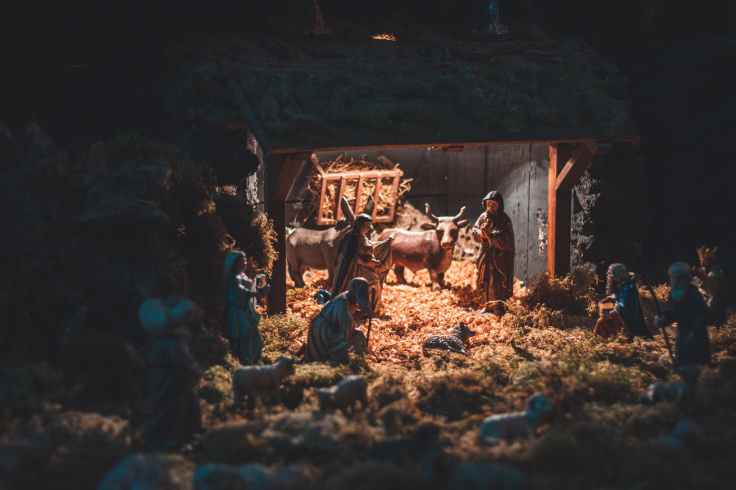
Even in Christ’s birth, it seems like the timing couldn’t have been worse–Joseph and Mary forced to travel far from home, only to find that there was no room anywhere for them to rest. And then– THEN–the labor pains began! It was cold, dark, filthy, lonely, and frightening. And not just that evening: the Romans ruled a significant portion of the world with an iron fist. Jews were not forbidden from worshipping God, but they were heavily taxed, regulated, and watched over by their invaders. This newest census was just another part of the bureaucracy and endless government red tape. It seems like it would be the worst timing ever for Emmanuel to appear.

And yet, Scripture says it was “just the right time” for Christ to come. So what can we discover about this “right time?”

  • God had been silent for 400 years before this– almost exactly the same amount of time the Israelites had been in captivity in Egypt before God sent Moses to lead them out. Coincidence? I’m not so sure…God uses patterns to illustrate concepts. Just as the Israelites had been slaves to the Egyptians, so all of us were slaves to Sin and Death. “And just as Moses lifted up the serpent in the wilderness, so must the Son of Man be lifted up” John 3:14 (New American Standard Bible)
  • The prophets made hundreds of statements about where and how Emmanuel would be born– some seemed completely contradictory; yet they were all fulfilled exactly. Again, this wasn’t a coincidence– God orchestrated events over centuries until it was “the right time” for them to all come to pass. Only God could have coordinated it all–the census, the genealogy of Jesus, Joseph’s hometown, Mary’s contractions coming THAT night in THAT cattle shed, instead of on the road somewhere, or in a private room where the shepherds couldn’t visit…

  • The Jewish people had been in exile off and on throughout the centuries; under Rome, even though they were conquered, most of the Jews who had returned to their homeland were still living there, much as they had centuries before. That wasn’t the case four or five hundred years before– it isn’t even the case today– more Jewish people live outside of Israel than in it!
  • Rome had established its rule over most of the Western World– and with it, they had established a system of roads, common currency, and a complex legal system. All of this played vital roles in the advent of the Savior– from His birth, through His ministry, and even in His trial, death, and the spreading of the Gospel. Before them, the Greeks had established cities and trading centers that would form the basis of the first missionary trips of the Apostle Paul. And they had created a “common” language in which this Good News was first written and spread. Just a few hundred years earlier, the spread of Christianity through letters and traveling ministers would have been much slower, less efficient, and more dangerous. Just a few hundred years later, the Roman Empire would be in shambles; travel would require going through regions separated by differing languages and governments.
  • To me, one of the most fascinating things to imagine is what it might be like if Christ had not come until our own time. First, there would be no Christianity, and none of the work of Christians over the centuries would have been done. But even if we imagine that all of history had unfolded and the present was much as it is, Christ’s birth would not have happened in the same way. Bethlehem would not be under the rule of Rome. In fact, Israel might not even exist; as it is, it exists in hot contention between the Jews, the Palestinians, and their close neighbors in the Middle East. There would be no census, and no need for Joseph and Mary to travel– and certainly not by donkey! There might be “no room at the inn,” but Joseph and Mary would be sent to a homeless shelter, filled with other hapless travelers. The shepherds, seeing angels, might still be filled with fright– mistaking them for missiles! Even so, it would only take minutes for a team of journalists to arrive with cameras, microphones, and commentary! The message of the angels would be dubbed “false” information or “fake news”, as would most of the prophecies about His arrival. “Fact checkers” would “kill” the story, and Mary, Joseph, and all the shepherds and wise men would be “cancelled” or receive threats.

Or not–I can only speculate. But I can say with confidence that God’s timing, even when it seems odd or “wrong” by our limited perspective, is perfect and worthy of our praise. All that seems “odd” or “wrong” about Christ’s coming when, where, or how He did, is just our limited perspective, and our tendency to doubt whatever we don’t understand.

Emmanuel came! He came at “just the right time” to fulfill all the promises and complete His ministry on Earth. Everything happened just as God designed it. And over two thousand years later, we still “Rejoice!” We sing songs, celebrate, and worship. We breathe in Hope, we give gifts, and we cherish the story of Christmas in hundreds of different ways.

This same God has a plan for us today. Throughout our lives, He sends blessings, allows struggles, and patiently stands by, offering help and hope to each of us. There is not a single detail of our lives that escapes His notice or is beyond His capacity or willingness to restore, transform, redeem, or renew.

Emmanuel– God WITH us–at “just the right time!”
Render Unto Caesar…

I don’t like paying bills. Utility bills, insurance premiums, credit cards, and taxes– property tax, income tax, even sales tax. Every month, the bills come, and the checks go. And if we don’t pay the bills on time, there is an extra fee and interest charges. Bills and fees and payment schedules are not unusual or unexpected in this world. And we pay (if and when we can) because we are honest and upright citizens. It is a duty, but not a pleasure.

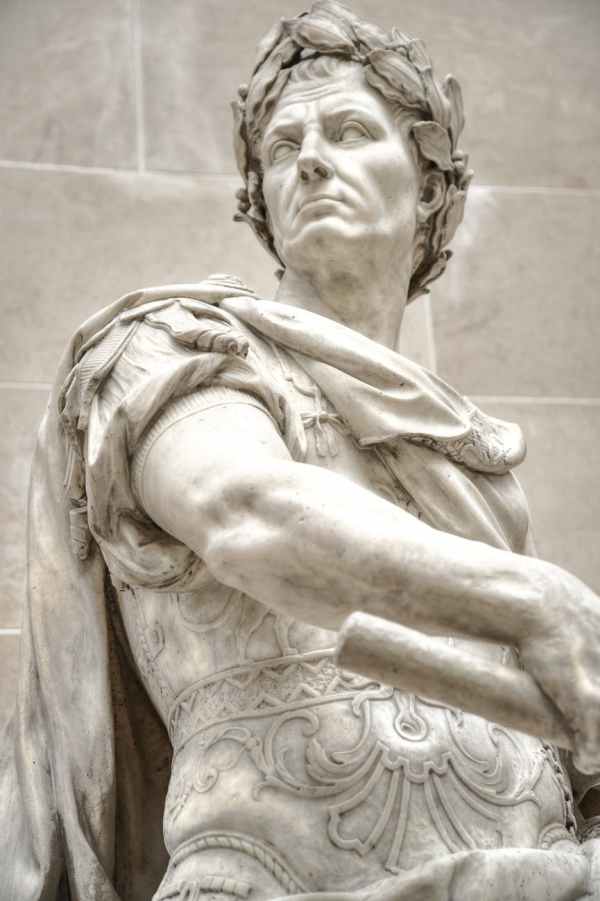
Even Jesus had to pay taxes. He was asked about it– even challenged over it. The Pharisees wanted to trap Jesus into taking a stance and offending many of His followers or running afoul of the Roman government. They asked, “Is it right to pay taxes to Caesar, or not?” (Matthew 22:17)(https://biblia.com/bible/esv/matthew/22/15-22) Of course, if Jesus said it was right to pay taxes, He would anger those who were fighting to be free of Roman oppression. Paying taxes to Caesar, in effect, legitimized Roman occupation and subjugation of the Jews. Much of the tax money was used to extend Rome’s control over the Jews, and to pay the soldiers and officials who made life miserable for Jesus’ followers on a daily basis. And it was common knowledge that many tax collectors were corrupt and cheated the people to line their own pockets, as well. The Romans worshiped countless gods and goddesses, but had no respect for the God of Israel. It was humiliating, and burdensome, and unjust to pay taxes. And yet, if Jesus said it was NOT right to pay taxes, He would be inciting open rebellion against the Roman occupation. He and His followers were be arrested and killed.

But Jesus did not fall into the Pharisees’ trap. He asked to see a common coin. He asked whose face and likeness were on the coin. “Caesar’s.” And then Jesus said, “Give to Caesar what is Caesar’s and to God what is God’s.”

I was reminded as I opened bills and wrote checks this past week, that I do NOT receive a bill from God. I owe God everything– my life, my next breath, my health, my hope of eternal life. Yet He never sends me a bill, or an overdue statement. He charges no interest, or late fees, even when I let distractions keep me from giving Him the praise and honor that is due to Him. Even when I choose to go through my day without sharing my heart’s longings with Him.

I may not like paying bills, but I do it. I “render unto Caesar,” even as I complain about taxes and interest fees. But do I “render unto God what is God’s?” And when I do, is my attitude the same as it is when paying bills? God forbid!

God never cheats; He never asks for something He doesn’t deserve. And He has given me far more than I could ever ask or imagine, through the power that is at work IN ME! God doesn’t give loans– He gives gifts of eternal value.

What can I render unto God today? Surely I can give Him praise, and share His grace and goodness with others…it isn’t impossible. It isn’t beyond my duty. It isn’t isn’t even “taxing!”

Believest Thou This?

John 11 (KJV)

In the Gospel of John, there is the curious story of Lazarus. Lazarus and his two sisters, Martha and Mary, were good friends of Jesus. There are other stories throughout the gospels of Jesus interacting with this family. But this story appears only in John’s gospel, and it contains some details that raise several questions.

The story begins with an urgent message. Lazarus is gravely ill, and the sisters send word to Jesus to come quickly. Yet Jesus seems to dismiss the message, saying that it is not a sickness that will end in death, and he lingers two days before he decides to begin the journey toward Bethany. There is no sense of panic or urgency in Jesus’s response. And, though it says he loved Mary, Martha, and Lazarus, he seems unmoved by their obvious distress.

When Jesus finally arrives, Lazarus has been dead for four days. The two sisters both mention, with some bitterness, that if Jesus had come sooner, their brother need not have died. Jesus never gets defensive, but he challenges the sisters about their faith. In his exchange with Martha, he says that her brother will rise again. She agrees that he will rise again in the resurrection at the end of time. But Jesus redirects her faith–“I am the resurrection, and the life: he that believeth on me, though he were dead, yet shall he live: And whosoever liveth and believeth in me shall never die. Believest thou this?” (v. 25b-26). Her statement of faith, in spite or her grief and bitterness, prompts her to act. She goes to find her sister and bring her to the Savior, that she might be comforted.

Martha’s faith is small comfort in the circumstances. Her brother is still dead. His body lies rotting in a nearby cave. Her faith is fixed in the distant future, even as the author of Life and Eternity stands next to her. Her belief is wispy– more of a wish or a dream than the solid God-in Flesh standing before her.

Yet Jesus chose to use this seeming defeat as a showcase for His power to give life and resurrection. Many people who saw this were transformed and put their trust in Him. Others saw Jesus’ growing ministry as a threat to their own power and authority. They reacted with fear and even anger, that Jesus would bring the miraculous into their well-ordered normality. The Pharisees, including the chief priest, Caiaphas, determined that Jesus must die in order to “save” them from the Romans. Instead of seeing Him as the agent of their eternal salvation, they saw Him as an obstacle to their limited “freedom” to operate under the Roman oppression.

What is my faith like as I pray today? Do I believe that God “could’ve” or “should’ve” solved a problem in my past? Do I believe that God is not acting fast enough or decisively enough? Do I have a wispy faith that God will make all things right in Heaven, but is uninterested in the “here and now?” Do I believe that God’s answers might upset my life or cause me to “lose” control?

God, as you challenge my faith, help me to declare even my weak and imperfect belief; help me to act on it, and bring others to you for comfort. For in doing, so, I may be preparing the way for an incredible miracle– for revival and renewal; for the glory of Your great Name! And help me to see your answers through eyes of faith, and not fear of the unknown. Help me to trust you for the future I cannot see– a future that is in your capable and loving hands.

When Half-Spent Was the Night

‘Tis the season for Christmas Music– hymns and carols, ancient songs and modern tunes celebrating the Advent and Birth of the Lord Jesus. Joyful, passionate, somber, or even a bit silly, such music can lighten our spirits, and remind us of the incredible gift of God– Emmanuel–His very presence among mankind.

Christmas lyrics often use wonderful imagery to retell this amazing story. The Bible accounts tell of shepherds, angels, wise men, and stars– the songs give us the immediacy of a dark night– “silent”, “still”, “earth as hard as iron; water like a stone”, “a midnight clear”, “half-spent was the night”…

Most of us live in a world that rarely gets so dark. If we live in a town or city, we are surrounded by street lights, security lights, even night-lights in the hallway. Even so, we have a feeling for how the midnight and early morning hours seem darker, colder, quieter, and more dreary than any other time. And there is a significance in remembering that Jesus came to earth in the midst of literal and metaphorical darkness, “when half-spent was the night.”

Photo by Alex Fu on Pexels.com

God is Omnipresent– it is not as though God leaves us when all is merry and bright– but His presence is often most keenly sought, and unexpectedly found, in darkness and distress. When all seems bleak, cold, and hopeless, Jesus comes silently, small and fragile as a baby, bringing light, hope, joy, and peace. He comes when the night is “half-spent”– when the darkness is deepest, the silence weighs heaviest, and the cold is most bitter; when hope and light seem lost.

Jesus’ Advent came after four hundred hears of silence. Prophets, such as Isaiah, Zechariah, and Micah, had spoken of Messiah rescuing Israel from captivity. But the years had passed, and Rome ruled the Jewish people with an iron fist. God had stayed silent, and hope seemed remote. Rome would continue to rule the world for another four hundred years. But when Messiah arrived, He didn’t come to break the power of Rome. He didn’t come at the end of that particular “night”; rather, He came when the night was “half-spent.” He came gently, quietly, and humbly. He came to deliver Israel from something much darker, colder, and deadlier than a foreign occupation. Jesus, through His life and death and resurrection, came to deliver Israel, and the rest of the world, from the power of sin and death.

All the promise of deliverance and salvation that came in the middle of that bleak night so long ago, remains for us to celebrate– even in the middle of our “half-spent” nights.

We may not see the dawn in the middle of our struggles. We may not hear the angels singing or feel the warmth of the new day coming. But because of this “Rose e’er Blooming”, we can rejoice. We can find hope and peace in the present night, knowing that Emmanuel is with us! Like a lamp in the night, He will stay with us as we travel through the present darkness. After all, “Thy WORD is a lamp unto my feet and a light unto my path.” (Psalm 119:105) Jesus is the Living Word of God, and thus, our living light!

O Come, O Come, Emmanuel

During this season of Advent, we often sing this ancient hymn.  It dates back nearly 900 years, and continues to be sung and/chanted in Latin.  https://hymnary.org/text/o_come_o_come_emmanuel_and_ransom

The hymn is a contrast of weary longing and hopeful prophecy.  The promised Messiah has not yet arrived, but his coming is sure, and cause for great rejoicing.

The hymn is also a prayer– pleading for the coming of Messiah, even as it comforts with the reminder that he WILL come.  And it reminds us of the power of prayer– not just the power of approaching Almighty God, but the power of acknowledging our longings, our needs, and our dependence on God.  Even in our darkest hours, even in captivity and oppression, we can have hope in God’s timing and wisdom.  He DOES see our struggle; he DOES care, and he WILL send hope and rescue.

But the song also points out a pitfall–in the first verse, the prayer is for Emmanuel to rescue Israel from Roman Occupation; to end its immediate plight of being politically and economically oppressed.  There were many people who saw Messiah, heard him speak, even felt his touch, who rejected him because he did not do what they were expecting.  There are many today who cannot believe in Jesus Christ because he doesn’t take away their current circumstances of pain and suffering.

In their narrow focus, people miss the greater miracle of what Messiah is all about.  Jesus did not come to free us from temporary troubles and trials; to make us comfortably apathetic or arrogantly victorious over personal poverty or sickness.  He came to free us to be able to endure and/or overcome our circumstances; to offer hope where there seems to be no hope.  He came to show us that our circumstances don’t define us or cut us off from God’s love; that our past is not more powerful than His forgiveness and power to heal; that even suffering and oppression can be endured with joy, even as we work together to overcome them.

This year, as I ponder this hymn, I am both discouraged, and emboldened. I am discouraged, because I hear voices calling out for many things, but few of them are calling for a Messiah. We live in a world that desperately wants what Christ offers– peace, unity, forgiveness, eternal life– but without a Savior. We want to save ourselves, and we want to do it casually, heroically, and without acknowledging our helplessness. We read books, seek out gurus and life coaches, haunt the internet, all searching for answers that only God can provide. We long to see an end to injustice and oppression– or whatever seem unfair or difficult to us or those we champion– but we don’t want to submit to the example of a humble Christ who serves others.
But I am emboldened to pray that more of us would desire more than the “quick fix” or the “feel good” solutions of the world. I pray that we would earnestly desire that this Advent Season would be a time of yearning for MORE of Christ; more of His Joy; more of His Love for others; more of His Hope to spread around us. I want us to Rejoice– not in the bright lights and decorations, or even the beautiful melodies of Christmas carols– but in the real gift of Christmas! Emmanuel!

This season, as we sing this hymn, I pray that we would see the continuation of its message.  Emmanuel HAS come– Jesus not only came and won the victory over sin and death on Calvary; he has commissioned US to be the bearers of the Good News.  There are dark places in the world praying for hope and rescue to COME.  Will we share the love of Christ in our own neighborhoods?  When we bear the name of Christ, we should be on mission to rescue those who are captives, not of Rome, but of Sin and the tyranny of Death.  So that we all can  know the reason to Rejoice! Rejoice!

Blog at WordPress.com.

Up ↑