I have to admit, this is not a reaction I enjoy. I want to meet with God in prayer, feeling loved, confident, and joyful. And I know that God is sovereign, awesome, and powerful…but I want to revel in the goodness of redemption and the hope of glory, not tremble in fear or awe.
Yet, we are told to do both throughout scripture. I can’t really have one without the other. I cannot accept God’s love without acknowledging His awesome Holiness and the horror of His suffering and death. Without Jesus’ willingness to go to the cross, and His triumph over death, I would have no hope beyond this life, and no reason to expect Goodness in this life.
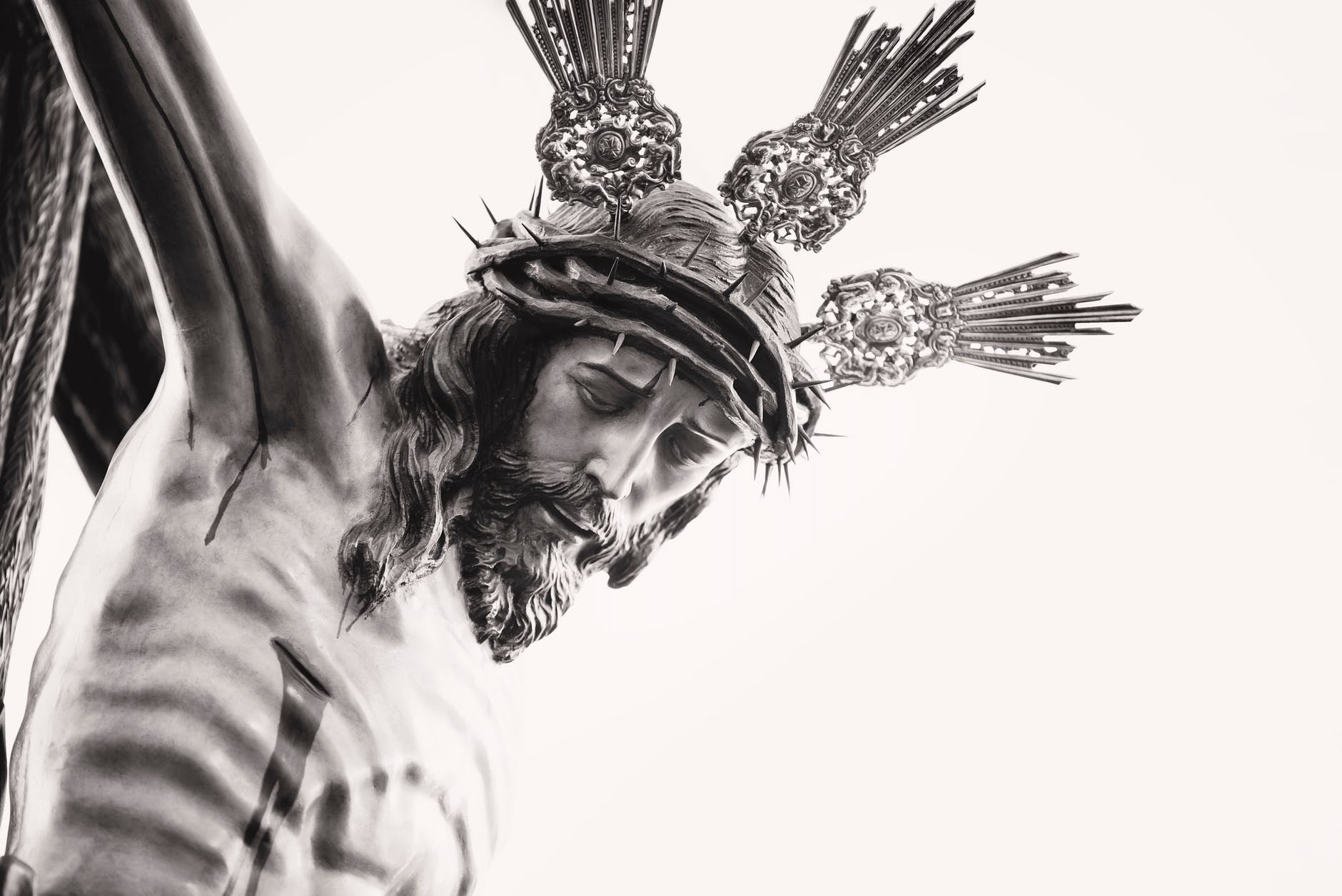
Today, I need to tremble– to see and acknowledge the awful wrath of God, fully and horrifically borne by Jesus on the cross. God did not send His Son to tidy up an uncomfortable or embarrassing “slip” on the part of one man. Jesus bore the weight of the Holocaust and the nightmares of genocide, terrorism, abortion, plague, war, and famine throughout the ages. Jesus paid the price of slavery, and sex trafficking, and human sacrifice committed over centuries and millennia of hatred and abuse. Jesus faced the punishment justly deserved by billions of acts of rebellion and rejection by people He had lovingly created. And He did it so that you (and I) could be held guiltless and allowed to enter the courts of praise.
Someday, we will see Him face-to-face. Yes, it will be joyful, and glorious. But it will also be cause for trembling. To see perfection, righteousness, Holiness, and Love, and yet see the One who was “pierced for our transgressions, and crushed for our iniquities…”
There is little glory in momentary happiness or small victories. But when we stop and tremble at His Majesty, we arise with joy unspeakable, and true worship!
How can I please God? What does He require of me? I’ve been exploring the most basic answer to this question by looking at Jesus’ answer to the related question, “What is the greatest of all the commandments?” (See Matthew 22: 34-40) Jesus quoted from Deuteronomy (6:5) as He gave His two-part answer– Love God with all your heart, soul, and mind, and Love your neighbor as yourself! He went on to say that ALL of the commandments and laws hang on these two concepts.
So today, I want to look closer at the last of these– Love your neighbor as yourself. In another gospel, we see that Jesus is challenged to clarify, “Who is my neighbor?” https://www.biblegateway.com/passage/?search=Luke%2010%3A25-37&version=NIV When we want to justify ourselves, or narrow the letter of the law, we often stall obedience by seeking to “clarify” God’s commands. Jesus’ words are broad, but perfectly clear– Love your neighbor as yourself–love the next person you meet; the person closest to you, as if they were YOU.
This doesn’t give us room to reject anyone or exclude anyone from our love, compassion, or respect as a child of God. Nor does it give us the right to live someone else’s life, or take away their God-given free will to think and act for themselves. I have been guilty of both offenses, and I don’t think I am alone.
Two of the great mistakes we make in failing to “love our neighbor” come through fear and pride. In the story of the “Good Samaritan,” we see two examples of a priest and a Levite, who fail to show love to their fellow Jew. They act in fear– fear of being the next victim, perhaps, but also fear of being inconvenienced or pulled away from their plans and purposes, and fear of being “defiled.” How many times do I let fear keep me from reaching out? How often do I fear that people, even God, will think less of me for associating with those who need help? Yet Jesus was known for interacting with sinners, lepers, and other outcasts. How can I act differently, and please God more than His own son?
The other great mistake I have made is to “love” out of pride. Sometimes, I think I have more wisdom, or more material wealth, or greater skills, and that it is my right to “help” my neighbor in my own way and at my own convenience. I think I know how they should live, what they should do, and what they need– more than they do; sometimes even more than God knows! But I cannot love where I am not willing to be humble. This is true with God, and it is equally true with others.
That doesn’t mean that I love others best when I let them take advantage to my harm or to their own harm. And it doesn’t mean that I must agree with them completely or deny what I know to be right. But it means that I must value their well-being and worth in God’s eyes as equal to (and often greater) than my own. It makes me feel good to “fix” someone else by fixing their circumstances, or demanding that they accept my help, but their greater need may be to take control of their own circumstances and attitudes. My need to be “right” or “righteous” or “charitable” needs to take a back seat to whatever their greater need may be. I need to listen more than I speak; wait when I would rather act (or vice versa); to take direction rather than give it; and to give advice rather than orders.
The Apostle Paul spoke at length about love:
13 If I speak in the tongues of men or of angels, but do not have love, I am only a resounding gong or a clanging cymbal. 2 If I have the gift of prophecy and can fathom all mysteries and all knowledge, and if I have a faith that can move mountains, but do not have love, I am nothing. 3 If I give all I possess to the poor and give over my body to hardship that I may boast, but do not have love, I gain nothing. 4 Love is patient, love is kind. It does not envy, it does not boast, it is not proud. 5 It does not dishonor others, it is not self-seeking, it is not easily angered, it keeps no record of wrongs. 6 Love does not delight in evil but rejoices with the truth. 7 It always protects, always trusts, always hopes, always perseveres.
1 Corinthians 13: 1-7 NIV (via biblegateway.com)
I can “care” about others; I can be generous; I can be knowledgeable; I can volunteer, and make sacrifices; I can “feel” deeply, and empathize with others– and still NOT love them. Conversely, I can disagree with them about a number of things, including their life choices, political views, and spending habits, and still love them as Christ loves them. I can love those who like me, or ignore me; those who hate me, as well as those who love me back. But I cannot do this in pride or in my own emotions and thoughts. This kind of love can only be sustained by the source of true Love– God Himself.
This is why it is so important to learn from Jesus’ example. His perfect Love casts out fear and pride, and allows us to see others (and ourselves!) in the proper perspective.
How firm a foundation, ye saints of the Lord, Is laid for your faith in His excellent word! What more can He say than to you He hath said— To you who for refuge to Jesus have fled?
“Fear not, I am with thee, oh, be not dismayed, For I am thy God, and will still give thee aid; I’ll strengthen thee, help thee, and cause thee to stand, Upheld by My gracious, omnipotent hand.
“When through the deep waters I call thee to go, The rivers of sorrow shall not overflow; For I will be with thee thy trouble to bless, And sanctify to thee thy deepest distress.
“When through fiery trials thy pathway shall lie, My grace, all-sufficient, shall be thy supply; The flame shall not harm thee; I only design Thy dross to consume and thy gold to refine.
“The soul that on Jesus doth lean for repose, I will not, I will not, desert to his foes; That soul, though all hell should endeavor to shake, I’ll never, no never, no never forsake.”
“How can you believe in a God who lets bad things happen?” We live in perilous times; dangerous times. Fires have swept through Canada and Hawaii (and elsewhere); massive heat waves have caused drought and death in many parts of the world; hurricanes have hit California and and the Caribbean, and another threatens Florida even as I write this. Wars rage in Ukraine and elsewhere; crime seems rampant in major cities on every continent. Diseases– even those we considered eradicated or “tamed” are making a comeback. Waste and pollution devastate our oceans, rivers, woodlands, and even the air we breathe. Often, it seems as if God is absent or powerless–sitting on the sidelines and letting bad things happen. Those of us who claim faith in an omnipotent, loving, and gracious God are mocked and challenged. How can we believe in the face of such evil, disaster, and injustice? How can we offer the empty comfort of prayers and assurances?
It can be very difficult to face such challenges– there are no easy answers and “mic-drop” moments for us in this world. But that doesn’t mean that there are no answers or that our faith is “blind” or without merit.
The Bible is filled with examples of people who followed God in extraordinary circumstances, often in the face of great evil and with little logical expectation of God’s blessing or help. Abraham traded a wealthy, safe, and honorable life in his native land to live as a stranger and a nomad among foreigners. Even after God seemed to fulfill the promise of a son, he tested Abraham’s faith, asking him to sacrifice his only son Read the complete story here... Many people see this story as a horrific example of injustice and cruelty– and if Abraham had been required to go through with the sacrifice, it might seem even more unjust and cruel. However, there are two points to consider:
God clearly planned to rescue Isaac–there was a ram in the thicket all ready and waiting. Abraham may not have known God’s purpose in asking such a thing, but he had faith that “God will provide for himself the lamb…” God may have been “testing” Abraham, but he already knew the outcome. The “test” was not for God–perhaps not even for Abraham–the test was for Isaac and all who would follow and experience the blessings that came through this amazing act of faith.
The story of Abraham, like so many others, is given to illustrate difficult truths– sometimes about God’s character, or OUR character, or the nature and consequences of Sin. These stories also often form patterns of allegory, foreshadowing, or illustrations of key principles and events. Abraham was told to sacrifice his only and very beloved son– a horrible prospect for any father. But God provided a substitute sacrifice– a lamb– allowing Isaac to live and become the father of many nations. God’s plan for the salvation of the world was built on the same pattern. God sent his only and very beloved “son” to be the substitutionary sacrifice for the sins of all mankind– a horrible prospect for a loving Heavenly Father. And this time, the son willingly gave His life to become the fulfillment of the promise acted out in Abraham’s story.
And, of course, there are hundreds of other stories– throughout the Bible, and throughout history– that demonstrate the blessings that come through radical and even tiny acts of faith in God.
Hebrews, chapter 11 lists several examples. And a key verse in the chapter points out:
13 These all died in faith, not having received the promises, but having seen them afar off, and were persuaded of them, and embraced them, and confessed that they were strangers and pilgrims on the earth.
Hebrews 11:13 (KJV)
These great examples of faith died without seeing the end results..but the end results are there for US to see! Faith in humanity– faith in Science– faith in ourselves– these are doomed to end in disappointment. Not because we don’t believe enough; not because these things are “bad”– but because faith needs an unshakeable, immovable, solid, and eternal foundation. Our faith in Christ is not a blind faith, an empty faith, or a desperate faith– it is a Faith that is firmly rooted in history, in observable facts, and in revealed truth. And even in the fiercest storms, the worst of disasters, and the overwhelming flood of hatred and evil in the world, our faith stands firm and sure– not because it is “our faith”, but because it is built on Him who is before and above all things–yesterday, today, and forevermore.
Our very firm foundation may seem invisible to the world, but that doesn’t change its reality or its power. We pray to the ONE who calms storms, who tears down and builds up kingdoms, and who holds all of eternity, including our future, in His hands. Fires, floods, trials, and terrors cannot overwhelm those who put their trust in Jesus. We may still get wet, singed, singled out, persecuted, and knocked down, but we will never be abandoned or defeated, or forsaken. Even if it seems like God is holding a knife to our neck– remember how the story ends! There is a lamb who has taken our place. God will not put an end to our hope. Even death cannot separate us from His Love and His Purpose for eternity. It’s all there– in His Excellent Word!
(In honor of my grand-niece’s 16th birthday, I am re-posting this entry from last year. I have changed her name to honor her privacy, and I have updated her age in the text,)
Yesterday was July 11. In certain parts of America, it is known as “Slurpee” Day. “Slurpee” is a brand name for a slushy drink sold at 7-Eleven convenience stores around the country. And since we write our dates with the month, followed by the day, July 11th is also “7/11.” Many 7-Eleven stores offer specials on their “Slurpee” drinks all day. And on a hot July day, that’s a great deal!
But July 11th is also the birthday of a very special person in my life. I can still remember the day she was born, and seeing her for the first time. She was beautiful (and still is). She had a full head of thick auburn hair, and seemed delighted to be alive and in the world– and we were all delighted to greet her! I remember commenting that she was a “Slurpee” baby– being born on “Slurpee” day. But shortly after she was born, it became clear that all was not “right” for “Chelsea” (not her real name). Chelsea did not respond to sights and sounds like other babies. And she started having violent seizures. Doctors soon determined that Chelsea had experienced several small strokes when she was in the womb. They also determined that such strokes would continue, and her chances of survival were slim. Immediate brain surgery would be necessary. At one point, the prognosis was very grim– even with surgery, she might be blind, deaf, and unable to control the movement in her limbs–essentially, she would be a vegetable if she survived at all. The first year of her life was a roller-coaster of surgeries and hospital stays, followed by extensive therapy and treatment that continues to this day. But she survived!
So every July 11, Chelsea, and her friends and family, celebrate, not just her birthday, but her life— her survival, her triumph, and her continuing struggle. Chelsea is 16 this year! She cannot walk on her own, and she has trouble talking and using one arm. But she excels at school–she loves reading and music (Yes, she can see and hear!) and she loves anything having to do with animals, especially dogs and horses! She loves jokes and riddles, and loves to listen to her Daddy play the guitar, or watch the dog play in the yard, or spend time with horses at the therapy riding center. She even loves cool treats– not necessarily “Slurpees,” but sweet drinks and yogurt parfaits! Her life is not easy. Her parents still have to help her dress and eat, even though she is almost fully grown. She has to use adaptive technology to write and do her schoolwork (and what an incredible blessing that it exists!) She spends most of her days in a motorized chair. And, like most teenagers, she has “moody” days and gets frustrated–her physical limitations add to that frustration. But she loves life, and she inspires those around her to embrace the positive. She is as welcome as an ice-cold Slurpee on a hot July day– sweet, refreshing, and colorful!
I am writing about “Chelsea” today, because I love her– she is my grand-niece, and my favorite “Slurpee” kid! But I’m also writing because there are many other “Slurpee” children like her who are not alive today, or who are made to feel unwanted and “less than” other children. Chelsea’s health issues were not detected until after she was born. Had they “discovered” the damage she sustained in the womb, chances are very great that her mother would have been encouraged or even pressured to have an abortion. The early prognosis was so horrific, and the struggle so difficult, that it would have been seen as the “most humane” option. Her “quality of life” would have been weighed in the balance, and her right to experience life– even at it’s most difficult moments– would have been invalidated by those who claimed to “have her best interests at heart.” Her parents could have made the choice to put her in an institution, or give up on her chances to live a purposeful and fulfilling life. Instead, they made numerous personal sacrifices, and have advocated for Chelsea’s well-being. And, if you ask them, it was worth it all!
I’m not here to judge those parents who have had to face this horrible choice, or those who have determined that they could not provide the care needed to raise a child with “special needs.” The needs are very real, very difficult, very expensive, and sometimes heart-rending. Most people I know have never had to face such challenges. And even my nephew and his wife were not called on to decide on Chelsea’s fate until after they had grown to love her for the baby she was. And there are days when they feel overwhelmed by the responsibility to care for a child beyond what they had ever planned. But I have also known Chelsea, and other wonderful children with extreme needs, who make the world a better, richer, more empathetic, and more joyful place– not because they are “special needs”, but because they are uniquely SPECIAL individuals! I also know of parents who have opened their homes and arms to foster and adopt children with special needs. Their courage, love, and sacrifice have made it possible for thousands of lives to reach their incredible potential.
God made each one of us to reflect His image in our own, unique way. And each individual has the power to shape the world around them for the better. My prayer today is that Chelsea, and all children who are marginalized because their lives are somehow deemed “less” than someone else’s, will find strength, hope, laughter, and respect. And that those of us who have had a “normal” childhood and family experience would embrace the joy that comes from LIFE itself, and praise the one who gives it– precious, abundant, joyful, and eternal life!
We are approaching Father’s Day. It is a day of celebration for many people, but it can also be a day of sadness for others. This year will be a milestone for our family, as my father passed away 25 years ago; and yet–we are preparing to celebrate the birth of my grand-nephew’s first child. This will make him a father, my nephew will become a grandfather, and my brother will become a great-grandfather! My husband is a father and grandfather, and so are three of his brothers. We also have brothers, brothers-in-law, nephews and cousins who are great dads. So we really have a lot to celebrate!
Fatherhood– the kind we celebrate– is more than just contributing genetic material to a new life, or claiming a child on an income tax statement, or showing up once in awhile for major events. Fatherhood involves sacrifice. It requires wisdom and patience. It involves ongoing commitments, and the tough love that says, “No” because it’s the right thing, rather than the easy thing to say. Fatherhood requires a man to be a teacher, provider, protector, defender, coach, and disciplinarian. It also requires humility, and grace, encouragement and sometimes tears. In addition, fatherhood requires prayer. No father is perfect, and no father can do all that he needs to in his own power. Fathers need our support and encouragement, our grace, and our prayers.
It is tempting to label our fathers. I have known “good” fathers. And I have known fathers who have abandoned or even abused their responsibilities, causing trauma, anguish, and hurt to their families, lasting for generations. My own father wasn’t perfect, but he was a “good” father. He was a man of humor and integrity, faithful, honest, loving and humble; a man of faith, and a man of honor. My father-in-law was the same. They left wonderful legacies of wisdom, hard work, and quiet strength. But I know of other fathers who have ruined the lives of their children (as well as their own lives) through fear, selfishness, addictions, abuse, anger, greed, and pride. Father’s Day can cause regret, envy, and bitterness in the hearts of many fathers and children alike. Many people would like to forget about their fathers on Father’s Day. Some don’t even know how to celebrate– they’ve never seen or heard from their father; some don’t even know his name!
But Father’s Day is not only for “good” fathers. It is a time to honor those who have been faithful, but it is also a time to reach out to those who need help. Good fathers are needed! And “bad” fathers need to be called out– not indulged or ignored, but held, guided, rehabilitated, or even incarcerated, for the good of their children. Hurting boys often grow up to be hurtful fathers. Hurting girls often end up in hurtful relationships. Hurtful fathers often struggle with their own baggage of hurt and disappointment from past generations, without knowing how to change. Fathers need more than a “day”, a cook-out, or another tie. They need a mission and a purpose; they need respect and forgiveness; they need encouragement and accountability.
My prayer today is that this Father’s Day can be a day of honor AND of healing for fathers and their children. I pray that struggling fathers will be encouraged and strengthened; that hard-working, faithful fathers will see the rewards of their efforts and find hope to keep going; that absent and apathetic fathers will wake up to the challenge and the gift of fatherhood; that broken fathers will find help and healing for themselves AND for their families; that hurting sons and daughters will find the grace to move beyond the pain of unmet expectations and abuse to become better men and women.
All that I pray for is made possible because we have a Heavenly Father– a perfect, loving, eternally wise Father– who loves us through our struggles and our pain. He knows our every need, sees our every tear, and hears our every prayer. He is ready to be our coach, our provider, our healer, our disciplinarian, and our protector. No matter our experiences or how we feel about our earthly fathers, or about being a father, we can trust Him to be all that we need. Our Heavenly Father will never abandon us, reject us, abuse us, or despise us. He will comfort, encourage, uplift, and guide us– now and forever. All we need to do is pray and accept Him for all that He is!
Prayer can take many forms and be many different things. I write about prayer as a pursuit– something done with purpose and with some kind of discipline. Prayer is not meant to be just another discipline in the life of a believer. “Pray without ceasing,” Paul says in 1 Thessalonians 5:17; but this is not meant as an exercise to pursue quantity of prayer over quality, or to spend every waking moment consumed with prayer to the exclusion of all else.
However, we are called to be disciples– and that necessarily entails learning discipline. Any activity taken on without discipline can’t really be called a pursuit. It may be a hobby or an entertainment, but pursuit involves direction, dedication, and focus. And this includes our prayer life.
I want to be very careful in discussing this aspect of prayer, because I believe that there is a real danger of letting the discipline overshadow the purpose of prayer. HOW we pray is never more important than WHY we pray, or to WHOM we pray! But failing to make a plan for prayer can cheat us of the benefits of learning to pray deeply, consistently, and with greater focus.
With this in mind, I want to spend some time each month talking about ways to “grow” a life of prayer. Today, I want to focus on journaling as a way to pursue prayer.
As with any discipline, the key is consistency. That’s why journaling can really help. Keeping a record every day of things to pray about, of reasons for praise, of people or issues to bring before the throne of Grace, can keep us focused. It can also help us chart God’s answers and His work in our lives and the lives of others. I keep four separate notebooks– one for each quarter of the year. But there are wonderful daily journals and notebooks that can work as well. Some come pre-printed with scripture or prayer prompts for each day. Some people use a pocket calendar or calendar app on their phone or computer. The method isn’t as important as having a planned approach.
I recommend having a daily focus that is consistent from week to week. For instance, on Sunday, I focus on The Church– missions, local church congregations, persecuted churches, evangelism effort, etc.. On Monday, I focus on Family and Friends. Tuesday, I pray for the Government– local, state, federal, and leaders of other nations. Wednesday is Community–community services, schools, businesses, neighbors, even roads and parks and utilities! Thursday is Global Day– things like war and drought, natural disasters and diseases. Friday, I focus on business and finances– my own, and others. Saturday is a day to pray about cultural issues, like abortion, marriage, gender issues, etc. That doesn’t mean that I don’t pray about family members on Thursday, or about a school shooting on Sunday. But it means that I pay special attention to those matters on particular days. Here are some reasons why:
God wants to hear from me about everything. But without a plan, I tend to pray about the same few things over and over. I pray about whatever is worrying me in the moment. And only that. God wants me to be aware of all that He is doing. He also wants to remind me that He is LORD of everything; big and small, immediate and long-term, far away or around the corner.
God wants me to be consistent and persistent in praying. But that doesn’t mean praying obsessively. Obsessive prayer can become nagging, doubt-ridden, desperate pleas. God listens to our prayers. And we can trust Him, even when we don’t get immediate answers or relief. We don’t stop praying, but we also don’t stop trusting Him for the next step in the journey. God is bigger than just one aspect of my life– no matter how urgent or overwhelming that aspect may seem today. My focus needs to be on God’s sovereignty, and not just my immediate circumstances.
God works in mysterious ways. I may not feel like praying for my Governor, or my neighbor, but it may be that my faithful prayer today is what God will use to make changes in some other aspect of my life. Praying for what I have on my list, rather than just what pops into my mind may actually remind me of something else, and help me see how God is working in an area I might have missed otherwise!
By practicing this discipline in prayer, I am learning discipline in other areas of my Christian walk.
I read an interesting article on-line the other day about the late Duke of Windsor. Born as the heir to the throne of Great Britain, he was trained from an early age. His father, the King, wanted him to learn discipline and honor, so as to be prepared to assume his role. But Edward despised his father’s training. He found his father to be harsh and critical, prim and joyless. And he rebelled. He took little interest in the affairs of state, preferring to focus on his own pleasure. As his father grew older and weaker, Edward was asked to take on more royal duties. He enjoyed making appearances at parties, but despised many of the other tasks– letter writing, or visiting factories or various parts of the Commonwealth. He refused to settle down and marry, until he met Wallis Simpson, who was twice-married, and separated from her second husband. She was also an American citizen.
Edward VIII wanted to defy the laws and traditions of his own nation in order to marry. When this proved to be contentious, he decided to abdicate his throne, marry Mrs. Simpson, and live abroad. Instead, his brother became the next king (George VI), guiding his nation and the commonwealth through the difficult days of the second world war.
For many years, the myth of a king who gave up his throne to be with “the woman I love” has prevailed. But there was more to Edward’s abdication than blighted love. Edward was not incapable of ruling, but he was unfit to rule it well. His lack of dedication to his duties and citizens became evident in the very first crisis. Those who were working with him during his short reign witnessed his lack of care or concern about paperwork, and his selfish insistence on doing what he wanted to do, and not what was expected of him or of benefit to his people. He was a man without discipline and without a clear moral compass https://www.dailymail.co.uk/news/article-417388/Prince-Charmless-A-damning-portrait-Edward-VIII.html.
The Bible is filled with many examples of kings throughout the history of Israel and Judah who also failed to learn discipline or restraint. Their desire to reap the benefits of their position without learning to fulfill their responsibilities led to the moral, and eventually the physical and political collapse of their nations. They did not make a habit of seeking God, or of listening to His prophets. They sneered at good advice, and defied the laws of Moses and the rules God had given for the kings. Some of them worshiped other gods; some even sacrificed their own children to foreign gods or goddesses. They failed to keep the sacred holidays; they failed to read the Word of God; they failed to pray– except as a last resort!
We often perceive prayer as a personal practice– and it is. But how we choose to develop our prayer life may be tied to how we choose to develop the rest of our lives. We don’t need to be rigid and legalistic about it. But we do need to live– and pray– with purpose, if we wish to follow the example of Jesus and grow in our walk with Him. Not only does it impact our life and growth– it impacts our witness and our influence as well. Pursuing prayer in a disciplined way may have a far-reaching impact on our life and the lives of others– even in the generations to come. For more, see the page Why I Keep a Prayer Journal
The story is told of an old, worthless-looking violin that came up for auction. No one wanted to bid on it. The auctioneer began with a modest call for three dollars. No bids. Two dollars? Nothing. One dollar? Surely someone would spend just a single dollar. The violin was in working order. It had all its strings and a bow. No one was willing to spend one dollar for an old violin?
Suddenly, an old man came forward and took the violin off the table where it lay. He picked up the bow and began to play a famous violin concerto. In the hands of a master musician, the old violin came to life. Its haunting and soaring music brought the entire room to tears. The old master came to the end of the piece, and there was a hushed silence as he lay the bow and violin back on the table and returned to his seat. Clearing his throat, the auctioneer started a new bid– one thousand dollars. Several people placed a bid. Two thousand? Three? What had been worthless in the eyes of so many just minutes ago suddenly had great value.
That’s a nice story, but it rarely happens that way in real life. I run a resale shop– antiques, collectibles, vintage and retro items, and yes, what most would probably call “junk.” People come in and look around– sometimes they find a piece or two that they like. Sometimes, it’s priced at just a dollar or two; sometimes the price is a little higher. Some people think my prices are too high; others find them on the low side. They think they are getting a real bargain, and they are convinced they will be able to resell the item for much more on-line or elsewhere. They may be right. They may be wrong. Most of them are just doing what I’ve already done– find an item that seems to be undervalued, and sell it to someone else who may value it more highly.
“One man’s junk is another man’s treasure.” That saying applies to many of the objects in my store. But it should never apply to a person. We tend to place a value on someone else based on many superficial factors. We judge people by the way they look– their clothing or their hair or the expression on their face when we first meet. Sometimes we judge them by their skin color or the way they speak– the words they use or if the have an “accent.” We judge some people to be smarter or more important based on who else pays attention to them or how much money they have (or don’t have). We judge their talents and experience based on hearsay or gossip. And we allow others to place their “value” on us. As though some people deserve more attention, more resources, or more love than others.
God sees through all the tarnish, the guilt, the low esteem, and shame that we carry around. Each one of us is equally precious in God’s eyes. There is no “junk” in God’s economy, when it comes to a human life. No matter how dirty, broken, used, misused, patched up, trampled on, or worthless we may seem to others (or to ourselves) we are priceless and cherished by our Heavenly Father.
Jesus sought out the “junk” people of his time– lepers, widows, children, the blind and lame, the sick and weary, diseased, depressed, and demon-possessed. He touched the untouchables, loved the unlovable, and forgave the unforgiveable. Even when He was condemned to die as a criminal, and rejected by His friends and followers, Jesus remembered the Father’s love for others.
In this Holy Week, I pray that I would not lose sight of God’s Amazing Love for us. When we were His enemies– fallen, ruined by Sin–“junk”, Jesus was willing to reach out, to walk with the marginalized and sick, and more than all that, to DIE in order to make us joint heirs and give us the glories of Eternal Life with Him! And when Jesus was taken down off the cross– broken, dead, and “worthless”, God raised Him to Life and gave Him a “Name that is above all names” (Philippians 2).
We pray to a God who cherishes our very thoughts–a God who delights to hear from us! What a powerful thought. What an Amazing Love!
One of my favorite movies is “It’s a Wonderful Life.” No matter how many times I watch it, it never gets old for me.
Oh, I know it’s in black and white, and it’s out-of-date. It’s politically incorrect on numerous levels, and it’s theologically incorrect, as well. But for all that, I think it has a deep wisdom we are sorely lacking, and I think what it says about the power of prayer cannot be dismissed.
Much of the movie is spent tracing the less-than-wonderful things that happen to George Bailey. George Bailey is the quintessential “nice-guy” who always seems to miss out–as a boy, he leaps into an icy river to save his brother’s life. His brother is saved, but George ends up losing the hearing in one ear. While his friends go off to college, George has to stay behind; when he finally saves enough money to enroll, he ends up having to give up his college plans to save the family business after the sudden death of his father. He loses out on business opportunities, and keeps losing skirmishes with his nemesis, the “scurvy spider” local magnate, Mr. Potter. Finally, on Christmas Eve, George has had enough. The weight of always doing “the right thing,” and watching others get ahead while he falls further behind, has taken its toll. When his absent-minded uncle loses $8000, George faces scandal and prison after all his years of frustrating hard work in a job he hates. After uncharacteristic angry outbursts and a short drinking binge, George is in utter meltdown. In desperation, he prays. It’s not an eloquent prayer, or an angry outburst. It’s a wimpy, doubtful, squeak of a prayer, “Dear Father in Heaven, I’m not a praying man, but if you’re up there and you can hear me, show me the way…show me the way.”
What the viewer knows, but George doesn’t, is that dozens of people he knows have all been praying for him. We get to hear the voices of his wife, his children, his friends and neighbors, all praying simple and heartfelt prayers. And we also know that God is at work– preparing to send an angel to help George. But in the bar, at the end of George’s tearful and tremulous prayer, God is silent.
Not only is God silent, but George’s downward spiral continues after his prayer. He gets punched in the jaw by a man he was arguing with earlier in the evening, and he doesn’t even have enough money to pay his bar tab. Driving away, drunk, he runs into a tree and gets yelled at. Reeling down the road and onto the bridge, where he intends to jump to his death, he almost gets hit by a truck.
While I like the sappy, happy ending of the movie, the incredible darkness and despair leading up to George’s encounter with Clarence, and the even darker “alternate universe” that George experiences are what keep me coming back to this movie– not because I’m a glutton for emotional wringers, but because George’s story is only wonderful when he gets to see it from God’s point of view. Mr. Potter tells George that he is worth more dead than alive. But Clarence shows George the true worth of his life, not as it might have been, but as it might NOT have been.
And so it is with our lives–all the “might-have-beens” and broken dreams and failures that weigh us down– God is NOT (as we so often picture Him) shaking His head and grumbling about our wasted potential and weakness. And often, the people we most fear to disappoint, our family and friends, are rooting for us to stay the course– to finish the race. God wants to wipe away all the seeming failures; all the “what-if”s and the “what might have been”s and replace them with the bigger picture of “what is happening around you”, “what really IS”, and “what can be.”*
There was never anything wrong with George’s dreams of traveling the world and becoming a successful builder of skyscrapers “a hundred stories tall.” George’s desire to have nice things for himself and his family was not evil, and, in fact, his ambition to do great things was not that different than Mr. Potter’s. But George’s choices, while “right” were not in his own immediate best interest. What Clarence showed George was not “what might have been” had George made other choices in his life. What he showed George was indeed far more wonderful– the ultimate IMPACT of George’s choices! God didn’t “take away” George’s dreams or ruin his life. But neither did He prevent him from making selfish choices or getting what he wanted in the moment. George’s life wasn’t wonderful because of what happened to him– though the ending is miraculous, and George gets toasted by his hero brother as “the richest man in town.” But what really made George’s life wonderful was that he was THERE– there to save his brother; there to fall in love with Mary; there to help and influence so many people; there to tuck his daughter into bed and “paste” the petals of her flower; even there to stand up to Mr. Potter when no one else did.
God answered George’s prayer. And He answered the prayers of his friends and family. But He didn’t answer in the way we would expect. In fact, George jokes with Clarence that the answer to his prayer was getting slugged in the jaw. But God’s answer came in the form of a childlike “angel” who struggles and questions his ability to make a difference– much like George himself. God didn’t answer the superficial aspect of George’s prayer– He didn’t show him the way to get $8,000. He didn’t show him the way to defeat Mr. Potter, or suddenly become more successful. But He did show George the way to look for “what is” and “what can be”, instead of the “what might have been.”
For anyone who has lost a friend or family member to suicide–my prayer is that we too, would find comfort and hope in the lives our loved ones lived, and not in the manner of their death. God is gracious and loving above all that we can imagine. Part of the hope and message of this movie for me is that, even if George had jumped at the end, his life was still wonderful in God’s eyes, just as it was to all who knew and loved him..
I won’t waste space to analyze all that I think is wrong with this scenario– but I will say the following:
$2,500 is a lot of money for most Americans, let alone many others around the world It’s more than most people spend in a month for groceries, utilities, and more, let alone one meal.
Talk is (according to the old phrase) cheap.
If having difficult talks over a plate of overpriced pasta and wine could really solve major problems, I’m shocked that we still have so many problems in the world!
I’m dismayed by this article. I hope that some good comes from these efforts, but I don’t expect such tactics to end racism, bigotry, or ignorance. These women are paying for a privilege on top of all their other privileges– the right to feel righteous and “woke” to lingering problems that have never personally touched them. It would not occur to them to invite 10 women who don’t look like them, don’t live like them, don’t speak like them, and don’t dress like them to come and share their dinner. They would not share their hospitality, their fine china, or their fancy dessert with a working-class woman with olive skin and an accent, or a single mother fighting to make ends meet and losing the battle– of any skin color. They might give another $2,500 to a homeless shelter or soup kitchen across town– they would not befriend anyone who needed those services, however.
Most importantly, they are likely to believe that by “owning” their prejudices for an hour, they are absolved of their responsibility to “love their neighbor as themselves.” They can be comfortable in the belief that their feelings “do them credit” and make them better than others who “are in denial” about their “subconscious biases” and “micro-aggressions” toward the people with whom they interact (or routinely ignore). They may take high-minded actions to force the government to “deal with” people less fortunate than they, but they will take no steps to get involved personally with the families who suffer from injustice and poverty just outside the gates of their exclusive communities.
But another more insidious problem with the article is the way I can choose to respond to it. Articles like this are designed (on some level) to create anger, division, and a sense of disgust toward those who are considered “privileged.” I look at the hypocrisy outlined in this article, and I may assume that “privileged” rich white people are all alike. I may assume that the “problem” is their affluence and their indifference– that if they could be “made to” care more, or made to pay “their fair share”, poverty would disappear, and with it, prejudice and other issues that separate the “privileged” from the “rest of us.”
But poverty, prejudice, injustice, and other issues are symptoms of a much greater problem– Sin. And Sin is a problem that can never be solved by sitting down over a meal or writing a large check or even learning empathy with others who suffer. In one very large sense, we all are “paying a price” for Sin. We live in a broken world, where Sin and its effects are felt by all. Even wealthy, healthy, “privileged” people suffer heartache, betrayal, loneliness, confusion, addiction, and loss. None of us has the “privilege” of being untouched by Sin.
And while each of us can and should be active in helping to mitigate the effects of Sin, we cannot eliminate them. We can never “pay” enough to make Sin and its consequences “go away.” Only the shed blood of Jesus Christ can do that. The real “privilege” in life is not great wealth, or social standing. It isn’t comfort and the ability to shell out a month’s wages for a single uncomfortable meal. It isn’t the temporary feeling of being more “virtuous” than one’s neighbor–and that brings me to reflect on my own actions and beliefs.
What “privileges” do I take for granted? What makes me feel “virtuous?” What makes me feel guilty or ashamed, that I would “pay” to have someone else make me feel “enlightened?” Jesus doesn’t call me to “feel” virtuous. He calls me to follow Him and become more virtuous. He has already paid far more than a month’s wages (or even a lifetime’s wages) to redeem me from Sin’s curse, and allow me to live with peace and joy– no matter my financial or social circumstances! I have the very real “privilege” of knowing Him! And so can anyone else who puts their trust in Him. Through Him, we have riches that cannot be sold, bought, lost, or traded. But they can be shared! I cannot rid the world of poverty, prejudice, greed, injustice, or death. But I can help others find strength, hope, relief, and joy in their journey, as I point them to the Savior. I can’t give a thousand dollars, but I can give a few dollars to a local food bank, or volunteer time to help others. I can share food or water or clothes with someone who is in need just down the street. I can listen to someone who needs a friend, and I can offer to serve where someone needs a helping hand. I can also give the benefit of a doubt instead of harsh judgment– even to those who seem hypocritical or “unenlightened” in their earthly “privilege.”
Lord, my prayer today is that I would pour out compassion– even on the ladies in this article–and on all who need it most. Your heart is that all of us would live in peace and lovingkindness. Help me to see my neighbors as you see them–ALL my neighbors. All the time.
The real privilege is not of wealth or comfort. The real privilege is to learn to love and be loved as Jesus loves– freely, sacrificially, whole-heartedly and without limit. May we celebrate in that privilege today.
We get excited about Christmas coming–we put up trees and decorations, and often a manger scene or Creche, with Mary and Joseph and the baby Jesus in the manger. But Jesus didn’t start as a baby. Long before He ever came to Bethlehem, Jesus was one with the Father. He ruled from the heights of Heaven. He saw the first dawn of the first day on Earth. He walked in the Garden with Adam and Eve. He was a witness to all the events leading up to His own birth.
We like to picture Jesus as a baby. We like to picture Him as a man. We like to think of Him as a good teacher. And these are all correct. But we miss the full picture if we never imagine Jesus with God before He ascended to Heaven. The Ascension was Jesus returning to His rightful place, after the work of Salvation was accomplished in chronological, Earthly time. Jesus walked with His disciples. He ate with them, He laughed and talked with them. But He spent His earthly life talking and walking and relating with His Father, too. Nothing separated them, until that moment when Jesus became Sin for us so that we could be restored to a relationship with the Father.
On the Cross, Jesus cried out, “My God, My God, why have you forsaken ME?”(Matthew 27:46 or Mark 15:34). God was not just “sending” His son as an emissary or a benign sacrifice to demonstrate how much He could love us. Jesus came, fully intending to be a living sacrifice. He endured the “imposed” separation of a human body, bound by time and place, separated physically from the glories of Heaven. But this separation– this knowledge of being forsaken, banished to Hell and Death–was what Jesus came to take upon Himself. The one who had eternally existed in loving harmony with the Father and the Spirit, had to be ripped away from Himself, forsaken by the Father and Spirit as one condemned. The one who had lived a perfect life of obedience had to be shunned as one who was unclean and unworthy of life, so that WE could have the right to be adopted as sons and daughters of God. We can be “with God” because He chose to endure the inconceivable pain of the rejection that we deserved. But there is another miracle of the Birth of Jesus that we overlook.
At the moment of Jesus’ birth, He was Emmanuel– God with US. Just by entering into a human existence, God already fulfilled His promise to bring us to Himself. When Jesus ate with His disciples, God was eating with them. When He laughed with them and walked side by side with them, the fullness of God was there. By His death, He continued “with us” to the grave and beyond. There is not a single moment of life –or death– that God, through Jesus, has not experienced and shared with us. In His resurrection, Jesus broke the power of Sin and death to separate us from God. Even the power of God’s justice cannot condemn those who put their trust in the finished work of Jesus, because Jesus has paid the debt in full. There is NOTHING that can ever separate us from God’s love and His loving presence. The Word was with God– and that same Word was with us. That same Word lives with, and in, and through us throughout our days on earth. And, if we have put our faith in this same Emmanuel, we will be “with God” throughout eternity.
I need to meditate on this truth today. Even in the Holiday season, I can feel very separated from God–surrounded by stress and worries; focused on my own struggles and goals; chasing after a temporary joy in the busyness of preparations. Jesus has not forsaken me to return to Heaven– He is no less “with me” for being once again “with God.” No, He doesn’t physically walk beside me and eat with me, or talk audibly to me. But His presence is constant, steady, and promised.
The Word– the same Word that spoke galaxies into being; the same Word that conquered Death and Sin–is “with us!” Today. Every moment! We will never have to cry out, “My God, my God, why have You forsaken me?” And we know this because Jesus CAME! He didn’t just “say” it. He gave us “His Word.”




















































 Pursuing Prayer