Today is March 16. In my area of the world, we abbreviate it as 3/16/26, or just 3/16. So it reminds me of the most quoted verse in the Bible– John 3:16– “For God so loved the world, that he gave his only Son, that whoever believes in him should not perish but have eternal life.” (ESV) This verse is so famous and so quoted, that many times, people just skip the actual verse and just use the reference. In fact, if you just see a poster or sign of reference that says 3:16, it almost always means this verse.
Recently, I saw a short video of a person complaining about seeing such a reference on their soft-drink cup at the fast food chain In-N-Out Burger. The chain prints “John 3:16” on the inside of the bottom of their cups. They’re known for it. They don’t print out the entire verse, just the reference. It’s not blatant or over-bearing– just a modest note on the bottom of their cups. But this person wanted none of it. They started out by liking the food, but they were offended by this tiny reference to a Bible verse. “Keep your John 3:16,” they sneered. “I don’t want your John 3:16.” Apparently, it left a bad taste in their mouth just to see any reference to the Bible. They felt judged and oppressed, I guess.
But John 3:16 is not about judgment. It’s all about Love! For God SO LOVED the WORLD–take a minute to reflect on that. God, the Holy One, who created the world, only to have mankind reject Him over and over again, didn’t destroy it. He didn’t turn His back on the world. He didn’t leave us as a footnote and move on. Instead, He GAVE His ONLY begotten SON. He didn’t come up with a cheap plan for salvation that was just adequate to cover our worst sins and leave us enslaved to our old guilt and shame. He didn’t send a half-hearted emissary to show us what Heaven and Holiness were like. He sent His SON– the heir of the Universe–to live among us, show us how to love and live and worship. And that Son GAVE all of Himself as a sacrifice– not for a select few, but for WHOSOEVER would trust in Him and submit to His Lordship!
WHOSOEVER believes in Him will not perish, but have ETERNAL LIFE! How does that offend and oppress? The message of John 3:16 sums up the whole Gospel of Christ. It is NOT judgment, but Salvation. It is not oppression, but freedom from Sin and Death!
So today, I am thrilled to celebrate 3:16! It is a message of hope, joy, renewal, abundance, purpose, power, and LOVE!
I heard a phrase, an idiom, recently..one I hadn’t heard in many years: “I’m as good as dead.” It is an odd phrase, but English is filled with similarly odd sayings, like, “good as gold”, “good as finished”, or “a miss is as good as a mile.” “As good as” in each case signifies being close to, or similar too, without being the same; nearly or akin to being. A child who is “good as gold” is one whose behavior is nearly faultless, whose actions and demeanor shine like gold. Someone who is “as good as dead” is someone who is either in very poor health or in dire trouble and expects to die soon. “A miss is as good as a mile” refers to the idea that a miss, whether narrow or wide, is still a miss–an inch or a mile makes no difference. A puzzle of 1000 pieces, minus one, is still incomplete; missing one’s train by a minute or an hour still leaves one at the depot.
In hearing this phrase, “as good as dead,” I was arrested by the juxtaposition of “good” and “dead.” There is nothing good about death or dying, yet we don’t say, “I’m as bad as dead.” We compare being close to anything as being “good as..”
I think there is an important spiritual and psychological reason. Deep in our soul, we have a desire to be “good.” To be whole, and righteous, and complete. And we also know that we are not whole; not really “good” as we now are. We long to be “as good as” our aspirations; as good as…God. We long to be close to God, and to His Goodness. We spend our lives comparing and measuring and striving to be better, and closer to His perfection. And sometimes, we feel comparatively “good.” Other times, our goodness only seems to measure up to failure and death. https://www.theidioms.com/a-miss-is-as-good-as-a-mile/
But we cannot be “as good as dead” any more than we can be “as good as gold” or as good as God. Because “a miss is a good as a mile.” Being almost as good as God (even if such a thing were possible) will never be enough to save us from the wages of sin, which is death. By the same token, being “almost dead” cannot separate us from God’s love, or His gift of everlasting life!
In the Gospels (Matthew, Mark and Luke), there is a short story of a young man who struggles with this concept. https://www.biblegateway.com/passage/?search=Mark+10%3A17-27&version=NASB The young man asks Jesus, “Good teacher, what shall I do to inherit eternal life?” In asking the question, the young man already reveals a certain lack of understanding. An inheritance is not something that can be earned; it is a gift that can only be received by an heir after someone’s death. It can be accepted or rejected or divided between many heirs. There may be stipulations or conditions– and this may be what the young man meant to find out–but inheritance is determined by the giver, not the conditions of the person or persons expecting to receive an inheritance. Secondly, the man assumes that whatever is required, he can accomplish it easily. He expects, in fact, the beginning of the answer Jesus gives him. But Jesus doesn’t begin with the answer. He cuts directly to the heart of the question: “Why do you call me ‘Good?’ No one is good except God alone.” (Mark 10:18) At the heart of this man’s question is the desire to become “Good” like God– to earn eternal life– to be complete and whole through his own actions. This young man doesn’t want to be challenged. He wants to be justified, lauded, and congratulated on his own wisdom and performance. And Jesus starts by giving him the answer he expects. He lists several commandments– five things NOT to do, and one general principle (honor your parents). One can almost hear the sigh of relief from the young man. “I’m ‘as good as’ guaranteed to get into heaven!”
But that’s when Jesus speaks again. He doesn’t offer a lengthy list of impossible feats; no pilgrimages or vows of silence, no special diets (not even a reminder to follow the Jewish dietary restrictions), no pledge to give more money to the Temple, or lead a rebellion against the Romans. Instead, He gives a single challenge– sell what you own and give it to the poor, and you will have treasure in Heaven– followed by an offer to follow Him.
Jesus did not offer this challenge as a kind of “gotcha” to the man’s initial question. In fact, the Gospel of Mark says that Jesus felt a love for him as He responded, and a great sadness when the man walked away. But “a miss is a good as a mile.” The young man wanted to know what he could do to be (or if what he had already done was) “good enough” to achieve eternal life. He had done all the things he expected would be enough. He had compared his life and actions with others around him. But he had missed the heart of the matter– inheritance. Heaven isn’t “achieved;” it is a gift of inheritance. It can only be given, not earned. And as an “inheritance,” it can only be given because someone else has died (Jesus!). When the young man walked away, he was depressed and discouraged– “as good as dead.” Not because there was no way for him to have eternal life, but because he had not “hit” the target; he would not do the one thing Jesus asked of him– he could not trust Jesus enough to “follow” the “good” teacher.
The disciples, too, missed the point at first. Jesus had not given the young ruler a simple task in earthly terms. But it wasn’t the action that was difficult; it was the heart attitude. The young man wanted something– he wanted the respect of the “good” teacher (not a relationship with Him), the acclaim of all those surrounding him, the honor and prestige his wealth had brought him, AND eternal life– because he was “as good as perfect” in his own eyes. He did not want eternal life more than any of these other things, but in addition to all of them, and by his own efforts.
Lord, forgive me for the times that I have wanted to earn eternal life for myself. Help me to seek you with all my heart, so that I may not miss the blessings you have for me by even the narrowest margin. And thank you, thank you(!) that in those times when I do stray and miss the point, I am not “as good as dead”, but you are always gracious and loving in showing me how to “follow you” and live!
Joy to the world, the Lord is come! Let earth receive her King; Let every heart prepare Him room, And heav’n and nature sing, And heav’n and nature sing, And heav’n, and heav’n, and nature sing. Joy to the earth, the Savior reigns! Let men their songs employ; While fields and floods, rocks, hills, and plains Repeat the sounding joy, Repeat the sounding joy, Repeat, repeat, the sounding joy. No more let sins and sorrows grow, Nor thorns infest the ground; He comes to make His blessings flow Far as the curse is found, Far as the curse is found, Far as, far as, the curse is found. He rules the world with truth and grace, And makes the nations prove The glories of His righteousness, And wonders of His love, And wonders of His love, And wonders, wonders, of His love.
Joy to the World– words by Isaac Watts
Advent is a time of preparation– joyful preparation. It is an oxymoron to say it, but it is a time when we remember with anticipation. It is a time once again to prepare our hearts for the arrival of an event that happened over two thousand years ago. Each year, we look backward to look forward! And we prepare as though it were all happening anew– the announcement of the angels, the travels of Mary and Joseph and their arrival in Bethlehem, the wise men following a star..
And we prepare for this year’s festivities– the gifts, the food, the decorations, the invitations and greeting cards, programs and parties, caroling and shopping…But in the midst of it all, hopefully, we prepare our hearts to be rekindled, reawakened to the wonder– beyond the star and angels and virgin birth–the wonder that God would ransom the lost, break the chains of sin and death, redeem the fallen and weary world, and pour all of his Glory into the frail cries of a newborn baby. All the rest of the preparation is meaningless if we don’t prepare to be overwhelmed again by the “glories of His righteousness, and wonders of His love.”
“Lord, may our hearts be prepared to accept the wonder and joy of this season. May we have new hearts for the wonders of your great Love for us– that you would humble yourself to live among fallen men and women, and die to set them free. That you would rise triumphant, so that we need not fear death. Thank you for this indescribable gift. Once again, let Earth receive her King with joy as all of heaven and nature sing!”
1 In the bleak midwinter, frosty wind made moan, earth stood hard as iron, water like a stone; snow had fallen, snow on snow, snow on snow, in the bleak midwinter, long ago.
2 Our God, heaven cannot hold him, nor earth sustain; heaven and earth shall flee away when he comes to reign. In the bleak midwinter a stable place sufficed the Lord God Almighty, Jesus Christ.
3 Angels and archangels may have gathered there, cherubim and seraphim thronged the air; but his mother only, in her maiden bliss, worshiped the beloved with a kiss.
4 What can I give him, poor as I am? If I were a shepherd, I would bring a lamb; if I were a Wise Man, I would do my part; yet what I can I give him: give my heart.
United Methodist Hymnal, 1989
I love this Christmas Hymn, though it creates a picture that is likely very false. Historically, we have no reason to believe that Jesus’ birth occurred on the 25th of December, or even in the winter at all. And even if it was December, it is very unlikely that the Middle-Eastern countryside was experiencing frosty moaning winds or icy waters on the night of Christ’s birth. In addition to Mary, the Bible tells us of others who came to worship that night– the shepherds in the nearby hills. The wise men likely came days, weeks, or even months later to bring their gifts. And Joseph would certainly have been there, as well.
The song is still lovely, and the last verse is the key. Christ poured out all that He was; taking on the form of a helpless baby, He lived among those who rejected and mocked Him. He served those whom He had created, healing their wounds, forgiving their sins, providing for their eternal redemption. He died, betrayed and despised by His own chosen people, and dismissed by the rulers and authorities of the day. He never owned a home, built monuments, carved his name in stone, or wrote books to preserve his legacy. He had no dynasty or even children to carry on his name; at the time of his death, all his friends and followers had abandoned him– all but one disciple and his mother. Yet his birth (the actual date of which has been obscured by history) is synonymous with generous gifting, rejoicing, singing, worship, and renewed hope. So what could any of us possibly give that could even begin to match what His life, death, and resurrection gave us?
He asks for only one thing– everything we have: all the failures, mistakes, good intentions, bad choices, selfish desires, and hurts of the past–and in return, He gives us everything beyond our wildest imaginations: eternity with Him; all the riches of His Glory; all His holiness and majesty imputed to us; peace with Him; rest and restoration in Him; and His Spirit to guide and sustain us!
The bleakness of midwinter may not have been the physical setting of Christ’s birth, but it represents the spiritual setting of our lives without Him. In that sense, Christ comes in the bleak midwinter of our rebellion, our despair, and our isolation, and offers to give us everlasting light, hope, peace, and joy!
That’s worth celebrating every day throughout eternity!
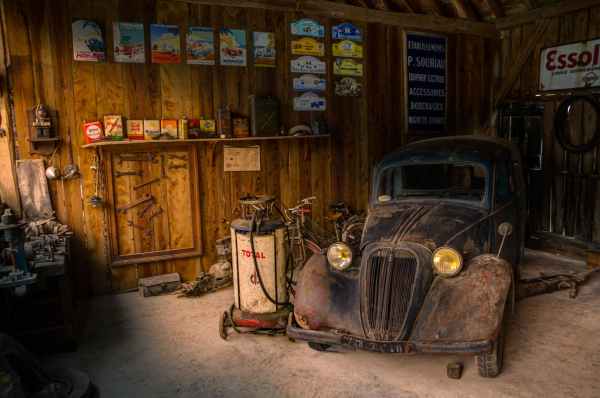
A widow contacted a local church to come pick up an old rusty car that belonged to her late husband. He had one request– that the car be kept in the old garage at the church parsonage and that anyone who wanted to could stop by and work on it. He had purchased it years before with the intention of restoring it to drive around in during his retirement. But time and ill-health had robbed him of his dream. His hope was that someone might enjoy working on it, and if no one came to work on the car, perhaps the church could sell it to scrappers and at least get some money for it. An ad was placed in the bulletin, and another in the local paper. Hours were set up, when people could stop by to work on the car.
Soon, there was a great stir– several members of the congregation came forward to protest. Some were concerned about the safety and liability involved in having the car in the garage where anyone could get to it. Surely, it would be in the church’s best interest to have the car locked away, so only members of the congregation could get to it. Others were arguing about how to restore the car properly– what was the original color of the chassis and the interior? Could they find the exact parts for that make and model? Who would work on the engine? The interior? The frame? Surely the old man didn’t mean for just anyone to come in and work wherever s/he felt like working…how would the job get done? Detailed schedules were posted and discussed; re-posted and opposed.
Weeks, and even months went by. The church was divided; some threatened to leave. And none of the church members had even visited the old car in the garage– it sat forgotten. Except…
A young man in town had seen the notice in the newspaper. He wrote down the original work schedule and followed it, quietly coming every Tuesday and Friday night after work, and patiently working to restore the car. He cleaned and oiled parts, “tinkered” with others, sanded off rust, fixed hose lines and checked all the panels. He patched upholstery and polished up the old tires. He painted the chassis and found matching window wipers to replace the old ones. He worked on the motor and the exhaust, and even the old AM radio. He made sure the mirrors and windows were not cracked or chipped. He even hunted around to find the right hood ornament to replace the one that was lost. Only the pastor knew of his work, and even he had never joined the man or asked about his progress– he merely opened the garage door every time the young man arrived, and closed it when the young man left.
After eight months, the division in the church had reached a fevered pitch. One group demanded that the car be removed to a secure location and that the labor should be divided based on an elaborate chart that focused on how long someone had attended the church, their skill base, what time they were available to work, and whether they were currently an elder or deacon (or had ever served as an elder or deacon).
When the group arrived at the garage, they were shocked to discover that the car was completely restored, polished and glorious in its restoration. Shocked and angry, they attacked the pastor– How could he have allowed this to happen “behind their backs?” When the pastor admitted that he was as surprised as they were, their attention turned to the young man. They hunted him down and demanded an explanation. How dare he come and work on the church’s car without their knowledge or approval! Who did he think he was?!
The young man’s answer left them stunned. He said, “I read an invitation that said anyone who wished could come and help restore an old car. I came every week, and no one else ever showed up to help. No one from your church did any work on this car. No one ever came to check on it or see if any work had been done. No one from your church gave me a word of encouragement, no one had a helpful suggestion or even constructive criticism. No one offered me a word of gratitude. No one helped hold a lamp or flashlight so I could see the hidden damage as I made repairs. No one helped when I had to hoist the motor or clean off the grease and grime or polish the chrome. The invitation was clear– whosoever will, may come. I came. I followed the directions I was given– I came on Tuesdays and Fridays, and I cleaned up each time before I left. I put a lot of work into this car, and now I’m done. I hope your church can decide on a good use for it; she’s a beauty, and I think she’ll run really well– I didn’t take her for a spin, but I hope someone will be able to enjoy her for many years to come.”
The crowd from the church still had one question– Why had the young man come in the first place, and why did he keep working on the car all those months? Did he want the car for himself?
“No,” the man said; “when I first read the ad in the paper and I saw the word ‘restoration’, I was deeply moved. Not too many years ago, I was living a very wild and dangerous life. I felt alone and abandoned and I was filled with anger. I was restless and destructive. But one man in town took me under his wing. He gave me a part-time job, and made me promise to stay in school. But much more than that, he and his wife invited me over for dinner several times. They made time out of their busy schedule to come and watch me play basketball after I finally made the team in my senior year. When I joined the army, they sent letters and care packages. The old man used to tell me that I reminded him of an old car he bought and kept in his garage. He said it was an amazing machine that just needed restoration– he said I was an amazing person who just needed some restoration. He told me that Jesus came to bring restoration to anyone who wanted to come to Him.”
“I finished my time in the army; I came back and started my own business. I got busy and moved on with life. I never came back to thank that man for his kindness, and he never asked for anything from me. I guess I expected to thank him some day, but I found out that he had died. I went to see his widow. She was so gracious, asking about my family and wishing me the best, and then she mentioned her husband’s last request. And when I saw the ad in the paper, I knew this was a way for me to thank the old man, but also to experience what restoration really means. When I came to God, I was rusty, filthy, and broken. God has sanded off the rust in my life, mended broken relationships, and given me new life. It’s an honor to be able to bring restoration, no matter the circumstances. God has done so much to restore my life, it’s the least I can do to help restore an old car. I hope that somehow, this car can inspire renewal in someone else’s life the way its owner helped bring restoration to my life.”
I wish I could say that the young man’s story changed the hearts of the angry deacons and elders. A few of them were touched; some even convicted of their pride and selfishness. But most were simply put out.
What have I done with the precious gift of restoration in my life? God, lead me to someone today who needs to hear, and SEE, the miracle of restoration and Grace.
Several years ago, it became incredibly fashionable (literally) to wear t-shirts, necklaces, and especially bracelets with the four letters, WWJD– which stood for “What Would Jesus Do?” This was supposed to serve as a reminder that the wearer was an ambassador of the Kingdom of God, and was supposed to be a follower of Jesus, and thus should act in accordance with what Jesus would do in any given situation. Stuck in traffic–What would Jesus do? Presumably, we would not lose his temper, honk and scream obscenities, or rudely try to cut or push others off the road. Tempted by the scantily clad actors and actresses in a new R-rated movie– What would Jesus do? Presumably, he would not attend R-rated movies filled with sexual situations in the first place, or, finding himself tempted, he would leave the movie.
I think the intention was good in the beginning– even scriptural in a sense. The Children of Israel were commanded, in Deuteronomy 6: 8 to “tie them (God’s commandments, laws, and decrees) as symbols on your hands and bind them on your foreheads. Write them on the door frames of your houses and on your gates.” Throughout the Bible, the patriarchs, prophets, Jesus, and the apostles, often spoke of keeping God’s Word in our hearts and on our minds as we go through our daily routines. This short reminder should help us do just that– redirect our thoughts to the One we are to follow. As far as it achieved that goal, it was a good thing.
The problem is that it didn’t work that way for most people. The jewelry or the t-shirt didn’t serve as a reminder to the wearer, but as a symbol to everyone else. “Hey, look at me! I’m wearing a fashionable accessory with a cryptic message that lets you know that my thoughts and actions represent Jesus here on earth!” Ironically, Jesus would have been the last person to wear such an item– not only because he wouldn’t have to ask the question (BEING Jesus, and all), but because his focus was on others–Jesus didn’t wear his heart on his sleeve, or his wrist, and he didn’t call attention to his own righteousness. Instead, he spoke to outcasts, and touched lepers. He acted in accordance with God’s wishes, not because he had decided what he thought God would want him to do, but because he knew who God wanted him to become.
One of the worst casualties of the WWJD craze is that many people substituted their own wisdom for a study of God’s word– in other words, they imagined what Jesus would (or might) have done, instead of learning and following what he DID. Of course, Jesus was never stuck in a traffic jam. But he did face demands on his time, and stressful situations. He was never tempted by movies or internet porn, but he was surrounded by a culture that had “religious” “temple” prostitutes, along with sexual immorality not that different from what we see today. The Bible doesn’t give us a picture of Jesus planning and executing a strategy for specific temptations– it DOES give us specific examples of people over a long period of time who failed or triumphed over temptations, big and small, and of people who turned to God for strength to overcome temptation and grace when they had fallen. It also gives us a picture of Jesus living a life that was perfectly pleasing to God– including a life of prayer.
What would Jesus pray? Look at John 17. Look at Luke 11:1-4 or Luke 22: 39-48. Look at Mark 14: 32-42. There are many examples of Jesus’ prayers– prayers that pour out his heart to his Father– in faith, in pain, in grief, and in hope. In fact, it would be appropriate to say in answer to the question, “What would Jesus do?”– Jesus would take it to God in Prayer! Look at the way He taught His disciples to pray:
“And when you pray, do not be like the hypocrites, for they love to pray standing in the synagogues and on the street corners to be seen by others. Truly I tell you, they have received their reward in full. But when you pray, go into your room, close the door and pray to your Father, who is unseen. Then your Father, who sees what is done in secret, will reward you. And when you pray, do not keep on babbling like pagans, for they think they will be heard because of their many words. Do not be like them, for your Father knows what you need before you ask him. “This, then, is how you should pray:
“‘Our Father in heaven, hallowed be your name, your kingdom come, your will be done, on earth as it is in heaven. Give us today our daily bread. And forgive us our debts, as we also have forgiven our debtors. And lead us not into temptation, but deliver us from the evil one. For if you forgive other people when they sin against you, your heavenly Father will also forgive you. But if you do not forgive others their sins, your Father will not forgive your sins. (Matthew 6:5-15 NIV)
Jesus did not ask the Father to give His disciples a blueprint of “Holy” activities or attitudes. He asked for fundamentals– that God’s Kingdom would come; that God would meet our daily needs; that God would forgive us as we forgive others; and that God would steer us away from temptations and evil. For everything else, Jesus directed His disciples to DO what He did, not ask what He would do. Reach out to those who are needy and hurting with love and practical help. Forgive. Tell the Truth. Worship God above all else, and go to Him in prayer.
Jesus didn’t come to earth and live his life to make us great, or successful, powerful or popular by the world’s standards. He came to seek and to save those who were lost. He asks us to do the same– not in our own strength or success, but in the overflow of the grace and power he has poured into us. T-shirts and jewelry are nice, but Jesus used his life–his time, his love, his talents, his words and his actions in accordance with God’s will and God’s wise commands to bring people to himself. Then he did what none of us could do– he fulfilled God’s law, becoming the perfect sacrifice for our sins, and conquering Sin and death. What would Jesus do? He DID IT! It is FINISHED! Our part is not to do what only God can do, but to what he has asked of us and trust him to do the rest.
This is also true in our pursuit of prayer. I often get side-tracked in wondering if my prayers match up to what Jesus might have prayed in the same situation– and that shouldn’t be my immediate focus. Prayer is, as I have to keep reminding myself, a pursuit. It is a process and a journey, and an ongoing, deepening conversation with the one who loves me best. And it is not a one-sided conversation– God answers my prayers, not just by meeting immediate needs or changing circumstances. He speaks through his law, through the Psalms and prophets, through the Gospels and the Epistles, and through the godly wisdom of friends and counselors and ministers of his Grace. And in doing so, he teaches me to pray.
May I stop worrying so much about the length or the style or the “worthiness” of my prayers. May I instead listen, and learn, and continue the pursuit.
The Biblical book of Daniel can be difficult to read. It contains stories, but they don’t seem to tie together. And sprinkled among the stories are visions, dreams, and prophecies. In chapter two, King Nebuchadnezzar threatens all the wise men of Babylon in his fear over a disturbing dream. (https://pursuingprayer.blog/2019/07/17/daniel-prayer-under-pressure/ and https://pursuingprayer.blog/2019/07/19/daniel-prayer-under-pressure-part-2/) At the end of the chapter, Nebuchadnezzar falls prostrate in awe of the God of Daniel, and rewards Daniel with a high position. He even rewards Daniel’s friends who prayed for him.
None of this context seems to carry over into the next chapter. If Nebuchadnezzar listened to Daniel’s interpretation; if he was in awe of the God of Daniel (the God of Israel– the God of Jacob), he forgot it all. The events of chapter three may have happened months or even years after the earlier episode; they may even have happened before(!)– we don’t know. But chapter three feels almost like a wholly disconnected story. Another thing that makes this story perplexing is the absence of the central character of Daniel. His name never appears in the story, and his friends are only given by their Babylonian names (unlike in chapter 2, where both the Hebrew and Babylonian names are given).
The story in Daniel chapter 3 is a familiar one to many children. (https://www.biblegateway.com/passage/?search=Daniel+3&version=MSG) Nebuchadnezzar orders an enormous statue to be built in Babylon. When it is complete, he orders all the administrators of his kingdom– minor rulers, judges, treasurers, advisers–to come to the dedication, where they are to fall prostrate and pay homage to the statue as soon as they hear the music that has been commissioned for the event. This is not a suggestion, it is an order, and anyone who fails to do this will be thrown into a fiery furnace.
Suddenly, there is a group of troublemakers (some translations call them astrologers or fortune tellers, others list them as Chaldeans–a people whose empire predated the Babylonian dynasties and whose culture and religion had produced great scholars and sorcerers). These men come forward with a single purpose– to denounce the Jews. Oddly, they only mention three names– Shadrach, Meshach, and Abednego. They don’t mention Daniel, nor do they mention any of the other Jewish captives who were in service to the king as administrators. Not only are Shadrach, Meshach, and Abednego accused of disobeying the king’s order, they are described as being disrespectful and contemptuous of the king (and the ancient gods of Babylon and Chaldea).
Much is made about the amazing things that happen next–Shadrach, Meshach, and Abednego are called before the king, who gives them a chance to answer the charges and he offers to give them another chance to bow down before the great image. When the three men refuse, Nebuchadnezzar is furious and orders the fire to be made seven times hotter. Men are killed in the process of stoking the flames, but Shadrach, Meshach, and Abednego are thrown in, and begin walking around unfazed. Not only so, but Nebuchadnezzar is astounded to see a fourth figure walking with them, and looking like “a son of the gods.” He calls the three men out, and everyone is astonished to note that they are completely unharmed. Their clothes and hair are not singed or scorched, they are not hot, and they don’t smell of fire.
Just as in the previous story, Nebuchadnezzar’s reaction is emotional and immediate. He gives praise to the God of Shadrach, Meshach, and Abednego, and makes orders that will protect them from future harassment. But there are some interesting undertones in this story that I think we ought to consider, and things we can learn about prayer in the process.
We called Daniel’s dilemma in Chapter two “Prayer under Pressure”. The pressure was not just on Daniel, though he stepped up to face the king. When Shadrach, Meshach, and Abednego prayed with Daniel–when they stood apart with him during their training– when they took a stand to follow the God of Israel in a land of ancient and powerful ‘gods’, they did so knowing that there would be pressure, powerful enemies, and potential persecution. God asks us to be faithful to him, regardless of our circumstances. Nebuchadnezzar had promoted Daniel and his friends to positions of power and privilege. They were grateful to the king, and loyal and devoted to serving him– except when that service called them to dishonor God. Many of us today face the pressure of honoring rulers or leaders who do not acknowledge or serve God; leaders who are corrupt or seem unworthy of our honor. We are to serve faithfully and show respect for their authority unless we are asked to disobey God’s laws or to disown or dishonor God. HE makes rulers to rise and fall. As we will see, Nebuchadnezzar’s power is far more precarious than it looks.
Following God will always bring confrontation and bring false accusations. Jealousy, guilt, envy, greed, anger, and malice will come to those who prosper under any circumstances. How much more to those who prosper at the hand of God? Those who have not schemed, stolen, or crushed others, and yet have been elevated to power, wealth, or honor– such people baffle and frustrate those who are grasping and clawing their way “to the top.” Those who deal in lies and stealth cannot accept truth and integrity. They will seek to twist others’ words, deeds, and reputations– sully names, destroy legacies, start rumors, invent grievances. We can let these little “fires” distract us from the “fiery furnace.” We can spend so much time defending ourselves, retaliating with our own rumors and grievances, or seeking revenge, that we become no better than our enemies. I know this from shameful personal experience. We can destroy ourselves in the struggle to justify ourselves. God doesn’t listen to rumors! God ignores false accusations, because He KNOWS the heart of every person. No matter how hot the “fire” gets, God is with us. He may not put the fire out. He may allow it to get seven times hotter, but He will be with us. If we are trusting Him, we will still have to walk around in the flames, but He will see to it that (ultimately) we are not singed or scorched!
Frequently that attacks we face (see above) are not about us at all. They are about people in rebellion against the God we serve. The men who spoke against Shadrach, Meshach, and Abednego may have had a personal grudge, but the Bible story points out a bigger plot. Daniel’s friends may have “felt the heat”, but the fire was not burning just for them. Daniel, Shadrach, Meshach, and Abednego were recent captives from a conquered nation who rose very quickly to power by openly serving their “foreign” God. The Babylonians (and the Chaldeans before them) had risen to power through violence, intrigue, and reliance on sorcery, sacrifice, and ancient rituals that were abhorrent to the God of Israel. He had allowed them to do so to be the agents of punishment against His own rebellious people. But the power of the Babylonian empire was not of their own making, nor was it greater than God’s power to deliver the remnant of His faithful servants. Many times, we are oppressed by others whose anger and viciousness hide their rebellion against God. They fear those who serve Him, because they fear His justice and His wrath. They hate those who serve Him, because they hate Him. When we pray for deliverance from their schemes and violence, we need to know that God hates injustice; He hurts with us as we suffer; but He wants two things for our tormentors and bullies– 1) to see God’s example of faithfulness in our lives, so they have no excuse for their rejection; and 2) to give them an opportunity to repent and receive mercy. He also wants to do two things for us–1) to refine us and show us how faithful He is; and 2) to use our struggle to encourage and embolden others. Very few people would have noticed that three men out of several thousand disobeyed the king’s command. But because of the opposition they faced, and their total commitment to follow God in the face of it, crowds witnessed their vindication and God’s salvation.
Notice that Nebuchadnezzar, while he acknowledges that God has saved Shadrach, Meshach, and Abednego, does not tear down the statue, humble himself to serve their God, or abandon his arrogance. Twice, God has shown His awesome power to this proud and powerful ruler; twice Nebuchadnezzar has been impressed, even awed– but he hasn’t been changed. Yet!
Where is Daniel? We don’t know. He may have been sent to one of the distant provinces and wasn’t in attendance for the dedication ceremony. He may have had a moment of weakness and joined the others in bowing down to the statue! All we know is that he is absent from one of the great miracles of his day. (He’ll have his own scary confrontation with a different king later in life.) This baffles me, but it also gives me hope. If Daniel DID bow down and worship the statue while his friends were faithful, God obviously forgave him and used him in a mighty way for the rest of his life. If he missed this fiery trial, perhaps God’s mercy was in it. God does not ask all of us to suffer the same trials, or have the same triumphs. God’s plan for each of us is unique. He doesn’t ask all of us to be “spiritual superstars.” He DOES ask each of us to be faithful for the fiery trials that come our way– whether fiery furnaces of persecution, or wildfires of hectic distractions and temptations, or the sudden flames of disaster or tragedy.
Today, as we pray, let us remember to thank God that, even when trials and fires come into our lives, He knows why. He knows how hot they will get. He knows how long we will be in the flames. And He is right there with us, so that we, too, may walk around, unbound and unharmed by the fires meant to destroy us.
Smack-dab in the center of Sin and Pride; You could find me in Peril, Intrigue and Rebellion– Guilt surrounded me, pain and despair held me fast. But I was not in Repentance, Mercy, or Grace.
I had to die to “I”– let it go and let the Son redeem the Sin Trade Pride for Prayer, and Hype for Hope.
But I am no longer lost or dead– and no longer a slave to sin or pride. I can now be found in Faith, and Charity; I thrive in Fellowship, I have a Friend in Jesus, A Spirit to guide me, and a vision for Eternity. It is not “I” who lives, but “I AM” who lives in me. Salvation, forgiveness, life, and victory are all mine; Alive in Him, I am found in Christ– sanctified, And never alone.
Romans 8:1-5King James Version (KJV)
8 There is therefore now no condemnation to them which are in Christ Jesus, who walk not after the flesh, but after the Spirit.2 For the law of the Spirit of life in Christ Jesus hath made me free from the law of sin and death.3 For what the law could not do, in that it was weak through the flesh, God sending his own Son in the likeness of sinful flesh, and for sin, condemned sin in the flesh:4 That the righteousness of the law might be fulfilled in us, who walk not after the flesh, but after the Spirit.5 For they that are after the flesh do mind the things of the flesh; but they that are after the Spirit the things of the Spirit.
1 Corinthians 15:57New International Version (NIV)
57 But thanks be to God! He gives us the victory through our Lord Jesus Christ.
A brief note about Scripture references and quotes: I try to give scripture references and quotes in various translations, though I give most in the New International Version (NIV), the English Standard Version (ESV) or the King James or New King James versions (KJV or NKJV). I don’t intend to cause confusion by doing this. There are several excellent translations/versions available, and for a good comparison, there are several wonderful Bible study websites (two of my favorites are Bible Gateway and Bible Hub ). I simply find that there are some nuances that make for easier reading or use in the blog. Often, one translation will have notes and cross references that are wonderful for further study, but confusing to include as part of the blog quote. I encourage anyone to read the verses in whatever translation they have available, feel most comfortable using, or feel is most trustworthy. I also welcome comments or corrections.
I call this blog “Pursuing Prayer.” I believe prayer is a pursuit; a discipline that one can learn from, grow into, and practice faithfully in life. But prayer is also a sacrifice. It involves giving of time, space, and honest reflection.
Sometimes, prayer is a willing and joyful sacrifice. I want to come and spend time with My Father in praise and worship, adoration, and even asking for His guidance and wisdom. But sometimes, the sacrifice is hard. I may dread coming to God when I know I have been dishonest or unfaithful. Like any relationship, I cherish the easy times, the relaxing times, and the expectations of challenges met and conquered. I don’t look forward to the hard work, the waiting, or the corrections that God may have for me.
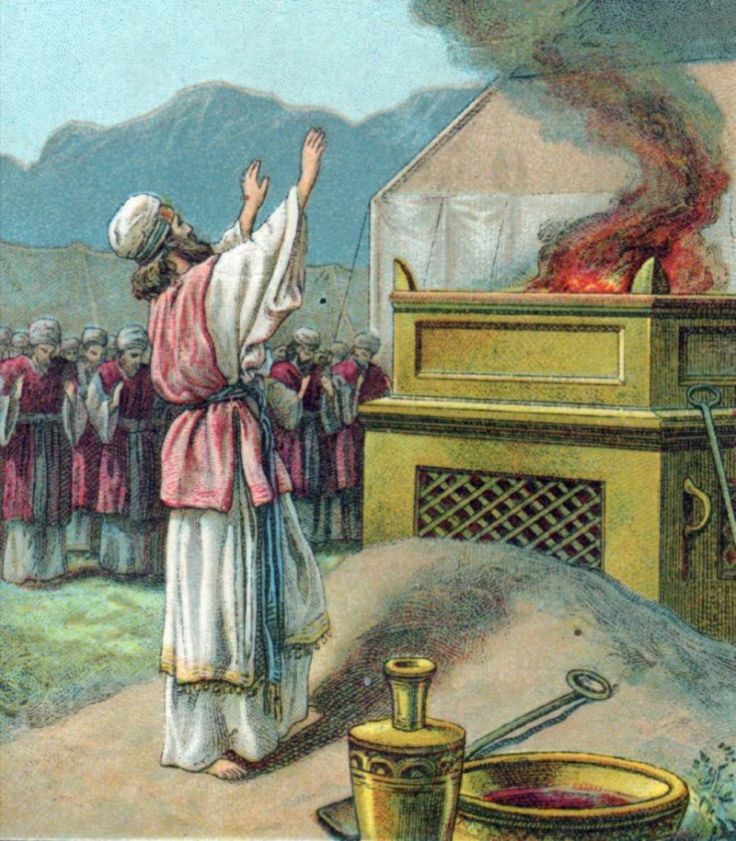
One type of sacrifice that doesn’t belong in the prayer of a believer is the Sin sacrifice. As described in the Old Testament books, the sin sacrifice had to be given to cover over the sins of individuals, priests and even the entire nation. The Israelites even had to give a sin offering for unintentional or accidental sins!
Unfortunately, I sometimes make the mistake of thinking that I must make a similar “sin sacrifice” in my prayer life– that I have to rehearse and recount all my past sins before God will hear me or act on my behalf. And that is NOT Biblical. If we are truly trusting in Jesus’ finished work on the cross, we are not obligated to offer token sacrifices as a means of covering over our past. Christ’s blood IS sufficient! (See 1 John 2:2, 2 Corinthians 5:21,1 Peter 2:24, and Romans 5:9 among others)
So when I talk about prayer of confession, I’m not talking about pouring out long laundry lists of sins I committed last week or thirty years ago. God already knows– in fact He knew about them before they happened!–and He has already forgiven me. That doesn’t mean that He wants me to pretend they never happened or that He doesn’t want me to feel the regret or understand the consequences of what I have done. Instead, He wants me to understand and rejoice in His overwhelming Mercy and Grace! My sacrifice, when I confess my sins, is a sacrifice of praise for God’s willingness to offer what I can never earn or deserve or atone for– complete forgiveness and restoration! I am agreeing with God about who I am and what I’ve done, AND about what He has done for me!
There are other times when prayer can be a difficult sacrifice. Sometimes, I am compelled to pray for those who have hurt me, or those whose actions have hurt others. I am commanded to pray for leaders– that may include church leaders who have sinned, or national leaders who have broken their promises or caused great damage. I am commanded to love my enemies, even if they never repent for things they have done.
Once again, I should be reminded of the sufficiency of Christ’s sacrifice for our sins. He didn’t just die for my Sin; He died for the sins that were committed against me. I may still feel the pain and consequences of that Sin for as long as I live on this earth. But I can trust and be confident that God has dealt with it. And that causes me to rejoice, because I can’t turn back time; I can’t undo the bad things that have happened; I can’t create perfect justice to punish my enemy. But I can let go of the burden of trying to make things “as they should be.” God will do it; He has promised! I can stop wallowing in the “what ifs” or the “what-could-have-beens;” the endless “whys” and “why me’s” that take up so much of my time and focus. Instead, I can leave them as a sacrifice on the altar of prayer, pledging my trust in the Almighty to heal and help me forgive as I have been forgiven.
We don’t practice the old animal sacrifices of the Old Testament. And we don’t have to! But sacrifice is more than just bleeding sheep and burning incense. Sacrifice is offering all of who we are to the One who created us, sustains us, forgives us, and gives us abundant life!
“There is a fountain filled with blood Drawn from Immanuel’s veins; And sinners plunged beneath that flood Lose all their guilty stains.” William Cowper
I love old hymns. So often, they express Biblical truths in simple purity, or in soaring poetry, that captures both the imagination and the memory.
Recently, I was listening to a radio broadcast of a sermon about mercy. It was a wonderful sermon, and the pastor talked about the richness and wideness of God’s mercy and lovingkindness in various situations– when we face injustice, pain, loss and grieving, guilt, and even when we are unaware of it throughout our life (Psalm 139:16-17) From the womb to the tomb, we live in the Mercy of God– God extends His Mercy and Grace for as long as we are alive to call out for it, accept it, and receive it. More than that, His Mercy and Lovingkindness endures forever (Psalm 136).
Later that day, I was doing housework– I had dirty dishes to wash and laundry to do. And there were stains! I have plastic dishes that I used to heat up leftovers in the microwave, and some of those leftovers had tomato-based sauce or cinnamon or turmeric. The dishes have a film of red or brown or yellow that didn’t come out, even when I washed and soaked them. A few of the stains will eventually fade away, but some of them will never come out. I also have clothes that are stained. David and I still wear them around the house, but there are paint stains, ink stains, oily stains, and mustard stains that didn’t come out the first time I washed (or the second or third time!)
As humans, we all have stains of one type or another. We try to hide them; we try to scrub them; we try to cover them up. Some of our stains are external and visible– scars or blemishes, imperfections and disabilities, worn or tattered “second-hand” clothes, missing teeth, poor posture, obesity, being “too” short or tall–things that people notice right away. Other stains are deep inside– guilt, shame, fear, anger, hatred, bigotry, envy, arrogance, hopelessness, depression, broken-heartedness, loneliness– we try to hide them by isolating, covering up, pretending that all is well, or denying the extent of our brokenness.
I was touched by the sermon about how God’s Mercy reaches us in all of these circumstances. The Bible is full of examples of God’s Mercy and its transforming power. But the words of this old hymn came to my mind, and a deeper realization swelled as I sang them quietly in my own heart: “And sinners plunged beneath that flood LOSE ALL THEIR GUILTY STAINS!”
I spend time washing and scrubbing at stains– silly mistakes, accidents, upsets– and even if I am successful, I can often point out where the stains were or find the last vestiges of them on an old shirt or a white plastic bowl. But I don’t “LOSE” stains. I don’t have the power to make stains totally disappear– especially stubborn ones like ink and oil. But the stains I worry about most– guilt, pain from my past, worry about how others might judge me– these stains are all in my doubting mind. In God’s Mercy, THEY DON’T EXIST! That doesn’t mean that others WON’T still judge me, or that I won’t still remember old hurts. But God WON’T! Their power is broken. God has removed them as far as the east is from the west (Psalm 103:12-14)
Sin leaves stains in our lives– even if the sin wasn’t ours to begin with. That person who bullied me in third grade– that left a stain. The way I reacted– that probably left a stain, too. When I nearly died as an infant– that wasn’t my sin, or even my parent’ sin. But it left a stain because I was born into a world where we have disease, defects, and disasters. I have Diabetes. Part of that “stain” can be blamed on things I ate, and lifestyle choices I made. Part of that is genetic. There are people who live with abuse, injustice, chronic pain, and lasting heartaches. And God’s Mercy didn’t stop any of that from staining their lives.
But the “fountain…drawn from Immanuel’s veins” is powerful enough, and God’s Mercy is amazing enough to make those stains disappear. In this life, I still have to deal with diabetes, fatigue, misunderstandings, and my own sinful lapses. People still struggle with cancer, poverty, war, and doubt. But the stains won’t follow Christians into eternity. There won’t be any vestiges of uncleanness; there won’t be any memory of the hurts and losses we suffered during this lifetime. Christ’s blood is powerful enough, and His Mercy vast enough to make the effects of sin DISAPPEAR!





























 Pursuing Prayer