Heroes of the Faith

When I was just a girl, many of my cousins and playmates were fans of comic-book heroes: Superman, Batman, Wonder Woman, X-Men, Spiderman, and many others. In fact, in second grade, we had a “superhero” club that met at recess and played out scenarios. Most of us got to be heroes; a few had to take turns being villains. We ran as fast as we could; we pretended to fly; we pretended to save the world!

Each super hero has a special super power (or several super powers), and each one has a “fatal flaw”– some weakness that could keep him (or her) from easy victory over a villain. Superman can fly; but he cannot overcome the effects of Krypton. Batman has a seemingly endless array of cool gadgets, but they are not always enough to counter the cool gadgets of his foes. Spider-man can spin webs, but being a superhero doesn’t pay his bills. Wonder Woman has a lasso of truth and an invisible airplane, but she must struggle between promoting peace and fighting to stop violence and war.

I was reminded recently that we often confuse Biblical characters with comic-book superheroes. Moses had his staff. Samson had great strength. Methuselah lived to be 969 years old. David wrote poetry and killed giants…and so on. And each “hero” of the faith seemed to have a “fatal flaw”– Abraham did not wait for God’s promise of Isaac. Moses had a temper. Jacob was hunted by his twin brother. Samson was arrogant and forgot the source of his strength. David was tempted by lust, which led him to commit adultery and murder!

There is nothing wrong with reading about comic book superheroes, or with honoring men and women of faith and courage and obedience. The entire eleventh chapter of Hebrews is devoted to “heroes” of the faith, and the faith of Godly heroes.

But we can turn heroes into idols, and that leads us to false thinking. We falsely believe that God only calls those who are already heroic and strong. We sometimes feel that God cannot use us unless we first show that we have some superpower. We also carry a false guilt about our “fatal flaws,” feeling that we have somehow ruined God’s plans or let the enemy “win” whenever we stumble. Finally, we fail to see that our ordinary obedience–even our shaky and stumbling faith– IS heroic.

The biggest difference between Biblical “heroes” of the Faith and comic book superheroes, is that the latter often inhabit a world in which there is no Sovereign God. Often, comic book heroes come from a distant planet, or are “accidentally” created by exposure to radiation. Their actions “save” the world when ordinary people cannot overcome evil and villains. They may appear ordinary some of the time, but their lives are actually very different from ours. Biblical heroes, on the other hand, are ordinary people who were used, not because of who they are, but in spite of who they are!

Superheroes are exciting and noble, but they are not Biblical, and Biblical characters are not “accidental” superheroes. They are ordinary men and women who were used by God to do extraordinary things– things that only God can really do! Most of them spent their lives doing mostly ordinary things– farming, fishing, carpentry, tax collecting, herding sheep! There is only one actual “superhero” in the Bible– God himself–and He has no fatal flaw. Instead, He chooses flawed and ordinary people to obey Him as HE does extraordinary things through them. Even in our own time, God uses ordinary people to do extraordinary “super” things in the lives of others. We may not see anyone killing giants or parting the waters of the Red Sea. We may not see anyone slinging webs, leaping over tall buildings or single-handedly saving Gotham City, but we can see how faithful Christ-followers can transform their families and communities because of God’s power working through them. No capes or costumes needed!

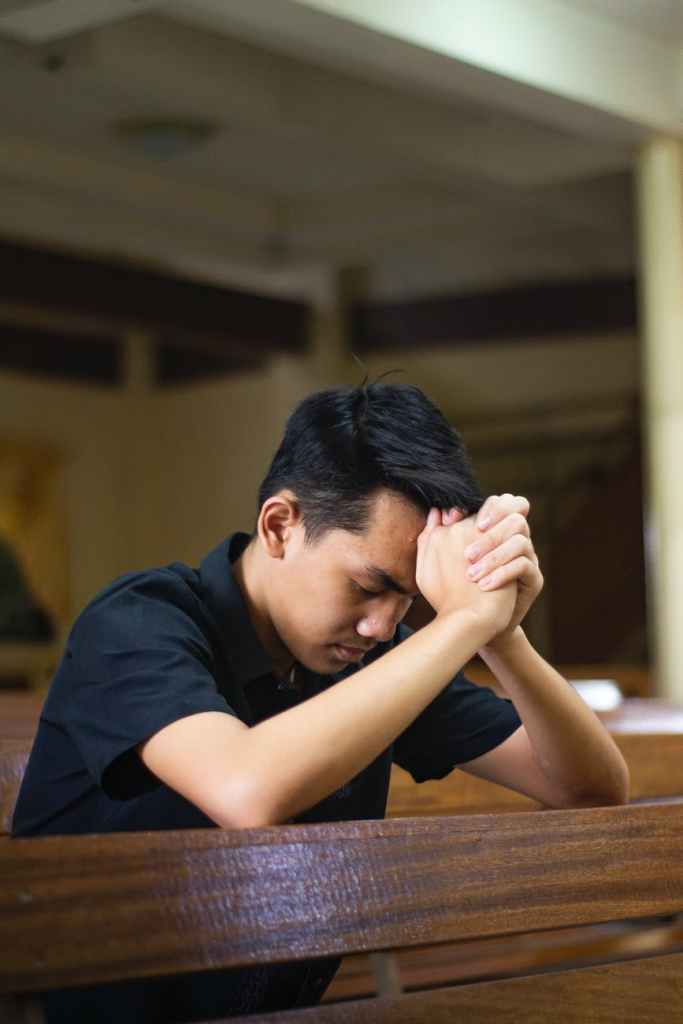
One consistent thing about the people we celebrate as “heroes” in the Bible– they all prayed! They all knew that real power (and wisdom and help) comes from God alone. Prayer and obedience are not guaranteed to make us famous or heroic. But God can use the simplest acts and the smallest measure of true faith to do great things in, and around, and through ordinary people just like us!

Praying Scripture

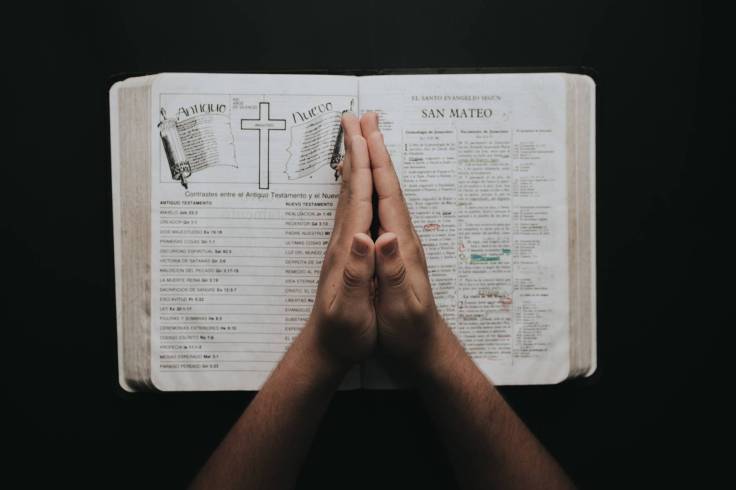
This is not a great secret or a new discovery, but a reminder that we can “pray” the Scriptures. Sometimes, we do this in corporate prayer, as in a congregation reciting “The Lord’s Prayer” together. But often, it is when we are reading God’s word, or a particular verse haunts our memory that we echo the words in our prayer life. There are so many benefits from this:

Photo by Luis Quintero on Pexels.com
  • We are joining in a great tradition– much of Scripture records the prayers of the patriarchs and of Jesus Himself. When we echo those words, we affirm them–both to God and to ourselves.
  • We are praying in the light of the truth–God’s own words on our lips can keep us from trying to put our words in God’s voice!
  • We are deepening our understanding and experience of Scripture– making it personal, rather than just a learning exercise or a daily duty.
  • We are deepening our experience of Prayer– it is more than just me talking to God. It is me agreeing with God’s Word, and God’s Word literally speaking through me.
  • We are reminded of what prayer can do– many of the prayers of Scripture are followed by answers, from prophecies to miracles to movements of the Holy Spirit.
  • We are reminded that God answers prayer that is consistent with His will– not all Biblical prayers were answered in the ways that their petitioners hoped or expected!

The Bible is full of wonderful examples of prayers. Here are just a few to get started:

  • Abraham’s prayer for God to spare Sodom in Genesis 18 (v. 23-32).
  • Moses praying for God to forgive Israel’s sin and disbelief in Exodus 32 (v. 31-32)
  • Moses praying for a successor to lead Israel into the Promised Land (Numbers 27:16-17)
  • Gideon’s prayer for guidance in Judges 6
  • Manoah’s prayer for help in raising his son Samson in Judges 13
  • David’s prayer in 2 Samuel 7 (v.18-29)
  • Elijah’s prayer for God to send fire from Heaven in 1 Kings 18 (v.36-37)
  • Several of the Psalms, including 3, 51, 90, 102, 103, 105, and many others.
  • Hezekiah’s prayer for God to save Israel from their enemies in Isaiah 37 ( v.16-20)
  • The prayer of Jebez in 1 Chronicles 4:10
  • Habakkuk’s prayer for revival in Habakkuk 3: 2-19
  • Jesus’ prayer in Matthew 11:25
  • Jesus’ prayer for His disciples (John 17)
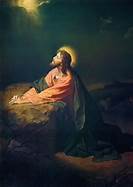
  • Jesus’ prayer in the Garden of Gethsemane (Matthew 26:39-44)
  • Jesus’ prayer from the cross in Luke 23:34
  • Stephen’s prayer in Acts 7:59-60
  • Prayer of worship in Heaven in Revelation 5:13

https://christian.net/resources/the-top-most-powerful-prayers-in-the-bible/

In addition, Bible passages that describe the Character and Majesty of God the Father, the Son, and the Holy Spirit can be used as prayers of worship and adoration. Bible stories and events can be lifted up in worship of God’s power and faithfulness through the ages. Jesus’ teachings (such as the Beatitudes) can be lifted up as the desire of our hearts, and as requests for the strength and wisdom to follow Him.

Photo by cottonbro on Pexels.com

Now unto him that is able to keep you from falling, and to present you faultless before the presence of his glory with exceeding joy, To the only wise God our Saviour, be glory and majesty, dominion and power, both now and ever. Amen.

Jude 1:24-25

Praying for Happiness

A while ago, I was following a thread on Facebook. It was about good parenting, and the idea being discussed was about what a good parent would do to ensure their child’s happiness. Several of the people on the thread agreed that happiness was the highest priority, and that they would do anything to ensure that their child was happy.

Photo by Trung Nguyen on Pexels.com

I disagreed, but I felt it was better not to argue as part of the thread. I never raised any children of my own, and threads on social media tend to pull out our gut reactions, rather than our studied ones. At first glance, it seems natural and good to want the people we love to be happy. I certainly don’t want my family and loved ones to be miserable! But is happiness the very best I can wish for– pray for? So often in life, true and lasting happiness is a process that involves going through struggles and periods of frustration and even failure. I don’t enjoy seeing loved ones struggling, but I want them to learn the life lessons that will help them become all they were designed to be.

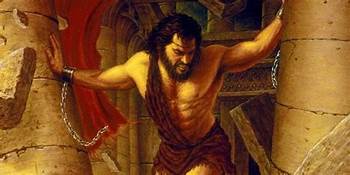
I think of the life of Samson (Judges 13-16). Samson was set apart from birth to be a Nazarite. During his childhood, his parents followed the rules set aside for such a designation. The Biblical account makes much of the rule about never cutting his hair, but there were other rules his parents likely followed as he was growing up, such as keeping him away from grapes, wine, wine vinegar, or any other fermented drink, and keeping him away from defilement by dead bodies. It’s never easy to be “different” when you’re growing up. I’m sure Samson had many questions, and moments of unhappiness as a child. But somewhere along the way, his parents seem to have made Samson’s happiness more important than his character development.

Photo by fabio.tsu on Pexels.com

Samson grew to be petulant and spoiled. He seemed to think he was entitled to whatever whim took his fancy. Now the Bible is clear that some of Samson’s desires were part of God’s plan to confront the Philistines, but Samson’s parents put up only a token resistance when he told them he wanted to marry a Philistine woman. At the wedding feast, Samson posed a riddle which exposed his lack of respect for his Nazarite vows. Not only had Samson killed a lion; he had come back later and eaten honey taken from the lion’s carcass– a defilement that broke his vow. Later, of course, he would use the unclean jawbone of an ass to kill a thousand Philistines in a single incident. Samson could have made an offering and renewed his vow, but we have no record that he ever did.

Photo by Pixabay on Pexels.com

The most famous story of Samson is his infamous liaison with a prostitute named Delilah. Though she does little to hide her intention to learn the secret of his strength and betray him to his enemies, Samson toys with her, lies to her, and finally reveals his sacred secret. Once his hair is cut, Samson loses his great strength and is captured by the Philistines and tortured. Only when he is blind, imprisoned, and shamed does Samson seek the Lord and ask for God’s blessing.

Photo by Sinitta Leunen on Pexels.com

Samson pursued a life of pleasure, and gave full vent to his lust, anger, and other strong emotions. I’m sure there were many moments of happiness in his life, but there were also moments of pain, tragedy, betrayal, and shame.

I think the story of Samson is full of lessons for us today. One of those lessons is that even when we are not faithful, God can still use us for His good purposes. God used Samson to judge the nation of Israel, and to bring punishment on the Philistines for their cruelty toward them. God could have disqualified Samson for having broken his vows time and time again, but God used even Samson’s weakness to highlight His strength.

But another lesson, I think is that God showcased exactly what can happen when we place happiness, pleasure, and ease ahead of everything else. Samson caused his own unhappiness and torture. There is no record of Samson bringing happiness to anyone else– only shame, tears, violence, and retribution. God caused Samson to be a model of all that the book of Judges is about– at the end of the book, there is a significant verse, “In those days, Israel had no king: everyone did as he saw fit.”

Photo by August de Richelieu on Pexels.com

I don’t want my family and friends to be “happy” at the expense of their character, or at the expense of others. I pray that they develop Love, Joy, Peace, Patience, Kindness, Goodness, Faithfulness, Gentleness, and Self-Control (Galatians 5:22-23). In the end, this will bring them a level of happiness that surpasses anything the world can offer.

Chariots of Iron

I was reading from the book of Judges today, and a curious phrase jumped out at me. The entire book of Judges is filled with the failure of the people of Israel to fully claim their promised inheritance from God. Generation after generation passes, with a cycle of sin, enslavement, and deliverance as God raises up various judges and heroes, like Gideon, Deborah, or Samson.

Already in chapter one, there is a hint of the trouble to come. The book begins with several successful battles after the death of Joshua. The people of Israel consult the Lord, who fights with them in several key battles. But in verse 19, it says: “The Lord was with the men of Judah. They took possession of the hill country, but they were unable to drive the people from the plains, because they had iron chariots.”

Say what? The Lord was with the men of Judah– the LORD! They had taken possession of the hill country– rough terrain that would have been filled with natural barriers, rocky fortresses, and literal “uphill battles.” They had destroyed massive cities like Jericho less than a generation before. They had defeated armies far larger and better positioned. They had defeated giants! And now, suddenly, they are “unable” to drive the people from the plains– because the enemy had chariots of iron?

Photo by van4er ivan on Pexels.com

https://www.biblestudytools.com/commentaries/gills-exposition-of-the-bible/judges-1-19.html I think this commentary says it well. The chariots of iron became the excuse for the Israelites’ unwillingness to obey; to trust in God’s strength instead of their own. After all, it wasn’t that long before in their history when God had drowned the entire Egyptian army, including all its chariots, in the Red Sea.

I don’t think it was about the chariots of iron. I think it was about the plains. I think sometimes it can be more difficult to fight on “the plains.” When God sends us on an “impossible” mission, we must face our own fears and acknowledge our weaknesses– we KNOW we cannot do it in our own power. But when we face an enemy on “equal footing,” we are tempted to trust in our own resources– the toughness of our armor, the skill of our generals, the speed of our horses, and the superiority of our weapons. We hope and expect God to fight for us where we cannot hope to win alone, but we don’t ask for God’s help or protection in areas where we believe our own strength should be sufficient. Israel had a fine army– seasoned veterans of battle. If they HAD iron chariots of their own, victory might have been expected– with or without God’s divine intervention. But victory eluded them, because they didn’t finish the fight!

Photo by Sora Shimazaki on Pexels.com

We do the same thing today–we fail to march into battle because the enemy has “chariots of iron.” Maybe they have more social status, more political or economic power then we have. Perhaps we see that they have the means to make our lives painful “on the plains.” We see their arrogance, and their wealth and success, and we let ourselves be intimidated. We know that God has promised never to leave us or forsake us, but He has not given us chariots of iron to match those of the enemy. We don’t pray for the courage to face their chariots, or the wisdom to trust that the battle belongs to the Lord. Instead, we make excuses for not fighting the battle at all.

The rest of the book of Judges is filled with war, slavery, corruption, death, and evil. The very last verse sums it up: “In those days Israel had no king; everyone did as he saw fit.” (Judges 21:25)

Photo by Ian Panelo on Pexels.com

Lord, help me to be courageous, and humble. May I always trust in You above all–especially above chariots of iron, and weapons of mankind.

Blog at WordPress.com.

Up ↑