“We Hold These Truths…”

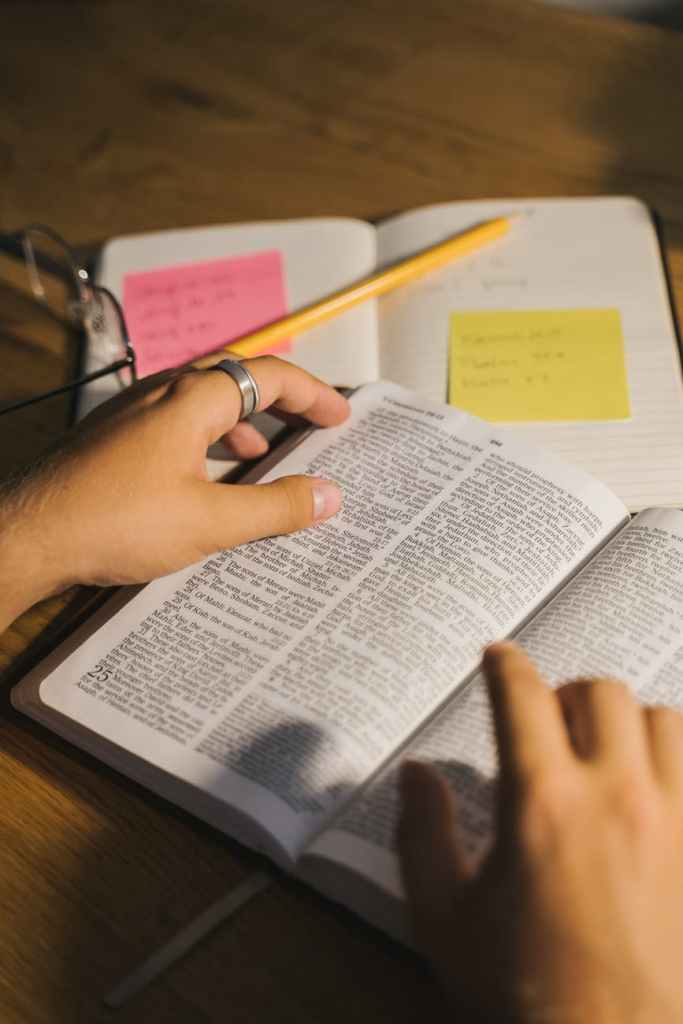
Earlier this week, we celebrated Constitution Day in the United States. It went largely unheralded. The United States Constitution– the document on which all other laws are supposed to be based in this country– is relatively small. It takes about a half-hour to read it through, including all 27 amendments. It takes much longer to understand and make sense of it. One document that helps define and explain the Constitution is the Declaration of Independence.

One of the key phrases in the Declaration is this: “We hold these truths to be self-evident, that all men are created equal, that they are endowed by their Creator with certain unalienable Rights, that among these are Life, Liberty and the pursuit of Happiness.–That to secure these rights, Governments are instituted among Men, deriving their just powers from the consent of the governed, –That whenever any Form of Government becomes destructive of these ends, it is the Right of the People to alter or to abolish it, and to institute new Government, laying its foundation on such principles and organizing its powers in such form, as to them shall seem most likely to effect their Safety and Happiness.”

But looking around today, it seems that not all American hold ANY truths to be self-evident– indeed, many people don’t hold any truths to be true! We like to pay lip-service to one phrase– “All men are created equal…” but even here, we cringe and rephrase it. “It’s not just ‘men’ who are equal– all genders are equal” “Everybody is equal.” But what do we mean by this new phrase? It is self-evident (I would argue) that everyone is NOT equal in all ways. Some of us are taller than others, or healthier or wealthier than others; some of us live longer than others. Some of us work in offices; others work in the wind and rain and snow. Some of us live in large mansions, while others live in motor homes, apartments, hospital rooms, or even homeless shelters. The “Truth” is that we are CREATED equal– we are equally valued by our Creator, and equally entitled to dignity, life, liberty, and the “pursuit of happiness” under the laws of the land. Our laws are not supposed to create an artificial “equality” of outcome or circumstance, but provide for equal protection and opportunities for everyone to live, experience freedom, and pursue their individual purpose and dignity.

And we are losing the self-evident truth that Government should derive its just powers from the consent of the governed– not the arbitrary will of unelected bureaucrats appointed without public consent and answerable to no one.

We have lost the self-evident Truth, and replaced it with clever and complicated ideals.

None of this is new, however. All the way back in the days of ancient Israel, the people lost the self-evident Truth about their nation and its unique covenant with God. The Covenant was simple. It did not take a long time to read through. There were Ten Commandments and several “amendments” of ceremonial and social rules. God gave Moses a list of promises– blessings and curses–if the nation of Israel would (or would not) uphold their portion of the covenant. God would be their ruler, and they would be His People.

But after the death of Moses and his successor, Joshua, the people abandoned the law and the covenant, until chaos reigned, and God invoked many of the curses against His own people. By the end of the book of Judges, we learn that, “..in those days there was no king in Israel; every man did that which was right in his own sight.” (Judges 21:25)

Such conduct led to Israel being invaded, defeated, and oppressed. Worse, they approached their religious leader, Samuel the Priest/Prophet, and asked for a human king in order to be just like the other nations– nations God had called out for being wicked, violent, and unjust. The reign of kings failed, too, and the nation was again invaded, dragged off to exile, and oppressed.

“We hold these truths..” is more than just a phrase in a national document. It is a guideline for justice, peace, and prosperity.

WE– It doesn’t work for the people of any nation to be divided about what constitutes Truth. “My truth,” “Your truth,” and “their truth” can’t live together in harmony.

HOLD– We must be firm in our commitment to the Truth, or we will be swept away by the latest philosophy, moral standard, or faddish practices of the world around us. That doesn’t mean that we can never admit a need for change– that’s what the amendment process is for– but when we keep letting go of standards which have preserved safety and guaranteed opportunity, replacing them with temporary power grabs and loosely defined concessions to the loudest complainers, we are headed for nationwide injustice, violence, and oppression

THESE– There are other “truths” we could have adopted back at the founding of our nation. We could have set up another monarchy. We could have developed an oligarchy, made up of a ruling class. We could have argued that only land-owners were “equal.” That life was not an “unalienable” right. That representative government was inefficient, and therefore not necessary.

TRUTHS– Not suggestions. Not prevailing opinions of the day. TRUTHS. Immutable, unchanging, solid, objective.

And what goes for the United States should be a warning for Christians everywhere. We are citizens of Heaven. There are truths that we should hold to– truths that should be self-evident in the life of every Christian.
Jesus is LORD– not just a pal; not just a guru or a good teacher. He is the LORD.
God doesn’t change– What He said a thousand years ago about loving God and loving your neighbor still applies today. He hasn’t changed His mind about life, or liberty, or the pursuit of righteousness… He hasn’t become less powerful or less Holy, that we should just do “whatever is right in our own eyes..”
God’s Word hasn’t changed–His promises still hold; His warnings are still meant to be heeded; His will is still evident.
God’s grace is sufficient! God is HOLY and JUST. And He is full of Mercy and Love. He will forgive; He will empower us to do His will; He will continue to transform us as we follow Him.
God is Greater than Government. Whatever system of Government we live under in this life, God’s Kingdom is greater, more just, and everlasting.

These are truths worth holding! No matter what happens to the United States or its Constitution, I will continue to hold to the Truth of the Bible above all. May God in His Grace give us the strength, wisdom, and will to hold fast to what is true, and not just what is “American.”

Hidden Among the “Baggage”

I am always drawn by the stories in the Bible. Stories of ordinary and extraordinary people used by God– sometimes in spite of themselves–to rescue others, to teach others, to serve as examples, and to show how God wants to interact (or discipline) those He loves.

Photo by Tima Miroshnichenko on Pexels.com

One such person was a man named Saul, son of Kish. Of all the young men of Israel, God chose Saul to be their first king. This was a mixed blessing for the nation. In asking for a human king, they were saying that the did not want to be “ruled” by God or His prophets. God warned Israel through the prophet Samuel that they might come to regret having a human king. They were rejecting the pattern established by God under Moses, and asking for a system of leadership that matched the surrounding nations. This would make it easier to make treaties, do business, and interact with neighboring countries, but it would also bring some of the same problems (succession, power struggles, greed, etc.) that plagued all the other monarchies and empires around them. The choice of Saul reveals not only God’s character, but the character of Israel. God chose a man from one of the least of the families of the least of the tribes of Israel. Saul’s father, Kish, was a man of some power and wealth, but his family line was one of younger sons of younger sons. God often chooses the “least” among us to lead. He is not a respecter of rank or birth, wealth or experience. However, God also chose Saul as a man who “looked” the part. Saul was “head and shoulders” taller than others. He was good-looking and well-educated. Wasn’t this exactly was Israel wanted in a king?

Photo by fabio.tsu on Pexels.com

On the day Samuel called a great assembly to publicly anoint the new king, lots were cast to show God’s choice. Among the 12 tribes of Israel, the tribe of Benjamin was chosen– the youngest of the sons of Jacob, and the smallest of the tribes. A lesser family among the tribe was then selected. Finally, the choice was narrowed down to Saul, son of Kish. But Saul could not be found! A search ensued, and he was eventually found– hiding among the baggage! The tallest man in the kingdom– the one who already had been confirmed as God’s choice– tried to hide from his own coronation! And it was God who revealed Saul’s hiding place and forced him to face his exaltation!

The ongoing story of Saul’s reign as king is filled with both triumph and tragedy. Time and again, Saul tries to “hide” behind excuses. He fails to obey God’s command, but blames his weakness on others. God takes away His favor, and His spirit leaves Saul, who descends into paranoia, anger, and madness.

But today, I want to look at the idea that Saul thought he could hide “among the baggage.” (1 Samuel 10:22) Other translations say he was “among the stuff” or “among the supplies.” Saul did not run away from the assembly altogether; he did not reject his role. Yet he tried to hide from the gravity and responsibility of kingship. In many ways, this shows good qualities of humility and an understanding of his own limitations. Saul’s problem wasn’t that he thought he was “born to be king.” Saul wasn’t born to be king– it was an honor thrust upon him. Saul’s problem was that he wasn’t prepared to let God rule through him. Saul would be the titular King of Israel. But who would be the King over Saul’s own life and heart? Saul, like the nation he ruled, ended up rejecting God’s rule. He tried to follow the letter of the law, and the traditions of his people, but he did not always choose to follow the God who had created them, nor did he humble himself to accept God’s correction.

Photo by Pixabay on Pexels.com

We may not be chosen for a position of leadership. But what responsibilities are we hiding from today? Are we surrounding ourselves with baggage? Do we hide in the busyness of our hobbies or our job? Do we cover ourselves with “obligations” that leave us drained to no real purpose? How many hours do we spend hiding in chit-chat, or watching television, or shopping, or daydreaming? How many times are we volunteering to work with strangers in order to avoid spending time with difficult relatives or neighbors? How often do we offer up the sacrifice of generic worship instead of the sacrifice of a teachable spirit?

Saul had many gifts, which he used to strengthen his nation and expand its territory. He had the opportunity to do even more great things for God and for Israel. But he is mostly remembered for his failures– his defiance of Samuel’s orders and excuses about disobedience; his ongoing murderous pursuit of his anointed successor, David; his consultation in the dead of night with the witch of Endor; his ignoble death in battle… We too, have opportunities to do great things with God’s help and in His power. We cannot hide forever among the “stuff” of life. God will reveal our hiding places– to others, even if we don’t acknowledge them!

Today, I pray that I will come out from behind the baggage of my everyday activities, and be available for God’s good purposes!

Photo by Munmun Singh on Pexels.com

Please see these other links for more commentary:
https://jentezenfranklin.org/daily-devotions/what-are-you-hiding-behind#:~:text=%E2%80%9CHe%20is%20hiding%20among%20the%20baggage.%E2%80%9D%201Sa%2010%3A22,tackling%20the%20job%20God%20appointed%20you%20to%20do.
https://www.thekingdomcollective.com/spurgeon/sermon/3322/

Name Above All Names

We live in a wonderfully diverse world, filled with unique individuals. One thing that defines us to our families, neighbors, and friends, is our name. Names can be tricky–some are difficult to pronounce, or spell. Some names are shortened or changed to form “nicknames.” Others are changed by circumstances, like adoption or marriage. Some names are common to several people, or shared as “namesakes” of others, or shared between generations, calling for additions, like “Jr.,” or “the elder” or “the fourth.” Some people reject the name they were given at birth, preferring to use an alias, or going through a legal process to change it. Some names have become symbolic, or stereotyped, famous, or infamous, or iconic.

Civil Rights activist Rev. Dr. Martin Luther King Jr. gesturing during sermon at Ebenezer Baptist Church. (Photo by Donald Uhrbrock//Time Life Pictures/Getty Images)

Even though many of us may share a common first name, or surname, (or even both), our name still represents who we are–it becomes a symbolic representation of all that makes us unique– our personality, our history, and our character. And it’s not just people who carry names. We name rivers and mountains, cities, houses, farms, cars, products, pets, works of art…the list goes on. It is deep in the human soul to name things. This is a God-given desire. All the way back in the second chapter of Genesis, God brought all the beasts of the air and land to Adam, to see what name he would give them. Adam and Eve chose the names for their sons– names with very personal meanings. Names are important and carry power; they should never be taken lightly.

Photo by Life of Wu on Pexels.com

God recognizes each one of us by name. The prophets Isaiah and Jeremiah both refer to God calling them before they were even born! Before the great judge Samuel even knew how to recognize God’s voice, God called him by name. God often changes names– Abram to Abraham, Jacob to Israel, Saul of Tarsus to Paul, the disciple Simon to Peter (or Cephas). One reason God changes names is to show His power to transform people and give them, not just a new name, but a renewed nature and spirit.

Photo by 3Motional Studio on Pexels.com

And when we talk to God, whose very name is sacred, He allows us to call on Him through the Name He gave to Himself/His Son– Jesus. There are many boys and men who carry this name, but when we pray in the name of Jesus, we are referring to the one and only Begotten Son of God the Father; the Jesus of the Trinity; Jesus the Virgin-born Messiah. HIS name is above all other names. There is power in every ordinary name, but THIS name carries eternal, sovereign, immeasurable power. It encompasses His holiness, His compassion, His wisdom, His goodness, His faithfulness, and His Love. There is no other name by which we are saved; no other name by which we can be made new. It is not a name to be taken lightly or in vain. It is a name to be honored, cherished, and exalted. JESUS. The name above all names!

Photo by Patricia McCarty on Pexels.com

Hannah and Her God

The story of Hannah is filled with a network of complex relationships– Hannah and her husband, her rival, her spiritual leaders, her son’s foster-parent, and the son she desired and yet gave away. But Hannah’s most complex and important relationship was with her God.

What can we learn by looking at this relationship?

  • Even when we don’t understand it, God has a plan, and it is always bigger than “us.” God closed Hannah’s womb– that was part of His plan. But it was not the end of the plan, or the point of the plan, or a hitch in the plan. Hannah’s barrenness was not a punishment for anything that she had done, but Hannah’s response to it (and the response of all the others) provides us with an example of faith, persistence, and obedience. Hannah didn’t know the end of her own story– she didn’t know that her son would play such an important role in the history of his nation or in the history of God’s ultimate plan of salvation for the human race. Hannah didn’t know her story would be contained in the pages of scriptures to encourage people centuries into the future. How would our response to current circumstances change if we considered that God may be using us them to bless, challenge, or encourage others through our stumbling steps of responding in faith? The results of our faith (or lack of faith) will have an impact far beyond just our immediate lives.
  • God is sovereign. Nothing happened to Hannah outside of God’s sight; nothing was beyond his control; nothing about this story took God by surprise. Hannah, even in her despair and frustration, could trust her all-knowing, all-seeing, all-powerful God.
  • God is more interested in our wholeness than our “happiness.” Our culture (and our selfish nature) tends to focus on our comfort, our accomplishments, and our happiness. When we are not happy, when we are frustrated in our goals, when we are restless or oppressed, we tend to think that God has turned His back on us. But it is often during times of grief, pain, loss, and darkness that we are stretched and reshaped to be stronger and wiser, growing closer to God and others. God doesn’t want us to wallow in despair and self-pity; but He will lead us through the very “valley of the shadow of death.” But, as Hannah experienced, God sees our sorrow, hears our cry, and answers our call.
Photo by Pixabay on Pexels.com
  • God is trustworthy and faithful. God knew Hannah’s heart. He knew her longing for a child. In Hannah’s case, He had caused her to be barren for a season, and then He gave her the desire of her heart and much more. But even if He had not given her a child of the womb, God gave her a loving husband, a compassionate (if imperfect) spiritual leader, a rival who could not triumph over her, and most of all, His presence and love.

Hannah’s Prayer

Then Hannah prayed and said:

“My heart rejoices in the Lord;

    in the Lord my horn[a] is lifted high.

My mouth boasts over my enemies,

    for I delight in your deliverance.

“There is no one holy like the Lord;

    there is no one besides you;

    there is no Rock like our God.

“Do not keep talking so proudly

    or let your mouth speak such arrogance,

for the Lord is a God who knows,

    and by him deeds are weighed.

“The bows of the warriors are broken,

    but those who stumbled are armed with strength.

Those who were full hire themselves out for food,

    but those who were hungry are hungry no more.

She who was barren has borne seven children,

    but she who has had many sons pines away.

“The Lord brings death and makes alive;

    he brings down to the grave and raises up.

The Lord sends poverty and wealth;

    he humbles and he exalts.

He raises the poor from the dust

    and lifts the needy from the ash heap;

he seats them with princes

    and has them inherit a throne of honor.

“For the foundations of the earth are the Lord’s;

    on them he has set the world.

He will guard the feet of his faithful servants,

    but the wicked will be silenced in the place of darkness.

“It is not by strength that one prevails;

10     those who oppose the Lord will be broken.

The Most High will thunder from heaven;

    the Lord will judge the ends of the earth.

“He will give strength to his king

    and exalt the horn of his anointed.”

1 Samuel 2:1-10 (NIV) taken from BibleGateway.com

Photo by Tookapic on Pexels.com

Hannah and Her Son

1 Samuel 1:11 New International Version (NIV)
11 And she made a vow, saying, “Lord Almighty, if you will only look on your servant’s misery and remember me, and not forget your servant but give her a son, then I will give him to the Lord for all the days of his life, and no razor will ever be used on his head.”

http://www.biblegateway.com

Today, we get to the essence of Hannah’s prayer. And it is not a prayer that most of us would pray. Hannah asks for a son to take away her misery and show her God’s favor. But in the same breath, she promises to give her son back to the Lord forever. How many of us would ask for something so rare and precious just to turn around and give it away?

Photo by Victoria Borodinova on Pexels.com

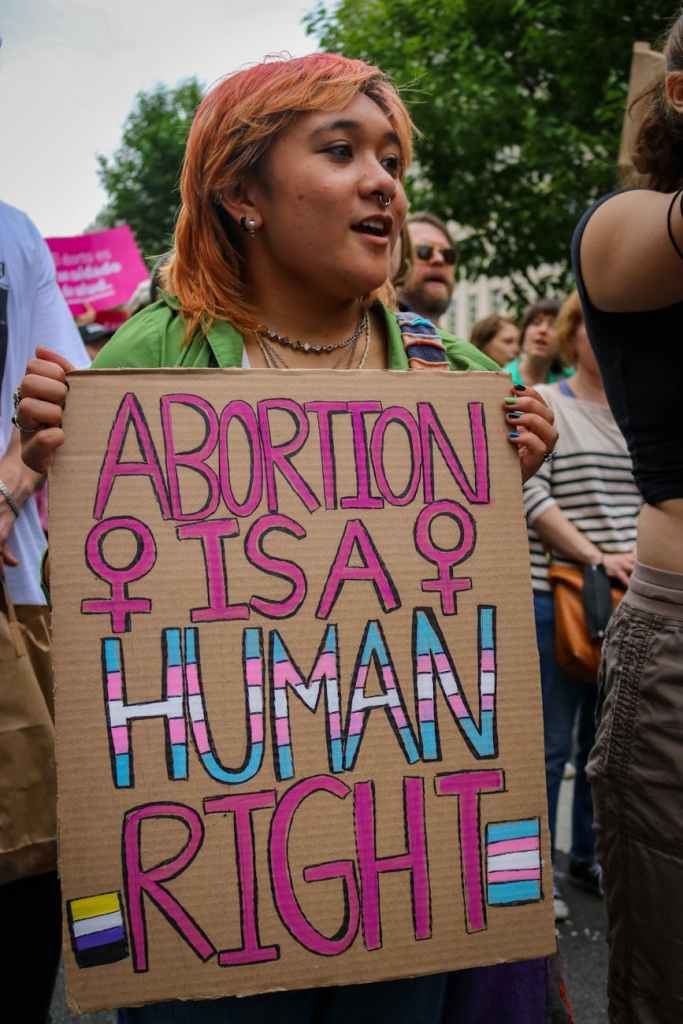
As I write this, my country, my friends, and even my family are deeply divided over the issue of abortion. Much is being made about a woman’s “right” to decide whether and when she will have a child. “My body, My choice,” is a common cry among the pro-choice crowd, while the other side points fingers and yells, “baby killer” at those women who choose to end their pregnancy. But yelling and chanting don’t change hearts or facts. A woman cannot actually “choose” to become pregnant at will. In Hannah’s case, she was in anguish over her inability to “choose” to become pregnant. In the case of a modern woman, she may be in anguish over not being able to avoid an unwanted pregnancy or avoid unwanted complications resulting from her pregnancy. She may, like Hannah, be in anguish over her inability to conceive or to carry to full term. But in any case, the idea that pregnancy and birth are simply a matter of “choice” is based on a false reality. There is an illusion of “reproductive autonomy” because of modern medicine. We have birth control that makes claims of being “safe and effective”; we have methods to increase fertility, regulate menstruation, reduce the chances of conception, and even stop the fertilization process within a day or two. But no woman can simply “choose” to become pregnant (or stop being pregnant) at will. Women cannot choose the gender of their children; they cannot guarantee the date of birth; they cannot produce a future world leader or athletic prodigy just by force of will. They cannot guarantee their child perfect health, long life, wealth, or happiness. And reproduction among human beings is never “autonomous”!

Hannah’s story seems the antithesis of abortion– here we have a woman begging for a child; she is in anguish over her inability to conceive. And God hears her cry and blesses her with a son.

Photo by Pixabay on Pexels.com

But today, I want to look at Hannah in a slightly different light. I think Hannah would have a great deal of compassion for those women who suffer anguish because of their womb– women whose wombs are achingly empty; women whose wombs seem to betray them as pregnancy after pregnancy ends in a miscarriage; women who long for their womb to be home to a little girl, even as they have a house full of much-loved little boys (or vice versa); women whose wombs hold anger and bitterness because they have been the unwilling vessel of abuse, incest, and rape.

Infertility and “unwanted” pregnancy are not mutually exclusive. They are distant cousins–manifestations of a fallen world where none of us control even the circumstances of our own bodies. And it is in this context that Hannah makes an extraordinary vow.

Hannah gives birth to a son– the fulfillment of all her longings. Or is he? Hannah gets to carry him in her womb; she gets to wean him. But then she vows that she will give him up– relinquish all rights to be there when he scrapes his knee or loses his first tooth, when his voice begins to deepen and his hugs require her to stand on tiptoe. What kind of mother is Hannah? She will never have all those stories of the little “mom” moments; no memories of tucking him in after a long day, or watching him climb a tree, or run after his dad. She will never hold his hand on dark stormy nights, or ruffle his hair after it gets a new cut (in fact, she vows he will never GET a haircut).

Photo by Pixabay on Pexels.com

There are moms–unsung, living in the shadows– who have made the incredible sacrifice of “giving up” their children. Sometimes by choice, sometimes by force. Some have given them up for adoption at birth. Some have lost parental rights due to divorce, incarceration, or other life circumstances. Some have had their children stolen or taken from them in tragic circumstances. Hannah was given other children after she gave up Samuel, but she never “got over” the loss of her son. No one ever does.

Which brings me back to the debate about abortion. We do not have “reproductive autonomy.” Our wombs are not just another part of our bodies. They are designed to nurture and prepare for new life. To the extent that they fulfill that design, they bring joy and pain, hope and hurt. In denying that reality and embracing the false promise of “my body, my choice”, we don’t erase the lives lost to abortion– we just bury them. And for the women who are making that choice, we must offer compassion. The pain and anguish they suffer before and after an abortion are every bit as real as that suffered by Hannah in her quest to have a son, only to give him up.

Hannah and Eli

The story in the Bible about Hannah is about prayer; it is also about depression, anguish, misunderstanding, marriage, rivalry, infertility, trust, and obedience.

Yesterday, I talked a bit about the priest, Eli, and his wicked sons. It is that same Eli who becomes a surrogate parent for Hannah’s precious, promised son, Samuel.

Think about that. In all my years reading through this story, it never occurred to me that Hannah had already known about Eli’s sons and their wickedness. Hannah knew that Eli was not the best role model for her small son. She knew that she was sending her child into an environment that included corruption, injustice, and perversion. This child she had promised to “give back” to God would grow up in a family more dysfunctional and dangerous than if he had stayed with Hannah, Elkanah, and even Peninnah and his half-siblings.

Photo by JJ Jordan on Pexels.com

The Bible does not give us all the details of either family, (https://www.biblegateway.com/passage/?search=1+Samuel+2%3A11-26&version=ESV ) but there is evidence that Elkanah was a good provider, an honest and worthy man, and a good father. Eli, on the other hand, was told of his sons’ wickedness, and, other than giving one mild rebuke, he turns a blind eye to their practices and grows fat and lazy in his service. There is no mention of a mother or motherly influence at all in Samuel’s new “foster” family. Why would Hannah surrender her maternal rights (and why would Elkanah agree to forfeit his paternal rights) to send Samuel into this hornet’s nest?

Perhaps the answer can be found just before the account of Eli’s wicked sons. At the end of Hannah’s Song (which we will examine in more detail later), we have a profound statement of faith:

1 Samuel 2:9-10 English Standard Version (ESV)
“He will guard the feet of his faithful ones,
    but the wicked shall be cut off in darkness,
    for not by might shall a man prevail.
10 The adversaries of the Lord shall be broken to pieces;
    against them he will thunder in heaven.
The Lord will judge the ends of the earth;
    he will give strength to his king
    and exalt the horn of his anointed.”

http://www.biblegateway.com
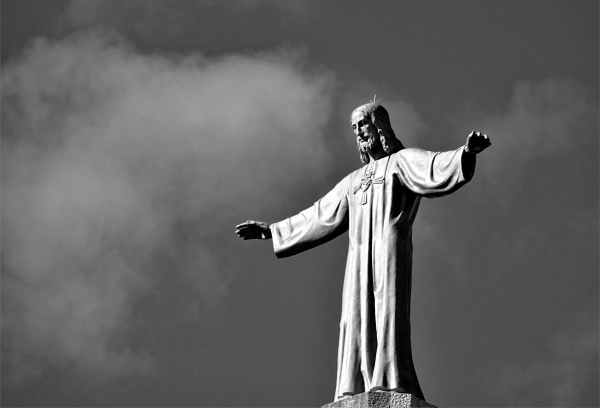
Hannah was not giving Samuel to Eli to raise; she was giving Samuel to God to raise and guide and protect.

I am writing this today, not to encourage parents to absolve themselves of responsibility for training and caring for their own family, but to encourage those parents who may not be in a position to guide and protect their children. Some of us have children, grandchildren, siblings, or other young and vulnerable family members living away from our care or influence. Some are living in dysfunctional and even dangerous environments. God KNOWS. He SEES. He HEARS. We do not know, nor do we understand, why God allows innocent people to suffer. We do not know what fears or concerns Hannah and Elkanah may have had about Samuel’s upbringing. We do not know what Samuel endured under Eli’s care, or what he saw or heard in the presence of Eli’s sons. As a child, he may have been spared some of the worst of their behavior.

Photo by Pixabay on Pexels.com

We do know two things, however. Hannah and Elkanah may or may not have had reason to trust Eli. He did allow them to visit each year, and he seems to have been fond of young Samuel; certainly the Bible stories I used to read in Sunday School made Eli seem like a kindly uncle. But the reality was that Samuel’s life was not in Eli’s hands–it was in God’s! Hannah and Elkanah trusted God to guide their son, even as they relished every moment they were able to spend with him. They certainly prayed for his safety and growth in wisdom as he served in the Tabernacle of the Almighty.

Secondly, we know that God can bring good out of even bad circumstances. Eli was weak and indulgent with his sons; he was warned and did nothing. He sat down on the job and faced judgment without repentance. When Samuel was grown, this pattern could have been repeated. Samuel’s own sons began taking bribes and perverting justice. Samuel was still serving faithfully, even as an old man, but his sons were not following his good example. However, when the people came to Samuel with reports of his sons’ activities and asked him to step aside and appoint a king, Samuel sought the Lord. God reassured him, and Samuel was faithful to appoint and advise Israel’s first king, Saul. God was faithful to guide Samuel’s footsteps, and to bring justice against the wicked sons of Eli.

Photo by omar alnahi on Pexels.com

Eli’s flawed examples of fatherhood and leadership still served as models for Samuel. Even as a child, he showed wisdom, respect, and love for his “foster father” and mentor. Hannah and Elkanah never wavered in their trust that God could and would guide their son and provide for him. Their faith wasn’t based on the knowledge that Samuel would one day become the chief priest and anoint both Saul and his successor, David. They only knew that God could be trusted.

That is not a promise that every child in a bad environment will be “safe” and rise above their circumstances to become famous or powerful. But it is reason to keep hope and faith when we feel powerless. None of Hannah and Elkanah’s (or Peninnah’s) other children are mentioned in the Biblical narrative. They may have been honest, upright citizens, successful in business or esteemed in their hometown of Ramah. Samuel’s story is not a parable–there is no “moral” about “giving a child back” to God and being able to expect success and fame and blessing. There is, however, a lesson here about recognizing that every child is a gift– not a reward, not a burden–our children belong to God. We should do our best to guide them, nurture them, protect them, and above all, to love them. But their destiny– including tragic circumstances and glorious opportunities–is not ours to control.

Next time, we explore another important relationship– that of Hannah and her Son.

Hannah and the Priests

The story of Hannah in 1 Samuel is filled with priests. Her husband, Elkanah, is of the priestly class, and regularly goes to Shiloh to offer sacrifices. Chapter one quickly mentions Hophni and Phinehas who were the resident priests there. And of course, there is Eli, their father, the High Priest at that time. Hannah has access to counselors, spiritual guidance, and men whose ancestral calling is to bring people closer to God. Yet none of them can bring Hannah out of her anguish and offer comfort.

Hophni and Phinehas are noticeably absent in this story. The mention of their names calls attention to this absence. They were supposed to be the acting priests, but they don’t interact in any way with the grieving Hannah, or her husband, Elkanah. Further reading reveals that they were very wicked and due to be judged for abusing their priestly role. https://www.biblegateway.com/passage/?search=1+Samuel+2%3A12-36&version=NIV

Photo by rawpixel.com on Pexels.com

Eli himself is an indifferent priest. The first mention of him is as the father of the wicked Hophni and Phinehas. Next, we find him sitting in a chair at the doorstep of the tabernacle. He is not serving; he is not overseeing; he is not doing anything. When he first observes Hannah, he jumps to a wrong and judgmental conclusion– that she is drunk and raving. He doesn’t go over to see if he’s right in his assumption. In fact, there is no mention in the passage that he ever rises from his chair.
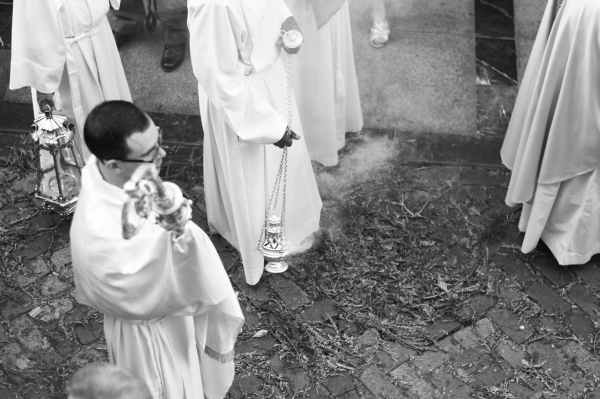
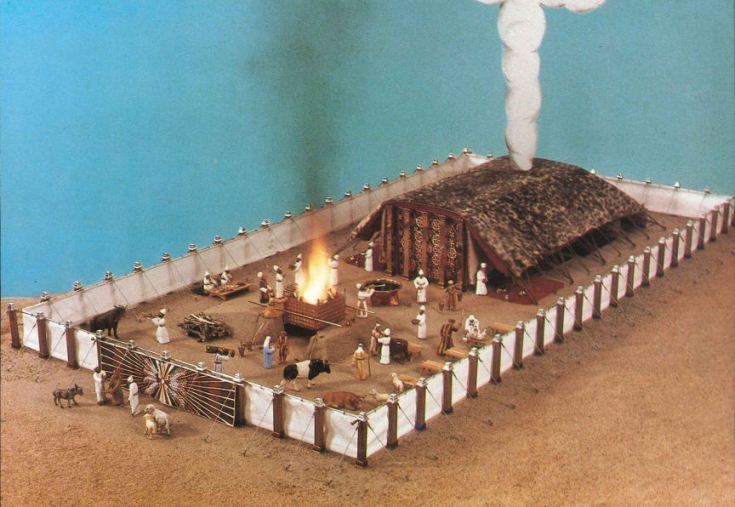
We might gloss over this passage, without grasping the importance of this detail. Nowhere in the long lists of a priest’s duties was there an option of sitting at the door and just watching people go in and out. The priests all had duties– some were in charge of the sacrifice (as Elkanah sometimes was). Others were in charge of the lamps, the incense, the care of the utensils and tools, offering prayers, singing, playing instruments, reading from the books of the law, and keeping the tabernacle clean and in good repair. None of them required sitting. Eli isn’t busy doing the work of the Lord; he is literally sitting down on the job.
In short, Eli is not a spiritual giant– he offers a standard blessing after Hannah pleads her case for not being a drunken disturber of the peace, but he doesn’t offer much in the way of true comfort or counseling. His first words to her are to “Go in peace.” The blessing seems to be almost an afterthought. Still, Hannah goes away encouraged, and comes back the next day to worship before returning home.

What can we learn from this encounter and these details in Hannah’s story?

One possible reaction is to become critical and dismissive of the clergy. I think this is the wrong reaction, but I want to address it in this context, because it can keep us from finding help and blessing if we let it. I know countless people who have walked away from the church because of one disappointing encounter with a minister, pastor’s wife, deacon, or fellow parishioner. Eli was not a stellar example of Israel’s priesthood; he was a flawed human. He had rebellious sons, and was likely depressed or anguished over his own troubles. Yet, he was still faithful to turn Hannah’s attention to the One who is always able to bring comfort and strength. Hannah could have chosen to focus on his rude and judgmental assumption about her, but she chose to focus on the hope he was able to offer.
I have gotten dismissive, even bad, advice from people in the church. I have been hurt, judged, and ignored by those who are supposed to be serving God. But just as God provides grace to cover our own failures and mis-steps, He asks us to extend forgiveness and grace to those–even those who serve Him.*

Having said that, I think there is a warning here for those who serve the Lord. Eli ends his days in tragic fashion, his family legacy in ruins, because of some of the details we glimpse even in this short passage about Hannah. Eventually, her son, Samuel, will be tasked with the job of delivering the fullness of God’s judgment against Eli and his sons. Eli’s priesthood was not a cushy position of sitting at the door of God’s tabernacle enjoying an afternoon breeze. He was in charge of setting the tone of reverence and worship for the nation. His sons were corrupt; everyone knew it, including Eli, but nothing was done about it. He sat there, and let evil happen around him.
Church workers, pastors, and priests who do evil and abuse their positions may get away with it for awhile, but God will not hold them guiltless. Nor will he hold those guiltless who cover up or deny the guilt of those around them. No matter how high the position, no matter how much “good” they have done, unless they repent of their actions, they will face God’s wrath over their evil acts.

Finally, we need to see Hannah’s response. Regardless of how evil the sons of Eli were, or how spineless Eli was as a parent and a High Priest, Hannah found faith– not in the priests– but in the God they served. She had seen the dedication of her husband, Elkanah. He served God with reverence, and he served his family with love and honor. She saw that Eli, even sitting down on the job, was still aware that hope and healing come from the Almighty.

Hannah’s response to Eli, and the God he served so imperfectly, deserves another look– one we will take in the next post.

I pray that today, we will be grateful to God for the faithful servants he sends into our lives, and for his grace when we or others “sit down” on the job of serving others and showing Him the reverence He deserves.

Who was Hannah?

The Bible is an amazing book. It is a single narrative, but it is made up of several stories; even several different types of literature. There are stories that seem straightforward; others are clearly meant as parables or metaphors; still others are prophetic visions. Hannah’s story fits the first category. Hannah is to be understood as a real person living in a real time and place in history. She is also representative of a particular situation–she is childless in a society where a woman’s value is measured in her ability to bear children. She is loved by her husband, but taunted and harassed by her husband’s other wife. She is consumed by grief and frustration. In our own time, she would likely be diagnosed as clinically depressed.

I don’t know about anyone else, but I have a tendency to see Hannah through the rosy lenses of her eventual triumph. I know the end of the story. I indulge her grief, because she “prays her way through it”, and gets the happy ending I think we all long for.

But Hannah’s story isn’t just about the outcome, and it isn’t a parable meant to show that earnest prayer will always result in getting what we desire. Hannah’s happy ending is not a guarantee or a promise for anyone else who suffers from grief or infertility (or both).

Photo by Thorn Yang on Pexels.com

So, I’d like to take a closer look at Hannah– not as one of the “heroines” of the Bible, but as a woman in distress. And I’d like to focus on the others in her story. God doesn’t waste details, even if we don’t always understand why they are included. I think there are several hidden lessons in this story, and they reside in details we often skim or throw aside in the pursuit of the very real truth that God answers prayer.

So, to prepare for this journey, here is the text of Hannah’s tale:


1 Samuel 1 New International Version (NIV)
The Birth of Samuel
There was a certain man from Ramathaim, a Zuphite from the hill country of Ephraim, whose name was Elkanah son of Jeroham, the son of Elihu, the son of Tohu, the son of Zuph, an Ephraimite. He had two wives; one was called Hannah and the other Peninnah. Peninnah had children, but Hannah had none.
Year after year this man went up from his town to worship and sacrifice to the Lord Almighty at Shiloh, where Hophni and Phinehas, the two sons of Eli, were priests of the Lord. Whenever the day came for Elkanah to sacrifice, he would give portions of the meat to his wife Peninnah and to all her sons and daughters. But to Hannah he gave a double portion because he loved her, and the Lord had closed her womb. Because the Lord had closed Hannah’s womb, her rival kept provoking her in order to irritate her. This went on year after year. Whenever Hannah went up to the house of the Lord, her rival provoked her till she wept and would not eat. Her husband Elkanah would say to her, “Hannah, why are you weeping? Why don’t you eat? Why are you downhearted? Don’t I mean more to you than ten sons?”
Once when they had finished eating and drinking in Shiloh, Hannah stood up. Now Eli the priest was sitting on his chair by the doorpost of the Lord’s house. 10 In her deep anguish Hannah prayed to the Lord, weeping bitterly. 11 And she made a vow, saying, “Lord Almighty, if you will only look on your servant’s misery and remember me, and not forget your servant but give her a son, then I will give him to the Lord for all the days of his life, and no razor will ever be used on his head.”
12 As she kept on praying to the Lord, Eli observed her mouth. 13 Hannah was praying in her heart, and her lips were moving but her voice was not heard. Eli thought she was drunk 14 and said to her, “How long are you going to stay drunk? Put away your wine.”
15 “Not so, my lord,” Hannah replied, “I am a woman who is deeply troubled. I have not been drinking wine or beer; I was pouring out my soul to the Lord. 16 Do not take your servant for a wicked woman; I have been praying here out of my great anguish and grief.”
17 Eli answered, “Go in peace, and may the God of Israel grant you what you have asked of him.”
18 She said, “May your servant find favor in your eyes.” Then she went her way and ate something, and her face was no longer downcast.
19 Early the next morning they arose and worshiped before the Lord and then went back to their home at Ramah. Elkanah made love to his wife Hannah, and the Lord remembered her. 20 So in the course of time Hannah became pregnant and gave birth to a son. She named him Samuel, saying, “Because I asked the Lord for him.”

Taken from biblegateway.com
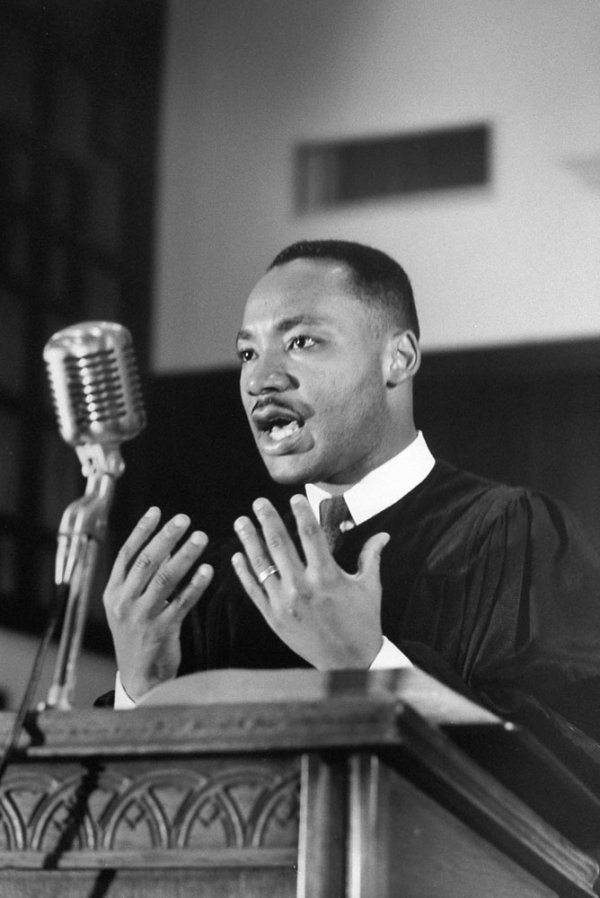
Lord, help us to read this story with new eyes. Help us to see how you work even in difficult circumstances and with imperfect people to bring hope and wisdom and salvation to a fallen world.

Next time: Hannah and Her Husband

Blog at WordPress.com.

Up ↑