
Pray For Me, Not About Me

Gossip and judgment are nasty habits– what happens when they creep into our prayer life?

I’ve sometimes struggled with the idea of praying for those who have hurt me or mistreated those I love.  We are commanded to do it, but often, I am tempted to pray about my enemies instead of praying for them.  As if God didn’t know what they had done; as if he needed me to alert him to their bad behavior, and remind him of how I was slighted, misunderstood, or powerless to bring justice to my friend or family member who was wronged.  I want to tell God how to treat them– how to punish them, or abase them, or bring them to feel remorse.  I want to hang on to the indignation and sense of victimhood–after all, God is going to make it right in the end, vindicating me and humiliating them, right?  Except that’s not how it works in God’s economy…My vindication does not come at their expense, but through the blood of the truly innocent Lamb of God.  Let that sink in.  God is not in the business of torturing others to make himself feel more righteous.  If I want to follow Christ, my actions, and my prayers, should be full of his Grace, not my bitterness.

I am not alone in this– and I’m sure I have been “prayed about” often enough.  Even saints and matriarchs of old have done it.  And King David was guilty of it as well–several of the Psalms include angry, even vicious rants against David’s enemies.  It’s understandable; it’s only natural for us to feel indignant, angry, and hurt in the face of injustice, unkindness, hatred, and abuse.  And it’s not inappropriate for us to cry out for justice, or pour out our hurt and frustration. But it is wrong to stand in judgment and unforgiveness when we come before the throne of Heaven.

gossip

I believe that these are the difficult prayers that teach us to know God better– as well as ourselves.  To pray for those who have hurt us means that we must move beyond what they have done– not to deny it, or to excuse or forget about it, but to give it over to God –and deal with who they are.  They are lost exactly as we are lost, but for the grace of God.  They are redeemable, not because they can undo or atone for what has happened, but because God says that whosoever trusts in Him can be saved.  They are precious in God’s sight.  When we stop focusing on who hurt us, and how, we can instead focus on who heals us, and how he wants to heal others.

These prayers also serve to remind us that our true “enemies” are not the people who say or do unkind or even wicked things.  Our true enemies are not the ones who can hurt our feelings, or even our minds or bodies.  Our true enemies are the ones who would steal our souls– who tempt us to hold on to rage and despair, to hopelessness and doubt, to bitterness and shame.

It is so easy to write these words, and to “know” the right thing to do.  But it is a painful, heartbreaking, humbling, stumbling uphill climb to DO the right thing.  I still catch myself so often praying about certain people, instead of praying for them.  God knows my heart–he knows if my prayer is sincere.  And, as I struggle, I am reminded that the change I would wish to see in someone else mirrors the change I should wish to see in me  The same Grace that God sends to heal and comfort me is the same Grace he offers to everyone who will take it–even when they choose not to accept it.

So I hope I am learning to pray for those who sneer at me; those who lash out in their own pain, anger, or thoughtlessness.  To pray for their health and safety, their well-being, and their wholeness. For their sake–for the sake of the One who loves them eternally.  And in the hope that healing and restoration will triumph over what lies in the past.

In This World You Will Have Trouble…

When will the violence end?  How long, O Lord, must we wait for justice?  Why did you allow this to happen?

And it has happened again.  A school-related shooting, this time in Minneapolis, Minnesota.  News feeds were filled with information, speculation, analysis, and commentary for days after the incident.  A week later, the fury seems to have moved on, and the fate of the two murdered children, their families, and the other wounded victims of the shooter’s rampage are dwarfed by the cries of those with a political agenda.  Some are raising concerns over gun control; others want to look at the effect of puberty blockers and other treatments used for those in the trans community. Everyone looking for a quick explanation and a quick solution, so that this “never happens again.”

Senseless violence, natural disasters, sudden tragic circumstances, still have the power to shock us, overwhelm us, shake our confidence, our composure, our beliefs.  Most of us want to believe that we live in a predictable world, a safe and orderly world, a world that has been tamed, and groomed, and civilized.  And we don’t want those beliefs shattered with the truth– life is unpredictable, filled with tragedy, evil, and danger, and it will end in death.  I’m not saying this as a cynic or a pessimist– life is also wonderful, filled with love, laughter, achievement, delight, and eternally precious.  But why are we so deeply disturbed to face the truth about our troubled world?

I believe it is due, in part, to the recognition that this is a fallen world.  It was not made for evil and tragedy and death, but every tragedy reminds us that the whole earth groans for restoration to what it was always meant to be.  The echo of Eden, and the hope of Heaven live in us, and the reality of our lost state cannot be denied when tragedy strikes.  The pleasant facade of the triumph of reason and humanity cracks, and we are forced to see that evil resides next door, down the street, across town, perhaps even in our own hearts and minds.

I love the movie “The Princess Bride” (ask any of my friends–I can quote whole scenes!), but when I first saw it in the theater, there was one line that struck me like a punch in the stomach.  The Dread Pirate Roberts (a.k.a. Westley) kidnaps/rescues Buttercup from her original captors, and after she tells him of the pain and desolation of losing her true love, he doesn’t comfort her by revealing that he is, indeed, her own sweet love, still alive and well.  Instead, he says, “Life is pain, highness.  Anyone who tells you differently is selling something.”   Wha-what?!   What kind of lover, when confronted by that kind of tragic outpouring, says something so callous?  To quote another line from the movie, “Why don’t you give me a nice paper cut and pour lemon juice on it?”  But Westley is not heartless.  The line is memorable, both because it is jarring in its context, and because we recognize that it holds a truth.  Anyone who tells you that this life will be free of pain and suffering IS selling something.  In the movie, Humperdink is “selling” the idea that he is going to make Buttercup a princess and marry her, and they will live happily ever after; all the while planning to kill her.  In today’s world, there are people trying to sell us ideas– that they “have it all figured out”; that truth and justice and morality  and even a person’s worth and value are all relative; that God doesn’t exist or that he doesn’t care; that evil is a figment of our imagination, or that human institutions can create a perfect society and “save” the planet from other human activities and institutions.

Jesus tells us in John 16:33 that in this world, we will have trials, trouble, tribulation, and/or suffering (depending on which version you read).  Not because God doesn’t care; not because he is incapable of stopping tragedies, but because we (humankind) have turned away from God, and the consequence of our rebellion is tragedy and death.  He doesn’t tell us this because he is callous or insensitive or cynical.  In fact, in the next phrase, he tells us to take heart, and to be of good cheer, for he has overcome the world.  HE has overcome the world, and in doing so, he has given us hope, and peace, and strength– not to avoid or deny tragedy, but to overcome it, and to triumph over it.

How does this relate to the pursuit of prayer?  Prayer is not a magic panacea in times of trouble– it isn’t a chocolate-coated miracle pill.  Prayer (and sharing thoughts and prayers with those who are suffering) doesn’t make the suffering disappear– it doesn’t lessen the horror or the evil of an event, and it doesn’t guarantee that future hate, violence, injustice, or tragedy will disappear or even diminish.   But prayer reminds us that evil will not always triumph; that it need not overwhelm us, paralyze us, or defeat us.  I believe it can bring us from being “mostly dead” in despair, fruitless rage, divisive finger-pointing and fault-finding, “inconceivable” arguments, vengeful fantasies, and conceited self-indulgence, back to abundant life in Christ, and renewed courage to do what is kind and loving, even in the face of evil.  Prayer should also restore our focus on what is good, and noble, and true, so that we can be equipped to fight for what is right, instead of just ranting against what is wrong.

Finally, brothers and sisters, whatever is true, whatever is noble, whatever is right, whatever is pure, whatever is lovely, whatever is admirable—if anything is excellent or praiseworthy—think about such things.– Philippians 4:8

I pray, in the wake of this newest tragedy, that God would show me where I am wrong in my thoughts and actions toward Him and toward others; that he would surround those who are suffering pain and loss, giving them comfort, strength and renewed purpose in the days ahead; that he would lead us to have the tough conversations, and take the right steps to bring renewal, restoration, hope, and healing to our communities and our land; and finally, that we would listen to, and acknowledge the truth, and take heart as we focus on the One who has overcome the world.

Where Am I?

Smack-dab in the center of Sin and Pride;
You could find me in Peril, Intrigue and Rebellion–
Guilt surrounded me, pain and despair held me fast.
But I was not in Repentance, Mercy, or Grace.

I had to die to “I”– let it go and let the Son redeem the Sin
Trade Pride for Prayer, and Hype for Hope.

But I am no longer lost or dead– and no longer a slave to sin or pride.
I can now be found in Faith, and Charity;
I thrive in Fellowship, I have a Friend in Jesus,
A Spirit to guide me, and a vision for Eternity.
It is not “I” who lives, but “I AM” who lives in me.
Salvation, forgiveness, life, and victory are all mine;
Alive in Him, I am found in Christ– sanctified,
And never alone.

sky sunset person silhouette


Romans 8:1-5 King James Version (KJV)

There is therefore now no condemnation to them which are in Christ Jesus, who walk not after the flesh, but after the Spirit.For the law of the Spirit of life in Christ Jesus hath made me free from the law of sin and death.For what the law could not do, in that it was weak through the flesh, God sending his own Son in the likeness of sinful flesh, and for sin, condemned sin in the flesh:That the righteousness of the law might be fulfilled in us, who walk not after the flesh, but after the Spirit.For they that are after the flesh do mind the things of the flesh; but they that are after the Spirit the things of the Spirit.


1 Corinthians 15:57 New International Version (NIV)

57 But thanks be to God! He gives us the victory through our Lord Jesus Christ.


  • A brief note about Scripture references and quotes:  I try to give scripture references and quotes in various translations, though I give most in the New International Version (NIV), the English Standard Version (ESV) or the King James or New King James versions (KJV or NKJV).  I don’t intend to cause confusion by doing this.  There are several excellent translations/versions available, and for a good comparison, there are several wonderful Bible study websites (two of my favorites are Bible Gateway and Bible Hub  ).  I simply find that there are some nuances that make for easier reading or use in the blog.  Often, one translation will have notes and cross references that are wonderful for further study, but confusing to include as part of the blog quote.  I encourage anyone to read the verses in whatever translation they have available, feel most comfortable using, or feel is most trustworthy.  I also welcome comments or corrections.

That Voice in Your Head

Most days, I post about Pursuing Prayer from the “praying” end…how do I pray, what attitude do I have about praying, why do I pray, etc.

Today, I want to explore the “responding” end…how do I know when God is answering my prayer, or what he’s asking me to do in response to his will?  While I don’t have a complete answer, I do want to share some wisdom– some from experience and some from Biblical principles and others’ testimony.

Isaiah 55:8-9 English Standard Version (ESV)

For my thoughts are not your thoughts,
    neither are your ways my ways, declares the Lord.
For as the heavens are higher than the earth,
    so are my ways higher than your ways
    and my thoughts than your thoughts.

God moves in a mysterious way, His wonders to perform. He plants his footsteps in the sea, and rides upon the storm. William Cowper

It often surprises people to learn that “God works in mysterious ways” is not actually in the Bible.  God’s ways are NOT our ways, and his thoughts are not our thoughts, but his answers to prayer are not always obscure and unknowable.  God does not delight in vexing us and making us guess and second-guess his will.  It would be easy if God always answered our prayers with a flashing neon sign that gave a simple, one-sentence directive– “Take two aspirin and call me in the morning.”  “Click your heels together and say, ‘There’s no place like home.'” “Hakuna Matata.”  But pithy platitudes and easy answers are not God’s way, either.  God created each of us as a unique reflection of his divine image– his answers will be uniquely designed to fulfill his will and meet our deepest needs, not always in ways we expect or understand.

pexels-photo-942317.jpeg

So how do we discern God’s will when there is no neon sign or simple answer to our prayers?  Here are a few guiding principles:

  • God will NEVER answer your prayer by contradicting himself or compromising his holiness.
    • God will not answer your prayer for money by giving you an opportunity to cheat or steal.  He will not answer your prayer for a husband by throwing you into the arms of someone else’s.
    • Just because God doesn’t send a lightning bolt or physically stop you from doing something doesn’t mean that he has given his OK.  If he ALLOWS you to sin, that doesn’t mean that he APPROVES of your sin or that it is his answer to your prayer.
    • God will never ask you to do harm to yourself or others as an answer to your prayer.  Vengeance, sacrifice, atonement, and retribution are the province of God alone.  I believe that God asks us to be vigilant in defense, and allows us to take up arms in defense, but to initiate a feud, to seek personal vengeance, or to act out vigilante justice is to flout both God’s authority and the authority of the powers God has set in place over us.
  • God MAY use circumstances or people to answer your prayer.  But the same principle above applies– circumstances that lead to sinful actions are NOT God’s answer to your prayer; people who advise you to do what you know is contrary to God’s holiness are not sent from God– no matter how appealing the prospect, no matter how powerful the person or persons.  That being said, God may choose to use the most unlikely of persons or events to bring about a resolution to your need–LET HIM!  Don’t judge a gift by the size, the shape, or the wrapping paper!

gift-made-surprise-loop-39006.jpeg

  • God may use time to answer your prayer.  I prayed for a husband from the time I was a young girl– I married at age 46.  Waiting doesn’t mean that God has forgotten about you; it doesn’t mean that you aren’t worthy of an answer or ready for an answer– sometimes your answer isn’t ready for you!  There are two caveats I want to share from my own experience of waiting for an answer:
    • Don’t give up!  God knows the desires of your heart– but keep praying anyway.  Well-meaning people will say awful, hurtful things– that you aren’t praying enough, or praying the “right” way; that you must be hiding un-confessed sin; that you need to try some other way to get what you want, or to hurry God along.  In my case, I had people trying to fix me up, suggest dating services, remind me that my “clock” was ticking (it was broken, but they didn’t know that), or suggest that it just wasn’t God’s will that I marry, and I should pray for him to take away the desire for a husband.  Listen to folks like this (if you must) with half an ear and less than 10% of your heart– let them cause you to re-examine your heart and your desires, but don’t let them cause you to give up or doubt God.  That was not their intention, but it can often be the result of their ill-considered words.
    • Do the next right thing.  Doing nothing while you wait for the perfect answer gets you nowhere.  Wringing your hands and pacing gets you nowhere.  God wants our trust and our obedience.  As we wait for more specific direction, we need to trust that doing the next right thing IS the RIGHT thing to do.  This was the hardest lesson for me, but the one I most needed to learn.  So while I waited, I moved ahead step-by-step.  I made a lot of friends, gained a lot of experiences, and learned about marriage by watching the examples of others (both good and bad).  I got involved working with children, first as a secondary teacher, and then as a librarian.  I got to spend nearly thirty years of my working life surrounded by young people.  I got to laugh with them, love on them, mentor them, dream with them, discipline them, and cry over them (and send them home).  I didn’t just “settle for” a single lifestyle– I learned to embrace it.  I learned to be grateful for the wonderful opportunities I had as a single woman, and to anticipate the changes that marriage would bring, should it come along.  I learned that marriage should be a means to an end, not the end itself– that marriage done right is not about my growth and fulfillment; not even about his growth and fulfillment; but about OUR growth together and toward Godliness.
  • Trust “that voice in your head”– (not the one that speaks out loud and gets you strange looks!) –but your God-given conscience, and the guidance of the Holy Spirit.  “That still, small voice” is often the most personal way God speaks to us.  In my own life, it was taking the risk to leave a career I loved (teaching) to reach for a deeper dependence on God.  I left the security of my teaching position for three part-time jobs (at one point), no health insurance, and a move to a new community where I knew virtually no one.  I had other choices, other more appealing options, chances to reconsider.  I wasn’t being pushed out of teaching–in fact, I left just as my options at the school were opening up for bigger and better things.  Yet I felt compelled to leave.  I had no safety net waiting– I ended up in libraries, but that wasn’t my original plan.  There were many people counseling me to reconsider– and their reasons were compelling.  But as I stood firm, other voices came along to encourage me.  I believe they were sent by God to confirm that this risk was from him and for my good.
  • Don’t trust “that voice in your head”–No, I’m not trying to confuse you or contradict what I just said.  But this is another caveat (see above).  We are told to “test the spirits”, and sometimes, that voice in your head is NOT the Holy Spirit.  In the case I mentioned above, I had to follow all the other principles of discerning God’s will.  In my case, leaving teaching did not violate God’s holiness or come about because I wasn’t willing to follow God’s leading–I wasn’t leaving teaching to try my hand at a get-rich-quick scheme, or because I had lost my desire to work with students, or had lost faith in God’s sovereignty in my life.  God DID use circumstances and people to confirm my decision and help me grow through the experiences that followed.  God used time to help me transition from schools to libraries, and prepare me for other opportunities, including short-term missions trips and marriage.  I can’t even begin to list all the ways I tested and examined what I felt God was leading me to do before I made the leap.  That much testing may not always be necessary, but we need to be careful not to rely on our own understanding (Proverbs 3:5-6), but to Trust in the Lord with all our hearts.  He WILL direct our paths when we do that.

pexels-photo-618955.jpeg

  • Finally, Pray for it– pray for discernment, for wisdom, for strength to do the right thing!  Won’t God DO IT!

Talk is Cheap

We are entering the season of Lent.  It is supposed to be a season of reflection, repentance, confession, and preparation.  Some people refer to it as a spring cleaning of the soul.  It is a time when many give things up or abstain from things– certain habits or routines, certain foods or activities.  This can be a good practice for many reasons– it teaches us discipline and patience; it reminds us of all that Christ gave up for us; it turns our focus from common earthly things to spiritual matters; and it frees us from habits and routines that have not only pulled us away from God, but away from each other.

I grew up with very mixed, and mostly negative, feelings about Lent. Neither my family nor my church celebrated Lent.  Many of my friends did, and their stories did very little to change my views.  I saw the season as drudgery, self-imposed punishment, dreary and legalistic, a cheerless, fruitless, and (mostly) meatless way of counting down to Easter.  No one seemed to “celebrate” it– it was more like they endured it.  My views have since changed, but I don’t think they were all that uncommon, and I think I was missing something of great value, something I would like to explore.

There are three important elements of Lent that I have struggled with, and I would like to share what I’ve learned.

  • There is great value in sober, somber reflection.  Our world is constantly calling us to revelry, happiness, entertainment, activity, and superficial comfort.  We see weakness in mourning for, and admitting to, our sins. We judge those who are serious and sober as “stodgy”, “boring”, and “prosy”.  We feel awkward in stillness and silent self-examination.  But the Bible paints a very different picture.  And the practices of fasting, confession, and meditation, practiced across a spectrum of religions, have been shown to promote better physical, mental, and emotional health, as well as spiritual well-being.

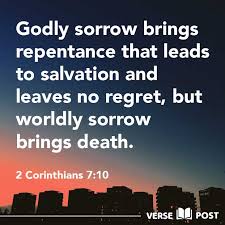
godlysorrow

  • Because we don’t value Godly sorrow– we sometimes substitute other practices that make a mockery of what Lent should be about.  I know I am not perfect, but I don’t want to feel that emptiness, that bankruptcy of spirit, that comes with honest confession and repentance.  In fact, I sometimes “glamorize” what is really petty.  I justify my bitterness, I excuse my selfishness, I “confide” my dislikes and judgmental thoughts about others.  And I bring these sins before God, not in sorrow and humility, but in scandal, as though he will be shocked or even entertained by my wayward behavior

trueconfessions

  • Which brings me to the third thing–cheap grace.  I spend a lot of time talking about Christian living– about the value of prayer, and confession being good for the soul.  I talk about being forgiven, and loving God, and wanting to serve him better.  But I have fallen into the very bad habit of seeing God as Ward Cleaver, or Ozzie Nelson– lovable and authoritative, but not Sovereign or supremely Holy –“There, there, child.  That’s all right.  You’ve confessed, and you’ve learned your lesson.  We’ll just forget that ever happened.”   Lent should lead us to dependence on God’s amazing grace.  It is the work of Christ in us– and only that– that saves, renews, and empowers us.  There is a danger in our culture that we cheapen grace by making the focus on what we know, or say about Christianity, rather than what God does through us.  Cheap grace leads to cheap talk–in my daily life, and in my prayer life.

This year for Lent, I’m not going to talk about giving up fast food, or Facebook, or shopping at my favorite store.  I’m not going to set a checklist or a target for random acts of kindness or giving alms.  I’m not even going to set a schedule for extra prayers or a list of special prayers just for this season.  There’s nothing wrong with any of those; in fact, if you’re thinking of doing any of the above (or all of the above), I encourage you to do it with all my heart.  My prayer for the next forty days will be to invite God to clean out the pretense and hand-wringing, sweep away the cobwebs of analyzing and making excuses, and empty my heart of pride, self-sufficiency, and false guilt, so that he can fill it again with love for him and for others.  Love that is more than cheap talk.  Love that pours out life and renewal– just as Christ poured out his blood on Good Friday, poured out glory on Easter morning, and poured out power at Pentecost.  Not because it was part of a 40-day program of renewal, but because it could not be contained.

But it starts with ashes and repentance.

psalm139

Sowing the Wind

“They sow the wind, and reap the whirlwind…”  Hosea 8:7

Hosea was a prophet who foretold the destruction (and eventual restoration) of his people.  God was pouring out his judgment against an unfaithful nation, and he used the tragic family life of Hosea as a living example of his dealings with Israel.  Hosea married a prostitute; an unfaithful and unloving spouse who chased after men with ready money and cheap gifts.  But when her activities resulted in slavery, shame, and despair, Hosea redeemed her and restored her as his wife.  In the same way, God had made a promise to the people of Israel, but they had broken their covenant and followed their own rules, chasing after the surrounding cultures, with their foreign gods and their hedonistic rituals, including human sacrifice, temple prostitutes, and divination.  There are many metaphors used throughout this book, but one that often stands out is the short phrase found in chapter eight.  In it, God is talking about the unfaithful priests and leaders of Israel, who have not only betrayed God in their rebellion and idolatry, but have led others astray.  God says of them that they have sown the wind, and are reaping/will reap the whirlwind.

How does this relate to us today in our pursuit of prayer?

I believe that many of us are sowing the wind– we do it in our careless words, gossip, rumor-mongering, complaining, babbling, prattling, and yes, in our half-hearted obedience, and our tepid prayers.  We often come to God, not eager to commune with him, or to hear his voice, not in humble adoration and open confession, but to complain, wheedle, and boast.  We pay lip service to his Holiness, while refusing to give up that bad habit that “isn’t really all that bad.”  We thank him for his Grace, but harbor resentment against a neighbor or family member who slighted us.  We ask for him to bring us success in our plans and ventures without really making sure if they line up with his will.  We excuse our lack of attendance at church, and our failure to spend time in God’s word.  We make rash promises to do “better” if God just gets us through this week.  We ask for his blessing, and thank him for the riches he has bestowed on us, but we turn our noses at those in our backyard who are in need.  We are bold about posting “Christian” sayings on Facebook, X, Pinterest, and Instagram–almost as bold as posting about our favorite new Brew Pub or Spa trip or “almost inappropriate” joke, or latest political rant.  Except that our “Christian” posts are less entertaining and more critical of others.  (They’re usually really pretty, though– pictures of flowers or mountain streams or desert sunsets–it’s really easy to “like” and “share” a sunset!.)  We cheapen the Gospel, we cheapen the Christian walk, we cheapen prayer, when we pursue it as a hobby or a social habit. Bur prayer is not something we do only because (or only when)  it makes us feel “good” or “better”– it is something we pursue because it brings us life and peace for eternity, and it brings glory and joy to the King of Kings.

“They sow the wind, and reap the whirlwind…”  There is a price for this shallow, careless pursuit of something that looks and feels vaguely like Godliness.  It is the whirlwind…being tossed about by “every wind of doctrine” as Paul warns against in Ephesians 4.  It is being caught up in doubts and half-truths, compromises, hypocrisy, division, scandal, and shame.  It is having to face the onslaught of detractors and persecution that come as a result of so many of us abusing and misrepresenting the very Gospel of the one whose name we carry.   “Oh, what peace we often forfeit; Oh, what needless pain we bear; All because we do not carry everything to God in prayer.”  The words of that old hymn are no less true today– when we trifle with prayer, carrying only our selfish needs, our petty complaints, and our flimsy agendas to God in prayer, we pay a huge price.

There is another metaphor, this one in the Gospel of John, that I think helps us combat this tendency to “sow the wind”–  Jesus says of himself in John 15 that he is the vine, and we are the branches.  If we are faithful, we remain in him– we draw our life and strength from him– and we are fruitful.  Remaining in him, we are grounded– he provides the roots that keep us from blowing every which way.  And he provides the nourishment, and strength to grow and produce more fruit.

I say “we” because I too am guilty of having sown the wind.  The great news, in Hosea and in the Gospel of John, is that God is eager to restore us– to graft us in–to welcome us home after our storm-tossed wanderings.  Let’s get serious about abiding in God, instead of scattering the latest “feel-good” religious spam.  God, forgive me for the times I have cheapened your precious gift of prayer.  Help me to abide in you, and refrain from careless words to you, about you, and about others.

Prayer Bullies

When I first felt the urge to blog about prayer and prayer life, I held off a bit.  I think prayer is many things– important, impactful, practical, personal, holy, and humbling.  I finally decided to start writing, not because I am an expert on prayer, or that I have mastered the practice, but because I feel passionate about growing in my prayer and praying with more knowledge, focus, and impact. Seven years and over 900 posts later, I still feel the same. I’m sharing in the hope that you will be encouraged, challenged, and equipped to do the same.  I want to explore the many aspects of prayer and learn all that it can be. But one thing prayer should never be is a bludgeon.

I find it embarrassing to be in the company of certain fellow Christians when I hear them try to stop a discussion or argument with the phrase, “I’ll pray for you.”  There are many times and ways one can say this phrase in love and mean it as a sincere gesture, but sometimes it is as condescending and insincere as a Southern, “well, bless your little pea-pickin’ heart.” They want a type of “mic-drop” moment; an argument-ending, argument-winning phrase, and this is what comes out.

“I’ll pray for you”, in this context, suggests that you (and only you) have a problem.  I don’t need to listen to, reconsider, or even try to understand your argument, because I have already determined that you have no valid point, and I have no obligation to hear you out. I know I’m right and you are not. 

But more than that, it suggests two horrible things about prayer that are untrue and misleading.  First, it suggests that my only interest in praying for you is to “fix” you.  In other words, I can’t convince you to see things my way, so I will reluctantly spend some of my precious time praying that you see things my way.  I won’t listen to you, try to understand you, or give you any of my respect, but I will do my best to bring your bad behavior and/or faulty beliefs to God’s attention (in contrast to my.own).  Prayer should never be a threat, or a weapon to be used against another person. Nor should it be a boast about one’s self-righteousness or moral superiority.

Secondly, this way of saying, “I’ll pray for you” suggests that prayer is leverage; that I have God on some kind of leash.  I pray when things aren’t going my way, and God “fixes” them–including people who don’t share my theology or doctrine or worship preference.  Anyone who prays with this mindset is not really praying, and God will not be impressed or coerced into doing anything that goes against His will– no matter how “righteous” I may believe it to be.

One of the dangers of writing and talking about prayer in a public forum is the risk of seeming to or actually to impose personal preferences, practices, and beliefs on others.  I hope to suggest many prayer thoughts and practices that I find true, helpful, challenging, or even dangerous, but I don’t want to insist that there is only one way to think about prayer or to practice it.  Prayer is our way of communicating with our creator.  He didn’t make us all the same; we don’t all like the same things, we don’t all interact the same way; we don’t have the same talents, passions, or responses to the world around us.  The one constant in prayer is God.  What I believe about God will determine how I pray, why I pray, maybe even when or how often I pray.  But it won’t determine God’s character or his actions toward another person.  I cannot make God make you do anything.  I cannot use God as some kind of enforcer or hypnotist or brain-washer– nor should I wish to.  Because that’s not how God works, either.  He desires that everyone come to Him willingly.  He invites us into relationship with Him, not abject humiliation and mindless submission.

I do pray for people who dislike or despise me, who dishonor or deny God.  I pray for their health, their safety, and their redemption.  I pray for family and close friends and complete strangers.  But I should do so knowing that God cherishes each person–gave his life for each one.  God is not a bully, even though he has been characterized as such by some.  God wants us to pray for everyone–not with pride or bitterness or an agenda, but with his compassion, grace, and love.

Journaling Prayer

Full disclosure– I’m not any type of expert on either prayer or journal writing.  But I do keep a prayer log of sorts, and I want to share how that works for me, and why I think it is helpful.

My prayer “journal” is actually a set of four standard notebooks I picked up on sale about two and a half years ago at an office supply store.  Each notebook has 100 pages.  I have labeled each page with a day (February 12, for example) at the top– three months to each notebook.  Below the date, I list people I know who are celebrating birthdays or anniversaries that day, as well as people who died on that day.  Below that, I save space for urgent prayer requests as I become aware of them.  To the side, I list a place (a country, city, or community) to pray for that day.  In the front cover or each notebook, I have a list of focus areas to pray for each day of the week, as well– things like family, leaders and authority figures, cultural issues, missions, etc.  The back side of each page is left to record answers, results, and updates.

The journal/notebook approach is not meant to lock my prayer life into a fixed routine; it is not a checklist of what I must pray for each day (and nothing else or added to everything else).  I don’t take the notebook with me everywhere– instead, I have a small notepad in my purse to jot down thoughts or requests. Sometimes, I record these in the larger notebook later, but not always.  I review the journal once a day, but I pray throughout the day– sometimes raising the names and places in the journal, other times people or situations as they come to my heart or mind.  The point is not to make an unnecessary burden of prayer.  The point is to remind me that prayer is a pursuit–an ongoing discipline as well as an intimate pouring out of my heart to God.

I’ve come to delight in turning the pages to see:

  • who is having a birthday/anniversary today– who might be encouraged with a FB post, a call or card or e-mail message
  • where in the world can I lift up people I may or may not know?  There are enough days in the year to pray for every country in the world, every U.S. state, and several major world cities or local communities–and while my list is in alphabetical order, I could have organized by geographic location, or simply listed random places for each day.  Some days, the places are familiar; other days I am inspired to look up information on places like Burkina Faso or find out more about West Virginia…
  • what was I praying about a year ago? Often, I find that my prayers have fallen into a particular pattern– and maybe I need to redirect my focus. Have I been mostly coming to God with burdens, or do my prayers reflect a heart of worship? Humility? Dependence on Him?
  • how faithful God has been over the years! Maybe there’s a burden that I’ve been praying about over many months or years, but far more often, I have forgotten the “urgent” need I was praying about just a few months ago–God answered in ways I did not anticipate. And those requests that are still “unanswered?” God HAS an answer. I just don’t know it yet.


Does the journal make me a better person or a better pray-er?  Well, prayer isn’t a competition, so while I would hope that it helps me develop perseverance, compassion, faithfulness, hope, trust, and wisdom in the practice and pursuit of prayer, it doesn’t make me or my prayer life “better” than someone else’s.  It is, however, a tool that is helping me chart the progress in this pursuit, and so I recommend it based on that experience.

If you feel (like I did for so many years) that your prayer life is haphazard and you want to grow in prayer, I encourage you to start with a simple journal– you don’t have to write out every thought or every request.  You don’t have to have a plan for every day.  But keep a remembrance of your prayer life –even a single item each day for a week, or a month–to look back on, and to move you forward.

For more detailed information, see my page about prayer journaling. Or do a search for “prayer journals.” You may find a system that works better for you– not because prayer needs to be systematic, but because prayer is a journey, and every journey can benefit from a journal!


Pharisee Prayers

He also told this parable to some who trusted in themselves that they were righteous, and treated others with contempt: 10 “Two men went up into the temple to pray, one a Pharisee and the other a tax collector. 11 The Pharisee, standing by himself, prayed[a] thus: ‘God, I thank you that I am not like other men, extortioners, unjust, adulterers, or even like this tax collector. 12 I fast twice a week; I give tithes of all that I get.’ 13 But the tax collector, standing far off, would not even lift up his eyes to heaven, but beat his breast, saying, ‘God, be merciful to me, a sinner!’ 14 I tell you, this man went down to his house justified, rather than the other. For everyone who exalts himself will be humbled, but the one who humbles himself will be exalted.” Luke 19:9-14 (ESV)

I study prayer. I write about prayer. But I am not an “expert” on prayer. That is not to say that one cannot become proficient in prayer or learn to pray “better.” But prayer is ultimately the pursuit of a relationship. I can pray eloquently in public. I can pray earnestly at home. I can pray fervently every day. And I will still pursue prayer– “more” “deeper” “better” prayer.

But it can be easy to fall into the trap of thinking that my relationship with God is based on my own efforts. That the “more” or “better” I pray, the more God will listen; the more God will accept me. That is a lie. God doesn’t want my “best.” He wants my all. He wants me to come to Him “just as I am”– not in an idealized version of myself.

Jesus spoke of this kind of prayer in the parable of the Pharisee and the Sinner. The Pharisee knows how to pray eloquently about himself. He is confident in his own righteousness. He does not need to ask God for anything. He really doesn’t need to thank God for anything. He has secured his own righteousness in his own eyes, and he wants to thank God for noticing (and surely rewarding?) his goodness.

We are sinners saved by grace. Yet we often act like sinners saved by our own cleverness in accepting God’s gracious gifts. Sure, Jesus paid a price for our sin on Calvary– but that was nearly 2,000 years ago. We are saved! We are justified! We “get it.” And our prayers are offered up in pride and self-confidence. God will hear us. God loves us. God will be impressed by our discipline and our fervor. When we do this, we are like the arrogant Pharisee in the parable. Such prayers do not honor God. They do not honor the work of the Cross. They do not reflect a right relationship with our LORD and Savior.

However, we are not exactly like the Sinner in this parable, either. If we have confessed our sins, and believe on Jesus Christ, our sins HAVE BEEN forgiven, and we have been justified. We do not need to offer sacrifices or beg for mercy over and over again for our past offenses. Our guilt has been washed away. We come humbly, but we come as sons and daughters of the King– co-heirs with Jesus.

God does not want wimpy, doubtful prayers. He does not want us to waver or hide from Him. He wants us to come boldly to the throne of Grace (See Hebrews 4;14-16). But we do so knowing that it is Jesus’ righteousness that gives us the right and His love that gives us the desire to come. It is the finished work of the Resurrection that makes us confident. We should pray honestly and humbly–whether in thanksgiving or confession of new sins– but with confidence and joy in our restored relationship with God through Jesus Christ.

Let us never forget that we pray to an all-powerful, Holy God, who is also gracious and merciful. We can come with TRUE thanksgiving for what God has done; for who He is; and for who we are IN Him.

“Lord, I thank you that YOU are not like other men and women. I thank you that You have made a way for me to be cleansed. I thank you that no matter what I have done, or what I do, Your love for me never changes. And I thank you that You listen to, and answer my prayers! You are Holy, Faithful, and True.”

“Thoughts and Prayers”…Revisited

One of the reasons I began a blog about prayer over eighteen months ago was in reaction to a scathing op-ed article about prayer written in the wake of a mass shooting. Well, here we are again. Two highly publicized (and several “smaller”) mass shootings occurred over the last week in the U.S., and the outrage and anguish is overwhelming and completely understandable. The senseless violence and subsequent loss of life stops us in our tracks. Why? Why would anyone do this? How? How could this happen? In the wake of such evil, millions of people rush to distance themselves from such evil; many of them resort to angry protests and calls for action. Many point their fingers at this leader, that group of people, that philosophy, that industry–any entity (other than oneself) that can be held responsible and made to “pay.” Many offer earnest condolences for the families of the victims– often with the phrase “thoughts and prayers.”

Photo by Kat Jayne on Pexels.com

But what good are any of these responses? Nothing we say or do can turn back time and undo the events of the past week. No amount of protesting, legislating, avenging, or moralizing will guarantee that everyone lives in peace and safety as long as evil lurks in human hearts– whether by vigilante gun violence, war, terror attacks, economic and political unrest, rioting, looting, domestic violence, brutality, assault, murder, or suicide. “Banning” guns (or “assault weapons”, “military-style” weapons, etc.) sounds like a sensible action to take, but it is not practical in the face of evil people who will not follow the law, and corrupt governments who will not enforce the law, or worse, who use their power to oppress their own citizens.

Finding, and even punishing a scapegoat may make us feel morally superior and bring a false sense of closure, but it will not break the cycle of anger, hatred, injustice, or lack of respect that is at the root of violence.

But there is something equally repugnant about hearing the phrase “thoughts and prayers”, no matter how earnestly it may be expressed, in the wake of inhuman tragedy. The “thoughts and prayers” of strangers have no warmth, no solidity, no promise, and no strength. They are wisps and vapors of selfish and graceless bystanders, who want to ward off the evil that has befallen someone else. They are nothing more than a pseudo-spiritual appeasement offered to the nameless, faceless fates.

Photo by Pixabay on Pexels.com

And the greater tragedy is that such empty phrases, expressed as reactions to great evil, cheapen the very real power that should be found in the pursuits of thinking/meditating and praying.

Prayer is not a knee-jerk reaction to bad news. It is not a gesture meant to signal to others that you are beyond the touch of whatever forces have just hurt someone else, or that by your thirty second of piety you can alter the consequences of a catastrophe or change the course of the future.

Where were the “thoughts and prayers” of others two weeks ago? Where will they be tomorrow or next week? What quality of “thoughts and prayers” go out to the families of victims whose names we have not even bothered to learn? Such superficial public expressions, sent with seven teary-eyed and five or six high five/praying hands emojis, mean very little to anyone except the sender. They change nothing from the past, and offer nothing going forward.

Photo by Pixabay on Pexels.com

I am as guilty of this kind of meaningless virtue-signaling as anyone. I want to feel as though I can, by such empathetic expressions, encourage and strengthen those who have been touched by horror, tragedy, survivor’s guilt, trauma, grief, etc. But I can’t. Nor can my anger, frantic attempts to “fix the world”, or brilliant analyses of all the root causes of violence prevent the next bombing, drive-by shooting, hijacking, arson, political uprising, or disappointing election result. I cannot change the hearts or minds of those with whom I disagree. I cannot “make” a better world.

But that is why I write this blog. It is through a lifestyle of prayer– real prayer, difficult and sometimes agonizing prayer, joyful and grateful prayer, pleading and gut-wrenching prayer, consistent and obedient prayer–that I engage with the only One who CAN bring hope, justice, change, renewal, and salvation to this world. And it is through a lifestyle pursuit of prayer–daily seeking God’s face, asking for His wisdom, accepting His mercy when I fail, reflecting on His character, acting in obedience–that He can change me. That power, that hope, and that renewal is available to ANYONE who will ask. It sustains us when tragedy strikes, and it empowers us to offer far more than empty “thoughts and prayers”– it causes us to pray, not just after a tragedy, but unceasingly– not just for our own comfort and safety going forward, but for the well-being of our enemies, not just for those who look like us or think like us, but for those who scream at us and tell us to stop already with the “thoughts and prayers!” That power causes us to seek peace where there is hatred, justice where we find corruption, and humility when we are surrounded by narcissism.

Photo by Pixabay on Pexels.com

And if we are not doing those things– if we are not tapping into that power– we should be taking a closer look at those “thoughts and prayers” we are hiding behind.

The prophet Jeremiah lived in violent times. His city was besieged by the Babylonians, and his king was a prisoner in his own palace. God had sent messages of judgment and punishment for the entire nation. Jeremiah prayed diligently, and spoke out against the injustice, pride, and idolatry all around him. In response, he was arrested, beaten, thrown into a pit, and abandoned. God even told him to stop praying for his countrymen, because they were unwilling to accept the truth about their condition, or prepare for the punishment to come. But in the middle of the violence and bad news, God offered hope and promises of restoration, justice, renewal, and peace. He also gave this warning to Jeremiah, that he should stand firm– he should, by his example of consistent obedience and hope– influence others, NOT let himself be influenced by the anger and arrogance of those around him.

Lord, I need to stop offering cheap thoughts and empty prayers that do nothing to honor You and little to help others. Give me the strength and grace to stop reacting to tragedy by reflecting the anger and self-righteousness around me. YOU are my hope, and the best hope I can offer to anyone else. Help me to serve others in truth and love, not judge them, dismiss them, or honor them above You. Help me to seek and stand for justice that is consistent with Your character and Your word, even if I stand alone.

Blog at WordPress.com.

Up ↑