Too Proud to Pray About It

I had a small habit.
Not a horrible addiction,
Or a life-threatening compulsion.
Just a little thing.
No need to pray about it…

I had a toothache.
Just a small one.
I made a dental appointment.
No need to pray about it…

My boss was giving me a hard time–
She “had it out for me.”
She was wrong, of course.
Everyone else said so.
No need to pray about it…

Finances were tight last month.
We were just a few dollars short.
No big deal.
Some bills were paid a little late.
No need to pray about it…

My son is having a hard time at school.
There’s a bully in his class.
I spoke to the teacher.
I gave him advice.
I told him all about the bullies I had faced.
Bullies I had dealt with and overcome.
No need to pray about it…

“Pray without ceasing.” (1 Thessalonians 5:17)
“Cast all your anxiety on him because he cares for you.” (1 Peter 5:7)
 “Do not be anxious about anything, but in every situation, by prayer and petition, with thanksgiving, present your requests to God.” (Philippians 4:6)
“Look to the Lord and His strength: seek His face always.” (1 Chronicles 16:11)
“May my prayer be set before you like incense; may the lifting up of my hands be like the evening sacrifice.” (Psalm 141:2)

God is not so far away
That He does not know my every need.
The “small” things I keep from Him
Keep me from seeing
Just how close He really is…

“For though the Lord is high, he regards the lowly,
    but the haughty he knows from afar.” (Psalm 138:6)

What Would Jesus Pray?

Several years ago, it became incredibly fashionable (literally) to wear t-shirts, necklaces, and especially bracelets with the four letters, WWJD– which stood for “What Would Jesus Do?”  This was supposed to serve as a reminder that the wearer was an ambassador of the Kingdom of God, and was supposed to be a follower of Jesus, and thus should act in accordance with what Jesus would do in any given situation.  Stuck in traffic–What would Jesus do?  Presumably, we would not lose his temper, honk and scream obscenities, or rudely try to cut or push others off the road.  Tempted by the scantily clad actors and actresses in a new R-rated movie– What would Jesus do?  Presumably, he would not attend R-rated movies filled with sexual situations in the first place, or, finding himself tempted, he would leave the movie.

I think the intention was good in the beginning– even scriptural in a sense.  The Children of Israel were commanded, in Deuteronomy 6: 8 to “tie them (God’s commandments, laws, and decrees) as symbols on your hands and bind them on your foreheads.  Write them on the door frames of your houses and on your gates.”  Throughout the Bible, the patriarchs, prophets, Jesus, and the apostles, often spoke of keeping God’s Word in our hearts and on our minds as we go through our daily routines.  This short reminder should help us do just that– redirect our thoughts to the One we are to follow.  As far as it achieved that goal, it was a good thing.

The problem is that it didn’t work that way for most people.  The jewelry or the t-shirt didn’t serve as a reminder to the wearer, but as a symbol to everyone else.  “Hey, look at me!  I’m wearing a fashionable accessory with a cryptic message that lets you know that my thoughts and actions represent Jesus here on earth!”  Ironically, Jesus would have been the last person to wear such an item– not only because he wouldn’t have to ask the question (BEING Jesus, and all), but because his focus was on others–Jesus didn’t wear his heart on his sleeve, or his wrist, and he didn’t call attention to his own righteousness.  Instead, he spoke to outcasts, and touched lepers.  He acted in accordance with God’s wishes, not because he had decided what he thought God would want him to do, but because he knew who God wanted him to become.

One of the worst casualties of the WWJD craze is that many people substituted their own wisdom for a study of God’s word– in other words, they imagined what Jesus would (or might) have done, instead of learning and following what he DID.  Of course, Jesus was never stuck in a traffic jam.  But he did face demands on his time, and stressful situations.  He was never tempted by movies or internet porn, but he was surrounded by a culture that had “religious”  “temple” prostitutes, along with sexual immorality not that different from what we see today.  The Bible doesn’t give us a picture of Jesus planning and executing a strategy for specific temptations– it DOES give us specific examples of people over a long period of time who failed or triumphed over temptations, big and small, and of people who turned to God for strength to overcome temptation and grace when they had fallen.  It also gives us a picture of Jesus living a life that was perfectly pleasing to God– including a life of prayer.

What would Jesus pray?  Look at John 17.  Look at Luke 11:1-4 or Luke 22: 39-48.  Look at Mark 14: 32-42.  There are many examples of Jesus’ prayers– prayers that pour out his heart to his Father– in faith, in pain, in grief, and in hope.  In fact, it would be appropriate to say in answer to the question, “What would Jesus do?”– Jesus would take it to God in Prayer! Look at the way He taught His disciples to pray:

“And when you pray, do not be like the hypocrites, for they love to pray standing in the synagogues and on the street corners to be seen by others. Truly I tell you, they have received their reward in full. But when you pray, go into your room, close the door and pray to your Father, who is unseen. Then your Father, who sees what is done in secret, will reward you. And when you pray, do not keep on babbling like pagans, for they think they will be heard because of their many words. Do not be like them, for your Father knows what you need before you ask him.
“This, then, is how you should pray:

“‘Our Father in heaven,
hallowed be your name,
your kingdom come,
your will be done,
    on earth as it is in heaven.
Give us today our daily bread.
And forgive us our debts,
    as we also have forgiven our debtors.
And lead us not into temptation,
    but deliver us from the evil one.
For if you forgive other people when they sin against you, your heavenly Father will also forgive you. But if you do not forgive others their sins, your Father will not forgive your sins. (Matthew 6:5-15 NIV)

Jesus did not ask the Father to give His disciples a blueprint of “Holy” activities or attitudes. He asked for fundamentals– that God’s Kingdom would come; that God would meet our daily needs; that God would forgive us as we forgive others; and that God would steer us away from temptations and evil. For everything else, Jesus directed His disciples to DO what He did, not ask what He would do. Reach out to those who are needy and hurting with love and practical help. Forgive. Tell the Truth. Worship God above all else, and go to Him in prayer.

Jesus didn’t come to earth and live his life to make us great, or successful, powerful or popular by the world’s standards.  He came to seek and to save those who were lost.  He asks us to do the same– not in our own strength or success, but in the overflow of the grace and power he has poured into us.  T-shirts and jewelry are nice, but Jesus used his life–his time, his love, his talents, his words and his actions in accordance with God’s will and God’s wise commands to bring people to himself.  Then he did what none of us could do– he fulfilled God’s law, becoming the perfect sacrifice for our sins, and conquering Sin and death.  What would Jesus do?  He DID IT!  It is FINISHED!  Our part is not to do what only God can do, but to what he has asked of us and trust him to do the rest.

bow down

This is also true in our pursuit of prayer.  I often get side-tracked in wondering if my prayers match up to what Jesus might have prayed in the same situation– and that shouldn’t be my immediate focus.  Prayer is, as I have to keep reminding myself, a pursuit.  It is a process and a journey, and an ongoing, deepening conversation with the one who loves me best.  And it is not a one-sided conversation– God answers my prayers, not just by meeting immediate needs or changing circumstances.  He speaks through his law, through the Psalms and prophets, through the Gospels and the Epistles, and through the godly wisdom of friends and counselors and ministers of his Grace.  And in doing so, he teaches me to pray.

May I stop worrying so much about the length or the style or the “worthiness” of my prayers.  May I instead listen, and learn, and continue the pursuit.

“The Willing Suspension of Disbelief”

It’s been nearly 45 years since I first heard this phrase, but it has resonated with me ever since.  Samuel Taylor Coleridge wrote of it over 200 years ago, speaking of how readers interact with literature, especially when it contains fantastical or supernatural elements.  Our high school English teacher and drama coach, Mrs. Barr spoke of it not only in the context of literature but in the context of the theater.  In fact, in all art, the artist depends on at least some willing suspension of disbelief on the part of his/her audience. 

 In visual art, we must believe that a few strategic blobs of color, or carefully shaped pieces of marble or wood have captured something timeless and true about a single moment in time– that movement and emotion and life can be held immortal on a canvas or a statue or a tapestry.  We must suspend our disbelief that paint, or wood, marble or stone exists only as itself– in the artist’s capable hands, mere matter transcends its ordinary form to touch our very soul.   In music, we can hear, in the well-played notes of an instrument, the sounds of birds, the falling rain, the crashing of thunder, the marching of armies, or the buzzing of bees.  Music doesn’t just touch our ears, it can touch our souls. Shakespeare also alluded to this in a comical way: “Is it not strange that sheep’s guts should hale souls out of men’s bodies” (Much Ado About Nothing– Act II, Scene 3) We can listen to a symphony without being moved, but in the willing suspension of disbelief, we can be transformed and inspired by notes on a page and breath being blown into wood or brass or fingers or bows being drawn over “sheep’s guts”.

 In literature or in the movies, we must suspend our disbelief that mythical creatures, aliens, monsters, and talking animals live among us as a normal occurrence– for the duration of the story…Dragons must be vanquished, Fairy Godmothers must be allowed to help poor Cinderella to the ball, and The Raven must repeat his ominous line, “Nevermore.”  Frodo must hide from orcs and Nazgul in order to reach the Fires of Doom and destroy the One Ring. Charlotte must spin her wordy webs and Papa Bear must exclaim, “someone has been sitting in my chair.”  As children, we shed our disbelief readily and enter into the story, falling in love (or having nightmares about) imaginary characters. As adults we become cynical, and lose some of our ability to enter into imagination and other-wordly realms.

I was recently reminded of this concept of the willing suspension of disbelief in two different contexts– loss of Faith, and the deception of the internet– including “fact checking” and AI.  Very different experiences, but I think they both tie in.

First, in the loss of Faith.  I know so many people, family, friends, even strangers, who write passionately about their loss of Faith.  Oh, they don’t call it that.  They have other terms, other catchphrases– they talk about their “Deconversion” or their “Awakening”.  They are too smart, too savvy, too enlightened to give credence to Faith in Jesus, or in any “god” or divine being.  After all, they cannot see “Him” or “it”; they cannot prove His existence (they can’t prove His non-existence either, but that’s another story). Believing in God, they claim, is the same as believing in fairy tales.

And yet…Keats once posited, “Beauty is truth, truth beauty– That is all ye know on earth, and all ye need to know” (Ode on a Grecian Urn).  Earlier in his poem, he also says, “Heard melodies are sweet, but those unheard are sweeter;  therefore, ye soft pipes, play on; not to the sensual ear, but, more endear’d, pipe to the spirit ditties of no tone…”  There is an acknowledgement that we do not just exist in a physical plane, but in a world of metaphysical marvels– memory, hope, and yes, even “fairy tales”.

Of course, we know that there is no Cinderella– no “happily ever after” in this world.  Life is not a fairy tale story.  But our lives ARE stories– we have a beginning and an end.  We want to find a purpose, a reason for being who we are, where we are, and even when we are.  We search for our “true” identities.  We dream dreams and harbor hopes.  We battle evil forces– the demanding boss, the annoying neighbors, blizzards and tornadoes, cancer…And we believe very strongly in concepts of justice and injustice, fairness and unfairness, goodness and evil–metaphysical concepts.  We long to be understood, accepted, “seen,” and loved (ever after!).  And we must suspend our disbelief in the face of evil to search for the good.  We must suspend our disbelief in our own worth to make choices that preserve our health and develop our latent talents.  Indeed, we must believe and cherish what we do NOT see or have never experienced, or we will be crushed by our (often temporary) realities.  When cynicism and disbelief BECOME our belief system, we become the living dead.  Oh, we can continue doing “good” things without believing in God; we can espouse a code of “good living”, we can take care of our bodies and emotions within a framework of humanism and self-esteem.  But we will not experience the fullness of Truth, or Beauty, or majesty, that lives in Faith.

Loss of Faith represents, what I would call an “unwillingness” to suspend disbelief, or a tendency to cling to only that which can be experienced on a physical plane. But there is another danger– that of an “unwilling” suspension of disbelief–believing things that are deceptive, because they are presented as “truth.” This includes such things as “fake news” on the internet, “fact checkers” who tilt the truth and “throw shade” on inconvenient or uncomfortable truths, and AI-generated stories meant to “create” truth  where none exists.

I would like to say that I am immune to such things; that my knowledge and dependence on truth cannot be subjected to manipulation.  But that is not always true.  I see a touching story on Facebook about a young person who is missing– please spread the word– only to find out that the post is several months out of date.  I see a meme that accuses one political big-shot or a celebrity or even a corporation or business of being corrupt, unfair, evil, etc., and I am outraged– until I realize that the original post was generated by a person or group that is completely unknown to me.  I don’t know their true experience, or their motivation in spreading this information (or false information).  It MAY be true, it MAY be completely false, but it is most likely somewhere in between– not nearly as bad as portrayed, or as every bit as bad as other politicians, celebrities, or companies who aren’t mentioned in the meme or article.

Outrage— especially outrage that is deliberately and manipulatively generated– is the suspension of not just disbelief, but of discernment. We immediately judge.  We immediately feel our blood pressure rise, our cheeks flame, and our breathing accelerate.  We become passionately angry, but we also become instantly indignant and self-righteous.  I would never I cannot tolerate… But what have we done on a smaller scale? Are we SO innocent? Do we have the authority to judge based on a single article or photo?

But it is not just outrage that can be deliberately and manipulatively generated.  AI and bad actors on the internet and other media sources can also manipulate our hopes, our disappointments, and our beliefs in what has happened and what is happening around us.  Stories appear online that sound authentic, narrated by well-modulated voices (many of which seem familiar), telling us that this event took place and changed someone’s life, or that this celebrity has finally “spilled the dirt” about beloved co-stars who died a couple of decades ago.  Others purport to give “wise words” from aging actors or writers or recently dead corporate gurus.  We suspend our disbelief, or our suspicions, because we trust the voice or the photoshopped picture.  We choose to believe the worst of people we already dislike.  We choose to believe only the best of people we like.  If a stranger came up to me on the street with a story like this, I would be suspicious.  Who are they? Why are they telling me this?  Why should I trust them?  But we suspend our disbelief if we see it in print with what looks like credible photos and when narrated by what we assume to be a credible voice.  If we bother to look at the source, even that seems credible– I may not have heard of this news service, but it has the word “news” in its heading…

We put our Faith in things seen– even if they are false, while we hold truth and beauty to be suspicious, because we have lost the ability to hope and trust in something beyond our own wisdom and personal perceptions.  

We need dreamers and artists and writers who see truth and beauty in the universal and metaphysical realities of faith and hope and majesty.  And we need people with the discernment to disbelieve what strangers claim to “show” and “tell” us with their clever manipulations.

Both Faith and “the willing suspension of disbelief” depend on the Will.  We have to make choices in what we are willing to believe and how far we are willing to search for the truth– both in what we can see, and in what we cannot.

Adonai–LORD

I’m choosing to focus for a few posts on the Names of God– titles, descriptions of His Character–that we can (and should) use in thinking about and praying to God. Today, I want to look at the term LORD, or Adonai, and what it signifies.

In English, we use the word “lord” to refer to someone who has power or authority over something– think “Lord of the Rings” or “lord and master”– someone with the power to control. In Hebrew, the word “Adonai” also means “Lord”, but in the plural form, denoting special respect or reverence. In the Bible, when we see LORD (in all capitals), it refers to the ONE who has power over all things– THE LORD, or MY LORD. (For a more detailed explanation, see https://www.christianity.com/wiki/god/what-does-adonai-mean.html)

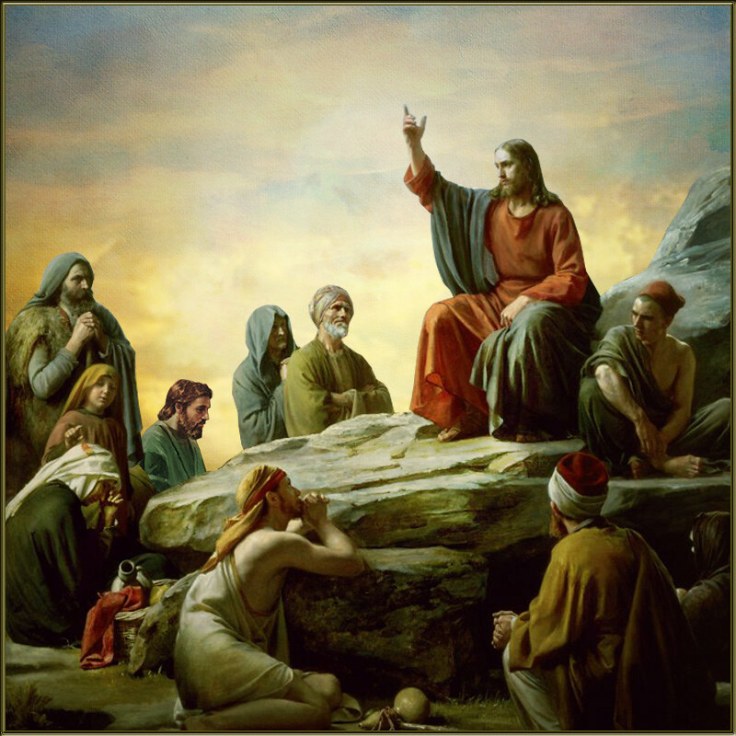
There is an interesting passage in Jesus’ Sermon on the Mount in which Jesus uses the term “Lord.” He warns that not all those who use the phrase, “Lord, Lord” will enter the Kingdom of Heaven.

21 “Not all who sound religious are really godly people. They may refer to me as ‘Lord,’ but still won’t get to heaven. For the decisive question is whether they obey my Father in heaven. 22 At the Judgment many will tell me, ‘Lord, Lord, we told others about you and used your name to cast out demons and to do many other great miracles.’ 23 But I will reply, ‘You have never been mine. Go away, for your deeds are evil.’ (Matthew 7:21-23 The Living Bible)

We can use the name “Lord” and still not understand how fully Sovereign and Holy He is. When we acknowledge Jesus as “Lord”, we may simply mean that we think of Jesus (and the Father) as a “Lord” over certain aspects of our lives– He controls the weather, or we can pray to Him to change our present circumstances or make someone else do what we can’t make them do. But Jesus is not just a “Lord.” He is THE LORD–He is Adonai. This name (when printed in all caps) is often used as a substitute for the given Holy Name of God (Yahweh or YHWH). It IS who He IS– the One LORD over all creation. The One who is the Master of ALL. If we call Him, “Lord,” but ignore what He says, and only turn to Him as a last resort, or use His name only to sound Righteous, we are literally taking His Name in Vain and breaking the third Commandment!

What amazes me is that THE LORD of the universe wants to hear from me! He has no need of a relationship with me; there is absolutely nothing that I can bring to Him– even my obedience is only an acknowledgement of who He already IS, and the power He already has over me. He CAN make me obey Him; He has the power to circumvent my will and impose His will upon it. Yet, He chooses to ask me to follow Him; He not only tells me to obey Him, He tells me why and how! And He gives me the power (through His Holy Spirit) to do it!

God is ADONAI– He is THE LORD! And He is patient, compassionate, and humble. When Jesus came, lived among us, and died on the cross, it wasn’t because any of us deserved His substitutionary sacrifice for our Sin. It was an extension of His nature AS “LORD.” And isn’t that worth a prayer of worship today!

April Fools

Yes, I know I’m early– April begins tomorrow, and the first of April is known as “April Fool’s Day.” It’s a day for pulling practical jokes and trying to “fool” people with fake news stories (actually, that can happen any day of the year, but it’s usually more obvious on April first). And when people tomorrow sit on a whoopee cushion, or bite into a frosted bagel, thinking it’s a donut, or they pass on a “breaking” news story about alien invasions, they will be laughed at and labeled “fools.”

But the Bible has a different outlook. We laugh at people who are deluded by headlines and gags; God warns us not to be deluded by our own thoughts and feelings.

The fool says in his heart, ‘There is no God.’ They are corrupt, their deeds are vile; there is no one who does good. The Lord looks down from heaven on all mankind to see if there are any who understand, any who seek God. All have turned away, all have become corrupt; there is no one who does good, not even one. Do all these evildoers know nothing?” Psalm 14:1-4 (NIV)

This doesn’t mean that corrupt people are corrupt merely because they are stupid, ignorant, or gullible, or that those who claim “there is no God” just don’t know any better. In fact, many atheists and agnostics know more about Biblical scholarship that most people who claim to be Christians! And many who claim to be Christians behave as though they don’t believe in or have any reverence for God!

What it IS saying is that even intelligent and well-read people can “fool” themselves into believing that God is irrelevant to the way they live their lives. Because they have not seen God act in dramatic fashion to bring justice– either punishment for their own corruption, or punishment for someone else’s injustice against them, they have concluded that God does not see, does not care, does not answer, or does not exist. They may be intelligent; they may even have a personal moral code of a sort. They may even base their “personal” morality on principles from the Bible. But they deny that God has any power or authority over their life. And this is just as true in the lives of people who carry the name of Christ as it is among atheists!

So why does the Psalmist call such people “fools?” Because God DOES see, He DOES bring Justice, He DOES answer– in His way and His timing. And when we forget that, or refuse to come to terms with that, we begin thinking that WE are in God’s place– that WE have the power and authority to do whatever we think is right or just and we can ignore God’s word, His warnings, and His sovereignty–or whatever parts of those we find inconvenient.

And many “fools” live their lives believing they are smarter, cleverer, and wiser than those who revere God. After all, their life circumstances are not so different from those who practice reverence and obedience– often they are wealthier, healthier, and more successful than their neighbors! What is the “reward” of being humble, obedient, and following a lot of “outdated and irrelevant” Biblical principles? In fact, on the face of it, it looks as though Christ followers are the real “fools!” We cannot “prove” God’s power in our lives if we are acting in our own power or measuring our life only through our current circumstances.

The Apostle Paul addresses this in 1 Corinthians, where many new believers were doubting the truth of the Resurrection. This is a central teaching of the Christian church, and yet it is a difficult reality to explain and teach to those who do not believe in life after death. A person who adopts a set of moral principles– even those taught by Jesus Christ– but doesn’t believe in the Resurrection of Christ can’t truly be called a “Christ-follower” or a “Christian.” But without the Resurrection, there is no life-changing power in a mere set of man-made rules, or the teachings of a dead folk hero.

We have preached that Christ has been raised from the dead. So how can some of you say that no one rises from the dead?  If no one rises from the dead, then not even Christ has been raised.  And if Christ has not been raised, what we preach doesn’t mean anything. Your faith doesn’t mean anything either.  More than that, we would be lying about God. We are witnesses that God raised Christ from the dead. But he did not raise him if the dead are not raised.  If the dead are not raised, then Christ has not been raised either.  And if Christ has not been raised, your faith doesn’t mean anything. Your sins have not been forgiven. Those who have died believing in Christ are also lost. Do we have hope in Christ only for this life? Then people should pity us more than anyone else. But Christ really has been raised from the dead. He is the first of all those who will rise from the dead. 1 Corinthians 15: 12-20

How does this relate to the pursuit of Prayer? If we pray to someone who “might” exist or who “may” hear us when we call, if we pray to someone who “probably” has the power to heal the sick or break the power of addiction, we really aren’t praying– we are foolishly practicing wishful thinking–we are gambling with our faith. AND, if we are praying, but then acting as though God won’t answer, we will not wait for His wisdom or wait to see His power at work in our lives. Instead, we will act on our own convictions, with our own limited understanding of the consequences (intended AND unintended) of our actions.

We can pray with confidence because God is Real; He really is Good; and because Christ really did rise from the dead in Power and Glory. Otherwise, we are praying in the mushy desire that God will rubber-stamp our requests, or that our daily circumstances are greater than God’s eternal promises. Let’s not fall into “foolish” thinking tomorrow– especially as it applies to the power of Prayer!

Free to Forgive

“Forgive us our trespasses as we forgive those who trespass against us.” (Matthew 6:12)

Imagine being a prisoner and being told that you were free to leave! Now imagine someone refusing to leave their prison cell, and choosing to stay locked up! Why would anyone do such a thing? And yet, there are stories of prisoners who have been freed– some of them found innocent of the crimes for which they were being held–who cannot seem to adjust to freedom.

For some, the issue is legal. Even though they have been exonerated, or have served out their sentence, they still face legal consequences–even if their conviction was overturned, or their sentence fulfilled, they still wear the tag of “convicted felon.” Their record, even if legally overturned, still hangs over their head when they apply for jobs, try to register to vote, or attempt to establish credit. For most, however, the issue is psychological. They still wear the imaginary label, “guilty.” “Not fit for freedom.” “Incorrigible.” And often, society does nothing to remove those labels, but rather reinforces the idea that once found guilty, a person can never redeem their life or legacy.

As Christians, we have been given a full pardon for our sins– regardless of whether we have spent time in a physical prison or not. We are free! But we can continue to live as though we are in prison– and worse, we can continue to put ourselves in a prison of unforgiveness toward others.

“If we confess our sins, He is faithful and just to forgive us our sins, and to cleanse us from all unrighteousness.” (1 John 1:9) God does not keep us in a prison of guilt and shame. He is faithful to forgive us, redeem us, and renew our mind and spirit. But part of that cleansing involves letting go of our “right” to hold grudges and cling to old hurts and bitterness toward others. God is faithful to forgive US; He is also faithful to act with justice on our behalf. In forgiving others, we are not denying the justice we deserve. And in forgiving us, God does not deny justice to those whom we have hurt!

God wants to give us true freedom– freedom from guilt and freedom from the burden of injustice. HIS shoulders are big enough to offer both– perfect freedom, and perfect justice. We are allowed to be free of both burdens when we trust God to take care of it all. And we are allowed to walk out of the prison of guilt, shame, bitterness, anger, vengeance, pride, self-righteousness, and self-loathing.

Let’s face it– we have all sinned. All of us have said or done things that have hurt others. We may not know the extent of the damage our words and actions have done, just as others may not be aware of how they have hurt us. And “hurting” people often hurt others in reaction. Jesus paid the price for our sins when He offered Himself on Calvary. His sacrifice stops the cycle of “unavenged” hurt.

Sin still continues to hurt us. Forgiveness doesn’t seek to pretend that what happened never happened, or that it didn’t matter, or that our hurt isn’t real and tragic. But forgiveness allows us to walk out of the prison of living with the label “victim” or “convict” that Sin slaps on our forehead or in our heart. It allows us to breathe the free air of God’s grace and the hope of a joyful, productive, courageous future!

Do I Serve or “Deserve?”

It struck me just the other day how similar these two words are in English. To serve is to work for; to perform a duty; to labor on behalf of someone else. A servant performs duties for a master; a worker serves his or her employer; I serve my customers as they visit my shop. To “deserve” is to work in such a way, or to show such qualities as to merit reward (or punishment).

Much of our Christian life here on earth is centered around service. I serve at church; “I serve a risen Savior;” even this blog is a way of serving– sharing the Gospel and what I continue to learn about prayer. Praying for others is a way of serving them.

But much of our culture centers around what we “deserve.” Even our service is often qualified and judged as being more or less worthy than other service. If I serve on a board of directors, it is considered more worthy, more deserving of respect, than if I serve as a janitor, a junior clerk, or a night watchman. If I serve in a public capacity as an elected official or an ambassador, I am considered more deserving than if I serve as a humble citizen. We see some positions as deserving of more money, more power, more respect, and more worth.

But that is NOT the way God sees our service. God gives good gifts, not because we “deserve” them, but because it is His nature to give. God sends the sunshine and the rain to everyone, regardless of whether they have “earned” a sunny day or “deserve” lovely flowers to grow in their garden. Similarly, when God allows for natural disasters, they affect both “good” and “bad” people in a region. Occasionally, God will show His divine favor by sparing a group, as He did with the Israelites in Egypt. The Egyptians were victims of ten plagues, while the Israelites, living in the land of Goshen, were spared. But that wasn’t because the Israelites “deserved” to be spared, nor that every Egyptian was “deserving” of punishment. Rather, the horror of slavery and oppression of the Israelites caused God to show His righteousness and His power to save those who were being unjustly treated. (A lesson our world has yet to fully learn!) And God promised Abraham, Isaac, and Jacob that He would be with their descendants forever, saving them from those who would oppress them. But in daily life around us, innocent people often struggle, while “bad” people seem to prosper. Why doesn’t God give us what we “deserve?”

What we “deserve” in this life is the consequence of our sin and rebellion against God’s holiness–and that is DEATH. A God without any mercy would simply allow for those consequences to take effect without any opportunity to repent or to experience His Blessing. God does NOT give us what we “deserve” here on earth. However, He notices our “service”– our desire and capacity to do good–at every level. He does not give higher value to those who serve in positions of power or authority– in fact, Jesus taught just the opposite:

25 But Jesus called them to him and said, “You know that the rulers of the Gentiles lord it over them, and their great ones exercise authority over them. 26 It shall not be so among you. But whoever would be great among you must be your servant,27 and whoever would be first among you must be your slave,  28 even as the Son of Man came not to be served but to serve, and to give his life as a ransom for many.” Matthew 20:25-28 ESV

Prayer often seems like a humble service– we often pray alone or in small groups. Very few people are praised for being “prayer warriors,” and many pray without anyone even knowing about it. Except God knows. He hears and He delights in our prayers. We don’t pray in order to “earn” God’s favor, or anyone else’s approval. But we pray to a God who gives us far more than we “deserve.” And we serve a God who delights in even the humble acts we do for others. A God who has promised us Eternal life with Him in Heaven! Not as a reward for our service; not based on our worthiness or self-righteousness, but based on the worthiness of Jesus! Heaven is our reward for His great sacrifice. We don’t “deserve” it, but we can rejoice in it, even as we serve quietly and humbly here on earth.

Pharisee Prayers

He also told this parable to some who trusted in themselves that they were righteous, and treated others with contempt: 10 “Two men went up into the temple to pray, one a Pharisee and the other a tax collector. 11 The Pharisee, standing by himself, prayed[a] thus: ‘God, I thank you that I am not like other men, extortioners, unjust, adulterers, or even like this tax collector. 12 I fast twice a week; I give tithes of all that I get.’ 13 But the tax collector, standing far off, would not even lift up his eyes to heaven, but beat his breast, saying, ‘God, be merciful to me, a sinner!’ 14 I tell you, this man went down to his house justified, rather than the other. For everyone who exalts himself will be humbled, but the one who humbles himself will be exalted.” Luke 19:9-14 (ESV)

I study prayer. I write about prayer. But I am not an “expert” on prayer. That is not to say that one cannot become proficient in prayer or learn to pray “better.” But prayer is ultimately the pursuit of a relationship. I can pray eloquently in public. I can pray earnestly at home. I can pray fervently every day. And I will still pursue prayer– “more” “deeper” “better” prayer.

But it can be easy to fall into the trap of thinking that my relationship with God is based on my own efforts. That the “more” or “better” I pray, the more God will listen; the more God will accept me. That is a lie. God doesn’t want my “best.” He wants my all. He wants me to come to Him “just as I am”– not in an idealized version of myself.

Jesus spoke of this kind of prayer in the parable of the Pharisee and the Sinner. The Pharisee knows how to pray eloquently about himself. He is confident in his own righteousness. He does not need to ask God for anything. He really doesn’t need to thank God for anything. He has secured his own righteousness in his own eyes, and he wants to thank God for noticing (and surely rewarding?) his goodness.

We are sinners saved by grace. Yet we often act like sinners saved by our own cleverness in accepting God’s gracious gifts. Sure, Jesus paid a price for our sin on Calvary– but that was nearly 2,000 years ago. We are saved! We are justified! We “get it.” And our prayers are offered up in pride and self-confidence. God will hear us. God loves us. God will be impressed by our discipline and our fervor. When we do this, we are like the arrogant Pharisee in the parable. Such prayers do not honor God. They do not honor the work of the Cross. They do not reflect a right relationship with our LORD and Savior.

However, we are not exactly like the Sinner in this parable, either. If we have confessed our sins, and believe on Jesus Christ, our sins HAVE BEEN forgiven, and we have been justified. We do not need to offer sacrifices or beg for mercy over and over again for our past offenses. Our guilt has been washed away. We come humbly, but we come as sons and daughters of the King– co-heirs with Jesus.

God does not want wimpy, doubtful prayers. He does not want us to waver or hide from Him. He wants us to come boldly to the throne of Grace (See Hebrews 4;14-16). But we do so knowing that it is Jesus’ righteousness that gives us the right and His love that gives us the desire to come. It is the finished work of the Resurrection that makes us confident. We should pray honestly and humbly–whether in thanksgiving or confession of new sins– but with confidence and joy in our restored relationship with God through Jesus Christ.

Let us never forget that we pray to an all-powerful, Holy God, who is also gracious and merciful. We can come with TRUE thanksgiving for what God has done; for who He is; and for who we are IN Him.

“Lord, I thank you that YOU are not like other men and women. I thank you that You have made a way for me to be cleansed. I thank you that no matter what I have done, or what I do, Your love for me never changes. And I thank you that You listen to, and answer my prayers! You are Holy, Faithful, and True.”

Choices

I like having choices. When I go to a restaurant, I get a menu, with several choices– appetizers, entrees, beverages, desserts. I have choices at the grocery store– brand X cereal or brand Y, different sizes of laundry detergent, which cucumber to put in a produce bag– sometimes even a choice between paper and plastic and reusable bags! I have a choice to buy or rent a house or apartment/condo. I have a choice about the car I drive or the choice not to drive, but to walk or take public transportation. I choose which church to attend, or not to attend at all. I choose when I get up in the morning and when I go to sleep. I choose what to wear each day. I choose to obey the law, including speed limits on the highway and slowing down in school zones, paying whatever taxes are due, and registering for the census, voting, and other civic duties.

Many of these choices seem benign. It doesn’t really matter to anyone else which brand of cereal I buy or when I eat it, or even if I decide not to eat it, but end up throwing it out. It doesn’t matter to most people where I live, or go to church, or what I am wearing. It doesn’t hurt anyone else if I drive a couple of miles faster than the speed limit on a back road somewhere.

But some choices DO matter– they matter a lot. If I choose to drive at high speed through a school zone, I might end up accidentally killing a student or school worker. If I live in a house or apartment I cannot afford, or if I refuse to maintain my house or apartment, I may end up evicted or homeless. If I choose to use drugs– even prescription drugs– in an unwise manner, I may end up in the hospital or in the cemetery! And I may hurt others around me in the process.

I live in a nation that prizes “freedom” and “freedom to choose.” But in the past century, more and more voices are being raised in an effort to make all choices “equal.” And they are not. Many of our “choices” are in direct contradiction to the Word of God, to traditional values, and even to common sense! Our choices have consequences– some benign, and some catastrophic. Voices are shouting about their “right to choose” even as they are also raised in righteous indignation about others’ rights and choices.

I could speak to this for days on end, defending my own choices, and pointing out which “choices” break my heart or offend me. But I feel compelled to point out just three things to consider about individual choices:

  1. How does this choice honor God? I think it is easy to focus on “big” choices when we think of this, but I have been challenged lately to see how even my “easy” and “little” choices honor Him. Does it really matter which brand of cereal I eat in the morning? Probably not. But what about brands and manufacturers that support causes that do not honor God? Most of the time, I am unaware of such considerations. But the money I spend on my favorite sugary breakfast treat may help sponsor evil. And if I am aware of which manufacturers are giving large donations to causes I despise, but I am still buying their products every week, I am helping to sponsor that evil.
  2. How does this choice impact others? We DO have the freedom to choose our actions, but we do NOT have freedom from the consequences of those actions. “My Body, My Choice” looks good on posters and banners, but things like abortion or gender reassignment have an impact beyond a single person. Abortion always ends with the death of a second “body”– one without any choice in the matter. Gender reassignment impacts more than just one person– it impacts their present and future relationships, as well as impacting their future physical health and reproductive system. It is also important to establish whether my choices are made to try to please or influence others. It’s easy to blame others after the fact, citing “peer pressure” or claiming “I didn’t have another choice,” but is that really true, or was one choice just a lot easier or more popular than another? That same group that pressured you make certain choices– will they be there for you afterward? No matter the consequences? Will they still be your friends if you make a different choice?
  3. Does this choice help me grow into a better person? Many of our choices come from wanting to be a happier, wealthier, or more popular person– NOT a healthier, more mature, or wiser person. And most of our choices focus on immediate gratification, rather than long-term growth. Doing something because you have the “right to choose” is not the same as “doing the right thing.” Doing the right thing often involves sacrifice and even a season of suffering. Our present choices–even the small ones– will impact our future circumstances, and our development as an individual. Eating a donut today may be tasty, but eating donuts every day may lead to obesity, diabetes or heart disease, and even a lessening of enjoyment for donuts– they’re no longer a tasty treat, but a habitual threat to my health!
  4. Am I angry and defensive about my “choice?” Years ago, I was stopped for speeding on my way to work. Of course, I had been running a little late, and being stopped made me even later. I had to explain my tardiness to my boss, who dismissed the whole incident with a sly “next time, don’t get caught..” But one of my co-workers self-righteously handed me a two-page pamphlet on the evils of driving over the speed limit. At that time, I was indignant and offended. (I still would be a bit miffed– I don’t agree with either of the reactions I got that day, but that’s another post…) As I have grown older, however, I have come to value the three questions above– and it changes my perspective. I KNOW it’s “wrong” to drive over the speed limit. I know many people do it anyway and get away with it. But the bottom line is this–speeding does not honor God. It does not help anyone else, and could potentially harm someone. And it does not grow my character. I don’t automatically become a “good” person if I DON’T speed– let me be clear about that. But I do grow in character when my choices are made out of a heart that prioritizes God and others over my own selfishness (and procrastination!) When I find myself getting angry and defensive, I need to consider whether or not it is really guilt. If I wasn’t speeding that day, I wouldn’t have had any reason to be angry with my co-worker or ashamed of being “caught.” If someone is angry and defensive about his or her behavior, it is often brought about by guilt, shame, and a rebellious spirit, tired of defending what everyone else (and sometimes their own conscience) tells them is “wrong.”

We make choices every day– some benign, some “good,” some “bad.” Let’s pray for wisdom to make the best choices, confess the “wrong” choices, and offer encouragement and truth, rather than judgment, to those around us.

Today, I’m praying about the “choice” of abortion and its impact on my nation (as well as worldwide). In the 50+ years since Roe v. Wade attempted to make abortion “legal” in all 50 of the United States, over 60 million abortions have been reported in the U.S. during those years.* This figure does not include other nations, unreported (back alley or non-clinical) abortions, or natural miscarriages. Not only does this represent the “choice” to end the lives of over 60 million precious individuals, it represents millions of women (along with men and other family members) who have been impacted by the deceptive offer of “freedom” and the increasing pressure to make this “choice” seem both normal and healthy. For my friends, family, and others who have made this choice– my heart aches for what you have been through, and I rejoice with those of you who have found Grace and renewed hope through Jesus. God loves you– YOU, not your past choices– and welcomes you to choose Him today and every day. For those who have not been in a position to be tempted by this “choice”– I pray that we live with compassion, and that we stand up for and speak up for TRUTH and LIFE– not self-righteousness and fear.
* A more conservative estimate still places the number at well over 40 million
https://www.pewresearch.org/short-reads/2024/03/25/what-the-data-says-about-abortion-in-the-us/
https://www.statista.com/statistics/185274/number-of-legal-abortions-in-the-us-since-2000/

The Offer of Life or Death

11 Now what I am commanding you today is not too difficult for you or beyond your reach. 12 It is not up in heaven, so that you have to ask, “Who will ascend into heaven to get it and proclaim it to us so we may obey it?” 13 Nor is it beyond the sea, so that you have to ask, “Who will cross the sea to get it and proclaim it to us so we may obey it?” 14 No, the word is very near you; it is in your mouth and in your heart so you may obey it. 15 See, I set before you today life and prosperity, death and destruction. 16 For I command you today to love the Lord your God, to walk in obedience to him, and to keep his commands, decrees and laws; then you will live and increase, and the Lord your God will bless you in the land you are entering to possess. 17 But if your heart turns away and you are not obedient, and if you are drawn away to bow down to other gods and worship them, 18 I declare to you this day that you will certainly be destroyed. You will not live long in the land you are crossing the Jordan to enter and possess. 19 This day I call the heavens and the earth as witnesses against you that I have set before you life and death, blessings and curses. Now choose life, so that you and your children may live 20 and that you may love the Lord your God, listen to his voice, and hold fast to him. For the Lord is your life, and he will give you many years in the land he swore to give to your fathers, Abraham, Isaac and Jacob.
Deuteronomy 30: 11-20 (NIV)

At dawn he appeared again in the temple courts, where all the people gathered around him, and he sat down to teach them. The teachers of the law and the Pharisees brought in a woman caught in adultery. They made her stand before the group and said to Jesus, “Teacher, this woman was caught in the act of adultery. In the Law Moses commanded us to stone such women. Now what do you say?” They were using this question as a trap, in order to have a basis for accusing him.
But Jesus bent down and started to write on the ground with his finger. When they kept on questioning him, he straightened up and said to them, “Let any one of you who is without sin be the first to throw a stone at her.” Again he stooped down and wrote on the ground.
At this, those who heard began to go away one at a time, the older ones first, until only Jesus was left, with the woman still standing there. 10 Jesus straightened up and asked her, “Woman, where are they? Has no one condemned you?”|
11 “No one, sir,” she said.
“Then neither do I condemn you,” Jesus declared. “Go now and leave your life of sin.”
St. John 8:2-11

Everyone’s a Critic!

Social Media can be a wonderful thing– it connects us, and helps us share good news, prayer requests, events, photos, and more. It can help us make new friends, get re-acquainted with old friends, learn new skills, and be more informed.

Sadly, though, social media can also bring out the absolute worst in us. Social media is immediate– we see or hear something, react to it emotionally, and respond without taking time to think. But social media is not really social. It is social only in the “virtual” sense. And that creates problems. There is nothing like being anonymous behind a computer screen to turn us into the biggest bullies, critics, and self-indulgent know-it-alls. Worse, we find it easy to spread vicious gossip, misinformation, and negativity by pressing a single “share” button…we didn’t even say it!

Photo by rawpixel.com on Pexels.com

But we DID send it out. And others saw it, heard it, felt it– for better or worse. Even the “good” responses– followers, “likes”, smiling emojis, and such–can feel impersonal or even forced. But what about the comments that reveal contempt, anger, sarcasm, or hatred? Critical, biting, self-righteous, self-gratifying, smug comments and posts.

“Oh, but I would never do that…” Really? I have been guilty of passing along posts (or even creating posts) that drip with sarcasm, or gleefully correct people or groups I feel have said something “wrong”. I’ve even passed along Bible verses with smug captions.

“Well, everyone is a critic.”
“I’m only saying what is true.”
“Doesn’t the Bible tell us to warn others and speak out against sin?”

There are many “gifts” of the Holy Spirit–teaching, preaching, healing, even prophecy– but nowhere in the Bible does it say we are “gifted” to be critics, nags, or to speak out in contempt, anger, and malice. In fact, the Bible contains several warning against such behavior:

Judging Others
“Do not judge, or you too will be judged. For in the same way you judge others, you will be judged, and with the measure you use, it will be measured to you.
“Why do you look at the speck of sawdust in your brother’s eye and pay no attention to the plank in your own eye? How can you say to your brother, ‘Let me take the speck out of your eye,’ when all the time there is a plank in your own eye? You hypocrite, first take the plank out of your own eye, and then you will see clearly to remove the speck from your brother’s eye.

https://www.biblegateway.com/passage/?search=Matthew+7%3A1-5&version=NIV

Galatians 5:15
But if you bite and devour one another, take care that you are not consumed by one another.
Philippians 2:14-16
Do all things without grumbling or disputing; so that you will prove yourselves to be blameless and innocent, children of God above reproach in the midst of a crooked and perverse generation, among whom you appear as lights in the world, holding fast the word of life, so that in the day of Christ I will have reason to glory because I did not run in vain nor toil in vain.
James 4:11-12
Do not speak against one another, brethren He who speaks against a brother or judges his brother, speaks against the law and judges the law; but if you judge the law, you are not a doer of the law but a judge of it. There is only one Lawgiver and Judge, the One who is able to save and to destroy; but who are you who judge your neighbor?

https://bible.knowing-jesus.com/topics/Criticism,-Amongst-Believers

For more, visit: https://deeptruths.com/bible-topics/criticism.html

This does not mean that we are to stay quiet about evil, or excuse sin. But we are to do so in love, not with contempt for others, or pride in our own understanding.

Moreover, God, who has the right to be critical and pass His perfect, Holy judgment on us, is the very one who offers us Grace and Mercy, encouragement, and hope!

Therefore, there is now no condemnation for those who are in Christ Jesus, because through Christ Jesus the law of the Spirit who gives life has set you[a] free from the law of sin and death. For what the law was powerless to do because it was weakened by the flesh,[b] God did by sending his own Son in the likeness of sinful flesh to be a sin offering.[c]And so he condemned sin in the flesh, in order that the righteous requirement of the law might be fully met in us, who do not live according to the flesh but according to the Spirit. (Romans 8:1-4 NIV)
https://www.biblegateway.com/passage/?search=Romans+8&version=NIV

God is NOT our critic– He is our Savior, our advocate, our Father.

Lord, may I honor You by my words and deeds today–including my activity on Social Media! May I demonstrate Your love, encouragement, mercy, and goodness today.
Amen

Blog at WordPress.com.

Up ↑