Poor Fruitcake– the butt of dozens of Christmas jokes. Someone once said that there were 20 Fruitcakes produced in France in 1541– and they are all still in circulation today! I know a few people who like fruitcake, but most people just make fun of it. Technically, it IS a cake, but it is mostly made up of fruit and nuts soaked in rum or brandy or candied for preservation. Fruitcakes can be mailed, shipped, and saved for months without rotting, but the fruits never taste fresh, and much of their flavor is overwhelmed by the sugars used to preserve them. Fruitcake is heavy, and sweet. It is full of things that are “good for you,” but the end result is not very healthful.
I was reading the other day in Galatians, and a couple of days later in Philippians– two passages that speak of Christians producing fruit. Our lives are to be characterized by virtues and acts of service that bring health and healing, joy and peace to those around us. And these virtues are the products of our Faith in Action– of The Holy Spirit working in and through us.
22 But when the Holy Spirit controls our lives he will produce this kind of fruit in us: love, joy, peace, patience, kindness, goodness, faithfulness, 23 gentleness and self-control; and here there is no conflict with Jewish laws.
Galatians 5:22-23 (Living Bible–emphasis added)
So this is my prayer: that your love will flourish and that you will not only love much but well. Learn to love appropriately. You need to use your head and test your feelings so that your love is sincere and intelligent, not sentimental gush. Live a lover’s life, circumspect and exemplary, a life Jesus will be proud of: bountiful in fruits from the soul, making Jesus Christ attractive to all, getting everyone involved in the glory and praise of God.
“Fruit of the Spirit” is not something we can manufacture ourselves. Only God’s Spirit at work IN us can produce such fruit. And, while it is Fruit that will last, it doesn’t need to be dried or candied or soaked for preservation. Unlike the fruit in Fruitcake, the Fruit of the Spirit is eternally fresh and bursting with life and flavor. There is nothing wrong or evil about Holiday Fruitcake. But it cannot compare with fresh fruit for wholesomeness and healthfulness.
Sometimes, we try to manufacture our own “Fruit of the Spirit.” And this can be far worse than a harmless but calorie-laden Holiday Fruitcake. Even those who are opposed to Christ can manufacture a certain amount of Joy, or Patience, or Self-Control. Anyone can appear Gentle or Kind when they choose. But, separated from the source of life and growth, we cannot produce fresh fruit. Our Joy may be soaked in Rum. Our Patience may dry up. Our Kindness may be candy-sweet, but hiding malicious or selfish motives. Or we may surround our fruit with worldly “wisdom,” disguising and transforming it with cake and nuts.
This holiday season, let’s not become dried out or artificially sweetened in our acts of service and Love. Let’s be producers of Godly Fruit– Love that reaches out to the Lost, the lonely, and the “unlovable” with true love and not just sentimentality; Joy that bubbles up from a thankful heart and a transformed mind; Peace that transcends our current trials and circumstances; Patience that endures hardship without losing hope; Kindness that wraps itself around the unworthy and never tires; Goodness that knows no conceit and seeks no credit; Faithfulness that inspires and produces hope in a faithless world; Gentleness that smooths over troubled waters without being overcome; and a rock-solid Self-Control and steadiness that produces trust– not in our own power or wisdom, but in the One who produces it in our lives. We should be humble and grateful, teachable, and ready to forgive, encourage, and pray for others.
8 In the sixth year, in the sixth month on the fifth day, while I was sitting in my house and the elders of Judah were sitting before me, the hand of the Sovereign Lord came on me there. 2 I looked, and I saw a figure like that of a man. From what appeared to be his waist down he was like fire, and from there up his appearance was as bright as glowing metal. 3 He stretched out what looked like a hand and took me by the hair of my head. The Spirit lifted me up between earth and heaven and in visions of God he took me to Jerusalem, to the entrance of the north gate of the inner court, where the idol that provokes to jealousy stood. 4 And there before me was the glory of the God of Israel, as in the vision I had seen in the plain. 5 Then he said to me, “Son of man, look toward the north.” So I looked, and in the entrance north of the gate of the altar I saw this idol of jealousy. 6 And he said to me, “Son of man, do you see what they are doing—the utterly detestable things the Israelites are doing here, things that will drive me far from my sanctuary? But you will see things that are even more detestable.” 7 Then he brought me to the entrance to the court. I looked, and I saw a hole in the wall. 8 He said to me, “Son of man, now dig into the wall.” So I dug into the wall and saw a doorway there.9 And he said to me, “Go in and see the wicked and detestable things they are doing here.” 10 So I went in and looked, and I saw portrayed all over the walls all kinds of crawling things and unclean animals and all the idols of Israel. 11 In front of them stood seventy elders of Israel, and Jaazaniah son of Shaphan was standing among them. Each had a censer in his hand, and a fragrant cloud of incense was rising. 12 He said to me, “Son of man, have you seen what the elders of Israel are doing in the darkness, each at the shrine of his own idol? They say, ‘The Lord does not see us; the Lord has forsaken the land.’” 13 Again, he said, “You will see them doing things that are even more detestable.” 14 Then he brought me to the entrance of the north gate of the house of the Lord, and I saw women sitting there, mourning the god Tammuz. 15 He said to me, “Do you see this, son of man? You will see things that are even more detestable than this.” 16 He then brought me into the inner court of the house of the Lord, and there at the entrance to the temple, between the portico and the altar, were about twenty-five men. With their backs toward the temple of the Lord and their faces toward the east, they were bowing down to the sun in the east. 17 He said to me, “Have you seen this, son of man? Is it a trivial matter for the people of Judah to do the detestable things they are doing here? Must they also fill the land with violence and continually arouse my anger? Look at them putting the branch to their nose! 18 Therefore I will deal with them in anger; I will not look on them with pity or spare them. Although they shout in my ears, I will not listen to them.”
Ezekiel 8 (NIV) via biblegateway.com
We make a big fuss in our culture about privacy. What I do in my own home, with my own life, in my own time, is private. And, for many of us, our privacy is sacred. We rage and fight and panic about who may be invading our privacy– listening in or watching us when we least expect it.
I must admit, I don’t like the idea of anyone spying on me or listening in on my private moments. I especially don’t like the thought of someone manipulating or using my private words, images, or ideas without my knowledge or consent.
But there is a danger in our quest for privacy– we are inclined to believe that anything we do in private CANNOT ever be discovered; that we are safe to do whatever we please, regardless of the consequences. The internet has made this idea even more dangerous–we can be private and anonymous behind the screen. We can say things we know we shouldn’t; we can view things we would be ashamed to acknowledge watching; we can explore fantasies, mask our inadequacies, pretend to be who and what we are not; all behind the “safety” of the screen.
And this is nothing new. In Ezekiel’s day, the moral, legal, political, and religious leaders of the day thought they were “safe” to indulge in idol worship behind closed doors. But more than that, they believed that God would never see as they practiced divination, witchcraft, ritual prostitution, violent orgies, even child sacrifice! They had built hidden rooms where they practiced vile rites and indulged in the very behaviors they taught others to avoid. Worse, they condemned and vilified others when they “got caught” doing the same things they practiced with impunity. And when prophets came to them with warnings–the very words of God– they had them ruined, imprisoned, tortured, and killed.
In the eighth chapter of Ezekiel, God shows his prophet a vision. He allows Ezekiel to “go behind closed doors” and see the priests and leaders at their worst–over and over again–secret rituals, detestable practices, flagrant disobedience, arrogant rebellion…And all of this was happening as the nations of Israel and Judah had collapsed, and many thousands had died from war, disease, and starvation. People had been sent into exile– defeated, starving, enslaved. Yet their leaders were keeping up an image of righteousness and proud endurance, instead of turning to God for help and hope.
God was very clear–Jerusalem WOULD be captured and destroyed. Babylon WOULD take God’s people captive and send most of them to the sword or to exile. Defiance and pride– especially relying on the great victories of the past– would not save them. Rebellion and violence would not hold back God’s judgment.
The same is true today. It is easy to write about praying and walking closely with God–I’m hidden behind a screen. I can sound righteous and Godly for a few minutes three times a week. And it is easy to point fingers and call out the bad behavior of others behind the anonymity of a computer screen. We need to speak up, speak out, and defend the cause of those who are oppressed, abused, enslaved, and silenced. But we also need to beware that we are not crying, “Shame on you!” from a locked closet, while waving banners or buying merchandise supporting the abusers.
And God sees all of it. What we may find shocking and reprehensible, God has already seen through to its conclusion! God WILL bring judgment and punishment for those who shed blood and bring violence and injustice. But God also sees what I do in the watches of the night; when I’m alone with my thoughts; when I’m not on my guard against what I view on Facebook or YouTube. God knows what celebrity gossip I crave, or what I’m “watching” on eBay. He knows if I am ignoring or justifying evil happening all around me. He watches over my shoulder when I’m reading that new novel, or I’m driving down the road (hopefully not at the same time!), or when I’m wallowing in self-pity or jealousy or anger.
When I read about Ezekiel weeping over the behavior of Israel’s leaders, I am convicted. How often do I weep and seek God’s mercy over the behavior of our leaders–all of them, and not just the ones I voted for? Or do I just fume and post about how awful “they” are (whoever “they” my be) and how “they” need to be punished? How often do I ignore my own bad behavior? I may not have a “hidden room” filled with detestable images and idols, but God is still watching how I react to challenging times. He knows if I am obeying His voice or merely pretending to follow Him while leaning on my own understanding or my own image of self-righteousness. He knows if I have made money, politics, status, safety, health, or even “religion” into idols, hoping that one or more of them will carry me through tough times. He knows if I am condemning others for their bad behavior, while hiding or justifying my own.
I want everyone to see me when I am noble and righteous–but I need to see myself as He sees me every day–His much-loved, and ever-needy, child.
Father, may I be quick to remember that You ALWAYS see me– and that You ALWAYS want me to see You as well. Help me to see You in the middle of challenging times. Help me to see You when I interact with others. Help me to obey You in the private moments when no one else is watching.
Yesterday was Easter (in parts of the world)–the celebration of Christ’s resurrection and victory over Sin and Death. We have much to celebrate. But we also have a mission. We have the assurance of eternity in Heaven, but in THIS world, Jesus warned us, “you will have trouble.” (John 16:33). We will be misunderstood, mocked, and persecuted. We will have to face the temporary consequences of living in a fallen world– anger, greed, abuse, violence, betrayal–even bad weather and natural disasters!
In giving the Beatitudes, Jesus turned common expectations upside-down. Blessed are the poor in spirit; blessed are the meek; blessed are those who are persecuted for righteousness’ sake… We don’t consider poverty, powerlessness, suffering and persecution blessings to be desired. Yet Jesus, the One we follow, gladly endured all of these for our sake! Notice that the “blessing” is the same here as in the first of the Beatitudes– “for theirs is the kingdom of heaven.” The Kingdom of Heaven is not reserved for those who are victorious in their own power or through force of will or extraordinary effort. But it is reserved for those who persevere in the face of evil–those who lean, and those who rest, and those who stand IN THE POWER of God.
Notice, too, that we are blessed if we are persecuted “for righteousness’ sake.” There is no blessing for suffering due to our own stubbornness or foolishness. There is no blessing for those who are persecuted for their own pride and judgmental nature and unforgiveness toward themselves or others. (see 1 Peter 3) https://www.biblegateway.com/passage/?search=1+Peter+3%3A8-17&version=CEV
We live in a culture that celebrates “victimhood.” Those who suffer injustice– even perceived of implied injustice–are considered to have a special status. Those who claim to have been offended or hurt by individuals or groups often demand recognition for their “bravery” or retribution for their suffering. This happens even among certain Christians, who claim to be “persecuted,” when they are merely suffering the consequences of their own hubris and self-righteous posturing. This is a monstrous injustice to fellow Christians who are truly suffering persecution “for righteousness’ sake.”
My prayer today is that I will emulate the example of Christ– that I will serve, humbly, willingly, sacrificially, enduring any persecution that comes as a result, and lifting up fellow Christians who are suffering, as well as their persecutors! For righteousness’ sake– for the sake of the Kingdom of Heaven.
I want to spend some time this month exploring the Beatitudes and how they relate to our prayer life. Today I want to look at Matthew 5:3: “Blessed are the poor in spirit, for theirs is the kingdom of Heaven.”
How do I approach God’s throne of Grace? Do I come with a list of what I want, and what I’ve accomplished for God? Do I come reluctantly, grudgingly, holding back some part of who I am or who I have been? Do I come flaunting my self-righteousness? Or do I come empty of all but my desire to be in the Presence of my Maker?
Many people have interpreted (and misinterpreted) this phrase. Jesus does not insist that we be financially destitute, or drained of all enthusiasm or emotion. But He does require that we come recognizing our need of Him. We may not be physically needy in the moment– we may be well-fed, comfortable, or even wealthy by human standards. But we are all in need of God’s presence and His provision. On my own, I may believe that I have earned all that I seem to possess, but I cannot supply the air that I breathe, or guarantee that my health will remain perfect, or that I will be able to keep what I think I own, or force others to accept or respect me. “Man supposes, but God disposes” is an old phrase, but an accurate one.
When I approach God in prayer, no matter how rich or poor I may seem, I am dependent on God for everything. And this is true for every one of us. So I don’t approach God as someone “needier” or “less needy” than my neighbor. And I don’t approach God with any power to bargain or demand, or even to request– except that God has invited me and sought me out in His Love and Mercy!
And this is the rest of the Beatitude– “for theirs is the kingdom of Heaven.” God has opened up Heaven and invited me to walk with Him, to learn from Him, to receive His blessings, and to live with Him throughout eternity. His riches! His Glory! His Presence! Every time I pray, I trade my poverty for God’s bounty. I trade my confession for His forgiveness. I trade my helplessness for His Wisdom and Power to triumph over adversity and confusion, grief and doubt, sickness and lack.
It is when I come to Christ believing that I possess or control all that I suppose to be “mine,” that I lose the Blessing of His sufficiency and His perfection.
“Thank you, God of Mercy, and Ruler of All, for the privilege of coming to you. I come empty and spent–show me where I am holding on to something less than You, or trying to claim Your wealth as my own. Teach me to rest in the sufficiency of Your kingdom, even as I continue to serve you here on earth.”
21 Not every one that saith unto me, Lord, Lord, shall enter into the kingdom of heaven; but he that doeth the will of my Father who is in heaven. 22 Many will say to me in that day, Lord, Lord, did we not prophesy by thy name, and by thy name cast out demons, and by thy name do many mighty works? 23 And then will I profess unto them, I never knew you: depart from me, ye that work iniquity.
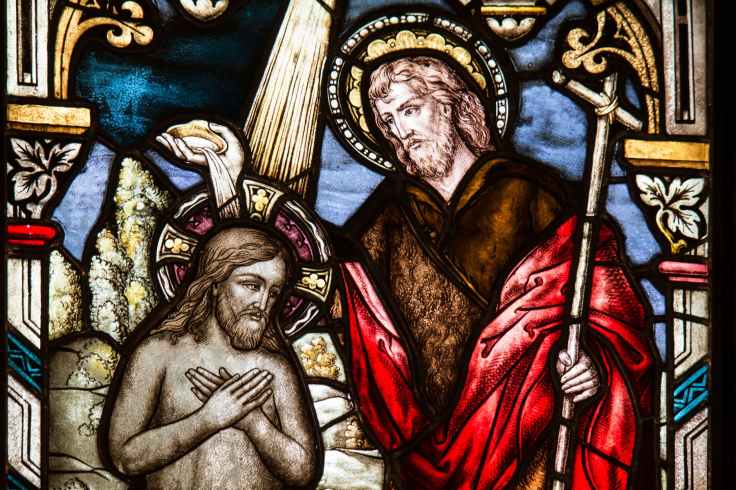
In just the past three weeks, three of my family members and one of my friends have made the decision to be baptized as a public declaration of their decision to live for Christ. All of them (and the others who were baptized at the same times) were baptized by immersion, signifying that they have, spiritually, died to self, been buried, and are raised with Christ to eternal life. This is not a step to be taken lightly, and I have confidence that all four (and more) of those I know are serious in their passion to follow the Lord.
When I write about prayer as a pursuit, I hope to convey that prayer is part of a larger pursuit of seeking God. And seeking God must include acknowledging Him as Lord above all– especially self. Jesus warned about people who claim to follow Him in word, but do not obey Him. It is, unfortunately, very easy to “speak Christian-ese”: to sound righteous and reverent when we are around others who claim to believe, but justify behaviors that may or may not stem from selfish motives.
There are obvious examples of hypocrisy in our world, but in His famous “Sermon on the Mount,” Jesus warns that many who seem to be doing good deeds, and “talking the talk” will not be part of God’s eternal kingdom. We are not to be seduced into thinking that God will be impressed by charitable giving, memorizing Scripture, or working on the Mission field if we are not willing to repent of our “secret” sins and false attitudes. And it is not for us to point fingers at “other” hypocrites– it is for us to humbly assess whether or not we are truly acting in obedience and submission to our Lord, or satisfying our own selfish desires and hoping for God’s stamp of approval.
Prayer should be a two-way communication. We pray to God, but we also listen for God’s guidance, wisdom, conviction, and encouragement. And we must act in obedience, and confess our disobedience if we want to “keep the slate clean” and keep a close relationship. When we refuse, we are just giving God lip service, and using His name to impress others and deceive ourselves. Others may judge us on appearances, but God sees what is in our heart. And “in that day” (v. 22), He will not let imposters through the gates of Heaven.
The Good News is that Jesus doesn’t leave us hanging in verse 23. He goes on to say, “Therefore everyone who hears these words of mine and puts them into practice is like a wise man who built his house upon the rock..” (Matthew 7:24) Jesus is our Lord, but also our Savior and our Advocate. When we call on Him AS our true Lord, He is faithful and just to forgive our sins (1 John 1:9), and His divine power has given us everything we need for life and godliness (2 Peter 1:3a)
The act of Baptism alone does not have the power to save us. The practice of prayer alone has no saving power. But the pursuit of a relationship with Christ depends on such acts of obedience, humility, and trust. And the other good deeds that come from that relationship will not only help others, but will please God and strengthen that relationship. Instead of hearing, “I never knew you,” we can hear, “well done!” Not because of what we’ve done, but because of the partnership we’ve developed in God’s work.
May God bless all those who have recently taken the step of Baptism. And may we all continue to pursue that relationship of dying to self, being buried with Him, and rising to new life in Christ!
I would like to be thought of as a good, honest, decent sort of person. I think most people would say the same; some might claim flippantly that they don’t care, but very few people are indifferent to public opinion. We want to be liked and respected by others– we want to be included. But we also want to be “right.” There is a confidence that comes from knowing that our opinions and morals are shared by those around us, and that we are accepted.
We live in a world full of “right-ness”, but much of what used to be considered good, right, and moral, is now seen as intolerant, mired in sexist or racist traditions, hateful, and “wrong.” And the temptation is to rise up in defense of what we know to be right– to be identified with it, and to claim it as our own. It is tempting to pray that others will “see the light” or even “get what is coming to them” in light of where they stand on moral issues.
But God’s standard is much higher. God loves us all with an unfathomable and everlasting love, but He is not impressed by our self-proclaimed righteousness. Nor does He declare us “better” or “more righteous” than our neighbors based on what we believe or how we argue. “There is NONE righteous, no not one.” (Romans 3:10) Our righteousness comes from Grace by Faith (Ephesians 2:8).
Just because God loves us all, and just because none of us can earn God’s favor by what we do or say, doesn’t mean that morality is relative or even irrelevant. We should still fight to correct faulty characterizations of God and His Righteousness. But we must be careful not to let it become a personal crusade; to let self-righteousness blind us to our own dependence on God’s Grace.
Last time Any One Who Is Without Sin…, I looked at a few verses in the gospel of John (8: 1-11), and wrote on four insights. Today, I’d like to look at some practical implications.
If I am “part of the crowd” following Jesus, how easily do I get distracted by the “Pharisees” and critics? How often do I wander off track, looking at fine points in the scriptures that fit a particular argument? How often do I get caught up in senseless debates, allowing myself to be offended or riled up? Over the past several weeks, I have seen arguments via FB , e-mail, or other social media sites where Christians are using Bible verses, Church traditions, the U.S. Constitution, and other teachings and documents to defend such things as wearing a face mask, defying executive orders, practicing (or not practicing) social distancing, and condemning family, friends, and neighbors for taking a different view. We live in a society that reacts– often instantly and with confidence in our own morality– instead of listening and contemplating. We like building strong arguments to defend…scripture? tradition? interpretation? Jesus did none of these things when confronted by this mob. He didn’t dismantle their argument with more argument– he simply got to the heart of the matter– how to deal with Sin.
How often do I come to Jesus “knowing” the answer before I ask the question? The Pharisees in the story were not really interested in Jesus’ thoughts or wisdom concerning the situation at hand. They assumed that Jesus would have to answer in only one of two ways, and that either way, he would look bad. I may not be trying to “trap” Jesus with my prayers, but often, I AM trying to seek his confirmation, rather than his wisdom and teaching. The Apostle Paul wrote to the Corinthians, “Knowledge puffs up, but love builds up. 2 Anyone who claims to know something does not yet have the necessary knowledge; 3 but anyone who loves God is known by him.” (1 Corinthians 8:1b-3 NRSV) Many times, I am busier “loving” how much I know than learning how much God loves!
For me, one of the most amazing new insights about this passage is that once Jesus introduces the phrase, “Any one who is without sin…” everyone leaves– everyone except the one who has been caught in the act of sinning, and the One who has always been without sin. Dealing with Sin is a very personal thing– both confronting our own sinfulness, and acknowledging God’s perfect righteousness. Everyone in the original crowd came to hear Jesus teach. And they were comfortable letting someone else be humiliated and condemned for her sin. But when their own unrighteousness was introduced into the situation–secret sins, unconfessed sins, pride, prejudice, and more–they melted away. How often do I slink away, unwilling or ungrateful to see Jesus show mercy to someone I find “unworthy,” knowing that I am equally undeserving, knowing that I am not “without sin?” Yet the sinful woman in question is the only one who receives the full light of Jesus’ love and mercy. Dozens of others, eager to hear Jesus’ teaching, missed the greatest lesson of all. In the very next verse, at the very next opportunity to speak, Jesus makes one of the most amazing statements in the Gospels, “12 Again Jesus spoke to them, saying, “I am the light of the world. Whoever follows me will not walk in darkness, but will have the light of life.”(John 8:12 ESV) It’s not just showing up to hear him speak; it’s not just knowing the law–it’s following him that leads to light and life.
Finally, Jesus grants mercy. He doesn’t split hairs about the Law of Moses. He doesn’t dismiss the reality of Sin or guilt. He doesn’t give the woman a long list of do’s and don’ts for the future or a proscribed plan of atonement. He doesn’t give her a blank check to keep sinning. The Bible doesn’t give us an epilogue to the story. We don’t hear whether or not the woman gave up her life of adultery– we assume that she did. But why? Would she have given it up because she had “dodged a bullet” with the mob? Part of the reason she was brought to Jesus in the first place was that Roman law overruled Jewish law. The mob was not likely to stone this woman– especially within the city limits. ( In fact, in the book of Acts, we have the story of Stephen, who was stoned by a mob. He was dragged out of town, after facing trial by the Sanhedrin, and stoned because of his testimony against their unbelief. ) Would the woman’s life have changed because her guilty secret had been exposed, even though she had not been condemned? Or is it more likely that her life changed because she had an encounter with the “One who is without sin,” and found in Him a love greater than condemnation? She hadn’t planned to follow Jesus. She may not have taken his teaching seriously if she had been just “one of the crowd.” She wasn’t singled out because of her beauty or righteousness or knowledge or status. But Jesus poured out on her the fullness of His love and mercy. How would/does such an encounter change my life? Yours?
The Pharisees saw this woman as a pawn worthy of stoning; worthy of condemnation. They brought her, intending to throw “sticks and stones,” accusations, and painful, even fatal words. Jesus used words of healing and hope. May we do the same today– as we approach our neighbors and friends, and as we approach the Sinless one who died in our place.
I was re-reading a familiar passage in the gospel of John recently, and I was struck by a truth I had missed before. In the first part of John 8, there is a story about a woman caught in adultery https://www.biblegateway.com/passage/?search=John+8%3A1-11&version=NIV I have read this story many times, and even heard sermons preached on this passage. What struck me this time wasn’t exactly new material, or a new reading, but a new understanding of a detail that was there all along.
The story begins with Jesus teaching a crowd of people in the temple courts in Jerusalem. His teaching is interrupted by a group of Pharisees and teachers of the law. They have a woman caught in the act of adultery, and they come to Jesus asking his opinion about stoning her. They obviously know the laws of Moses, because they cite them. But they cite only a certain portion of the law, and they want Jesus to weigh in (so they can use his own words to trap him).
Jesus turns the tables, and passively bends down to write letters in the sand. He says only, “If any one of you is without sin, let him be the first to throw a stone at her.” One by one, the accusers and the crowd– everyone except Jesus–melts away. Finally, Jesus asks who is left to condemn the woman. There is no one. Jesus refuses to condemn her, and sends her on her way, telling her to “Go, and sin no more.”
There was already a crowd around Jesus before the Pharisees and teachers arrived. They did not bring this woman to Jesus to get an honest answer to a question, or to bring about justice (for that, they should have brought both her AND the man involved!); they brought her to a very public spot to humiliate her and trap Jesus. She was a pawn in a political and religious game, and she was guilty of a crime that was punishable by death. She was accused and forced to stand before a crowd to be condemned without a trial. So often, I read this passage, and my focus is on Jesus and the woman and the Pharisees– I forget that there is a crowd of ordinary people being “played” by the Pharisees for their own purposes.
Jesus never answers the question at hand. According to the laws of Moses, the woman should be stoned. That is the point the Pharisees want Jesus to address. They have set him up. If he agrees with their interpretation of the laws of Moses, he should insist that the woman be stoned. But this will be in violation of the Roman laws, and will lead to Jesus being arrested by the Romans. But if Jesus upholds the Roman law, he will be turning his back on centuries of Jewish tradition dating back to Moses. The problem is that the Pharisees have resorted to some half-truths. The laws of Moses DO speak of stoning; they speak of adultery being punishable by death– for both the man and the woman involved. However, the Priests and leaders of Israel have not followed this practice. King David committed adultery with Uriah’s wife. Neither one was stoned or condemned to death. There are no records of other adulterous couples being stoned throughout Israel’s history. So it is rather disingenuous for the Pharisees to bring this case to Jesus and ask him to speak judgment where they will not. Jesus knows this is not about actual justice; it isn’t really about the law of Moses– because they are not following it themselves! By turning the tables back on them, Jesus exposes their hypocrisy and failure in front of the very crowds they are trying to impress with their clever plans.
One by one, the woman’s accusers melt away. But it’s not just them, it’s the crowd of ordinary people– the ones who were likely riled up by the Pharisees and teachers. Think about the mob mentality–a guilty woman, caught in the act and brought before a teacher with moral authority–there is nothing like scandal to get a crowd of anonymous bystanders worked up and ready for blood. Yet, Jesus’ gentle reminder that any of us could be found “guilty” of something and condemned to shame and punishment puts out the flame of anger and resentment, and causes the mob to evaporate. No one is left to accuse, to curse, to insult, to humiliate, or condemn.
Finally, it’s down to Jesus and the sinful woman. There IS one person there who is without sin– one person who has the right to throw stones, to judge, to punish. Yet he reaches out with compassion and mercy. He is still righteous– he doesn’t shrug off the woman’s sin. He doesn’t say, “Well, that’s no big deal. Let’s just pretend that never happened.” or “I think you’ve learned a valuable lesson here today, young lady.” He simply says, “Neither do I condemn you. Go now and leave your life of sin.”
Next time, I want to address each of these details from a practical standpoint in light of modern circumstances, and what lessons I am taking from Jesus’ actions.
What Would Jesus Do? This question, shortened to the acronym WWJD, appeared as a fad on bracelets, t-shirts, billboards, etc., a few years ago. The idea was to ask oneself how Jesus Christ would act or react in various situations.
While I don’t disagree with the premise, I have never been a fan of this trend– mostly because it calls for people to speculate or imagine what Jesus would or might have done in their place. There is nothing wrong with wanting to act like Jesus– that’s what we’re supposed to do–to be disciples of Christ, and be His ambassadors. But our minds and hearts are not perfect; in fact they can be deceitful and arrogant, self-righteous and self-justifying. It is more common for us to justify how Jesus would act like us, than for us to adjust our thoughts and actions to those we know Jesus took during His time on earth. Would Jesus be angry about injustice– of course! Would He want us to have empathy for others– undoubtedly! But what would He actually DO? There are some pretty clear examples in the Bible– both examples of what Jesus DID, and what He DID NOT do:
Jesus drank wine; He visited and ate with known sinners; healed on the Sabbath (in direct violation of the church leaders of His day); interacted with the Romans (soldiers and leaders, etc.)who were oppressing the Jews– without protesting their rule or joining rebel groups; healed and performed miracles for some, but not for others; forgave sins for some, but not for others; paid His taxes without complaint; challenged religious leaders and spoke harshly against their practices; refused to get drawn into condemning and stoning a guilty adultress….
Jesus prayed. He want to temple regularly; read and studied God’s word; He rested, meditated, and spent time alone; He listened to strangers and treated those He met with compassion and respect; He honored His mother, but did not put her above His work; He loved his friends, even those who did not understand Him and the one who betrayed Him; He did not flatter those in power or disdain those in lowly positions; He cared deeply, wept unashamedly, and laughed heartily…
Jesus did not own a home. He didn’t have a “regular” job; He had no savings account or retirement fund; He had no donkey or horse for transportation; He wasn’t a member of a particular congregation or church council, like the Pharisees. Jesus didn’t have a university education; He didn’t run for public office; He never got “employee of the month;” He never married or had kids; We have no evidence that He ever gave to a particular charity, or joined any activist group. Jesus never hosted a barbecue, or led an evangelistic gathering, like His cousin, John the Baptist…
Jesus never addressed many of the issues we deal with today– civil rights, gay rights, abortion, health care, income inequality, democracy/socialism, smoking, drug use, pornography, violence in the media, global climate change, speed limits on highways, income tax structure, campaign finance reform, gender dysphoria, unisex bathrooms, vegans vs. meat eaters…
But the point of Jesus’ ministry on earth was to preach the coming of the “Kingdom of God,” and to fulfill His promise to go to the cross, die for our sins, and to rise again on the third day. He spent time teaching and discipling twelve very different individuals, who saw and did things very differently from each other, and differently from Jesus himself. Peter was fiery, John was a quiet observer, James was stern and concerned about actions, Matthew was concerned with history and prophecy. And all of them were loved by and commissioned by Jesus to spread the Gospel.
In these days of COVID-19, faced with fear and panic, many Christians (myself included) are struggling with the “right” response–we all want to show the love of God, and honor Him above all. In doing so, however, I find myself spending a lot of time justifying my own actions, and condemning the words and actions of others. And I find myself getting hurt and angry when someone I know and love reacts differently, uses different words or tones, or gets caught up in arguments about what “we must do.”
We MUST seek God’s wisdom in these times. And we MUST listen to and obey His word. But beyond that, I believe that God wants us to be very different “parts of the body” (see 1 Corinthians 12) https://www.biblegateway.com/passage/?search=1+Corinthians+12&version=ESV And I believe that God wants us to work together, honoring the various gifts and personalities that we have been given. Some of us are going to be fiery in our defense of health care workers, and advocating for the best and fastest medical care and treatments available. Some of us are going to be spreading small words and acts of encouragement wherever we see the opportunity. Some of us are going to be standing up against threats of corruption and injustice lurking among the actions of those in power. Some of us are going to speak boldly about our Hope in Christ, evangelizing and calling people to repentance. Some are going to be “standing in the gap” in prayer and counseling. Some are going to be providing money, food, PPE (personal protective equipment), and other services. And we must honor the other members of the body– in whatever role they take on– and seek unity, rather than division.
Instead of blasting each other on Facebook or angry e-mails, we need to bring our initial reactions– anger, disappointment, hurt, confusion– to God. HE is the one who will judge our actions and motives in the end. Unless we see Christians who are flagrantly violating God’s laws– looting, cheating, spreading malicious lies and causing division, cursing God and/or misrepresenting Him in heretical fashion–we should ask, not just what Jesus would/might do in my situation, but what DID Jesus do in my place.
Because He died for me when I was still a sinner. He sacrificed His life. Not because I had done anything “right,” or “good enough.” He didn’t keep a list of all the things I got “wrong.” He did not bring condemnation– He brought forgiveness, mercy, and hope! And His mercies are new every morning. If I “get it wrong,” if I do something, or don’t do something–because I am still human and I don’t know everything about COVID-19 or the global economy or what tomorrow will bring–God will still love me. God will forgive me.
My prayer is that I will do the same for others– that I will extend Grace, and true encouragement (rather than flattery or mutual congratulation), and Love, because I know without a shadow of doubt or speculation, that this is What Jesus Would Do.
I gave that fellow a piece of my mind! I let him know how wrong he was, how backward, how ill-informed. And he just wouldn’t see reason. He had the nerve to call me hateful, judgmental, and “toxic!” Doesn’t he understand? He is selfish, rebellious, arrogant, and “lost.” I was just trying to give him a warning. If he doesn’t repent, he will end up in Hell. I was good enough to spend my valuable time trying to set him straight, and all I got for it was abuse! Well, you know what they say, “Hate the sin, love the sinner.” At least I tried.
I gave that woman a piece of my mind! I let her know how judgmental and backward and hateful she is. Who is she to tell me what to think? She called me a sinner and told me I was going to Hell– and then she wants me to thank her for it?! She was completely unreasonable. Why would I want to spend time with someone like that? People like her are what’s wrong with this world. They talk about love, but only if you act and think exactly like them– what kind of “love” is that? What a hypocrite!
Christ’s Example of Humility 2 So if there is any encouragement in Christ, any comfort from love, any participation in the Spirit, any affection and sympathy, 2complete my joy by being of the same mind, having the same love, being in full accord and of one mind. 3 Do nothing from selfish ambition or conceit, but in humility count others more significant than yourselves. 4 Let each of you look not only to his own interests, but also to the interests of others. 5 Have this mind among yourselves, which is yours in Christ Jesus, 6 who, though he was in the form of God, did not count equality with God a thing to be grasped, 7 but emptied himself, by taking the form of a servant, being born in the likeness of men.8 And being found in human form, he humbled himself by becoming obedient to the point of death, even death on a cross. 9 Therefore God has highly exalted him and bestowed on him the name that is above every name, 10 so that at the name of Jesus every knee should bow, in heaven and on earth and under the earth, 11 and every tongue confess that Jesus Christ is Lord, to the glory of God the Father. Lights in the World 12 Therefore, my beloved, as you have always obeyed, so now, not only as in my presence but much more in my absence, work out your own salvation with fear and trembling, 13 for it is God who works in you, both to will and to work for his good pleasure. 14 Do all things without grumbling or disputing, 15 that you may be blameless and innocent, children of God without blemish in the midst of a crooked and twisted generation, among whom you shine as lights in the world, 16 holding fast to the word of life, so that in the day of Christ I may be proud that I did not run in vain or labor in vain. 17 Even if I am to be poured out as a drink offering upon the sacrificial offering of your faith, I am glad and rejoice with you all. 18 Likewise you also should be glad and rejoice with me.
Philippians 2:1-18 English Standard Version (ESV) (www.biblegateway.com) Emphasis added.












































 Pursuing Prayer