People, Places, and Things

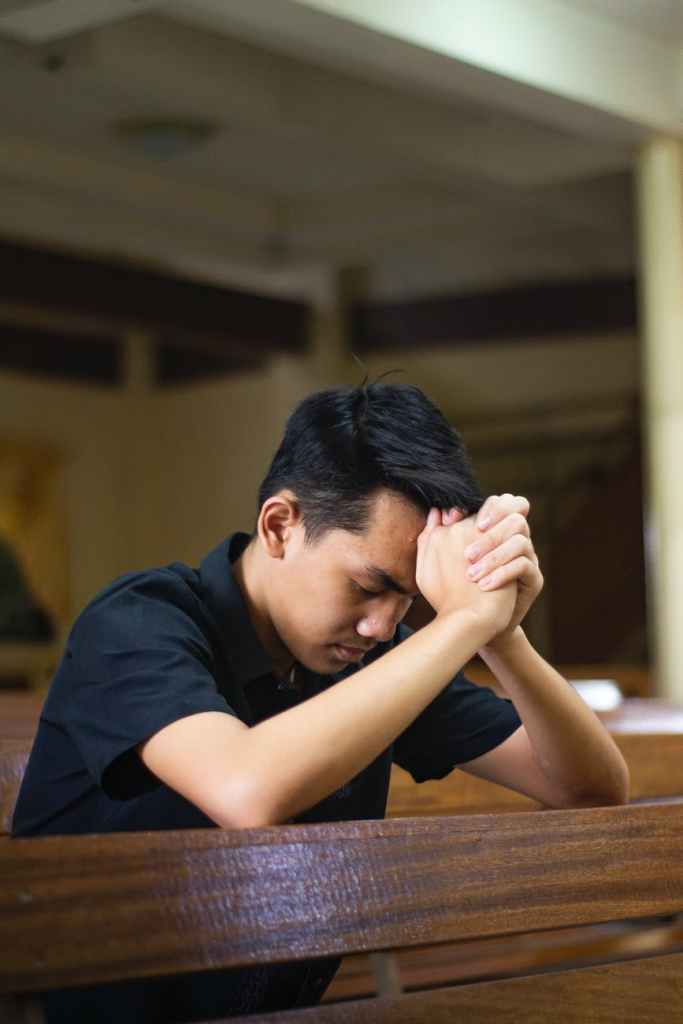
Most of the time, when I lift up prayer requests, they are about people. I love people, and so does God, so it makes sense to remember those who are rejoicing, those who are mourning, and those who are struggling.

But I also pray about places. God created places, just as He created people. Through the prophets, God spoke of places– nations, certainly, but also specific mountains, rivers, cities, forests, and deserts. God pronounces judgment on people, but He mourns the destruction of places, as well.

At least once each month, I hope to post some thoughts or practices that I have found helpful in my pursuit of prayer over the years. Today, I want to talk about the importance of place.

Every day, on my prayer journal pages, I have a focus on a specific place. Yesterday, it was the island of Madagascar. Many times, I pray for the people of a specific place. Sometimes, I know of conflicts or natural disasters that impact the people living there. But often, I know very little about the places I pray for. I can look them up to find out more– what language do the people speak? what is the climate like? what are the natural resources of the area? Madagascar is home to many animal and plant species that are found nowhere else on the planet. God cares about His creation, and so should I. I may not have the resources to protect wildlife in Madagascar, but I know the creator and sustainer of all creation. And in praying for the land, people, and wildlife in Madagascar, I am taking the time to remember the vastness and variety of God’s creation, and His power to sustain life and cause it to flourish.

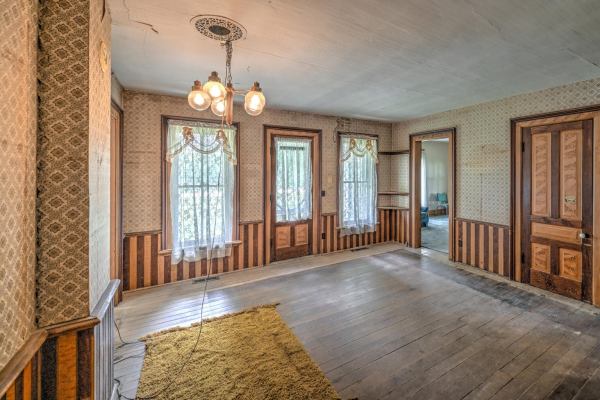
Jesus prayed over Jerusalem. He prayed over the Temple there. If Jesus can pray over places, then maybe we should, too. Over the past several weeks, I’ve been praying over the house where I grew up. After my mom’s death, we children decided to put the house up for sale. It hasn’t been an easy decision, but we feel it is the right one. I’ve been praying, not just that the house would sell, but that it would become a nurturing, safe place for a new family– a place where God would be honored and wonderful memories made. We aren’t finished with the process yet, but I believe that God can honor such prayers. God transcends “place.” He is omnipresent. But I believe that there are special places that resonate with the power of God’s work in the past (and other places that are haunted by the evil done there in years gone by). We should take time to acknowledge both the work that God has done in special places, and the need for His cleansing (and/or judgment) in others. Places are not more important that people, but they have lasting impact and are part of God’s purpose.

Cities, habitats, people groups, wildlife; wars, famines, floods and droughts, pollution and climate issues– from urban blight to toxic waste in the oceans. God’s heart is that we would do our best to care for the places in which we live– and that we would trust Him with the changes that are out of our control. Not just in Madagascar, or Ukraine or Rio de Janiero, but in our own backyard or in the next city block. Buildings, lakes, roads and parks– we can also lift them up in prayer, knowing that God is Lord of ALL around us–all that makes up life around us.

Photo by Ghost Presenter on Pexels.com

What might happen in our world if, instead of wringing our hands about climate change, we prayed and asked God what small steps we could take to make a difference right around us? What would happen if we prayed about the oceans and deserts and the wildlife that inhabit them– after all, I have no idea how many seals and gazelles, coral reefs and cacti there are in the world, but God knows them all!

Prayer doesn’t negate our need to care for the places around us– it’s still important to pick up litter, recycle, and be responsible about using, caring for, and disposing of resources. But praying about places will keep us “in tune” with God’s love of creation, and His desire that we honor Him in everything– everywhere!

What to Throw Away…

19 “Do not store up for yourselves treasures on earth, where moths and vermin destroy, and where thieves break in and steal. 20 But store up for yourselves treasures in heaven, where moths and vermin do not destroy, and where thieves do not break in and steal. 21 For where your treasure is, there your heart will be also

Matthew 6:19-21 (NIV)

When my mom died earlier this year, she left a house filled with “stuff.” Mom saved EVERYTHING! She saved old calendars, expired drivers’ licenses, used peanut butter jars, all her children’s baby clothes and shoes, graduation and wedding invitations, Christmas Cards, broken cameras, and so much more. She owned a seven-bedroom farmhouse, but she lived for many years in just a few square feet in four different rooms. She slept on half a twin mattress; the other half was covered with boxes. She ate on just a patch of her kitchen table; the rest was piled over with papers and “stuff.” There was a narrow path through the dining room to the bathroom and bedroom. Mom was a hoarder.

Mom was also stubbornly independent, and refused to get rid of things or have others help her throw things away. It contributed to her falling and breaking her hip, and later falling and breaking her leg. We eventually persuaded her to move to assisted living and later to a small house that she could navigate safely. But she would not sell the old house or let us throw away her “treasures.”

Shortly before she died, Mom gave us permission to begin the difficult task of “going through” her house. She joked that we would all hate her after she died and we had to finish the task. We joked back that we would never be able to finish in our own lifetimes! Mom knew that she should have thrown things away. But she had chosen to live surrounded by the memories of broken toys and yellowed letters of yesterday.

Well, the house is almost empty. We decided to sell it, and had to clean it out so it could be shown. The bulk of the work fell to my brother and his wife. They are retired, and they live closest to the old house. But even so, it has taken months, and tons of sweat, to find the floors and walls and windows that were covered and blocked by “stuff.” There are still a few pieces of furniture and some items in the basement, but hundreds of boxes, bags, crates, and containers had to be taken to my brother’s house, my house, my sister’s house, donation centers, recycling centers, and, sadly, to the dump.

We had very few “things” left from my father. His family had lived through a house fire when he was a young man, and he learned early that even precious things cannot be saved. He tried to throw things out; Mom would “rescue” some from the trash and bring them back in! He saved a few momentos, mostly photos, and when he died, he was no longer there to advise Mom about what must be put in the trash. But even his “stuff” was hidden among worthless old shoes and dishes and old boxes.

My Mom DID have several treasures– at least to us. She had saved school papers from our childhood, birth and baptism certificates, photos, my dad’s old work uniform, my grandfather’s Navy cap, afghans and doilies my grandmother made, and several worn and tattered Bibles she had so faithfully studied over the years. And Mom was generous in her own way– she sent out thousands of greeting cards and gave wonderful and thoughtful gifts to her many friends and family members. But she kept broken things, rusty and dusty things, used-up things, and things that were useless. And the hardest part of sorting through over 20,000 square feet of “stuff” was finding and determining what to keep and what to throw away.

Life is a lot like that house full of “stuff. It is full of memories, experiences, hopes, dreams, guilt, fears, relationships, emotions, and disappointments. And we have to make choices about what to treasure and what to throw away. Here are some guidelines I’ve learned through my recent experience:

  • Treasure the lesson– throw away the bitterness.
  • Keep the memories– throw away the t-shirt.
  • Save the relationship– throw away the anger.
  • Keep the recipe– throw away the container/magazine it came with.
  • Eat the chocolate–but throw away the fancy box it came in.
  • Throw away the broken dishes, the worn towels, and the pot without a handle.
  • Treasure the stories– trash the dusty, musty books (Yes, that’s coming from a librarian!)
  • Don’t just worth on appearance alone–DON’T throw away an opportunity to show kindness where it is least expected and most needed. There may be treasure among the rubbish!
  • Use the stationery you got for Christmas–throw away the wrapping paper.
  • Throw away last year’s calendar– those days are gone. Make space for this year.
  • Keep your promises–let go of your disappointments.
  • Hold your dreams loosely– be ready to accept what IS as a gift; what WILL BE as a mystery.
  • Treasure the empty spaces in your house and in your life– throw away the extra baggage.
  • Keep space for new blessings–pass the old blessings on to others.
  • Things can never take the place of time spent with the people you love. I appreciate some of the things Mom left behind, but the real treasure was the wisdom she imparted, the laughter and tears we shared over the years, and the faith she lived out as she loved others.

Mom’s joke about us hating her after she was gone– that didn’t happen. And our joking prediction was wrong, too. It was frustrating to go through everything; it was hard work and it might not have been necessary if Mom had chosen differently. But it wasn’t wasted work. We still have dozens of boxes to sort through, but I am finding small miracles and memories (and lessons!) in each one. Mom may not have been able to judge what she should throw away, but she did know what to keep above all!

I hope I am learning what to throw away, as well as what to give away and what to keep. Mostly, I hope I am learning to let go of the things that might prevent me from accepting better things. God will not always take away the things that hold us back, or bury us in the past. But He asks us to store up our treasure, not in a house or a storage barn, or a safe deposit box, but with Him! Things will break, rust, rot, and be lost. Feelings and thoughts can keep us trapped in the past, and blind to the present and future. But God’s gifts– Faith, Hope, Love, Peace, Patience, Discipline, Forgiveness–these last forever, and never lose their value!

What Is It Worth?

My husband and I own a small shop. It’s actually a two-part shop, with used items, antiques and collectibles in the front, and amateur radio gear in the back. We have a few “new” radios, books, and other items, but most of our items are second-hand. This sometimes creates a problem in pricing.

Photo by Skitterphoto on Pexels.com

New items usually come with a manufacturer’s recommended price, based on what the item costs from the factory or warehouse. Sometimes, price is based on what we pay at a wholesaler. But used items aren’t coming from a wholesaler or a factory warehouse. Often, we pick up pieces from an estate sale or another shop like ours. Sometimes, we are selling items that were salvaged or even donated.

Photo by Leticia Ribeiro on Pexels.com

So how do we determine a price on a used item? For that matter, how are prices determined for some of the new items that we sell? Of course there are a few guidelines:

  • Basic costs– what did it cost to produce the item (or procure the item)? How much for the materials? Labor? Shipping? Packaging? Also, what are the basic costs of running the store– will the sales of these items be enough to cover expenses like the light bill and rent and miscellaneous supplies as well as covering the cost to replace them?
  • Supply and Demand– how rare is this item? How easily can someone find a similar item at a similar price? How easily can we find more of this item (or something similar)? Do we have “too many” of the same item? Which items are selling “too fast” at a lower price?
  • Quality– some items involve more craftsmanship. Some contain sturdier or more expensive materials–real copper wiring, metal gears instead of plastic, silver v. silver-plate, hand-carved instead of mass-produced, etc.
  • “Aesthetics”–Antiques are often valued for their condition. But it varies from one piece or type of piece to another. Glass and ceramics are more valuable if they are unchipped. Old magazine ads carefully cut out and attractively framed can be more valuable than the entire magazine from which they came. Certain colors of glass are worth more than others. Wooden items that have been repainted, repaired, or refinished can actually lose value over those left in their original condition. Some items sell better with a “patina,” while others do better if they are polished and clean.
  • Ultimately, however, the items in our store are “worth” only what we decide, and what our customers are willing to pay for them. If we are “wrong” about the worth of an item, it may sit on the shelf collecting dust– either because we have priced it too high, or because the price is so low that a customer mistrusts our judgement about the quality of the product.
Photo by cottonbro on Pexels.com

Why am I writing about this on a blog about prayer?

We have a tendency to place values on people and situations, as well as items. Sometimes, we think it “isn’t worth it” to pray about a minor problem that we face, or someone we don’t know very well, or don’t think of very highly. Perhaps we think that our requests are too ordinary, or too small, or too chronic to bring before God. Lost keys; that lingering pain in the elbow; the barking dog that keeps us up at night; the sibling that hasn’t spoken to us in 15 years–we wonder if they are worth making the effort (or continuing to make the effort).

Photo by Meruyert Gonullu on Pexels.com

But, in God’s economy, every person–and each moment in each person’s day–is of enormous value! God uses the small things of life to make a big impact. Every prayer that is lifted to God from a sincere heart and with even the tiniest grain of faith can have unbelievable consequences. There are hundreds of examples throughout the Bible, and hundreds of thousands of other testimonies to illustrate this truth The same is true for “big” prayers– the impossible situations– that plague us. War, famine, disease, corruption and injustice are NOT too big for God to handle. Just because they are too big for us to solve (or even understand) does not make them too big for us to pray about, or our prayers too little to make a difference.

Photo by Tima Miroshnichenko on Pexels.com

I was reading in 2 Samuel 16 the other day. King David faced betrayal– from his son, Absolem, and also from one of his counselors, Ahitophel. David prayed– almost as an afterthought– that Ahitophel would give Absolem bad advice. And he did! But God also prompted David to send another counselor, Hushai, as a secret agent. At first, Absolem followed the advice of Ahitophel without question, and it seemed to work in his favor. But at a crucial moment, Absolem hesitated and asked for a second opinion. Ahitophel’s advice, according to the writer of 2 Samuel, was actually the better advice. But Absolem chose to follow the clever but ineffective advice of Hushai instead! David’s prayer was answered, and even when it seemed that David’s prayer “wasn’t enough,” God protected David, frustrated Ahitophel, and brought judgment and punishment to Absolem, ending in his death. There is no record of either Absolem or Ahitophel praying at all during the rebellion.

Photo by Ian Panelo on Pexels.com

God won’t judge the quantity or quality of what we pray for, or who we pray for, or how we pray– He values it all. Prayer is truly “priceless!”

Blog at WordPress.com.

Up ↑