How Firm a Foundation

  1. How firm a foundation, ye saints of the Lord,
    Is laid for your faith in His excellent word!
    What more can He say than to you He hath said—
    To you who for refuge to Jesus have fled?
  2. “Fear not, I am with thee, oh, be not dismayed,
    For I am thy God, and will still give thee aid;
    I’ll strengthen thee, help thee, and cause thee to stand,
    Upheld by My gracious, omnipotent hand.
  3. “When through the deep waters I call thee to go,
    The rivers of sorrow shall not overflow;
    For I will be with thee thy trouble to bless,
    And sanctify to thee thy deepest distress.
  4. “When through fiery trials thy pathway shall lie,
    My grace, all-sufficient, shall be thy supply;
    The flame shall not harm thee; I only design
    Thy dross to consume and thy gold to refine.
  5. “The soul that on Jesus doth lean for repose,
    I will not, I will not, desert to his foes;
    That soul, though all hell should endeavor to shake,
    I’ll never, no never, no never forsake.”
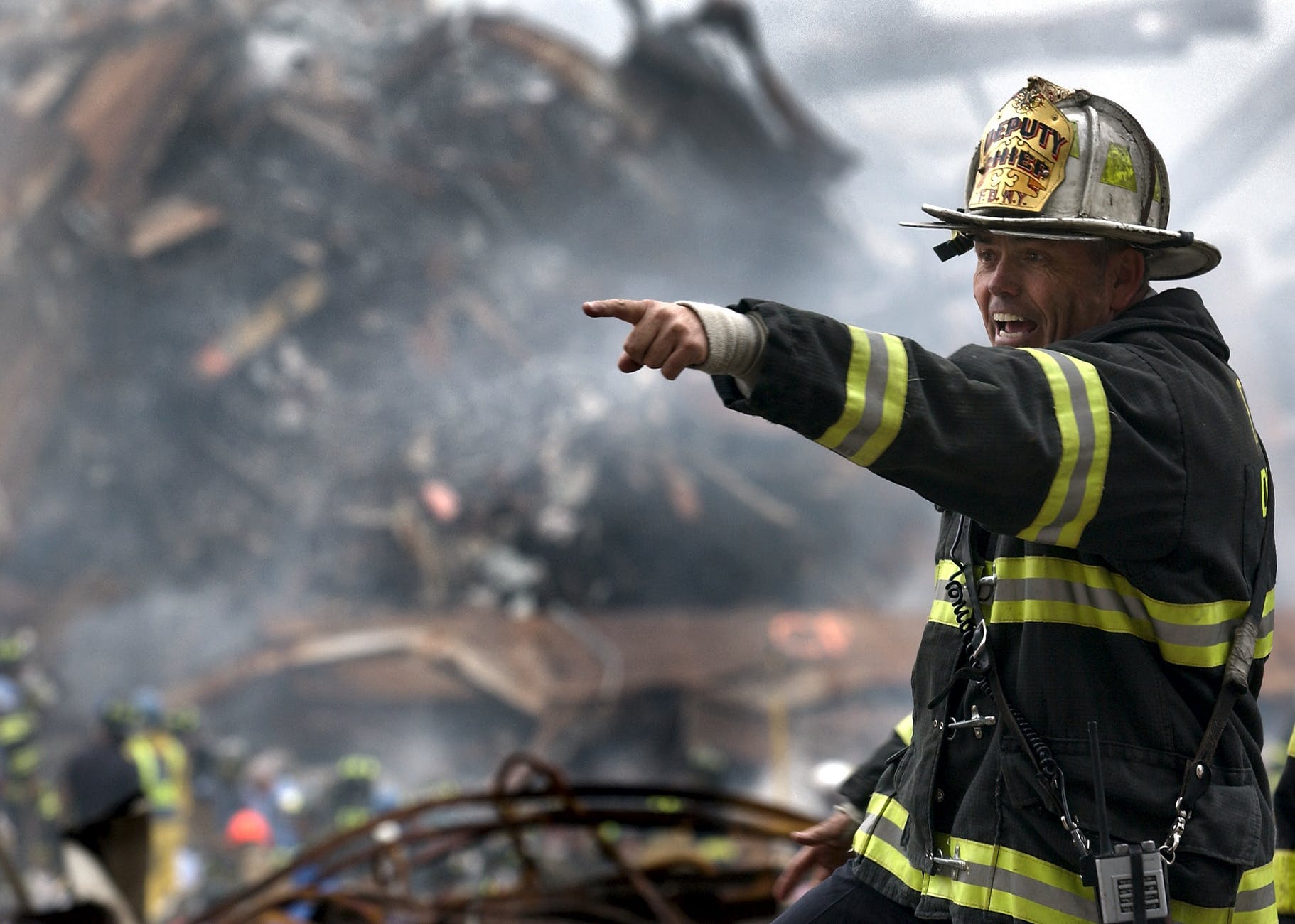
fire fighter wearing black and yellow uniform pointing for something

“How can you believe in a God who lets bad things happen?”
We live in perilous times; dangerous times.  Fires have swept through Canada and Hawaii (and elsewhere); massive heat waves have caused drought and death in many parts of the world; hurricanes have hit California and and the Caribbean, and another threatens Florida even as I write this. Wars rage in Ukraine and elsewhere; crime seems rampant in major cities on every continent. Diseases– even those we considered eradicated or “tamed” are making a comeback. Waste and pollution devastate our oceans, rivers, woodlands, and even the air we breathe. Often, it seems as if God is absent or powerless–sitting on the sidelines and letting bad things happen.  Those of us who claim faith in an omnipotent, loving, and gracious God are mocked and challenged.  How can we believe in the face of such evil, disaster, and injustice?  How can we offer the empty comfort of prayers and assurances?

It can be very difficult to face such challenges– there are no easy answers and “mic-drop” moments for us in this world.  But that doesn’t mean that there are no answers or that our faith is “blind” or without merit.

The Bible is filled with examples of people who followed God in extraordinary circumstances, often in the face of great evil and with little logical expectation of God’s blessing or help.  Abraham traded a wealthy, safe, and honorable life in his native land to live as a stranger and a nomad among foreigners.  Even after God seemed to fulfill the promise of a son, he tested Abraham’s faith, asking him to sacrifice his only son Read the complete story here...  Many people see this story as a horrific example of injustice and cruelty– and if Abraham had been required to go through with the sacrifice, it might seem even more unjust and cruel.  However, there are two points to consider:

  1. God clearly planned to rescue Isaac–there was a ram in the thicket all ready and waiting.  Abraham may not have known God’s purpose in asking such a thing, but he had faith that “God will provide for himself the lamb…”  God may have been “testing” Abraham, but he already knew the outcome.  The “test” was not for God–perhaps not even for Abraham–the test was for Isaac and all who would follow and experience the blessings that came through this amazing act of faith.
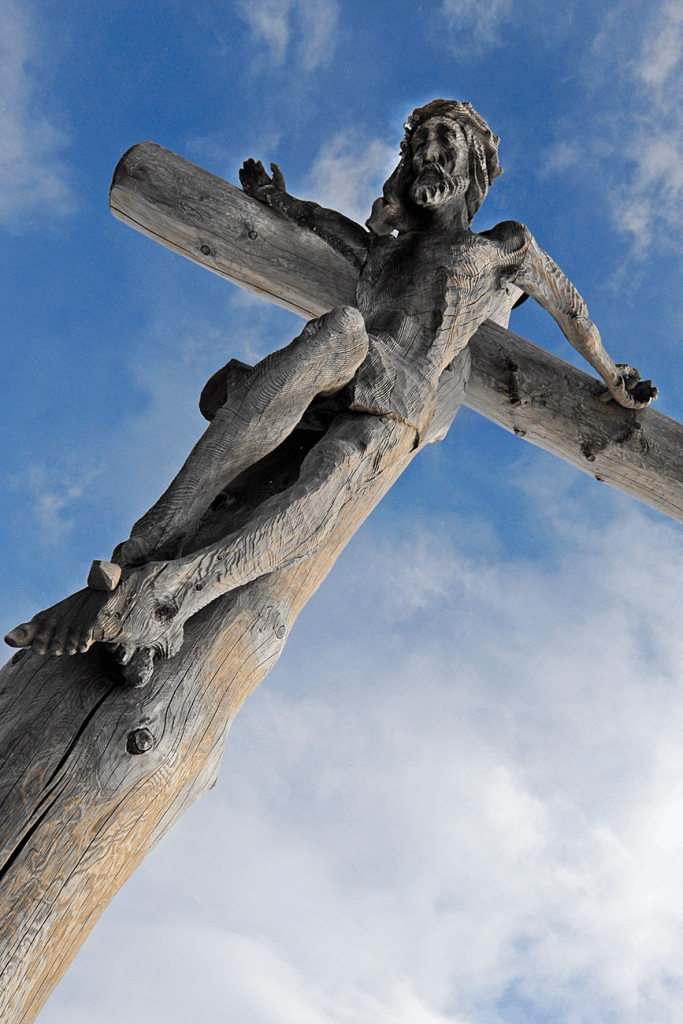
  2. The story of Abraham, like so many others, is given to illustrate difficult truths– sometimes about God’s character, or OUR character, or the nature and consequences of Sin.  These stories also often form patterns of allegory, foreshadowing, or illustrations of key principles and events.  Abraham was told to sacrifice his only and very beloved son– a horrible prospect for any father.  But God provided a substitute sacrifice– a lamb– allowing Isaac to live and become the father of many nations.  God’s plan for the salvation of the world was built on the same pattern.  God sent his only and very beloved “son” to be the substitutionary sacrifice for the sins of all mankind– a horrible prospect for a loving Heavenly Father.  And this time, the son willingly gave His life to become the fulfillment of the promise acted out in Abraham’s story.
shallow focus photography of sheep

And, of course, there are hundreds of other stories– throughout the Bible, and throughout history– that demonstrate the blessings that come through radical and even tiny acts of faith in God.

Hebrews, chapter 11 lists several examples.  And a key verse in the chapter points out:

13 These all died in faith, not having received the promises, but having seen them afar off, and were persuaded of them, and embraced them, and confessed that they were strangers and pilgrims on the earth.

Hebrews 11:13 (KJV)

These great examples of faith died without seeing the end results..but the end results are there for US to see!  Faith in humanity– faith in Science– faith in ourselves– these are doomed to end in disappointment.  Not because we don’t believe enough; not because these things are “bad”– but because faith needs an unshakeable, immovable, solid, and eternal foundation.  Our faith in Christ is not a blind faith, an empty faith, or a desperate faith– it is a Faith that is firmly rooted in history, in observable facts, and in revealed truth.  And even in the fiercest storms, the worst of disasters, and the overwhelming flood of hatred and evil in the world, our faith stands firm and sure– not because it is “our faith”, but because it is built on Him who is before and above all things–yesterday, today, and forevermore.

man holding sheep statuette

Our very firm foundation may seem invisible to the world, but that doesn’t change its reality or its power. We pray to the ONE who calms storms, who tears down and builds up kingdoms, and who holds all of eternity, including our future, in His hands. Fires, floods, trials, and terrors cannot overwhelm those who put their trust in Jesus. We may still get wet, singed, singled out, persecuted, and knocked down, but we will never be abandoned or defeated, or forsaken. Even if it seems like God is holding a knife to our neck– remember how the story ends! There is a lamb who has taken our place. God will not put an end to our hope. Even death cannot separate us from His Love and His Purpose for eternity. It’s all there– in His Excellent Word!

Leaning– “Eutychus and Hot Dogs” Revisited

*Note: This is a revision of an older post– you can visit the original here: https://wordpress.com/post/pursuingprayer.blog/2156

I was reminded today of an old hymn; one that I heard as a child and did not understand at all. Have you ever heard a new song, and completely mis-heard the lyrics? As a young child, I often heard hymns sung that were familiar to the adults but “new” to me. This was one of them. I paid little attention to the first verse, but the chorus!?! I was convinced the congregation was singing, “Wienies (the word my grandparents sometimes used for hot dogs)! Wienies! Wienies on the everlasting arms…” It sounded like a righteous chorus of hot dog vendors at a baseball game. What could hot dogs possibly have to do with living for Christ? I giggled and snorted, and my grandmother, who was standing next to me, quietly leaned over and asked what I found so funny. When I explained it to her, she too began to giggle a little, and we shared a (quieter) giggle and smiles throughout the rest of the hymn. (Sacrilegious, I know, but it seemed very funny to a five-year-old.) Later, my grandmother lovingly explained the hymn–turning a “silly” song into a wonderful testament of God’s tender, loving care that touches me to this day.

There is another old hymn, known as “The Solid Rock” or “On Christ the Solid Rock I Stand. ” One of the lines of the hymn states, “I dare not trust the sweetest frame, but wholly lean on Jesus’ Name.” Jesus IS the solid rock, the everlasting arms, and the “frame” on which we can both stand and rest secure. He is also our anchor in any storm (see “My Anchor Holds” https://wordpress.com/post/pursuingprayer.blog/5828)

There is a curious story in the Bible about the Apostle Paul and a young man named Eutychus. https://www.gotquestions.org/Eutychus-in-the-Bible.html. The story is found in Acts 20:7-12 https://biblia.com/bible/esv/acts/20/7-12, and involves a young man listening to the Apostle Paul. As Paul talks on into the night, the young man, sitting in the third story window, falls asleep, falls out of the window, and plummets to his death. Luke, who authored the the gospel which bears his name and the book of Acts, was a doctor, and an eyewitness of this event. He clearly states that Eutychus died from his fall. But Paul runs outside and immediately brings Eutychus back to life, returning inside to finish his talk and eat with the crowd– who are amazed and relieved to find their friend alive and well. The Bible doesn’t say what they had to eat– certainly NOT hot dogs– nor does Luke spend time giving details of the aftermath of such a miracle. Paul simply picks up the limp form in his arms, lets everyone know that the young man is alive, and they all return upstairs and pick up where they left off: “breaking bread” and talking!

Luke’s story doesn’t say whether or not Eutychus was alone in the third story window, or leaning against a wide window frame or perched precariously before he fell into “a deep sleep.” I have always imagined him perched comfortably leaning against the side of a wide and open window frame, one leg drawn up and the other dangling as he listened to Paul speak. As the night wore on, he may have slouched a bit, or even turned to lean his whole back against the frame, pulling both legs up onto the wide ledge. I imagine there were others sitting close by. There may even have been others leaning against the window frames! But as they were engrossed in Paul’s message, and whatever questions were being asked and answered, Eutychus drifted into sleep and lost his balance. My mental picture may be completely wrong, but I don’t think of him hugging a narrow space and sitting tense or afraid and clinging to the window frame before sleep claimed him. I imagine that he felt safe and secure in his position, never expecting to fall to his death; never expecting to become famous for falling asleep during one of Paul’s sermons!

I don’t recommend to anyone that they trust themselves to a window frame, a third story balcony, a too-comfortable seat at the theater, or to hot dogs eaten in bleacher seats at the baseball game. God doesn’t call us to get comfortable! Even if we are listening, and trying to follow Jesus, we may still fall– literally, like Eutychus, or figuratively. We may misunderstand, or get confused or weary and lose our focus. We may put ourselves at risk by leaning on the wrong frame. I believe that the story of Eutychus has several lessons for us.

  • First, we should be on guard. Eutychus wasn’t doing anything especially risky or unusual at the time of his death. It would have been common for people to sit where they could see and hear a speaker– not unlike sitting in bleachers at a baseball game!–and most houses were constructed so that windows were open. We often do things that seem natural and even good, but we, too, can “fall asleep” in complacency, routine, tradition, and other things that can lead to a “fall.”
  • Second, we should be slow to condemn. Again, Eutychus wasn’t doing anything that “deserved” death. There was nothing overtly sinful about his situation, nor does the Biblical account suggest any reason to judge Eutychus: this was an accident that might have happened to anyone. There is something cold and un-Christlike that sometimes arises in modern Christian culture. Many of us are quick to see any misfortune as “proof” of something lacking in others. Lacking in Faith; lacking in commitment or obedience; lacking in knowledge; lacking in God’s favor. Such an attitude shows a lack of compassion and a lack of humility! Eutychus is one of US! His death would have been a tragedy– his resurrection was a source of joy. We don’t know WHY Eutychus fell– but we know that God intended for him to be saved. And isn’t that where our focus should always be?
  • Lastly, the story of Eutychus reminds us of Paul’s marvelous words to the Roman believers:

35 Who shall separate us from the love of Christ? Shall tribulation, or distress, or persecution, or famine, or nakedness, or danger, or sword? 36 As it is written, “For your sake we are being killed all the day long; we are regarded as sheep to be slaughtered.” 37 No, in all these things we are more than conquerors through him who loved us. 38 For I am sure that neither death nor life, nor angels nor rulers, nor things present nor things to come, nor powers, 39 nor height nor depth, nor anything else in all creation, will be able to separate us from the love of God in Christ Jesus our Lord.

Romans 8:35-39 ESV

God could have kept Eutychus from falling from that third story window, but I believe He meant for that story to come down through the ages. It is not just a miracle, and a testament to the power of God and given to the Apostle Paul. It is a great reminder that even when we are trying to listen and follow God, we can still end up trusting in the wrong things and “falling asleep”. But no matter how far we fall, or how broken or “dead” we may seem to be, God sees us, cares for us, and wants to give us new life! Nothing– not even death– can separate us from God’s loving care or His ability to give us restoration and renewed life! We can rest “safe and secure from all alarms” when we remain in (or return to) the reassuring, everlasting arms of our Savior.

Some days, I feel like Eutychus– lying broken and useless three stories below where I began. Other times, I feel like a confused hot dog vendor, calling out to God for “Wienies”, when I really need Wisdom and Grace. Still other times, I feel like one of the crowd– wondering why Eutychus fell, instead of wondering at God’s miraculous ways. But God is faithful to bring me back time after time, wrapping me in his amazing “Everlasting Arms”:

When God Asks a Question…

We often fear questions. We are afraid to ask questions; we are afraid of being questioned; we are afraid of asking the wrong questions or not asking the right ones. And we are often afraid of the answers, too.

Photo by samer daboul on Pexels.com

God is not afraid of our questions. In fact, He wants us to ask, to seek, and to knock (Matthew 7:7, Jeremiah 33:3, and others). God knows the answers to our questions– He even knows our motives in asking them! God may not give us the answers we expect, or answer in the manner or time we expect. But God encourages us to ask anyway, and to trust in His ability and His desire to give us what we need in the moment we most need it.

Photo by Munmun Singh on Pexels.com

God also asks questions–not because He doesn’t already know the answers, but because we can learn from the questions He asks, and the answers we give. Some of God’s questions seem self-evident; others are probing. Some are rhetorical; others are anguished. Let’s take a look at just a few, and see what we might be able to learn from them:

  • In Genesis 3, God asks some very obvious questions of Adam and Eve after they hide from him. “Where are you?” Adam and Eve had not successfully hidden from God. He knew exactly where they were and even why they were hiding. But instead of storming into the Garden of Eden with condemnation and instant judgment, God asked a simple question, giving them both the opportunity to confess, and a clear reminder of their broken relationship. There had never been a need (on either side) to ask “Where are you?” After Adam responds with the excuse of being naked and ashamed, God asks his second question, “Who told you that you were naked?” God knew the answer to this, as well, but He added a third question that forced Adam to get to the heart of the matter and tell Him the truth– “Have you eaten from the tree…?” God could have asked condemning questions– “How could you disobey me like this?” “Do you have any idea what you’ve done?!” But God isn’t asking questions to overwhelm Adam and Eve with their guilt and shame. He’s asking for truthful acknowledgment of their disobedience, so their broken relationship can begin to be repaired. God assigns punishment, but He does not bring additional questions and condemnation
Photo by Chinmay Singh on Pexels.com
  • In the very next chapter, God asks Cain a probing question, “Why are you angry? (And why has your countenance fallen?)” God knows the answer. He knows how Cain feels and what Cain is thinking. God knows it so well, that He challenges Cain to master his anger and turn his face upward (i.e. seek God’s counsel over his own emotions). We don’t like probing questions, because they reveal our selfish motives and dark impulses. But God actually WANTS us to be aware of our own tendencies–and our need for His wisdom and grace! God is not afraid of our darkest thought– He doesn’t want to expose them for our shame, but enlighten us for our own good!
  • In Genesis chapter 18, the Lord asks a rhetorical question, “Shall I hide from Abraham what I am about to do…” (concerning the destruction of the cities of Sodom and Gomorrah). God had already determined that they should be destroyed; He had no need to share this information with Abraham. But in asking the rhetorical question, God gave us a glimpse into His character (as well as a window into Abraham’s character!) God does everything with purpose. He is not willing to hide information we need, nor to waste time or energy on useless information. Imagine if we knew everything–everything!- that would happen to us for the next year? If we knew about that near miss at the intersection on May 22, or the toothache on June 2, or the “surprise” birthday party in October? But when God does choose to open a window, He gives us a chance to respond. Abraham did not choose to argue that Sodom and Gomorrah were not wicked cities, or that God had no business destroying them. His heart was driven to discover if God would destroy the innocent with the wicked. He got his answer (several times over!) And even when God did not find ten innocent people in the cities, He still offered rescue for Abraham’s nephew, Lot, and his family.
Photo by Pixabay on Pexels.com

  • It isn’t only God the father who asks questions. Jesus the son asked two agonizing questions in the New Testament. While He was dying on the cross, He asked the Father, “My God, My God, why hast Thou forsaken Me?” (Matthew 27:46). Jesus knew, intellectually and spiritually, why God had forsaken him; but His question echoed the one found all the way back in the Garden of Eden– “Where ARE you?” The ultimate anguish of being separated from God’s presence was felt by God himself! The agony of loneliness that comes from sin and shame and guilt– God knows it intimately from both sides!
  • Jesus also asked and anguished question of Saul of Tarsus– “Saul, Saul, why are you persecuting Me?” (Acts 9:4) Just as God asked Cain to look carefully at his motives and emotions, so Jesus challenges Saul to reexamine his activities and ambitions. Jesus knew, of course, why Saul was hunting down those who were preaching the Good News. He knew Saul’s ambition and his zeal for the Law. He knew that it had blinded him to the truth. And in Saul’s physical blindness, Jesus could “open his eyes” to a greater ambition and zeal–to preach this same Good News to the Gentiles– the same Gospel that is opening eyes around the world to this day to see the Awesome, Eternal, Victorious, and All-Encompassing Love of God.

Today, may we ask, seek, search out, study, cry out, knock on doors, and pursue this truth–God wants to meet with us! He wants to talk to us, to listen to us, to share closeness, to increase our Joy and be joined to us in our Grief, to lift up our countenance, end our isolation, and be the ultimate answer to our questions.

Photo by Saulo Zayas on Pexels.com

Always On the Go

“On the Go..”, “Going, Going, Gone!”, “Get Up and Go”–it seems that we spend a lot of our time either going somewhere or planning to go somewhere. Traveling, commuting, hiking, even walking in place; it seems we can’t stay still and in one place for any length of time.

Photo by Dom J on Pexels.com

Sometimes we’re on the move trying to get to a destination; other times we’re trying to escape from a situation. We go to the store; we go to a party; we go to an amusement park or a movie to escape from home and “normal” life for awhile. We go to the beach or the woods to experience nature; we go to the city to experience more people “on the go!” We go to work; we go back home.

Photo by Lisa Fotios on Pexels.com

Many times in the Bible, God explicitly commanded people to “Go;” Abraham was told to go to a land where God would lead him; Moses was told to go to Pharaoh, and tell him to “Let my people GO!” Jonah was told to go to Ninevah; Ananias was told to go to the house where Saul was staying after his encounter on the road to Damascus. The Disciples were told to “Go into all the world!”

Photo by Valentin Antonucci on Pexels.com

But there is one important exception–Jesus calls us to go into all the world, but He also commands us to “Come!” And unlike a command to Go–first here, then there, then somewhere else–the command to “Come” is full of closure and finality. We will not be forever “on the go” in Heaven. We will be Home. The God who is outside of time and space bids us join Him in the Eternal Everywhere–we cannot “Go” anywhere where He doesn’t exist, but someday, we will live in our ultimate destination– the eternal awareness of His constant, encompassing presence!

Photo by Johannes Plenio on Pexels.com

That’s the great good news of the GOspel. But it comes with a warning. Just as Heaven is an eternal destination, with no more need to “Go” anywhere, so Hell is an eternal destination, with no way of escape. Those in Heaven will have eternal rest– the peace of being where we were meant to be. Those in Hell will be eternally restless–wanting to escape from shame, guilt, and loneliness; wanting to escape to peace, rest, joy, and communion– always wanting to go, but unable to leave.

Photo by Ekrulila on Pexels.com

This compulsion to “go” throughout life is a nagging reminder that we have an ultimate destination. Either we are “going” toward a purpose and a destination, or we are wandering, lost and restless, never reaching the end of the race.

Photo by Emma Bauso on Pexels.com

Today, let’s pause for a moment and evaluate where we are going today. Even a long journey, over rough terrain, can be filled with joyous anticipation. Even a short journey on smooth roads can be filled with stress and regret. Let’s remember our destination, even as we “press on” today.

The Silent Treatment

Have you ever had someone give you “the silent treatment?” Or have you ever been angry or disgusted and refused to talk to someone? It can be very frustrating. You may ask a simple question– even look the other person in the eye–only to face a wall of silence. Silence of this type can be oppressive. It is less an absence of sound than a presence of something heavy and dark.

Photo by Simon Blyberg on Pexels.com

God spoke through His prophets, messengers (angels), and sometimes, in visions throughout the days of the Old Testament. But then, He was silent. For four hundred years! There were no new messages, no prophetic visions– just a gloomy silence. There was still noise in the world– chaos, confusion, war, debates, chattering, gossip– but no word from God. He had spoken for thousands of years, and His laws and the words of the prophets still stood, promising a coming Messiah, a rescue and a redemption for the nation of Israel. But then, nothing.

Photo by Gabriela Palai on Pexels.com

Imagine how much more glorious it must have been when the angel hosts announced the Messiah’s birth to the shepherds! After such a long silence, they must have nearly exploded with the joyous news! The shepherds, already frightened by the sudden appearance, must have been held in thrall to hear voices from the heavenly realms– something that hadn’t been heard or even heard of for over a dozen generations!

And that’s how it often is–after a period of silence, the sound comes spilling out in a mad rush. Feelings, thoughts, announcements, all waiting to rush out in an explosion of sound and excitement. The silence is over! The heaviness is lifted. The dam has burst, and the words pour out in a great flood.

Photo by Avery Nielsen-Webb on Pexels.com

When Jesus– the Word of God– arrived, He spoke to many. He told parables and spoke words of healing and kindness and even warning. But at His trial, He refused to answer many of the questions that were posed. He dared to give “the silent treatment” to Pontius Pilate and the Pharisees. People who had refused to listen to Him during his ministry suddenly wanted answers. But He had already spoken and told them everything they needed to know.

Not so with His disciples. He spoke to them plainly and promised them a “counselor.” The Holy Spirit would speak, and would teach them how to speak. There would be no more “silent treatment” for those who knew the Spirit. No need for angelic messengers or prophetic visions (though God could still choose to use them as well)–God’s Spirit would dwell in the hearts and minds of His people.

Photo by Sora Shimazaki on Pexels.com

And yet, we often feel that God is “silent” in our own time. But is that really the case?

Photo by MART PRODUCTION on Pexels.com

Have you ever given God the “silent treatment?” How long have you held in resentment or doubt over something God did or didn’t do; a prayer He answered in a way that left you feeling hurt or confused? Is there a wall of silence on your part? It may not even be full silence. Is there some issue or topic you refuse to bring to prayer? Some secret desire you won’t discuss with Him? How does it weigh down the rest of your relationship?

Photo by Anete Lusina on Pexels.com

I have found myself holding things back, keeping silent about things in my life. It stunts my growth and hinders my prayers. But when I finally break my silence, pouring out the full measure of my fears, confusion, and deepest desires, it is like a weight sliding away, and light breaking through the clouds. The joy and relief are overwhelming. (See Psalm 32 https://www.biblegateway.com/passage/?search=Psalm+32&version=ESV) What the psalmist says about sin can apply to doubt, anger, or confusion, as well. Unconfessed and unspoken, it will weigh upon us.

Photo by MART PRODUCTION on Pexels.com

Don’t give God the “silent treatment.” He already knows all that you would keep back from Him. Silence doesn’t “treat” anything– real healing comes from open communication with the Great Physician. Don’t wait four hundred years– or even four hundred seconds! Let the words (and maybe the tears) flow…And don’t be surprised if your silence is replaced with singing!

The Work is “Donne”

Wilt Thou forgive that sin where I begun,
Which is my sin, though it were done before?
Wilt Thou forgive those sins through which I run,
And do them still, though still I do deplore?
When Thou hast done, Thou hast not done,
For I have more.
Wilt Thou forgive that sin by which I have won
Others to sin? and made my sin their door?
Wilt Thou forgive that sin which I did shun
A year or two, but wallowed in a score?
When Thou hast done, Thou hast not done,
For I have more.
I have a sin of fear, that when I have spun
My last thread, I shall perish on the shore;
Swear by Thyself that at my death Thy Sun
Shall sine as it shines now, and heretofore;
And, having done that, Thou hast done,
I have no more.

A Hymn to God the Father John Donne, 1623
John Donne

I enjoy studying the poetry of John Donne. https://www.biography.com/writer/john-donne Even though he lived 400 years ago, he wrote about very timeless and personal topics. Donne lived during a time of religious tumult and persecution. Born into a Catholic family, he later converted to Anglicanism and became a powerful preacher, as well as a poet, and lawyer. Throughout his life, he wrestled with deep theological questions of sin, guilt, redemption, and death. Yet he did so with wit, humor, and passion. The poem above, written during a long illness and near the end of his life, is filled with puns on his last name, Donne. Would God’s redemptive work ever be “done” in “Donne?” He struggles with the knowledge that his sins, having been forgiven, must be forgiven again and again. Does God never say, “Enough! I am done!?” What about stubborn sinful habits? What about sins that have led others to sin? What about last-minute, unconfessed sins?

Photo by Teona Swift on Pexels.com

The real question is, “How sufficient is God’s Grace?” Does God sprinkle out Grace sparingly on each sinful act, or does Christ’s blood cover All? Do our stubborn, habitual acts of rebellion pile up to a point where God cannot forgive? Having forgiven us once, twice, seventy times seven– is there a limit to His willingness to pour out Mercy? Theologically, the Bible is clear. The answer is a resounding, “NO.” God will not withhold His Grace from those who have sought it. God will never be “Done” with “Donne.” Nor will He be “done” with any of us who have chosen to follow Him. But in his all-too-human logic, Donne jokingly suggests that though God “hast” done/Donne, He “hast not” done/Donne. In other words, while Donne “belongs” to God– he has confessed his sins, and eagerly seeks to follow Christ, he still wrestles with fears that his small sinful acts prove that God does not fully “have” him– that He still lives separated from God.

Photo by Sinitta Leunen on Pexels.com

But the final sin of the poem is fear– fear that somehow, at the last, Death will prevail, and Donne will “perish on the shore,” rather than be taken into Heaven. He pleads that Christ’s blood (“Thy Sun/Son”) will be sufficient; that God’s promise of eternal life will indeed hold true, and that the work of salvation is indeed “done.” In the end, the poet hopes that “Thou hast Donne.” And he must trust that God’s promises will hold, for “I have no more.” Donne cannot stop death, he cannot do anything to save himself from sin, but he can be “done” with worry and trust in “Thy Sun/Son.”

Photo by Samuel Theo Manat Silitonga on Pexels.com

I am strangely encouraged by Donne’s poem. We all have moments of questioning and niggling doubts. And even though we “Know” the truth, our fears and emotions can play tricks on our mind. But Donne, even while putting such doubts and fears on paper, takes them to the Source of Hope. This is not a poem of accusation or despair. It is an honest and passionate desire to hear God’s calm assurance. And it is part of a long tradition that runs through the Bible. Jacob literally wrestled with an angel of the Lord (Gensis 32), Moses argued with God about going back to Egypt (Exodus 4), David questioned God (Psalm 10); even Jesus asked God, “Why have you forsaken me?” (Matthew 27). But in our doubts and questions, God’s still, small voice echoes, “I will never leave you nor forsake you.” (Hebrews 13:5), “My Grace is sufficient for you.” (2 Corinthians 12:9), and “Neither height nor depth, nor anything else in all creation, will be able to separate us from the love of God that is in Christ Jesus our Lord.” (Romans 8:39).

Photo by S Migaj on Pexels.com

God’s work is ongoing, but it is also “done”– it is complete, whole, sufficient, and eternal. And even if we occasionally wonder and even question, we can choose to rest in His promises. Just as the poet concluded, if God “hast” done/Donne, “I have no more”– he needed to have no other fear of sin or sin of fear. And through Donne’s poetry, God’s assurance is being passed on– the work continues to be “Donne!”

Photo by Nicholas Githiri on Pexels.com

Praying in Heartbreak

Yesterday was Mother’s Day. And it was a good day. It started out cold and wet, but I got to spend time with my mother, my mother-in-law, several other family members, and some dear friends from childhood. It was a happy day, and it ended with sunshine breaking through the late afternoon clouds, birds singing, and a full heart of memories and gratitude.

Photo by Pixabay on Pexels.com

But Mother’s Day wasn’t always like that for me. For many years, it was one of the worst days of my year. No matter the weather or the company, there was always a shadow of barrenness and emptiness. Yes, I was grateful for my mother; for my grandmothers and aunts and other relatives; for my friends and their adorable children. But I felt shut out– I was not a mother. I would never be a mother. I was always on the outside looking in.

Photo by Andrea Piacquadio on Pexels.com

My circumstances are slightly different now, but I am still not a “natural” mother. No one calls me “mama” or even “grandma.” But Mother’s Day isn’t meant to be a day of sorrow and emptiness, and after years of prayer and letting go of expectations, God is showing me how to enjoy and embrace the circumstances in which He has placed me.

Photo by Design Killer on Pexels.com

I am not alone in this struggle– far from it. For the past few weeks, I have heard from heartbroken people who dread Mother’s Day. Those who have lost their mothers face the reminder of their grief and loss. It is particularly hard on those who were unable to spend precious days with a dying mother due to COVID restrictions, or lost their mother to COVID. Some mothers are reminded of the wrenching loss of a child– still birth, drug overdoses, suicide, auto accidents, childhood cancer– gut-churning emptiness where once there was a promise of joyful life, grandchildren, shared memories, and so much more. Other mothers (and their children) face the pain of separation and severed relationships. Many, like me, face the reminder that they are NOT a mother– not a “real” mother–even if their circumstances or careers are filled with children “not their own.” And some people face multiple circumstances that cause grief, bitterness, alienation, anger, and despair.

Photo by Ken Ozuna on Pexels.com
Photo by rawpixel.com on Pexels.com

These feelings of sadness and loss are natural, but they do not have to weigh us down or control how we face each day. God wants to share these burdens; He wants to carry the weight of our brokenness and free us to experience joy and peace– even in the midst of our pain! And on those days when our circumstances threaten to overwhelm us, God is never more than a prayer away. He doesn’t make our grief disappear; He doesn’t erase our memories. But He can redeem them with a changed perspective and new hope.

Mother’s Day, Father’s Day, Valentine’s Day, birthdays, anniversaries, etc.– each can bring bitterness and heartbreak, as well as joy. We do well to pay attention to those around us who dread such holidays, and offer the comfort, hope, and encouragement of a listening ear, a loving heart, and, most of all, a loving God who longs for us to pray in and through our heartbreak.

When Christmas Wasn’t Merry

I know several people who had a very Merry Christmas this year. Some of them flew to exotic locations and spent Christmas on the beach, or in a big city with lights and dozens of family members. Some of them spent a cozy Christmas in a cabin with roaring fires and glittering snow-covered trees, eating sumptuous meals and unwrapping expensive gifts.

Photo by Pixabay on Pexels.com

But most of the people I know spent a Christmas that wasn’t “post-card” perfect. Some of them were alone in a small apartment with no presents and no heat. Some were working at a job they hate because they had no other option. Some were grieving loved ones lost in the past months. Some of them are facing economic mountains– debt, job loss, medical bills or taxes they cannot pay, no money for rent or groceries… Some are battling cancer or alcoholism, anger, or fear. Some are estranged from their families, or separated from loved ones because of COVID, or deployment, or divorce. And some are facing persecution, starvation, homelessness, disease, or war.

Photo by Levent on Pexels.com

Christmas comes, whatever our circumstances– and so does the Christ Child. Jesus didn’t come to the earth to bring us all “better” circumstances or worry-free holidays, but to deliver us from eternal death, and equip us to endure the circumstances we face in life. Jesus himself came in chaotic and stressful circumstances, and He came, knowing that He would face rejection, hatred, injustice, and death on a cross.

Photo by Alem Su00e1nchez on Pexels.com

There are millions of people who spent a “Merry” Christmas and missed the whole point. Some of us indulged in a gift-giving frenzy that left others in the cold. Some of us allowed envy, fear, greed, or bitterness to color our Christmas. In the process, many of us lost sight of the true gifts of Christmas– Peace, Joy, and Goodwill. In fact, “His divine power has given us EVERYTHING we need for a godly life through our knowledge of Him who called us by His own glory and goodness.” (2 Peter 1:3)

And these gifts are not temporary, like earthly Christmas gifts. They are always available, and they never break, expire, or grow dim. My prayer for this year(and the year to come) is that we all may find–and share!– these eternal and astounding gifts, this “inheritance that can never perish, spoil, or fade…kept in heaven for you” (1 Peter 1:4)

Photo by Porapak Apichodilok on Pexels.com

Christmas Day may not always be merry in this life, but because of Christmas we can face an eternity that will never disappoint, and we have a living Hope that can carry us through even the darkest hours!

Where Can I Hide?

Psalm 139 New King James Version (NKJV)

For the Chief Musician. A Psalm of David.

139 O Lord, You have searched me and known me.
You know my sitting down and my rising up;
You understand my thought afar off.
You [a]comprehend my path and my lying down,
And are acquainted with all my ways.
For there is not a word on my tongue,
But behold, O Lord, You know it altogether.
You have [b]hedged me behind and before,
And laid Your hand upon me.
Such knowledge is too wonderful for me;
It is high, I cannot attain it.

Where can I go from Your Spirit?
Or where can I flee from Your presence?
If I ascend into heaven, You are there;
If I make my bed in [c]hell, behold, You are there.
If I take the wings of the morning,
And dwell in the uttermost parts of the sea,
10 Even there Your hand shall lead me,
And Your right hand shall hold me.
11 If I say, “Surely the darkness shall [d]fall on me,”
Even the night shall be light about me;
12 Indeed, the darkness [e]shall not hide from You,
But the night shines as the day;
The darkness and the light are both alike to You.

13 For You formed my inward parts;
You [f]covered me in my mother’s womb.
14 I will praise You, for [g]I am fearfully and wonderfully made;
Marvelous are Your works,
And that my soul knows very well.
15 My [h]frame was not hidden from You,
When I was made in secret,
And skillfully wrought in the lowest parts of the earth.
16 Your eyes saw my substance, being yet unformed.
And in Your book they all were written,
The days fashioned for me,
When as yet there were none of them.

17 How precious also are Your thoughts to me, O God!
How great is the sum of them!
18 If I should count them, they would be more in number than the sand;
When I awake, I am still with You.

19 Oh, that You would slay the wicked, O God!
Depart from me, therefore, you [i]bloodthirsty men.
20 For they speak against You wickedly;
[j]Your enemies take Your name in vain.
21 Do I not hate them, O Lord, who hate You?
And do I not loathe those who rise up against You?
22 I hate them with [k]perfect hatred;
I count them my enemies.

23 Search me, O God, and know my heart;
Try me, and know my anxieties;
24 And see if there is any wicked way in me,
And lead me in the way everlasting.

We can’t hide from God. We can ignore Him, deny His existence, even rage against Him. But we cannot escape His Spirit. We cannot hide who we are or what we think from Him. And we cannot flee from His goodness or mercy; we cannot run beyond His ability to restore us, heal us, or save us. He knows the worst about us, and He calls us to the very best we can be. Which begs the question– Why would we want to escape from God? Why do we try to hide from Him? What is it about God that would give us a reason to flee?

Photo by EVG photos on Pexels.com

There are many terrifying things in this world–right now, we are faced with a global pandemic; a plague that brings sickness and death. Now THAT is something worth hiding from! Many of us are “sheltering in place,” trying to hide out until it is safer to interact with others. The disease seems to be everywhere–but it really isn’t– it cannot go where there are no hosts to carry the virus. It can be spread wherever we find other people who are infected, or where the virus lingers on surfaces. The disease does not seek us out or come searching for us if we stay put. Unfortunately, “sheltering in place” comes with its own dangers. We cannot survive long in a bubble. We are interdependent. We need food, medicine, fresh air, and interaction with family and friends to survive and thrive. Hiding away from a tiny virus is only effective in the short term. And there are other diseases from which we cannot hide– cancer and heart disease, and even other viruses that are active, but haven’t been traced or identified.

Photo by Nandhu Kumar on Pexels.com

There are other terrors that we try to escape by fleeing– hurricanes, fires, floods, war, etc. And we may escape immediate danger from such terrors–if we have advance warning or if we have the means to escape. But there is no place of absolute safety: no place on earth where such dangers cannot exist. There is no Utopia– no earthly dwelling, community, or settlement where there is only goodness, harmony, peace, and plenty. There is no place to hide, and no place of escape.

Photo by Johannes Plenio on Pexels.com

It is understandable that we should want to hide from danger or flee bad things, even if such escape is impossible in life. But why should we wish to hide from a loving and merciful God? Is He as bad as COVID-19? Is He as threatening as a hurricane or an air raid?

Certainly, He is as powerful (and even more) than any of the dangers we fear. God has the power, and the authority, to judge, punish, and destroy all who live on the planet. He has the power to obliterate all of His creation, and none of us could stop Him or challenge His right to do as He pleases. And if we should challenge God’s authority, we would be wise to want to run away, hide, or escape the consequences of such foolishness.

Photo by Luis Aquino on Pexels.com

Adam and Eve tried this long ago. After they sinned by eating the Fruit of the Knowledge of Good and Evil, they hid from God. And God’s response was not instant obliteration. He didn’t storm through Eden, destroying everything in His righteous anger before torturing Eve, making Adam watch in horror before He killed them both. Nor did God negate His Holiness by changing the consequences of sin. Death DID enter creation– along with disease, pain, guilt, envy, hatred, lying, greed, destruction– they all exist, persist, and continue to plague all of God’s creation to this day.

But God’s first act–His first words to Adam and Eve after their rebellion– was to seek their presence. God came to walk in the Garden; to meet with Adam and Eve. He called out to them, “Where are you?” He wasn’t asking because He didn’t know that they were hiding. He knew where they were, and why. And even in assigning their punishment, God did not throw extra guilt and recrimination at the fallen couple. He didn’t shout, “How could you do this to ME?!” “How dare you!” “I wish I’d never made you!” “You’re worthless. What a waste of time and energy. Get out of my garden! I never want to see you or hear from you again!”

Photo by Josh Willink on Pexels.com

God’s Spirit is always seeking reconciliation, communion, restoration, and love. God is Holy, and God is Merciful. Holiness desires Whole-ness. Mercy desires Peace. God pursues us, not because He wants to infect us or devour us or destroy us– God wants to hold us, heal us, and give us Life.

The danger is not in God’s presence, but in our ability to reject it. God is everywhere, but not everyone will see Him, accept His authority, or welcome His mercy. Some will spend a lifetime hiding and fleeing, only to discover that God will, reluctantly, give them what they want– an eternity without Him. Without Grace, without Love, without Peace, without Wholeness, without Hope.

Photo by Mitja Juraja on Pexels.com

That is a fate far worse than waking up to “shelter in place,” or even suffering through a virus that can separate us from loved ones for weeks, months, or even a short lifetime.

There are many things worth fleeing in life– But we can find joy, hope, and peace in the presence of a Loving and Omnipresent God.

Photo by Simon Matzinger on Pexels.com

Hannah and Eli

The story in the Bible about Hannah is about prayer; it is also about depression, anguish, misunderstanding, marriage, rivalry, infertility, trust, and obedience.

Yesterday, I talked a bit about the priest, Eli, and his wicked sons. It is that same Eli who becomes a surrogate parent for Hannah’s precious, promised son, Samuel.

Think about that. In all my years reading through this story, it never occurred to me that Hannah had already known about Eli’s sons and their wickedness. Hannah knew that Eli was not the best role model for her small son. She knew that she was sending her child into an environment that included corruption, injustice, and perversion. This child she had promised to “give back” to God would grow up in a family more dysfunctional and dangerous than if he had stayed with Hannah, Elkanah, and even Peninnah and his half-siblings.

Photo by JJ Jordan on Pexels.com

The Bible does not give us all the details of either family, (https://www.biblegateway.com/passage/?search=1+Samuel+2%3A11-26&version=ESV ) but there is evidence that Elkanah was a good provider, an honest and worthy man, and a good father. Eli, on the other hand, was told of his sons’ wickedness, and, other than giving one mild rebuke, he turns a blind eye to their practices and grows fat and lazy in his service. There is no mention of a mother or motherly influence at all in Samuel’s new “foster” family. Why would Hannah surrender her maternal rights (and why would Elkanah agree to forfeit his paternal rights) to send Samuel into this hornet’s nest?

Perhaps the answer can be found just before the account of Eli’s wicked sons. At the end of Hannah’s Song (which we will examine in more detail later), we have a profound statement of faith:

1 Samuel 2:9-10 English Standard Version (ESV)
“He will guard the feet of his faithful ones,
    but the wicked shall be cut off in darkness,
    for not by might shall a man prevail.
10 The adversaries of the Lord shall be broken to pieces;
    against them he will thunder in heaven.
The Lord will judge the ends of the earth;
    he will give strength to his king
    and exalt the horn of his anointed.”

http://www.biblegateway.com

Hannah was not giving Samuel to Eli to raise; she was giving Samuel to God to raise and guide and protect.

I am writing this today, not to encourage parents to absolve themselves of responsibility for training and caring for their own family, but to encourage those parents who may not be in a position to guide and protect their children. Some of us have children, grandchildren, siblings, or other young and vulnerable family members living away from our care or influence. Some are living in dysfunctional and even dangerous environments. God KNOWS. He SEES. He HEARS. We do not know, nor do we understand, why God allows innocent people to suffer. We do not know what fears or concerns Hannah and Elkanah may have had about Samuel’s upbringing. We do not know what Samuel endured under Eli’s care, or what he saw or heard in the presence of Eli’s sons. As a child, he may have been spared some of the worst of their behavior.

Photo by Pixabay on Pexels.com

We do know two things, however. Hannah and Elkanah may or may not have had reason to trust Eli. He did allow them to visit each year, and he seems to have been fond of young Samuel; certainly the Bible stories I used to read in Sunday School made Eli seem like a kindly uncle. But the reality was that Samuel’s life was not in Eli’s hands–it was in God’s! Hannah and Elkanah trusted God to guide their son, even as they relished every moment they were able to spend with him. They certainly prayed for his safety and growth in wisdom as he served in the Tabernacle of the Almighty.

Secondly, we know that God can bring good out of even bad circumstances. Eli was weak and indulgent with his sons; he was warned and did nothing. He sat down on the job and faced judgment without repentance. When Samuel was grown, this pattern could have been repeated. Samuel’s own sons began taking bribes and perverting justice. Samuel was still serving faithfully, even as an old man, but his sons were not following his good example. However, when the people came to Samuel with reports of his sons’ activities and asked him to step aside and appoint a king, Samuel sought the Lord. God reassured him, and Samuel was faithful to appoint and advise Israel’s first king, Saul. God was faithful to guide Samuel’s footsteps, and to bring justice against the wicked sons of Eli.

Photo by omar alnahi on Pexels.com

Eli’s flawed examples of fatherhood and leadership still served as models for Samuel. Even as a child, he showed wisdom, respect, and love for his “foster father” and mentor. Hannah and Elkanah never wavered in their trust that God could and would guide their son and provide for him. Their faith wasn’t based on the knowledge that Samuel would one day become the chief priest and anoint both Saul and his successor, David. They only knew that God could be trusted.

That is not a promise that every child in a bad environment will be “safe” and rise above their circumstances to become famous or powerful. But it is reason to keep hope and faith when we feel powerless. None of Hannah and Elkanah’s (or Peninnah’s) other children are mentioned in the Biblical narrative. They may have been honest, upright citizens, successful in business or esteemed in their hometown of Ramah. Samuel’s story is not a parable–there is no “moral” about “giving a child back” to God and being able to expect success and fame and blessing. There is, however, a lesson here about recognizing that every child is a gift– not a reward, not a burden–our children belong to God. We should do our best to guide them, nurture them, protect them, and above all, to love them. But their destiny– including tragic circumstances and glorious opportunities–is not ours to control.

Next time, we explore another important relationship– that of Hannah and her Son.

Blog at WordPress.com.

Up ↑