Why Should I Pray for My Enemy?

But I say to you, Love your enemies and pray for those who persecute you,

Matthew 5:44 (ESV)

The obvious answer to the question in the title is that Jesus commands it. But what practical and spiritual reasons are there for such a counter-intuitive action? Jesus himself continues:

43-47 “You’re familiar with the old written law, ‘Love your friend,’ and its unwritten companion, ‘Hate your enemy.’ I’m challenging that. I’m telling you to love your enemies. Let them bring out the best in you, not the worst. When someone gives you a hard time, respond with the supple moves of prayer, for then you are working out of your true selves, your God-created selves. This is what God does. He gives his best—the sun to warm and the rain to nourish—to everyone, regardless: the good and bad, the nice and nasty. If all you do is love the lovable, do you expect a bonus? Anybody can do that. If you simply say hello to those who greet you, do you expect a medal? Any run-of-the-mill sinner does that.

Matthew 5:43-47 (The Message)
Photo by Keira Burton on Pexels.com

If we are following Christ and asking His Spirit to help us grow in Godliness, we should be acting– and reacting– like God. God makes the sun shine and the rain to fall on everyone. He is Mercy and Grace personified. That takes away nothing from His ability to exact justice. But His true desire is to show mercy– and that includes mercy THROUGH us!

But there are other good (and related) reasons to pray for our enemies.

  • Such prayers put things in perspective. If I focus on the injustices that my enemies have done (or continue to do), they become larger than God’s power to restore and redeem. If I focus on God’s power, the injustices, while still real, take their proper place. God is bigger; God is greater; God is wiser; God is Sovereign.
  • Such prayers remind me that I am not immune from causing pain and distress to others. It is natural for us to see our enemies as completely different from ourselves. “They” are evil, callous, and deserving of punishment. But, if we are honest– we are also deserving of punishment. We, too, have been callous, careless, selfish, angry, or bitter with someone, somewhere, at some time. God has dealt with us mercifully. How can we be grateful for His mercy and fail to pray for others who need it?
Photo by Ketut Subiyanto on Pexels.com
  • Praying for our enemies may not change them, but it will change US. Praying for my enemies forces me to release my anger and bitterness, so that I don’t become trapped in a cycle of letting my enemy become my obsession or even my role model. I say this from negative experience; NOT praying for someone I considered my enemy led to me say and do things that were unkind and vicious– because I thought she “deserved” the same treatment she had given me and others. One day I woke up and realized that I was slowly becoming like her– letting her behavior determine who I was in return: suspicious, hard-hearted, critical, and vindictive.
Photo by Matt Jerome Connor on Pexels.com
  • Praying for others reminds us that our true enemies are not other people. Once again, it is easy and natural to create a monster out of the person who is our “enemy.” They have often caused very real and very intense pain and suffering– personal, physical, psychological, emotional, financial, and sometimes chronic and catastrophic–sometimes, they show no remorse; sometimes, they refuse to accept responsibility for their actions. God knows all this. He sees all this. He aches for our pain– and for their rebellion. But the root cause is not a person– no matter how involved they are in delivering the pain. The real cause is Sin and Brokenness. That’s why WE can’t fix it. That’s why WE don’t have the power or authority to administer righteous judgment over it. And that also means–
  • Such prayers can free us of the burden of guilt, shame, bitterness, and hurt of the past. That doesn’t mean that we must deny the very real hurt we have felt. But we no longer have to be bound and shackled by it. When we can lift up our enemies and our past, and give them to God– really let go and give them to Him–He will carry that load, and let us run the race before us.
Photo by Pixabay on Pexels.com

One caveat here. Loving your enemy; praying for them– these are not the same as believing their lies or consenting to their abuse. There may be people in your life that you must pray for– from a distance! You can love someone, and still set clear boundaries to protect yourself and others. God will never abandon us. But He doesn’t call us to enable others in their evil actions. This is especially true in cases of domestic violence. Love your enemy, but get help and healing. And continue to pray!

Proclaim Liberty to the Captives

“The Spirit of the Lord is upon me, because he has anointed me to proclaim good news to the poor. He has sent me to proclaim liberty to the captives and recovering of sight to the blind, to set at liberty those who are oppressed…”

Luke 4:18 (ESV)
Photo by Andrea Piacquadio on Pexels.com

Yesterday, we observed a holiday, relatively “new” on the national scale, of “Juneteenth.” Many people across the United States (and elsewhere) still don’t know the meaning behind this day. On the nineteenth of June, 1865, federal soldiers entered the city of Galveston, Texas, with news of the Emancipation Proclamation and the victory of the Union over the Confederate Army in the Civil War. The Emancipation Proclamation, in which President Abraham Lincoln declared freedom for all slaves throughout the Confederate States, had been signed on January 1, 1863. The war had been over for more than two months. President Lincoln had been assassinated in April. But news of the proclamation had never reached as far as Galveston; nor had news of the defeat of the Confederacy. Far from the ravages of the war, and far from the events of Washington or Richmond, the people of Galveston continued with life as it had been. For two-and-a-half years, people who had been declared free continued to live as slaves. News of their freedom came with shock and joy! Finally, those who were considered free in the eyes of the law KNEW they were free, indeed!

Photo by Yogendra Singh on Pexels.com

It would take more than 100 years for many of the injustices to be addressed that had grown up around slavery. Many of them are still being contested. But the celebration of the good news of Freedom continues, along with the hope that we will continue to build a better Union for All.

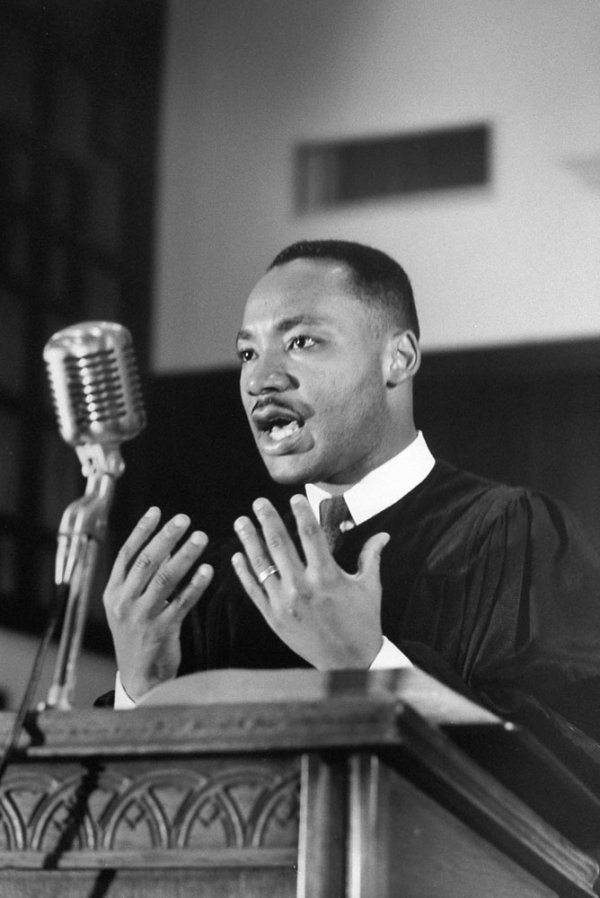
Civil Rights activist Rev. Dr. Martin Luther King Jr. gesturing during sermon at Ebenezer Baptist Church. (Photo by Donald Uhrbrock//Time Life Pictures/Getty Images)

Several centuries before the American Civil War, Jesus stood in the synagogue and read a prophetic passage from the book of Isaiah, in which He declared that He had been anointed to proclaim, among other things, “liberty for the captives.” He wasn’t talking about those who were in physical or institutionalized slavery, but for all of us who are slaves to sin. Unlike the slaves of Galveston, many of us are unaware of our captivity. But like them, we have been declared Free. What good news! Yet, we continue living in ignorance, both of our slavery, and of our potential freedom.

Photo by Engin Akyurt on Pexels.com

How many of us, even those of us who claim the Salvation of Christ, continue to live as though we are slaves? How many of those around us live as slaves without knowing they can be free? Today is a great day to proclaim the Good News– Jesus Saves! We can walk in Freedom and Newness of Life! Hallelujah! Carry the Good News to those who have not heard. Proclaim Freedom to the captives, and Liberty for those who are oppressed.

Photo by Designecologist on Pexels.com

Juneteenth is a time of celebration and exhilaration– for those who understand the gift of freedom. God offers us freedom–not from the trials or work of ordinary life– but freedom TO LIVE–abundantly, eternally, and fruitfully! In Christ, life has purpose, promise, hope, and joy. Death and sin and shame have been defeated– the war is over! Freedom is ours!

Photo by Victor Freitas on Pexels.com

I hope that today (and every day!)is a day of celebration for all of us who know the Freedom of Life in Christ.

Testimony

Yesterday at church we were challenged to share our testimony. I have shared my testimony several times, but I haven’t shared it in this space in a long while (if ever), so here goes:

When I was about 4 1/2 years old, I became a big sister. I was excited about this, but after my younger sister arrived, I had a terrible time with jealousy and resentment. She was tiny and adorable, and she had my Dad’s blue eyes (they later changed to a greenish/hazel color like mine, but everyone commented on her eyes, and never on mine). One day, filled with this resentment, I made a rather impulsive decision to poke my sister in the eye with a sharp stick. At that age, I wasn’t completely aware of the danger and damage I would have done, but I still knew it was wrong. I didn’t succeed– my mother caught me in time and got a stern talking-to about what had almost happened. Not wanting to face punishment and Mom’s anger, I burst into tears and said I was sorry. Surely a show of remorse would make everything all right. That’s how it worked on television, and it had worked for me that way in the past.

Photo by Keira Burton on Pexels.com

But this time was different. Mom was frightened by what might have happened, and unimpressed with my tears. She explained quite clearly that what I had attempted could have ended in disaster, and that no amount of “sorry” would have undone my action. I had to face punishment (probably less severe than I deserved, but it felt awful at the time). She also explained that she was both frightened of and disappointed in my action. She would tell my father, who would also be ashamed of my behavior. Now I was truly frightened. What if Mom and Dad never got over their disappointment? What if they stopped loving me? Not only that, but Jesus had seen everything: He knew what I had been about to do and WHY! I had learned about Jesus in Sunday School. He was kind and gentle and loved all the little children. What if He stopped loving me after He saw what I did? What if I had succeeded in hurting my sister and it could never be made right? What if I said I was sorry, and no one believed me? Even Jesus?

Photo by Keira Burton on Pexels.com

I can still remember the feelings of terror and shame– that kind and gentle and Holy Jesus might be disgusted with me; that my resentment and anger had separated me from Him, and that I could not “undo” it or “sorry” my way out of it. Certainly, I was coming to realize that He had (through my mom) stopped me from completing my evil plan –WHEW!– but He KNEW that I would have done it. And I wouldn’t have been sorry for my jealousy, or for my sister’s pain in that moment. Not really sorry. I recognized in that moment that I wasn’t a nice person or a good or righteous person. If Jesus loved me, I didn’t deserve it.

Mom must have seen the change in me, because she stopped and took the time to walk me through the lessons I was still learning in Sunday School. We are all sinners, and unworthy of the love and blessing of a Holy God. Yet Jesus came and offered to love us– to love us SO much that He was willing to die to remove the sting and shame of Sin and its consequences. And Jesus’ love is SO powerful that it can take a rotten, sinful heart and cleanse it completely. Mom and Dad could love and forgive me. But it would involve more than just saying, “I’m sorry.” I had to mean it. I had to choose to let Jesus take control of my resentment, and my wrong thinking, and ask Him for forgiveness. In fact, only Jesus can offer complete and everlasting forgiveness! I am not a righteous person; others can see that I am not a righteous person– yet Jesus can see me, not as I have been, but as I can be– perfected through Him! I asked Jesus to do just that– to come into my heart; to live in and through me; to renew me and change my mind and heart to be more like His.

Photo by Efigie lima Marcos on Pexels.com

Jesus Loves ME– this I KNOW
For the Bible tells me so.
Little ones to Him belong.
They are weak, but He is strong!

I had sung this song many times, but now it made sense to me in an entirely new way. That was over 50 years ago, and I must admit that I have had moments of failure and embarrassment; times when I have chosen my own will and emotions over what I know to be right. I have had moments of doubting whether Jesus could still love me after things I’ve said and done. But time after time, I come back to that simple truth that Jesus, for reasons I cannot explain or fully understand, Loves Me– He Really Loves Me! His offer of forgiveness isn’t phony or conditional or limited. Not because I deserve unconditional love or a thousand “second chances.” Simply because HE LOVES ME!

Photo by Nashua Volquez-Young on Pexels.com

And He Loves You, too! Right now, right where you are, just as you are– He Loves You! Whether you’ve never known that, or been sure of that, or whether you’ve had moments of doubt because of something you’ve said or done (or left undone or said)–Jesus Loves You! And He wants to give you a New heart and a New Life– one that is free of lingering shame and fear; one that is eternal and filled with joy and peace!

Photo by Pixabay on Pexels.com

That is my testimony. That is what I know from experience to be true of God– more true than anything else in the world.

Blessed Are the Pure in Heart..

“Blessed are the pure in heart, for they shall see God.” (Matthew 5:8)

“Create in me a pure heart, O God, and renew a steadfast spirit within me.” (Psalm 51:10)

Photo by Min An on Pexels.com

I’ve been looking through the Beatitudes and how they relate to prayer. Jesus said that the pure in heart are blessed, for they shall “see God.” Have you ever spoken to someone who wasn’t looking at you? They looked past you, or around you, or down at their device, but they didn’t attempt to make or maintain eye contact. It can be disconcerting, and even rude. And yet, there are times when, with our divided hearts, we come into prayer without really looking for, or at, God.

Photo by RODNAE Productions on Pexels.com

At other times, our hearts cloud our vision, giving us a distorted view of God. We harbor sin or guilt, and we see God as unforgiving or unfair. We are holding on to our own will, and we see God as restrictive or demanding.

Photo by Andrea Piacquadio on Pexels.com

The pure in heart see God as He really is– Glorious, Merciful, Wise, and Just. They see evidence of His lovingkindness and faithfulness all around them. They see themselves through His eyes– beloved and forgiven–and they see others through the eyes of Grace.

This is not our natural state. We are NOT pure in heart. We are self-centered, self-absorbed, and self-conscious. King David recognized this profoundly when he was caught in his great sin of adultery and murder. In his own lust and selfishness, he had seduced the wife of another man, and when she became pregnant, David arranged to cover up the first sin–by having the man murdered. David was not a notorious scoundrel. He was even called, “a man after God’s own heart.” But when he was confronted with his guilt, David “saw” himself as he really was– not a victim of circumstance, or a martyr to passion, or a king who was above the law, but a man who had committed evil against others, and against a Holy and Sovereign God.

Photo by Nicola Barts on Pexels.com

David’s prayer was in line with his vision. Not only did he see himself as he really was; he saw God as HE really is: Holy and Just, but willing and able to restore David’s purity of heart. David’s God is the same today as He ever was. He longs to make us clean; to restore to us the joy of our salvation (see Psalm 51:12), and give us the power to pursue our purpose and leave our past sins behind.

Photo by Edu Carvalho on Pexels.com

When we desire to “see God,” we must desire this cleansing and restoration of purity. We can pray without it, but we cannot look at a Holy God with an unclean spirit. All we can do is look elsewhere– talking to the wall or the floor. God still hears us, but he wants to have a real conversation; one full of intimacy and understanding.

So, today, will I make “eye contact” during my prayer time?

Blessed Are Those Who Mourn

I’ve been exploring the Beatitudes (Matthew 5:1-12) and how I think they relate to prayer. Today, I want to look at the second one: “Blessed are those who mourn, for they shall be comforted” (v. 4).

Photo by RODNAE Productions on Pexels.com

I know a lot of people who are mourning. I know people who have lost loved ones to COVID, to suicide, to cancer, etc. I know those who are mourning the loss of a job or a house. I know those who are mourning the loss of health– either their own or that of a loved one. And I have been a mourner. I know those moments when the grief hits unexpectedly– a song comes on the radio, or a certain photo pops up in my Facebook memories; even the smell of freshly cut grass or the taste of popcorn can remind me of loved ones lost, and bring a tear to my eye.

Photo by cottonbro on Pexels.com

I also know the mourning that comes from regret– the painful consequences of ill-chosen words or reckless actions– even missed opportunities. Mourning is painful. It is uncomfortable. The world around us is made uncomfortable by our mourning. People spend billions of dollars and spend countless hours trying to avoid mourning; trying to deny, placate, drown, or forget their grief and sadness. We take pills, we binge watch entertaining programs, we run away, we distract, we seek to mask our feelings, suppress them, or eradicate them.

Photo by Andrew Neel on Pexels.com

Jesus calls on us to mourn. He wants us to bring all the ugliness of our grief and shame and give it to Him. He will not ask us to cover it up, or hide from it, or “get rid of it.” He will not tell us to “get over it” or “put it behind us.” Instead, He will comfort us. That doesn’t mean we will never again feel grief or shame or sadness in this life. But our mourning will be transformed into Joy. Joy is not the absence of, nor a denial of grief. It is the triumph of life over death; of hope over despair; of purpose over futility. We are not commanded to be “shiny, happy” problem-free people. Nor are we to let mourning and grief overwhelm us or turn us sour and despondent. Instead, we are to share our grief– and to share in the grief of others–just as we can then share in the comfort we have found!

Photo by Pixabay on Pexels.com

In the same way that the “poor in spirit” can embrace all the riches and glory of the Kingdom of Heaven, those who mourn can receive from God the kind of Peace that “passes all understanding” (Philippians 4:7), and the joy the “comes in the morning” (Psalm 30:5) God does not want us to be forever depressed or wallow in our despair–but He also does not want us to pretend that we are invincible, or untouched by sorrow. Jesus wept. Jesus felt sadness and frustration during His earthly ministry. He was tired, He was misunderstood, He was betrayed. He suffered losses. And He grieved over broken relationships and the horrible consequences of Sin in the lives of those around Him.

Photo by Ivan Samkov on Pexels.com

Those who do NOT mourn– who do not feel sorrow or regret or loss– will never know the healing power of God’s consuming comfort. They will never know the full measure of Grace. They will never cry out for it, never be surprised by the light in the darkness, never feel the joy of being held and cradled by compassion. And they miss out on the true Joy that comes from being comforted and being able to comfort others.

Photo by Design Killer on Pexels.com

So the question I have to ask myself today is– what have I mourned lately? When was the last time I collapsed under the weight of my own grief or shame, only to find myself upheld and wrapped in the arms of the Lover of my Soul? When was the last time I extended comfort to someone else by mourning with them?

Prayer and Weight Loss

Recently, I found out that I have developed diabetes. One of the ways to lower my glucose count and mitigate the effects of diabetes is to lose weight– something I’ve been trying to do over many years with little success!

Photo by Andres Ayrton on Pexels.com

Weight loss can be a tricky thing– the harder I try, the less I seem to lose. In fact, sometimes, I gain weight instead! Part of the process is not to think of it as weight loss, but as a change of attitude and lifestyle. It is easy to get fixated on numbers– calories, carbs, ounces, serving sizes, etc.. But numbers alone don’t tell the whole story. It’s not just what I eat, or the amount, but when, and how, and why. Am I skipping meals? Do I fry my vegetables in butter, or drown them in cream sauces? Do I eat because I am bored, or stressed? Do I exercise? Do I drink enough water?

Photo by Lisa Fotios on Pexels.com

Prayer can be a tricky thing, as well. It shouldn’t be complicated or stressful, but I can add all kinds of expectations and structures to my prayer life that actually get in the way. I can stress about whether I am praying enough, or too little; whether I am forgetting to pray for someone, or if I’m praying selfishly for a certain situation; whether I am too distracted or tired; the list seems endless.

Photo by MART PRODUCTION on Pexels.com

One of the biggest barriers to prayer comes when we carry the extra “weight” of subtle sins like guilt, fear, doubt, or pride. And just like physical weight loss, the harder we try to deal with it using our own willpower and our own wisdom, the less likely we are to “lose” it. The only way to lose this kind of weight is to confess it– asking God to take it and replace it with a new way of thinking and a new attitude. Instead of focusing on what I need to lose, I need to start focusing on what I will GAIN as I change my eating habits.

Photo by Andrea Piacquadio on Pexels.com

My current weight-loss goal is to lose between 15-20 lbs. over the next three months (in time for summer). But my REAL goal is to change my way of cooking and eating, such that I am living a healthier lifestyle going forward. My current prayer goal is to spend more time in prayer (an hour each day). But my REAL goal is to develop prayer habits that further my relationship with God– to continue to draw closer to Him. It’s worth losing old habits and attitudes to gain so much more!

Timid Prayer

The Bible is full of examples of prayer– long prayers, elegant prayers, short prayers, confident prayers, even arrogant and angry prayers. Much has been written about praying boldly and with confidence. But I want to say just a few words about timid prayers.

Photo by Karolina Grabowska on Pexels.com

Sometimes, our awe of God is so powerful, and our awareness of our own shortcomings so deep, that it makes us pause. We “know” that God hears us; we “know” that God has made it possible to approach Him with assurance in His Love and Grace. But what we “know” and what we “feel” don’t always align. Sometimes this may make us “feel” as though our prayers are lesser, somehow– that God may still listen to our prayers, but will count them as less worthy or that they will be less effective.

Photo by Ian Panelo on Pexels.com

God listens to the spectrum of our prayers–including those when we are timid and fearful, confused and anxious, even those for which there are no words (see Romans 8:26)! Gideon (see Judges 6-8) was timid and reluctant; and yet he prayed for God’s help to strengthen his resolve. He ended up defeating a mighty army with just 300 men, and was listed in Hebrews 11 as one of the heroes of Faith. David’s psalms and prayers include many that are timid and questioning, yet God described King David as a man after His own heart. Even Moses doubted his abilities and prayed that God would send someone else to speak to Pharaoh. God answered Moses’s request, sending Aaron to help, but it was through Moses that God delivered an entire nation!

Sometimes, our timidity can be traced to our doubts or fears. Sometimes, it can be traced to guilt or shame. There are many reasons why we may “feel” timid, frightened, or unworthy to come before a Holy God, to ask for His help or guidance when we feel inadequate, or to admit that we have failed. But we must remember that NOTHING can separate us from God’s Love or from the privilege of praying to Him. A timid heart is not always a humble heart, but a humble heart is often a timid heart. And God promises to give grace to the humble (James 4:6).

Photo by Meruyert Gonullu on Pexels.com

We should rejoice with those who pray boldly (and not arrogantly). But never despise the lowly and timid prayer. After all, what makes prayer effective and powerful is not who is doing the praying or what words we use, or even how we feel– it is to WHOM we pray that makes all the difference.

If We Confess…

Many years before he became America’s first President, a young George Washington supposedly chopped down his father’s cherry tree. But young George is not remembered primarily for his action of cutting the tree– he is noted for telling the truth and confessing to the act, rather than trying to cover it up or excuse it or escape his punishment.

Photo by Todd Trapani on Pexels.com

Hundreds of years earlier, King David committed adultery, and later had one of his most loyal warriors assassinated to cover up his sin. But when he was confronted with his sin by the prophet Nathan, David tore his clothes. He fasted and prayed, and confessed everything before the Lord. He accepted the bitter punishment that he had tried to avoid earlier, and he was reconciled to God.

If we confess our sins, he is faithful and just to forgive us our sins and to cleanse us from all unrighteousness.

1 John 1:9 (ESV)

This is a very basic tenet of Christianity, and one that most of us learn early in our journey of faith. But it is also one that we sometimes have trouble trusting fully. We find it difficult to confess our “petty” sins–they seem too little; we find it difficult to confess sins long past– why bring them up now? We find it difficult to own up to chronic sins– shouldn’t I be beyond this by now? And we find it difficult to confess that we know what is “right,” and still choose to go our own way. We haven’t been tricked or misled; we haven’t been ignorant or unaware. We have sinned. And God already knows it. God is already waiting to forgive us and to restore to the “joy of (His) salvation” (Psalm 51:12). But we must trust that God is both willing and able to “cleanse us from all unrighteousness.” That He will not continue to hold our sins over us.

Photo by David Garrison on Pexels.com

In the cases of George Washington and King David, we have stories of their failures– one pretty minor, and the other catastrophic. But God didn’t leave them in their failure– that isn’t the end of the story! God’s story is always one of redemption and renewal. King David went on to great victories– and even other failures–yet he remained a “man after God’s own heart.” George Washington endured many trials and setbacks, but God brought him to a place of honor, making him the first of America’s elected leaders, and the one who would be the model of limited power for a limited term of service to the Republic.

Photo by Artem Beliaikin on Pexels.com

God already knows the worst about each of us. Nothing can separate us from His love. Failing to confess won’t change God’s offer– all it will do is prolong our shame and grief, and delay the peace and forgiveness we crave.

Praying for Happiness

A while ago, I was following a thread on Facebook. It was about good parenting, and the idea being discussed was about what a good parent would do to ensure their child’s happiness. Several of the people on the thread agreed that happiness was the highest priority, and that they would do anything to ensure that their child was happy.

Photo by Trung Nguyen on Pexels.com

I disagreed, but I felt it was better not to argue as part of the thread. I never raised any children of my own, and threads on social media tend to pull out our gut reactions, rather than our studied ones. At first glance, it seems natural and good to want the people we love to be happy. I certainly don’t want my family and loved ones to be miserable! But is happiness the very best I can wish for– pray for? So often in life, true and lasting happiness is a process that involves going through struggles and periods of frustration and even failure. I don’t enjoy seeing loved ones struggling, but I want them to learn the life lessons that will help them become all they were designed to be.

I think of the life of Samson (Judges 13-16). Samson was set apart from birth to be a Nazarite. During his childhood, his parents followed the rules set aside for such a designation. The Biblical account makes much of the rule about never cutting his hair, but there were other rules his parents likely followed as he was growing up, such as keeping him away from grapes, wine, wine vinegar, or any other fermented drink, and keeping him away from defilement by dead bodies. It’s never easy to be “different” when you’re growing up. I’m sure Samson had many questions, and moments of unhappiness as a child. But somewhere along the way, his parents seem to have made Samson’s happiness more important than his character development.

Photo by fabio.tsu on Pexels.com

Samson grew to be petulant and spoiled. He seemed to think he was entitled to whatever whim took his fancy. Now the Bible is clear that some of Samson’s desires were part of God’s plan to confront the Philistines, but Samson’s parents put up only a token resistance when he told them he wanted to marry a Philistine woman. At the wedding feast, Samson posed a riddle which exposed his lack of respect for his Nazarite vows. Not only had Samson killed a lion; he had come back later and eaten honey taken from the lion’s carcass– a defilement that broke his vow. Later, of course, he would use the unclean jawbone of an ass to kill a thousand Philistines in a single incident. Samson could have made an offering and renewed his vow, but we have no record that he ever did.

Photo by Pixabay on Pexels.com

The most famous story of Samson is his infamous liaison with a prostitute named Delilah. Though she does little to hide her intention to learn the secret of his strength and betray him to his enemies, Samson toys with her, lies to her, and finally reveals his sacred secret. Once his hair is cut, Samson loses his great strength and is captured by the Philistines and tortured. Only when he is blind, imprisoned, and shamed does Samson seek the Lord and ask for God’s blessing.

Photo by Sinitta Leunen on Pexels.com

Samson pursued a life of pleasure, and gave full vent to his lust, anger, and other strong emotions. I’m sure there were many moments of happiness in his life, but there were also moments of pain, tragedy, betrayal, and shame.

I think the story of Samson is full of lessons for us today. One of those lessons is that even when we are not faithful, God can still use us for His good purposes. God used Samson to judge the nation of Israel, and to bring punishment on the Philistines for their cruelty toward them. God could have disqualified Samson for having broken his vows time and time again, but God used even Samson’s weakness to highlight His strength.

But another lesson, I think is that God showcased exactly what can happen when we place happiness, pleasure, and ease ahead of everything else. Samson caused his own unhappiness and torture. There is no record of Samson bringing happiness to anyone else– only shame, tears, violence, and retribution. God caused Samson to be a model of all that the book of Judges is about– at the end of the book, there is a significant verse, “In those days, Israel had no king: everyone did as he saw fit.”

Photo by August de Richelieu on Pexels.com

I don’t want my family and friends to be “happy” at the expense of their character, or at the expense of others. I pray that they develop Love, Joy, Peace, Patience, Kindness, Goodness, Faithfulness, Gentleness, and Self-Control (Galatians 5:22-23). In the end, this will bring them a level of happiness that surpasses anything the world can offer.

Whiter Than Snow

Winter has arrived full force in my part of the world– snow, falling temperatures, ice, and freezing winds make travel difficult and even dangerous. But snow brings about some good things–and one of those things is its color. The white of the snow helps reflect every small bit of light during the short, gray days of winter. When there is no snow cover, some of us can suffer from a condition called “seasonal affective disorder” (SAD). We don’t get enough exposure to sunlight, which can lead to depression, diminished immunity, and other health-related issues. And, while snow doesn’t contain vitamin D or create sunlight, it does reflect it and sometimes that is enough.

Photo by Maria Orlova on Pexels.com

I am enjoying the whiteness of the new-fallen snow as I write this. Even though it is late afternoon, and normally, it would seem dark by now, the snow makes it lighter; I can actually see better because of the snow! (Of course I couldn’t say this if I were driving and the snow was blowing about or covering my windshield…)
Many people in my community are rejoicing in the snow and cold– it means they can go skiing, snowmobiling, sledding, and build snowmen and snow forts. Some of the children (and their teachers) are hoping to have a “snow day” today. And some people are hoping to make some money from shoveling or plowing driveways and parking lots!

Photo by Jill Wellington on Pexels.com

There will be many people praying for snow; and others praying for the snow to end! And in a few days, the pure white snow may end up dingy and gray from being exposed to unclean air particulates, vehicle exhausts, smoke from chimneys, animal tracks, tire tracks, boot tracks, and trash. But for now, it has a purity and beauty that brightens the spirit.

Photo by Josh Hild on Pexels.com

God uses the imagery of snow to speak of His Salvation. In Isaiah 1:18, He says, “Come now, let us reason together, says the Lord: though your sins are like scarlet, they shall be as white as snow; though they are red like crimson, they shall become like wool.” The psalmist David says to the Lord, “Purge me with hyssop, and I shall be clean; wash me, and I shall be whiter than snow.” (Psalm 51:7) And the Apostle John writes, “And everyone who thus hopes in Him purifies himself as He is pure.” (1 John 3:3)

I don’t feel particularly pure most of the time– I know my past; I know my own failings, and the times I have NOT sparkled, or reflected God’s perfection. And God’s salvation doesn’t ignore any of that. God doesn’t declare that I have never sinned–instead, He takes the dirt, shame, and guilt that I deserve, and swallows it up in His grace. In its place, He gives me a renewed mind, a clean heart, and the power to make choices that reflect His heart and mind.

In a “SAD” world that is cold and gray, depressed and weak, God offers redemption that can make us purer, lighter, and fresher than new-fallen snow. We can reflect His light to a darkened world. And, even though the world is filled with contamination and filth, God has the power (and the desire!) to purify us, protect us, preserve us, and give us a sparkling purpose.

Photo by David Dibert on Pexels.com

Blog at WordPress.com.

Up ↑