We have entered the season of Advent, and as we prepare our hearts for the coming of the Christ Child, one of the first steps should involve quieting our hearts.
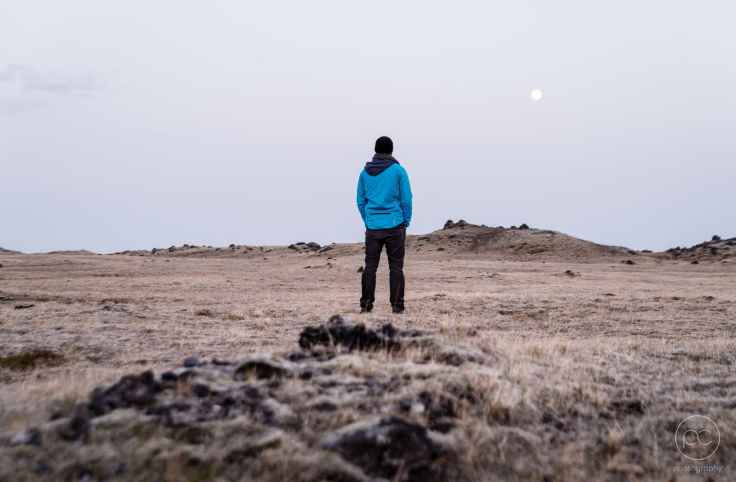
This can be difficult in the daily noise and bustle around us– particularly in this season! We have filled Christmas with sparkle and glitter; the ringing of bells and endless songs about reindeer and jolly fat men and decorated trees. But this is NOT Christmas– not yet. The bright lights of Christmas, the joyful songs of the angel hosts, all need a proper context. And that means a cold, dark night more than 2000 years ago. It means an emptiness. A heavenly silence that stretched over 400 years. Silence from heaven; silence in the earth; silence in the soul.
In silence, we ponder. We wait. We anticipate–perhaps even dread– what may come. What will God say when He finally speaks again? Will it be judgment–severe, holy, deserved, undeniable? Will it be condemnation? Will it be that final pronouncement of God’s Holy Sovereignty, and our utter failure to measure up?
The joy of Christmas comes, not because of seeing light shows and snow glistening on trees, or listening to jingle bells and laughter. It comes from knowing that God’s Word is Peace! It is reconciliation and restoration. It is Freedom and Victory over Sin and silence and eternal Death! It is not first felt in the blaring of anthems and resounding of carols. It is in the soft cooing of new Life coming into a dark and silent world. Of everlasting love being wrapped in rags and gently laid in straw.
God delights in turning earthly things upside-down. And so He comes to us, not with fanfares and regal procession, but in stillness and gentleness, in the middle of a dark and silent night.
Have you ever had someone give you “the silent treatment?” Or have you ever been angry or disgusted and refused to talk to someone? It can be very frustrating. You may ask a simple question– even look the other person in the eye–only to face a wall of silence. Silence of this type can be oppressive. It is less an absence of sound than a presence of something heavy and dark.
God spoke through His prophets, messengers (angels), and sometimes, in visions throughout the days of the Old Testament. But then, He was silent. For four hundred years! There were no new messages, no prophetic visions– just a gloomy silence. There was still noise in the world– chaos, confusion, war, debates, chattering, gossip– but no word from God. He had spoken for thousands of years, and His laws and the words of the prophets still stood, promising a coming Messiah, a rescue and a redemption for the nation of Israel. But then, nothing.
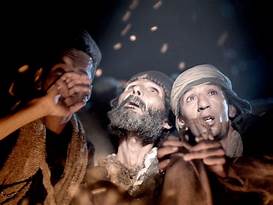
Imagine how much more glorious it must have been when the angel hosts announced the Messiah’s birth to the shepherds! After such a long silence, they must have nearly exploded with the joyous news! The shepherds, already frightened by the sudden appearance, must have been held in thrall to hear voices from the heavenly realms– something that hadn’t been heard or even heard of for over a dozen generations!
And that’s how it often is–after a period of silence, the sound comes spilling out in a mad rush. Feelings, thoughts, announcements, all waiting to rush out in an explosion of sound and excitement. The silence is over! The heaviness is lifted. The dam has burst, and the words pour out in a great flood.
When Jesus– the Word of God– arrived, He spoke to many. He told parables and spoke words of healing and kindness and even warning. But at His trial, He refused to answer many of the questions that were posed. He dared to give “the silent treatment” to Pontius Pilate and the Pharisees. People who had refused to listen to Him during his ministry suddenly wanted answers. But He had already spoken and told them everything they needed to know.
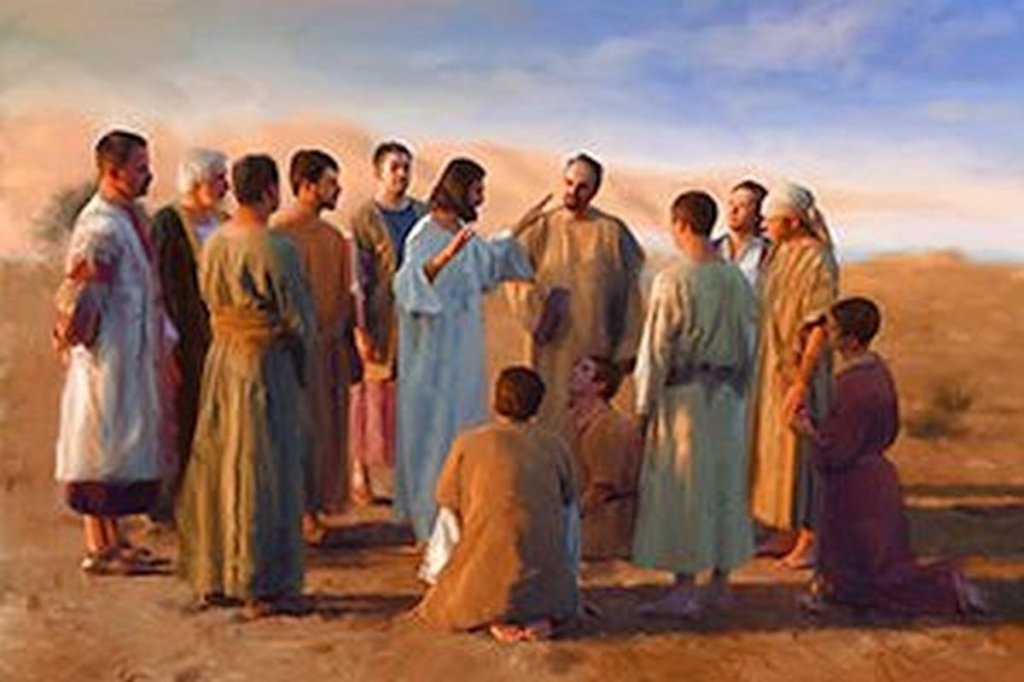
Not so with His disciples. He spoke to them plainly and promised them a “counselor.” The Holy Spirit would speak, and would teach them how to speak. There would be no more “silent treatment” for those who knew the Spirit. No need for angelic messengers or prophetic visions (though God could still choose to use them as well)–God’s Spirit would dwell in the hearts and minds of His people.
Have you ever given God the “silent treatment?” How long have you held in resentment or doubt over something God did or didn’t do; a prayer He answered in a way that left you feeling hurt or confused? Is there a wall of silence on your part? It may not even be full silence. Is there some issue or topic you refuse to bring to prayer? Some secret desire you won’t discuss with Him? How does it weigh down the rest of your relationship?
I have found myself holding things back, keeping silent about things in my life. It stunts my growth and hinders my prayers. But when I finally break my silence, pouring out the full measure of my fears, confusion, and deepest desires, it is like a weight sliding away, and light breaking through the clouds. The joy and relief are overwhelming. (See Psalm 32 https://www.biblegateway.com/passage/?search=Psalm+32&version=ESV) What the psalmist says about sin can apply to doubt, anger, or confusion, as well. Unconfessed and unspoken, it will weigh upon us.
Don’t give God the “silent treatment.” He already knows all that you would keep back from Him. Silence doesn’t “treat” anything– real healing comes from open communication with the Great Physician. Don’t wait four hundred years– or even four hundred seconds! Let the words (and maybe the tears) flow…And don’t be surprised if your silence is replaced with singing!
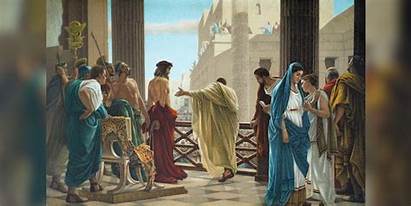
The events of Good Friday are well recorded in all four of the gospels, (see Matthew 27, Mark 15, Luke 23, and John 19 https://www.biblegateway.com/passage/?search=JOhn%2019&version=NIV ) but it is still difficult to imagine exactly what it must have been like that day. The first crow of the rooster came as Jesus was still on trial before the Sanhedrin, hours of questioning and betrayal that would continue as the sun rose and Jesus as passed on up the chain of power to Pontius Pilate for more questioning. The sun was still climbing as Jesus was beaten and paraded before the crowds. The swell of voices shouting for His execution would have echoed through the public square–“Crucify Him! Crucify Him!” “We have no king but Caesar!” The same taunting would continue as Jesus walked the long Via Dolorosa and came to Golgotha.
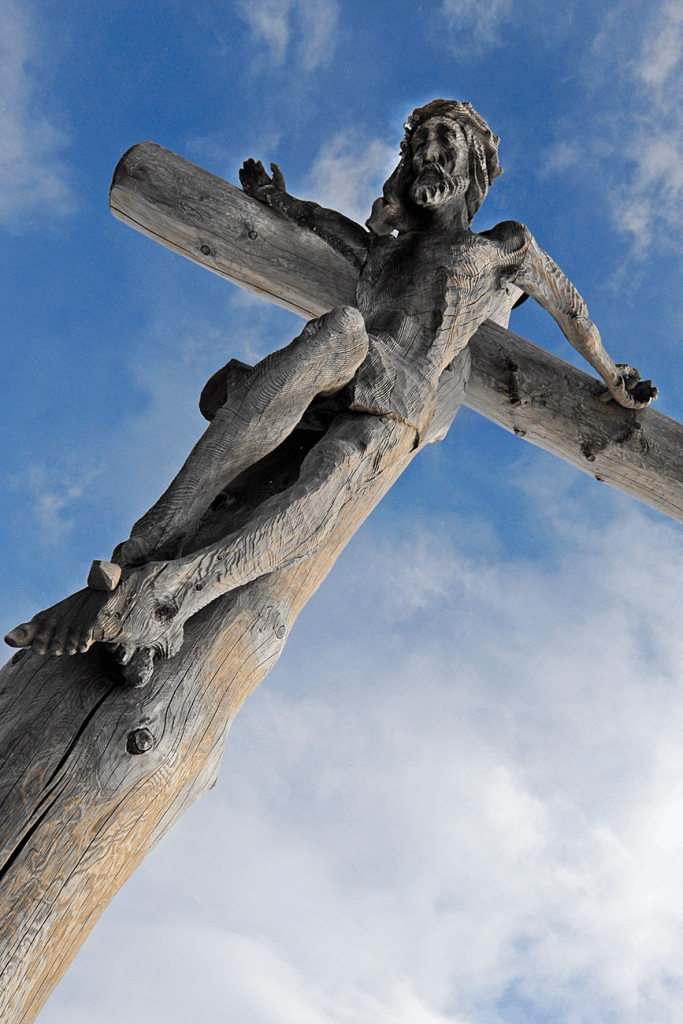
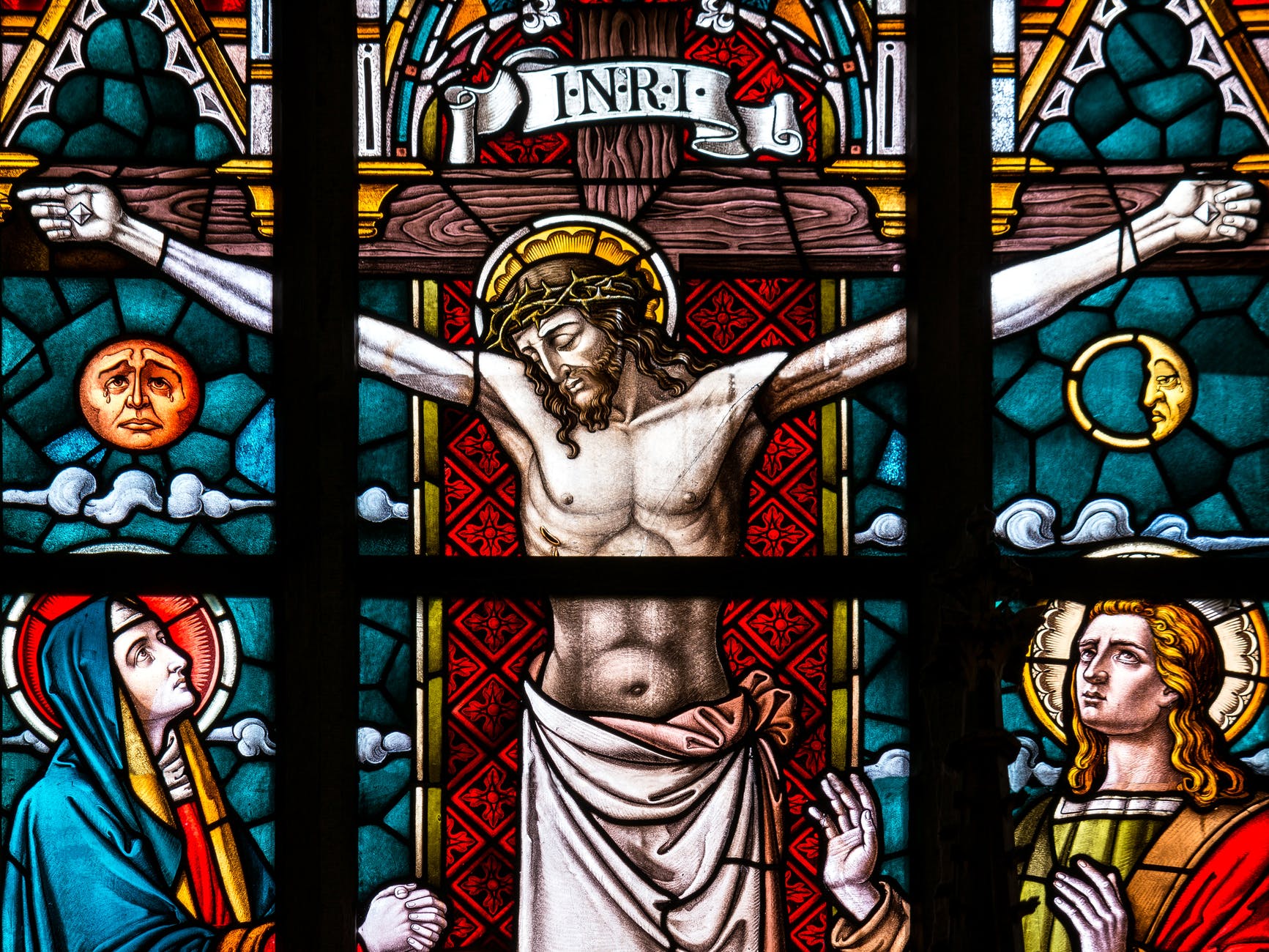
By nine that morning, Jesus, bloodied, whipped, exhausted, humiliated, betrayed, and struggling for every breath, was nailed to the cross. He was fully exposed to the bright morning sun, the heat, and all the stares of the angry mob who came to revel in His anguish. He was unable to wipe the blood or salty sweat that trickled from His brow and ran into His eyes; unable to swat away flies who buzzed around His face, elbows, or cheeks. He was unable to block out the noise–curses, curious questions, His Mother’s agonized cries, and, in the lull, the ordinary noises of a crowded city preparing for a celebration.
As noon approached, there would be the aromas of roasted lamb, market fish, baking bread. The crowds were quieter now, some may have left to seek out lunch or relief from the heat. But the heat and the sun disappeared as darkness rolled in. The angry energy gave way to fear and dread. The earlier shouting was now a an ominous rumbling among the remaining spectators. It was quiet enough to hear Jesus address His Mother and His disciple, John, and answer the thief on the neighboring cross, promising to see him in Paradise. It was possible to hear Jesus cry out later, His voice raspy and broken, but clearly in anguish, “Eloi, Elioi, lama sabachthani!?”
Perhaps it even got so quiet, as it sometimes does in darkness, that you could hear the three men on the crosses struggling to take each breath–their tortured muscled straining to lift their weight enough to get air past their parched lips and tongues–in and out, as distended muscles demanded more oxygen than their bodies could provide. Did the members of the crowd listen to their own heartbeats in those moments?
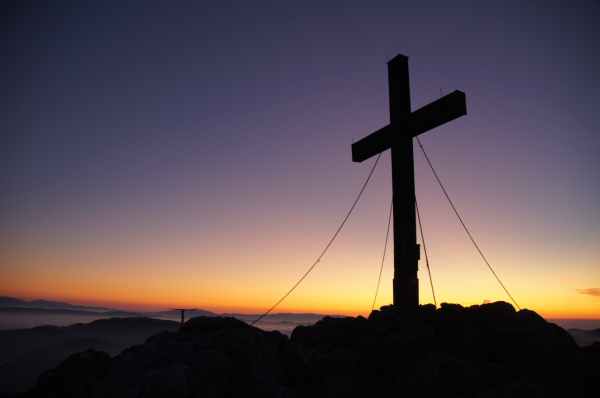
The unnatural darkness would have magnified the moment when Jesus, the Light of the World, breathed His last breath. And I imagine in the moment after that a silence so deafening, so complete, as the Word of God, the Creator of Life and Giver of Breath departed the Earth– as though all light and sound imploded at the loss. A split second only, but one so intensely silent that it must have taken the breath of every onlooker.
And then, the sound returned full-force– the Earth quaking, the skies crashing, Creation gasping, the Temple Veil ripping, and terrified people rediscovering their ability to cry out. Noise–piercing, and violent and sudden, bringing with it a return of the angry energy of before. But the energy is different now. Subdued. Nervous. Desperate. Empty…
There is a sickness in our world. Call it racism, or bigotry, or prejudice. Call it power, or oppression, or tyranny. Trace its roots to fear, to greed, to a lust for power, to pride, to hatred… Expose it as government overreach, police brutality, white supremacy, corruption, indifference to the suffering of others. Protest it with signs, looting, rioting, tear gas, lines of police officers in riot gear, shouting, and anger. Lots of anger.
There is not enough anger in the world to heal it.
Anger is a natural and even God-given emotion. God gets angry; even wrathful. It is right to be angry at injustice and hatred; division, greed, apathy, inequality, brutality, oppression, poverty, sickness, and death– they are unnatural, wrong, maddening.
But anger, even justified anger, cannot heal. It cannot build up, bind wounds, create peace. Anger feels powerful. It is active, dynamic, it tears down and threatens some of the powers that have, in their time, threatened us or those we love. It draws mobs that seem to share our anger– it looks like solidarity, even unity. It makes headlines. It creates “buzz.” It feels righteous and “right.” And it creates change. In the short term, anger “works.” Surging anger forces the oppressor to be quiet, go into hiding, make some small concessions…for now. Maybe they will pass legislation. Maybe they will give lip service to certain ideals. For now.
God understands anger– he even shares anger. Jesus even got angry. But God does not sanction letting our anger spill into vengeance, violence, and retaliation of sin for sin. Our anger does not give us the right to judge others, oppress others, steal destroy, or condemn.
The New Life 17 Now this I say and testify in the Lord, that you must no longer walk as the Gentiles do, in the futility of their minds. 18 They are darkened in their understanding, alienated from the life of God because of the ignorance that is in them, due to their hardness of heart. 19 They have become callous and have given themselves up to sensuality, greedy to practice every kind of impurity. 20 But that is not the way you learned Christ!— 21 assuming that you have heard about him and were taught in him, as the truth is in Jesus, 22 to put off your old self,[f] which belongs to your former manner of life and is corrupt through deceitful desires, 23 and to be renewed in the spirit of your minds, 24 and to put on the new self, created after the likeness of God in true righteousness and holiness. 25 Therefore, having put away falsehood, let each one of you speak the truth with his neighbor, for we are members one of another. 26 Be angry and do not sin; do not let the sun go down on your anger, 27 and give no opportunity to the devil. 28 Let the thief no longer steal, but rather let him labor, doing honest work with his own hands, so that he may have something to share with anyone in need. 29 Let no corrupting talk come out of your mouths, but only such as is good for building up, as fits the occasion, that it may give grace to those who hear. 30 And do not grieve the Holy Spirit of God, by whom you were sealed for the day of redemption. 31 Let all bitterness and wrath and anger and clamor and slander be put away from you, along with all malice. 32 Be kind to one another, tenderhearted, forgiving one another, as God in Christ forgave you.
If you have read this far, some of you will say that I am being unfair– speaking out against protesters, but not against the evil they are protesting. And if I have never spoken out against injustice, if I have never called upon people to seek peace, never lifted my hand to help my neighbors, never encouraged, never offered help, never shared in others’ grief, then I am the worst of hypocrites. Stop reading.
Anger asks us to act NOW– it asks us to abandon patience, prayer, and the promises of God, and take matters into our own hands–in our own power, in the moment, for the moment. And it tells us that we can and should act in the place of God to achieve what we believe to be His ends. Often, it asks us to act with little information, no time to reflect, and at the behest of others, who wish to use our anger to further their ends. Anger tells us that we can force evil people to surrender their power without being corrupted by it. And anger tells us that it has the only solution– the only action– that can bring peace.
Does this mean that no one should be angry? That we should do nothing active in the face of evil? ABSOLUTELY NOT! We should speak truth to our neighbors– not just the truth of our anger, but the truth of our hope for justice, our dependence on God, our love for our brothers and sisters, and our need for Mercy. We must not turn a blind eye to injustice, but we must work toward justice– not just vengeance. We must not sit silent in the face of bigotry, but we must love extravagantly– even those who seem unlovable and unwilling to love us in return. We must not silence those who are angry and hurt, but listen with respect and compassion–as we would wish to be heard.
And we MUST pray! Pray for the grieving; pray for our enemies; pray for justice; pray for peace. Pray even when we don’t have the answers– especially when we don’t have the answers. Pray–fervently, feverishly– pray on our knees and as we pace in frustration. Pray like we’ve never prayed before. Pray until we break a sweat; until we hunger and thirst for GOD’S presence on every street corner, and in every household, and at every riot, and every government office. Those who would silence our prayers and hold them in disdain are trying to silence the power of God Himself! They cannot win, but they can keep us from sharing in God’s ultimate victory by marching in a fake war, instead of defending the Kingdom. We must take our anger to God and let Him show us the path to justice, action, peace, and healing. He may ask us to step out in ways we never imagined–loving our enemy; sharing the gospel; standing in solidarity with those we used to fear; forgiving those who have hurt us; asking forgiveness from those we have hurt.
In my last post, I talked about “When God Doesn’t Answer..” Of course, there are times when God seems silent, and I spoke about a couple of times when that was true in my life. God’s timing and wisdom are reminders that He is God– and I am NOT.
I want to revisit that theme for a bit. I was reading the post and realized that I spoke of the waiting and hoping and God’s faithfulness in sending an answer in the person of David, who became my husband. I spoke of God’s ways being higher and better than our ways– and they are. But I left out one aspect of God’s character. Forgiveness.
It is tempting, and I gave in to the temptation, to focus on my feelings, and my positive actions during those years of waiting– taking good advice and making good use of my time as a single to volunteer and serve. But I also did plenty of wallowing in self-pity, of questioning God’s goodness and His timing. I slipped into bad habits that I had to break as a married woman– selfish habits and indulgent thought patterns. And I find myself battling new bad habits, slipping back into depression and isolation, or taking for granted the blessings of married life.
I don’t say this to negate God’s goodness in answering my longing for a husband and family, nor to suggest that God’s long silence and eventual answer were any less gracious and loving. Instead, I want to thank Him for being patient with me, for extending both mercy and grace in His good time, and in spite of my bad behavior.
Photo by u0410u043du043du0430 u0412u0430u0441u0438u043bu044cu0435u0432u0430 on Pexels.com
God’s mercy and his goodness surround us–especially when we don’t see them. When we doubt His presence, when we accuse Him of not caring, when we pout, and posture, and resent the road He has us traveling. God’s word is full of stories of people who waited– some patiently, some not so much– and people who wandered, and even rebelled. And many of them perished without ever seeing God’s answer or without repenting. But I cannot think of any instance where someone who sought God’s face or His forgiveness and was turned away– EVER. God followed the grumbling nation of Israel for forty years, His anger breaking out against them multiple times, but He remained faithful to His promise to bring them to the Promised Land. https://www.biblegateway.com/passage/?search=Deuteronomy+1&version=NCV God went so far as to remove His Spirit from King Saul, but He allowed Saul to continue to reign, even when Saul tried to kill God’s anointed one and his own son-in-law. https://www.biblegateway.com/passage/?search=1+Samuel+19-24&version=NIV God followed David from his days as a shepherd boy through his reign as Israel’s king– in spite of David’s sins, in spite of the drama and chaos of his household, in spite of betrayal by his own sons and generals.https://www.biblegateway.com/passage/?search=1+kings+2%3A1-10&version=CSB God chased down Saul on the road to Damascus– after Saul had hunted and hounded faithful followers of the Messiah.https://www.biblegateway.com/passage/?search=acts+8%3A1-3%3B+9%3A1-18&version=ESV
God is patient and faithful with us– whether we have grumbled at His timing, or turned our back on Him for a season, or actively rebelled against His sovereignty and kindness.
When God seems silent, we often forget that He also remains silent in the face of our grumbling. He withholds His righteous judgment, giving us ample opportunities to rethink, repent, and return. His silence reminds us that He is God– and we are not. He does not owe us an answer– nor does He owe us a second chance. But He will give us both in His time. Because He is God– in His sovereignty, in His boundless Love, and in His mercy–and I am not. I am not God. I am the (sometimes) grateful recipient of all that He gives.
May I be grateful today, not just for the blessings and gifts and answered prayers, but for the patience, grace and mercy I don’t deserve.
We experienced some storms last week, and while we didn’t have a lot of damage from the winds and rain, my husband and I lost our internet connection over the weekend. No wireless internet meant no Facebook, no WordPress, no e-mail, and no cash register at our little shop downstairs. We had to do every transaction by hand until we could rig up something so our smart phone could accept cards; no new chip cards, no Apple Pay or PayPal. And while our phone could begin to accept limited credit payments, it could not provide any printed receipts, nor could it do double duty– we either had a phone or a point-of-sale device, but not both!
It was an inconvenience, but not a disaster. I thought about thousands of people who are stuck in the aftermath of hurricanes, tornadoes, floods, earthquakes, and blizzards who have no electricity, no phone lines, no cell service, no roads, no water or sewer lines–cut off from common necessities and basic communication. Suddenly, an emergency becomes even more tragic because of the isolation, and the inability to ask for help or to hear any message of hope. (Of course, my husband would like me to put in a short plug here about the advantages of amateur radio– the radios can run on battery power and still connect over hundreds of miles!)
Isolation is an earthly concept. God is eternally Triune. He created us for relationship; from the very beginning, he declared that it is not good for “man” to be alone (Genesis 2:18) God instituted marriage, and families, and communities so that we would stay connected, and he himself came to walk and talk with mankind in the Garden of Eden before the Fall. It is mankind who hid from God and broke off communication– one of the effects of Sin is the desire to run away, to separate, to isolate and cut off relationships and break off contact.
That is one reason that prayer is so basic; so essential. It is a lifeline to the one who loves us best, who knows what we need, and has the power to hear us, to help us, to lift us up wherever we may be, whatever our circumstances.
But sometimes, even when we want to talk to God, it seems impossible to speak or feel like he hears us. Sometimes, we are the ones who can’t come up with words, or can’t settle our minds to seek his face. Sometimes, we pour out our hearts and wait in silence for an answer. Why should it be that just when we need it most, prayer seems the hardest?
I wish I had a pithy, perfect answer. I don’t know. I have a few incomplete thoughts, though:
what comes easily has less value to us. Cheap and pointless conversation doesn’t make us work hard, but it also leaves us empty and unsatisfied. Crying out to God is hard–it humbles us, it strips us bare and uncovers all our pretenses and subterfuge. The true depth of our need is ripped out of us like a tumor, and it hurts, but it is a healing hurt. Waiting in silence can cause us to become restless and to doubt, but it also can cause us to listen more attentively– we strain to hear the answer; we stop the white noise of busyness and half-hearted hand-wringing, and listen with our whole being. And the smallest whisper– that still, small voice– has the power of the first rain after a long drought. We are revitalized and our strength renewed as never before.
sometimes, though not always, we find prayer difficult because we have not really prayed for a long time (if ever)– we have developed a habit of saying words to the empty air and thinking that the words themselves hold some power of hope or magic or self-fulfilling prophecy. When life’s realities cannot be wished away with simple words, we search for distractions, for other types of words, for other “realities”, when we should be searching for our maker and the lover of our souls.
sometimes, it is a matter of unacknowledged or unconfessed sin that keeps us from breaking through in prayer. However, there are many people who will use this as a default position, and that, too, is wrong. Jesus had such difficulty in praying at Gethsemane that he sweat drops of blood— NOT because of unconfessed sin, but because his heart was that overwhelmed. Still, we should examine ourselves to see if we have started to move away from God– better to turn back than to go father afield.
sometimes, as with Christ in the Garden, our hearts are just overwhelmed in the moment– it’s hard to breathe! It’s hard to go on; it’s hard to ask for help; it’s hard to keep the faith. Just because it’s difficult, don’t give up– even if all you can do is groan or whimper–even if it feels like God has closed up the heavens and left you alone–don’t give up. God DOES hear, he DOES care. Sometimes, we are inches from victory– don’t give up!
And what can we do during those times? Again, I wish I had better answers, but what I have, I want to share– some from my own experience, some wisdom from others, some of both:
Learn to “pray outside the box”–
Sing–sing the blues, sing an old hymn, sing along with the radio, sing like nobody else is listening
Write it out– write a letter, write an angry letter if you have to– write a rant, write a poem, write out all your questions
Move– dance, pace, run, punch a pillow, do some sit-ups, mop the floor, scrub the sink– as you get a rhythm going, add your thoughts or questions to your movements
Cry it out– it’s ok to cry, moan, sob, weep, or just stare into space and rock yourself to sleep after all the tears have dried up. Jesus wept (John 11:35)– what makes us think that we can’t?
Count your blessings
Make a list of what you have; what you have to be grateful for; what you have experienced and enjoyed now or in the past
Make a list of your questions, concerns, needs, wants, wishes–Now think back ten years and make a list of what you wanted then, and how many of those concerns have been answered, altered, or forgotten.
Put yourself in another time or place– what do you have here and now that others lack? How do your present troubles compare to what others have had to deal with?
Ramp up your pursuit of God in other areas–
Search for answers in His word
Seek the companionship of someone you trust who will help you keep on going
Seek out counselors, web sites, and/or a church group or family who can keep you from becoming isolated
The single most important thing is to continue the pursuit– seek God with all your heart–and you will find him sufficient through the silent times, as well as through the roaring of the fiercest storms.






























 Pursuing Prayer