Praying for the Enemy

pexels-photo-984953.jpeg

Everybody has enemies.  And when I use the term “enemies”, I’m mosl referring to two types of people.  There are the people who are your enemies– they hate you.  They are scheming to hurt or destroy you; people who defame or slander you; people who betray you; people who cheat and lie to and steal from and abuse you or those closest to you.  Then there are the people for whom you are an enemy– you don’t like them, you don’t trust them, you don’t respect them; you probably defame or gossip about them, and you hurt them, even if it is unintentional.  Some enemies fall into both categories, but not all.

And then there are existential “enemies”– not personal enemies, but those who live in opposition to our way of life, or our beliefs, or our nation. There are enemies within and enemies without– those who argue in the street, and enemies who plan catastrophic destruction to entire groups of people. And sometimes, those enemies can include “us.” “Us” v. “Them.”

I would love to say that I have no enemies–of any type.  But, alas, they exist.   God calls on us to love our enemies, to pray for them, to show them kindness, and to bless them!  In our own power, we can’t do this.  We can make the attempt to forgive the unforgivable, to love the unlovable, and reconcile the impossible, but we fall short in our attempts:  the betrayal is too deep; the hurt is too overwhelming; the damage is irreversible, and the impossible is just…well…impossible.

pexels-photo-1058068.jpeg


 Loving our enemies is one of the proofs of God’s existence, his goodness, his power, his own boundless love at work through our imperfect words and efforts.  Praying for our enemies, showing kindness and grace in the face of hatred and betrayal–these are miracles that defy explanation.  That is one good reason to keep praying for the enemies in our lives– God can work through us to effect reconciliation, healing, and peace. And this includes those enemies who want to do is immeasurable harm. We don’t have to pray for their triumph at our expense– but we should be praying for their salvation; for their safety; for their good! Yes, even “those” enemies. God can change even the most horrific situation.

pexels-photo-984926.jpeg

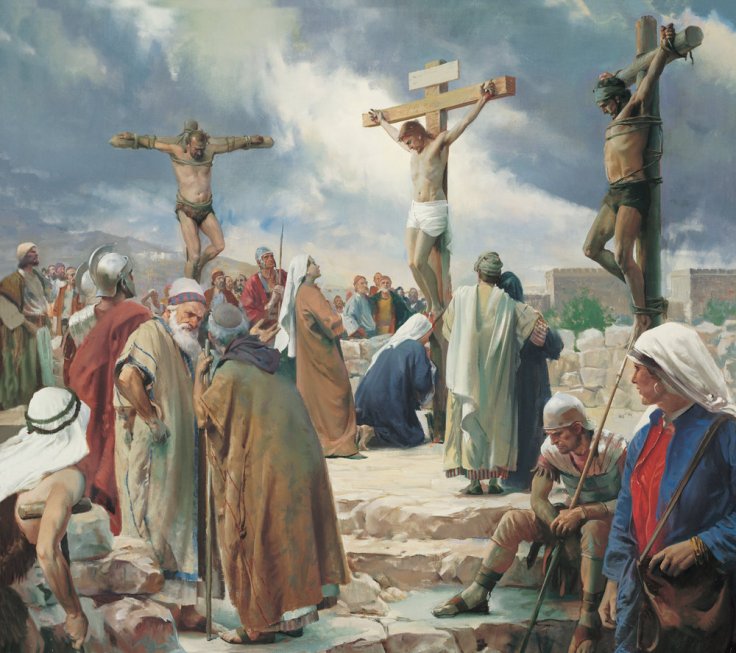
Another good reason is that prayer changes US.  Praying for our enemies is difficult.  It is humbling.  It breaks our pride and forces us to let go of the bitterness and recognize God’s rightful place as judge, avenger, and healer.  It reminds us that God’s love, being boundless and eternal, stretches to those people who don’t deserve it, whether that is the hurtful person you don’t want to forgive, or the hurtful YOU who needs to be forgiven. God even loves those who seek our destruction. God loves those who hate HIM! God prayed for those who crucified Him– while He was dying. Can we say that we follow Him and do any less?

But praying for our enemies isn’t just about bringing peace and harmony or transforming us into better versions of ourselves.  No amount of willpower, or good intention, or logic, or internal fortitude, or peaceful meditation, or persuasive rhetoric, or even powerful prayer will be enough to eliminate our enemies or make us perfect in love. Our prayers may stop neighborhood chaos or family feuds. They may even cause wars to cease. But they may NOT. Jesus is the Prince of Peace– not me. My job is to recognize that I cannot bring peace, but I can live in the Peace that passes all understanding– even in the midst of chaos and turmoil. And I can show love, even as I stand up for truth and hold fast to God’s Word. Love doesn’t mean that I will compromise. But I will respond with compassion– even in conflict.


pexels-photo-669032.jpeg

We pray FOR our enemies, but not all of our enemies.  There are two enemies we need to pray AGAINST– Sin and Satan.  They are the true enemies, trying to destroy both sinner and sinned-against.  They are not just our enemies, but enemies of God.  Both are defeated.  Their power is illusory, and their damage, while intensely painful, is temporary.  And when we refuse to pray for our human “enemies” we serve their destructive purposes. When we follow our own fears, hurts, and feelings of outrage, instead of God’s wisdom in showing love to our enemies, they gain a temporary victory. And we end up on the losing end!


God Doesn’t Make Mistakes

Our current culture is obsessed with “fixing” things– including ourselves. Makeovers, plastic surgery, Botox injections, even gender reassignment. We seem to be convinced that God, who knit us together in our mother’s womb, got it “wrong.” I’m not opposed to someone wanting to look or feel more attractive, and there are many surgeries and makeover techniques that can actually improve our physical health. Not all such actions come from a rebellion against God’s design, but in many cases, people are trying to remake themselves in their own “fantasy” image– women having plastic surgery to make themselves look more like a Barbie doll, or like their online avatar; some people even risking their lives just to look like something they’re not.

The smug Christian may answer such behavior with, “God made you that way, and God doesn’t make mistakes!” But such an answer is dismissive of some very real concerns. In fact, it may lead people who experience dysphoria and chronic health crises to conclude that God either doesn’t care about them, or that He simply doesn’t exist.

What about my family member who was born with a rare condition? She experienced strokes in utero– she was stricken in the womb–and she had to have urgent brain surgery at six months. She is bound to a bed or wheelchair for life. Yet God created her. Did He make a mistake? What about the person who was born a biological boy, but an accident in his infancy crushed his “boy parts” and the doctors did emergency surgery and reassigned his gender? Was God sleeping on the job? If He knows all that will happen to us, why not just create that person to be a girl from the beginning? What about children born with a cleft palate? Or those born without hands? How can a loving God sit back and let such things happen? And how can a Christian say, “God doesn’t make mistakes.”

I don’t have a mic-drop, definitive, uncontestable answer for such questions. I don’t know why God chooses to allow certain people to suffer physically, mentally, or emotionally, through no fault of their own. I don’t understand why some people develop ALS or dementia, either. What I do know is that God’s original creation was perfect. And when Sin entered the world, it wasn’t just that people sinned– the whole world was infected. It’s not just that people are born with defects– all of nature suffers. There are diseases that cause deformity in animals, diseases that attacks certain species of trees or plants. We have earthquakes and volcano eruptions, sink holes, and hurricanes. And some people carry genetic diseases that impact their life from conception to death. Others will face mental health issues– some of which won’t show up for many years.

But God doesn’t MAKE such things happen. How do I know this? Jesus Himself addressed this issue during His ministry. In the gospel of John, chapter 9, Jesus and His disciples come across a man born blind. The disciples assume that the “cause” of this man’s affliction is a particular sin– either his own or his parents’. They assume that bad things happen to people because God is punishing them for something they’ve done. But Jesus dismisses that reasoning. “This happened so the power of God could be seen in him” (John 9:3 NLT). LIFE is God’s gift– not necessarily perfect health or a problem-free existence. In fact, later in John’s gospel, Jesus says, “In this world you WILL HAVE TROUBLE. But take heart! I have overcome the world.” (John 16:33 NIV–emphasis added)

God doesn’t make mistakes– He offers redemption. There are some things in this world that we have the power to “fix”– we can forgive those who wrong us. We can work to bring justice and peace to those around us. We can build and re-build relationships. But there are many things that only God can “fix.” God has the power to heal bodies, minds, and hearts. He has the power to give us the strength necessary to endure trials and afflictions and grief. And He can give us a peace that passes all understanding when we trust Him in the middle of life’s struggles.

That doesn’t mean that we will always understand or enjoy what life brings our way. We DO live in a fallen and disease-ridden world. But this is NOT the ultimate fate for those who trust God.

It is when we refuse to trust God and His design that we lose out on the strength, peace, and joy of walking (or even lying in bed) by His side! It is when we try to “fix” things in our own power that we miss out on seeing the mighty power of God working for our ultimate GOOD. God allows for mistakes– but His joy and His plan are to make all things NEW!

ACT-ing On Prayer

Pursuing a lifestyle of prayer means more than just coming to God with a list of requests and a couple of scattered “Thank You’s” every now and again. Prayer is a discipline– that means being a disciple of prayer! How can I learn to pray for effectively? Commune with God in a richer and more satisfying way? There are many tools and methods that can help with this. One of them is called the ACTS method.

ACTS is an acronym for Adoration, Confession, Thanksgiving, Supplication. And praying in this order can radically transform the way we enter into prayer and the way we respond to God’s answers. On a busy day, I often start prayer with my supplications– my requests, my needs, my hopes and desires. I may be approaching God, but my thoughts and heart are all about “what’s in this relationship for me!” “I want healing for ______, and protection for my family, and a resolution to this problem at work, and…”

But the ACTS method flips this order–it starts with Adoration. It begins by coming to God and acknowledging who HE IS. Worship will outweigh worry. Adoration accentuates God’s Ability and His Authority over whatever is on our mind. It also leads naturally into

Confession. Not the kind that masks false humility– “Woe is me, I’m so unworthy. I am a worm, and I don’t deserve to be happy or free or victorious in Christ.” Rather, confession comes as we recognize who we are in relation to God. We are not worthy of God’s blessings in our own righteousness, but IN CHRIST, we are able to come boldly before God in dependence and joyful acceptance of HIS righteousness. And we can’t accept it if we are still hanging on to old habits and sinful ways of thinking. We must agree with God, let go of whatever is holding us back, and gladly prepare to move forward!

Now we are in Thanksgiving mode. We are reminded of God’s mercy, and His faithful care of us. He has been faithful to answer prayers in the past, and to be with us, even in times of trouble and seeming silence. He IS there. He DOES listen. His mercies are new every morning! (Lamentations 2:22-23)

NOW, we are ready to present our Supplications. In fact, we are ready to follow the direction of the Apostle Paul, when he told the Philippian believers: “Do not be anxious about anything, but in every situation, by prayer and petition, with thanksgiving, present your requests to God.  And the peace of God, which transcends all understanding, will guard your hearts and your minds in Christ Jesus.” Philippians 4:6-7 (NIV).

There are many times when we pray in desperation or in a hurry about a specific need, when this approach can be modified. But for deep prayers during a quiet time, or in a small group, the ACTS method can really boost our connection with the Holy Spirit. We begin by thinking we are praying about “something,” and are amazed to re-discover that prayer is really about “someone!”

I have found that such prayers also cause me to more readily ACT in the matters I bring up for request. I’m not just turning them over to God because I am helpless and He is my last resort. Even when I “know” that is not the case, when I focus on the problem and not the Provider and Protector, I forget that He can give me the power to “do all things” (see Philippians 4:13) in Christ’s strength and for His Glory!

Holy!

Not so much a name of God as a description of His Character, the word Holy means “sacred, separate or set apart, morally blameless; complete; whole; lacking nothing; worthy of worship.” God is Holy. There is no force, no person, no entity who can rival God or be a peer of God. Satan is not God’s equal. Sin, death, evil, none of these can successfully oppose God, or cause Him to stumble or challenge Him. God is Supreme– Alone in His Power and Glory and Sovereignty.

I pray to a Holy God. I pray with the guidance of His Holy Spirit. I follow Christ, who demonstrated Holiness in human form during His time on earth. Sinless perfection, He walked among sinful men and women, healing, teaching, and showing perfect Love and Mercy.

We live in a world that constantly questions this aspect of God. How can a Holy God allow people to suffer injustice, doubts and struggles, and even death? Surely, this is a mistake! God must have failed at some point, or we would live in a perfect world.

God doesn’t make mistakes! And sometimes, that is a concept that can be difficult to fully comprehend. Yes, we know God is “good.” And we know He is powerful. But He is so much more than that. He is without guilt, without doubt, without confusion, without failure. When I see and experience injustice or disease, disappointment, misunderstanding, exhaustion, grief–these are not from God. They come from a fallen world in rebellion against our perfect maker.

Except we once did! Adam and Eve lived in the Garden of Eden, and God provided for their every need. They didn’t need clothing– it never got cold, and the insects, animals, and plants posed no threats. They didn’t need the Law, because they walked with God and knew only good. They didn’t need jobs or houses, money or banks, governments, medicine, dictionaries, alarm clocks or Wikipedia. God didn’t sin– they did. And God didn’t get caught by surprise by the Fall– He already had planned for mankind’s redemption. God didn’t fail. He was, is, and will always be Holy.

This also means He is always “wholly” sufficient for our every need. Even the needs to be understood and to be rescued from our own failures. God, who is Holy, sent His Holy Son to live IN our fallen world– to taste OUR failure, and to set things right. Whatever we suffer now is not God’s “fault,” and it has already been made right in His perfect plan. He understands our temporary pain and suffering differently than we do, because He sees the finished product– our renewal, redemption, and “perfection” in Him!

So I am very thankful today for the Holiness of God. It is something I cannot fully understand until I experience it first-hand, but I can trust in it, put my hope in it, and LIVE in the promise of it, even when I stumble, fail, and struggle.

For more on the Holiness of God, see https://www.whatchristianswanttoknow.com/what-is-the-biblical-definition-of-holy/#:~:text=If%20you%20think%20God%20is%20concerned https://www.biblestudytools.com/bible-study/topical-studies/what-does-it-mean-to-be-holy.html

Lamb of God

Abraham put the wood on Isaac’s shoulder, but he carried the hot coals and the knife. As the two of them walked along, Isaac said, “Father, we have the coals and the wood, but where is the lamb for the sacrifice?”
“My son,” Abraham answered, “God will provide the lamb.”
(Genesis 22:6-8 Contemporary English Version)

The next day John saw Jesus coming toward him and said, “Look, the Lamb of God, who takes away the sin of the world!  (John 1:29 NIV)

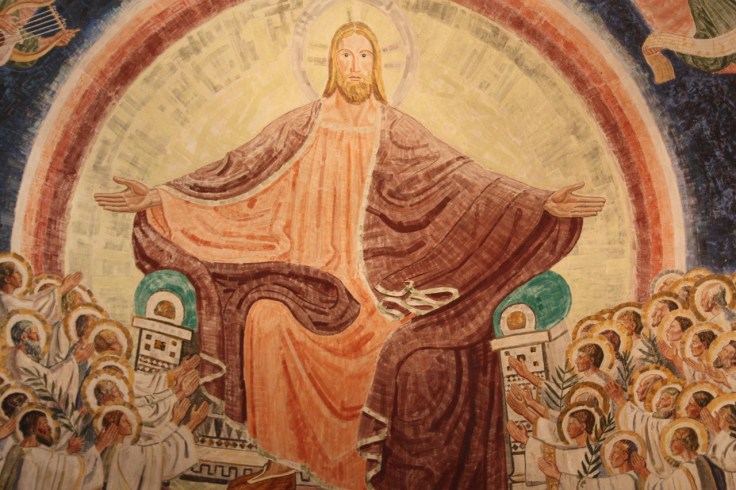
After this I looked, and there before me was a great multitude that no one could count, from every nation, tribe, people and language, standing before the throne and before the Lamb. They were wearing white robes and were holding palm branches in their hands. 10 And they cried out in a loud voice:
“Salvation belongs to our God,
who sits on the throne,
and to the Lamb.”
(Revelation 7:9-10 NIV)

In my last post, I spoke of Jesus being “The Good Shepherd.” But He is also the Lamb– the Lamb of God, who takes away the sin of the world! This image may seem to contrast with the previous Names of God– names full of authority, power, might, wisdom, and strength. A lamb is powerless and has no authority. So, what can this name possibly tell us about God?

From the beginning, God used a lamb to represent innocence and sacrifice. Cain and Abel brought sacrifices to God– Cain brought crops he had grown; Abel brought a lamb. God was pleased with Abel’s sacrifice, more than Cain’s. The Bible doesn’t spell out exactly why, but I think the context of the rest of the Bible gives us a clue. When God gave His laws and regulations to the nation of Israel, He specified that the sacrifice for sin, for guilt, for peace, and for worship were to be animals–pure and innocent– their blood the factor that would bring atonement and peace. The innocent lambs would be killed, their blood poured out on the ground, their meat sacrificed on the altar, and the rest of their bodies (skin, bones, offal, etc.,) taken outside of the camp and destroyed. Vegetables, bread, herbs, wine– these could all be offered as free-will offerings, but they were not to be used for sacrifice. And the lambs (or other animals) had to be spotless and free of disease or disfigurement– perfect.

Sin is death– it doesn’t just bring disruption– it is fatal. Because God is HOLY, He cannot dismiss Sin with a shrug and say, “humans will be humans…”, or “it’s ok this once…” or “at least you learned your lesson.” But because the world is infected with Sin, even lambs and goats are not good enough to fully remove the stain and sentence of Sin. Only Holiness could do that.

Jesus is the Lamb of God. Just as Abel offered a lamb for a sacrifice; just as Abraham was ready and willing to offer his beloved son of the promise, God offered His only begotten Son as the only possible perfect sacrifice for Sin. Jesus came as a helpless, powerless babe. He lived a humble and obedient life of service and sacrifice. And He became the ultimate Sacrifice on the Cross.

Jesus is also the victorious Lamb of Revelation, worthy of all praise and adoration! God’s Might and Power are equaled only by His Grace and Lovingkindness. He is both Shepherd and warrior– fiercely protective of His people– and the sacrificial Servant Lamb who humbly serves both God and mankind. He is NOT a lamb without power or authority. But He willingly lays aside all the trappings of authority in order to teach us how to obey and follow Him.

He is God ALMIGHTY, and Ruler of All– but He is also gentle and humble. I do not pray to a God who is far off, aloof, distant, or unfeeling. I pray to the Lamb of God who was wounded for me, who willingly offered to become the sacrifice for my sins, and who died the death I deserved. And I pray to the Lamb who rose victorious, making what should have been the darkest day of history Good Friday!

Almighty!

I’ve been looking at the Names of God lately. In my last post, I meditated on “Adonai”– The LORD. God has the ultimate authority over all things. He is the Master; the King; the Ruler; the One LORD of All.

Today, I want to explore a related Name– Almighty. It is often used in conjunction with LORD. God is the LORD ALMIGHTY. Whereas LORD refers to God’s ultimate authority, Almighty refers to His Absolute Ability. He is all-powerful, all-wise– able to do exceedingly, abundantly, above all that we could ever ask or imagine (see Ephesians 3:20). There is literally nothing that God cannot do. There are many things He WILL not do– He will never leave or forsake those who are His; He will never be untrue to His own Word or break His promises; He will never change His nature or be untrue to it– but He CAN do whatever He wants.

And this is where we sometimes fail to grasp the fullness of His name, Almighty. We know that He is Mighty; that He is mightier than we are, at least. But He is the source of Everything! He is mightier than Nature–He spoke all of it into being! He is mightier than Time– He is unbound by time or age or deterioration. He is mightier than Sin and Death– He proved that through the death and resurrection of Jesus Christ! He is mightier than the dark emptiness of space– He holds the entire Universe in His Hands!

And that brings me to the subconscious wonder of the name, Almighty. God is not JUST all-powerful and eternally capable. His Almighty nature is GOOD! All of His power is regulated and matched by Mercy and Grace! He has the authority (as LORD) and the power (as the Almighty) to be a terrible enemy. In fact, Job speaks of this repeatedly when he feels that God is punishing him unfairly (see Job 27). I can’t argue against God and win; I can’t grapple with God and defeat Him (Jacob tried that in Genesis 32). I am powerless against God– physically, mentally, spiritually–I cannot “win” against God by fighting, arguing, cajoling, bargaining, or using any weapon. There is no army, no spirit, no power that can budge God from His plans.

But God is NOT my enemy or my rival! Only Sin and my own rebellion and pride can make me an enemy of God. In fact, He wants a relationship with me; He wants me to live in peace and harmony with Him! He has moved Heaven and Earth to reconcile me to Himself through the death and resurrection of Jesus Christ! He is like a mama bear or a lioness with their cubs, jealously guarding me from Sin and Death. He is my Father, my protector, my provider, and my Shepherd– the ALMIGHTY! And yet He cares about the smallest details of my life– He numbers the hairs on my head and keeps track of any injustice that has ever been done to me (or by me!) to be settled and made perfect on the Day of Judgment.

What a humbling thought! What a joyous reality! The Almighty LOVES ME! He LOVES YOU! And His Love is all-powerful and eternal. The ALMIGHTY IS LOVE! How can I not praise Him! How can I not see Him in every moment!

Adonai–LORD

I’m choosing to focus for a few posts on the Names of God– titles, descriptions of His Character–that we can (and should) use in thinking about and praying to God. Today, I want to look at the term LORD, or Adonai, and what it signifies.

In English, we use the word “lord” to refer to someone who has power or authority over something– think “Lord of the Rings” or “lord and master”– someone with the power to control. In Hebrew, the word “Adonai” also means “Lord”, but in the plural form, denoting special respect or reverence. In the Bible, when we see LORD (in all capitals), it refers to the ONE who has power over all things– THE LORD, or MY LORD. (For a more detailed explanation, see https://www.christianity.com/wiki/god/what-does-adonai-mean.html)

There is an interesting passage in Jesus’ Sermon on the Mount in which Jesus uses the term “Lord.” He warns that not all those who use the phrase, “Lord, Lord” will enter the Kingdom of Heaven.

21 “Not all who sound religious are really godly people. They may refer to me as ‘Lord,’ but still won’t get to heaven. For the decisive question is whether they obey my Father in heaven. 22 At the Judgment many will tell me, ‘Lord, Lord, we told others about you and used your name to cast out demons and to do many other great miracles.’ 23 But I will reply, ‘You have never been mine. Go away, for your deeds are evil.’ (Matthew 7:21-23 The Living Bible)

We can use the name “Lord” and still not understand how fully Sovereign and Holy He is. When we acknowledge Jesus as “Lord”, we may simply mean that we think of Jesus (and the Father) as a “Lord” over certain aspects of our lives– He controls the weather, or we can pray to Him to change our present circumstances or make someone else do what we can’t make them do. But Jesus is not just a “Lord.” He is THE LORD–He is Adonai. This name (when printed in all caps) is often used as a substitute for the given Holy Name of God (Yahweh or YHWH). It IS who He IS– the One LORD over all creation. The One who is the Master of ALL. If we call Him, “Lord,” but ignore what He says, and only turn to Him as a last resort, or use His name only to sound Righteous, we are literally taking His Name in Vain and breaking the third Commandment!

What amazes me is that THE LORD of the universe wants to hear from me! He has no need of a relationship with me; there is absolutely nothing that I can bring to Him– even my obedience is only an acknowledgement of who He already IS, and the power He already has over me. He CAN make me obey Him; He has the power to circumvent my will and impose His will upon it. Yet, He chooses to ask me to follow Him; He not only tells me to obey Him, He tells me why and how! And He gives me the power (through His Holy Spirit) to do it!

God is ADONAI– He is THE LORD! And He is patient, compassionate, and humble. When Jesus came, lived among us, and died on the cross, it wasn’t because any of us deserved His substitutionary sacrifice for our Sin. It was an extension of His nature AS “LORD.” And isn’t that worth a prayer of worship today!

TGIF!

Many people look forward to Friday. For students and many workers, it marks the end of the working week and heralds the weekend. For many, it may also be payday! Fridays represent accomplishment; completion of work done, reward for recent efforts; a measure of our success. We chant “T.G.I.F.”– “Thank God it’s Friday.” But we might just as easily say, “Thank God it’s Finished!”

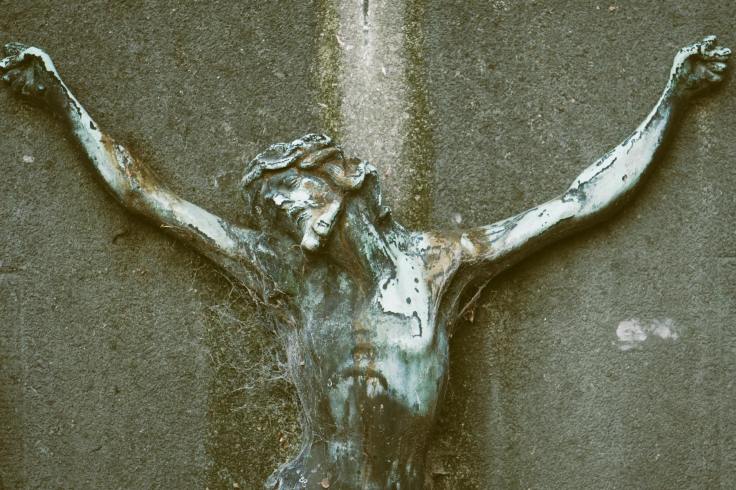
We’re in the Lenten season, leading up to Easter, and, of course, Good Friday. Much more significant than any ordinary Friday, Good Friday is the day we remember the Crucifixion of Jesus Christ. It was on that day that Jesus Himself cried, “It Is Finished!” just before He took his last breath.

On that first “Good Friday” there seemed to be little reason for celebration. Jesus had been found guilty in a hasty, overnight trial, by the Jewish Sanhedrin for saying that He was the Son of God– Blasphemy if one is NOT God, but simple truth if one is the promised Messiah! The Roman Governor, Pontius Pilate, after examining Jesus’ claims and trying to literally “wash his hands” of the case, turns Jesus over to be crucified by the angry mobs whipped up by the Jewish leaders. And Jesus is beaten, tortured, taunted, and nailed to a cross to die a gruesome, public death. “It is finished!” For Jesus’ followers, this meant defeat, fear, and gloom, rather than accomplishment or celebration.

But Jesus knew better. Even though His death was filled with suffering and humiliation, it was the culmination of His life on earth. And it was the necessary final scene before the next Act– the Acts of the Apostles–the coming of power and hope by the release of the Holy Spirit to indwell those who had put their faith in Jesus AS the Messiah! And so it is today. We have great cause to celebrate Good Friday. Without the Pain of the Cross, there would be no Glory of the Resurrection or Promise of Eternal Life!

Even though this Friday is not Good Friday, we can spend today reflecting on the life of Jesus– the incredible example He gave of how we are to trust in God, love others as God loves, and cherish life–both now and through eternity, as God’s gift. And we can be thankful that, because of Jesus, “IT IS FINISHED!”– the battle against Sin and Death is over. We can live abundant lives, without the fear of eternal death, and we can look beyond the curse of Sin to the Glory of Restoration and Renewal.

Thank God it’s Friday!

The Price of Discontent

If anyone teaches a different doctrine and does not agree with the sound words of our Lord Jesus Christ and the teaching that accords with godliness, he is puffed up with conceit and understands nothing. He has an unhealthy craving for controversy and for quarrels about words, which produce envy, dissension, slander, evil suspicions, and constant friction among people who are depraved in mind and deprived of the truth, imagining that godliness is a means of gain. But godliness with contentment is great gain, for we brought nothing into the world, and we cannot take anything out of the world. But if we have food and clothing, with these we will be content. But those who desire to be rich fall into temptation, into a snare, into many senseless and harmful desires that plunge people into ruin and destruction. 10 For the love of money is a root of all kinds of evils. It is through this craving that some have wandered away from the faith and pierced themselves with many pangs.
1 Timothy 6: 3-10 (ESV)

This past week, I have really been struggling with discontent. There are things I want that I can’t afford; things I want to accomplish, but I have other obligations that eat away at my time and energy. I want to lose weight and exercise more– the spirit is willing– but my body and will-power are weak. And I spiraled down into anger, frustration, depression, and comparison. It’s been an ugly week. Instead of thanking God that we have enough money to pay the bills and buy groceries, I complain about the price of the groceries and bills, and the lack of money left over for entertainment or new clothes I don’t need.

“Godliness with contentment is great gain” (v.6). It’s a verse I learned as a girl, and yet I’m still struggling with the concept. Part of that, I think may be that our culture’s teachings clash with the Bible. There are people in our culture– even pastors and Bible teachers– who twist the Gospel so that, as Paul says they (imagine) that godliness is a MEANS of gain. (v. 5). And I have listened to, and bought into, that concept– that God rewards (financially, socially, physically) those who practice “godliness”. But what kind of godliness bargains with God for reward? What kind of godliness leads to discontent and anger?

No. Godliness is not a game or a role to play at. It is, much like prayer, a pursuit and a lifestyle. It is discipleship– following the example of Christ’s life and teachings– changing the way I think and the way I live. And no amount of “following the principles” on my own will lead to that kind of change, because my motive will always be “gain.” Whether gaining money, or status, or achievements and accolades, this type of sham godliness will leave me discontented. And the price of that discontent will be my life.

 The thief comes only to steal and kill and destroy. I came that they may have life and have it abundantly.
John 10:10 (ESV).

Jesus did not come to earth to gain fame or fortune. He was despised by many and crucified by the religious authorities of his day. He was misunderstood, and he was, in worldly terms, a failure. He was homeless, childless; there were no monuments to His achievements, no medals or honors bestowed on Him by the rulers of the day. BUT He came to make it possible for us to break the chains of Sin, guilt, worry, jealousy, and discontent. Jesus saw suffering around Him. He saw people with beautiful houses, high social status, productive farms or businesses, and great political power. But He was not drawn to them. He was content to do the Father’s will; content to travel from town to town, talking with lepers and prostitutes, with tax collectors and beggars. And His life changed the world! It is because of His life, death, and resurrection that I can have eternal life and abundant life now and forevermore (John 3:16).

That doesn’t mean that I have everything I want, or that I don’t have to struggle in the present. And it doesn’t mean that I am comfortable and complacent with what I do have. Sometimes, life is difficult and doesn’t seem very “abundant” in the moment. I still have bills. I still have diabetes. And I still have ambitions and unrealized goals. I just need to remember what the Gospel is really all about. It isn’t about becoming rich or well-respected, or productive in the eyes of the world. My life may be quietly abundant in the things that really matter– peace with God, time with family and friends, opportunities to reach out with hope and encouragement to those who need it, seeing beyond the moments of life to the value of life itself.
“Godliness with contentment” isn’t about wealth or achievement. It’s about the journey– and taking this journey WITH God–walking at His pace, walking where He tells me to walk, walking toward a greater goal. Discontent takes me along a different path– one that will never result in a life that is truly abundant and worth living. I waste my days wishing for this or regretting that or envying someone else’s victories instead of being able to join with them in celebration. It teaches me to be frantic, restless, and angry with myself and others. It leaves me exhausted and unfulfilled.

Money, fame, achievement– none of these is the “root of all evil.” Rather, it is the love of ANYTHING that displaces my “first” love for God that is the root of all kinds of hurt, grief, disappointment, and waste.

Free to Forgive

“Forgive us our trespasses as we forgive those who trespass against us.” (Matthew 6:12)

Imagine being a prisoner and being told that you were free to leave! Now imagine someone refusing to leave their prison cell, and choosing to stay locked up! Why would anyone do such a thing? And yet, there are stories of prisoners who have been freed– some of them found innocent of the crimes for which they were being held–who cannot seem to adjust to freedom.

For some, the issue is legal. Even though they have been exonerated, or have served out their sentence, they still face legal consequences–even if their conviction was overturned, or their sentence fulfilled, they still wear the tag of “convicted felon.” Their record, even if legally overturned, still hangs over their head when they apply for jobs, try to register to vote, or attempt to establish credit. For most, however, the issue is psychological. They still wear the imaginary label, “guilty.” “Not fit for freedom.” “Incorrigible.” And often, society does nothing to remove those labels, but rather reinforces the idea that once found guilty, a person can never redeem their life or legacy.

As Christians, we have been given a full pardon for our sins– regardless of whether we have spent time in a physical prison or not. We are free! But we can continue to live as though we are in prison– and worse, we can continue to put ourselves in a prison of unforgiveness toward others.

“If we confess our sins, He is faithful and just to forgive us our sins, and to cleanse us from all unrighteousness.” (1 John 1:9) God does not keep us in a prison of guilt and shame. He is faithful to forgive us, redeem us, and renew our mind and spirit. But part of that cleansing involves letting go of our “right” to hold grudges and cling to old hurts and bitterness toward others. God is faithful to forgive US; He is also faithful to act with justice on our behalf. In forgiving others, we are not denying the justice we deserve. And in forgiving us, God does not deny justice to those whom we have hurt!

God wants to give us true freedom– freedom from guilt and freedom from the burden of injustice. HIS shoulders are big enough to offer both– perfect freedom, and perfect justice. We are allowed to be free of both burdens when we trust God to take care of it all. And we are allowed to walk out of the prison of guilt, shame, bitterness, anger, vengeance, pride, self-righteousness, and self-loathing.

Let’s face it– we have all sinned. All of us have said or done things that have hurt others. We may not know the extent of the damage our words and actions have done, just as others may not be aware of how they have hurt us. And “hurting” people often hurt others in reaction. Jesus paid the price for our sins when He offered Himself on Calvary. His sacrifice stops the cycle of “unavenged” hurt.

Sin still continues to hurt us. Forgiveness doesn’t seek to pretend that what happened never happened, or that it didn’t matter, or that our hurt isn’t real and tragic. But forgiveness allows us to walk out of the prison of living with the label “victim” or “convict” that Sin slaps on our forehead or in our heart. It allows us to breathe the free air of God’s grace and the hope of a joyful, productive, courageous future!

Blog at WordPress.com.

Up ↑