The Value of a Life

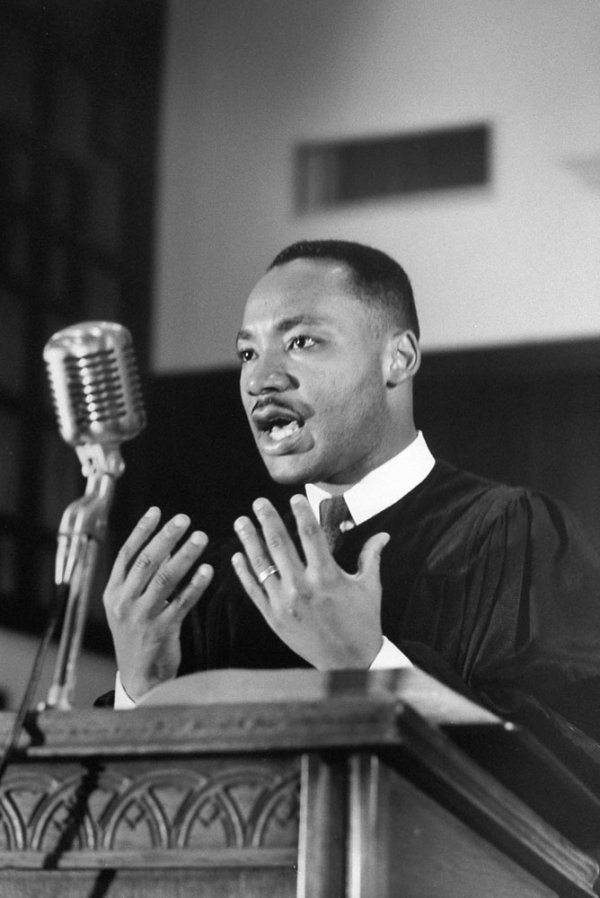
Today in America, we celebrate the life of Dr. Martin Luther King, Jr. Dr. King was a minister, a brilliant writer and student of theology, a leader in the Civil Rights movement of the late 1950s and early 1960s, a noted speaker, and man who arguably made a difference in the world. Dr. King was murdered in 1968, at the age of only 39, leaving a family and a nation devastated by his loss.
Next Monday, we will observe the 51st anniversary of the Supreme Court decision Roe v Wade, in which nine judges effectively legalized abortion in the U.S. for over half a century. Even though this decision has been overturned, many states, using the precedent of Roe v Wade, have changed their state laws to allow for abortion. In many states, it is now legal to abort a child right up to the moment of birth!

What is the value of a single life? Who gets to decide that they have the right to take another person’s life– whether by assassination, capital punishment, abortion, murder, or euthanasia?

It is a question that our society has struggled with for centuries. Who can give life? Who can take life? Who can determine the conditions of another person’s existence? And, for those who live, what is the “value” of their life–to their family, to their neighborhood, to their nation, or to history? Who gets to set the standard of what constitutes a “worthwhile” life or the “quality” of life for someone else? For themselves?

I’ve been reading through the book of Genesis this month, and, according to the Bible, this subject is as old as human life on earth. Cain decided that Abel’s life was expendable, so he killed him– the first murder. The people of Sodom and Gomorrah felt they had the right to enslave and rape anyone they wanted to. Joseph’s brothers plotted to kill him, before selling him into slavery, instead.

The Bible doesn’t hide this history, nor does it sugar-coat the actions of those featured in its pages. But, the Bible offers us a clear picture of WHO gives life, and WHO has the authority to decide what life is worth. God alone has this authority. It is God alone who can create and sustain life. Mankind has the choice– to protect life or destroy it; to treat life with respect or with disdain; to honor the Giver of Life, or to rebel against Him.

All the atrocities of the Old Testament lead to the ultimate decision on the value of a single life. Jesus lived a simple, ordinary human life. He lived with compassion, with purpose, and with humility. And He was willing to GIVE His life to atone for all the murders, all the abortions, all the slavery, all the injustices in history, so that WE could enjoy abundant, eternal life with Him. By looking to this singular life, and trusting in the power of His death and resurrection, we can choose to honor all life. We can make a difference. We can live with purpose and joy.

Dr. King’s legacy is one of honoring life, and pointing out the evils of those who seek to devalue the lives of others based on the color of their skin. Abortion’s legacy is one of destroying life, and promoting those who devalue the rights of the helpless.

The choice is still before us. How will we determine the value of a single life in the coming week? How will be add value to life on earth? How will we live for more than just the moment?

Praying for Time

When I was a late teen, and into my early twenties, I loved English pop music, including the duo, Wham! Their music was bubbly, upbeat (mostly), and easy to sing along to. I listened along, sang along, watched their videos, and danced along. When the duo broke up, I was eager to follow the rise of singer/songwriter George Michael, whose first two solo albums I bought and listened to, as well. But the tone of his solo music was different. There were danceable, singable tunes, but they were darker and more cynical. And many of the songs were less about enjoying life and more about social commentary, confusion, and even despair. The songs were well-crafted, but they were haunting, rather than enjoyable or uplifting. They spoke of sadness, depression, and world-weariness.

One of the songs that has haunted me for years was from his second album, “Listen Without Prejudice.” In it, he talks about greed, poverty, apathy, and a loss of innocence. It’s called “Praying for Time,” but the tone of the song suggests that time has all but run out.

And yet…

One of the ideas that still shines through the words of the song is that prayer–specifically praying for time–may be the only hope that we can still cling to. And in a time of darkness and hopelessness, prayer can reach beyond “wounded skies” to a God whose Grace extends even to His children who have “slipped out the back door.”

There is something about the idea of time as a gift from God that stays in the soul, long after most hope is gone. I think it is why we are so driven by the concept of time and time “running out” as we hustle through our busy lives. I think it is why we spend time avoiding “down time” and “alone time” and the quiet time we should take to reflect, meditate, and yes, even time to pray. And I think, too, that it is why we recognize that wasted time is a sin– that there is a purpose in our time on Earth that transcends having “fun” or living for our own selfish aims. George Michael often used “spiritual” words and phrases for his songs– often with a cynical twist, pointing out some of the hypocrisy he saw around him (and occasionally, within himself).

These are the days of the open hand
They will not be the last
Look around now
These are the days of the beggars and the choosers

This is the year of the hungry man
Whose place is in the past
Hand in hand with ignorance
And legitimate excuses

The rich declare themselves poor
And most of us are not sure
If we have too much
But we’ll take our chances
‘Cause God’s stopped keeping score

I guess somewhere along the way
He must have let us all out to play
Turned his back and all God’s children
Crept out the back door

And it’s hard to love, there’s so much to hate
Hanging on to hope
When there is no hope to speak of
And the wounded skies above say it’s much, much too late
Well, maybe we should all be praying for time

These are the days of the empty hand
Oh, you hold on to what you can
And charity is a coat you wear twice a year

This is the year of the guilty man
Your television takes a stand
And you find that what was over there is over here

So you scream from behind your door
Say, “What’s mine is mine and not yours”
I may have too much but I’ll take my chances
‘Cause God’s stopped keeping score

And you cling to the things they sold you
Did you cover your eyes when they told you
That he can’t come back
‘Cause he has no children to come back for

It’s hard to love, there’s so much to hate
Hanging on to hope when there is no hope to speak of
And the wounded skies above say it’s much too late
So maybe we should all be praying for time

“Praying for Time” George Michael, Listen Without Prejudice, 1990 (lyrics taken from Lyrics.com)

In an interview, George Michael analyzes his own lyrics:

While he mentions “He” and “God,” it is clearly humanity he blames for the apathy and selfishness, greed and scandal, the “empty hand” and “wounded skies” mentioned in the song. And his repetition of “all God’s Children” and its counterpart, “no children to come back for,” is aimed at US– people who “slipped out the back door,” moving away from God and embracing our own wickedness. WE have entered this time of hopelessness and despair. WE have crafted it in our own ignorance, and then in our own pride and stubbornness. But we can still pray for time– time to repent, time to return, time to reach out to others with compassion and hope. What the song just barely misses is that prayer can open so much more than just time. Prayer can bring renewal, justice, redemption, and eternal hope! God hasn’t stopped “keeping score,” by any means. But He is holding back the wrath and judgment we all deserve, giving us time to seek Him! Most of all, we can pray, not with desperation, but with confidence– even in times of confusion and distress, because we have an Advocate, Jesus Christ, who hears all our prayers– desperate, confused, ashamed, angry, hopeful, offered with no more than a mustard seed’s faith.

George Michael, like all of us, lived in a fallen world. He was looking at the world, and seeing injustice, greed, apathy, corruption, violence, and the ravages of Sin. His own life was plagued with sorrow, tragedy, pain, injustice, drug addiction, betrayal, and the effects of Sin– both his own and others’. I don’t know if he ever found peace and hope in this life. I hope so. His gifted life ended early and tragically. But his song lives on with a warning, and a hint of promise, too.

We SHOULD all be praying for time– time to change. Time to repent, and seek God’s wisdom. Time to reach out to a darkened world with more than despair and dark analysis. To reach out with the Hope of Christ, who brings Redemption, Justice, and MERCY! We should be praying for time to meditate on the Goodness of God, as well as time to see the needs of others. We should be praying for wisdom to share our resources, and to multiply the good we can do– things that only God’s power can really accomplish. We should be praying for connection– restored relationships, and renewed fellowship with the Father. We should be praying for time to pray! Not just a desperate kind of prayer that this song suggests, but a lifelong pursuit of prayer that connects us to the Source of Hope, Joy, Peace, Power, and Love.

This year, while I don’t often listen to George Michael’s music anymore, I will be “praying for time.” And I will be investing more time in prayer! I hope you will join me in the time God has gifted us with this year!

For more analysis of the song and its relation to prayer see the following:

Praying in Anger

Ephesians 4:25-32 English Standard Version (ESV)

25 Therefore, having put away falsehood, let each one of you speak the truth with his neighbor, for we are members one of another. 26 Be angry and do not sin; do not let the sun go down on your anger, 27 and give no opportunity to the devil. 28 Let the thief no longer steal, but rather let him labor, doing honest work with his own hands, so that he may have something to share with anyone in need. 29 Let no corrupting talk come out of your mouths, but only such as is good for building up, as fits the occasion, that it may give grace to those who hear. 30 And do not grieve the Holy Spirit of God, by whom you were sealed for the day of redemption. 31 Let all bitterness and wrath and anger and clamor and slander be put away from you, along with all malice. 32 Be kind to one another, tenderhearted, forgiving one another, as God in Christ forgave you.

I grew up hearing that anger is a sin.  Yet God experiences anger and wrath.  And the Apostle Paul says in this passage that we are to “Be angry and do not sin” (Eph. 4:26a).

Anger is an emotion; feeding on anger, wallowing in it, stewing and screaming and acting out under the control of our anger– that is sin.  That is why Paul goes on to say that we should “not let the sun go down on your anger ” (4:26b).  Anger doesn’t have to be a bad emotion, but it is a bad master.  We need to take control over our anger to resolve it, and let it go.  In Genesis, God spoke to Cain about this very thing–Cain and his brother Abel had brought sacrifices to God; Abel’s sacrifice was pleasing to God, but Cain’s sacrifice did not find God’s favor.  The sacrifices were voluntary– Cain and Abel were not in competition to see who could bring the “best” sacrifice.  God had not ordered them to bring a sacrifice only to find fault with Cain’s efforts or the way he chose to present the sacrifice.  The scriptures don’t even say that God rebuked Cain or pointed out a flaw in his offering.   He simply found favor with Abel’s offering– Abel had brought the best he had; the firstborn of his flocks.  Cain had brought “some” of his crops. 

garlic beside ginger and pepper on brown wooden table

The difference in the sacrifices had nothing to do with the content or the manner of offering, but in the intent to worship God halfheartedly, instead of wholeheartedly.  God saw that Cain was angry (as well as proud and envious of his brother).  Instead of rebuke, God offered grace and wisdom:

man head face portrait

Genesis 4:6-7 New Revised Standard Version (NRSV)

The Lord said to Cain, “Why are you angry, and why has your countenance fallen? If you do well, will you not be accepted? And if you do not do well, sin is lurking at the door; its desire is for you, but you must master it.”

God doesn’t want us to deny our anger or pretend we are never angry.  But He does want us to acknowledge it, and deal with it.  Why am I angry?  What should I do about it?  Anger can motivate us to do the wrong things, but it can also spur us to change our course, and do something good.  Righteous anger can spur us to speak out about injustice, and seek to correct wrongs.  Anger can lead us to our knees, asking God for direction, strength, or His intervention and justice.  King David often prayed angry prayers asking God to strike down the people who were plotting against him, or those who were doing evil or mocking God’s people.

walk human trafficking

I wish I could say that I had mastered this area, but I’m writing as much for my own instruction today as anything else.  Here are some wonderful steps we can and SHOULD take to deal with anger:

  • Pray!  Anger can strangle us, or it can sneak up and suffocate us, but the worst it can do is drive us away from our source of help and hope.  God WANTS us to come to him.  He reached out to Cain in his anger, wanting to draw him near and help him overcome it; He offers us the same help.  God can handle our anger– he can give us the power to let it go, and direct our feelings appropriately.
  • Own it–Angry people tend to deflect responsibility.  Yes, other people can say or do things that make you angry, but they can’t make you say or do sinful things in response to their actions.  You still bear the responsibility for what you do with your anger– even “righteous indignation.”
  • Question it!–This is something I have found helpful.  Just as God asked Cain, ask yourself, “Why am I angry?  Why am I downcast?”  And then, answer them honestly.  Many times, the root of my anger isn’t justified–instead it’s “just a lie”.  I have no right to be angry with someone else when I chose to waste time, cut corners, or neglect to do what was necessary.  I have no right to be angry or outraged because someone else feels differently or sees a different side of an issue.  In fact, if I keep listening instead of exploding, I might find compassion overriding the anger.  I might even learn something new!  Or I might better understand why I feel or think as I do, and be better able to explain it to others, instead of just yelling the same thing over again.
adult anger angry angry face
  • Deal with it–This is a difficult one for me.  I don’t like confrontation.  If someone hurts me, I just want to walk away and lick my wounds.  And we shouldn’t confront others WITH our anger, striking out at them and seeking to hurt them.  But I have found that a lot of anger and hurt that I have harbored is not only unjustified, but is based on misunderstandings and pride.  It takes humility, but it also takes courage to seek out someone to offer an apology you don’t want to give, or to ask for clarification instead of harboring hurt.
women typing on the notebook
  • Don’t spread it!  “Don’t let the sun go down upon your wrath”  is not permission to “vent” to seven (or seven hundred) friends by spreading your hurt and outrage  until you feel calmer.  This is particularly true in the age of Facebook, Twitter, and Instagram.  In the short-term, this may seem right– “they need to know what is happening”– but it is just the opposite.  Anger often leads to rash judgments, and hasty actions that we can’t undo or call back.  If you are not talking with the object of resolving a misunderstanding, apologizing, or offering a positive solution, you are engaging in sin.  The old saying, “If you can’t say something nice about a person, say nothing at all” applies here.  And it applies about situations and circumstances, too.  I am angry about various practices and policies by governments, companies, even churches; what I need to spread is not my anger about them, but awareness of how God can change them, and why we should be seeking His justice, His righteousness, and His grace toward those who have been impacted by them.
  • Repent of any anger-related sin.  Remember, anger itself is an emotion.  God experiences it; we are made in His image, so we experience it, too.  But God’s anger is Holy; ours is often tainted with other feelings and thoughts– pride, envy, greed– or even other human frailties like misunderstanding, exhaustion, hunger and pain. Instead of feeling guilt over the anger, we need to turn away from the sin that overpowers us in our anger.

For more Biblical wisdom about dealing with anger, see the following:

belief bible book business

https://www.biblestudytools.com/topical-verses/anger-bible-verses/

https://www.biblegateway.com/passage/?search=Matthew%205%3A21-26&version=NCV

https://thewisebeliever.com/anger-bible-examples/

Let All Mortal Flesh Keep Silence

Christmas is a time of joy and light. But the time of Advent is often a time of somber reflection. We remember a time we have never known– a time before the coming of Christ the Messiah– a time before the mysteries of Heaven were revealed and before the victory of Salvation was accomplished. Advent reminds us of the spiritual darkness that existed before God, in human form, in humble obedience, and in sacrificial love, became the Light of the World, and the Hope of All Nations.

Before the bells rang, and the angels sang; before the kings brought gold and the shepherds ran to tell the news; before there were Christmas Carols, Christmas decorations, or Christmas pageants– there was solemn silence, fear, dread, and waiting. God had been silent. The prophets had been silent. The world had grown hard and cold.

Jesus stepped out of the unfathomable glory of the Highest Heaven– surrounded by armies of angels all worshiping Him and ready to do His bidding. In an instant, He became a helpless fetus inside a helpless young woman, a subject of the Roman Empire, and at the mercy of her culture. Her fiance could have repudiated her; her parents could have disowned her; her community could have had her stoned to death, along with her unborn child. No one, even those who were anticipating the arrival of a Christ, was expecting this tiny baby growing inside the womb to change the course of history.

He was born in obscurity, in ignominious squalor. He was the Lord of All Creation, wrapped in rags and laid in a feeding trough in an overcrowded city at tax time. There were no bells or carolers, no glittering trees or festivals of lights, no sounds of joy and celebration– not in that manger in Bethlehem. Instead, there were strangers pushing and shoving, shouting, and snoring in the inns and houses and streets, being watched by soldiers and pickpockets alike, as they made their way through narrow, unfamiliar streets and tried to lock out the worry and danger and dread. There may have been silence in the fields and valleys outside of town, but not near the stable where Jesus was born. No. The “silence” we sing about during Advent is the silence inside our own hearts– a call to “be still,” and know that this baby we celebrate is God Incarnate. He is the One to whom every knee will one day bow, and every tongue confess that He is LORD.

In the stillness and silence of Advent, in the darkness lit only by candles and faint hope, we being to understand the contrast. We re-imagine what came before the joy and hope and eternal clouds of witnesses shouting, “Holy, Holy, Holy!” We remember the days and years before the angels sang, and the star danced across the night sky– before the shocking crucifixion and the glorious resurrection of this still unborn Savior.

Let us spend these days of Advent preparing our hearts for the true wonder of Christmas. It doesn’t come in the wrapped packages under a festive tree, or in the feasting with friends or family. It doesn’t come with sirens and parades, or speakers at the mall blaring out favorite tunes. It doesn’t come in the majesty of a Cathedral ringing with the voices of a choir and organ. It comes when the silence and darkness of our sin and dread are pierced with the overwhelming glory of God With Us– Emmanuel is coming! But for now, for these moments, Let All Mortal Flesh Keep Silence.

O Come, O Come, Emmanuel

During this season of Advent, we often sing this ancient hymn.  It dates back nearly 900 years, and continues to be sung and/chanted in Latin.  https://hymnary.org/text/o_come_o_come_emmanuel_and_ransom

The hymn is a contrast of weary longing and hopeful prophecy.  The promised Messiah has not yet arrived, but his coming is sure, and cause for great rejoicing.

The hymn is also a prayer– pleading for the coming of Messiah, even as it comforts with the reminder that he WILL come.  And it reminds us of the power of prayer– not just the power of approaching Almighty God, but the power of acknowledging our longings, our needs, and our dependence on God.  Even in our darkest hours, even in captivity and oppression, we can have hope in God’s timing and wisdom.  He DOES see our struggle; he DOES care, and he WILL send hope and rescue.

But the song also points out a pitfall–in the first verse, the prayer is for Emmanuel to rescue Israel from Roman Occupation; to end its immediate plight of being politically and economically oppressed.  There were many people who saw Messiah, heard him speak, even felt his touch, who rejected him because he did not do what they were expecting.  There are many today who cannot believe in Jesus Christ because he doesn’t take away their current circumstances of pain and suffering.

In their narrow focus, people miss the greater miracle of what Messiah is all about.  Jesus did not come to free us from temporary troubles and trials; to make us comfortably apathetic or arrogantly victorious over personal poverty or sickness.  He came to free us to be able to endure and/or overcome our circumstances; to offer hope where there seems to be no hope.  He came to show us that our circumstances don’t define us or cut us off from God’s love; that our past is not more powerful than His forgiveness and power to heal; that even suffering and oppression can be endured with joy, even as we work together to overcome them.

This year, as I ponder this hymn, I am both discouraged, and emboldened. I am discouraged, because I hear voices calling out for many things, but few of them are calling for a Messiah. We live in a world that desperately wants what Christ offers– peace, unity, forgiveness, eternal life– but without a Savior. We want to save ourselves, and we want to do it casually, heroically, and without acknowledging our helplessness. We read books, seek out gurus and life coaches, haunt the internet, all searching for answers that only God can provide. We long to see an end to injustice and oppression– or whatever seem unfair or difficult to us or those we champion– but we don’t want to submit to the example of a humble Christ who serves others.
But I am emboldened to pray that more of us would desire more than the “quick fix” or the “feel good” solutions of the world. I pray that we would earnestly desire that this Advent Season would be a time of yearning for MORE of Christ; more of His Joy; more of His Love for others; more of His Hope to spread around us. I want us to Rejoice– not in the bright lights and decorations, or even the beautiful melodies of Christmas carols– but in the real gift of Christmas! Emmanuel!

This season, as we sing this hymn, I pray that we would see the continuation of its message.  Emmanuel HAS come– Jesus not only came and won the victory over sin and death on Calvary; he has commissioned US to be the bearers of the Good News.  There are dark places in the world praying for hope and rescue to COME.  Will we share the love of Christ in our own neighborhoods?  When we bear the name of Christ, we should be on mission to rescue those who are captives, not of Rome, but of Sin and the tyranny of Death.  So that we all can  know the reason to Rejoice! Rejoice!

Prayer and Fasting

I had to fast overnight for some bloodwork I had done this morning. No food for 12 hours; no water for 8 hours before the blood draw. It shouldn’t seem like such a difficult thing, but at 9 or 10 p.m., I imagined I smelled food. My mouth watered– and then it felt dry. I felt woozy and weak. Surely I could have just a cracker or some orange juice, right? But no, I finished the fast and rejoiced to eat breakfast after the blood draw was complete. And simple scrambled eggs tasted sooo good! Oddly, I have often gone several hours without food and without all the imagined side effects I felt last night. The actions were the same, but the focus was on what I was doing, not what I was missing.

Fasting has become popular in recent years. I know several people who practice intermittent fasting for weight loss and other health benefits. Others fast for religious reasons (other than prayer); some people give up certain foods ritually, for Lent or other festivals. Some even fast in dangerous ways (anorexia, etc.) Fasting is usually about our relationship (sometimes an unhealthy relationship) with food.

Prayer, on the other hand, is all about our relationship with God. And when the Bible speaks of Prayer and Fasting, it is also about our relationship with God. The Bible gives many examples of fasting– even “extreme” fasting. Moses, King David, Jesus, and the Apostles all practiced it. Sometimes entire groups (churches), cities (Nineveh–see Jonah, chapter 3), and nations (Israel/Judah) fasted. The Bible also gives us many reasons to do fasting, including repentance of personal or national sin, deep personal struggles, and focusing on a single issue, such as the unsaved, the persecution of fellow Christians, seasons of famine, or ongoing injustices. But the Bible isn’t specific with guidelines and rules about fasting, because, like prayer, it is primarily a pursuit. It’s not about the extremes or the number of days, or the amount of food we “give up.” It is about the pure pursuit of God’s sufficiency. God is not impressed by whether we fast for one day or forty; He does not count the number of calories we might have consumed or the amount of weight we lost. He doesn’t measure the strength of our will power or our “success.” He isn’t impressed by posturing and virtue signaling. What He does ask is that we pray with complete focus and integrity, without the distractions that food, entertainment, and even sleep can sometimes become.

We can fast for hours or days– miss one meal or fifteen–and still “miss” the blessing of prayer, because we are focused on what we are doing (or not doing) instead of focusing on what God is doing. We can also “fast” in ways that have nothing to do with food– turn off the TV or phone, retreat from crowds and busyness, even “fast” from sleep! The point is not that WE are “better” for fasting, but that fasting is “better” for US!

Today, consider a small “fast”– replace a coffee break, snack, meal, hour of social media, or that extra 15 minutes of sleep with some time alone and wholly abandoned to God. Not only will we come away refreshed and not “missing” whatever we traded, but we will more fully enjoy those same activities or foods when they take their rightful priorities. Remember, prayer and fasting is not a contest or a ritual, it is a pursuit and an adventure! Enjoy it!

Some thoughts:

  • 1) Fasting is as individualized as praying. There is no perfect “formula.” But there are several helpful suggestions. You can set a time limit (one day; 12 hours, etc. without food or a certain activity) or a food/activity limit (only one meal a day for seven days, only one television program per night for a week). You can plan days or weeks ahead to fast for a definite period, or you can decide spontaneously to start fasting until you feel led to stop. One caveat– Fasting is not a game. It IS a commitment, and shouldn’t be done without a real desire to get closer to God.
  • 2) Having said that, fasting isn’t about your will power, or success/failure. Sometimes, circumstances will prevent you from completing a planned fast. Certain health issues or family situations may prevent you from fasting for a day or more. Sometimes you will fall short of the goal you set. Don’t let that stop you from trying again, or trying differently. God isn’t about perfection on your part– He IS about helping you grow stronger and more complete as you continue to walk with Him.
  • 3) Fasting is personal. It isn’t about looking virtuous, posting about your struggles, or comparing yourself to others. (See Matthew 6:16-18) That doesn’t mean it can’t be done as a group. But group fasting should be about a single focus or topic, not about making everyone in the group conform to a preconceived expectation. There is great encouragement to be found in praying as a group, and some encouragement in fasting as a group, but remember, fasting is between you and God, not you and the group, or you and all your Facebook friends.

  • NOTE: At least once a month this year, I want to offer some practical suggestions on how we can better pursue a life of Prayer and living the Christian Life. I hope this post gives each reader something to consider.

Who Are We Feeding?

“An old Cherokee man told his grandson, ‘..My boy, there is a great battle between two wolves that live inside us all. One is evil–it is anger, jealousy, greed, lies, resentment, regret, and arrogance. The other is good– it is joy, love, peace, hope, kindness, humility, empathy, and truth.’ The boy thought for awhile, and then he asked, ‘ Grandfather, which wolf wins the great battle?’ The wise old man replied quietly, ‘The one you feed.'”

The Story of the Two Wolves– a Cherokee legend

 “Don’t store up treasures here on earth, where moths eat them and rust destroys them, and where thieves break in and steal. 20 Store your treasures in heaven, where moths and rust cannot destroy, and thieves do not break in and steal. 21 Wherever your treasure is, there the desires of your heart will also be. 22 “Your eye is like a lamp that provides light for your body. When your eye is healthy, your whole body is filled with light. 23 But when your eye is unhealthy, your whole body is filled with darkness. And if the light you think you have is actually darkness, how deep that darkness is! 24 “No one can serve two masters. For you will hate one and love the other; you will be devoted to one and despise the other. You cannot serve God and be enslaved to money. 25 “That is why I tell you not to worry about everyday life—whether you have enough food and drink, or enough clothes to wear. Isn’t life more than food, and your body more than clothing? 26 Look at the birds. They don’t plant or harvest or store food in barns, for your heavenly Father feeds them. And aren’t you far more valuable to him than they are? 27 Can all your worries add a single moment to your life?28 “And why worry about your clothing? Look at the lilies of the field and how they grow. They don’t work or make their clothing, 29 yet Solomon in all his glory was not dressed as beautifully as they are. 30 And if God cares so wonderfully for wildflowers that are here today and thrown into the fire tomorrow, he will certainly care for you. Why do you have so little faith? 31 “So don’t worry about these things, saying, ‘What will we eat? What will we drink? What will we wear?’ 32 These things dominate the thoughts of unbelievers, but your heavenly Father already knows all your needs. 33 Seek the Kingdom of God above all else, and live righteously, and he will give you everything you need.

Matthew 6:19-33 NLT

Just a short while ago, I published a blog entry called, “You Are Not What You Eat.” But sometimes, you DO become what you consume. I’m not talking literally about food, but figuratively you become what you read, and listen to, and spend time and money on– what you consume can end up consuming You!

“Watch your thoughts, they become your words; watch your words, they become your actions; watch your actions, they become your habits; watch your habits, they become your character; watch your character, it becomes your destiny.”

― Lao Tzu

Just like the two wolves in the Cherokee legend, there are two forces at work inside us. The Bible calls them “flesh” and “spirit.” The Apostle Paul also writes about this great battle:

15 For I do not understand my own actions. For I do not do what I want, but I do the very thing I hate. 16 Now if I do what I do not want, I agree with the law, that it is good. 17 So now it is no longer I who do it, but sin that dwells within me. 18 For I know that nothing good dwells in me, that is, in my flesh. For I have the desire to do what is right, but not the ability to carry it out. 19 For I do not do the good I want, but the evil I do not want is what I keep on doing. 20 Now if I do what I do not want, it is no longer I who do it, but sin that dwells within me.

Romans 7:15-20 ESV

We all start with “good intentions.” We want to be known as a “good person.” We want to have healthy relationships. We want the trust and respect of others. But Sin works in us against our own good intentions. We get hurt, so we lash out in anger. We see others achieving success or enjoying benefits we think we should have, and we become envious or resentful. We allow fear, greed, or bitterness to overpower us. We lie, or we isolate ourselves from others. We give up in despair, or reject the help and advice of those who want what’s best for us. We rely on our own resources and “will power” to achieve success, even to lose weight– but we always seem to fall short! We compare ourselves to others– sometimes ending in arrogance and apathy, sometimes ending in shame and humiliation.

But the battleground is not always so obvious as arrogance or despair, hurting others or being victimized. Who are we feeding in those moments of relaxation and ease? Are we scrolling through websites that waste our valuable time or encourage us to devalue others around us? Are we listening to music that encourages us to anger and pleasing ourselves at any expense? Are we reading books or watching movies that honor God? Are we spending money in ways that please Him? Are we spending our “down” time on our knees? Who are we feeding when times are tough? Are we spending time worrying or scurrying around trying to “make things happen” a certain way? Are we grateful, or fearful? Are we terrified or trusting? Our small choices in things that don’t seem to matter can start to change the way we think, and speak, act, and live.

There IS a great battle. But there are also tiny battles in the little moments of our day: opportunities to inch closer to God or to lose ground to the distractions and temptations of the world. And on our own, we will lose the battle, for the “flesh” will conspire to steal even the “good” food we think we are feeding ourselves. Thankfully, Christ came to feed the “good wolf.” In following Christ; in developing a relationship with Him, we allow His Spirit to nourish us. He is the “bread of life.” He is the “living water.” He alone provides the power to win the battle. Paul follows up in Romans by saying:

Likewise the Spirit helps us in our weakness. For we do not know what to pray for as we ought, but the Spirit himself intercedes for us with groanings too deep for words. 27 And he who searches hearts knows what is the mind of the Spirit, because the Spirit intercedes for the saints according to the will of God. 28 And we know that for those who love God all things work together for good, for those who are called according to his purpose. 29 For those whom he foreknew he also predestined to be conformed to the image of his Son, in order that he might be the firstborn among many brothers. 30 And those whom he predestined he also called, and those whom he called he also justified, and those whom he justified he also glorified.

Romans 8 26-30 ESV

So who are we feeding today? Or rather, who is feeding us? What are we consuming, and is it consuming us in turn? I hope we are feeding on God’s Word today, and walking with Him in each moment– whether in quiet reflection or in desperate need. May we be nourished and satisfied as we walk forward with Him!

“Praying” Hide and Seek With God

A strange image popped into my head the other day while praying with our Wednesday morning prayer group from church. I was trying to express the amazing paradox that we are being pursued by a God who is omnipresent, while seeking the same omnipresent God. And the image God gave me was one of playing a game– “Peek-a-boo” or “Hide and Seek.” Of course, prayer is not just a game– it is nothing less than communicating with the Sovereign Lord of the Universe! But God delights in our prayers, and He delights in delighting us as we learn and experience new aspects of His Character.

I love to play “Peek-a-Boo” with babies and toddlers. They love the idea of being “discovered” and “finding” someone. There is a moment of supreme joy in finally seeing oneself in the eyes of the beholder– that moment of recognition and reaction to being the focus of someone’s attention–the joy of intimate connection, “I SEE YOU!” But the game only brings joy if both of us are present and interacting. It brings no joy to a baby to see me staring off into space, or glued to my cell phone. The baby might be intrigued, or even comforted by my nearness, but there is a deeper thrill when she knows that my eyes will shine as they are revealed– looking directly at her! And I get great joy from seeing the baby’s delight.

The same is true of “Hide and Seek.” Yes, the idea is to hide from sight–for awhile. But what fun is it to hide and never be found? What fun to search for someone who has gone away and has no desire to be discovered again? The joy of the game is in that moment of discovery and being discovered– even though we know the other person is somewhere close by, there is that moment of re-connection that brings a jolt of delight. AHA!! I have found you! AHA! You searched for me and found me!

Photo by Nicola Barts on Pexels.com

This is the great tragedy of Sin. Sin causes us to want to hide and NOT be found. (See Genesis 3:8-10). We live in shame and fear, dreading the thought of God finding the “real” us, the secrets we carry, and the ugliness of our hearts. We are frightened by the thought that God is omnipresent– that He sees us; that He sees THROUGH us! We do not want to “Face” God’s justice, and see disappointment and anger in His face. Instead, we want to run away, to cover our eyes, if He will not cover His.

Conversely, this is the great joy of being a Christian. We don’t hide from God’s presence; instead, we turn to Him in delight and recognition. We pray to BE found and to be seen! Finding God, and being found BY Him, involves no fear, no condemnation (Romans 8:1), and no shame. God sees us– all our secrets and shame– through the blood of Christ’s redemption. We are “Born” again– like babies, we can revel in the connection with Our Loving Father. Like a child waiting for the “boo” in Peek-a-Boo, we anticipate the day when we will see Him face-to-face in all His Glory; in the meantime, each glimpse of His Grace, each revelation of His Faithfulness, builds our Hope and our Joy, excites our anticipation, and makes our Heart yearn for the future.

God is omnipresent. His spirit is all around us all the time. As Christians, His Spirit is indwelling– He is not just all around us, but He lives and works IN us and THROUGH us! And yet, God delights in those moments when we turn away from the world around us to focus on just Him. In the same way, even though God is everywhere, He seeks after us and pursues us with a passion and devotion that knows no limits– “Here I am!” “I SEE YOU!” “You are the one who makes my eyes shine!” “I LOVE YOU!”

Today, as you turn away from the world to focus on the Lover of Your Soul, may you find that incredible delight in recognizing His Presence for what it is– Divine, Eternal, Limitless, and Loving.

Searching for the “Oh!”

I like to play Scrabble, and other word games. Sometimes, in order to make a certain word in Scrabble, you need to wait for an opportunity and a particular tile. It can be very frustrating to play when you have only consonants or only vowels. You need both to make most words. Vowel tiles are not worth as much as the consonants. And so most players tend to discount them. After all, if someone else has made a word, you can use the vowel from their word to make yours– sometimes. But sometimes, you really need a vowel in the right position to make your word. Sometimes, you need a particular vowel. The other day, I was hoping for an “o.” Instead, I had four “i”s! I could try to make use of the vowels I had, or lose a turn and trade in my “i”s for other letters– which might all be consonants!

Photo by Pixabay on Pexels.com

Life is not a game of Scrabble. But there are times when we are looking for something to help make sense of life. It seems like whatever “hand” we’ve been given adds up to nonsense. We need an “o” to make it work. Deep down, though, I think most of the time, we really need an “OH!” We need to look beyond whatever we have, and see the wonderful things God has already done in and around and through us.

As I was driving to my doctor’s appointment the other day, it was hazy and cool for late June. It could have felt depressing or even oppressive. But I was listening to a song on the radio. The singer pointed out that God’s goodness, His Mercy, and His artistry are all around us in nature– the sky, the singing of birds, the colors of the sunrise or sunset, the majesty of trees or mountains, the comfort of a gentle rain–and suddenly, I found my “OH!” moment. Recent rains had brought a newer, deeper shade of green to the leaves, and had caused the corn and beans in the fields to begin springing up. The haze could not hide all the life and growth going on all around me. God’s magnificence was there for anyone to see.

Sometimes, I try to substitute an “I” for the “Oh!” Instead of focusing on the SON, I fall into SIN. When I look at what I have done, or the plans or dreams I have, it can fall short. I can’t make the stars shine. I can’t create a forest, or sing a song more beautiful than a babbling brook through a meadow of flowers. My best efforts with “i” aren’t worth much. But, OH!, what God can do! OH! What God has done! And it’s this same God who loves me and knows my name!

Are you having a “hazy” day? Are you looking around for something? Something clear, and beautiful, and worthwhile? Maybe, if you have an old Scrabble game, you could put an “o” tile in your pocket or purse to remind you to see the “OH!” all around you today!

20 For since the creation of the world God’s invisible qualities—his eternal power and divine nature—have been clearly seen, being understood from what has been made, so that people are without excuse. 21 For although they knew God, they neither glorified him as God nor gave thanks to him, but their thinking became futile and their foolish hearts were darkened.

Romans 1:20-21 (NIV)

It Is Well With My Soul

I’ve been reading through the book of Job this past week. Job’s story challenges us– especially if we trust in our circumstances to confirm God’s love for us. Job was a seeming pawn in a situation beyond his control or understanding. He lost nearly everything– his cattle, flocks, all his children, and even his health. The only thing he did not lose was his nagging wife, and his faithful, but very unhelpful friends.

Photo by Parij Photography on Pexels.com

At first, Job’s friends seem very supportive. They stay with him, saying nothing, just offering their presence for a week! But then, they start spouting the kind of useless aphorisms and accusations that make Job’s bad situation infinitely worse. They “remind” him that good people don’t suffer–only the wicked experience pain and loss. This knowledge, they assure him, comes from their own experience, and the wisdom of the past. When Job protests that he is innocent, that his suffering is NOT because of his own wickedness, they become increasingly angry and irrational– making up accusations and heaping blame on Job for daring to “question” God.

But Job’s friends, even though they speak with confidence and sound very much like many people we hear today, are wrong. Job’s experience is real–suffering comes to the innocent, while the wicked often “get away with” their sin, living lives of ease and comfort at the expense of others. We see it in the world around us– innocent people are the targets of mass shootings, or war, or famine, or disease. Meanwhile, criminals get “off” on a technicality; decorated war “heroes” destroy entire cities; powerful tyrants bend laws and oppress the helpless.

Photo by Ron Lach on Pexels.com

Where is God in all this? WHO is God in all this? There are many different responses, but I want to look at three that are all present in the book of Job:

  • Mrs. Job: “Curse God and Die.” Some people look at evil and suffering, and they decide that God must be a fraud. Either He cannot or He will not destroy evil, or He would have done so before now. They declare with great defiance that either God does not even exist, or He must be malicious, capricious, petty, and weak.

  • Job’s friends: “Everyone knows that God rewards good and punishes evil.” Doesn’t the Bible say this? Isn’t this what we learned in Sunday School? Surprisingly, most of us would say, “Yes, that is exactly what I learned as a child, and it is exactly what the Bible says!” But look closer. The Bible says that “All have sinned and fall short of the glory of God.” (Romans 3:23) It goes on to say that “The Just shall live by faith” (Habakkuk 2:4 and Romans 1:17)–not their good works. God DOES reward goodness, and he DOES punish evil– but He also redeems the wicked and causes the good to go through times of trial and suffering. God is more than a two-dimensional dispenser of rewards and punishments. God’s ways are not our ways (Isaiah 55:8), and there are times that He chooses not to explain His ways “in the moment” of our suffering, or in the moments when wickedness seems to be “winning.”
    Unfortunately, when bad times come; when we experience pain, or watch someone else going through inexplicable suffering, if our view of God is incomplete or two-dimensional, we are left repeating the little we KNOW (or think we know) about God, and defending, not God’s character, but OUR knowledge. This is especially true if we have not been tested ourselves.
  • Job: “Though He slay me, yet will I trust in Him.” (Job 13:15) “I know that my redeemer lives, and that in the end he will stand on the earth. And after my skin has been destroyed, yet in my flesh I will see God; I myself will see him with my own eyes—I, and not another. How my heart yearns within me!” Job 19:25-27 Even when Job struggled with his pain and suffering–even as he defended his character to his accusing friends, Job KNEW that God was GOD. He knew all that his friends were saying ABOUT God, but he also knew God–even when he didn’t understand His actions. And after all the arguments had been made and all the “easy” answers had been spilled out, GOD did not slay Job; he did not leave him in his agony. Neither did He provide Job with detailed answers or explanations. But He redeemed the situation– Job ended up with more blessings than before. More importantly, Job ended up with a greater understanding of who God is.

When all is not well with our health, or our finances, or our safety, or our relationships, it can still be “well with (our) Soul.” God does not change, but He does ask us to trust Him, even when His ways are not our ways. God will reward good and punish evil– but it may not be in our lifetime or as we imagine. God may stay silent during times of great stress and pain, but He will not leave us! In every situation, we can trust Him.

Will we?

Blog at WordPress.com.

Up ↑