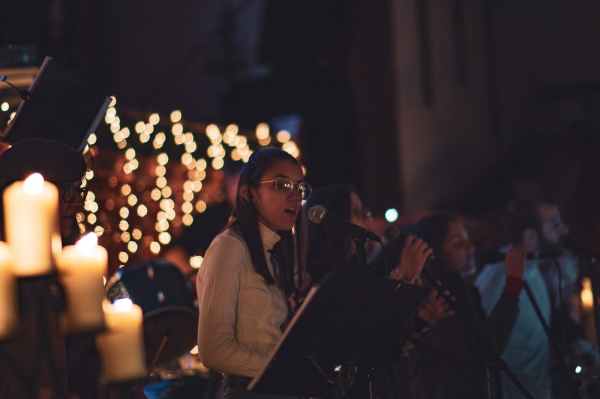
The Ghost of Christmas Past

Charles Dickens wrote “A Christmas Carol”– a (literally) haunting tale of greed, bitterness, and, in the end, redemption. Set in Victorian England, the story involves a miser named Scrooge, his business partner, Marley, who has been dead for seven years, and three mysterious spirits: The Ghost of Christmas Past, the Ghost of Christmas Present, and the Ghost of Christmas Yet to Come…

Scrooge and Marley

Scrooge doesn’t really hate Christmas. He considers it a Humbug– an annoying and worthless distraction from the “reality” of making money. What bothers Scrooge– what eats at him and rules his actions– is the fear of poverty and powerlessness. He avoids relationships so that he cannot be hurt or abandoned. He avoids spending money– even for common comforts like coal to heat his office–for fear that he will fall into poverty. He does not like people because he will not trust anyone enough to risk getting hurt or used.

Scrooge’s only “friend,” his former partner Marley, lived by similar principles during his lifetime. He “visits” Scrooge on Christmas Eve to warn him of the fate that awaits those who fail to realize that there is more to life than making and keeping money. “Mankind was my business. The common welfare was my business; charity, mercy, forbearance, benevolence, were all my business. The dealings of my trade were but a drop of water in the comprehensive ocean of my business!” Marley has managed to arrange for Scrooge to be haunted by memories of the past, visions of the present, and shadows of what may be in the future.

The first of these “spirits” reminds Scrooge of Christmases from his childhood and early adulthood. Some of the memories are sad– Scrooge is left to spend the holiday alone at school, as his cold and distant father refuses to show him love, mercy, or guidance. Later, Scrooge is reminded of how his decision to pursue wealth alienated the woman he could have married. But there are happier memories, too. His first boss, Mr. Fezziwig, brought happiness and a sense of camaraderie and purpose to Scrooge’s early employment. He celebrated both hard work and the joy of fellowship with his employees. Scrooge sees visions of his beloved sister and is reminded that he has a family (his sister’s son) with whom he could make and share happy memories– if only he would choose to do so.

I will write about the other visitations later, but I want to camp out here for a little bit.

What memories would the Ghost of Christmas Past bring to me? To you? Are there sad or painful memories of Christmases without loved ones? Christmases that included anger or rejection? Christmases spent with poverty, uncertainty, or sickness? Would you feel bitterness? Fear? Guilt? Regret? Or would there be nostalgia for days gone by? Longing for family members who have passed? Questions about what might have been?

It is tempting sometimes to shove our memories of Christmas past in a closet or an old trunk and try to forget them. In Dickens’ story, Scrooge ends up desperately trying to snuff out the light of Truth that the spirit is holding. He doesn’t want to remember; doesn’t want to know or deal with the pain and loss of his past.

But before we can truly live in the present, we must confront the past. We do not have to live there. Our memories– good and bad– are but shadows of the things that have been. But they can cast long and devastating shadows if we let them. Denying past pain or trauma can give us a false sense of control. Burying ourselves in work or pleasure or entertainment may feel like a solution. Being cautious and angry and cynical may seem like wisdom. We can blame others, blame ourselves, even blame God for our feelings of hurt and fear of being hurt again and again. OR we can, with the light of truth, revisit our past. We can discover the healing power of redemption and forgiveness. We can– we must– still acknowledge the pain, the injustice, the grief that lies on our past. But we also must see that the shadows of the past only fall behind us. However the past may have shaped us, damaged us, challenged us, or forged us, the present and the future can be turned in a new direction.

And that is possible because of Christmas– because of Christ!
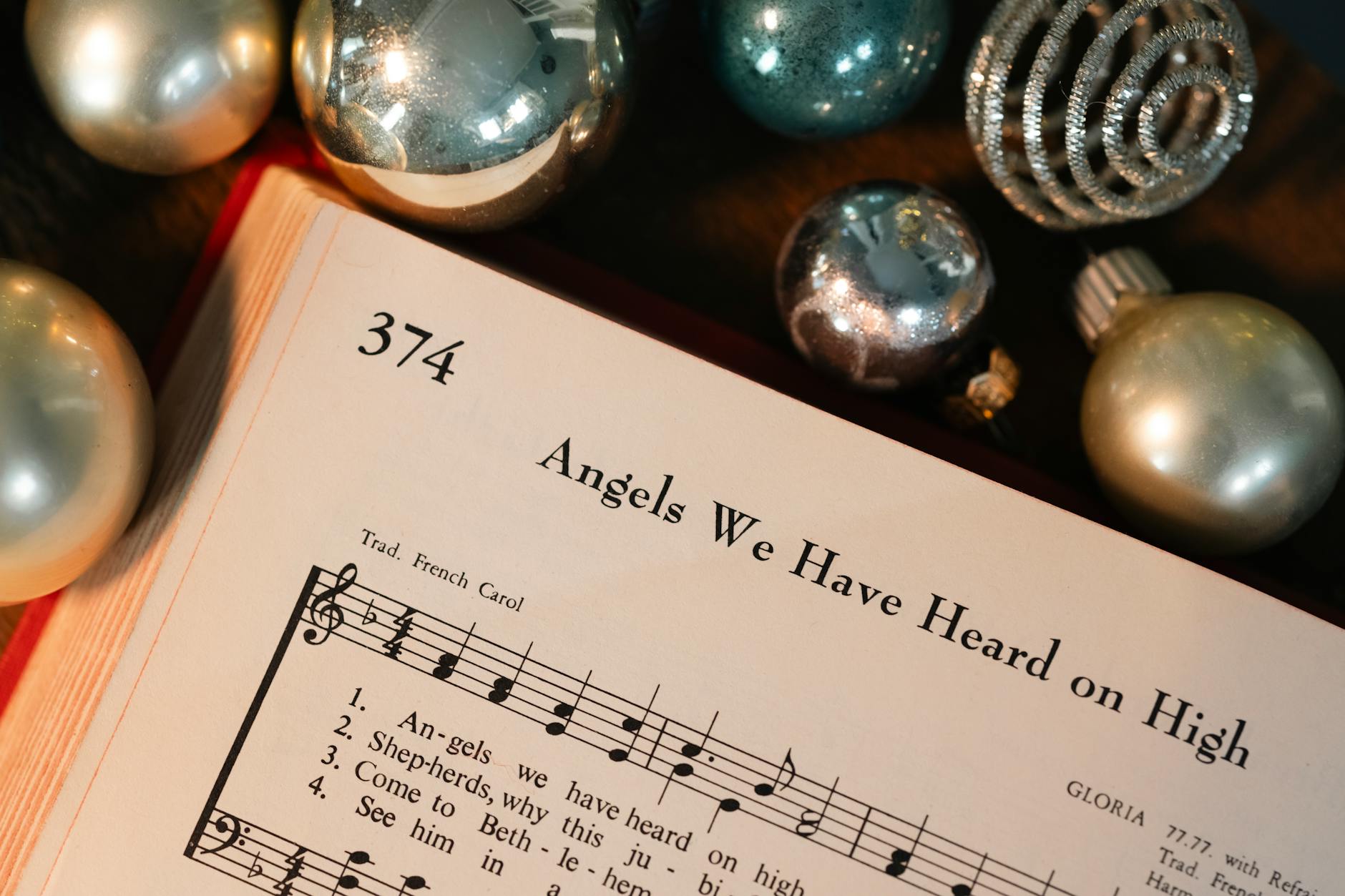
When Scrooge first visits his past with the Ghost of Christmas Past, the first image he experiences is of his classmates from school riding in sleighs and wagons singing Christmas carols. Singing! He could not join in. As an adult he has chosen not to join others as they sing of the wonder of Christ’s birth. But the carols echo– their message endures! Christ is Born! Glory to the Newborn King!

My prayer today is that Christmas past holds some happy memories for you. But the very Good News of Christmas is that it isn’t just about the past. And our past Christmases don’t have to haunt us. Because the Light of Truth– The True Light of the World (John 1:9) –that came on that first Christmas so long ago leads the way forward!

Then, He Smiled at Me…

The story of “The Little Drummer Boy” is nowhere in the Bible. It is very unlikely that such an event ever took place. Yet it has become a classic Christmas song. I think it is easy for us to identify with the singer– a poor boy who wants to honor the Baby Jesus, but has no gift to offer. What he does have– a drum and the ability to play it– he offers gladly. He asks permission of Mary and she nods her consent. But the highlight of the song is when the Baby Jesus smiles His approval.

At Christmas, we welcome a Christmas card-picture perfect stylized Baby Jesus, who smiles, never cries, charms all the animals of the stable, and merits the singing of angels choirs among the heavens. But we have a tendency to leave Him in the manger, where He can be a tiny miracle; a gift from God, bringing hope of peace on earth, and teaching us to give gifts and celebrate life.

Somewhere along the way, our picture of Jesus tends to change. The adult Jesus is kind, wise, compassionate, and even passionate– but He is a man of sorrows. This is not “wrong” theology– the Bible describes Him as a man of sorrows; one who was despised and rejected by His own people, and condemned to die by those He came to save (see Isaiah 53). But we don’t tend to think of Jesus smiling, His eyes crinkled in a grin, dimples appearing as He delights in sharing time with us. Yet this is also Biblical (see Zephaniah 3:17).

What an amazing image– Jesus, a radiant smile on His face as He listens to our prayers; a grin of delight as we speak words of encouragement to our family members and joyful greetings to those we meet throughout the day! Jesus smiling as we take out the garbage (without grumbling!); Jesus laughing along with us as we share treasured memories (or make new ones) with our kids; Jesus listening to our confession and responding with a warm smile of forgiveness and compassion; Jesus smiling as we sing along (maybe even a little off-tune) with one of our favorite songs on the radio, or tap our fingers on the steering wheel, or bob our head along with the rhythm, oblivious to onlookers!

We pray to the very Lord of the Universe– but He is not a stern and joyless God. Jesus wept while He was on earth (John 11:35)–but He also laughed, and ate, and hugged, and sang, and ran, and danced for joy! And He is no less joyful in Heaven as He watches over us. He delights in our smallest triumphs. He cheers us on in our battles every bit as enthusiastically as a fan cheering on his favorite sportsperson. And when we stumble, He is there with the kind of smile that welcomes us to get up and fall into His arms.

There is only one thing we must do to experience His radiant and glorious smile– “Come!”

On a Cold Winter’s Night…

One of the great classic Christmas carols, “The First Noel,” describes the night of Christ’s birth as a “cold winter’s night, that was so deep.”

It is dreamy and dramatic to think of Jesus coming into a cold, dark, dreary (and even snowy) world, bringing angels, glorious stars, kings bearing expensive gifts, and joyous songs.

We tend to look at Advent as a time of darkness and silence, in anticipation of the coming light and the Gospel. The idea that the world before the Birth of the Savior was cold continues the pattern of absence. Darkness does not exist independently. Neither does silence or cold. Each is the absence of something else– Light, sound, warmth–and it can only be known by the degree to which its opposite is reduced, distant, or absent.
In contrast, the light, sound, or warmth is made more evident in contrast with its opposite–we may not notice a slight difference in lighting on a sunny day, or a slight difference in temperature; but a candle in a dark room, or a whisper in a silent auditorium has a dramatic effect.

We don’t actually know the exact date of Jesus’ birth, and while December falls during winter, that doesn’t always mean a cold night in every part of the world. If shepherds were watching their flocks in fields just outside of Bethlehem, it is not likely that the temperatures were below freezing, or that there was snow and ice all around. The Middle East is not known for icy winters, after all. Nighttime generally brings colder temperatures, and it may be close to freezing by the middle of the night if you have no fire or protection from the wind, but a “cold winter’s night” is more likely to be found in Minnesota or Finland, not in Bethlehem, and usually in the middle of winter– January– rather than the beginning of the season.

However, just like the darkness and silence, the cold of that first Christmas was spiritual in nature. (https://www.biblegateway.com/passage/?search=John+1%3A9-12&version=ESV). Jesus entered a frigid world– a world of closed-off people, suspicious, oppressed, angry, sick, and world-weary. Hatred can be cold, but colder still is apathy and disdain and hopelessness. The world of Advent is a world desperate for the light and heat and sound of God’s love– not because God is absent, but because people have moved so far away from Him. The light becomes dimmer, the songs become a series of indistinct noises, and the cold and damp of night creep into our souls. Today, even with the hope and light of the Gospel story, we take our focus off of the true light of the world, and the true source of warmth and love, and too often focus on the lesser warmth of a new jacket, or the glittering lights of a shopping center, or the strident sounds of greed and envy.

Jesus may not have come in the cold of midwinter. But He came into a world of cold hearts as a helpless baby in a strange and unwelcoming land. And he was wrapped in rags and placed in a feeding trough– the warmest place that could be found. But even in this tiny, shivering baby, there was the warmth of Pure Love. And it was felt by all who came in contact with Him– shepherds rejoiced, Mary pondered, Wise Men knelt in adoration.

I love seeing candles and firesides at Christmas time– I love coming into a warm house, full of laughter and love, or singing carols on a cold night, and being invited inside to share the warmth. I love fellowship at church, and sharing a hug and a smile with those I meet. Imagine the warmth of God with us–All of the warmth and life of being wrapped in the arms of Grace, and held by the nail-scarred hands, never to be cold or alone ever again. Can you feel it? Can you anticipate it? Imagine passing that on to someone who has never known such warmth…on a cold winter’s night…

How Great Thou Art

Then sings my soul, my Savior God to Thee; How great Thou art, how great Thou art!

wild-flowers-flowers-plant-macro-40797.jpeg

Clouds dot the cerulean sky,
A gentle breeze whispers,
And flowers nod as I walk
A country path.
Then sings my soul.

photo of buildings near ocean

Trees bow and rain coils,
Gales roar and city streets
Shiver as I wait
In sheltered awe.
Then sings my soul.

pexels-photo-539944.jpeg

A newborn nestles in my arms
Making sucking noises
In its slumber,
As arms and legs
Learn to measure open space.
Then sings my soul.

trees in park

Families gather in black
Murmuring comfort
In somber tones
As they learn to
Measure the empty space.
Then sings my soul.

animal avian beak bird

How Great Thou Art!
How awesome in power!
How glorious your Creation!
How mysterious your ways!
How lavish in Life,
And triumphant over Death!

My souls sings;
Sometimes sweet and low,
And sometimes keening.
My soul dances;
It reels and skips and sways.
My soul cries and laughs and trills.
But always, it says,
“How Great Thou Art!”

sky space dark galaxy

Mr. Teeter’s Song

When I was growing up, there was a man in our church named Mr. Teeter. He seemed impossibly old when I was a child– he’d been born in the 1800s! And he and his wife often looked like they were still living in the previous century. Mrs. Teeter wore dark-colored dresses that came past her calf, sturdy shoes, and a white cap over her carefully arranged, long white hair. Mr. Teeter always wore a suit to church, complete with a gray fedora. Mr. and Mrs. Teeter were both short–he was probably no taller than 5’4″, and she barely cleared five feet in height.

One of the weekly church meetings we attended was mid-week prayer meeting. Sometimes, we would start with worship and singing. Various people would call out old favorite hymns. Sometimes we had a pianist; sometimes we sang a Capella. And almost invariably, Mr. Teeter would request the same old hymn. He liked other hymns–“What a Friend We Have in Jesus,” or “He Lives! He Lives! I know He lives; He lives within my heart.” But his clear favorite was “I Love to Tell the Story.”

As a child, I found this frustrating. First of all, I liked to sing a variety of songs; this one was NOT one of my favorites, and I thought we were “wasting time” by always singing the same old songs. Secondly, because of his age, everyone deferred to Mr. Teeter, so even if other songs were called out, it was a given that his choice would probably win out.

But one evening, Mr. Teeter explained WHY he loved this old hymn so much. He said he had lived a rough life in his younger years– he drank more than he should, and he had a short temper. I was shocked. I could not imagine this tiny, wrinkled, gentle man as being anything other than how I knew him. He was dapper, soft-spoken, kind, and wise. When his wife suffered a stroke, he patiently and lovingly cared for her. He was generous and compassionate, even if I thought his musical taste was more limited than it might have been.

Instead of singing the song, he read it aloud. And after a couple of phrases, he would linger and talk about how, all these years later, he was still in love with the simple Gospel message– that Christ died for sinners, rose again and offered forgiveness and redemption to all who believed in Him. Mr. Teeter had never forgotten the joy and wonder of his Salvation. He never tired of “the old, old story” because it had changed his life in a dramatic and eternally satisfying way. Mr. Teeter died when I was still a teenager. He had cared for his wife until she died, and he was at peace when it came time to leave his life on earth. In fact, his face almost glowed as he lay in his casket. He was absent from the body, and ready to sing the “new, new song.”

There was nothing slick or intellectually challenging about Mr. Teeter’s testimony, but it was very real and powerfully moving. There was nothing musically exciting about the song he loved, but the message was eternally true, and worth singing over and over again. So many years later, whenever I hear this timeless hymn, I am reminded of how Jesus changed my life, and how grateful I am to sing His praises.

Today, as I remember Mr. Teeter and his faithful witness of God’s love and mercy, I pray that you know the simple and enduring truth of Christ’s love for you. And I pray that we would be as faithful in proclaiming the “Old, Old story of Jesus and His Love” as we go through life.

I Just Called to Say…

Near the end of 2020, my mother took a bad fall and broke her hip. Because of COVID, we were not allowed to visit her while she was recuperating. Thankfully, she had her cell phone and was able to make and receive phone calls. My mom was a very independent sort, but she loved to be “in the know” about all that was happening in the neighborhood and among our family members– births, deaths, hospitalizations, relocations, etc.. But, for all her interest in “what’s new,” Mom was completely computer-illiterate. She didn’t text, she didn’t have e-mail, and she knew nothing of social media. She relied on her phone and her desk calendar and notepad. Being trapped in a nursing home for six weeks was torture for her, even though she needed to recover and do physical therapy there. I tried to call her every day, and each time, she would ask, “Do you have any news?”

Sometimes, I had “news” for her; someone had tested positive for COVID, or a new baby had been born. But most days, I had to tell her– “I just called to say I love you, and I’m thinking of you.” And I could “hear” her smile on the other end of the line as she replied, “well, that means a lot. I just love to hear your voice.”

I don’t know why, but it struck me the other day how often we pray about circumstances– we “call” on God because we have “news”– situations that we want to bring to His attention– as if He didn’t already know! We pray because we want to lift up someone who is ill or suffering; we pray because we need to make a confession and ask forgiveness; we pray because we are facing an unknown future, and we desire God’s guidance and wisdom. Other times, we pray because we have a specific praise or thanks to offer. These are all legitimate reasons to reach out to God in prayer, and we certainly SHOULD pray in all circumstances, but how often do we call on God just to say, “I love you and I am thinking of you!” In fact, how often do we take the time to disconnect from social media and all the other distractions of our day to really focus on spending time with God?

Mom went back in a nursing home a couple of years after her first fall…she fell again and broke her other leg! So, I called her nearly every day– with or without “news.”

I marvel that God is every bit as eager to hear from me– even me– every day, “just because.” I’m so glad that I had the ability to talk to Mom; to hear her voice–and yes, even to share the “news.” She has been gone almost two years now, but what precious memories of our time together on the phone! How much greater my joy that I can talk to my creator; that I don’t have to worry about a busy signal or dropped call; that I can read His words to me any time of day; that His presence–even though I can’t see Him or hear His voice–follows me everywhere. And that He sends special people to call me, or text, or e-mail– “just because.” And no matter how I feel about my circumstances, God is so very glad to hear from me. And you!

This isn’t a hymn, but the music was running through my head as I wrote this. How often to we hear a ballad or a love song, and suddenly realize that God sings love songs over us?! (See Zephaniah 3:17!)

Let No Tongue On Earth Be Silent..

“O ye heights of Heav’n, adore Him,
Angel hosts His praises sing.
Pow’rs, dominions, bow before Him,
And extol our God and King.
Let no tongue on earth be silent,
Ev’ry voice in concert ring,
Evermore and Evermore!”

“Silent night, Holy night…” Tradition has it that Christ was born on a cold and silent night. The Bible doesn’t exactly say when he was born. It does say that the angels appeared to shepherds who were keeping watch over their flocks by night; and that the wise men of the East followed a star to find the newborn King. But the Bible doesn’t talk about the night being unnaturally silent or cold– these are details we’ve added to the story that may or may not be accurate.

But one thing is certain– whatever silence may have settled over Bethlehem near the time of Christ’s arrival; whatever lull in the hustle and bustle of the busy city’s streets–there was no silence among those who heard the good news of His birth. From the singing hosts of Heaven’s angels, to the excited voices of the shepherds, the inquiring whispers among the wise men, and the nervous recitations of the prophecies among Herod’s advisors, Christ’s birth was met with a symphony of reaction.

And so it continues–as Christmas Eve and Christmas Day approach, hymns will be sung, rich with words like “Hallelujah,” “Joy, ” “Blessed,” “Adore,” “Savior,” “Lord,” “Wonder,” “Glory,” “In Excelsis Deo,” “Redeemer,” “King,” and “Emmanuel!” From every nation, and in every language, praise and worship will erupt from homes and churches. And this is in addition to prayer and worship that rises in an unbroken stream around the globe each day, every day.

Even during this time of Advent, when we spend some time in silent reflection, we await the music and joyful sounds of Christmas. And we have songs for this season, too. Songs and prayers as we think abou the glory to come.

It fills me with wonder to think that at any given moment, someone, somewhere, is praying and praising our Wonderful God. But millions of tongues are silent– even on Christmas–in response to God’s Everlasting Love and Grace. There are millions, even billions of tongues that will greet Christmas Day without wonder, without hope, without joy. Billions who will grumble about the weather, or the outcome of a sporting match, or their family relationships. Tongues that might be singing will be mumbling, boasting, yelling, or complaining this season.

Someday, “no tongue on earth” will be able to keep silent in response to the Messiah. “Every knee shall bow, in Heaven and on earth and under the earth, and every tongue confess that Jesus Christ is Lord, to the glory of God the Father.” (Philippians 2:10b-11 NIV)

Can you imagine a choir made up of every single human being–“every voice in concert”– declaring the worth and majesty of God’s Holy Lamb?! This babe born to be the Prince of Peace; this Only Begotten of the Father; our Emmanuel– He is worthy of such a concert! Let NO TONGUE on Earth be silent! Let us Extol Him! How Great Our Joy!!

Where Grief Meets Hope

We lost a family member a couple of weeks ago. We were shocked and heartbroken to hear of his loss. To know that we will never get to hear his laughter or watch his eyes crinkle up over a good joke; never hear him enthuse over history or a great movie; never enjoy the fellowship of being in the same room together again. He never got to retire from his job; never got to walk his daughters down the aisle; never got to enjoy the house he and my sister-in-law planned to build.

BUT

Chris had a wonderful life in many ways. He and his wife have three amazing adult children. He got to enjoy plenty of days loving nature and enjoying a good sunset over Lake Michigan. He harvested many morels each spring. He made music. He helped hundreds of people in hundreds of little ways. He was blessed.

We went to Chris’s funeral last weekend. We helped celebrate his life– his accomplishments and achievements, his vivid personality, his sense of humor– and we celebrated his Faith. Yes, there were tears at the funeral. We will miss Chris in the years to come. But we share his faith and his great hope. We will miss him temporarily. We will grieve for a few years. And then, we will experience a joy that will make us forget the grief! Not only will we see Chris again– to laugh together and share stories and songs– we will be in the presence of our source of Life, and Hope, Joy and Peace! We will be surrounded by the great cloud of witnesses as we live eternally with the One who loves us best!

Many years ago, another man died. There was grief, stunned disbelief, and terror. The family, friends, and followers of Jesus Christ mourned. They hid. Their world was dark with despair and anguish. All these years later, we look at paintings and sculptures of Jesus suffering on the cross. But, while we shudder at the horror of all He suffered, we do not look on such pictures with fear or despair. The Cross is not a symbol of Death’s ultimate victory, but rather its ultimate defeat. Jesus didn’t stay dead. His body was buried, but He did not stay there. We celebrate, not the horrors of the Cross, but the limits of its power to steal our joy.

This is where grief meets hope. It is where the past is overwhelmed by the promise of Eternity. Christians grieve– of course we do. We love life, and we grieve to see it end. We love being with friends and family– we feel an emptiness and an ache when someone we love is “missing.” But we do NOT grieve without hope. We acknowledge the brief sting of loss. But Death loses its sting in the light of Christ’s victory. There is no lasting victory in the grave. Our time is short; we are powerless to stop death from taking us; from taking our loved ones. But Eternity beckons! Even our time on earth gives us daily reminders– the sun rises each morning; spring comes after each winter; children grow into parents, and we get to love another generation.

Even when life is hard; when grief looms large and hope seems dim– hope does not disappoint! Because Christ LIVES!

Chris was buried earlier this week– his body was buried– but he LIVES. He is healed and freed of all the pains and frustrations of this earthly life, and because of Christ’s gift of Grace and Redemption, Chris is living all that he once hoped for. Because of Christ’s great gift, many of us will someday join him in singing God’s praises, in laughter, delight, and endless joy!

Praying in Tune

I have a song that Jesus gave me,
It was sent from Heaven above;
There never was a sweeter melody,
‘Tis a melody of love.

I love the Christ who died on Calvary,
For He washed my sins away;
He put within my heart a melody,
And I know it’s there to stay.

‘Twill be my endless theme in Glory;
With the angels I will sing;
‘Twill be a song with glorious harmony,
When the courts of Heaven ring!

In my heart there rings a melody,
There rings a melody with Heaven’s harmony;
In my heart there rings a melody;
There rings a melody of Love.

Hymn by Elton M. Roth (1891-1951)

close up of ukulele

My grandfather had perfect pitch–he could hear a musical note and tell you what the note was or whether it was “in tune”.  He loved music and taught himself to play several musical instruments, including trombone, ukulele, auto harp, thumb harp, saxophone, violin, flute, banjo, dulcimer, trumpet, penny whistle, ocarina, and harmonica.  My grandmother played piano, organ, and a host of percussion instruments.

brass classic classical music close up

My grandfather could hear perfect pitch, but he rarely sang.  He could make wonderful music with instruments, but not with his own voice.  He might have done so, but he never bothered to practice.  In fact, while he could play a multitude of instruments, he never became proficient on any of them.

music note book and silver soprano flute close up photography

Prayer is accessible to anyone, as is music, but tuning and practice are required if we want to pursue prayer as a discipline and a means to develop a more harmonious relationship with God.  Prayers that are out of tune can be sharp– nagging, complaining attempts to bargain with God; or they can be flat– lifeless and empty of trust and affection.  Prayers that lead to growth, healing, and change are those that are “attuned” to the heart of God.  What a sweet song of praise when we live in harmony with God and others– working, growing, sharing, and singing together.

pexels-photo-730588.jpeg

I don’t have perfect pitch– I can usually hear if my voice or my flute seems out of tune with another instrument or other voices, but sometimes I need help.  The same is true of my pursuit of prayer.  I need help to keep in tune– a prayer journal is one tool I use.  But it also helps to have a prayer group or prayer partner, a prayer list, or a book of prayer.  For more ideas, see:  Proactive Prayer Points  and Prayer Journal.

ancient antique architecture art


“Bathed” in Prayer

We were reviewing last week’s VBS at our church–sharing stories, “crunching” numbers, evaluating the various elements that made up each day… One of the phrases that came out of our various talks and meetings was that Bible School week had been “bathed in prayer.” What does that actually mean?

For me, it represents how prayer surrounded us– much like bath water.

  • It covered every part of our efforts– we prayed for the children who were registered– and those who came unexpectedly as guests. We prayed for the families of the children–those from our church, those from neighboring churches, and those who are unchurched. We prayed for all the volunteers– teens, adults, those who where there each day of VBS, and those who helped before and after with decorations, building, providing supplies and funding, advertising, etc. We prayed for each team– teaching, drama, singing, videography, sound and lights, registration, group leaders, science and crafts, snacks, sports and games, record-keeping, security, and more! We prayed weeks before VBS, and we are still praying that the seeds planted last week will grow and produce a harvest!
  • It flowed freely. We had organized prayer meetings, and spontaneous outbursts of prayer. We prayed in the “opportune moment” and in the planned schedule. Prayer was a consistent part of each day, but came in random bursts, as well. It came from staff, from volunteers, from children and retirees. Everyone can’t work at VBS– but everyone can pray!
  • It “cleansed” our efforts. It is easy to get side-tracked with the chaos and fol-de-rol of an event like Bible School. It is easy to lose focus and let stress, frustration, and even bitterness worm their way into our efforts. On the very first day, our registration and check-in system crashed– and this could have been a disaster. But we had prayed before; we prayed during our confusion, and we praised God that, system or no, HE knew who was there, where they should go, and how we should respond to THEM. We are in the middle of a construction project in our children’s wing– we had to plan around fewer classrooms available, and less indoor space. On the hottest week of the summer (so far) we had to hope that the weather would cooperate for our games. God provided cloud cover on at least two of the mornings, and overnight showers– we did not have to deal with heavy rains or the worst heat of the day on any of our days! And (at least partly) because we had prayed in advance, we were grateful instead of stressful about our circumstances, marveling at God’s provision.
  • Praying brings peace– like the clean and relaxed feeling you have after a good soak in the bath! And I hope that peace was reflected in the way we welcomed each child each day– in the way we listened, and in the way we spoke; in the way we encouraged, and in the way we taught; in the way we interacted with the children, and with the other volunteers.

We tend to “bathe” our “big concerns” in prayer. But what about our “little things?” What if we spent as much time praying about our next doctor appointment? Our next church service? Our next family outing?

We NEED prayer! Our efforts, without prayer, humility, and submission to the Spirit of the Lord, will be fruitless. With prayer, our lives, efforts, and plans will be clean, and bring Glory to God!

Just a thought– but if we bathed more things in prayer, we might just receive more “showers of blessing!”

Blog at WordPress.com.

Up ↑