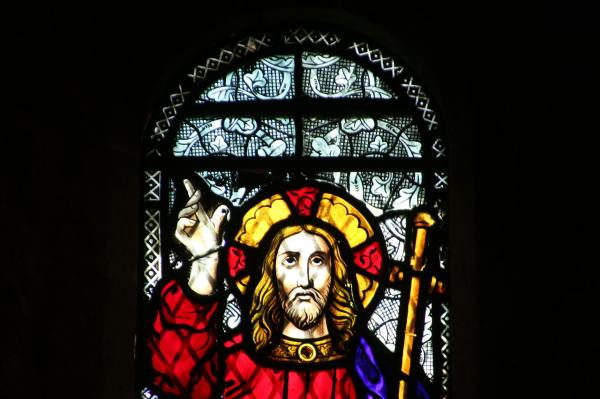
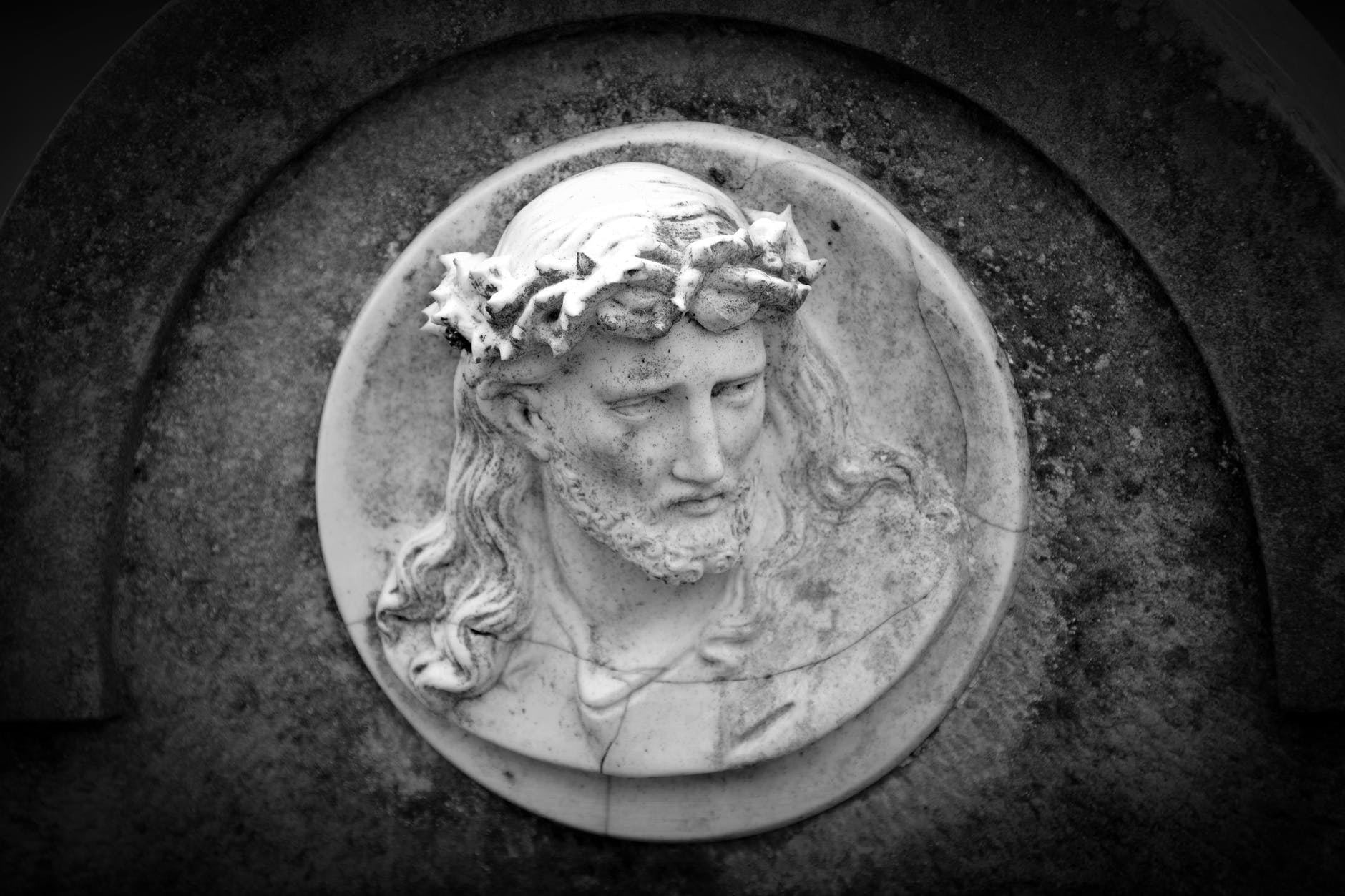
“…Lose All Their Guilty Stains!”

“There is a fountain filled with blood
Drawn from Immanuel’s veins;
And sinners plunged beneath that flood
Lose all their guilty stains.”
William Cowper

I love old hymns. So often, they express Biblical truths in simple purity, or in soaring poetry, that captures both the imagination and the memory.

Recently, I was listening to a radio broadcast of a sermon about mercy. It was a wonderful sermon, and the pastor talked about the richness and wideness of God’s mercy and lovingkindness in various situations– when we face injustice, pain, loss and grieving, guilt, and even when we are unaware of it throughout our life (Psalm 139:16-17) From the womb to the tomb, we live in the Mercy of God– God extends His Mercy and Grace for as long as we are alive to call out for it, accept it, and receive it. More than that, His Mercy and Lovingkindness endures forever (Psalm 136).

Later that day, I was doing housework– I had dirty dishes to wash and laundry to do. And there were stains! I have plastic dishes that I used to heat up leftovers in the microwave, and some of those leftovers had tomato-based sauce or cinnamon or turmeric. The dishes have a film of red or brown or yellow that didn’t come out, even when I washed and soaked them. A few of the stains will eventually fade away, but some of them will never come out. I also have clothes that are stained. David and I still wear them around the house, but there are paint stains, ink stains, oily stains, and mustard stains that didn’t come out the first time I washed (or the second or third time!)

As humans, we all have stains of one type or another. We try to hide them; we try to scrub them; we try to cover them up. Some of our stains are external and visible– scars or blemishes, imperfections and disabilities, worn or tattered “second-hand” clothes, missing teeth, poor posture, obesity, being “too” short or tall–things that people notice right away. Other stains are deep inside– guilt, shame, fear, anger, hatred, bigotry, envy, arrogance, hopelessness, depression, broken-heartedness, loneliness– we try to hide them by isolating, covering up, pretending that all is well, or denying the extent of our brokenness.

I was touched by the sermon about how God’s Mercy reaches us in all of these circumstances. The Bible is full of examples of God’s Mercy and its transforming power. But the words of this old hymn came to my mind, and a deeper realization swelled as I sang them quietly in my own heart: “And sinners plunged beneath that flood LOSE ALL THEIR GUILTY STAINS!”

I spend time washing and scrubbing at stains– silly mistakes, accidents, upsets– and even if I am successful, I can often point out where the stains were or find the last vestiges of them on an old shirt or a white plastic bowl. But I don’t “LOSE” stains. I don’t have the power to make stains totally disappear– especially stubborn ones like ink and oil. But the stains I worry about most– guilt, pain from my past, worry about how others might judge me– these stains are all in my doubting mind. In God’s Mercy, THEY DON’T EXIST! That doesn’t mean that others WON’T still judge me, or that I won’t still remember old hurts. But God WON’T! Their power is broken. God has removed them as far as the east is from the west (Psalm 103:12-14)

Sin leaves stains in our lives– even if the sin wasn’t ours to begin with. That person who bullied me in third grade– that left a stain. The way I reacted– that probably left a stain, too. When I nearly died as an infant– that wasn’t my sin, or even my parent’ sin. But it left a stain because I was born into a world where we have disease, defects, and disasters. I have Diabetes. Part of that “stain” can be blamed on things I ate, and lifestyle choices I made. Part of that is genetic. There are people who live with abuse, injustice, chronic pain, and lasting heartaches. And God’s Mercy didn’t stop any of that from staining their lives.
But the “fountain…drawn from Immanuel’s veins” is powerful enough, and God’s Mercy is amazing enough to make those stains disappear. In this life, I still have to deal with diabetes, fatigue, misunderstandings, and my own sinful lapses. People still struggle with cancer, poverty, war, and doubt. But the stains won’t follow Christians into eternity. There won’t be any vestiges of uncleanness; there won’t be any memory of the hurts and losses we suffered during this lifetime. Christ’s blood is powerful enough, and His Mercy vast enough to make the effects of sin DISAPPEAR!

The Saints’ and Angels’ Song

In an earlier post, I wrote about an old hymn, “I Love to Tell the Story.” I called it “Mr. Teeter’s Song” as it was a favorite of one of the men in the church where I spent my childhood.

Today, I want to talk about another great old hymn, “The Love of God…(Is Greater Far).” I love the lyrics of the third verse:

Could we with ink the ocean fill,
and were the skies of parchment made;
were ev’ry stalk on earth a quill,
and ev’ryone a scribe by trade;
to write the love of God above
would drain the ocean dry;
nor could the scroll contain the whole,
though stretched from sky to sky

As Christians, we speak often of the Love of God. We talk about it, we sing about it, we hype it, and we brag about it. But sometimes, it’s good to be still and meditate on it for a bit. God’s Love is greater than even our best imagination can comprehend. God’s Love is more powerful, more enduring, richer, and more wonderful than all the greatest writers and poets can express; than all the mathematicians could ever sum up. It is more beautiful than all the artists together could ever attempt to capture. The human heart cannot hold the full reality of God’s Love! God loves EVERYONE. Everywhere. ALL the Time and FOR all time!

When we pray, we are talking to the ONE who loves us utterly, perfectly, and completely. He knows all or our secret shame, all our unfulfilled longings, and all our deepest hurts. And He LOVES US!

I focused on my favorite verse from this hymn above, but today, I also want to take a closer look at the second verse– the one we often skip over:

When ancient time shall pass away,
and human thrones and kingdoms fall;
when those who here refuse to pray
on rocks and hills and mountains call;
God’s love so sure, shall still endure,
all measureless and strong;
grace will resound the whole earth round—
the saints’ and angels’ song.

The Love of God– Frederick M. Lehman

We live in a world that is obsessed with human endeavor and the natural world, without giving much thought to the God who created both humans and the world in which we live. Many people will go out of their way to ignore the spiritual– and others who pervert spirituality– and it results in a cheapening of what Love is really all about. God’s love is not like human love–temporary, imperfect, and often self-centered. God’s love is selfless and pure. And it is this love we are to grow into.

Two hymns. One tells the “story” of Jesus and His Love. Another echoes the “song” of angels and saints– those who live in and trust in the glory of Jesus and His Love.

The Love of God– this is the Good News. Christ is the embodiment of that Love– a love that lived and died for others; a love that embraced sinners, healed the sick, and restored the dead to life. The Love of God– eternal, rich, and perfect! May our prayers, our songs, and our lives reflect the “Saints’ and Angels’ Song” today!

Our Advocate

I write often about praying for others. I sometime write about others praying. But I don’t often write about Jesus praying– except during His ministry on Earth. But Jesus continues to pray–without ceasing– for us in Heaven. (See Hebrews 7:25 and Romans 8:24). The Bible tells us that Christ is seated at the right hand of the Father and making intercession for us. Not only is He praying; He is praying FOR US.

Jesus didn’t just die to keep us out of Heaven and then move on and leave us to struggle on our own. Nor did He send the Holy Spirit to live with us so that He could sit down and do nothing. Jesus is still passionately advocating on your behalf– every minute!

And that is a great comfort in a world where we sometimes feel abandoned and friendless. Even if the whole world is lined up to do me great harm, Jesus is on my side. If you have trusted Him with your life, He is faithful to advocate for you– for your growth as a Christian; for your protection from the schemes of the Enemy; for abundant and productive LIFE for you, both now and through Eternity.

If you have not trusted Jesus as your LORD and Savior, He is still advocating– for another opportunity, for more time, for circumstances (good or bad) to help you seek (and FIND!) Him. For those who have not heard the Gospel, He is pleading with the Father (and sending the Spirit to urge believers) to open their eyes, ears, and hearts to God’s will and trust Him.

Jesus advocates on our behalf because of His great Love and Compassion. We don’t deserve to have someone else plead our case before the Righteous Throne of God. And we are not qualified to plead our own case– we are guilty in the sight of a perfectly Holy God.

“But God shows His love for us in that while we were still sinners, Christ died for us. Since, therefore, we have now been justified by his blood, much more shall we be saved by him from the wrath of God. For if while we were enemies we were reconciled to God by the death of his Son, much more, now that we are reconciled, shall we be saved by his life. More than that, we also rejoice in God through our Lord Jesus Christ, through whom we have now received reconciliation.” Hebrews 5:8-11 ESV

You will never, NEVER pray alone! And who better to have as a prayer partner than the very Son of God Himself! He is our Savior, our Champion, and our Advocate!

…Cry With the Saints

Several years ago, singer and songwriter Billy Joel created some controversy with a song he wrote, called “Only the Good Die Young.”  The song was about a young man trying to convince a young catholic girl to give up her virginity.  Many were offended by some of the lyrics, and by the general tone of the song, which was sacrilegious; sneering at the notion of sexual purity and waiting for marriage.  One of the lines in the song says, “I’d rather laugh with the sinners than cry with the saints..The sinners are much more fun.”

Full lyrics here

It may seem that way to many– Christians (along with many Jews, Muslims, and others who are sincere and spiritually-minded) seem stern and sober in comparison to free-living, fun-loving heathens.  Why should this be so?  Shouldn’t those who are closer to God experience more Joy and happiness than those who do not know Him?  Why are saints and prophets so often shown crying, wailing, and weeping bitter tears?

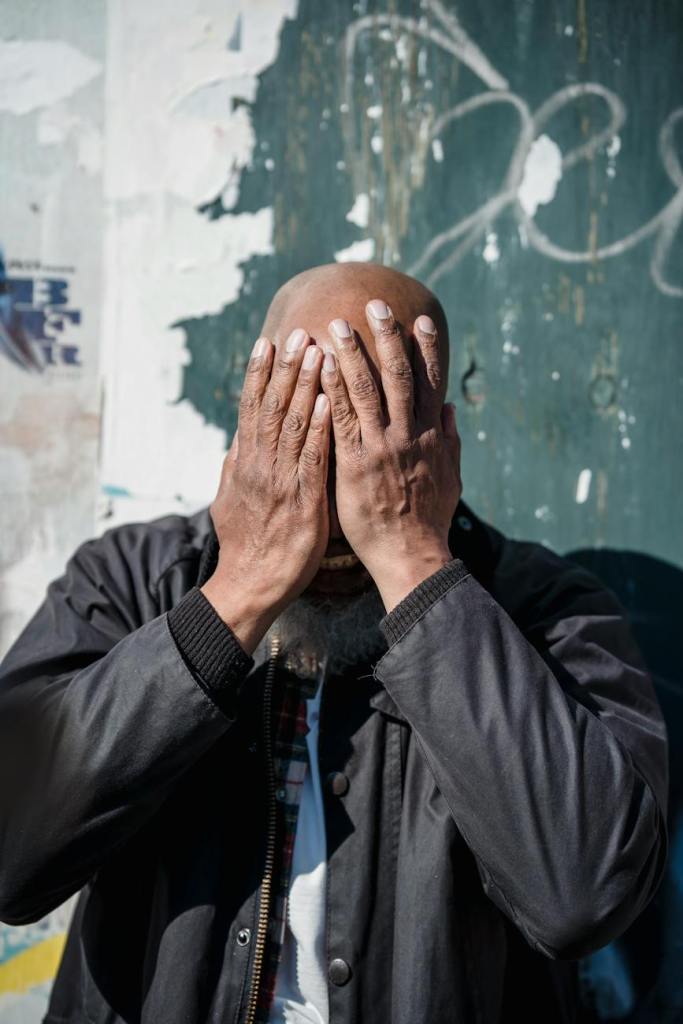
man wearing gray sweater in selective focus photography
Photo by Segopotso Makhutja on Pexels.com

The author of Ecclesiastes (assumed to be King Solomon) writes:

Ecclesiastes 7:1-6 (Revised Standard Version)

A good name is better than precious ointment;
    and the day of death, than the day of birth.
It is better to go to the house of mourning
    than to go to the house of feasting;
for this is the end of all men,
    and the living will lay it to heart.
Sorrow is better than laughter,
    for by sadness of countenance the heart is made glad.
The heart of the wise is in the house of mourning;
    but the heart of fools is in the house of mirth.
It is better for a man to hear the rebuke of the wise
    than to hear the song of fools.
For as the crackling of thorns under a pot,
    so is the laughter of the fools;
    this also is vanity.

This doesn’t mean that God wants His people to be depressed, hopeless, and constantly weeping.  But God DOES want us to be aware and to see the world as it really is– fallen, chaotic, filled with needless suffering and injustice.  Why?  Because He calls us to think about the consequences of our actions, and also to have compassion for those who are hurting.  It may be more “fun” to ignore the consequences of sin and to “live it up” if you are young and healthy, but it is not at all true that “only the good die young.”  Death comes unexpectedly and randomly– taking both good and evil, both wise and foolish.  The difference is that fools get cut off and caught off-guard.  The consequences of their actions find them unprepared and filled with regret or bitterness and pain– all of which might have been prevented if they had not ignored reality.

silhouette of graves
Photo by Micael Widell on Pexels.com

I think the song DOES have a message to Christians–while we shouldn’t be fools chasing after fleeting pleasures that leave a large wake of pain and regret and filling our lives with empty laughter, we should not “die young” in the way of the Pharisees of old.  Jesus called them “white-washed tombs” for good reason.  Their “goodness” came from self-righteousness and piety.  They shunned sinners, and chased others away with their long lists of rules and disdain for anyone who didn’t keep up appearances.  Such “saints” never cry– they are more likely to crow about their own “goodness” with dry eyes and closed fists.  Jesus attended feasts and parties with the sinners– but his heart was not for the “fun”  they were having.  It was for them– for their lost souls.  Jesus wept!  Jesus wept for the loss of his friend Lazarus; he wept over Jerusalem; he even wept tears of blood in the Garden of Gethsemane!

ancient art black and white close up

The “Good” have many reasons to cry– millions of innocents suffer needlessly every day–abuse, slavery, genocide, abortion, bigotry, war, starvation, murder, theft, addiction, homelessness, disease, natural disasters, man-made disasters, and more fill our world.  People waste time angrily shaking their fists at Heaven or at governments, but so much of the suffering is a direct result of sinful actions on the parts of individuals.  In my own country, in my own lifetime, over 50,000,000 babies have been aborted–without legal consequence, but with a terrible consequence on the soul of our nation.  If we could shed one tear for each life lost it would equal over 660 gallons of water (here’s how I got that number  )– just one tear for each life, and those are only the abortions that have been recorded in the past 45 years in the U.S.  If we were to shed a tear for every broken marriage, every rape, every life lost to addiction, suicide, murder, or war, every violent assault, every broken promise, every lie, or every corrupt deed in our world over the past 50 years, we could fill an ocean!  The power of tears, or of any running/falling water is so great, it could generate electricity to light the nations! ( Here’s an interesting article on the power of a drop of water!)

waterfalls near gray paved road surrounded by green leaf trees during daytime

I would far rather “cry with the saints.”  But more than that, I would rather pray with the saints, and arise from both to work with the saints–the power of tears pales in comparison with the power of God’s mercy and grace!

Laughing With the Sinners

There is a line in a song by Billy Joel (Only the Good Die Young) which reads, “I’d rather laugh with the sinners than cry with the saints. The sinners are much more fun.”

There is a myth about sin– that sin is fun and obedience is drudgery. Sinners laugh and live carefree, happy lives, while “saints” lead gloomy lives filled with tears, worry, and anguish. Heaven will be filled with sour-faced do-gooders playing harps, while Hell will be an eternal party.

Photo by Julia Larson on Pexels.com

Nothing could be further from reality. While sin gives momentary pleasure and temporary laughter, it also leads to devastating pain and haunting regret. Broken families, lost relationships, stress, and guilt are just some of the consequences of sin. The idea that “I’m not hurting anybody– I’m just doing what makes me happy” is a false comfort.

Photo by Victoria Borodinova on Pexels.com

Similarly, while obedience may require us to make sacrifices or suffer momentarily, it also leads to great reward–discipline, wisdom, integrity, and a legacy of hope and help. The idea that “I’m missing out on the fun” is also a false one. “Saints” may cry, but often their tears are for the misfortunes of others!

Unfortunately, the common stereotype of sinners laughing while saints cry or, more often, sit in judgment, is based on observation. I have known some very sour Christians. They may not be crying, but they frequently make others around them cry! They nag, scold, wag their fingers, consign their neighbors and family members to Hell, and act as though they are too good for everyone else. When challenged about their negative attitude, sometimes they suggest that they are just “waiting for Heaven.” Others plead a genuine concern for others, and they worry that the laughter they hear now will turn to mourning in the future.

Photo by Paul Theodor Oja on Pexels.com

But I have also known joyful Christians– laughing, singing, encouraging others, whistling while they work, even laughing in the face of suffering and persecution! They, too, are “waiting for Heaven.” But in the meantime, they are celebrating their new and abundant life in Christ. Their attitude and actions attract others, and reflect the love, joy, peace, and hope that transcends the mere “happiness” of a moment’s sinful pleasure.

Photo by Akshar Dave on Pexels.com

The Bible says much about the value of both laughter and tears; of joyous celebration and sober reflection. In the end, ALL of us are “sinners”–no one is righteous on her/his own. Jesus, when He walked the earth and interacted with people, wept and celebrated with them. The Pharisees reprimanded Jesus and His disciples for their “feasting” and spending time with prostitutes and tax collectors. And yet, Jesus had harsh words about sin and Hell, and often spent time alone and in anguish of heart.

Photo by Andrea Piacquadio on Pexels.com

The crying of saints is not, in itself, of any more value than the laughter of sinners. But laughter and happiness in the moment cannot save us from the sting of death or the yawning emptiness of an eternity without God. And that is no laughing matter! Unfortunately, the song is based on an empty myth. Death comes to all of us, young or old, “good” or “bad,” gloomy or exuberant in life. What makes the difference is not our laughter or tears, or even our efforts to obey or live “good” lives– what makes a difference is GRACE and FAITH. And I’d rather live with the redeemed than die with the defiant!

Blog at WordPress.com.

Up ↑