Daniel– A Life of Dangerous Prayer

When we hear about the Biblical story of Daniel, we usually hear only the small story of Daniel and the den of lions. Daniel was thrown into a den of lions for refusing to obey the king. God shut the mouths of the lions and Daniel was saved. It is an amazing, miraculous, even incredible story. But what makes Daniel’s story truly amazing is to see it in perspective. I’d like to spend a couple of days looking at the larger picture of Daniel’s life.

Daniel, like most prophets of the Old Testament, was an ordinary person– yet he was different, too. Daniel was from the line of kings and the royal household of Israel. He was strong and intelligent, among the elite young men of the land. According to the Bible, he was also gifted with the ability to interpret dreams and visions– a gift of extraordinary importance that set him apart from others.
But Daniel was also a slave– a captive who was ripped from his homeland and taken by force to serve in the court of the Babylonian king. He was a stranger in a strange land; he walked a very dangerous line of trying to keep the favor of the king while dealing with very powerful and resentful enemies among the king’s other courtiers. Daniel stood apart–there is little mention of a family in Daniel’s story– Daniel faced many of his trials alone (except for God). And, while Daniel survived many extraordinary trials, he never received the kind of promise or fulfillment that we see in lives like Abraham or David. Daniel spent most of his life as a captive. He never returned to his homeland. He never saw the fulfillment of his great vision– in fact, he asked for clarification, and was simply told to go his way–he would understand at the end of time.

But Daniel has a lot to teach us about prayer– its power, its peril, and its promise.

In the first chapter of the Book of Daniel, we are told a very little about Daniel’s background and how he ends up in the service of the king. https://biblia.com/bible/esv/Dan%201 One little detail that stands out is that Daniel is given a new name– not by God, but by the Babylonian official who is his new “boss”. Daniel is to be known as Belteshazzar– “Protect the life of the King”. Daniel is used by God to protect, and even warn, the foreign kings who have taken him captive. Daniel faithfully serves his oppressors– he does not seek to betray them or plot revenge against them. But the new name doesn’t stick. We still know Daniel by his original name–“God is my Judge.”

Daniel’s first trial comes when he and his friends are selected for potential service to Nebuchadnezzar. They are to be trained and fed at the king’s own palace. They are to be assimilated into Babylonian culture, history, laws, etc. But Daniel refuses to be “defiled” by the royal food and wine. Instead, he and his companions ask for a diet of plain vegetables and water. Much has been made of this– entire diets and healthy living books have been based on just this simple request. I think such plans miss the bigger picture. Daniel’s request wasn’t about veggies or “strength training.” It wasn’t about eating smarter or being stronger and healthier than the other captives. It was about obedience to God AND to the very authorities who were offering the food from the king’s table.

There was nothing nutritionally “wrong” with the king’s food or wine, nor any particular virtue in the vegetables Daniel requested. But there were at least three good, Biblical reasons why Daniel may have refused to eat the king’s food. First, the Babylonian customs called for sacrifice to their gods–even human sacrifice in some cases! But much of the meat, fruit, and grain offered at the king’s table may have come from the temples. Food that had been ritually “offered” to the gods would be fit for the table of the king. But Daniel would not want to eat the food offered to these other, false gods– it would suggest that Daniel agreed that these gods were worthy of the sacrifices that had been offered– including infants. Better to eat plain food of any type than food that had religious implications. Second, the food was likely to be non-Kosher. God’s people were to be distinct, including in their diet. There were several types of foods forbidden to the Jews that would likely be on the daily menu of the palace–not just the foods themselves, but the way they were prepared. It’s not that these foods were not edible or nutritious, but God wanted his people to demonstrate discipline and obedience. Daniel did not want to compromise or cause trouble on a daily basis rejecting first this dish, then questioning that one…easier by far to simply request what he knew was in line with God’s ways. Finally, Daniel was being offered rich and decadent food while many of his fellow Israelites were starving in their captivity. To stuff himself full of the best food in the land would not change their circumstances– but it would change Daniel’s heart. This was more important than any particular diet. Daniel did not claim that his requested diet of vegetables would make him stronger or wiser or healthier than the others– he trusted that God would sustain him to be at least as strong and healthy as anyone else. And God did more!

It is important, also, to note that Daniel did not defy the king or demand special treatment. He won the respect of the official in whose charge he was being kept. He even helped the official overcome his fear of the king. Why is this important? Daniel was in a difficult and dangerous position. He was a captive– a slave in a strange land– with a golden opportunity. He was chosen to be in the elite group of young people who could serve with power and influence in the land of their oppressors. Daniel, in fear or seeking his own advancement, could have trusted to his own wits and the favor of the Babylonians. He could have abandoned his commitment to serve God in favor of serving the immediate whims of those around him. He could have determined that in his new situation, he should adapt to the new rules, even those that contradicted God’s word. Or, he could have been defiant and arrogant–demanding that the Babylonians recognize all the customs of his native land, including his Kosher diet. He could have encouraged his friends to lead a rebellion; he could have gone on a hunger strike to protest the king’s food. But the king had never commanded that the young people eat his food– he had merely offered it as an incentive. Daniel used wisdom and tact. He won the trust of the official by suggesting a trial period of ten days to see if the “alternative” food plan would prove acceptable. He didn’t place his trust in his own actions– he placed his trust in the true Judge and offered faithful service– both to God and to Nebuchadnezzar.

No matter our circumstances today– whether we are in a palace or a prison; whether we are free or enslaved– God sees us. He will judge, not only the actions of our oppressors, but our response to oppression and hardship, and mistreatment (or our oppression and mistreatment of others). May we, like Daniel, turn to the true Judge, and walk worthy of His Name today.

Declaration of Dependence

Today, America marks the 249th anniversary of the signing of the Declaration of Independence. In it, colonial leaders listed several reasons why they no longer held allegiance to the British Crown. Many of their reasons involved abuses by the King or by Parliament in relating to their colonial citizens. Taxation without representation; passing unjust laws; requiring people to quarter (feed and house) soldiers who often harmed and cheated them; refusing to hold the soldiers accountable for their offenses– even murder; refusing to allow the colonials to trade with other nations, etc. But there was something more.

We hold these truths to be self-evident, that all men are created equal, that they are endowed by their Creator with certain unalienable Rights, that among these are Life, Liberty and the pursuit of Happiness.–That to secure these rights, Governments are instituted among Men, deriving their just powers from the consent of the governed, –That whenever any Form of Government becomes destructive of these ends, it is the Right of the People to alter or to abolish it, and to institute new Government, laying its foundation on such principles and organizing its powers in such form, as to them shall seem most likely to effect their Safety and Happiness.

In drafting and ratifying these words, the founders of the United States did something unique. They did not just establish an independent government; they established a model for both independence and dependence IN government. Government is not independent of certain inalienable rights, nor of the Creator of those rights. Governments are not the highest authority in the land. Governments are instituted and derive their power, not by their own actions and decisions, but from the consent of the governed. Governments DEPEND on their ability and willingness to serve the people.

Of course, there are wicked and improper governments, and Britain’s rule in 1776 was not the worst example of tyranny or despotism the world had ever seen. The United States has not always lived up to the ideals and principles of the Declaration of Independence. Less than a century after the Declaration was adopted, the United States was engulfed in a war that tested its ideals. The nation was divided by the issue of slavery. Nearly half of the states still practiced slavery, meaning that hundreds of thousands of people were being treated far worse than the “rebellious” colonists of previous generations. Our nation as a whole was not delivering on its promised declaration that “all men are created equal” or that they were endowed by their creator with rights to “life, liberty and the pursuit of happiness”.

But when our nation has remembered its Dependence– our need for God and our need to care for the safety and opportunity for those under our jurisdiction–remarkable things have happened. The union was “saved.” Voting rights were not just extended but enshrined in our Constitution. Americans joined the fight in Europe and around the world on more than one occasion to secure rights for people who were being oppressed, tortured, and even exterminated. The “Promise of America” draws people from diverse nations and cultures and stands as a model for the rest of the world.

Sadly, today, many here in the United States want Independence from America. Our culture has devalued life, exchanged liberty for conformity, and traded the pursuit of happiness for indulgence and selfishness. We want to be independent of responsibility– to our families, to our neighbors, to our nation, and to God. We do not want a government that protects those rights that are endowed; instead, we want a government to give us assumed “rights” that are really permissions to defy God’s laws. We want to be free to redefine morality, escape the consequences of our own poor choices, and feel virtuous without pursuing virtue.

What will happen to our country if this trend continues? On the eve of celebrating our 250th year, we may be on the brink of falling apart. Issues like abortion, immigration, health care mandates, and transgenderism threaten to divide our country, just as slavery did over 150 years ago. Americans are divided on political, economic, religious, and cultural issues. We can’t seem to agree on what we mean by “rights, ” “freedom,” or “pursuit of happiness.” We can’t even seem to define what a “woman” is or decide how many genders to fight for. Everyone wants to speak out, but no one seems willing to listen– except to find another point of disagreement. We are no longer “united” states– we are warring factions in a series of culture wars.

But what happens when American Christians declare our Dependence on God and on His Word? Many around us have declared their independence from God’s laws–even to the point of denying His existence. Many people live in a self-imposed despotism; they are enthralled by a false “freedom” from morality, reverence, and even common sense. But Christians– wherever they live– are called to submit to the authority of Christ above all. We depend on Him– not on our customs, not on our history, not even on the words of the Declaration of Independence. And we are to lean on God, not on our own understanding or our superior morality or our ability to shout louder than the next person! Our Freedom comes through Christ alone!

True “freedom” comes from dependence, not independence. When we depend on Christ’s finished work on the Cross, we are free from the weight of Sin and the power of Death. When we depend on God’s wisdom, we find understanding. When we depend on God’s guidance and discipline, we gain freedom from guilt and shame. When we depend on God’s power to channel our emotions and energy, we find purpose and joy.

Today, I declare my utter dependence on God– on the Salvation He provided through Jesus Christ, and on the power of His Holy Spirit to lead me through this life. I am glad to be an American, but my ultimate citizenship is in Heaven. The “promise of America” is a good thing: the promise of Heaven is glorious and life-changing!

The Prince of Peace

They have healed the wound of my people lightly, saying, ‘Peace, peace,’ when there is no peace. Jeremiah 8:11(ESV)

While people are saying, “There is peace and security,” then sudden destruction will come upon them as labor pains come upon a pregnant woman, and they will not escape. 1 Thessalonians 5:3 (ESV)

Peace I leave with you; my peace I give to you. Not as the world gives do I give to you. Let not your hearts be troubled, neither let them be afraid. John 14:27 (ESV)

I have said these things to you, that in me you may have peace. In the world you will have tribulation. But take heart; I have overcome the world.” John 16:33 (ESV)

Jesus answered: “Watch out that no one deceives you. For many will come in my name, claiming, ‘I am the Messiah,’ and will deceive many. You will hear of wars and rumors of wars, but see to it that you are not alarmed. Such things must happen, but the end is still to come. Nation will rise against nation, and kingdom against kingdom. There will be famines and earthquakes in various places. All these are the beginning of birth pains…21 For then there will be great distress, unequaled from the beginning of the world until now—and never to be equaled again. Matthew 24:4-8; 21 (NIV)

One of the prophetic names given to Jesus in the book of Isaiah is “Prince of Peace” (Isaiah 9:6). And yet, Jesus did not bring an end to the Roman occupation of Judea while He walked the earth. He did not end slavery or war or oppression. He did not bring the kind of “peace” that most of us look for even today. We live in a world of war, dissention, upheaval, and chaos. There is hatred, injustice, slavery, abuse, and oppression, and none of the efforts to bring peace in our world have succeeded in wiping out any of these evils. In the nearly 2000 years since His crucifixion and the rise of the Christian Church, these evils have remained. Great strides have been made over the years– slavery is officially outlawed in many areas of the world; human rights have been codified. Humanitarian efforts have greatly decreased the number of people who die of starvation and disease, homelessness and exposure to the elements. But there are thousands, and indeed hundreds of thousands of people around the world who are refugees from their home countries, who are denied human rights, who live in fear of bombing raids and terrorist attacks.

Where is the Peace?

Jesus spoke freely of the tribulations His followers through the generations would face. He never promised us a world without any trouble. He promised that, in this life, we WILL have trouble. And it will increase over time. People will grow suspicious, hateful, and cold. Nations will rise up against other nations; families will be divided in such a way that one’s greatest enemies will be their closest relatives! Wars and natural disasters will intensify. And ONLY Christ’s return will stop any of it. Human efforts may make a difference for a short while, or make a small difference for a long while, but nothing we can do, single-handedly or as a human race, will deliver us from the evil that lives in the human heart. In fact, we often delude ourselves into thinking that we can change the world on our own; we seek to force our plans on others “for their own good,” little knowing that we may be sowing the seeds of bitterness, backlash, and revenge.

Jesus Christ is the Prince of Peace. He will administer perfect peace and justice when He returns. And in the meantime, He offers us an inner peace that passes all understanding. We can experience peace as bullets whip around us; as we are being misunderstood, mistreated, and abused; as we face injustice and oppression. We can do this because Jesus gave us the example. He did not fight back or even complain as He was arrested, falsely accused, sentenced, and executed. He did not seek to force everyone to accept His rightful claims. He did not even protest the unjust treatment of His people by the Romans.

What He did instead was to focus on God’s mission– He interacted with those who were suffering; He healed the sick; He brought comfort to those who were grieving. He brought sinners to repentance and sought to make peace between individuals and God. Jesus is the Prince of real and lasting Peace– not just peace in “our time” or peace for a generation, but eternal and everlastingly joyous Peace. This is the kind of peace that sees trouble and tribulation for what it is– temporary and transformational. Suffering can make us bitter or better, and Jesus shows us how to experience the latter. When we protest instead of pray, we forfeit that peace. When we pray, we gain wisdom in how to stand firm against injustice without losing our own peace and perspective.

These are not peaceful times, but we can still experience peace, hope, trust, endurance, joy, and light in the days ahead, thanks to our Prince of Peace.

The Unchanging God

A few days ago, we had to reset all our clocks for “daylight savings time.” This is an artificial construct whereby we pretend that seven o’clock is really eight o’clock for several months in an attempt to “gain” more daylight hours. Several months from now, we will “move the clock back” to its “real” time. We talk about a “lost” hour which will be “regained” in the fall, but time is constant. There are still 24 hours in each day throughout the year. We are simply playing a game with time.

We live in a time of great changes. Whether it’s a “time change”, a change of government officials, climate changes, technological changes, and even physical changes as we age, we must learn to “roll with” and adapt to the many changes around us.

God does not change. All the changes in our life can leave us confused, frightened, agitated, and even angry. But God is constant. His love is constant. His nature does not change. His Word does not change. He is the same yesterday, today and forever (see Hebrews 13:8). We can trust Him to do what He has said He will do. We can rely on Him to be the same, regardless of the changes around us; regardless of the changes within us; regardless of our circumstances, our reactions, our failures, and our best efforts. Other people will let us down. Their love may be conditional or fleeting. Their promises can be broken. And the fact that we are so hurt by broken promises and sudden changes points to the reality of the unchanging God, and of our need for Him.

It can be tempting, with all the change around us, to doubt God’s faithfulness; to wonder, or even wish, that He, too, might change. Sometimes, we want Him to “bend” to fit in with our own desires, or to fit in with our society and culture. Surely, if the majority of our culture has changed, we believe that such change equals growth. We look at the past with disdain. “We just didn’t know better, then,” we say. And surely, if we know better now, God will recognize our new thoughts and attitudes as a positive change– in fact, God will change to fit our new awareness, our “better” way of thinking.

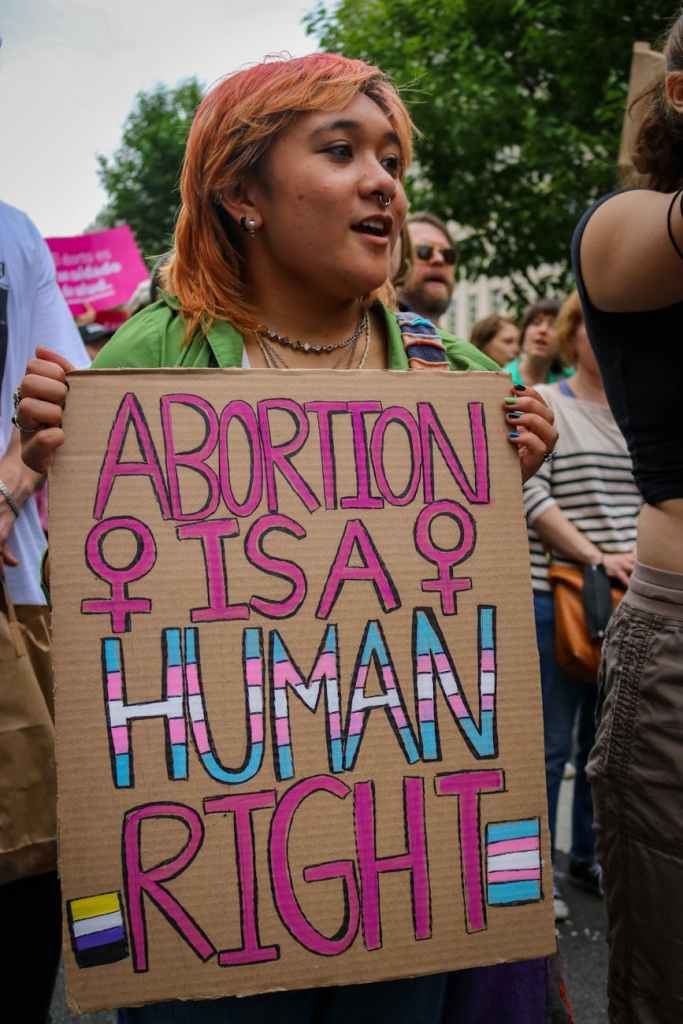
But that is not how it works. There are millions who believe that the “bad” days of slavery are behind us; others believe that the “legacy” of slavery is the greatest problem of our age. All without acknowledging that there are still millions of people who are enslaved– victims of the sex trade, victims of organ harvesting, victims of debt and war–even in our “modern” world. Abortion-on-demand still slaughters millions of human beings every year–in spite of our culture’s acceptance, and even championship of abortion as a “woman’s right.” Hundreds of thousands of young people are being mutilated because of our society’s growing belief that gender is “fluid” and God is not a good and wise creator.

While God’s unchanging nature can be a great comfort to the believer, it can be a stumbling block for those who listen to the roar of cultural voices, instead of the still small voice of the lover of their souls. And it can mean that Christians face misunderstanding and persecution as we hold God’s truths to be unchanging and unfailingly good.

I am choosing today to be grateful for God’s unchanging nature. I choose to celebrate that His promises are true; that His love never fails; that He is eternally wise; that His compassions are new every morning, and great is His faithfulness! (Lamentations 3:22-23)

Saint Patrick’s Breastplate

In honor of St. Patrick’s Day yesterday, I am reprinting one of his prayers, called St. Patrick’s Breastplate. For more on this and other prayers attributed to St. Patrick, see https://slife.org/saint-patricks-prayers/.


St. Patrick (also known as Padraig or Padrig) lived in the fifth century during the last of the Roman era in Britain. Held as a slave in Ireland as a young man, he escaped and returned to his home. However, he felt called to return to the land of his captivity as a missionary. Today, he is celebrated for his efforts to bring the Good News of Christianity to the very people who had enslaved him. The following prayer is attributed to St. Patrick. It is as relevant today as it was over 1500 years ago:

I arise today
Through the strength of heaven;
Light of the sun,
Splendor of fire,
Speed of lightning,
Swiftness of the wind,
Depth of the sea,
Stability of the earth,
Firmness of the rock.

I arise today
Through God’s strength to pilot me;
God’s might to uphold me,
God’s wisdom to guide me,
God’s eye to look before me,
God’s ear to hear me,
God’s word to speak for me,
God’s hand to guard me,
God’s way to lie before me,
God’s shield to protect me,
God’s hosts to save me
Afar and anear,
Alone or in a multitude.

Christ shield me today
Against wounding
Christ with me, Christ before me, Christ behind me,
Christ in me, Christ beneath me, Christ above me,
Christ on my right, Christ on my left,
Christ when I lie down, Christ when I sit down,
Christ in the heart of everyone who thinks of me,
Christ in the mouth of everyone who speaks of me,
Christ in the eye that sees me,
Christ in the ear that hears me.

I arise today
Through the mighty strength
Of the Lord of creation.

So Close…

I’ve been reading in the book of Numbers this week. Numbers is not the most exciting book of the Bible. Many of the chapters are about the census, or about further rules and regulations concerning sacrificial offerings, etc.. But the chapters from 11-15 detail a series of rebellions– grumblings against Moses and efforts to return to Egypt. These rebellions happen after over two years after God had led the people out of Egypt. For two years, they have been protected, fed, sustained, and instructed by God himself. His spirit has appeared as a pillar of cloud by day and a pillar of fire by night throughout their journey. They have had manna and quail to eat, water from the rock to drink, and they have seen the vast army of Egypt drowned in a matter of minutes, while they were led through the sea on dry land! 

And now, they are so close to the “finish line.” They are on the very doorstep of the land of Canaan; the land God had promised to GIVE them. All that is left is for Moses to send out some scouts to bring back a report about the land– its cities and farmland, its people and its produce. Those two years must have seemed like a lifetime, but now it would be coming to an end. God would provide a homeland; a place to build houses, raise crops, rear their children, and settle into lives of peace and prosperity.

So what happened? The scouts brought back a factual report. The land had fortified cities, and lush farmland. It was already planted with plenty of fruit trees and vineyards. And there were ancient people groups with mighty warriors. Israel had just taken a census. They also had mighty warriors, and a lot of them! Moreover, they had God’s promise that the land would be GIVEN to them as their inheritance.

They were so close! Victory, rest, and prosperity were so close they should have been able to taste them. Instead, their warriors moaned and wailed like infants. The same people who had vowed to follow the Lord at Mount Sinai, now planned to walk away from His promised prize. They decided to turn around and go back to slavery in Egypt–the same Egypt that God had decimated two years earlier by sending plagues and destroying its army.

Two years of camping and living “on the road,” lost in two hours of grumbling and fear-mongering. And the punishment? Forty years of needless wandering–time to realize what had been thrown away in petty worrying and imagining the worst. Time to regret their reaction and their failure to trust God. Time for God to show them, once again, His ability to keep them safe and sound in the desert places.

And the learning curve would be a steep one. Almost immediately, a group decided that they would “prove” to God that they were ready to conquer Canaan– on their own. But it didn’t work. Then a group decided that Moses was to blame for their misfortune. But they were “swallowed up.” In the forty extra years of wandering, group after group would challenge Moses (and God) and be destroyed from within.  Moses, who had already lived forty years in the wilderness tending sheep, would have to repeat the task, shepherding the entire nation of Israel for forty long and difficult years. And even he would fall victim to his own frustrations, calling water from another rock, but doing it “his” way. Even Moses would fall in the wilderness, never getting to enter the promised land.

How many times have you noticed that the closer we get to a goal, the more likely we are to fall short. We sabotage our own efforts, or we rebel against good instruction. Sometimes we just give up a few yards short of the finish. We are just over half-way through the month of February. What goals or resolutions did you make for this year? How many of them have you stuck with?

Here are three things I take away from the lessons of Numbers 11-15:

  • Look Beyond. Don’t take your eyes off the prize! The scouts’ report was not all bad. Yes, the cities were walled and the warriors were big and fierce. But the walls of Jericho were eventually brought down without a single battering ram, siege ramp, or arrow! Don’t ignore the trials ahead, but don’t let them blind you to the blessings beyond them!
  • Look ahead, not behind. Don’t waste time living in past comforts or running from past mistakes. God has something better than whatever we’re going through now. But God isn’t waiting on the other side. He is beside us, around us, WITH us right now. He is patient with us. It may take us two years (or forty-two!) to reach a goal, but if we learn to follow God, we will never be forsaken.
  • Look UP! God’s spirit didn’t appear on the ground around the Israelite camp. He appeared as a pillar. God called Moses UP on Mount Sinai. We need to stop looking back at our past, or around, comparing ourselves to others, and look at God’s promises. In relation to our goals and dreams, we need to LIFT them up in prayer! Daily!

We are so close! Let’s keep going in the right direction towards God’s promises.

Casting Shadows

Today is “Groundhog Day.” Tradition says that on this day, if a large rodent called a groundhog peeks out of its hibernation burrow to see its shadow, there will be six more weeks of winter. For more history about this observation, see https://www.yahoo.com/lifestyle/groundhog-day-five-things-didn-095407401.html?fr=sycsrp_catchall .

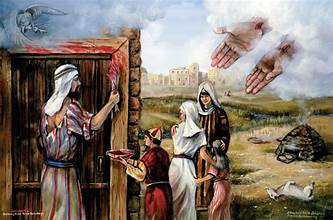
Candlemas, the celebration on which Groundhog Day is founded, is actually the day of the Baby Jesus’ presentation in the Temple (see Luke 2:22-40). Forty days after his birth, every first-born male child in Israel was to be presented at the temple, and a sacrifice was to be made for his redemption. This traces back to the Passover tradition, when the angel of death passed over the houses of the Jewish families who had painted their door frames with blood. Meanwhile, the first born sons (and animals) throughout Egypt were slaughtered. In this way, God showed His Power and His Mercy, leading Israel out of Egypt in triumph, while showing judgment on the Egyptians. (See Exodus 12).

History and tradition cast long shadows. The Jews had been slaves in Egypt for nearly 400 years. A new tradition helped them remember where they had come from and celebrate the promise that God would lead them to their own land. The Jewish people had kept this sacrificial tradition for centuries, reminding them of God’s mercy in saving their sons, and in redeeming them as a people from slavery in Egypt. Christians, realizing that this tradition “foreshadowed” the coming of Christ, adapted it into a new celebration. Christians celebrated Candlemas for centuries, remembering that Jesus was presented as OUR sacrifice, OUR redemption from Death into eternal Life Jesus came to be our Sacrifice, and also our Light. 

But somewhere along the way, pagan beliefs and rituals were woven into the story of this day, until it has become “Groundhog Day.” Instead of the Lamb of God, we celebrate a common rodent. Somewhere in Pennsylvania (Punxsutawney), a small crowd gathers as someone lifts up a frightened groundhog and pronounces a weather prediction (one that is less than 50% accurate!) And everyone is looking for a shadow, instead of celebrating the Light.

The thing about shadows is that you cannot see them when you are looking INTO the light. You have to look away, turn around, look back, to see a shadow. Shadows are cast when something gets between the source of light and a flat surface. History casts shadows. Memories cast shadows. Sin casts a huge shadow. But Jesus is pure light. The Word of Life came to be a “lamp unto (our) feet and a light unto (our) path” (Psalm 119:105 KJV). We are meant to learn from the shadows of the past, but not to walk in them. We are to walk in the light, looking forward to the fulfillment of God’s promises, even as we celebrate the faithfulness of His past actions in the lives of others.

Light casts no shadow. But it banishes the darkness where shadows live. Our choices have consequences. We can turn away from the light, or step in opposition to the light, and cast shadows that may follow for generations–cycles of abuse, isolation, hatred, anger, or regrets. Or we can choose to follow the light, and banish the shadows of the past– bringing peace, repentance, reconciliation, and hope.

Heavenly Father, today, I pray that I will be a reflection of Your light in the world; that my actions would help banish shadows of doubt and despair, and shine with Your truth and hope for others to see. Where there are shadows in my life from the past, may I learn from them and leave them behind as I follow you more closely. Where I have cast shadows in the lives of others, help me to bring light and healing in Your name. Amen.

The Value of a Life

Today in America, we celebrate the life of Dr. Martin Luther King, Jr. Dr. King was a minister, a brilliant writer and student of theology, a leader in the Civil Rights movement of the late 1950s and early 1960s, a noted speaker, and man who arguably made a difference in the world. Dr. King was murdered in 1968, at the age of only 39, leaving a family and a nation devastated by his loss.

Next Monday, we will observe the 51st anniversary of the Supreme Court decision Roe v Wade, in which nine judges effectively legalized abortion in the U.S. for over half a century. Even though this decision has been overturned, many states, using the precedent of Roe v Wade, have changed their state laws to allow for abortion. In many states, it is now legal to abort a child right up to the moment of birth!

What is the value of a single life? Who gets to decide that they have the right to take another person’s life– whether by assassination, capital punishment, abortion, murder, or euthanasia?

It is a question that our society has struggled with for centuries. Who can give life? Who can take life? Who can determine the conditions of another person’s existence? And, for those who live, what is the “value” of their life–to their family, to their neighborhood, to their nation, or to history? Who gets to set the standard of what constitutes a “worthwhile” life or the “quality” of life for someone else? For themselves?

I’ve been reading through the book of Genesis this month, and, according to the Bible, this subject is as old as human life on earth. Cain decided that Abel’s life was expendable, so he killed him– the first murder. The people of Sodom and Gomorrah felt they had the right to enslave and rape anyone they wanted to. Joseph’s brothers plotted to kill him, before selling him into slavery, instead.

The Bible doesn’t hide this history, nor does it sugar-coat the actions of those featured in its pages. But, the Bible offers us a clear picture of WHO gives life, and WHO has the authority to decide what life is worth. God alone has this authority. It is God alone who can create and sustain life. Mankind has the choice– to protect life or destroy it; to treat life with respect or with disdain; to honor the Giver of Life, or to rebel against Him.

All the atrocities of the Old Testament lead to the ultimate decision on the value of a single life. Jesus lived a simple, ordinary human life. He lived with compassion, with purpose, and with humility. And He was willing to GIVE His life to atone for all the murders, all the abortions, all the slavery, all the injustices in history, so that WE could enjoy abundant, eternal life with Him. By looking to this singular life, and trusting in the power of His death and resurrection, we can choose to honor all life. We can make a difference. We can live with purpose and joy.

Dr. King’s legacy is one of honoring life, and pointing out the evils of those who seek to devalue the lives of others based on the color of their skin. Abortion’s legacy is one of destroying life, and promoting those who devalue the rights of the helpless.

The choice is still before us. How will we determine the value of a single life in the coming week? How will be add value to life on earth? How will we live for more than just the moment?

Free to Pray

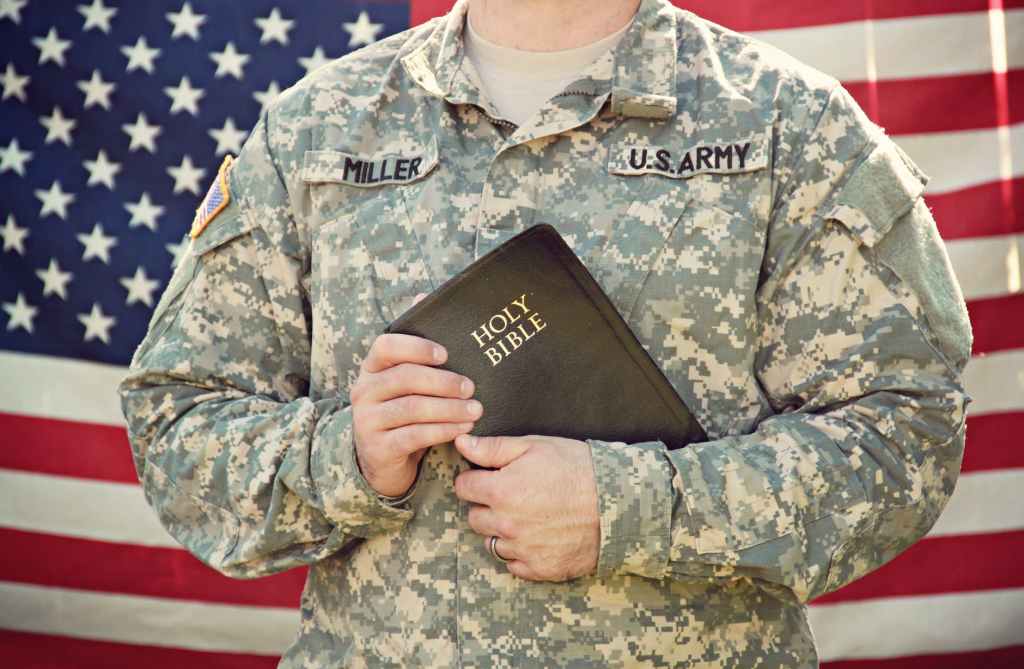
Today, the United States will celebrate our “Independence Day.” Two hundred forty-six years ago, fifty-six men pledged their lives and fortunes by signing a Declaration of Independence from Great Britain and the rule of its king, George III.

We talk a lot about freedom and independence on this day. For many, it is a bittersweet reminder that not all Americans were “free” during the first decades of our existence as a nation. For others, it serves as a rallying point to urge for further movement toward freedom from tradition and restraint. We talk of freedom and independence as though the terms are interchangeable…as if the only way to understand freedom is in the context of independence from someone or something else. We want to be free from the constraints of tyrants, oppressive bosses, or prudish parents. But freedom from something implies freedom to do or become something else.

Photo by cottonbro on Pexels.com

In the case of our fledgling nation, freedom from the British Empire meant the freedom to create a new nation– not just to modify an old national identity, but to create a new identity; to have a new “birth” of freedom. Freedom from oppressive rule does not eliminate the need for restraint and responsibility. Indeed, it creates a great need to define limits and practice self-discipline. Total freedom– without boundaries, rules, or responsibilities– leads to its own destruction.

A few years after the Declaration of Independence, once “freedom” had been won by long years of war and the sacrifice of many soldiers and their families, some of the same men were joined by others to draft a national Constitution. Almost immediately, the Constitution was amended to include a Bill of Rights, outlining certain Freedoms which had been implicit, but were now spelled out for all to uphold. The very first of these rights covered the freedom of expression– both in speech, and in worship.

Photo by Sharefaith on Pexels.com

Americans have the freedom to speak. We can speak publicly about our thoughts, our feelings, our beliefs– without the fear of imprisonment or government retaliation. We can write or post blogs, regardless of whether others agree with us, or like what we have to say. This is an incredible freedom– I can create novels or poetry; I can recite speeches or create persuasive advertising; I can talk for hours about nothing at all! But it also comes with responsibility– I could write falsehoods about my competitors, or speak out disparagingly about a neighbor. I could do great damage with my words. My neighbor or competitor might take me to court and sue me for libel or defamation, but the damage would already be done.
Photo by EKATERINA BOLOVTSOVA on Pexels.com

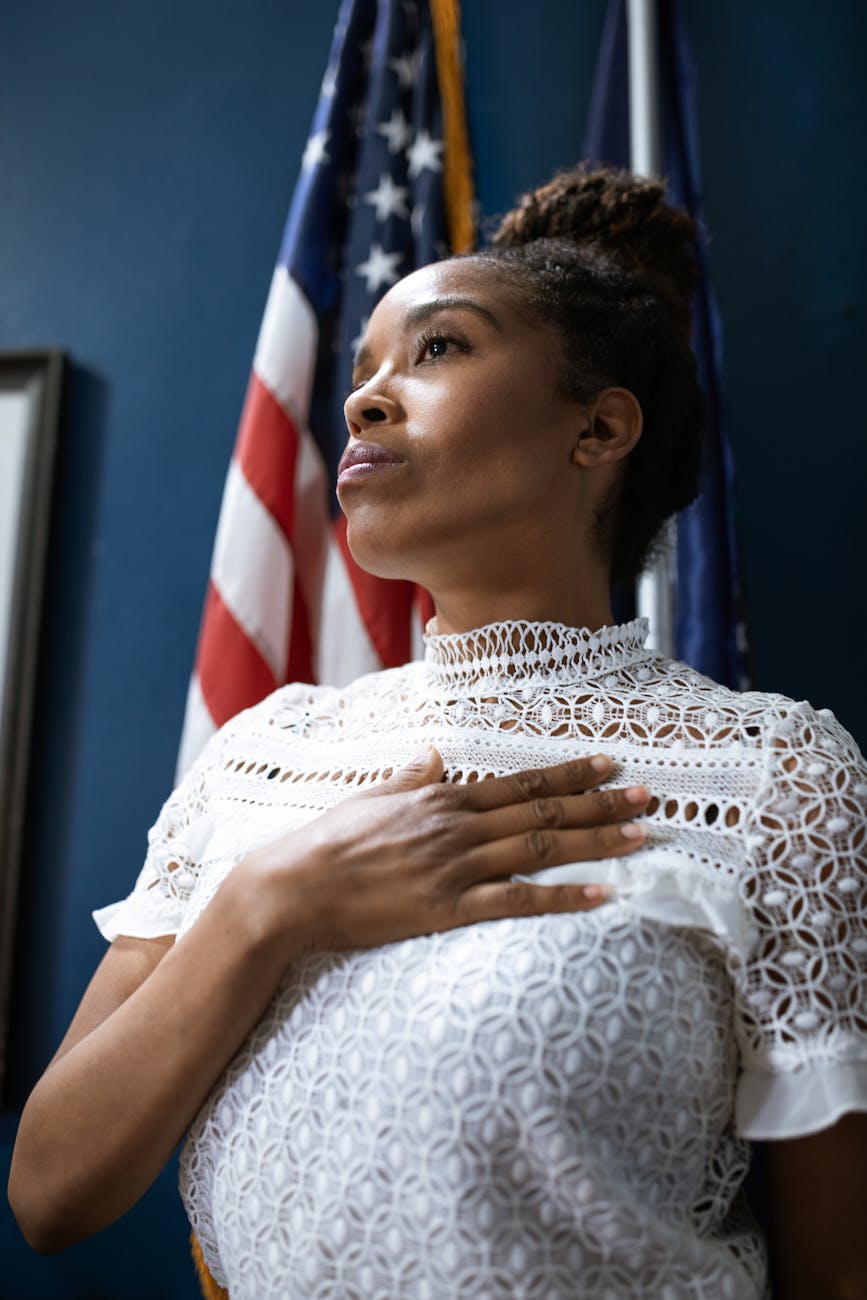
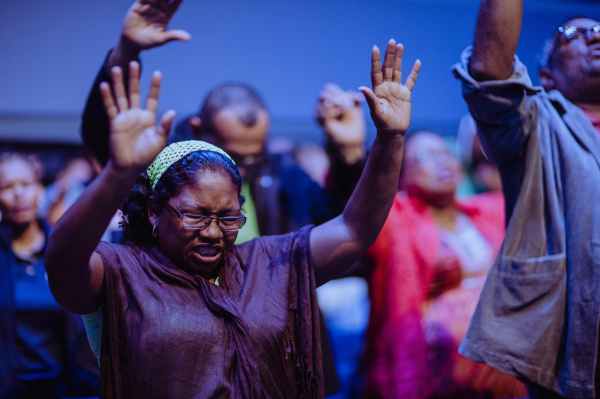
Americans also have the right to religious expression. Our Supreme Court recently upheld the right of a high school football coach to say a prayer on the football field after a game. Americans can assemble for worship, whether in a church, a mosque, a synagogue, or an open field. We can pray– aloud, in a group, over a loudspeaker, even–and the Government cannot legislate that only “approved” prayers are allowed. This might make a few people squirm– Wiccans, Baptists, Scientologists, Hassidic Jews, Shi’ites, Druids, and Satanists ALL have this right. But each of us has the responsibility to respect the rights of all to pray.

Photo by Ivan Samkov on Pexels.com

But that brings me to this point– we have the freedom to pray under the Constitution, but that freedom means nothing to the Christian without the greater Freedom to Pray granted by God Himself. Anyone can offer a prayer to empty air, to a created idol, to a metaphysical “being”–but governments cannot give us the freedom to be HEARD, to be WELCOMED into the presence of the Almighty. Only God gives that freedom– and He gives it to ALL who seek His face! I don’t have to be an American to pray. I don’t have to be given the legal right to pour out my heart to my Heavenly Father– HE invites me to pray. All I need is the belief that God hears and responds to my prayer– even a silent one delivered in peril of Government retaliation. God’s invitation is more powerful than any oppression that seeks to stop me from calling on His Name!

Photo by Tima Miroshnichenko on Pexels.com

God took great pains to illustrate this in bringing the Israelites out of Egypt. God took a “nation” of slaves out of Egypt, and led them through the wilderness and into their own inheritance in the Promised Land. They had the freedom to pray, and to worship this Great God. But over the years, they lost that freedom, and ended up going into exile, slaves to the pagan nations around them. Yet God remained faithful, hearing their prayers even from the nations where they enslaved. God’s promises and His invitations remain, regardless of the rise and fall of Empires or religious movements.

So today, especially in light of my right as an American to pray freely and publicly, I want to challenge myself, and anyone reading this to spend time today in earnest prayer and thanksgiving. What a privilege to be “Free” to pray!

Proclaim Liberty to the Captives

“The Spirit of the Lord is upon me, because he has anointed me to proclaim good news to the poor. He has sent me to proclaim liberty to the captives and recovering of sight to the blind, to set at liberty those who are oppressed…”

Luke 4:18 (ESV)
Photo by Andrea Piacquadio on Pexels.com

Yesterday, we observed a holiday, relatively “new” on the national scale, of “Juneteenth.” Many people across the United States (and elsewhere) still don’t know the meaning behind this day. On the nineteenth of June, 1865, federal soldiers entered the city of Galveston, Texas, with news of the Emancipation Proclamation and the victory of the Union over the Confederate Army in the Civil War. The Emancipation Proclamation, in which President Abraham Lincoln declared freedom for all slaves throughout the Confederate States, had been signed on January 1, 1863. The war had been over for more than two months. President Lincoln had been assassinated in April. But news of the proclamation had never reached as far as Galveston; nor had news of the defeat of the Confederacy. Far from the ravages of the war, and far from the events of Washington or Richmond, the people of Galveston continued with life as it had been. For two-and-a-half years, people who had been declared free continued to live as slaves. News of their freedom came with shock and joy! Finally, those who were considered free in the eyes of the law KNEW they were free, indeed!

Photo by Yogendra Singh on Pexels.com

It would take more than 100 years for many of the injustices to be addressed that had grown up around slavery. Many of them are still being contested. But the celebration of the good news of Freedom continues, along with the hope that we will continue to build a better Union for All.

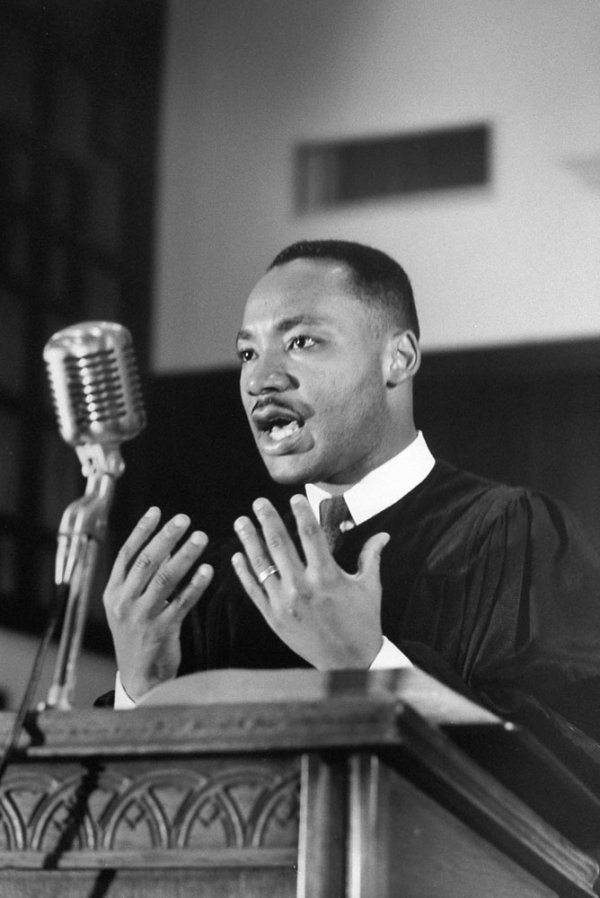
Civil Rights activist Rev. Dr. Martin Luther King Jr. gesturing during sermon at Ebenezer Baptist Church. (Photo by Donald Uhrbrock//Time Life Pictures/Getty Images)

Several centuries before the American Civil War, Jesus stood in the synagogue and read a prophetic passage from the book of Isaiah, in which He declared that He had been anointed to proclaim, among other things, “liberty for the captives.” He wasn’t talking about those who were in physical or institutionalized slavery, but for all of us who are slaves to sin. Unlike the slaves of Galveston, many of us are unaware of our captivity. But like them, we have been declared Free. What good news! Yet, we continue living in ignorance, both of our slavery, and of our potential freedom.

Photo by Engin Akyurt on Pexels.com

How many of us, even those of us who claim the Salvation of Christ, continue to live as though we are slaves? How many of those around us live as slaves without knowing they can be free? Today is a great day to proclaim the Good News– Jesus Saves! We can walk in Freedom and Newness of Life! Hallelujah! Carry the Good News to those who have not heard. Proclaim Freedom to the captives, and Liberty for those who are oppressed.

Photo by Designecologist on Pexels.com

Juneteenth is a time of celebration and exhilaration– for those who understand the gift of freedom. God offers us freedom–not from the trials or work of ordinary life– but freedom TO LIVE–abundantly, eternally, and fruitfully! In Christ, life has purpose, promise, hope, and joy. Death and sin and shame have been defeated– the war is over! Freedom is ours!

Photo by Victor Freitas on Pexels.com

I hope that today (and every day!)is a day of celebration for all of us who know the Freedom of Life in Christ.

Blog at WordPress.com.

Up ↑