My Next Breath

Wildfires have been raging in Ontario, our neighbor to the north. Hundreds of thousands of acres of forest, land, homes, and towns have been destroyed. And the smoke from those fires is also causing damage hundreds of miles away. My husband and I woke up last week to bits of ash on our flowers and thick, smoky air causing visibility to shrink drastically, and breathing to become difficult– especially for those with lung damage or asthma, like my husband.

I was reminded of the time, in 1980, when Mount Saint Helens erupted in Washington State. Even though it is hundreds of miles away, some of the ash from the eruption made it to Michigan and coated our cars and plants. The smoke and ash caused many breathing problems and killed plants across the nation. Smoke doesn’t just “get in your eyes” as the old song claims. It gets into your lungs, it chokes out fresh air and light, hijacks rainwater, and settles in a coating on vulnerable plants, cloths, animals’ coats, standing water, and much more.

I normally don’t spend much time thinking about my next breath. I take it for granted that I will fill my lungs with fresh air and breathe out again. The carbon dioxide I produce will be absorbed by plants and fresh oxygen will be replenished into the air. I don’t have to “decide” to breathe– it happens automatically unless I choose to “hold my breath” and NOT breathe. But I also don’t think about WHAT I am breathing in. I take for granted that the air contains the appropriate amount oxygen to keep my body energized and working properly, and that it doesn’t contain noxious gases, carbon monoxide, tar, ash, etc.

I read somewhere once that God’s name (Yahweh) actually mimics the breathing process. Yahweh is two syllables– the first requires you to inhale in order to produce the right sound. The second allows you to exhale for the exact same reason. You cannot say “Yah-weh” without breathing! (Actually, you can, but you have to make a conscious effort to do so– breathing comes naturally in the two syllables otherwise.) The Bible never actually suggests this, and some religions and sects have misused this idea to suggest that God is somehow IN our breath or in the way we breathe. But I think there is something else to be pondered here.

My next breath depends absolutely on God’s sovereignty. I assume that the air I breathe is pure, healthful, and life-giving. And even when it isn’t– like the past week or so– I assume that air filters, breathing masks, or other mitigations will make the air “safe” to breathe. My husband is a little more aware of his breathing, because he has suffered from asthma attacks, apnea, bronchitis, and lung damage from COVID. Still, he doesn’t spend most of his waking hours in fear of his next breath. And even if we both spent time thinking about it, we have no way to control Earth’s atmosphere, no way to create our next clean breath and guarantee that it will be pure and good. We can buy tanks of oxygen, but even that requires that we trust what is in the tank. Our lives, and every function that sustains it– breathing, blood circulating, brainwaves, digestion, nerves, etc., are in God’s hands. And that’s an amazing and comforting thing, indeed!

Imagine a world where God was NOT in control; where the very air around us might quietly morph into noxious fumes with no warning– no smoke or clouds, no smell–just instantly shutting down our lungs, brains, heart, and life. Such things have been known to happen, in isolated incidents or in the deadly gas chambers of World War 2. We know that we could not breathe the air on other planets, such as Venus or Jupiter. But our Earth was created and is sustained by an abundant life-giving God, who cares about every aspect of our life, including our next breath.

“Father, I am so grateful for your Sovereignty and your compassion. I will fill my lungs with your gift of breath today, and I will use it to pour out praise to You!”


Where Do Prayers Go?

Do you ever pray “directional” prayers? Some people pray TO something or TOWARD something. It may be positioning yourself to pray toward the east or toward the rising sun, or even toward a particular holy place. Some people pray to the moon or stars or a statue or image of a person. Some people pray rather aimlessly into the sky or the ceiling or the floor.

Does it matter? What does the Bible say?

In Exodus, when God gave Moses the Ten Commandments, He said, “Thou shalt not make unto thee any graven image.” In other words, no carved images of any animal or person that takes the place of God. For some people, this extends to icons and statues of Jesus; for others, it means only idols from other religious traditions.

However, later in Israel’s history, when King Solomon dedicated the first Temple, he prayed that when people prayed toward the Temple in Jerusalem, that God would hear from heaven and intervene. For many, this edict still holds true– they focus many, if not all their prayers toward the city of Jerusalem. Others specifically pray to the “Wailing Wall”– the last part of the Temple that still stands. Tradition states that the Spirit of God “dwelt” in the Temple– therefore to pray to the Temple was to pray to the God who lived there.

Jesus did not command His followers to pray toward the Temple itself, but rather to pray directly to “Our Father, which art in Heaven.” Throughout the Bible, the image of prayer is linked with the image of smoke or incense– rising toward Heaven. Jesus sometimes is described as looking up toward Heaven as He prayed. But other times He bowed or knelt as He prayed.

So what are we to conclude? Which is the “correct” direction for our prayers?

There is no conclusive answer in the Bible. And I think this is because God is Omnipresent. He is everywhere at once, so that we can pray anywhere, facing any direction, without a fixed focus point. There is only one direction that is “wrong.” And that is when our heart is facing away from (in rebellion to) God. We can pray aimlessly to nothing and no one, or to something that we know is NOT the One True God–to creation itself or to an invisible but remote “Force.” But the Bible IS clear that we are to pray to God alone– Father, Son, and Holy Spirit– and directly and personally to Him. We do not need a personal altar in order to be heard; we do not need to be facing an icon or a building or the rising sun or an imaginary point in the stratosphere. God Himself, through Christ– will accept and respond to our prayers. God will hear us from anywhere, in any position or circumstance. Altars and images and icons may represent Christ and His Holiness– they can be helpful tools in reminding us of who we are in relation to Him–but they must never become replacements for His Spiritual Presence.

Our prayers end up– through whatever mysterious and wandering way– finding their true destination, which is the heart of God Himself, when we seek Him sincerely and whole-heartedly. In much the same way, God’s answers to us will find their way through His Holy Spirit, no matter where we are or what direction we are facing.

Photo by cottonbro on Pexels.com

God transcends space and time, and can be found by those who seek Him from the ends of the earth. I am greatly comforted by this truth. My Father is in Heaven– and right beside me, and dwelling within me! He is always listening, and always available.

Stop, Drop, and Pray!

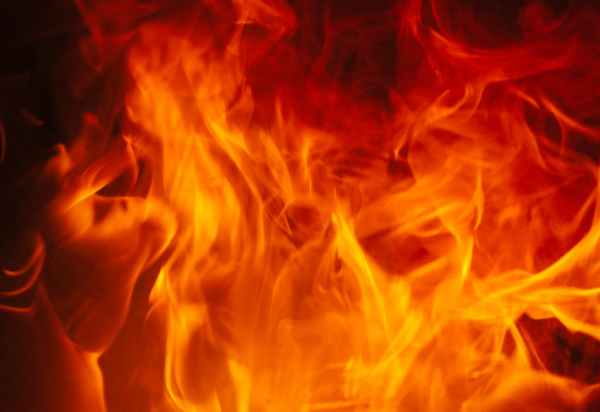
Does it ever feel like you spend your days “putting out fires?” Taking care of little problems before they become bigger problems? Never getting a chance to rest or relax before the next crisis hits? Trying to put out a fire that keeps getting out of hand?

Photo by Produtora Midtrack on Pexels.com

Fires can become very dangerous very quickly. Experts advise that we shouldn’t try to stay and fight a fire for which we are not equipped–it puts you and others at far greater risk. There is a simple phrase that can help people survive and escape a house or building fire: Stop. Drop. And Roll. A similar phrase can be helpful in facing the spiritual and emotional “fires” we face: Stop. Drop. And Pray!

Photo by Jeremy Bishop on Pexels.com
  • Stop! Often when we face trials, our first reaction is to rush in and try to “save” things– ourselves, our loved ones, our possessions, our pride…the list goes on. This is a natural reaction, but not always the wisest course. In the initial panic, we are likely to make poor judgments, and miss warning signs. With the best of intentions, we can make situations worse: maybe we don’t have the skills, the equipment, the authority, or the knowledge to offer salvation or safety. That doesn’t mean that we must walk away from danger, or fail to offer help when we are able to do so. But it means that we must remember that Salvation and Wisdom come from God.
Photo by Vlad Bagacian on Pexels.com
  • Drop. Fire is an obvious danger, but smoke is a silent killer. We can see fire; we can feel the heat of it. But the smoke can immobilize us long before the flames reach us. Spiritually, we may be able to see obvious sins in others, but ignore the smoke of compromise and apathy in the air all around us. Smoke rises– just like pride, and arrogance, and denial. We need to be “on our knees” –lowly and humble– if we want to keep from getting choked and suffocated.
Photo by Tobias Rehbein on Pexels.com
  • Pray! Pray with a heart to listen for good advice and obey. Sometimes, we need to stay still and wait; sometimes we need to flee! Sometimes we need to get involved; sometimes we need to walk away. We don’t need to know the next seven or eight steps, however. We need to do the next right thing– even if it seems insignificant in the face of the threat. What we can see is not always where the danger is greatest, nor where the help is most available.
Photo by Emre Kuzu on Pexels.com
  • Finally– Don’t wait until you are in danger to practice these steps or prepare for what may lie ahead. There is a popular but unbiblical phrase: “God helps those who help themselves.” But this is NOT what God says! God says that He will help those who humble themselves (Luke 14:11; James 4:10); those who seek Him (Psalm24:6; Amos 5:4); and those who believe (Mark 9:23; John 20:29).

Blog at WordPress.com.

Up ↑