Christians, Christ-followers, and Jesus Freaks

I see a lot of articles, posts, and religious sites as I wander around the internet. And there has been a lot written and shared lately about the word Christian getting a “bad rap.” Many writers and church goers are no longer comfortable calling themselves Christians. They don’t want to be identified with “bad” Christians– hypocrites, political extremists, etc., who loudly and proudly use the label while treating others with contempt, and generally acting like bullies and/or clowns. The growing trend is to use the term “Christ-follower” to describe a lifestyle that seeks to mirror that of Jesus Christ during His life on earth.
Photo by Pixabay on Pexels.com

Proponents of this practice point out that Jesus never called His followers “Christians.” Instead, He consistently invited people to “Follow me.” The term “Christian” is associated with the earliest Gentile churches and with the scattering of the persecuted church across Judea, Samaria, and Asia Minor. The term originated in Antioch a few years after Jesus’ resurrection:

19 Now those who were scattered after the persecution that arose over Stephen traveled as far as Phoenicia, Cyprus, and Antioch, preaching the word to no one but the Jews only. 20 But some of them were men from Cyprus and Cyrene, who, when they had come to Antioch, spoke to the Hellenists, preaching the Lord Jesus. 21 And the hand of the Lord was with them, and a great number believed and turned to the Lord. 22 Then news of these things came to the ears of the church in Jerusalem, and they sent out Barnabas to go as far as Antioch. 23 When he came and had seen the grace of God, he was glad, and encouraged them all that with purpose of heart they should continue with the Lord. 24 For he was a good man, full of the Holy Spirit and of faith. And a great many people were added to the Lord. 25 Then Barnabas departed for Tarsus to seek Saul. 26 And when he had found him, he brought him to Antioch. So it was that for a whole year they assembled with the church and taught a great many people. And the disciples were first called Christians in Antioch. (emphasis added)

Acts 11:19-26 (NKJV via biblegateway.com)

For a more detailed look, check out this link: http://www.bible.ca/ef/expository-acts-11-19-26.htm

Photo by Paul Theodor Oja on Pexels.com

Christian was not a positive or honorable label for the early followers of Jesus Christ. There are still many places in the world where the label “Christian” invites arrests, beatings, and death threats. There are places where the name “Christian” invites scorn and derision. What has changed (or seems to have changed) in the intervening years is that we see and hear of more and more places in the world where the label “Christian” brings up images of sneering protesters condemning gays or smug white faces spouting self-righteous phrases to justify greed, racism, and/or injustice. “Christians” are not just unwanted or misunderstood by others–Christians are unwanted by their own; misunderstood and misrepresented, at odds and at war with one another.

So what can be gained by followers of Jesus Christ in re-branding themselves as “Christ-followers?” After all, it’s just a name. In the 1960s, many Christians were condescendingly labeled “Jesus Freaks.” Jesus Freaks were viewed much like Hippies. They spoke of Peace and Love and Acceptance. They taught about kindness and unity. They were often young, and generally disillusioned with the older generation and its way of life. They acted a lot like Hippies; they just didn’t do as much experimenting with drugs and free sex. Much like the early Christians, they were labeled by those who dismissed their message and their way of life. They rejected traditional or mainstream Christianity, and were dismissed by many who called themselves Christians. Some were openly critical of previous generations of Christians. Many of those who wish to be called “Christ-followers” now are the descendants (or remnants) of the Jesus Freaks of the 60s. The mind set is very similar– disillusionment with others who have misused or abused the name of Christ, and a desire to “rescue” the reputation of the church.

Photo by Matthew T Rader on Pexels.com

There have been other groups across the centuries who have tried to re-brand and re-label their devotion to Jesus– God-fearers, Disciples, Reformers, Witnesses, Saints, Fellowships, etc.. And there is no command in Scripture that we must all call ourselves by a particular label.

But is seems odd to me that the very label, “Christian,” that came about because of persecution, that came about as a derisive, sneering, condescending term, was embraced by those it sought to shame and intimidate. Why didn’t the original “Christians” re-brand themselves to make their cause less offensive? Why has this term, “Christian,” endured over the centuries?
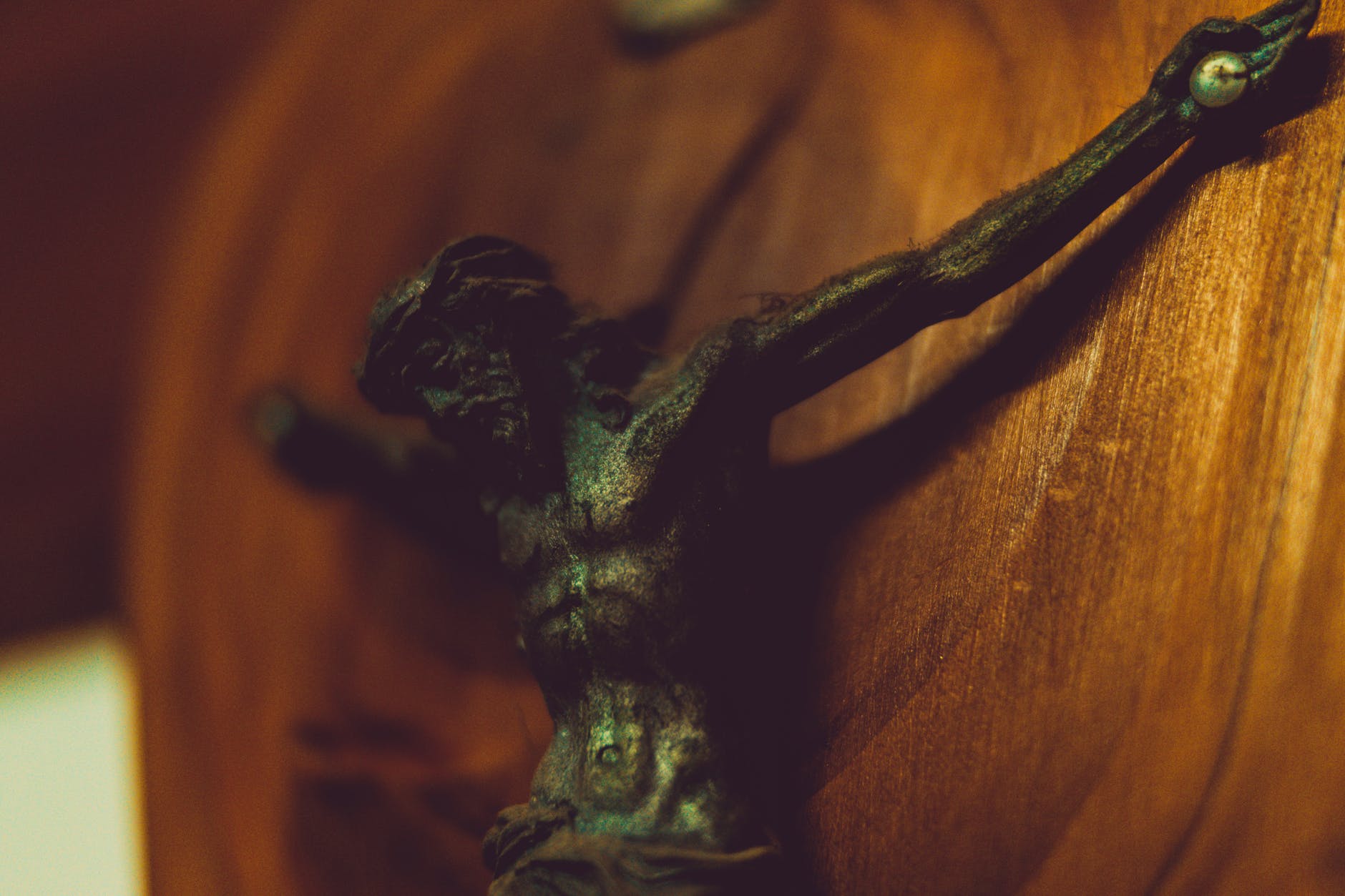
Photo by Francesco Paggiaro on Pexels.com

I think there are a few very good reasons:

  1. “Christians” bear the name of Christ, whatever other name they give themselves. When I say I am a Christian, I know that there are people who will compare me to others who make this claim. But I am not just a member of a group that likes the idea of Christ; I’m not just a Facebook follower of Christ, or a fan of Christ, or a student of Christ. Christ is my Lord; my life; my identity. Christ– Jesus the Christ, the Messiah. Not Joe Smith down the road who also attends my church, or a famous evangelist or Bible teacher, or even one of the Apostles, or Saints. Jesus– son of Mary and Joseph; Son of God and Son of Man. This same Christ was arrested, given a sham trial, condemned to be crucified like a common criminal, and hung, naked and tortured before a mocking crowd. He was humiliated, misunderstood, and abandoned by those who claimed to care the most. THAT is the name I willingly bear.
  2. “Christian” is a label. I can label myself in any number of different ways– “Woman,” “American,” “Caucasian,” “College graduate.” But there are many others who can use those same labels. They may define what I am, but they don’t define who I am. I may be appalled (and I am, sometimes) at things other women do, at things other Americans say, at the history of Caucasians and their interactions with indigenous peoples in other parts of the world, at the snobbery of other college graduates…But I don’t say, “I’m no longer going be an American; I want to be known as a resident of the United States, but I have my own system of government and culture and language independent of those living in Missouri or Idaho or Chicago– they don’t represent who I am.” Of course they don’t represent who I am–they never did. We all, collectively, are Americans AND residents of the United States. I can’t decline to be a woman because I don’t like the way other women behave or speak. And I can’t choose to be “other than” a Christian…all I can do is give it another label.
  3. Finally, who I am is not found in a name or title or label. It is the sum total of my character and the way I live my life. Jesus didn’t tell His disciples that they would be known by any particular name, but He did say they would be known and identified by their love: 34 A new commandment I give to you, that you love one another; as I have loved you, that you also love one another. 35 By this all will know that you are My disciples, if you have love for one another.” (John 13:34-35 NKJV). That doesn’t mean I have to approve of everything other “Christians” do– in fact, if they use the name Christian and do not have love for others, they prove they are liars– but it means that I must do everything in the name of Christ.
    I am a Christian first, before I am a woman or an American or any other label. That means that I am the co-heir and sister to a young man in India who has been rejected by his family and expelled from his school for being a Christian. I am an ambassador of Christ to the woman I meet in the grocery store whose children are taxing her patience and whose cart is blocking the aisle I want to enter. I am an example of Christ’s love to the young couple who have been victimized by other “Christians” because they are “different.” And I am a Christian in a world of “fake” Christians, and confused Christians, and faulty and very human Christians just like me, who need correction, mercy, justice, and wisdom to follow Christ, to die to self, and to bear the honor of His name. Ultimately, I can call myself a Christian, a Christ-follower, a Jesus Freak–any other label I want. Whether I AM a Christian or not will be determined by how I live, not what I call myself.
Photo by Pixabay on Pexels.com

If you are a Christian reading this– how are you bearing His name today?

M.I.A.

Yesterday was Father’s Day.  Father’s Day can be very difficult for many people– in my case, it can be a reminder of how much I miss my Dad, who passed away 20 years ago.  Some of my friends have had recent experience in losing a beloved father.  For some, the hurt is still there after 50 years, or 70.

For others, it is a difficult day, not because they grieve the loss of a father to death, but because they grieve the absence of a loving father– an absentee father, an unknown father, an abusive father, or a distant, cold, or critical father.

man wearing black zip up hooded jacket standing
Photo by Tamar Willoughby on Pexels.com

At this point, I generally point to the Father who is eternally loving and faithful– Our Heavenly Father is God of the fatherless and the orphan, the God of restoration and reconciliation.  No matter where our earthly fathers are or have been, God is always right by our side.

All that is true, but I want to share something that’s been bothering me.  I scrolled down my FB feed, and listened in at church, and talked to a restaurant owner, and looked at the card section at the store.  And there’s something missing.  It’s not that we don’t honor fathers.  I saw a lot of wonderful tributes to dads, husbands, brothers, and sons.  I saw sons sitting with their recently widowed father at church; a son honoring his father by taking him out to eat; fathers and sons wearing awesome matching shirts with fun messages, and lots of old photos of dads with their families in years past, as well as newer pictures of dads with goofy toddlers, and pretty girls in prom dresses, and holding newborns.

selective focus and color photography of man looking at her girl sitting on garden swing white holding bouquet of flower in brown wicker basket
Photo by Kha Ruxury on Pexels.com

We honor fathers, but we do not honor Fatherhood.  We seem awkwardly proud and surprised when fathers actually show up and do their job.  We make it seem easy, even brainless, in comparison to the work of a mother.  In fact, there are those who argue that Fatherhood is not necessary for family life.  Nothing could be further from the truth.  It is POSSIBLE to rear children in a single-parent household (male or female).  It is possible to raise strong and healthy children without the presence of a father (or mother).  But that doesn’t make it desirable or advantageous for a child, or for society.

fatherhood

affection beach care caucasian
Photo by Pixabay on Pexels.com

What are we losing as a society when we engage in (or stay on the sidelines for) a war on Fatherhood?  When we make excuses for bad fathers or mothers who choose to denigrate the men who gave life to their children?  What happens when “dad” becomes, not the name of a single influential person in your life, but the name of whichever man is currently living with mom, AND also the man who sees you every other weekend?  What happens when the media consistently portray moms as hardworking and wise, and dads are the comic relief?

We are losing the next generation of fathers; the next generation of men with drive and passion to work for something beyond their own whims and wants.  We are losing the next generation of women, too– as they struggle to be both mothers and fathers, or choose to be neither because it’s too much trouble to do it alone.  We are losing a sense of what it means to be a Father– the honor, the responsibility, the joy and pride, the reward.  Worst of all, we are losing the examples of fathers who through their words and actions, are pointing others to our Heavenly Father.  God is not a baby-daddy; He is not an absentee father or an every-other-weekend Father.  He is not a faceless provider of money for new clothes and college textbooks.  He is not a goofy guy who tells bad jokes and pats you on the head once in a while.  He is not the one who never shows up for your game or your dance recital because he’s too busy playing golf with the guys.

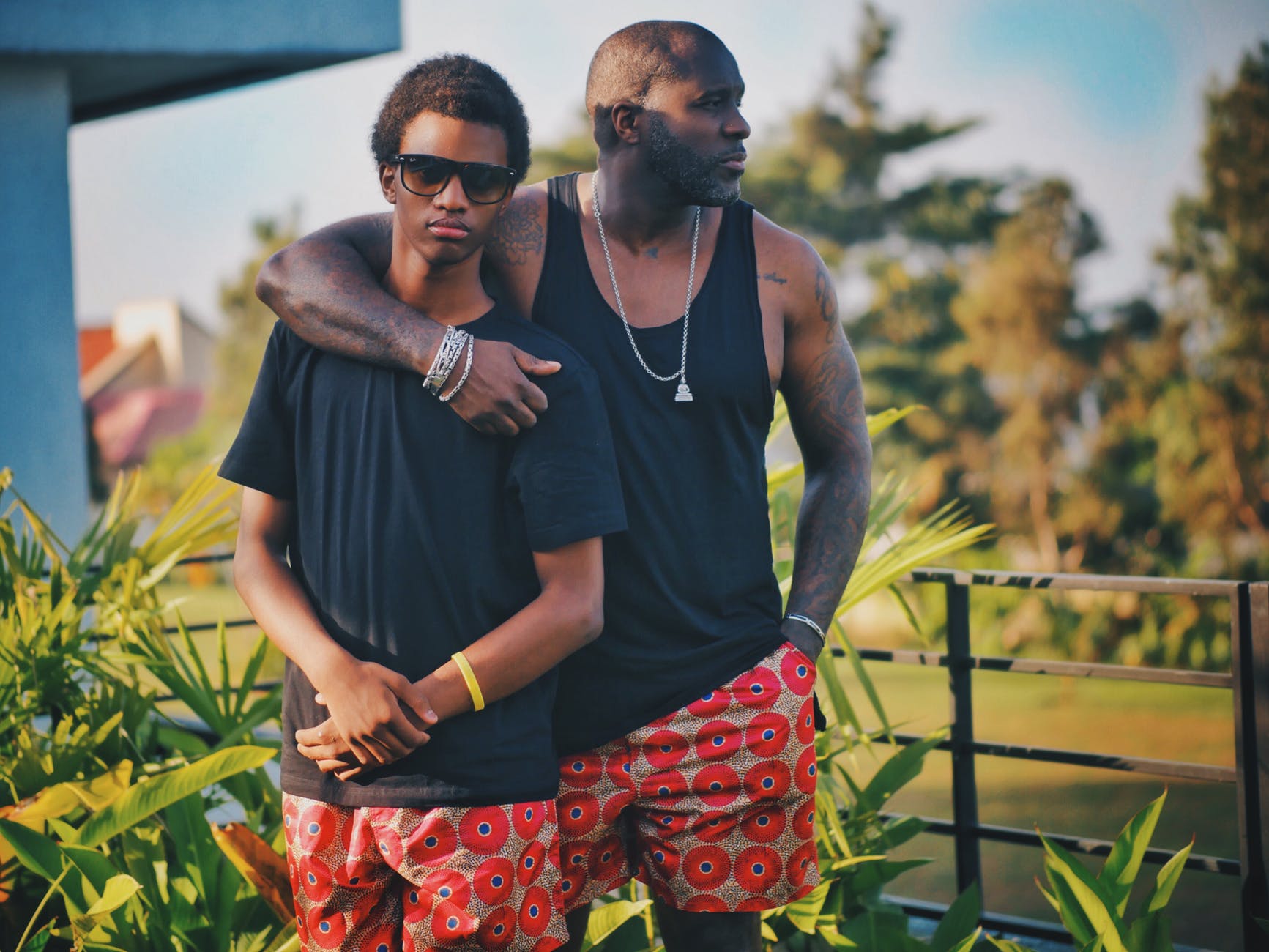
man putting his shoulder around boy while his other hand is inside his pocket
Photo by Kaysha on Pexels.com

This isn’t universally true– and I’m so grateful for the men, young and old, who are staying the course, setting the examples, and standing out like beacons of light.  And I don’t wish to belittle the women who have had to be both mother and father due to death or other circumstances beyond their control.  But we desperately need good fathers.  We need fathers who will fight the good fight; not fathers who are Missing In Action.  We need active, responsible, faithful Dads.  But we need to pray for them.  We need to honor them.  We need to encourage and support them.  More than just one day a year….

Out of Focus

I try not to bring current events into my writings on prayer.  That said, I feel compelled to discuss some recent events in light of a growing trend–instant and polarizing reactions to small events, petty arguments, and even non-events.

Recently, a celebrity–one whose entire career has been predicated on her whining, hateful, politically incorrect rhetoric–was fired and her TV show cancelled over a single “tweet” she sent making fun of a former White House employee.  The TV show in question was a regurgitation of her popular sitcom from 30 years ago; a show that was controversial then because of its irreverence and foul language.  The new show quickly invited controversy by seeming to support the current president– also known for making offensive and cringe-worthy tweets.

android app blog blogging
Photo by Pixabay on Pexels.com


There is more than enough finger-pointing, blame-sharing, and shaming in the wake of this incident–but there is even more hypocrisy.  The people who are celebrating in the wake of this comedienne’s downfall are the very ones who were supporting her three decades ago– then she was “bold” and “brave” and “real.”  These same people were likely watching the new version of the TV show just last week.  Now she is “racist” and “abhorrent” (I guess the word “hateful” is suffering from overuse, and needs a stand-in– it was used in at least two of the tweets from her boss and colleagues) and “unacceptable”.  The people who are defending her now were the ones calling for boycotts of her show in the late ’80s for its flippant tone and dysfunctional family morals.  They are calling for more shows to be cancelled– shows they still watch; shows they discuss freely on social media; or maybe shows they don’t watch, because their friends tell them how they should react to what they’ve missed.

photo of a woman using her smartphone
Photo by bruce mars on Pexels.com


My point is that controversies and “outrages” like this are becoming more common, more polarizing, and more hypocritical every week.  In the rush to judgment, we are losing our focus and missing the bigger picture.  What this comedienne said was offensive– it was juvenile, personal, hurtful.  It wasn’t funny, it wasn’t appropriate, and it wasn’t fair.  But it also wasn’t shocking.  The reprisal was swift and harsh, but that wasn’t really shocking, either, except in the context of the show’s success (it was the highest rated show of the season).  In the days and weeks that follow, some will regret that this action left dozens of other actors and staff without jobs, and others will cry foul at those who continue to “get away” with bad behavior and hurtful language.  But few of us will turn the spotlight on our own faults, our own use of social media or hateful language, or our own contributions to the cut-throat culture that surrounds us.

monochrome photography of a man looking in front of mirror
Photo by Min An on Pexels.com

Before I cheer or protest or react to this recent event, I want to ask forgiveness–for losing my focus.  I invited that TV show into my living room, along with those characters and their skewed values.  I watched video clips of interviews and failed attempts at the National Anthem and other scandals, and I chuckled.  I clicked on the news stories about the sitcom “reboot”, and considered watching it because it would be controversial– something to talk about, yell about, or laugh at.  And I clicked on the “news” of this comedienne’s downfall, consuming it like popcorn, and being entertained by the fallout.

Forgive me, Father, and restore my focus.  Create a clean heart in me, and be my pure vision.  Help me to stop pointing fingers at others and point others to you.

Hebrews 12:1-2 New International Version (NIV)

12 Therefore, since we are surrounded by such a great cloud of witnesses, let us throw off everything that hinders and the sin that so easily entangles. And let us run with perseverance the race marked out for us, fixing our eyes on Jesus, the pioneer and perfecter of faith. For the joy set before him he endured the cross, scorning its shame, and sat down at the right hand of the throne of God.

selective photo of teal cross decor
Photo by Pixabay on Pexels.com

Prayer and Social Media

There are several positive and proactive aspects of prayer I want to explore in this journey, but I don’t want to deny or ignore some of the bad habits and false ideas that sometimes come with prayer.

One of the reasons I am writing this blog (see Prayer is a Pursuit) is to answer some of the critics and detractors of prayer.  Many of these critics are responding to what they see of and about prayer on FB or Twitter, on blogs like this, or on spiritually-minded websites.  If all I knew of prayer came from reading dashed-off posts and prayer memes accompanied by soothing photos, I would have a false and shallow idea of prayer, and one that invites criticism.

The Bible describes, and the Church practices, many different kinds of prayer.  Prayer can be intensely personal and private.  It can be communal or corporate in nature.  There are prayer partners, prayer groups, prayer chains, and congregational prayers.  But prayer is not primarily or ideally a social activity, and its essence is not suited to be broadcast or posted.

Social media can be a very helpful tool TOWARD prayer– requests, needs, and answered prayer can be shared; prayer can be urged and encouraged; prayer can be discussed (as in this post); prayers can be made public as examples.  And people can be greatly encouraged by the knowledge that their needs are being lifted up by family, friends, even strangers across town, across the country, and even around the world.

But prayer on social media also presents real problems, and I’ve gotten caught up in some, so I’m sharing some of what I have learned.  These areas have been stumbling blocks for me– that does not mean that they are “bad” practices in general, or that my questions or criticisms will apply to others.  But if someone else struggles with these thoughts or issues, I hope my journey might help.

  • Social media tends to promote the “tyranny of the urgent”– posts pop up screaming for attention NOW.  I feel pressure to respond immediately with something encouraging.  To say that I am “praying” or “I will keep you in my prayers” is encouraging–but is it true?  A couple of years ago, I realized that, in my desire to comfort and uplift, I had started stretching the truth.  I meant to pray for the person/situation/need…sometimes I sent a hasty and half-hearted thought heavenward before scrolling on.  But I wasn’t really opening my heart to God OR to the person in the post.  As one critic put it– I was making myself feel better.  My words may have given momentary comfort or encouragement, but they were basically empty and hollow.  I made a vow going forward to do one of three things:
    • If I can, I will stop what I am doing and take the time to really pray about the situation BEFORE I respond, comment, share, etc.
    • If I can’t take the time right now, but I have my prayer journal handy, note the concern on today’s page (or tomorrow’s) to make sure I include it in my daily devotional time, so I can pray thoughtfully and whole-heartedly.  Sometimes I will comment after the note is written, or after the prayer has been said.
    • If I can’t stop, add it to my prayer journal, or make a note– I don’t comment or respond.  The other person may not know the difference, but I will.  I don’t want to give a false impression.
  • Social media thrives on drama, algorithms, and visibility.  Recently, I received two similar prayer requests within a day of each other.  Two friends shared about two different men in life-threatening situations needing prayer.  One of my friends’ posts went viral, with people setting up fundraisers for the family, a website, and daily updates.  The other post simply said, “Please share.”  It got a few responses, and one update to say that the man had died of his injuries.  These men were both precious in the sight of God.  They were both badly injured in the line of duty, and both had families who loved them and were in crisis. They were both equally in need, but not equally visible.  I prayed for both, but I wondered at the difference in visibility, and how it might be changing our prayer focus.  I am tempted, as I spend time on social media, to be concerned about those things that are most visible.  But who is hurting in my neighborhood, among my friends, among those people I interact with daily– their needs invisible to me because I’m only focused on what I see online?
  • Social media is both social and self-oriented.  How many people “like” or “follow” me?  How big is the circle of people I can reach?  What impression do others have of me?  But prayer is not about me.  I have a bad habit (shared by many others–especially Americans, I think) of wanting to be seen as independent and self-sufficient.  I want to be the one offering support–the “prayer” and not the “pray-ee”.  But if I’m going to put myself “out there” in either capacity, social media tempts me to measure and compare myself with others.  I am tempted not to ask for prayer for little ordinary things, tempted to exaggerate some pains and downplay others, and tempted to respond to others in ways that make me look “good.”  That’s just human nature, but it’s also sin, especially when selfish concerns and petty thoughts crowd out the natural compassion I should have for others and the honesty I should have about my own weaknesses and strengths.
  • Social media is a “glass house.”  What you post in haste, in jest, or for your “besties” is out there for everyone to see– and judge.  We are told not to judge, lest we be judged (from Matthew 7:1).  There are several groups who love to quote the first part of that verse, but it’s the second part that relates equally to social media.  If I post beautiful words about prayer and encouragement for my Christian friends, and hateful rhetoric about my political foes, I had better be willing to own up to having a double standard.  The same goes for the random offensive, suggestive jokes, the rants about my noisy neighbor and my unsaved relatives.  Sitting in front of a silent screen tempts us to “let rip” with sarcasm, frustration, self-righteous indignation, and self-congratulation.  All of us have probably posted things we later regretted because we think better of our words, or because someone “took them wrong” .  I want to become better at prayer, better at communicating about it, defending it from attack, and promoting it.  But that comes with a responsibility to learn, be honest about my failures, and open about the struggles I face.

I hope to do just that as I journey forward– on- and off-line!

Blog at WordPress.com.

Up ↑