The Value of a Life

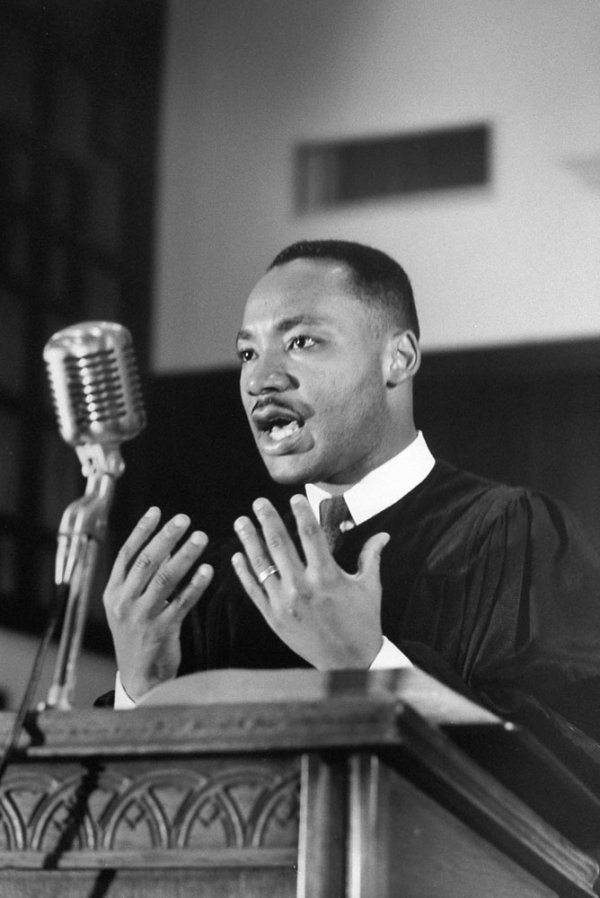
Today in America, we celebrate the life of Dr. Martin Luther King, Jr. Dr. King was a minister, a brilliant writer and student of theology, a leader in the Civil Rights movement of the late 1950s and early 1960s, a noted speaker, and man who arguably made a difference in the world. Dr. King was murdered in 1968, at the age of only 39, leaving a family and a nation devastated by his loss.
Next Monday, we will observe the 51st anniversary of the Supreme Court decision Roe v Wade, in which nine judges effectively legalized abortion in the U.S. for over half a century. Even though this decision has been overturned, many states, using the precedent of Roe v Wade, have changed their state laws to allow for abortion. In many states, it is now legal to abort a child right up to the moment of birth!

What is the value of a single life? Who gets to decide that they have the right to take another person’s life– whether by assassination, capital punishment, abortion, murder, or euthanasia?

It is a question that our society has struggled with for centuries. Who can give life? Who can take life? Who can determine the conditions of another person’s existence? And, for those who live, what is the “value” of their life–to their family, to their neighborhood, to their nation, or to history? Who gets to set the standard of what constitutes a “worthwhile” life or the “quality” of life for someone else? For themselves?

I’ve been reading through the book of Genesis this month, and, according to the Bible, this subject is as old as human life on earth. Cain decided that Abel’s life was expendable, so he killed him– the first murder. The people of Sodom and Gomorrah felt they had the right to enslave and rape anyone they wanted to. Joseph’s brothers plotted to kill him, before selling him into slavery, instead.

The Bible doesn’t hide this history, nor does it sugar-coat the actions of those featured in its pages. But, the Bible offers us a clear picture of WHO gives life, and WHO has the authority to decide what life is worth. God alone has this authority. It is God alone who can create and sustain life. Mankind has the choice– to protect life or destroy it; to treat life with respect or with disdain; to honor the Giver of Life, or to rebel against Him.

All the atrocities of the Old Testament lead to the ultimate decision on the value of a single life. Jesus lived a simple, ordinary human life. He lived with compassion, with purpose, and with humility. And He was willing to GIVE His life to atone for all the murders, all the abortions, all the slavery, all the injustices in history, so that WE could enjoy abundant, eternal life with Him. By looking to this singular life, and trusting in the power of His death and resurrection, we can choose to honor all life. We can make a difference. We can live with purpose and joy.

Dr. King’s legacy is one of honoring life, and pointing out the evils of those who seek to devalue the lives of others based on the color of their skin. Abortion’s legacy is one of destroying life, and promoting those who devalue the rights of the helpless.

The choice is still before us. How will we determine the value of a single life in the coming week? How will be add value to life on earth? How will we live for more than just the moment?

Heart, Soul, and Mind..

Jesus was asked many trick questions by people who wanted to discredit him during His ministry. One such query involved all the many commands of the law. “Which is the greatest?” With so many commandments, laws, rituals, and traditions, it would be difficult to pick just one. Which is more evil– lying, stealing, murder, idolatry?

But Jesus didn’t skip a beat. 37 Jesus replied: “‘Love the Lord your God with all your heart and with all your soul and with all your mind.’ 9Matthew 22:37 NIV) Jesus was actually quoting from Deuteronomy (Deut. 6:5), when God was giving instructions to the people of Israel before they entered the Promised Land. Of course, Jesus, as part of the Triune Godhead, was actually present for these instructions– in fact, as the WORD of God, He may have been the very one speaking the same words hundreds of years before!

The first three of the Ten Commandments all involve this concept. “Thou shalt have no other gods before Me”–don’t give your soul (your very essence) to someone or something else ahead of Yahweh. “Thou shalt not make unto thee any graven image”–don’t give your heart to worship anyone or anything that is created; instead, worship your Creator. “Thou shalt not take the Name of the Lord your God in vain”–don’t use your mind to devalue and defame the Sovereign Lord.

God is Sovereign. He is Supreme. And He IS Love– it is not just something He chooses to do. Love is part of God’s essence, and it cannot live and thrive without Him.

But this brings up two questions: If God IS Love and He created us, why must he “command” us to love Him? This is one of the great arguments people try to use to deny God’s Sovereignty, His Goodness, even His existence. A Good, Wise, Sovereign, All-powerful God should not need to command love and worship from His creatures, should He? And, if He “commands” love and obedience, how can we truly love Him? We can fear Him, obey Him, be ruled by Him, but none of that sounds like Love.

In theory, such questions seem daunting. But we have dozens of real-life examples of how such commands work. Every nation (and principality, and even every household) has rules and laws directing us how to behave and demanding respect for certain values. “Don’t sass your parents.” “Don’t deface or defile sacred spaces.” “Don’t litter!” We find it distinctly unsettling when we see children treating their parents with disrespect, malice, even abuse. Or when we hear of people whose hatred leads them to burn places of worship, or defile gravestones in a cemetery, or commit treasonous acts that lead to the slaughter of hundreds of innocent neighbors or fellow-countrymen. The planet groans under the strain of people who dump their trash in rivers or streets, or wantonly start wildfires or kill helpless animals.

God does not “command” our love out of weakness. He could DEMAND abject obedience–overrule our will; punish without delay or hope of mercy; force us to act as robots or machines–but He desires us to Love Him freely. His command is for OUR good–when we choose to seek Him, follow Him, Love Him in ever greater measure, we grow to be more like Him–Loving Him teaches us what Love is really all about!

The Law itself, the “command,” is NOT what pleases God or makes us Love Him. God’s purpose is not that we become ritualistic, legalistic, or weak-willed. He wants us to be joyful and live abundant and productive lives. But left to our own devices and our own “wisdom,” we will not achieve any of this. In fact, even with the law and commandments, we will still fall short. God’s love is such that He gave us an impossible command– love Him with our entire heart, soul, and mind– and then, He provided the only Way to make it possible.

Photo by Pixabay on Pexels.com

It IS possible to love God with all our heart, soul, and mind. It doesn’t require that we become hermits or ascetics, wasting away in a cave or mountaintop, starving ourselves and crying out day and night. It does require that we recognize that He is God, and we are not. It requires that we accept His mercy for the times we have strayed. It requires that we seek His counsel, and His correction.

We need to love Him with our heart–draw near to Him in worship and thanksgiving.

We need to love Him with our soul–trust Him to direct our lives, now and in the future.

And we need to love Him with our mind–learn to listen to His words, and to meditate on them; to think more about the things of God, and less about the things of trivial and temporary import.

Lord of All, Large or Small

I’ve written a number of times about my prayer journal. In it, I pray for individuals and individual requests, as well as praying for communities and regions each day of the year. I also use what I call “Prayer Points” for each day of the week. These are broad topics– The Church, Family and Friends, Government and Politics, Community and Services, Global Health (Healthcare, Diseases, Ecology, etc.), Business and Economy, and Cultural Issues. Often, these broad topics will lend themselves to specific needs or requests (which may overlap items in my prayer journal), but there are also times when the topics seem generic and almost overly broad. I use them anyway.

Photo by Pixabay on Pexels.com

Why?

It isn’t because I have any influence over such broad categories– but because God does! And I need to be reminded of that every day. God loves to hear our specific requests– heart cries and urgent needs–even bad hair days and misplaced keys. But He also loves to hear us acknowledge that “all the world” belongs to Him; that He is sovereign over our nations, our culture, His Church, our families, etc. He has authority over world economies, including all the factors we worry about– drought and famine, production, distribution, wealth (or lack thereof). He has the power to overthrow corrupt governments and bring justice. He has the power to defeat disease, and restore forests and rivers; to meet our financial needs, and to save marriages.

Photo by Johannes Plenio on Pexels.com

Moreover, He knows best in all these situations– even when I know next to nothing! My efforts to change society or fix the planet will be puny, and based on my limited knowledge and experience. Even my outlook on my own small community is limited– I don’t know all the individual people, organizations, or companies that make up my small town. I trust that God, however, knows each teacher, garbage collector, city worker, police officer, fire fighter, mail carrier, nurse’s aid, day care provider, physical therapist, food service worker, accountant, paralegal, banker, and shopkeeper (and all the other valuable members of my community)– AND He knows the number of hairs on each of their heads! It revolutionizes the way I think and the way I pray each day.

Photo by Cameron Casey on Pexels.com

Imagine what can happen when we pray this way collectively! Imagine the way it can change our outlook, and our actions. I can be saddened by the state of our culture or the breakdown of families. But I have a Mighty Father who has both the wisdom and the power to redeem them! I know I can trust God with everything– large and small. But it is easy to take that for granted, or to “know” it only in the abstract. Keeping prayer points where I can see them and use them daily helps me to live out the truth that I already know.

Photo by MART PRODUCTION on Pexels.com

So this morning, instead of worrying about our business or the larger economy, I will lift them up into the arms of One who can really make a difference! And I will pray for smaller and more personal requests– those in the hospital or grieving a recent loss; those who are discouraged; those who are celebrating birthdays or anniversaries, promotions or new opportunities; those who are lost, and those who have misplaced their keys (again).

Because God is the Lord of ALL. AMEN!

Time to Renew

It’s that time of year again…my birthday is coming up and I will need to visit the Secretary of State’s office to renew my license plate tag; this year, my driver’s license also expires, so I have to renew that as well.

This is not a pleasant process– I will wait in line, answer questions, and have a photo taken.  I will write out a check or have money debited from my bank account (ouch).  I may have to wait another week or two for the new driver’s license to be sent out, and then I will have to live with the horrible photo for a few years. What a drag!  I often hear people complaining about the process–it’s a time-consuming, costly, bureaucratic nightmare, or it’s just an annoyance.

Except I don’t really “have to” do any of those things.  Being a licensed driver is not a life or death matter.  The law says that I must possess a valid license in order to drive, but thousands of people drive every day with no license, or a suspended or expired license, and “get away with it.”  Others choose not to drive, and do not carry a license or state-issued photo ID.

car side mirror showing heavy traffic
Photo by STANLEY NGUMA on Pexels.com

But I choose to go through the annoying process because of the benefits.  Driving is a privilege– one denied to many who can’t afford, or can’t operate a vehicle.  Renewing my license brings much-needed revenue to the state, so they can (attempt to) maintain the roads, bridges, and traffic-related signs and lights that we use every day.  Renewing shows my commitment to obey the laws and authorities that govern (the roads in and around) my city, county, state, and nation. Renewing my license gives me an opportunity to register (or confirm my status) as a voter.  It even gives me the opportunity to learn patience and people skills!

All this to talk about another kind of renewal…

Therefore, I urge you, brothers and sisters, in view of God’s mercy, to offer your bodies as a living sacrifice, holy and pleasing to God—this is your true and proper worship. Do not conform to the pattern of this world, but be transformed by the renewing of your mind. Then you will be able to test and approve what God’s will is—his good, pleasing and perfect will.  (Romans 12:1-2  NIV)

The Apostle Paul speaks about the “renewing of your mind.”  In renewing my license, I am conforming to the laws of the land.  This passage is not telling me to break the law; it is calling me to transform the way I view the world, the way I process the world, and the way I allow my thoughts to shape my behavior.  Instead of thinking about the license process as an inconvenience– I need to weigh the inconvenience against the benefits I receive from having a valid license.  Instead of focusing on the negatives around me– fear, hatred, selfishness, complaining, greed, lying, etc., I need to focus on how I can respond in hope, love, compassion, encouragement, generosity, and truth.  And I need to depend on the work of the Holy Spirit to transform the way I think about the world, about myself, and about God.

action asphalt automobile automotive
Photo by Taras Makarenko on Pexels.com

There is a lot of ugliness in the world, lately; but there is also a lot of beauty.  There are urgent needs, but there are also abundant resources in Christ Jesus.  There are hardships, but there are also moments of peace, healing, and hope.

It’s time for renewal!

Finally, brothers, whatever things are true, whatever things are honest, whatever things are just, whatever things are pure, whatever things are lovely, whatever things are of good report, if there is any virtue, and if there is any praise, think on these things.  (Philippians 4:8 MEV)

Fruitful Families

Yesterday was my Grandmother’s birthday.  She passed away over 20 years ago, but I still cherish the memories I have of my time with her.  She was a woman of quiet dignity, gentle wisdom, and deep love for her family and neighbors.

Gramgrad

While I was still in my late teens and early twenties, my Gram started getting me interested in genealogy.  She had amazing stories that had been passed down through several generations, but she was unsure how many of them were “true” and how many had devolved into legend and half-truth.  Her stories became the first framework I used to research our family’s roots.  Over thirty years later, I have books and charts and databases filled with names, dates, stories, photos, mysteries, dead ends, twists and turns, surprises and more.  I have traced my own family, my husband’s family, related families, possible connections to famous people in history, and mapped out many of the locations where our families lived over the centuries.

architecture bridge clouds countryside
Photo by Pixabay on Pexels.com

God created and instituted families, and I’m so grateful for mine.  In spite of the many tragedies and skeletons I’ve found along the way, one thing is clear.  God’s design for families is good and leads to hope, security, and fruitfulness.

All families are unique, but the design for families– the traditional family model–has been pretty consistent throughout the centuries and even across cultures.  It may not always be the “nuclear” family of a mother and father and two or three children in a single household.  Sometimes it is made up of multiple generations or nuclear groups sharing a house or living communally, and there have always been blended families, or single-parent households, but there is a consistent expectation of being able to trace one’s mother’s family line and father’s family line through at least two or three generations– knowing their names, where they were born, and when they lived and died.

As technology is advancing to make this kind of genealogical research even easier, society is pulling away from the traditional family model and making it harder and harder to find one’s “roots.”  Children live with a series of adults– “aunties” and “dads” who bear no biological relationship and no lifelong commitment to them.  Children whose fathers are nameless, faceless DNA donors, or whose parents left them to chase a career, or be with a new lover or a consuming addiction.  Grown children rebel and leave their families behind to mix and mingle with other free-floating adults, never desiring to continue a legacy of family ties.  Many people look upon this as “progress”– changing the definition of family…ironically, they use the term “relative” when talking about values and definitions, even as they redefine what it means to be a “relative.”

alone blond child cute
Photo by Pixabay on Pexels.com

God doesn’t love us less if we don’t come from a traditional family– certainly, He is the God of the orphan, the fatherless, and the widow.

Psalm 68: 4-6: (NIV, courtesy of biblegateway.com)

 Sing to God, sing in praise of his name,
    extol him who rides on the clouds
    rejoice before him—his name is the Lord.
 A father to the fatherless, a defender of widows,
    is God in his holy dwelling.
 God sets the lonely in families,
    he leads out the prisoners with singing;
    but the rebellious live in a sun-scorched land.

God wants us in families– He wants us to grow and be fruitful.  “The apple doesn’t fall far from the tree,” is a phrase often used about family members being alike in their thinking or actions or habits.  And so it is with families who grow and live together.  We may “fall” away from our birth families, and move miles away, but we will produce a new tree with the same fruit– fruit that nourishes communities and societies and new families.

red apples
Photo by Elizabeth Tr. Armstrong on Pexels.com

However, when we lose the pattern of families as God set them up, we lose a lot of other good things:

  • A sense of belonging–sure we all belong to the entire human race, and we shouldn’t become exclusive and tribal at the expense of our neighbors and others, but there is a point at which we want to know where we “fit” in the scheme of things.
  • Support and encouragement–I love my family; and I even like most of them!  But I recognize a bond that cannot be broken lightly, and it keeps pulling us together in good times and bad.  We are there for baby showers, funerals, weddings, house-warmings, graduations, and reunions.  As our family has grown, we can’t always be at every event, but I will never be without anyone.  There is a horrible epidemic of people who ARE living and dying alone– no family to visit or be visited; no family to talk to, or argue with, or share memories.  This breaks my heart, and it breaks the heart of the God who made us to be “relational.”
  • History and legacy–My life has a purpose and fits into a plan.  I am uniquely “ME”, yet I am also a daughter, sister, wife, step-mom, grandma, aunt, and cousin (and second-cousin once-removed, etc.).   I didn’t just appear out of thin air, and I won’t disappear without leaving a trace.  The choices I make don’t just impact my life.  This is important regardless of my history–I am the one who can change a bad legacy into a great heritage, or ruin a heritage and leave a legacy of pain for those I leave behind.

superdad

  • Role models–Having roles within a family prepares us for having roles at work and in our communities– we learn to speak out, and to listen; we learn to ask for and offer help; we learn to respect others and earn the respect of those around us.  We don’t learn these lessons perfectly, because there are no perfect families.  But families provide a structure and pattern for teaching life lessons that is time-tested and approved.  Busy parents are aided by grandparents, uncles, and older siblings and cousins in modeling good behavior, correcting bad behavior, and answering questions ranging from “the birds and the bees” to how to braid hair or tie a necktie.  When that structure is missing, young people fall through the cracks in ways both small and crucial.
  • Seeing how God’s love works through the ages.  God doesn’t just love in spurts and impulses.  God’s love is eternal, and meant to be shared from generation to generation and spread from family to family.


I pray today that, just as my grandmother encouraged my love of family, that I will leave a legacy of love and faith for others in my life– those who are family by blood, and those who have become the family of my heart.  And I hope that others will pray for our families to stay true and strong and fruitful, too.

man standing beside his wife teaching their child how to ride bicycle
Photo by Agung Pandit Wiguna on Pexels.com

Blog at WordPress.com.

Up ↑