The Sweetest Frame…

I have several friends who are really great at photography– some have made it their profession. One of the hallmarks of a great photograph is “framing.” I’m not talking about choosing a frame for a printed photograph, but choosing natural elements that draw the eye to a focal point. It include perspective, focus, lighting, and even composition– which elements make it into the picture, and which ones are excluded. After all, photos, by their very nature, only show part of the whole reality. Even a panoramic picture cannot show everything at once, and the photographer chooses where s/he wants to place the focus and framing.

We have a tendency to “frame” our lives in a similar way. We focus on only part of the whole reality of life. We choose to “frame” our present situations, our past memories, and our future hopes– even when they are out of focus! We can do this in both positive and negative ways. At one point in my life, I felt I had found “the perfect job” as a youth services librarian at a local public library. It was pleasant work that made use of my skills, talents, and interests. It included a mixture of social interaction and self-directed projects. I loved the job, my co-workers, our patrons, the work environment–it was a pleasure and an honor to work there.
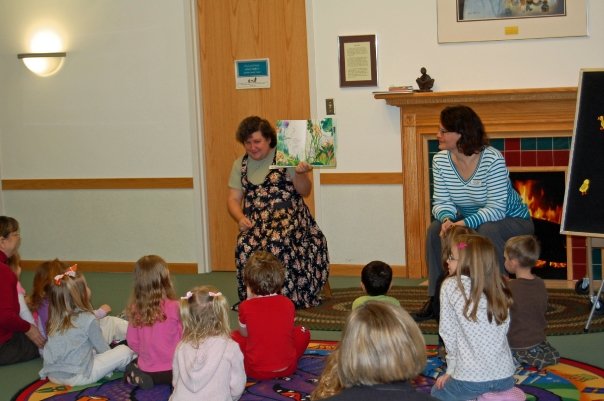
Library Story Time

But I was viewing my job (and myself in that job) through a frame. There was more happening in the wider picture of my life and development. After more than a dozen years there, things had changed. I still loved the work, and while some co-workers retired or moved, and the staff changed a bit, the work environment was still mostly peaceful and friendly. I still found the job challenging and rewarding, and I had gotten to know people in the community over the years who truly felt like family. But, as my role changed, so did some of the relationships. As new leadership came, so did new directions and new priorities. And I had become “comfortable”– and somewhat complacent as well.

In time, it became clear that my “perfect” job was not only not perfect, but becoming a source of frustration, stress, and unhappiness. And there were other things happening that demanded my focus. I was preparing to become a wife and move to a new community. My mother’s health was deteriorating, demanding more of my time and energy. My future husband wanted to open a shop– someone would have to work there, and we couldn’t afford to hire anyone, even part-time. That meant working a second job at the shop while trying to maintain my efforts at the library.

As the “frame” of my life shifted, I felt confused, even angry, with God. Why would He allow something so good to turn sour? Why did I feel like I was losing myself? Didn’t He want me to be happy and fulfilled? Didn’t He want me to use my talents to help others?

Now, after a few years’ perspective, I can see some of the “rest” of the picture. I had begun to see myself through the lens of my job, and I was depending on that vision, rather than focusing on what God was doing in, around, and through my life. There was nothing “wrong” with my job, per se, but God needed me to be willing to let go and move in new directions. Now I am preparing for another change, as we have decided to close our shop, and I will look for the next step– a new job, new opportunities, new challenges.

My nation just went through a contentious election. Many people are upset at the outcome, while others are relieved. But just as it happened with my job, I need to be careful NOT to depend on politics and governments to be “saviors.” No political party or platform or policy can “fix” sin and brokenness. The “system” isn’t the root of the problem. As individuals, we need to submit ourselves to the authority of those in government, but only AFTER we submit to the authority of God. HE is the King of Kings, the Lord of Lords, and His power exceeds that of Presidents, Cabinets, Congresses. Our nation must prepare for new challenges, as well as new opportunities.

I write all this, knowing that there are people going through much more traumatic “shifts” in their lives– the changing of a government administration, with its unknown power and potential can be worrying; the loss of a job, and a change of career is a disappointment. But it is not the same as the loss of a spouse or child, the sudden loss of a home to fire, or an unexpected diagnosis of cancer or other health issue. But the principle is not so different. God’s ways are eternal. Sometimes, we see the uncertainty and trauma in front of us, or surrounding us, and it becomes a frame for all of our thinking and emotions. But the “picture” is much bigger than just our immediate situation. God calls us to trust Him in all circumstances, knowing that His love for us is not just for this life, but for all eternity. Whatever we (or our loved ones) go through here is but a snapshot– one of millions that God will put together in a Glorious and Perfect collage.

Moreover, God gives us the privilege of listening to us when we call out to Him. We need not be afraid to ask, “Why this?” or “Why now?” or even “Why me?” But when we ask, we need to be willing to shift our focus, and remember where our Hope is Built– On Christ the Solid Rock. Even the sweetest “frame”– our career, our relationships, our identity, our politics, our happiness in this life– cannot compare with His faithfulness and eternal Sovereignty.

It’s Not Enough!

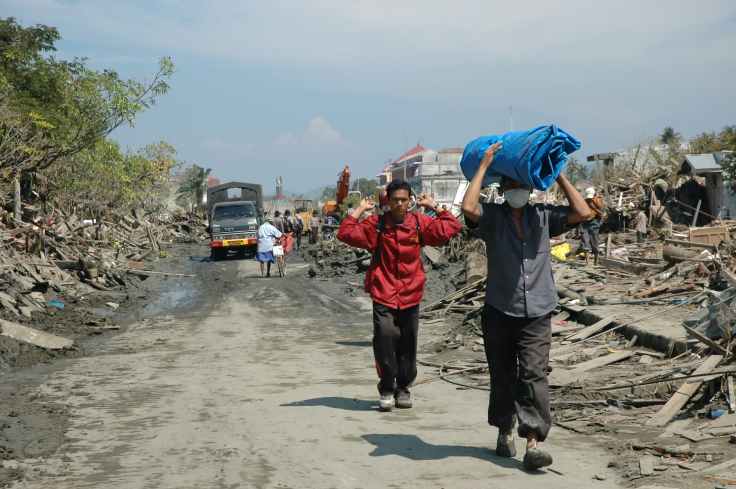
Often, when there is a disaster– especially one that seems preventable and senseless, like a mass shooting or a horrible crash–thousands of people reach out with “thoughts and prayers” for the victims and their families. And, predictably, others will angrily comment that thoughts and prayers are “not enough.” What good are thoughts and prayers in the face of senseless violence or preventable dangers? Shouldn’t we be driven to action? Shouldn’t we focus our efforts on justice or working to guarantee that such disasters can never happen again?

Such anger is natural, and such sentiments may seem more virtuous than offering nebulous emotional support. What, after all, can thoughts and prayers really DO in the face of evil, injustice, pain, and grief?

Well, I can’t speak for “thoughts”, but I have studied prayer for most of my life. I would offer the following words about the effects of prayer:

  • First, prayer reminds me that I am NOT in control of my circumstances– only my reaction to them. I cannot control what happens, what HAS happened, or what WILL happen. And my anger will not change what has already happened, nor will it prevent future disasters from happening. And while I may not be able to prove to others that prayer CAN prevent future disasters or heal present grief, I have known it to do both in my life and in the lives of others.
  • Second, prayer reminds me that there is Someone Bigger than me– Someone Bigger than my circumstances– who has the wisdom and the power to do what even thousands of well-meaning people cannot. Thousands of people coming together can make a difference over time, but God can do miraculously more than we can imagine!
  • Third, praying for others is something I CAN DO— anywhere, anytime– across distances, cultures, time zones, and circumstances. Prayer doesn’t cost anything. It doesn’t require that I have specialized skills or access to physical resources. It may not seem very active, like ranting or screaming, marching or protesting, but it isn’t the same as inaction or apathy.

  • Lastly, praying for others is a first step in helping others. My prayer alone may not seem like “enough”, but prayers have a way of multiplying, and inspiring, and intensifying in positive and impactful ways.

But more than just talking about the effectiveness of prayer, I’d like to pose a couple of questions for those who dismiss prayer as “not enough.”

  • What are you offering (instead of prayers)? Will your thoughts, plans, and actions have immediate or eternal results? Do you have the solution to all the world’s problems? Will you be able to control what happens in the future, or make sense of what has happened in the past? Will your solutions be perfect– no unintended consequences or necessary casualties?
  • If you are so angry about others praying, why waste your energy complaining about it? Go ahead with your own solution/reaction/plan.
  • Is your solution “enough?” Is your anger “enough?” Are your good intentions “enough?” Ultimately, you must wrestle with the existence of evil and injustice in this world. Senseless things happen. Good people suffer, and guilty people enjoy “success.” And nothing we offer is ever “enough” to change the world around us.

Our efforts and actions will never be “enough.” But prayer taps into the reality that God IS ENOUGH. His Grace is sufficient; His Love endures forever; His wisdom is higher than ours, and His power is boundless. He doesn’t always remove us from the chaos and suffering of this world, but He redeems us, and He enters into the circumstances of our own suffering and grief. He gives us courage, strength, hope, and a sense of purpose that goes beyond what we can find in ourselves.

Elementary!

I love solving things–puzzles, mysteries, codes–I love finding the answer. It’s very satisfying. And I love reading mystery stories–Agatha Christie, Georges Simenon, Dorothy Sayers… But I have very mixed feelings about Sherlock Holmes. Always have had. I loved the intricacy of the mysteries themselves. They seemed impossible; unsolvable. Yet somehow, Holmes always knew the answer. And then, as he calmly explained how “elementary” it was, he would throw out details that no one else could possibly know without three doctorate degrees and a photographic memory.

I recently watched a series of TV episodes about Sherlock Holmes, and it struck me again. However, in our modern age, it is not so very impossible to become an expert on esoteric topics in almost no time. We have the internet, where vast amounts of information is available at the tip of our fingers. We can find facts about nearly everything, everywhere, at any point in history. We can virtually track people, visit places, experience adventures, and yes, even solve mysteries– all without leaving our couch. And while there are numerous dangers of relying on information found in cyberspace, there is no denying the easy availability of it.

One of the things I like about most mysteries is that they show the triumph of good over evil. Mysteries tend to show us, not only the impact of evil in the loss of life or property, the suffering of victims, and the need for vigilance, but the longing for order and knowledge and safety that we hope someone can “solve.” A good mystery story ties up all the “loose ends” and answers all the burning questions– “Who did it?” “How?” “Why?” By the end of the story, we feel victorious and safe and satisfied.

But reading mysteries or solving puzzles can give us a false sense of safety and knowledge. In real life, there are many unsolved puzzles, unanwered questions, and “cold” case crimes with no resolution. We are left asking “Why?” and “How?” about many of the things that have happened in our lives. And the answers are not “elementary”– even for the most intelligent among us.

As an adult, I read (and watch) the Sherlock Holmes mysteries with a different mindset. I know, from past experience, that Sherlock Holmes will always outwit the criminal. And I will probably learn some little-known fact– likely one that I never needed to know–that may be astonishing. But I am more interested in the character of Sherlock Holmes himself, now. Likewise with many of the other detectives I enjoy reading about. Because mysteries involve the triumph of good over evil, they attract writers who study the ongoing fight between the two. Mysteries often involve complex machinations, intricate plots, many-layered characters, and misleading information.

And the detectives are often equally complex and many-layered. Their startling intellect and deductive skills leave us in awe. Yet, they also have human frailties that lead them to overlook key clues or lead them to take risks beyond what we would consider wise. And many of them wrestle with the concept of good and evil–they are often tempted to take the law into their own hands, or to do something illegal in order to bring a criminal to justice. Thus, the reader is left with another mysterious question– just what is “Good” or “Evil?” Are there times when, in order to do “right” we may need to do something that others consider “wrong?” Can two “wrongs” make a “right?”

Some of the best detective characters are almost god-like in their ability to ferret out evil. But they are constrained in their ability to defeat evil. They are, in the end, human. Even Sherlock Holmes, with his arrogant assumptions and dizzying deductions, cannot wipe out evil; cannot keep it from touching and even ruining lives. In fact, as Sherlock Holmes (and others) discovers, intelligence is often a key ingredient of evil. “Stupid” criminals are easy to catch. The great detectives are needed to find the brilliant masterminds of evil; the ones who would otherwise go undetected and unstopped.

The man who created Sherlock Holmes, Sir Arthur Conan Doyle, was an agnostic and, in later life, became a spiritualist. He wrestled with the concepts of good and evil and particularly with the concept of how a “good” God could allow evil to exist. He was skeptical of the existence of the Biblical God, but instead believed in the continuing existence of the human spirit after death. He believed that the battle between good and evil was left to mankind to solve. He, like his famous character’s sidekick, Watson, was a medical doctor. He was a man who worshipped science– a man who valued facts above all. In fact, the stories of Sherlock Holmes offer us what seems to be a triumph, not just of good over evil, but of facts over faith.

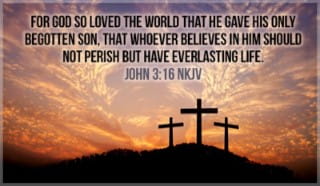
Today, we celebrate the triumph of faith and facts over skepticism and arrogance. Jesus, unlike Sherlock Holmes, did not come to the earth to “solve the puzzle of evil” by bringing individual human criminals to justice. He did not brag about His great intellect, though He dazzled the Jewish Priests of His day with His knowledge and understanding of Scripture. Jesus had no fixed address. He did not write treatises or analyze dust samples– He created nature; He had no need for further study! His disciples did not write about Jesus merely because He did miracles. They did not write about Him in order to become rich or famous. Instead, they were martyred and exiled. Jesus did not put an end to the corruption of the priesthood under the Pharisees and Sadducees. He did not break the yoke of the powerful Roman Empire. He died on a wooden cross, hung between two criminals, after being convicted in an illegal trial, and a farce of an appeal to Pilate. He was flogged, taunted, pierced, and buried in a borrowed tomb. He was, by all appearances, defeated by evil and death. He lost– by human standards and appearances.

But faith tells us that God is Good; that Jesus is God; that Good triumphs over evil. And the facts bear out our faith. Yes, Jesus died. It was recorded, affirmed, and witnessed. But that wasn’t the end of the story. He rose again. There is no body in the tomb. There are witnesses to His post-crucifixion appearances. There were witnesses of his ascent into Heaven. His disciples died for their testimony and continued faith in the face of persecution, torture, and threats. And believers over the past two millennia have lived and died in the faith. We are witnesses of His power to redeem, to restore, and renew lives.

The events of Good Friday and Easter present the ultimate mystery. Jesus, Son of God, Messiah– eternal, all-powerful, all-Good– became a sacrifice for us. He allowed Himself to be an innocent victim of Evil for our Good. And in doing so, He didn’t just “solve” a puzzle– He defeated the power of Evil once for all! We don’t have to know more than the enemy. We don’t have to chase down and outwit death. We don’t have to be terrorized by the threat of evil, the weight of our guilt, or the power of the grave. All we have to do to defeat the evil in our lives is to trust in the work of the Risen Savior and follow Him.

And that is Elementary!

Fixing the Snarls

A few years ago, I got really ambitious and decided I would take up crocheting. My grandmother taught me the basics many years ago, and I thought I would be able to pick it back up and make delightful scarves and mittens and maybe even afghans… Except, when I started a scarf, I ended up with a nice start attached to a horribly snarled up ball of yarn. No problem. I would simply work at the snarl until it melted away, and continue with my scarf. Except it didn’t melt away. I was able to “move” the snarl a foot or so down from where it was, but I couldn’t work it all the way out.

I struggled with that snarl far longer than I should have, and eventually gave up the project and moved on to making candles (another story for another time). But I learned a painful lesson. I would love to say that I prayed about the snarl and God unraveled it for me, but that didn’t happen. I prayed– yes; but God allowed me to continue in my stubbornness and self-confidence to do battle with a few yards of green yarn for days, when I could have been doing more productive things.

I have a great need to try to “fix” things– I think most of us do at some level. We live in a broken world, and we know that there are things that are “snarled” all around us–relationships, situations, circumstances–that need fixing. And God has given us opportunities to do good works that can make the world around us better. But it is not our job to “fix” the brokenness in the world. Only God can really “fix” it–even though He may give us work to do along the way.

And that brings me back to prayer. No, God didn’t “fix” the snarl in my yarn. And He didn’t “fix” my stubborn attitude or my willingness to finish the project another way or ask for help from someone else. God isn’t interested in making our lives (or our projects) easier for us by removing our problems. And God isn’t impressed by our stubborn efforts to “fix” the situations in our lives. God’s ways are not our ways (see Isaiah 55:8-9; and check out https://blackaby.org/gods-ways-are-not-our-ways/.

So many times, we think of prayer as a last resort, as a crutch to fall back on when our efforts seem to be failing, or when we think a situation is “too big” for us to handle on our own. Even in the things of Christ, we tend to plan first, and pray later. Prayer becomes our Plan B. But what if, in the grand scale, prayer was always our Plan A? What if we started the morning, not looking at our planners and calendars, but listening for God’s direction? Even if it meant scrapping our own plans and leaving the “snarls” to God? What if, as our churches planned for programming and outreach, we resolved to do nothing until we had prayed for a month about our goals for the coming year? What if our churches had more people coming to prayer meetings than coming to Family Game Nights or Teen Overnight Parties? In my own life, what if I spent less time writing in my prayer journal than actually asking God to inhabit my prayers?

In the book of 1 Samuel, King Saul undertook a mission for God– God had chosen him to be King over all Israel, and to lead the nation against the wicked peoples in their midst. Saul led his warriors in battle, and even had success, but God rejected Saul because of his disobedience. Saul wanted victory to confirm his status as a warrior and a king. He listened to God’s instructions– superficially. He even insisted that he had followed God’s instructions– after all, he defeated the enemy! But he didn’t do it God’s way or for God’s glory. God gave him victory in many battles, but Saul was impatient, imprudent, and impudent. Saul ended his reign in shameful defeat because he wanted to “fix the snarls”– his way.

I’m not saying that my prayer blog and prayer journal are wrong, or that churches shouldn’t do programming– not at all. But it is something to think about, before the next yarn snarl comes along… Am I busy trying to “fix” a situation that I can’t (or shouldn’t) fix, when I should be watching for God’s next assignment? Am I trying to win a battle to prove myself worthy, or am I letting God set the terms and take the Glory that is rightfully His? Am I busy asking God to unsnarl yarn, when He wants to move mountains?

O Come, O Come, Emmanuel

During this season of Advent, we often sing this ancient hymn.  It dates back nearly 900 years, and continues to be sung and/chanted in Latin.  https://hymnary.org/text/o_come_o_come_emmanuel_and_ransom

The hymn is a contrast of weary longing and hopeful prophecy.  The promised Messiah has not yet arrived, but his coming is sure, and cause for great rejoicing.

The hymn is also a prayer– pleading for the coming of Messiah, even as it comforts with the reminder that he WILL come.  And it reminds us of the power of prayer– not just the power of approaching Almighty God, but the power of acknowledging our longings, our needs, and our dependence on God.  Even in our darkest hours, even in captivity and oppression, we can have hope in God’s timing and wisdom.  He DOES see our struggle; he DOES care, and he WILL send hope and rescue.

But the song also points out a pitfall–in the first verse, the prayer is for Emmanuel to rescue Israel from Roman Occupation; to end its immediate plight of being politically and economically oppressed.  There were many people who saw Messiah, heard him speak, even felt his touch, who rejected him because he did not do what they were expecting.  There are many today who cannot believe in Jesus Christ because he doesn’t take away their current circumstances of pain and suffering.

In their narrow focus, people miss the greater miracle of what Messiah is all about.  Jesus did not come to free us from temporary troubles and trials; to make us comfortably apathetic or arrogantly victorious over personal poverty or sickness.  He came to free us to be able to endure and/or overcome our circumstances; to offer hope where there seems to be no hope.  He came to show us that our circumstances don’t define us or cut us off from God’s love; that our past is not more powerful than His forgiveness and power to heal; that even suffering and oppression can be endured with joy, even as we work together to overcome them.

This year, as I ponder this hymn, I am both discouraged, and emboldened. I am discouraged, because I hear voices calling out for many things, but few of them are calling for a Messiah. We live in a world that desperately wants what Christ offers– peace, unity, forgiveness, eternal life– but without a Savior. We want to save ourselves, and we want to do it casually, heroically, and without acknowledging our helplessness. We read books, seek out gurus and life coaches, haunt the internet, all searching for answers that only God can provide. We long to see an end to injustice and oppression– or whatever seem unfair or difficult to us or those we champion– but we don’t want to submit to the example of a humble Christ who serves others.
But I am emboldened to pray that more of us would desire more than the “quick fix” or the “feel good” solutions of the world. I pray that we would earnestly desire that this Advent Season would be a time of yearning for MORE of Christ; more of His Joy; more of His Love for others; more of His Hope to spread around us. I want us to Rejoice– not in the bright lights and decorations, or even the beautiful melodies of Christmas carols– but in the real gift of Christmas! Emmanuel!

This season, as we sing this hymn, I pray that we would see the continuation of its message.  Emmanuel HAS come– Jesus not only came and won the victory over sin and death on Calvary; he has commissioned US to be the bearers of the Good News.  There are dark places in the world praying for hope and rescue to COME.  Will we share the love of Christ in our own neighborhoods?  When we bear the name of Christ, we should be on mission to rescue those who are captives, not of Rome, but of Sin and the tyranny of Death.  So that we all can  know the reason to Rejoice! Rejoice!

But Did I Pray?

I cried a bit.
I threw a fit.
Made a fuss;
Kicked up some dust…
But did I pray?

I made a plan.
I took a stand.
I marched around;
Made some sound.
But did I pray?

Photo by Andrea Piacquadio on Pexels.com

I went on-line;
Looked for a sign.
I read a book;
Took another look.
But did I pray?

I hit a wall.
I made some calls.
I spoke to friends.
I followed trends.
But did I pray?

I shook my head
And then I said
A hasty word.
I felt unheard.

I wondered why;
Had another cry.
I drove my car
And searched the stars.
But did I pray?

Prayers are simple.
Prayers are quiet.
I wanted answers.
I wanted a riot.

My heart was proud.
My voice was loud.

But what can I say?
I didn’t pray.

“Be still, and know that I am God..” Psalm 46:10

Paying for the Privilege

I read a most astonishing article some time ago. Wealthy white American women are paying up to $2,500 for a meal and a gut-wrenching session about how racist and bigoted they are. https://www.theguardian.com/world/2020/feb/03/race-to-dinner-party-racism-women?fbclid=IwAR12AvWdTyht5RV0vfBfZ5XUEnA4441GU8efLSX8xtdfePI2R9KEesCipI8 Over a fancy dinner, they discuss how their privilege has (arguably) caused them to ignore and/or deny the needs and rights of others, based largely on prejudices and fear.

Photo by bruce mars on Pexels.com

I won’t waste space to analyze all that I think is wrong with this scenario– but I will say the following:

  • $2,500 is a lot of money for most Americans, let alone many others around the world It’s more than most people spend in a month for groceries, utilities, and more, let alone one meal.
  • Talk is (according to the old phrase) cheap.
  • If having difficult talks over a plate of overpriced pasta and wine could really solve major problems, I’m shocked that we still have so many problems in the world!

I’m dismayed by this article. I hope that some good comes from these efforts, but I don’t expect such tactics to end racism, bigotry, or ignorance. These women are paying for a privilege on top of all their other privileges– the right to feel righteous and “woke” to lingering problems that have never personally touched them. It would not occur to them to invite 10 women who don’t look like them, don’t live like them, don’t speak like them, and don’t dress like them to come and share their dinner. They would not share their hospitality, their fine china, or their fancy dessert with a working-class woman with olive skin and an accent, or a single mother fighting to make ends meet and losing the battle– of any skin color. They might give another $2,500 to a homeless shelter or soup kitchen across town– they would not befriend anyone who needed those services, however.

Photo by Levent on Pexels.com

Most importantly, they are likely to believe that by “owning” their prejudices for an hour, they are absolved of their responsibility to “love their neighbor as themselves.” They can be comfortable in the belief that their feelings “do them credit” and make them better than others who “are in denial” about their “subconscious biases” and “micro-aggressions” toward the people with whom they interact (or routinely ignore). They may take high-minded actions to force the government to “deal with” people less fortunate than they, but they will take no steps to get involved personally with the families who suffer from injustice and poverty just outside the gates of their exclusive communities.

But another more insidious problem with the article is the way I can choose to respond to it. Articles like this are designed (on some level) to create anger, division, and a sense of disgust toward those who are considered “privileged.” I look at the hypocrisy outlined in this article, and I may assume that “privileged” rich white people are all alike. I may assume that the “problem” is their affluence and their indifference– that if they could be “made to” care more, or made to pay “their fair share”, poverty would disappear, and with it, prejudice and other issues that separate the “privileged” from the “rest of us.”

Photo by Steven Arenas on Pexels.com

But poverty, prejudice, injustice, and other issues are symptoms of a much greater problem– Sin. And Sin is a problem that can never be solved by sitting down over a meal or writing a large check or even learning empathy with others who suffer. In one very large sense, we all are “paying a price” for Sin. We live in a broken world, where Sin and its effects are felt by all. Even wealthy, healthy, “privileged” people suffer heartache, betrayal, loneliness, confusion, addiction, and loss. None of us has the “privilege” of being untouched by Sin.

And while each of us can and should be active in helping to mitigate the effects of Sin, we cannot eliminate them. We can never “pay” enough to make Sin and its consequences “go away.” Only the shed blood of Jesus Christ can do that. The real “privilege” in life is not great wealth, or social standing. It isn’t comfort and the ability to shell out a month’s wages for a single uncomfortable meal. It isn’t the temporary feeling of being more “virtuous” than one’s neighbor–and that brings me to reflect on my own actions and beliefs.

What “privileges” do I take for granted? What makes me feel “virtuous?” What makes me feel guilty or ashamed, that I would “pay” to have someone else make me feel “enlightened?” Jesus doesn’t call me to “feel” virtuous. He calls me to follow Him and become more virtuous. He has already paid far more than a month’s wages (or even a lifetime’s wages) to redeem me from Sin’s curse, and allow me to live with peace and joy– no matter my financial or social circumstances! I have the very real “privilege” of knowing Him! And so can anyone else who puts their trust in Him. Through Him, we have riches that cannot be sold, bought, lost, or traded. But they can be shared! I cannot rid the world of poverty, prejudice, greed, injustice, or death. But I can help others find strength, hope, relief, and joy in their journey, as I point them to the Savior. I can’t give a thousand dollars, but I can give a few dollars to a local food bank, or volunteer time to help others. I can share food or water or clothes with someone who is in need just down the street. I can listen to someone who needs a friend, and I can offer to serve where someone needs a helping hand. I can also give the benefit of a doubt instead of harsh judgment– even to those who seem hypocritical or “unenlightened” in their earthly “privilege.”

Lord, my prayer today is that I would pour out compassion– even on the ladies in this article–and on all who need it most. Your heart is that all of us would live in peace and lovingkindness. Help me to see my neighbors as you see them–ALL my neighbors. All the time.

Photo by Kamille Sampaio on Pexels.com

The real privilege is not of wealth or comfort. The real privilege is to learn to love and be loved as Jesus loves– freely, sacrificially, whole-heartedly and without limit. May we celebrate in that privilege today.

Search Terms, Algorithms, and Prayer Requests

I used to work in a public library. I was the Youth Services Librarian, which meant that most of my time was spent working on building up the collection of children’s books, planning and presenting programming and story times, and going into schools to do book talks and promote library offerings. But I also spent time at the reference desks– both in the Children’s Area and the Adult Services area– and some of my time was spent finding answers to a wide range of questions:

  • Does the library have books or articles about Okapis (for a 4th grade report)?
  • Do you carry tax forms for my out-of-state business?
  • What are the school colors for _______ college (a small community college in Nebraska)?
  • Do you have a picture of the Egyptian queen Hatshepsut?
  • What is the title of a children’s book that featured muskrats making chicken soup?
  • My great-aunt left me a set of dishes and I want to know if they’re worth anything.
  • Do you have a recipe for pemmican?
  • What color is yak’s milk?
Photo by Andrea Piacquadio on Pexels.com

Some questions were easy to answer. Some required a little research within the library’s resources. Some were next to impossible and required hours of searching databases, or calling on expert help. Searching a database can be tricky. You need to find solid key words and search terms. For instance, our computer catalog did not recognize the the search term “cooking” or “cookbook.” You had to use the term “cookery” to get the best results. You could also use “cook***” to force the algorithm to look at all words that contained the letters c-o-o-k and any other letters that followed, such as cooks, cookies, cookery, etc. (Many library databases have since been updated, so searches will automatically redirect or refine common terms like this.)

Photo by Pavel Danilyuk on Pexels.com

Databases and search engines are amazing things, but they have limitations. They will only search for what you type in, and they will only search in the way they are programmed to do so. Computers (currently) “think” laterally–they do not make leaps of imagination, nor do they second-guess what you might have meant to ask but didn’t. If I want to know about pemmican, but I misspell it, the search engine may not find what I’m looking for.

Photo by Pascal Renet on Pexels.com

That’s where algorithms come in. If I misspell pemmican by leaving out the second “m”, the algorithm will look for words close to what I typed, based on thousands of other inquiries. It may ask if I meant to search for pelican, instead. Or it may ask if I want pemmican. But if my spelling is really bad, or if the word I type in is actually another word, the search engine may miss my real inquiry altogether, and send me on a fruitless search. If I’m searching for a children’s book with muskrats and chicken soup, and the search engine doesn’t find both terms in a description, the algorithm will usually stick with the first term, and give me a list of children’s books with muskrats. Hopefully one of them also includes chicken soup… If I type the key words in reverse, I will get a list of children’s books with chicken soup…hopefully one of them includes muskrat characters! And algorithms can be skewed by advertisers or other interest groups that pay to have their information appear more often or first whenever certain search terms are entered.

Photo by Pressmaster on Pexels.com

How does any of this relate to prayer requests?

When people request prayer, they are usually focused on what they perceive as their greatest need. They are searching for an answer; a solution to a specific problem or situation. “Pray for complete healing.” “Pray that my son/daughter will…” “Pray that I get this job.” And it is tempting to pray very specifically. This is not wrong. But sometimes, it limits how we see prayer and how we look at God’s answers. The opposite is also true. Sometimes, we pray so broadly, that we may not see God’s answer for what it is. Sometimes, we pray, hoping to change some sort of algorithm and get to the “top of the list” or get the “right” answer. This is not what prayer is about…we know this, but sometimes, our wants blind us to what we are actually asking (or asking others to ask for).

Photo by Luis Quintero on Pexels.com

So what are some of the key words we can use in our prayer requests and prayers? Jesus gives us a fantastic blueprint in The Lord’s Prayer (Matthew 6:9-13):

“Our Father”–remembering to whom we are praying is vital. We are not praying to a distant, absent-minded, shadowy figure; He is our Father. He knows what is necessary, and what is best.

“Who art in Heaven”–God is Omnipotent. There is nothing we can ask or imagine that is too big, too difficult, or too much to ask. That doesn’t mean that God will give us whatever we want, whenever we want it, but it does mean that God is not limited by the same things that limit us!

“Hallowed by Thy Name.”–God is not our “genie in a bottle.” He doesn’t work for us, or at our command. God is sovereign; He commands the Universe. And even though He makes Himself known and wants a relationship with us, He is not like anyone else–He ALONE is GOD. When His answers seem “wrong,” or don’t make sense, it isn’t because He didn’t hear us, or because He doesn’t love us, but His ways are not our ways (Isaiah 55:8-9).

“Thy Kingdom come, Thy will be done on Earth as it is in Heaven”–There are a lot of “good” things that are NOT part of God’s best will for us. There are a lot of difficult and painful things that God can use for our good. He wants to hear the cry of our heart–“I want to be healed.” But He also wants to hear our willingness to accept that healing may not be immediate or easy.

Photo by sergio omassi on Pexels.com

“Give us this day our daily bread”– It is not “wrong” to pray for things in the future, or to pray for “big” or complex things, but our dependence on Him is shown best when we acknowledge our everyday basic needs are met by Him.

“And forgive us our debts as we forgive our debtors, And lead us not into temptation, but deliver us from evil”–Don’t be fooled. God will not ignore our hidden resentments, hatred, disdain, rebellion, and unforgiveness. Our requests can be sidelined by holding on to grudges and harboring secret doubts about God’s essential fairness, as well as hanging on to sinful habits.

Photo by Foss Valentine on Pexels.com

God doesn’t need algorithms or special prayer “search terms”. We can come to Him with our requests, and He knows precisely what we want and what we need. But we will learn more about ourselves and about who God truly is when we refine our hearts and our prayer life.

Praying the Perimeter

I love puzzles–jigsaw puzzles, crossword puzzles, Sudoku, logic puzzles, etc.

This may seem like a strange way to begin a blog on prayer, but stick with me…

Photo by Pixabay on Pexels.com

Puzzles can be fun, but they can also be very frustrating, especially if you approach them with no strategy. If you dump 1,000 pieces of a jigsaw puzzle on a table, and begin by trying to find any two pieces that fit, you may be able to eventually solve the puzzle, but it makes more sense to look for the “edge” and “corner” pieces first, and build a framework. Depending on the puzzle picture, you may also be able to work on colors or patterns that stand out– sky/clouds, a patch of red or blue, a dog in the foreground, etc.

Photo by Magda Ehlers on Pexels.com

The same is true of word and logic puzzles. There is usually a strategy when you approach each puzzle that can help make it easier and more rewarding. Words have patterns of letters– vowels and consonants; logic puzzles depend on deduction– narrowing down the possible by eliminating the impossible. Sudoku, and its cousin, Kakuro, involve simple math and numbers 1-9 in changing patterns. Start with the strategy, and you will find even the most challenging puzzles a little less challenging.

Photo by Dziana Hasanbekava on Pexels.com

Some puzzles seem impossible; and some are beyond my ability to solve, even with the best of strategies. That’s life. We don’t know all the answers, and we can’t always “see” the solution, or make all the pieces fit.

Sometimes, our lives seem like a challenging puzzle. Nothing seems to “fit” a pattern or make sense, and we end up lost and frustrated. Our most basic need is to trust God. But God does not leave us without a strategy. Prayer (along with reading God’s word and keeping in fellowship with other Christians) is part of an excellent strategy. Just like putting the “edge” pieces together in a jigsaw puzzle, praying “the perimeter” of our problems can put them in the proper frame.

What does that mean? Jesus gave us a perfect example in “The Lord’s Prayer.” When His disciples asked Him how they should pray, He started with the “frame.” “Our Father, who art in Heaven, hallowed be Thy Name.” God should be at the center of our life and trust, but He also needs to be the “edge” and framework of our life. There is no problem or worry that is outside of His control and awareness, no need that He cannot meet, and no problem that can take Him by surprise or leave Him frustrated and “stumped.”

Photo by Pixabay on Pexels.com

“Thy Kingdom come, Thy will be done in earth as it is in Heaven.” God already has the right strategy, and solution for our need. We can’t see it; we may not have a clue how to pay our bills, or deal with that devastating diagnosis, or make peace with our enemy–we may never find “the solution” on our own or in our short lifetime. But God sees the entire picture, and He has the power to make all the pieces “fit”– in His time and in His perfect will.

Photo by Levent Simsek on Pexels.com

“Give us this day, our daily bread, and forgive us our trespasses as we forgive those who trespass against us.” Sometimes our “puzzles” seem too big because we try to tackle everything at once, or we try to tackle things from the wrong end. God’s strategy is to rest in Him daily, letting tomorrow’s troubles wait for tomorrow, and letting go of yesterday’s struggles. That doesn’t mean that we don’t make plans or budgets, or that we don’t take responsibility for our health, or the mistakes we’ve made. But it means that we stop focusing on what we can’t control, and focus on the present. Instead of worrying, I can be thankful for what I have right now. Instead of focusing on what others think of me, or the threat they pose, I can concentrate on my own attitude and actions, making sure that I am practicing trust and obedience. Instead of getting angry when things don’t make sense, I can rest, knowing that God knows the end from the beginning.

Photo by Element5 Digital on Pexels.com

“And lead us not into temptation, but deliver us from evil.” God is our “Good Shepherd” (See Psalm 23 and John 10). He “leads us beside the still waters” and “makes us lie down in green pastures.” “He restores my soul.” (Psalm 23:3a) If we let God determine our “edges” and boundaries, we will still have to travel through troubled times and valleys “of the shadow of death.” But we need not fear evil, when we trust that God will deliver us. We need not fear the shadows and uncertainties within the boundaries of God’s will. And even when we have taken the wrong path, and “messed up” the puzzle we are in, God is in the business of redemption and restoration! He will deliver us– if we confess and seek His solution. He will wipe away the “wrong” answers and rearrange the pieces of our life, so that we can find wholeness.

Photo by Miguel u00c1. Padriu00f1u00e1n on Pexels.com

When we develop the pursuit of prayer– daily meeting with God, acknowledging who He is, and seeking His wisdom and grace– we will meet the challenges of life with the right strategy. We will still face the frustration of not knowing all the answers, or not seeing the whole picture. We will still have to deal with struggles, shadows, grief, and pain. But we will have a stronger “framework” and a God-given strategy to help.

Blog at WordPress.com.

Up ↑