Fast Forward

I’ve written dozens of blog posts about prayer, and very little about fasting. Fasting is a practice that is often coupled with prayer, but fasting rarely appears in my blog.

There are several reasons for this. I don’t make a practice of dedicated fasting, so I don’t feel comfortable writing about something I don’t know well. or practice often. I also don’t want to give fasting equal time or importance, because I feel it can become a substitute or even an obstacle to prayer if done for the wrong reasons.

Photo by RODNAE Productions on Pexels.com

The Lenten season is fast approaching, and it is a time when many people choose to fast, so I am stepping out of my comfort zone a little to give more time and effort to fasting (and discussing it here). Here are a few things I have found:

Photo by Marx Alexei Illaconza on Pexels.com
  • While we often think of fasting as going without food or water (or both), there are actually many kinds of fasting. Fasting simply means that we do without or set aside something as an act of obedience, reverence, contrition, or worship. Fasting should be done with the goal of getting closer to God, increasing our focus and our dependence on Him. When we fast, we are creating a “space” of dependence– separating ourselves from one thing to be available for another thing– namely prayer and worship. It isn’t about not eating, so much as not allowing food and drink (or other things) to call us away from time with God.
  • Fasting is Biblical. It was practiced by Biblical figures from Moses to King David, Ezra, Daniel, Nehemiah, Esther, and the entire nation of Israel! Jesus fasted and members of the early church practiced fasting as well. Fasting is encouraged, but not required. It is never prohibited, but there are several biblical warnings about improper fasting (see below).
  • For an excellent discussion (by people who have studied longer and know far more than I do), see: https://www.biblestudytools.com/bible-study/topical-studies/what-exactly-is-fasting-all-about.html or any number of other excellent blogs and websites, many of which are linked in the site I’ve listed.
  • Fasting is NOT meant to be an end in itself. There are many people who use fasting as a diet plan, or as an exercise in self-control. This is NOT biblical fasting. Whatever you are “setting aside” in your fast should be “filled” with prayer, meditation, and worship, and that should always be your focus. If you have health issues, a history of eating disorders or obsessive behavior, you should be very careful about fasting. Consider seeking advice or an accountability partner to help you remained focused on the real goals.
  • Fasting will not make you more righteous, or better than someone else who does not practice fasting. In fact, Jesus warned that when we fast, we should not do anything to call attention to the fact– no moaning or sighing, etc. Fasting isn’t about impressing others with our religious devotion. God knows our actions, but He also knows our heart.
  • Fasting is a commitment, and should not be taken lightly. If you decide to do a fast, and you’ve never done one, it’s best to start small and complete it, than to jump in headfirst and fail to keep your commitment. Not because God will be angry or disgusted– remember that God LOVES you and wants you to desire a closer relationship. But God wants each of us to grow to maturity. God will give us grace to do what He asks us to do; but He won’t honor our efforts to “outdo” Him.
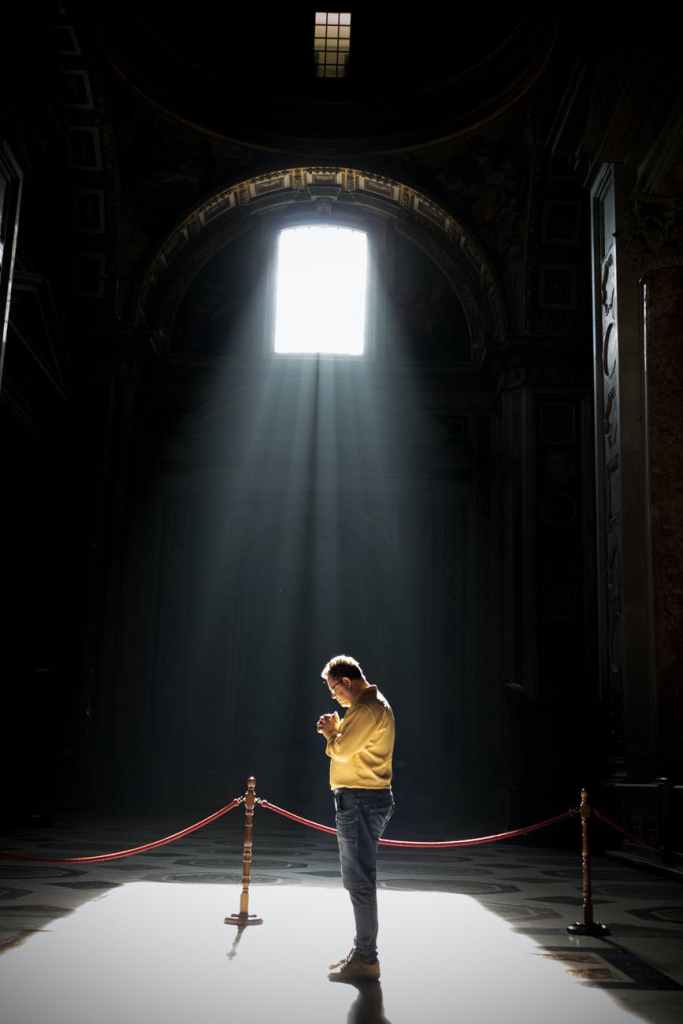
Photo by Paulo Mu00e1rcio Dos Santos on Pexels.com

In taking a closer look at fasting, I am encouraged to do it more often. I have done short fasts, food fasts, and fasting from activities, and I can say that such practices often have surprising results. If you are planning to do any kind of fast for Lent, I pray that you will find it brings you closer to God and helps you in your own pursuit of prayer.

Photo by John Ray Ebora on Pexels.com

What’s Your Destination?

Recently, my husband and I took a weekend trip.  We had a destination in mind, but had to decide on a route.  Looking it up on the computer, we were given an estimated distance and travel time based on a programmed route that was found to be the “fastest.”  However, this route was not necessarily the shortest, or the most scenic, or the safest.  Knowing our destination, my husband was able to reconfigure the program to map out a route that fit our needs.  It got us to the correct destination, and allowed us to travel safely, leisurely, and confidently.

After we reached our initial destination, we decided to take a side trip.  Since we hadn’t counted on taking the side trip, we didn’t have a route.  We relied on the same technology, but, not knowing our exact destination, we typed in a general location and followed the instructions we were given.  We missed an important exit and had to reconfigure…we changed our plans and had to reconfigure…we misspelled the name of the new destination and were sent miles out of our way before we realized what had happened…we ran into an unexpected detour which sent us more miles out of our way.

pexels-photo-490411.jpeg

Knowing your destination, and having a good map or set of directions can make a huge difference.  We still had an enjoyable trip, but we might have been able to do more if we had planned a little better–one of the places we decided to visit had just closed by the time our reconfigured driving directions got us there!   And we might have been able to cut several miles off of the detour route if we knew the local roads better (it didn’t help that our map application wasn’t working at the critical moment, either!)

auto automobile automotive car
Photo by Mikes Photos on Pexels.com

In life, there are many “programs” that offer advice, direction, and focus to get us to a destination.  There are weight-loss programs, “life coaches,” self-help books, universities, “mindfulness” seminars, even religions that promise to guide us along a particular path.  But if we don’t have a clear destination in mind, we can end up wandering down a detour or even a dead end.  What started out with such promise becomes a maze of questions, unmet expectations, and frustrating twists and turns.

pexels-photo-618955.jpeg

So what is my destination in pursuing prayer?  Where do I want to end up at day’s end?  In a year?  When I face the end of my life (if God chooses to let me see the end approaching)? I want to experience the kind of prayer life that honors God, deepens my relationship with Him, and has an impact.  There are many “paths” of prayer– but they have different destinations.  Meditation, recitation, fasting and praying, praying corporately or in isolation–I need to map out a course that will get me to the goal.  And I need to rely on the guidance provided by the Bible, the Holy Spirit, and godly counselors and teachers.

pexels-photo-935944.jpeg


Where’s the Joy?

I love puns– friends from all over the world send me the craziest puns, “punny” images, silly videos, and awful jokes.  Except for those that are patently offensive and find their humor at someone else’s expense, I really enjoy them all.

Someone has said that puns are the lowest form of humor, but I disagree.  In fact, I often find that puns, like humor in general, can cause us to explore a serious topic in ways we would otherwise avoid.  The image above tickled my funny bone, but it also caused me to think.  Where is my Joy?  Do I bottle it up and hide it down in my cart, or does it bubble up, iridescent and smelling of sunshine (and possibly lemons) from deep down in my heart?

clear bubble
Photo by Pixabay on Pexels.com

Prayer is a serious topic, but it shouldn’t be joyless.  Even in our troubles, we can be confident that we are loved, cherished, and precious.  In our grief and sorrow, we are not overwhelmed (though it often feels as if we are) when we have this kind of joy.  It will wash away despair, anger, doubt, and weariness, as it rises up.  We pray for so many other things– health, wisdom, forgiveness– we should also pray for Joy.  Not the false and fleeting joy of a silly pun, or the veneer of joy that lies and says that “everything is great.”  We need the kind of joy that sings through tears, laughs at storms, defies despair, and shakes the rafters!  And we need the quiet, blessed assurance that God is in His Heaven and even if all is not well with the world, God still has everything well in hand. Such joy, lodged deep in our heart and soul can keep us from buckling under the weight of loss, the exhaustion of stress, and the threat of chaos.  We need a new “Dawn” of “Joy” (yes, I had to include another pun). We need to pray for joy. We need to cherish it.  And we need to pass it on.

The world could really use it!

Where Your Treasure Is…

Our church held a hymn-sing and ice cream social last Sunday.  It was an informal evening service, but we heard testimony of the power of hymns to shape our worship, and to help us remember scripture’s promises.  We also had the chance to just “call out” a favorite hymn to sing together.  We probably sang 15 or 20 hymns that night, and each one had special meaning to many in the congregation.  We treasure certain songs, certain verses, certain stories– they feed our soul, encourage our heart, steel our thoughts, and pour balm on our wounds.

church-bank-wood-benches-161060.jpeg

One hymn we didn’t sing the other night, though it is a favorite of many, was “Sweet Hour of Prayer.”  Sweet Hour of Prayer– lyrics and much more here  In getting ready to post for today, I thought about this hymn.  We treasure the thought of prayer being sweet and bringing relief, but do we treasure prayer enough to spend an hour or more at it?  If I add up the time spent in morning prayers of devotion, grace at mealtime, evening prayers, and “quick thoughts to heaven” throughout the day, it probably adds up to an hour…but I spend more time writing about prayer each day than I actually spend practicing it.  And when was the last time I got so caught up in prayer that I lost track of time and spent over an hour at it in one sitting?

pexels-photo-707676.jpeg

In the Sermon on the Mount, Jesus warned that we should not lay up treasures for ourselves on earth, but to store up treasures in heaven, “For where your treasure is, there will your heart be also.” (Matthew 6:21 KJV)  This is true of our material treasures, but also our spiritual treasures, our thought treasures, and our time.  When I hear “Sweet Hour of Prayer,” one of my first thoughts is always, “That would be nice, but I don’t have an hour to spend praying– I’d never get anything done!”  But would I have said that about watching my favorite TV show?  Spending an hour on Facebook or shopping at my favorite store?

God is beyond time– he’s not counting the hours, minutes or moments we spend with Him.  But he feels our absence and our distraction just the same.  He isn’t trying to pull us away from important things to waste our time– he wants to pull us away from the things that weigh us down, worry us, haunt us, and eat up the precious time He has given us.

grayscale photography of people walking in train station
Photo by Skitterphoto on Pexels.com

I have found that when I feel “too busy” to spend time with Jesus, it’s a good time to pause and make time for prayer.  When I do (and it’s not as often as I should), three things happen:

  • I want more!  That time refreshes me, calms my spirit, and removes the burden of  worries, failures, and frustrations.
  • I accomplish more–maybe it’s a case of God re-ordering my other priorities; maybe he just gives me the power to work more efficiently; maybe it’s a miracle–but I find that the “time crunch” I worried about seems to melt away.
  • Jesus becomes “more” to me– I grow closer to Him, and closer to the person He created me to be.

Bloom Where You Are Planted

I love living in Southwest Lower Michigan– especially in the spring.  We have blossoms everywhere– apple blossoms, cherry blossoms, dogwood, red buds, tulips and irises, hyacinth and daffodils.  The rich earthy smell of freshly plowed gardens and fields permeates the air, and rides on the breezes coming off Lake Michigan.  Birds, newly returned from their winter wanderings are busily building nests, chirping away, while the sun’s rays chase away the last of the winter chill each morning.  There is color and new life everywhere you turn.

pexels-photo-165542.jpeg

We have a lot of spring festivals in the area, most of them centered on the blooms and blossoms that fill the countryside.  Gardens, orchards and fields are not just for show around here– they are also important parts of our economy and eco-system.  Without a good spring full of blossoms, buds, and blooms, we may have a disastrous harvest in the fall, and run-off of the soil; bees will die off, wild and domestic animals will have less grass and fewer berries to eat.  A late spring can shorten the growing season and shrink the harvest; an early spring can bring buds out too soon, only to have them lost to a late season frost or to have them mature too early and be burned in a mid-summer drought.

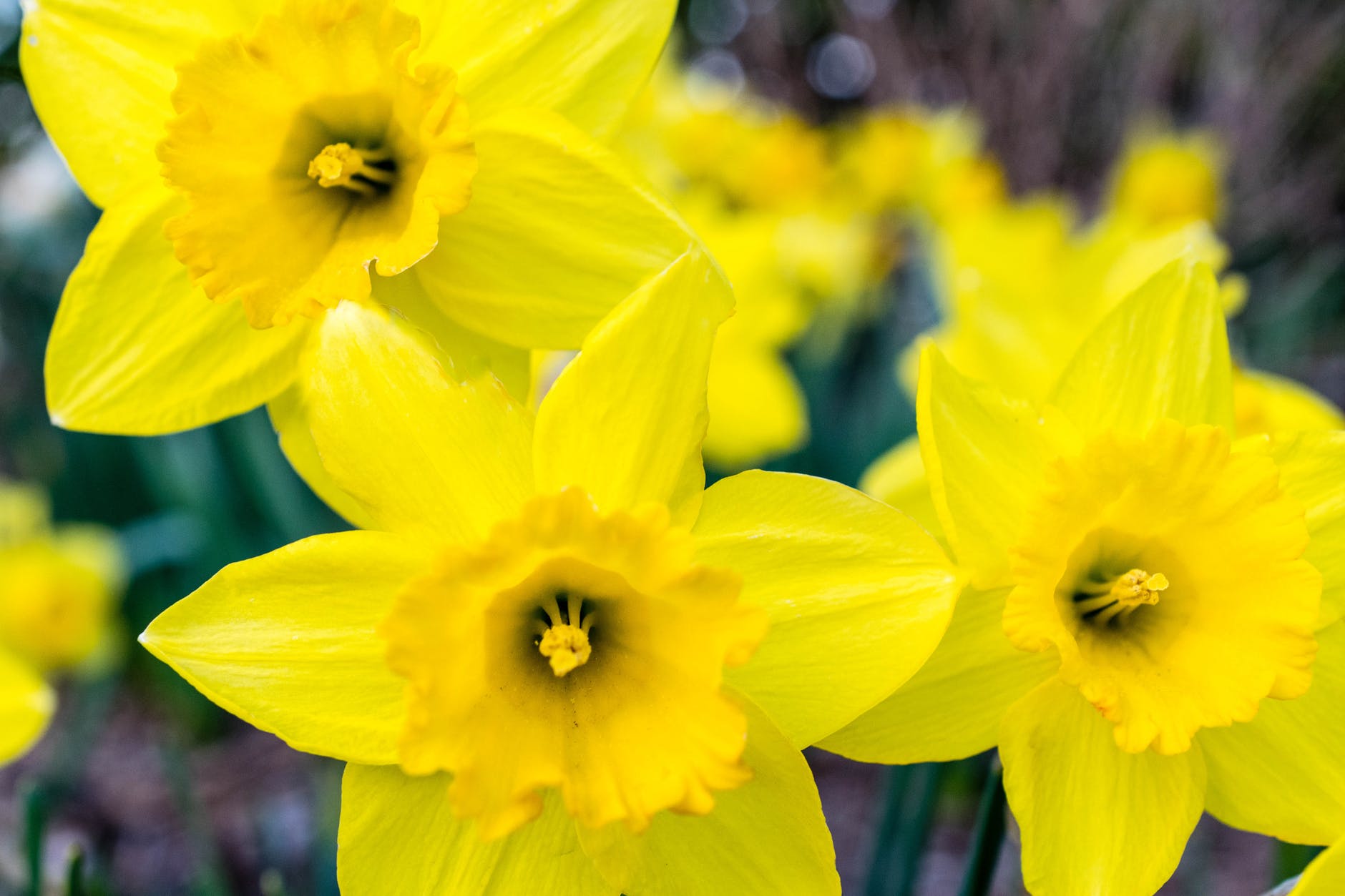
And yet, I have seen crocuses burst through two inches of snow; buds that defy harsh weather and cruel winds.  I have seen daffodils blooming where there once was a house and a yard, but now there are only brambles and foundation stones.  I have seen trees twisted and split by long-ago storms– one side dead and rotting, but with buds and new branches on the other side.

crocus-flower-spring-purple-60120.jpegpexels-photo-1031413.jpeg

It is easy to bloom when you are in a lovely flower bed, with tilled earth, fertilizer, gentle rains, just the right amount of sun, and protection from the winds and pests and birds.  But it is more spectacular to bloom in the desert; to defy the odds and stand in stark contrast to brambles, a broken-up sidewalk, or a litter-filled back alley; to bloom in the snow and sleet or weather a flood or a tornado.

pexels-photo-1035739.jpeg


Not always so with prayer.  Sometimes, it is easier to pray when we feel our own needs and shortcomings; when we are driven by our circumstances to call out for help.  When all is well, we may be grateful, but we may also begin to slack off.  We stop asking for wisdom and guidance, coasting in the beauty and ease of a good life, and forgetting that the beauty and the ease– indeed the life itself– is not our right, but a gift.  Amid so many other beautiful prayers, ours seem drab and ordinary, almost unworthy of God’s notice.

But God DOES notice– he has placed each of us where he wants us to bloom and grow– to pray, to fellowship, to walk with other believers and give off the fragrance of His grace as we live our lives in obedience to Him.  Have you been planted in an apartment complex?  Have you been planted as a suddenly single parent of three kids?  Have you been planted on a campus?  In a group of friends that all have Harleys?  Or one block from a rescue mission or homeless shelter?  A classroom full of high-energy first-graders?  A community that has had a lot of crime and blight?

pexels-photo-991681.jpeg

God has not placed you in circumstances to reward or punish you, but to grow you in the soil that can produce the best harvest.  Is your prayer list filled with needy people who live in turmoil and rebellion?  Bloom where you are planted– you may be the only person praying for your cantankerous neighbor– the only raindrop or fertile soil s/he will ever encounter.  Has God placed you in a family of people who taunt you for your faith?  Bloom where you are planted– pray for strength to stand firm in the beauty of meekness and compassion in the face of their taunts and disdain.  Are you in a greenhouse full of self-righteous orchids making you feel dowdy and wilted by comparison?  Bloom where you are planted– pray for God’s eyes to see the beauty in yourself, as well as those around you, and stop trying to be an orchid where God needs a lily.

Has God planted you in trying circumstances?  Bloom where you are planted– pray for God’s Peace as you face each day:

Matthew 6:25-34 English Standard Version (ESV)

Do Not Be Anxious

25 “Therefore I tell you, do not be anxious about your life, what you will eat or what you will drink, nor about your body, what you will put on. Is not life more than food, and the body more than clothing? 26 Look at the birds of the air: they neither sow nor reap nor gather into barns, and yet your heavenly Father feeds them. Are you not of more value than they?27 And which of you by being anxious can add a single hour to his span of life?[a] 28 And why are you anxious about clothing? Consider the lilies of the field, how they grow: they neither toil nor spin, 29 yet I tell you, even Solomon in all his glory was not arrayed like one of these. * 30 But if God so clothes the grass of the field, which today is alive and tomorrow is thrown into the oven, will he not much more clothe you, O you of little faith? 31 Therefore do not be anxious, saying, ‘What shall we eat?’ or ‘What shall we drink?’ or ‘What shall we wear?’ 32 For the Gentiles seek after all these things, and your heavenly Father knows that you need them all. 33 But seek first the kingdom of God and his righteousness, and all these things will be added to you.*

34 “Therefore do not be anxious about tomorrow, for tomorrow will be anxious for itself. Sufficient for the day is its own trouble.

*Emphasis added

Can You Hear Me Now?

We experienced some storms last week, and while we didn’t have a lot of damage from the winds and rain, my husband and I lost our internet connection over the weekend.  No wireless internet meant no Facebook, no WordPress, no e-mail, and no cash register at our little shop downstairs.  We had to do every transaction by hand until we could rig up something so our smart phone could accept cards; no new chip cards, no Apple Pay or PayPal.  And while our phone could begin to accept limited credit payments, it could not provide any printed receipts, nor could it do double duty– we either had a phone or a point-of-sale device, but not both!

It was an inconvenience, but not a disaster.  I thought about thousands of people who are stuck in the aftermath of hurricanes, tornadoes, floods, earthquakes, and blizzards who have no electricity, no phone lines, no cell service, no roads, no water or sewer lines–cut off from common necessities and basic communication.  Suddenly, an emergency becomes even more tragic because of the isolation, and the inability to ask for help or to hear any message of hope.  (Of course, my husband would like me to put in a short plug here about the advantages of amateur radio– the radios can run on battery power and still connect over hundreds of miles!)

sound-speaker-radio-microphone.jpg

Isolation is an earthly concept.  God is eternally Triune.  He created us for relationship; from the very beginning, he declared that it is not good for “man” to be alone (Genesis 2:18)  God instituted marriage, and families, and communities so that we would stay connected, and he himself came to walk and talk with mankind in the Garden of Eden before the Fall.  It is mankind who hid from God and broke off communication– one of the effects of Sin is the desire to run away, to separate, to isolate and cut off relationships and break off contact.

That is one reason that prayer is so basic; so essential.  It is a lifeline to the one who loves us best, who knows what we need, and has the power to hear us, to help us, to lift us up wherever we may be, whatever our circumstances.

pexels-photo-787452.jpeg

But sometimes, even when we want to talk to God, it seems impossible to speak or feel like he hears us.  Sometimes, we are the ones who can’t come up with words, or can’t settle our minds to seek his face.  Sometimes, we pour out our hearts and wait in silence for an answer.   Why should it be that just when we need it most, prayer seems the hardest?

I wish I had a pithy, perfect answer.  I don’t know.  I have a few incomplete thoughts, though:

  • what comes easily has less value to us.  Cheap and pointless conversation doesn’t make us work hard, but it also leaves us empty and unsatisfied.  Crying out to God is hard–it humbles us, it strips us bare and uncovers all our pretenses and subterfuge.  The true depth of our need is ripped out of us like a tumor, and it hurts, but it is a healing hurt.  Waiting in silence can cause us to become restless and to doubt, but it also can cause us to listen more attentively– we strain to hear the answer; we stop the white noise of busyness and half-hearted hand-wringing, and listen with our whole being.  And the smallest whisper– that still, small voice– has the power of the first rain after a long drought.  We are revitalized and our strength renewed as never before.

pexels-photo-546657.jpeg

  • sometimes, though not always, we find prayer difficult because we have not really prayed for a long time (if ever)– we have developed a habit of saying words to the empty air and thinking that the words themselves hold some power of hope or magic or self-fulfilling prophecy.  When life’s realities cannot be wished away with simple words, we search for distractions, for other types of words, for other “realities”, when we should be searching for our maker and the lover of our souls.
  • sometimes, it is a matter of unacknowledged or unconfessed sin that keeps us from breaking through in prayer.  However, there are many people who will use this as a default position, and that, too, is wrong.  Jesus had such difficulty in praying at Gethsemane that he sweat drops of blood— NOT because of unconfessed sin, but because his heart was that overwhelmed.  Still, we should examine ourselves to see if we have started to move away from God– better to turn back than to go father afield.
  • sometimes, as with Christ in the Garden, our hearts are just overwhelmed in the moment– it’s hard to breathe!  It’s hard to go on; it’s hard to ask for help; it’s hard to keep the faith.  Just because it’s difficult, don’t give up– even if all you can do is groan or whimper–even if it feels like God has closed up the heavens and left you alone–don’t give up.  God DOES hear, he DOES care.  Sometimes, we are inches from victory– don’t give up!

And what can we do during those times?  Again, I wish I had better answers, but what I have, I want to share– some from my own experience, some wisdom from others, some of both:

  • Learn to “pray outside the box”–
    • Sing–sing the blues, sing an old hymn, sing along with the radio, sing like nobody else is listening
    • Write it out– write a letter, write an angry letter if you have to– write a rant, write a poem, write out all your questions
    • Move– dance, pace, run, punch a pillow, do some sit-ups, mop the floor, scrub the sink– as you get a rhythm going, add your thoughts or questions to your movements
    • Cry it out– it’s ok to cry, moan, sob, weep, or just stare into space and rock yourself to sleep after all the tears have dried up.  Jesus wept (John 11:35)– what makes us think that we can’t?

landscape-nature-man-person.jpgpexels-photo-256658.jpeg

  • Count your blessings
    • Make a list of what you have; what you have to be grateful for; what you have experienced and enjoyed now or in the past
    • Make a list of your questions, concerns, needs, wants, wishes–Now think back ten years and make a list of what you wanted then, and how many of those concerns have been answered, altered, or forgotten.
    • Put yourself in another time or place– what do you have here and now that others lack?  How do your present troubles compare to what others have had to deal with?
  • Ramp up your pursuit of God in other areas–
    • Search for answers in His word
    • Seek the companionship of someone you trust who will help you keep on going
    • Seek out counselors, web sites, and/or a church group or family who can keep you from becoming isolated

pexels-photo-935944.jpeg


The single most important thing is to continue the pursuit– seek God with all your heart–and you will find him sufficient through the silent times, as well as through the roaring of the fiercest storms.


What Did You Say?

Every once in a while, I like to check an app that counts the words I use on Facebook.  The end result is a cloud full of words that people see when they read my posts.  (You can see my most recent one above.)

Sometimes, I like the cloud– I love to see it filled with words like Love, People, God, Prayer, Joy, Peace, Thankful, etc.  I’d like to think that this is how I always look and sound.  Of course it isn’t.  I don’t always speak encouragement and love on people.  Sometimes, I complain and rehearse negative self-talk, or I explode and rant about bad drivers, rude customers, constant bills, and more.  Checking on my word count may not keep me from using negative words altogether, but it does show me patterns I may not be seeing or hearing on my own or from my friends.

pexels-photo-211816.jpeg

My prayer life acts in this same way–especially as I journal about my prayers.  I can look back through my prayer journal, and see patterns in prayer requests, notes, and even answers to prayer.  Sometimes, I see patterns of struggle–desperation, need, frustration.  Sometimes, the pattern is steady; other times it is a roller coaster of ups and downs.

It’s important to spend a little time periodically getting feedback like this.  Why?  Because what we actually say (and pray) may be very different from what we think we have said.  Jesus was very careful about words:

Matthew 12:35-37 English Standard Version (ESV)

35 The good person out of his good treasure brings forth good, and the evil person out of his evil treasure brings forth evil. 36 I tell you, on the day of judgment people will give account for every careless word they speak, 37 for by your words you will be justified, and by your words you will be condemned.”

Mark 10:17-18 English Standard Version (ESV)

17 And as he was setting out on his journey, a man ran up and knelt before him and asked him, “Good Teacher, what must I do to inherit eternal life?” 18 And Jesus said to him, “Why do you call me good? No one is good except God alone.

Paul is also careful to distinguish between words:

Romans 5:7-8 English Standard Version (ESV)

For one will scarcely die for a righteous person—though perhaps for a good person one would dare even to die— but God shows his love for us in that while we were still sinners, Christ died for us.

I include the last two examples because they both refer to “Good” people.  I want people to see God’s goodness in me.  But idle or careless words and habits can show up in my thought life, my prayer life, my on-line life, and my face-to-face conversations.  In attempting to show how “good” I am (self-righteousness), or how clever I am (even at someone else’s expense), or how__________________________________ (daring, popular, hard-working…you get the idea) I am, it compromises all that I want my life to say about God, and all that He is waiting to say through me.

cheaptalk

Words matter– whether in praying or blogging or commenting on someone else’s post.  I pray that I am making mine count!

Great Expectations

Earlier this week, the Duke and Duchess of Cambridge (otherwise known as Prince William  and Kate Middleton), welcomed their third child.  As with most royal births, there was a lot of fanfare and speculation well in advance of the actual delivery.  Early tabloid reports hinted at twins; bookmakers were figuring odds for delivery dates, names– even what the Duchess would be wearing as she brought the newborn outside for his first “sighting”.  As of the writing of this blog, the name has yet to be announced, which is cause for more speculation and anticipation.

pexels-photo-50632.jpeg

Preparing for a newborn is exciting, and filled with certain expectations.   We imagine what the baby will look like, what kind of personality s/he will have, all the wonderful discoveries to be made. But we need to be careful not to let our expectations become idols.  There’s nothing wrong with hoping for good outcomes, but it can be dangerous to get locked into a particular expected outcome.  Children surprise us (in good ways and other ways) be being themselves, and not who or what we expect them to be.

pexels-photo-185934.jpeg

When we pray, we sometimes come with certain expectations–that God will answer in a certain way or on a certain timeline.  This is not the same as having faith.  Faith says that God will hear our prayer; that he knows best, and that he will act in accordance with his own love and mercy.  It doesn’t mean that he will give us what we want when we want it, or that he will give us what makes us comfortable and happy.  His answers may seem difficult or even painful to accept– certainly not what we were expecting.  When he chooses to answer in ways that don’t meet our expectations, we wonder why.  When he chooses to say “wait,” or even, “no,” we may feel cheated and even resentful, instead of thankful that our prayers are heard by a loving God.  Often, we have built up such expectations of what “the best” should look like that we miss the real miracle God is giving us instead.

pexels-photo-236287.jpeg

Worse, there are times when our expectations reveal a lack of faith or a lack of understanding of God’s ways.  We pray for peace, but what we really want is ease and comfort.  Peace– real peace– is often revealed in times of stress, hardship and loss!  We don’t want stress; we don’t pray for stress, but stress and hardship are going to come into our lives at some point.  Praying for peace won’t bring stress, any more than not praying will keep it away!  We expect the peace to come without the battle; we expect the growth to come without the growth pains; we expect to win the race without having to run!

Sometimes we won’t even pray for what we really want or need because we expect that God will “test” us or give us difficult circumstances if we ask for certain things (like patience or peace).  We see God as some sort of cosmic con artist, who teases us with the promise of good things, only to laugh as we suffer.  But this is a wrong view of God.  God doesn’t play games or “trick” us by giving us hardship when we ask for healing, though it may feel like it at the time. Suffering and hardship are not the gifts of God– his amazing gift is the ability to redeem even the worst of circumstances and bring joy and rest and peace that passes any expectation, any dread, or any understanding we have.  Often, our very desire for extra patience, peace, and joy are opportunities for us to learn more about God’s grace–and more about ourselves.

Life seldom meets our expectations–God is waiting to exceed even our wildest dreams!  Don’t just pray expecting something good might happen.  Pray expecting God to SHOW UP!


Looking Back

In my pursuit of prayer, I have found it helpful to keep a Prayer Journal.  One of the reasons is that I can look back and see what prayer concerns and issues I prayed for weeks, months, or even years ago.  I also save space in my journal to go back and fill in how God answered those requests, or what the progress has been in those areas of concern.  see also: Proactive Prayer Points

pexels-photo-273011.jpeg

The Bible warns us to be very careful about looking back…the most famous example is the tragedy of Lot’s wife (Genesis 19).  In looking back, she lost her chance to rebuild a life after the destruction of Sodom and Gomorrah, and was turned into a pillar of salt.  In the book of Exodus, the newly freed Israelites grumbled about their circumstances and looked back with fondness on their lives in Egypt, forgetting their oppression in their homesickness for certain foods (Exodus 16).  Spending too much time and energy on the past leaves us with little motivation and energy for the present or future.  The past should never become more important to us than moving forward.  If we long for the past, if we romanticize it or cling to it, fearing the changes and opportunities to come, we can stagnate, and miss the blessings playing out right before our eyes.

But we should take some time periodically to look back in order to gain perspective.  The same Children of Israel who grumbled about leaving Egypt, once they arrived in the Promised Land, were commanded to remember their wandering in the wilderness, and told to teach their children about the past (Deuteronomy 8).  Holidays and religious rites were instituted as reminders of the past.  But this kind of looking back gives us renewed encouragement, incentive, and momentum to keep going by showing us how far we’ve come, and reminding us of God’s faithfulness.


pexels-photo-191842.jpeg

I am especially encouraged when I see how God has answered prayer–so often, I’ve forgotten about trials and struggles that have come my way–issues that seemed huge in the moment, but in hindsight look insignificant.  Sometimes, God’s answers were immediate and breath-taking.  Sometimes, they were subtle and were revealed in several stages.  Sometimes, the answers revealed how God was working beyond anything I imagined!  Often, the requests reveal how I have grown (or not!) to trust him more or to listen better to those around me.

And, just like that, I have material to add to today’s prayers– gratitude for prayers answered, hope for new growth, praise for God’s faithfulness, and confession for times I have doubted or looked back in envy or regret.

pexels-photo-1007977.jpeg

Trust and Obey

It’s a song I sang as a child in Sunday School–

Trust and obey,
For there’s no other way
To be happy in Jesus,
But to trust and obey.

It bothered me as a child, the part about “No other way.”  It seemed narrow-minded and harsh.  Surely, I could be happy in Jesus just doing my own good things and singing his praises.  Besides, I did trust him, I followed the Ten Commandments, and the Golden Rule, and I was a nice person.  So why did I feel that I was missing something?

In all the years I’ve been a follower of Christ, I have learned the importance of trust and obedience.  I can’t truly follow someone I don’t trust.  I can learn from them, admire them, even try to act like them, but eventually, I will try to take the lead, or let go and walk down a different path.  Similarly, I can’t say that I trust someone if I won’t obey them.  If they ask me to do something, and I ignore their request, or re-interpret it, or come up with excuses why I won’t do it, it really boils down to one thing: I don’t trust that their request has any merit.

In a broken world, filled with sin and pride and selfishness, there are many reasons NOT to trust or obey certain people.  Abusers, users, sadists and sociopaths abound.  Such people may suggest that there is “no other way to be happy..” than to trust them and obey them implicitly.  So when God asks us to put our trust in an invisible Godhead, it seems terrible, final, and harsh.  Is God demanding abject humiliation and mindless adherence to his law?  Will we lose ourselves in drudgery and joyless obedience to a harsh taskmaster on the whimsical hope of a happy afterlife?

That is a view that is often peddled, and ridiculed.  But I think a closer look at the Bible gives us a different picture.  Yes, God is harsh and wrathful against sin and sinners–but so am I!   I find myself getting furious over injustices and pain caused by sin in the world–I can only imagine how angry God must be to see the way we lie and cheat and abuse each other, and the untold painful consequences he has witnessed through the years.  The only thing holding him back is the power of his Mercy.  His anger is swallowed up in patient and unfathomable love that is ready to forgive even the worst offenders.   And God’s wrath is pure, unlike mine, which is selective against those who have hurt me, but wants to smooth over my own sins.  His love is even more pure– he loves even the worst sinner, and even the most unloveable people (in my flawed estimation).  He is unwilling that ANYONE stay lost and enslaved by their sinful past.

Think about it– Jesus, who knew God best (being part of the Godhead himself) never painted his Father as a brute who demanded people to become “useful idiots” just to stroke his ego.  He didn’t talk about a harsh and unforgiving God who “hated” sinners.  Instead, Jesus healed the sick, raised the dead, gave sight to the blind, and spoke to sinners and outcasts as though they were more important than the religious elite…because that was his heart!  But more than that, Jesus showed us what it meant to “Trust and Obey”–he didn’t seek fame or fortune for himself, he never owned a home, or sought public office, and he never ran arouns worrying and fretting that God would leave him in the lurch.  Even under the worst circumstances leading up to his arrest and crucifixion, Jesus only spent one hour worrying about what was to come, and in that hour of prayer, he found the peace and strength to say, “not my will, but yours be done (Luke 22:42).  In his ministry, he humbly walked the byways and taught those who willingly followed him.  He healed and encouraged and saved those who came to him; those who trusted him as he trusted his Father.  He did not pat on the back those who claimed to follow his Father, but wouldn’t trust him.  Nor did he reward those who claimed to obey God, but hated their neighbors, justified their own self-righteousness, and changed God’s laws to feather their own lifestyles.

Does “Trust and Obey” mean that we might lose our status, our wealth, our comfort, and our lives?  Not necessarily, but there is no promise that we will be richer, or healthier, or more popular for following Jesus.  He didn’t come to make us comfortable or “better than” someone else.  In fact, he warned us that while we are in this world, we will have troubles and sorrows (with or without our faith!)  So how can we be “happy in Jesus” if we end up homeless, hated, or sick?  How can we talk about being happy in Jesus under awful circumstances?  Is this just some brainwashing tactic to make us forget how miserable we are?  What’s the “payoff” of Trust and Obey?

The answer involves a choice–Do I trust Jesus when he says that he came to give us, not just life, not even just eternal life, but abundant life?  If Jesus isn’t trustworthy; if I am not sure that he can or will make my life MORE than I ever dreamed, MORE than I imagine–even in the midst of otherwise difficult circumstances–then I will never be happy in Jesus.  But if I DO trust Jesus, then I can be happy, not because of my circumstances, but because I can trust all that he says about them, and that his grace is more than sufficient to see me through.  And I know that whatever trials I may be going through can be turned to good because I trust his power and his goodness.

And true obedience can only follow true trust.  If I say that God’s rules aren’t important, or don’t apply to me, then I’m really saying I don’t trust him to know what’s best, or that I don’t trust that He is really Good.  The temporary happiness that comes from following my way (even if I think I’m doing it for the right reasons) will give way to resentment against God.  How dare he stop me from that one thing that brings me joy– how dare he question my “needs” or call my actions “wrong”.  How dare he suggest that His way could be better or more abundant than what I know–even if I suspect that what I know and experience isn’t always the best it could be.

pexels-photo-994316.jpeg


No– the longer I follow Jesus, the more that old song rings true, and not harsh or condemning, but full of wisdom and promise.  It is with the faith of a child (not stupid or simplistic, but hopeful and eager), and humble (not abject or reluctant) obedience that we find happiness in Jesus, peace for our souls, and strength to face the trying circumstances of this life.

pexels-photo.jpg

Blog at WordPress.com.

Up ↑