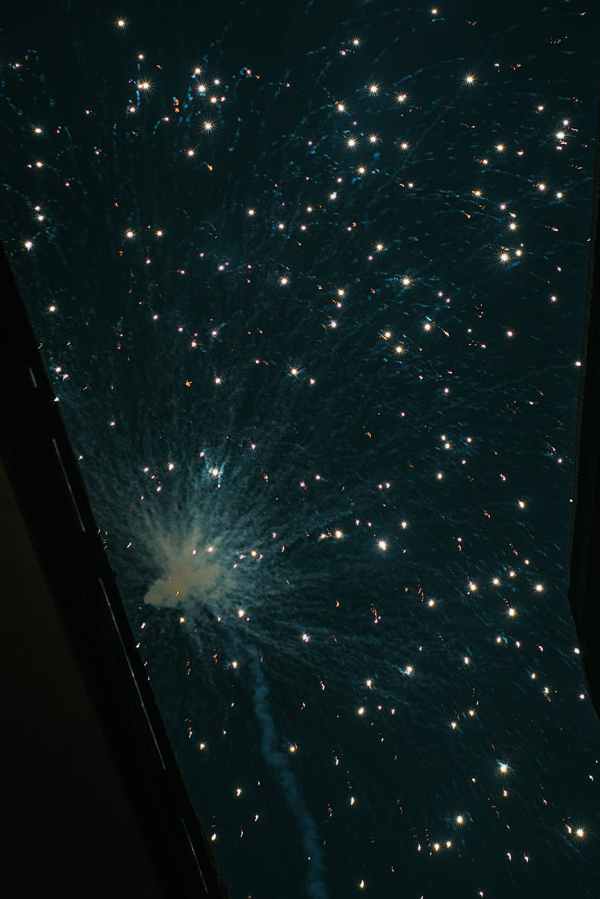
Epiphany!

I’m late writing this post today. The new year is unfolding faster than I had planned, and I come to this day unprepared.

But that’s kind of the idea behind Epiphany. We focus so much on preparation during the Advent and Christmas season that the season which follows can be lost in the shuffle of “getting back to normal.” Even at the historical birth of Christ, there was a real focus on everyone “getting back to normal” after the hustle and bustle of the census and the travel-weariness it generated. Very few people were focused on “Christmas” because Jesus was still considered one small child in a land of thousands of others. There were no Christmas traditions, no trees to un-decorate, no gift wrapping to put away for next year, no leftover cookies to finish eating. And then, twelve days after the glorious events of Christmas Eve and Christmas Day we celebrate Epiphany.

Also known as Kings’ Day, or Twelfth Night, this is the date we celebrate the arrival of the Magi (Kings or Wise Men) who traveled to Bethlehem to see the newborn King of the Jews. They did not arrive at the same time as the shepherds, and the account in Matthew has them visiting Mary, Joseph, and the Baby in a house. We must assume that Joseph found better accommodations for his family as the rush of census-taking waned, and yet he wanted somewhere safe to stay while the baby was still so small. The Magi came unannounced, unexpected, and “late” in the story.

The word “Epiphany” means a revelation or manifestation of something supernatural. The shepherds had gone through an epiphany when the angels appeared to them in the fields and told them to go to the manger on Christmas Eve. But the Magi, who had been following the star for months, finally had their Epiphany upon seeing the young child several days or even weeks after His birth. We don’t know that it was actually on the twelfth day after Jesus’ birth, but at some point, the Magi arrived at their destination and saw God in the Flesh! And their lives would never “get back to normal!” And their visit was a revelation to Mary and Joseph as well. The Kings brought expensive gifts of Gold, Frankincense, and Myrrh. They also brought the revelation they had received about the threat of Herod and the need to leave Bethlehem. If Mary and Joseph thought the worst was over, they were shocked into action by the warning of the Magi.

And yet, we celebrate this moment in time, this further revelation that a tiny baby was going to change everything. This knowledge that the Wise Men of Old held, and we can hold today– an encounter with Jesus is a revelation of the supernatural–this baby is GOD in the FLESH, GOD with US, GOD living AMONG us, GOD dying FOR us, GOD who will RETURN to REIGN over us. Nothing will ever be “normal” after such an encounter!

And I hope that can be said for all who read this– that we have encountered the Messiah; the Holy Son of God and Son of Man–and we have been forever changed! There is no end to the season of wonder and delight; there is no need for bright lights and tinsel-topped greenery, and no need to put away the joyful trappings of what His arrival really means.

Epiphany should “sneak up” on us– any day, anywhere–it should amaze us and surprise us with Holy wonder as we encounter the reality of “Emmanuel–God with Us!” And it should cause us to respond with prayers. Not only joyful prayers and prayers of thanksgiving, but prayers in our weariness, prayers in our anticipation of days to come and trials to face. Just like the Wise Men, we may have a long and even difficult journey in 2025. But at the end of it we will encounter God– not as a sweet baby in the manger but as our Lord, as well as our constant companion, our champion, and our heart’s desire!

Come To Bethlehem

“O come, all ye faithful, joyful and triumphant,
O come ye, O come ye to Bethlehem!”

“Come to Bethlehem and see
Him whose birth the angels sing;
come, adore on bended knee
Christ the Lord, the new-born King.”

“O little town of Bethlehem,
how still we see thee lie!
Above thy deep and dreamless sleep
the silent stars go by.
Yet in thy dark streets shineth
the everlasting light;
the hopes and fears of all the years
are met in thee tonight.”

“Come!” It echoes in our Christmas Carols; it echoes throughout Jesus’ ministry. It thrums and courses through the prophets and into the Revelations, “Amen, Come Lord Jesus!”(Revelation 22:20)

Christmas is all about coming– the coming of the Christ Child; the coming of the angels to shepherds; the coming of the shepherds to see the newborn King; the coming of the Wise Men. And we are bidden to “come” to Bethlehem and share in the joy and wonder of God coming to be our Emmanuel– God With Us.

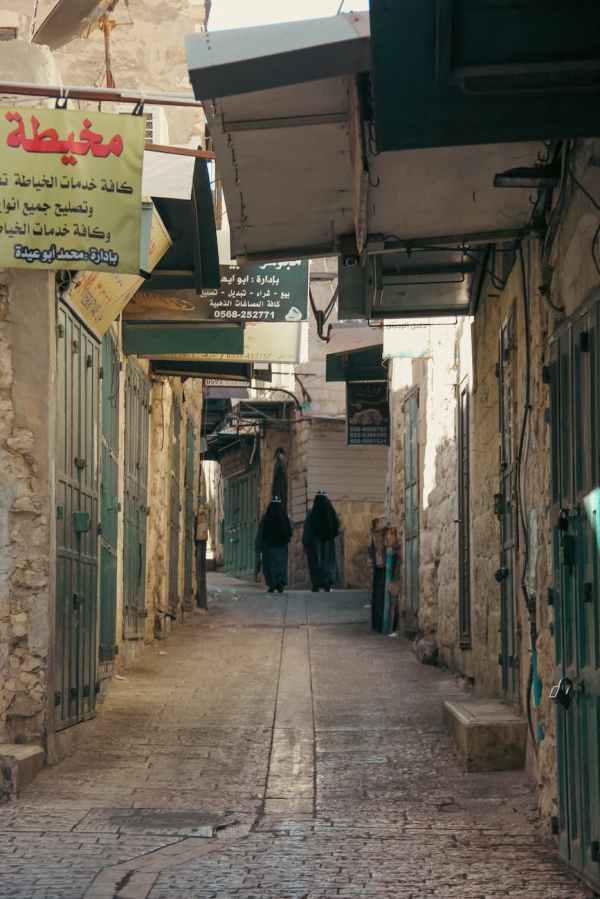
But the journey to Bethlehem is not as easy or a joyful as one might imagine. Bethlehem is crowded. It is dark and dreary. It is not “silent” as the hymns make out. It is noisy, dirty, and filled with people who “aren’t from around here.” There is no room here. There is no joyous welcome. There is not enough to eat, what with all the out-of-town travelers; shelves are bare, while garbage is piling up in the streets. Tempers are high, and patience is low.

“Come to Bethlehem.” At this moment, Bethlehem is caught in the chaos and struggle of war. Hospitals are in danger. People live in fear and violence. There is no peace and quiet– no silent streets or glorious angels in the sky– only the light and noise of rockets. We may not be able to physically travel to Bethlehem at the moment, but we can focus our prayers on the Middle East– to the hurting people in Israel and in Gaza– to earnestly pray for truth and peace there. We may not be able to travel back in time to Bethlehem, but we can travel across town to help our neighbors who need encouragement; we can step out of our safe and comfortable lives to share light in the dark regions of today’s world. And we can “Come” to prayer– to lift up those who are hurting, to ask for strength and courage to help, to own our own limitations and emptiness.

“Come to Bethlehem.” At this season, we are tempted to stay where it is cozy and familiar; or to travel somewhere warm and welcoming. We want the joy and peace of the Christmas Season to come to us! But we are bidden to come to Bethlehem, with its crowded streets and suspicious strangers; its unfamiliar alleys and rude Roman officials. We are bidden to come and share this message of peace where there IS no peace. We are asked to come where there is need and darkness and fear– to spread the Good News, not to sit on it.

“Come to Bethlehem.” Are we avoiding our own “Bethlehem?” Are there places we could visit to spread light; places we’re being called to, or places where we should go to “be counted,” but we refuse to come? Are there people we can encourage? Ways we can share hope and help– if we are willing to come away from our own comfort and (manufactured) joy?

Perhaps we long to hear the angels shouting “Glory to God in the Highest!” (Luke 2:14) But if we won’t “come” to Bethlehem, we may miss their song. We may miss seeing the message of Christmas if we insist that it comes to our pleasant palace, instead of seeking the Babe in the Manger of the Little Town of Bethlehem.

“Come to Bethlehem and See.” “Come, Let us Adore Him!” “Come!”

Christmas Wish Lists

When I was a child, we used to write letters to “Santa” with a list of what we wanted to find under the Christmas Tree that year. Sometimes this was a school project– practice in letter-writing etiquette, etc.– and sometimes, it was done spontaneously after poring through the Sears “Wish Book” Christmas catalog, or after watching Saturday morning cartoons with their endless ads for toys, dolls, bikes, and sugary cereals.

As adults, we often do something similar, drafting a Christmas “wish list” in our prayers and Advent dreams. Our adult lists may be as shallow as those of childhood–a new dishwasher, or a shiny piece of jewelry; a new “toy” boat for Dad, etc. Sometimes, they sound more virtuous– world peace, a healthy economy, a cure for cancer…

Photo by Ivan Samkov on Pexels.com

It isn’t “wrong” to have wishes at any time of year. And we should hope for better things in the world around us. But we can get caught up in the idea of Christmas being all about wishes and desires at the expense of the real GIFT of Christmas– Christ Himself! In fact, we can become numb to the fact that Jesus wasn’t just “another” Christmas gift among our “wish list” items.

Photo by Irina Iriser on Pexels.com

The true light that gives light to everyone was coming into the world. 10 He was in the world, and though the world was made through him, the world did not recognize him. 11 He came to that which was his own, but his own did not receive him. 12 Yet to all who did receive him, to those who believed in his name, he gave the right to become children of God— 13 children born not of natural descent, nor of human decision or a husband’s will, but born of God.14 The Word became flesh and made his dwelling among us. We have seen his glory, the glory of the one and only Son, who came from the Father, full of grace and truth.

John 1: 9-14 (NIV)

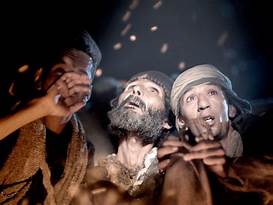
Christ didn’t come that first Christmas in response to any person’s wish list. In fact, the Bible says that when Jesus came into the very world He created, He was rejected, ignored, even despised by those who should have recognized and welcomed Him. He didn’t come wrapped in shiny paper and waiting for us to enjoy Him. He came wrapped in rags, forced to go into exile under threat of death, and honored only by humble shepherds and strangers from foreign lands. No one sought Him out on their own. Even the shepherds and wise men were led by angels and a guiding star.

This year, instead of concentrating on wish lists and our desires (even noble ones!), let’s reflect on God’s wish list– that we would turn from sin and rebellion, and be reconciled to Him; that we would make His gift our greatest desire!

Photo by Pavel Danilyuk on Pexels.com

Star of Wonder…


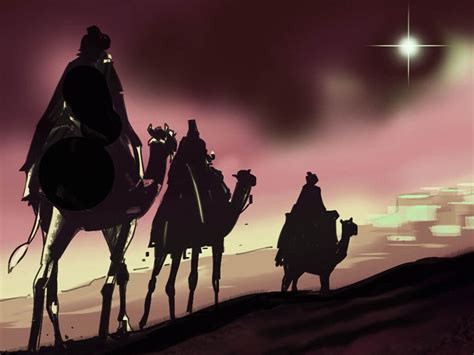
We three kings of Orient are;
Bearing gifts we traverse afar,
Field and fountain, moor and mountain,
Following yonder star.Refrain:
O star of wonder, star of night,
Star with royal beauty bright,
Westward leading, still proceeding,
Guide us to thy perfect light.
Born a King on Bethlehem’s plain
Gold I bring to crown Him again,
King forever, ceasing never,
Over us all to reign.
Frankincense to offer have I;
Incense owns a Deity nigh;
Prayer and praising, voices raising,
Worshiping God on high.
Myrrh is mine, its bitter perfume
Breathes a life of gathering gloom;
Sorr’wing, sighing, bleeding, dying,
Sealed in the stone cold tomb.
Glorious now behold Him arise;
King and God and sacrifice;
Alleluia, Alleluia,
Sounds through the earth and skies.

John H, Hopkins, Jr.
Photo by Jonathan Meyer on Pexels.com


The Visit of the Wise Men
Now after Jesus was born in Bethlehem of Judea in the days of Herod the king, wise men came from the east to Jerusalem, saying, “Where is He who was born King of the Jews? For we have seen His star in the east and have come to worship Him.”
When Herod the king heard these things, he was troubled, and all Jerusalem with him. And when he had gathered all the chief priests and scribes of the people together, he inquired of them where Christ should be born. They told him, “In Bethlehem of Judea, for this is what the prophet wrote:
‘And you, Bethlehem, in the land of Judah,
    are no longer least among the princes of Judah;
for out of you shall come a Governor,
    who will shepherd My people Israel.’[a
Then Herod, when he had privately called the wise men, carefully inquired of them what time the star appeared. And he sent them to Bethlehem and said, “Go and search diligently for the young Child, and when you have found Him, bring me word again, so that I may come and worship Him also.”
When they heard the king, they departed. And the star which they saw in the east went before them until it came and stood over where the young Child was. 10 When they saw the star, they rejoiced with great excitement. 11 And when they came into the house, they saw the young Child with Mary, His mother, and fell down and worshipped Him. And when they had opened their treasures, they presented gifts to Him: gold, frankincense, and myrrh. 12 But being warned in a dream that they should not return to Herod, they returned to their own country by another route.

Matthew 2:1-12 (MEV)

Yesterday, I revisited the account of the shepherds; today, I’d like to take a closer look at the wise men from the East.  First, a bit of clarification:

  • They are (most likely) NOT three kings– at least not in the literal account given in Matthew.  (See more about the number and possible names  and places of origin of the wise men in various traditions here:  https://en.wikipedia.org/wiki/Biblical_Magi)
  • They did not arrive alongside the shepherds on the night of Christ’s birth.  Again, tradition says they may have arrived as early as twelve days after his birth, or up to two years later.  Matthew’s account is very vague.  It quotes the prophesy about Bethlehem, but does not say that this is where the wise men actually found the child (notice that Matthew does not call him and infant or babe).  Their arrival in Jerusalem to make inquiries suggests that some time had elapsed, and the travelers were expecting to find ready knowledge of the birth (or perhaps the child himself) in the capital city.
  • They came “from the East”– which leads me to ask: Why were there no wise men in Judea studying this star and its significance?  These wise men had traveled for weeks or months, bringing gifts. They were  ready to honor a king they knew only from a few prophecies and their study of the night sky. Matthew’s account tells of their arrival and their questions.  They came looking for “the king of the Jews”, suggesting that they were aware of some of the prophecies about Messiah, but they were unaware of Micah’s prophecy concerning his birth in Bethlehem.  Yet the scholars and wise men of Jerusalem were “disturbed” rather than elated or excited by these revelations.   God had not spoken through the prophets of Israel for over 400 years, but He had not forgotten His promises, nor had He abandoned His people.  They, however, had lost their desire to study the prophecies; they had lost much of their hope and faith.  Not everyone had fallen into complacency– the book of Luke points out two specific people who eagerly awaited the coming of Messiah (See Luke 2:21-40).
Photo by Marta Branco on Pexels.com

But it is not just the wise men that capture my attention…it is that miraculous “Star of Wonder.”

Scholars debate whether or not the “star of Bethlehem” was an actual star or another astronomical event.  See one good explanation here:   https://www.timesofisrael.com/can-astronomy-explain-the-biblical-star-of-bethlehem/

Photo by Snapwire on Pexels.com

I am not an astronomer, but everything about this story brings a sense of awe… If this was an actual star (either a new star or a star exploding into a supernova of intense bright light), its light would be traveling several millions of miles, even light years to be visible on Earth.  The star would have to have been burning several years before the birth it announced, and its light would have to reach the Earth in coordination with the events taking place across the vast emptiness of space.  If the “star” was actually a configuration of planets or another astronomical event, the same impeccable timing needed to be activated across the span of eons– just waiting for this exact moment for all the planets and other cosmic elements to align.  It is yet another incredible example of God’s sovereignty and omniscience that all of time, space, history, politics, and celestial objects came together to fulfill multiple prophecies given over multiple centuries and studied by people the world over.

Photo by Lennart kcotsttiw on Pexels.com

What can we learn from all this?  I pray that we would be open to the wonder and awe of every aspect of the Advent and Nativity.  I pray that we would seek as intently as these wise men of the East– that we would not be “disturbed” and taken aback when God fulfills His promises and sends signs and portents.  And I pray that we would shine in such a way as to draw people to the wonder of the Savior, even those from distant lands who have never heard the gospel.

Blog at WordPress.com.

Up ↑