Do You Hear What I Hear?

high angle view of train on railroad tracks

George: You know what the three most exciting sounds in the world are?
Billy: Uh-huh. Breakfast is served; lunch is served, dinner…
George: No, no, no, no! Anchor chains, plane motors, and train whistles.

James Stewart (as George Bailey) in “It’s a Wonderful Life”

I’ve mentioned before that I love the old movie, “It’s a Wonderful Life.”  In it, the protagonist, George Bailey, is in despair and considers taking his life.  As his family and friends pray, God responds by sending “an angel, second class” named Clarence, who shows George what life would be like if he had never been born (and how much impact his life has had on those around him).

ItsAWonderfulLife4

One of the key events in George’s life happens when he is 12 years old.  He dives into a freezing river to save his brother from drowning, but in the process, he loses the hearing in his left ear.  This hearing loss weaves its way through the rest of the movie.  As a young man, George designs an indoor swimming pool under the gym floor for his high school (the movie makes no direct link to the earlier event, but it might be presumed that his experience caused him to think of ways to keep active kids indoors during winter months…)  His bad ear (and his need to help his dad at the Bailey Building and Loan) keeps him from playing football in high school.  It later keeps him from fighting in the war but leaves him stuck at home coordinating scrap drives and air-raid drills–“safe” but less-than-honorable positions for a young man of his day.

There are many things George cannot hear, but three things he listens for– Anchor chains, plane motors, and train whistles!  George spends much of the first part of his life longing to leave Bedford Falls (his home town), to travel the globe.  While his friends travel to exotic places and build successful careers in big cities, George gets tangled up in financing small houses for ordinary people in his small town.  All around him are bitter reminders of the life he dreamed of leading.  His brother becomes a pilot– a fate denied to him.  His best friend makes a fortune selling plastic parts for fighter planes, and takes cruises and fancy vacations that George cannot afford.

jimmy_stewart_in_its_a_wonderful_life

There is a dramatic change, however, when Clarence turns George’s life upside-down.  One of the first things George notices after Clarence declares that George has gotten his wish (and never been born) is that the hearing has “returned” to his left ear.  He marvels at this simple but profound change, but attributes it to his recent encounter with more freezing cold river water.  Soon other changes capture George’s attention–his brother is dead because George wasn’t there to save him; his mother is destitute and care-worn because George wasn’t there to save the Building and Loan after his father’s death; none of the houses he helped finance were ever built, and dozens of families are living in squalor and being over-charged for rent by the evil Mr. Potter.  And the peaceful town of Bedford Falls has been transformed into a noisy hotbed of crime and filth, anger and greed.
Its-A-Wonderful-Lifeb

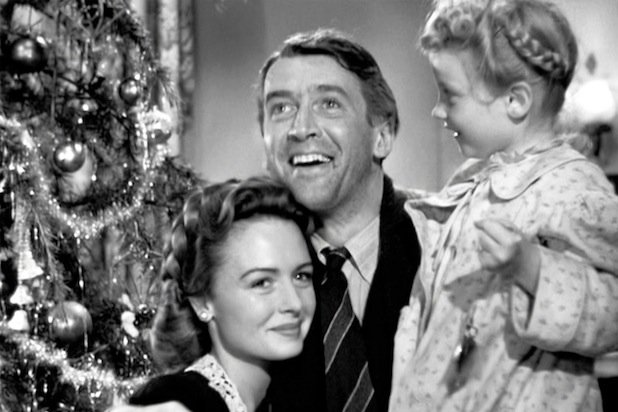
After George has a change of heart and is “returned” to his wonderful life, the hearing loss is back– this time, George laughs in gratitude as his “disability” confirms that all is back to normal.  He no longer listens for plane motors or trains whistles– instead, he eagerly listens for the sound of his kids as he returns home, and the breathless call of his wife as she returns home with help and hope in the form of neighbors and friends.  The sirens and screaming of his earlier nightmare are replaced with joyous music and laughter.

One of the last shots of the movie shows a tiny, tinkling bell on the Christmas Tree.  Zuzu says that her teacher has told the class that every time a bell rings, an angel gets his wings, and George, hearing the bell ring, simply says, “Atta boy, Clarence.”

pexels-photo-788567.jpeg

What are we listening for in life?  Are we consumed with the sounds of excitement and adventure?  Or are we listening for the important sounds of lonely people softly crying, children giggling, birds singing their morning worship song, or raindrops dancing on the sidewalk?  Are we listening for the Spirit’s whisper in the wind, or God’s voice in the thunder?  Exciting sounds can sometimes deafen us to important sounds.  God calls for us to “be still” and know that He is God (see Psalm 46:10)–what we hear in the stillness and silence is rest and peace for our souls.  And that is one of the best sounds of all!

Be Still and Know…

Psalm 46
For the director of music. Of the Sons of Korah. According to alamoth. A song.
God is our refuge and strength,
    an ever-present help in trouble.
Therefore we will not fear, though the earth give way
    and the mountains fall into the heart of the sea,
though its waters roar and foam
    and the mountains quake with their surging.
There is a river whose streams make glad the city of God,
    the holy place where the Most High dwells.
God is within her, she will not fall;
    God will help her at break of day.
Nations are in uproar, kingdoms fall;
    he lifts his voice, the earth melts.
The Lord Almighty is with us;
    the God of Jacob is our fortress.
Come and see what the Lord has done,
    the desolations he has brought on the earth.
He makes wars cease
    to the ends of the earth.
He breaks the bow and shatters the spear;
    he burns the shields with fire.
10 He says, “Be still, and know that I am God;
    I will be exalted among the nations,
    I will be exalted in the earth.”
11 The Lord Almighty is with us;
    the God of Jacob is our fortress.

When I am tempted to fret or worry, I like to read through Psalm 46. I love the way the psalmists use hyperbole to shrink fear and maximize faith– God is an “ever-present help”, we will not fear, “though the earth give way, and the mountains fall into the heart of the sea”, “He lifts his voice, the earth melts!” And I love that the phrase is repeated– “The Lord Almighty is with us; the God of Jacob is our fortress.”

There is so much to unpack in just 11 verses of psalm! But I want to stick to two that always stand out to me.

First, the phrase, “the God of Jacob.” God is the God of Abraham, Isaac, and Jacob. He is the God of Moses, the God of Israel, the God of David…His titles are many. But in this case, He is the God of Jacob. NOT the God of Israel– even though God changed His name. No, He is the God of Jacob– the “heel grabber,” the son who stole his brother’s blessing and tricked his brother out of his birthright– the same Jacob who fled his homeland and worked for twenty years for his duplicitous uncle Laban. This is not the God of the victorious, but the God of those who have had to learn the hard way. He is the God of the one who has acted unjustly, and the God of one who has been treated unjustly. He is the God of the one who wrestles and demands a blessing, the God of the second son, the disappointed husband, and the grieving father. THAT is the God who is with US when we are in trouble and feeling overwhelmed by our own past mistakes, or our own inadequacies, or our unfair circumstances.

Secondly, the phrase “be still and know that I am God.” This same God who wrestled with Jacob, who blessed him in dramatic fashion, was the God who was with him through all the long and lonely night watches as a shepherd. Jacob, with his two wives, their two servants, and all thirteen or more of his children (12 sons and at least one daughter, Dinah)–spent a lot of his time surrounded by noises, nagging, responsibilities, and discord. Yet he took time to ‘be still.” And, though it took many years, and often came “the hard way,” Jacob did learn to “know” his God. He learned to trust that God would protect him, guide him, and bless him– and the generations that would follow him!

I am so grateful for this Psalm to remind me of God’s everlasting presence, His power to save and protect, and His sufficiency for every circumstance in my life. I’m so glad that the “God of Jacob” is the same God who sees me, loves me, and rescues me. I’m humbled to know that I don’t have to be clever enough or brave enough, or “righteous” enough to earn God’s help. I’m glad that the Lord Almighty is always with me. (see Hebrews 13:5) However, I still struggle to “be still and know…” I want to know by doing; by studying and making things happen. But to know God– to really know Him– I have to be still, to wait in silence and anticipation, to trust in what I cannot see and cannot do in my own power. I have to know Him as the Almighty, Omnipotent, Sovereign God that He is, rather than a God of my own imagination or the God I hear about or read about from someone else.

What a mighty God! The God of Jacob is MY fortress! And in stillness, meditation, and trust, I can KNOW Him!

“Better-than” Prayers

I know a lot of “Prayer Warriors”– people who pray often, and fervently, and are known for their prayer habit. But I often hear a very disturbing statement in relation to such people. The thinking goes that if someone is a “Prayer Warrior” they get results. They have a direct line to Heaven– different and “better” than normal pray-ers. There are people who will hunt down a prayer warrior, believing that this action will be more effective than praying about an issue or problem themselves. Others try to emulate or copy the praying style of “prayer warriors,” thinking that the way someone words their prayers will make a difference in whether or not God will hear them. Still others will refuse to pray in public, because they say their prayers are not good enough. And this should not be!

We have a terrible tendency to compare. We compare our appearance, our social or economic status, our skills and abilities, and even our spirituality. “She’s so close to God!” “He knows the Bible so much better than I do!” And we think this determines whether or not God will listen to and act on our prayers. And Christians who could pray more often, more joyfully, and, yes, more effectively, simply give up on pursuing prayer, because they think others are so much “better” at it.

God is not a respecter of persons. His willingness to listen to our prayers does not depend on how many Bible verses we can quote or how many church services we attend each week, or how eloquently we can pray. God does not play favorites– He does not respond more quickly or more powerfully to some people because they call Him “Heavenly Father” instead of “Almighty God” or because they kneel instead of sitting, or because they are somehow “holier” than their neighbor.

God wants to hear from YOU. And yes, it can be a blessing and a comfort to know that others are praying for you or with you, but we should not measure our prayers against those of others around us. Especially if we allow ourselves to get discouraged in our pursuit of “better” prayer.

That said, there are a few things that can make our prayers “better”:

  • Be sincere– God doesn’t play games. He doesn’t respond to flattery, falsehoods, foolishness, or exaggerations. God already knows what you need, what you’re thinking, and who you are– who you REALLY are. Prayer that tries to cover up your real emotions or thoughts; prayer that tries to make you sound pious, needy, devout, etc., are not fooling anyone but you…
  • Be still–take time to get quiet before God– so that you can listen as well as speak! Meditate on WHO it is you are talking with, instead of just what you want to say.
  • Be submitted– Prayer is not about getting God to “deliver” on your wish list. Don’t just pretend to be pious, but determine that you will accept God’s perfect will and timing. And that you will accept God’s correction when you are having trouble accepting His will!
  • Be faithful–don’t give up. Pursuing Prayer means practicing prayer. You may find it gets easier to pray as you stumble through awkward prayers, instead of trying to be perfect out of the gate. Most “Prayer Warriors” started out the same way. Anyone–ANYONE–can be a prayer warrior!

Such “better” prayers will not impress God. God isn’t about being impressed. He IS about being personal, loving, wise, and sovereign. But such prayers will be “better than” those prayed in pride, or prayed inconsistently, or without fully acknowledging God’s character and authority.

My goal is not to be a “better” pray-er than someone else. I may never be acknowledged by others as a “Prayer Warrior.” But my goal is to be disciplined and trained in the pursuit of Prayer. Every day, we face spiritual warfare– in that sense we are all prayer “warriors.” And I may be a foot soldier in this war, but I want to be the best foot soldier I can be! I want to be “better than” I was yesterday, and even better tomorrow!

Let All Mortal Flesh Keep Silence

Christmas is a time of joy and light. But the time of Advent is often a time of somber reflection. We remember a time we have never known– a time before the coming of Christ the Messiah– a time before the mysteries of Heaven were revealed and before the victory of Salvation was accomplished. Advent reminds us of the spiritual darkness that existed before God, in human form, in humble obedience, and in sacrificial love, became the Light of the World, and the Hope of All Nations.

Before the bells rang, and the angels sang; before the kings brought gold and the shepherds ran to tell the news; before there were Christmas Carols, Christmas decorations, or Christmas pageants– there was solemn silence, fear, dread, and waiting. God had been silent. The prophets had been silent. The world had grown hard and cold.

Jesus stepped out of the unfathomable glory of the Highest Heaven– surrounded by armies of angels all worshiping Him and ready to do His bidding. In an instant, He became a helpless fetus inside a helpless young woman, a subject of the Roman Empire, and at the mercy of her culture. Her fiance could have repudiated her; her parents could have disowned her; her community could have had her stoned to death, along with her unborn child. No one, even those who were anticipating the arrival of a Christ, was expecting this tiny baby growing inside the womb to change the course of history.

He was born in obscurity, in ignominious squalor. He was the Lord of All Creation, wrapped in rags and laid in a feeding trough in an overcrowded city at tax time. There were no bells or carolers, no glittering trees or festivals of lights, no sounds of joy and celebration– not in that manger in Bethlehem. Instead, there were strangers pushing and shoving, shouting, and snoring in the inns and houses and streets, being watched by soldiers and pickpockets alike, as they made their way through narrow, unfamiliar streets and tried to lock out the worry and danger and dread. There may have been silence in the fields and valleys outside of town, but not near the stable where Jesus was born. No. The “silence” we sing about during Advent is the silence inside our own hearts– a call to “be still,” and know that this baby we celebrate is God Incarnate. He is the One to whom every knee will one day bow, and every tongue confess that He is LORD.

In the stillness and silence of Advent, in the darkness lit only by candles and faint hope, we being to understand the contrast. We re-imagine what came before the joy and hope and eternal clouds of witnesses shouting, “Holy, Holy, Holy!” We remember the days and years before the angels sang, and the star danced across the night sky– before the shocking crucifixion and the glorious resurrection of this still unborn Savior.

Let us spend these days of Advent preparing our hearts for the true wonder of Christmas. It doesn’t come in the wrapped packages under a festive tree, or in the feasting with friends or family. It doesn’t come with sirens and parades, or speakers at the mall blaring out favorite tunes. It doesn’t come in the majesty of a Cathedral ringing with the voices of a choir and organ. It comes when the silence and darkness of our sin and dread are pierced with the overwhelming glory of God With Us– Emmanuel is coming! But for now, for these moments, Let All Mortal Flesh Keep Silence.

When Half-Spent Was the Night

‘Tis the season for Christmas Music– hymns and carols, ancient songs and modern tunes celebrating the Advent and Birth of the Lord Jesus. Joyful, passionate, somber, or even a bit silly, such music can lighten our spirits, and remind us of the incredible gift of God– Emmanuel–His very presence among mankind.

Christmas lyrics often use wonderful imagery to retell this amazing story. The Bible accounts tell of shepherds, angels, wise men, and stars– the songs give us the immediacy of a dark night– “silent”, “still”, “earth as hard as iron; water like a stone”, “a midnight clear”, “half-spent was the night”…

Most of us live in a world that rarely gets so dark. If we live in a town or city, we are surrounded by street lights, security lights, even night-lights in the hallway. Even so, we have a feeling for how the midnight and early morning hours seem darker, colder, quieter, and more dreary than any other time. And there is a significance in remembering that Jesus came to earth in the midst of literal and metaphorical darkness, “when half-spent was the night.”

Photo by Alex Fu on Pexels.com

God is Omnipresent– it is not as though God leaves us when all is merry and bright– but His presence is often most keenly sought, and unexpectedly found, in darkness and distress. When all seems bleak, cold, and hopeless, Jesus comes silently, small and fragile as a baby, bringing light, hope, joy, and peace. He comes when the night is “half-spent”– when the darkness is deepest, the silence weighs heaviest, and the cold is most bitter; when hope and light seem lost.

Jesus’ Advent came after four hundred hears of silence. Prophets, such as Isaiah, Zechariah, and Micah, had spoken of Messiah rescuing Israel from captivity. But the years had passed, and Rome ruled the Jewish people with an iron fist. God had stayed silent, and hope seemed remote. Rome would continue to rule the world for another four hundred years. But when Messiah arrived, He didn’t come to break the power of Rome. He didn’t come at the end of that particular “night”; rather, He came when the night was “half-spent.” He came gently, quietly, and humbly. He came to deliver Israel from something much darker, colder, and deadlier than a foreign occupation. Jesus, through His life and death and resurrection, came to deliver Israel, and the rest of the world, from the power of sin and death.

All the promise of deliverance and salvation that came in the middle of that bleak night so long ago, remains for us to celebrate– even in the middle of our “half-spent” nights.

We may not see the dawn in the middle of our struggles. We may not hear the angels singing or feel the warmth of the new day coming. But because of this “Rose e’er Blooming”, we can rejoice. We can find hope and peace in the present night, knowing that Emmanuel is with us! Like a lamp in the night, He will stay with us as we travel through the present darkness. After all, “Thy WORD is a lamp unto my feet and a light unto my path.” (Psalm 119:105) Jesus is the Living Word of God, and thus, our living light!

Blog at WordPress.com.

Up ↑