Praying for the Paris Olympics

Let me just preface this by saying that I am not watching the Olympics coverage on television this year. That is not in protest of anything, nor does it reflect a keen disinterest in sports or in global events. My husband and I simply do not watch television. But I do spend time on the internet, and I follow news there. So it was with great sadness that I learned of the controversy about the opening night ceremonies and the tableau that seemed to mock “The Last Supper.” It has been with equal sadness that I have watched the angry and offended responses from Christians. I do not mean to say that the tableau was not offensive. I found it ugly. And I think it would have been both shocking and offensive to have seen it in the midst of all the other celebration.

Many of the organizers and presenters of the Opening Ceremonies have made public statements claiming that they either didn’t realize this would be offensive to many, or they didn’t mean it to be offensive. I find this difficult to believe. If the planners, organizers, participants, and crew had absolutely no idea that their tableau had any resemblance to “The Last Supper,” they I would suggest that they are woefully ignorant of European Art and Culture, or they are perhaps unaware of the number of Christians around the world. Yet some of them claim that ignorance/intolerance belong only to those who found their display offensive. They say that their only objective was to pay tribute to the ancient gods of Olympus, for whom the Olympic games are named. They claim that any resemblance to DaVinci’s mural of “The Last Supper,” or any allusion to Christianity were unintended. But they appear to be quite pleased with the furor and controversy.
While I did not see this happen in context, I do have some thoughts on the aftermath of what I have seen this week.
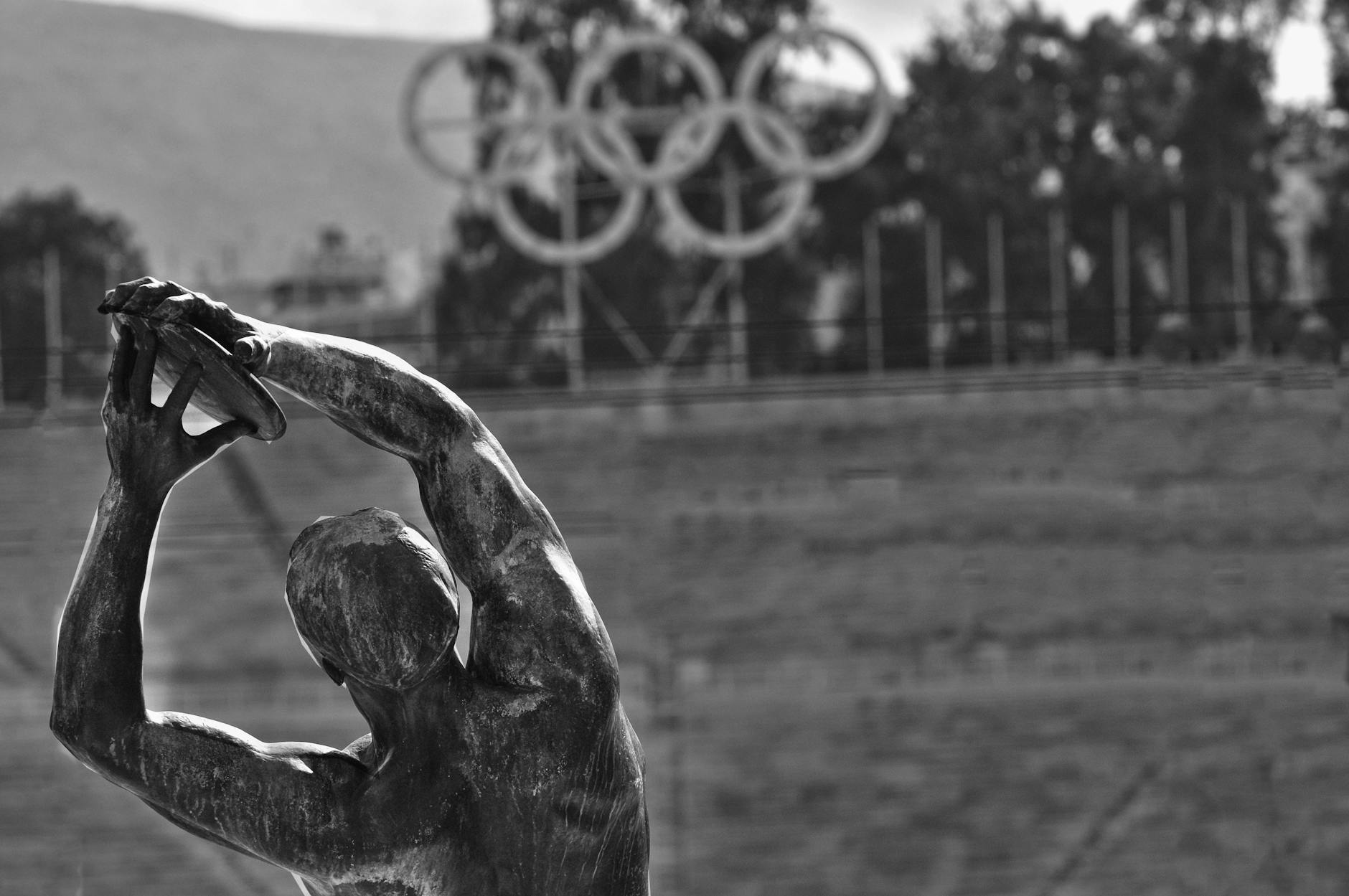
First, I think that Christians, while we should be offended by this display, should perhaps NOT be shocked. We live in a post-Christian, post-religious Western World. The world, especially the Western World, thrives on divisiveness, controversy, and the “shock factor” in entertainment. The tableau that was presented wasn’t just offensive to Christians (though we were likely the primary targets). It was, in its own way, offensive to the ancient Greeks, and to the spirit of the Olympic games. The Olympics are not about Bacchanalian debaucheries, orgies, or feasts of any kind. Nor are the Modern Olympics about the gods of Ancient Greece– not in the way that the Ancient Olympics were. The Modern Olympics are meant to be inclusive to every participating nation and qualifying athlete. The opening ceremonies are traditionally meant to celebrate both the shared heritage and spirit of competition among athletes, and the unique culture of the host country. This display did neither. And the organizers had to have known that. Whatever their real reasons for including this cartoonish and puerile tableau, they had nothing to do with bringing people from all nations and cultures together, or with celebrating the highlights of French culture.

Having said all that, I am somewhat disappointed in the angry responses I see from Christians. We are reacting as though Christ promised us that we would always be respected, welcomed, and esteemed. Yet we serve a CRUCIFIED Savior! How are anger, boycotts, protests, and demonstrations showing honor to Jesus or bringing glory to God? What makes us think that reacting in anger and “playing the victim” will change the minds or hearts of those who created this mess? I believe that is precisely their “point.” They see themselves as victims of God’s righteous laws, and they are reacting TO HIM in anger and rebellion. To see US react in the same way makes them feel justified in their own anger. We live in a culture of outrage– it is our job to rise above the temptation to add to the general outrage. Jesus did not lash out as He was being whipped, taunted, and nailed to His Cross. He prayed for His tormentors, instead.
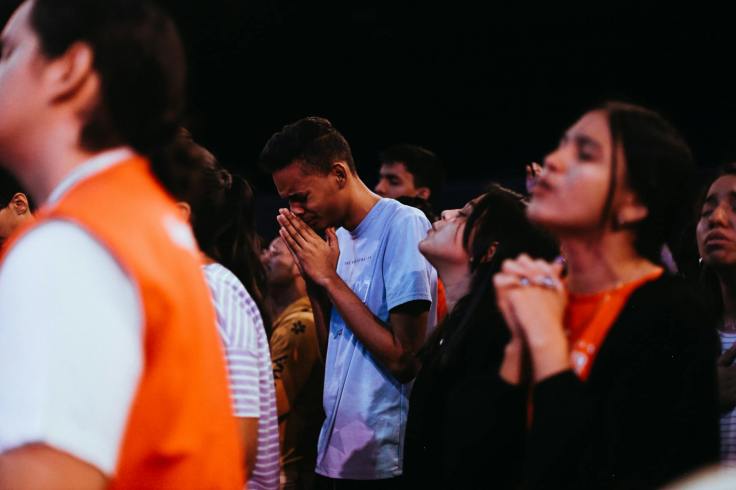
And that brings me to my final point. I think we need– especially in light of these events– to be praying for the Paris Olympics. Pray for the safety of all the athletes. Pray especially for those athletes who are being booed, taunted, and threatened because of their home country, or their religious beliefs. Pray for those who are standing up for what is right, and pray for the hearts of those who are acting in evil, anger, hurt, and deception. Pray that the spirits of division and hatred will NOT hijack this world event, as they have in the past. Pray that Christians will come together to react and to reach out as Jesus Himself did– speaking the truth in love. We do not have to embrace, condone, or accept what is evil. But we must stand firm in the armor of God, rather than attack with the enemy’s weapons!

Remember, we are to run OUR race:

24-25 You’ve all been to the stadium and seen the athletes race. Everyone runs; one wins. Run to win. All good athletes train hard. They do it for a gold medal that tarnishes and fades. You’re after one that’s gold eternally.
26-27 I don’t know about you, but I’m running hard for the finish line. I’m giving it everything I’ve got. No lazy living for me! I’m staying alert and in top condition. I’m not going to get caught napping, telling everyone else all about it and then missing out myself.–1 Corinthians 9:24-27 (The Message)

What happened in Paris last week was offensive and wrong. What we do this week needs to reflect what is right and God-affirming. We don’t need to be silent. We don’t need to be victims. We don’t need to be outraged. We don’t need to be protesting. We need to be praying.
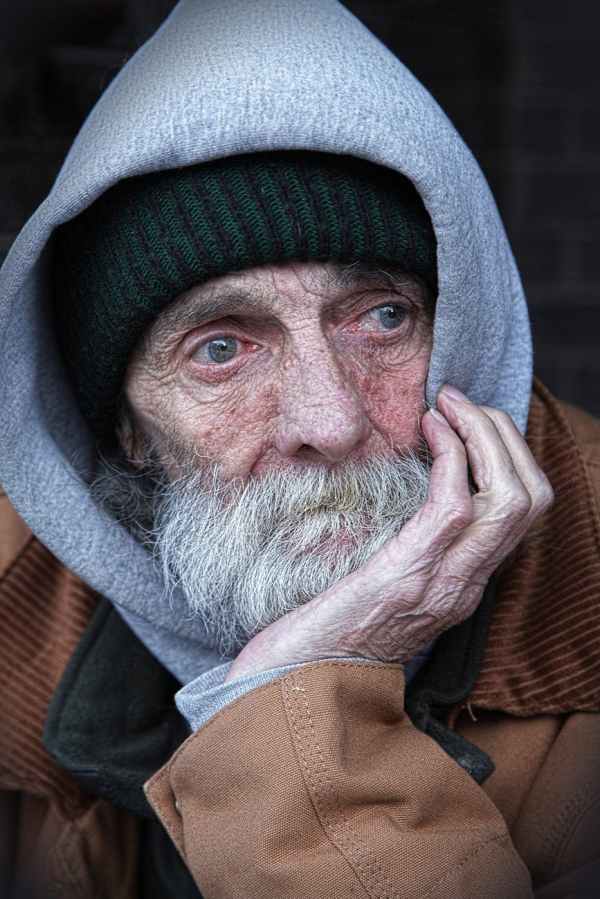
Why, O Lord?

We are a curious race, humans–we ask a lot of questions of ourselves, each other, and even of God. How did He make the universe? When will Jesus return? Who can we trust in this world? Where is Heaven? What must we do to be saved? But the majority of our questions are “Why” questions. Why did Jesus come? Why did He have to die? Why did God make snakes and mosquitoes and platypuses? Why are men and women so different? Why am I… (short/tall, fat/thin, clumsy, “odd,” misunderstood, etc.)? Why are You so mysterious? Why do bad things happen to “good” people?

I was thinking about this last question this week. I don’t have any definitive answer to that– no one I know has any better answer. God has not given us a definitive answer, either. We are to trust that His ways are wise and best and perfect, but faith and trust require–well, Faith and Trust! We know God has done good things in the past. We know He has redeemed what seemed like hopeless situations. We know His promises, and we have seen some of them fulfilled. Still, such a question can often leave us blindsided and tongue-tied.

There are many learned thinkers, philosophers, and apologists who have written whole books on this subject, but I want to just pose a couple of ideas to help us, not ANSWER the question, but understand the question a little better.

First, the question, “Why do bad things happen to good people?” is really two questions: “Why do ‘bad’ things happen?” AND “Why do they happen to ‘good’ people?” So let’s look at the questions separately.

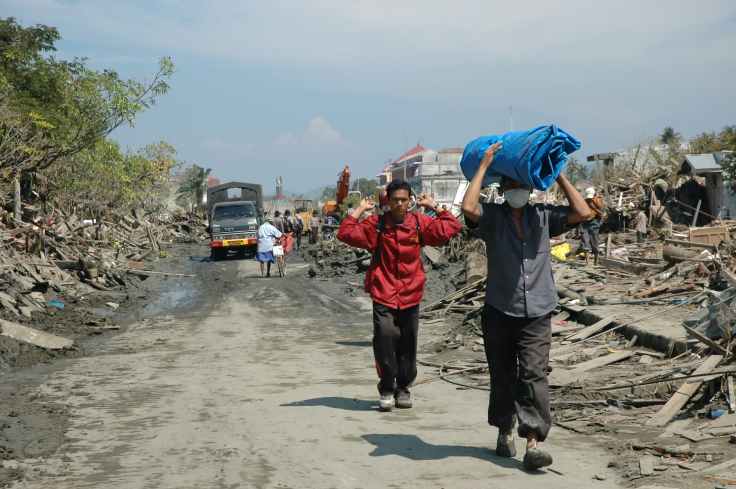
“Why do ‘bad’ things happen?” What do we mean when we say “bad things?” There are many circumstances, events, diagnoses, and occurrences that may be called “bad.” Death is “bad.” Indigestion is “bad.” Stubbing one’s toe is “bad.” Being diagnosed with Alzheimer’s Disease is “bad.” Divorce is “bad.” Slavery and abuse are “bad.” House fires, job losses, being mugged, being stranded without heat in a blizzard, an outbreak of acne, being laughed at– all these are “bad.” But they are all different. Many “bad” things are the direct result of sin–we suffer the consequences of our own sin; we are the victims of the sins of others. The consequences of addiction can be horrific, but we often lack compassion for those who are suffering, because “they brought it upon themselves.” But what about the innocent victim of rape or child sex trafficking? Such acts leave victims traumatized and broken. Both are “bad,” but we are angered and frustrated even more when “bad” consequences also seem unjust and unfair. And what about natural disasters? Are they the result of sin, as well? The Bible suggests that they are. When God placed Adam and Eve in the Garden of Eden, they lived naked, carefree, and unafraid. Only after their sin did God place a curse on the land– Adam would now have to cultivate the land in order to get food. There would be enmity between the woman and the serpent. Eve (and all women after her) would have pains in childbirth. (see https://www.biblegateway.com/passage/?search=genesis+3%3A+14-20&version=NIV) There is no mention of hurricanes, blizzards, or earthquakes prior to the Fall of mankind, though it is speculation on my part, to say that there were none.

God has promised to make all things new. There will be a time when the consequences of Sin will be eradicated. We will not even remember the suffering we endured in life, in light of the blessings of eternity. So, though God doesn’t answer our question of why “bad” things happen, He does give us the assurance that such “bad” things do not determine our destiny, nor do they happen without His knowledge or outside of His will! We cannot understand God’s purposes in allowing us to suffer, though sometimes we may see a hint of good even in the midst of tragedy.

And God is loving and gracious in the face of our confusion and pain. We CAN ask God “Why?!” “Why me?” “Why this?” “Why now?” “Why them?” Why, O Lord!?” Many of the Psalms speak to this very question. But in the middle of his anguish, the psalmist often finds comfort and renewed strength to face the struggle, when he turns to God. Asking why is not always a sign of weak or failed Faith. Instead, it is acknowledging before God that we ache. We grieve. And we NEED HIM!”

And what about the second part of the question: “Why do (bad things) happen to ‘good’ people?” What makes a person “good?” Jesus was “Good,” And yet He questioned the rich young ruler, “Why do you call me good? No one is Good– except God alone.” (see https://www.biblegateway.com/passage/?search=Luke+18%3A18-27&version=MSG) We tend to think of the people we know and like as “good.” And we have a natural expectation that their lives should be “good” also– free of pain or struggle. But that is not realistic in this world. The actor, Michael J. Fox has been suffering for years with Parkinson’s Disease. This seems unfair and cruel. How could God let him suffer like this? But there are many thousands of people suffering from Parkinson’s Disease. Some of them are homeless addicts; some are in prison for rape or embezzlement. Is their suffering any less than that of Mr. Fox? Is it somehow less tragic or unjust?

The sad and shocking truth is that none of us “deserves” a pain-free, struggle-free life. Bad things DO happen. And they happen to people we like, and people we hate; people we judge to be “good” and people we judge to be “bad.” God does not “play favorites.” Yes, God can, and often does intervene on someone’s behalf through prayer, or for His own bigger purposes. But He does not “dish out” suffering to those He dislikes out of spite or revenge. Nor does He cause His faithful to float through life without ever tasting bitterness and grief. Jesus made many promises, but one of them was this: “in this world you will have trouble; but be of good cheer, I have overcome the world.” (John 16:33) He didn’t promise that you might have a little spot of trouble, or that you might look around and see others in trouble– He promised that we would have trouble. Not because we are “bad” or “good” but because that’s the way this world is.

I find it odd that atheists often pose this question as a way of trying to “prove” that God doesn’t exist. They pose the question as an accusation. “If there is a kind and loving God, why do bad things happen to good people?” But if they believe that there ISN’T a kind and loving God, how do THEY explain why bad things happen to good people? How do they define “good” people and “bad” things? Without a Good God, where is the expectation of good things happening to good people? Without God, there are no objectively “good” things or “bad” things happening– only random events without divine cause or purpose. You can’t blame a non-existent God for things He either caused or didn’t prevent. Such questions are meant to plant doubt in the mind of a believer, but they fail to answer the greater question– Why do Good things happen to undeserving people? Why do we sometimes find joy and peace and strength in the midst of our suffering? Why do human beings continue to Hope?

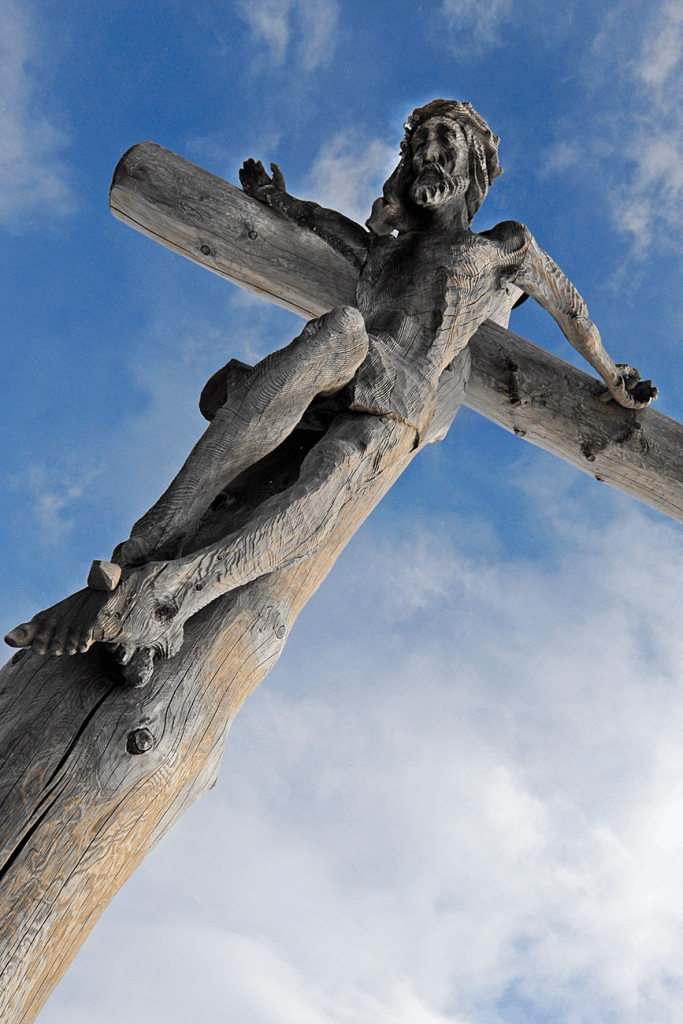
Finally– the ultimate example of God letting something “bad” happen to someone “good” can be seen in the central image of our Faith– the crucifixion of Jesus Christ. Jesus was sentenced unjustly to a torturous death and public humiliation. He was separated from God the Father, and carried the punishment for OUR sins so that WE could be reconciled to God. Even though the purpose of Christ’s suffering has been revealed to us, it doesn’t negate the agony and trauma He faced. And even HE cried out from the Cross– “My God, My God, WHY have YOU forsaken ME?!” (Matthew 27:46)

God does not answer the question of why “bad” things happen in this world. But in the crucifixion, Jesus proves to us that He shares and understands our suffering; that He has the power to overcome and redeem our traumas; and that He will hear our sincere cries of “WHY?!” He will hear when we turn toward Him, instead of turning our back on Him. He will hear our broken heart. He will heal our broken heart.

WHY?– Because He loves us!

These Three Remain–Love!

I’ve been exploring the Apostle Paul’s first letter to the Corinthians; specifically chapter 13, verse 13. Paul states that there are three virtues that remain, after all else has passed away or been lost: Faith, Hope, and Love. And, while the other two are great and necessary, the greatest is Love.

So much has been written about Love– poets and prophets, songwriters and storytellers. most would agree that Love is the greatest virtue. But they wouldn’t all agree on what “Love” is. The Greeks have three different words for love– in fact most languages have more than one word– English has dozens of synonyms: Love, adore, desire, passion, enamored, infatuated, devoted…you get the idea. Except there are several ideas, so how do we know which kind of love remains? What kind of love endures beyond life and time and against every obstacle?

Human love is fallible; it is temporal (and sometimes even temporary). It doesn’t last forever– in spite of poetic promises and sacred vows. People “fall in love” and they fall out of love. Human love grows deeper; but it can also grow cold. It can be conditional, and manipulative; selfish, and shallow. Human love is often based on feelings that change with the seasons. We “love the whole world” when we are feeling good–we love mankind, but can’t stand our next door neighbor!

God’s love is eternal and unconditional. It never depends on His “mood.” It never depends on who we are or what we have done. God loves because it is His nature. He IS Love. He is the definition of enduring, everlasting, boundless, endless LOVE. This is the Love that endures. It is the Love that changes us from the inside out, and changes the world around us. It is this Love that infuses our Faith, that inspires our Hope, and allows us to approach a Holy God and share His Mercy and Grace with those we might otherwise deem “unlovable.”

We are living through chaotic times, filled with raw and dangerous emotions– anger, hatred, pride, despair, resentment, greed, grief, and fear. God’s love is more than just another emotion. I cannot love my enemy with human emotion– nor does God ask me to. God loves through us– it is His Love that we need to access and carry with us into the darkness. I want to bring Love into the world– and I want to be seen as a Loving person. But God asks me to Love even when it is rejected; even when I am seen as the enemy; even when I get hurt in the process. That doesn’t mean that I invite or tolerate abuse because I think it makes me more virtuous or because I think I somehow deserve it. But it does mean that I continue to pray, I continue to have Faith and Hope that God will turn even the smallest acts of Love into seeds that will return a harvest in His time and in His way.

When I look at the life of Jesus Christ, that is just what He did. He had the power to destroy the corrupt Temple system– He demonstrated just a particle of His passion when He drove the money changers out of the Temple courtyard (Matthew 21:12-13). He could have led a rebellion against the oppressive Roman Empire. (In fact, that is one reason He was rejected as the Messiah. He chose not to use His power for political or economic gain– even for the benefit of His own people.) He had the power to wipe out leprosy, or blindness, or demon possession– He could have been the most powerful man on Earth, and single-handedly put an end to poverty, injustice, and so much more. If solving those issues for His people in His lifetime would have been the most loving thing– He would have done it. But He spent His time listening to and helping individuals in need– those who had lost hope, those who needed healing, those who were carrying guilt and doubt and grief. He spent His time, not just talking about Love, but demonstrating Love– personal, unconditional, life-giving Love. Jesus spoke to crowds, yes, but most of His time was spent in small groups or one-on-one– teaching, eating, listening, caring–Loving.

Loving this way takes time– it takes effort, and it comes with risk. Jesus, loving in just this way, was misunderstood, rejected, hated, even killed. But His Love conquered death, and brought life and victory. I may not be asked to become a martyr– but will I seek to Love like Jesus? Will I pray for people I don’t know; or people who have opposed me, or rejected me? Will I continue to love those who have hurt me in the past, or rejected my help? Will I reach out in Love to people who are in rebellion against God? People who mock Him, cry out against Christians, persecute us–even kill us? Will I pray for and support those who are in danger because they are showing God’s Love in this way? Because whether I do or not– Love Remains. Will I be Faithful? Will I reach out in Hope? Will I risk Loving as Christ Loves?

We live with the same brokenness that Jesus faced during His ministry. People around us are hurting– we are hurting! But our Faith tells us that God hears our prayers. Our Hope tells us that God has a plan for the future. And our Love compels us to share the burdens of others as we wait for Christ’s return.

Jesus WILL someday “fix” the brokenness of this world. He WILL Reign and Rule for Eternity. But He asks us to live with the three virtues that ensure that we will overcome the darkness of our own world– that will cause us to shine a light in the darkness–Faith, Hope, and Love!

These Three Remain.. Hope

I have to start this by saying I don’t always feel particularly hopeful as I look around and hear all that is happening. There are a lot of reasons to be discouraged, even depressed. Upheaval, suffering, injustice, disasters, anger, death, and evil surround us at nearly every turn. I can say that my Faith sustains me, and it does, but I still feel beaten down and exhausted by all the chaos and hurt and anger and misunderstanding.

Faith sustains us in times of trouble, but our hearts can still feel heavy. Faith tells us that God is in control, but we can feel powerless in the midst of suffering. What keeps us motivated to look for the best on even the worst of days? What allows us to have joy even as we grieve and strain and suffer? Faith is our anchor, but what renews our strength, and keeps us looking beyond the storm?

In 1 Corinthians 13, the Apostle Paul talks about things that are temporary– possessions, knowledge, gifts, prophecies– and three things that remain: Faith, Hope, and Love. Last time, I wrote about Faith. But Hope is a more difficult and more nebulous concept. The writer of Hebrews defines Faith for us– “the substance of things hoped for; the evidence of things not seen” (Hebrews 11:1). But there is no substance or evidence for Hope. Hope is not a physical anchor; it is not a realization. Neither is it a mere wish, or dream; at best, it is an expectation. Yet Paul says it “remains,” even when other things pass away.

How is this possible– that a Christian should Hope after all else has been lost, abandoned, or destroyed? Isn’t Faith more solid, more important, than Hope? Aren’t knowledge, obedience, and perseverance more important and more tangible? Isn’t hope wispy, fleeting, and conditional? Lately, it sure seems so. I say that I hope we all get through these tough times; that we will come through all this stronger, wiser, more compassionate, more just, more prepared, etc., but what am I really hanging on to? Where is my Hope?

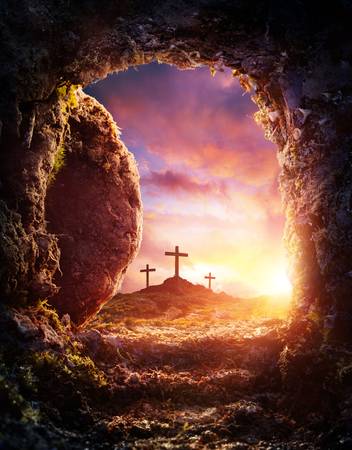
My Hope DOES have substance and a sure foundation–in the life, death, and resurrection of Jesus Christ, and in the sure promises of my Heavenly Father! I may have wispy dreams and half-formed wishes of what I would like to see in my life or in the world around me tomorrow, or next year. I may have dreams and visions of what Peace and Justice and Health look like– and I may never see them materialize in my lifetime. I may have to adjust my vision within the temporary world of possessions, and gifts, prophecies and human systems of government and society. But I can remember the life of Christ; in spite of His circumstances, He remained true to His purpose. In His death, He remained compassionate, humble, and loving toward those who hated Him. In His resurrection, He brought eternal Hope to all who choose to trust Him. I can Hope because He fulfilled God’s promises. He WAS Hope. He gave Hope, and He demonstrated Hope. And He pointed to the Hope of His return and our eternal destiny!


I can be inspired by the dreams and hopes of other Christians throughout the years, even if their dreams have not been realized. I can be inspired by the prophecies of others, even if they don’t match my visions. And I CAN see beyond the darkness of the moment (or the year) to see that people (even I) can change; situations can change; circumstances can change; rhetoric and tone can change for the better. Painful valleys and unexpected upheaval may not be what I would want, but sometimes, it serves to clear out the “sinking sand” where dream houses would otherwise be built.

And Hope is necessary to Prayer– Faith tells us that God hears, even when we can’t see Him or hear His answer. Hope tells us that God cares. He is not aloof in hearing our prayers. He doesn’t answer us out of some worn sense of duty or obligation. He doesn’t just give us His law or even His forgiveness– He gives us restoration and Hope and abundant life! Hope for change in our own lives; hope for progress and healing in our world; hope for victory over sin and evil. Most of all, hope for eternity. God is just and merciful, but He is also gracious and loving beyond all measure. I can cry out when all other hope is gone– His Hope Remains! His Hope is a Solid Rock. His Hope comes with an eternal guarantee.

It’s Not Enough!

Often, when there is a disaster– especially one that seems preventable and senseless, like a mass shooting or a horrible crash–thousands of people reach out with “thoughts and prayers” for the victims and their families. And, predictably, others will angrily comment that thoughts and prayers are “not enough.” What good are thoughts and prayers in the face of senseless violence or preventable dangers? Shouldn’t we be driven to action? Shouldn’t we focus our efforts on justice or working to guarantee that such disasters can never happen again?

Such anger is natural, and such sentiments may seem more virtuous than offering nebulous emotional support. What, after all, can thoughts and prayers really DO in the face of evil, injustice, pain, and grief?

Well, I can’t speak for “thoughts”, but I have studied prayer for most of my life. I would offer the following words about the effects of prayer:

  • First, prayer reminds me that I am NOT in control of my circumstances– only my reaction to them. I cannot control what happens, what HAS happened, or what WILL happen. And my anger will not change what has already happened, nor will it prevent future disasters from happening. And while I may not be able to prove to others that prayer CAN prevent future disasters or heal present grief, I have known it to do both in my life and in the lives of others.
  • Second, prayer reminds me that there is Someone Bigger than me– Someone Bigger than my circumstances– who has the wisdom and the power to do what even thousands of well-meaning people cannot. Thousands of people coming together can make a difference over time, but God can do miraculously more than we can imagine!
  • Third, praying for others is something I CAN DO— anywhere, anytime– across distances, cultures, time zones, and circumstances. Prayer doesn’t cost anything. It doesn’t require that I have specialized skills or access to physical resources. It may not seem very active, like ranting or screaming, marching or protesting, but it isn’t the same as inaction or apathy.
  • Lastly, praying for others is a first step in helping others. My prayer alone may not seem like “enough”, but prayers have a way of multiplying, and inspiring, and intensifying in positive and impactful ways.

But more than just talking about the effectiveness of prayer, I’d like to pose a couple of questions for those who dismiss prayer as “not enough.”

  • What are you offering (instead of prayers)? Will your thoughts, plans, and actions have immediate or eternal results? Do you have the solution to all the world’s problems? Will you be able to control what happens in the future, or make sense of what has happened in the past? Will your solutions be perfect– no unintended consequences or necessary casualties?
  • If you are so angry about others praying, why waste your energy complaining about it? Go ahead with your own solution/reaction/plan.
  • Is your solution “enough?” Is your anger “enough?” Are your good intentions “enough?” Ultimately, you must wrestle with the existence of evil and injustice in this world. Senseless things happen. Good people suffer, and guilty people enjoy “success.” And nothing we offer is ever “enough” to change the world around us.

Our efforts and actions will never be “enough.” But prayer taps into the reality that God IS ENOUGH. His Grace is sufficient; His Love endures forever; His wisdom is higher than ours, and His power is boundless. He doesn’t always remove us from the chaos and suffering of this world, but He redeems us, and He enters into the circumstances of our own suffering and grief. He gives us courage, strength, hope, and a sense of purpose that goes beyond what we can find in ourselves.

The Silence of God

I am just finishing the book of Job in my daily Bible studies. Job is an interesting book. It begins with a discussion between God and Satan, in which God seems to “set up” Job. God points out Job and his righteous life. Satan (The Accuser) fires back that Job is only enjoying God’s favor; that, given hardship and pain, Job will turn his back on God and embrace evil. God allows Satan to ruin Job’s life– taking away his property, his status, and even all his children. (Ironically, Satan doesn’t cause any harm to Job’s wife, who acts as “devil’s advocate” later, telling her husband to “Curse God and die!”)

Job passes the first test. Satan asks for a “second chance,” saying that Job is still enjoying God’s physical protection. So God allows Satan to cause a painful, wasting disease to attack Job.

But the narrative shifts dramatically at this point. The next several chapters focus on Job’s confusion; his suffering; his bitter quest for answers to the age-old question– Why does God allow bad things to happen to good people? Job’s friends, who start out sharing his sorrow, end up being of very little help and no comfort at all. They insist that God wouldn’t– couldn’t– allow bad things to happen to an innocent man. Therefore, they conclude that Job “deserves” his pain and misfortune. Job insists that God is Righteous, but he wants God to answer his questions– WHY? WHY ME? WHY THIS? WHAT HAVE I DONE TO DESERVE THIS?

And God is silent. Through several rounds of discussion and argument, God is nowhere to be found or heard. Job’s complaints and questions anger his friends, but God remains silent and seemingly unmoved. The central question is not so much about God’s righteousness, but about His Goodness. Is God Good? Can a loving God allow people to suffer– especially if it is unjust– and still be called “Good”?

Reading through the book of Job, we are aroused to the same kind of anger that Job expresses. There are times when I have questions; times when I am suffering; times when I just don’t understand– “What have I done to deserve this?”

And yet.

The Bible is full of “and yet” moments. God finally speaks, but He never answers Job’s questions directly. Job did nothing to “deserve” his suffering. And yet, God allows him to be tested, tormented, and stretched to his breaking point. Not because Job has done something wrong, but because he has been faithful! God never answers Job’s complaints– and yet, God does not leave Job without any answer. In fact, God restores Job’s fortunes and gives him more children, so that his final condition is even better than before! God justifies Job in front of his friends, restoring his status, as well. Job complains about not having a mediator to defend him before the Almighty. And yet, Job trusts that such a mediator– such a redeemer– exists. He cannot see Jesus– and yet He puts his faith in the promise of His coming!

The book of Job ends with Job praising God–BEFORE his restoration– acknowledging that God is not just Good, but that He is Great! He is Great beyond our understanding. He is Holy, and His ways are higher and greater than our ways. Job’s suffering, while painful and undeserved, allowed him to understand God in a new and deeply personal way. God allowed Job to be crushed but not destroyed; tested, but not terminated. God was silent, but never absent.

In fact, the one character who is conspicuously absent at the end of the story is Satan! He has “lost” his challenge to make Job repudiate his right living and his love of God. He has been given two chances to strike at the authority and character of God– and he has left the battlefield in contempt and defeat. He has caused Job pain and suffering, but he has not caused Job to quit.

Job’s questions throughout the book which bears his name are really prayers. He is talking about God, and talking TO God, even as he addresses his friends. He is bitter and angry and confused– AND YET– he prays!

May that be said of me today, as I face questions, trials, and suffering. I can “Take it to the Lord in Prayer.” Not just when things are going well, and I am praising God, but when life seems bitter and I am questioning God’s justice. He IS Sovereign. He IS Good. He IS listening. He DOES Love me.

I Know That God Lives

13-20 “God alienated my family from me;
    everyone who knows me avoids me.
My relatives and friends have all left;
    houseguests forget I ever existed.
The servant girls treat me like a deadbeat off the street,
    look at me like they’ve never seen me before.
I call my attendant and he ignores me,
    ignores me even though I plead with him.
My wife can’t stand to be around me anymore.
    I’m repulsive to my family.
Even street urchins despise me;
    when I come out, they taunt and jeer.
Everyone I’ve ever been close to abhors me;
    my dearest loved ones reject me.
I’m nothing but a bag of bones;
    my life hangs by a thread.
21-22 “Oh, friends, dear friends, take pity on me.
    God has come down hard on me!
Do you have to be hard on me, too?
    Don’t you ever tire of abusing me?
23-27 “If only my words were written in a book—
    better yet, chiseled in stone!
Still, I know that God lives—the One who gives me back my life—
    and eventually he’ll take his stand on earth.
And I’ll see him—even though I get skinned alive!—
    see God myself, with my very own eyes.
    Oh, how I long for that day! (Job 19:13-27 The Message)

Atmospheric Disturbances

We had a storm blow through the area the other night. We were under a tornado warning, and a couple of tornadoes did touch down several miles northeast of here. Long before the tornado warning was issued, the weather forecast predicted strong storms with the possibility of hail and/or tornadoes. But even without them, it was easy to sense that “something was in the air.” There was a quality of heaviness in the very air outside. And the sky was an unnatural greenish-gray color, even where it wasn’t dark with storm clouds.

In life, we often get warning signs of impending “storms”–physical symptoms that tell us there may be a problem like infection or disease that needs to be diagnosed; a tense atmosphere at work that suggests big changes may be coming; withdrawal of a family member that alerts us they may be struggling with emotional or mental issues. These “atmospheric disturbances” may be subtle at first. We may choose to ignore them, or dismiss their importance, until we find ourselves in the middle of the storm!

God calls on us to trust Him in any weather or circumstance. We can pray about even the slightest change in our “atmosphere,” whether at home, work, or even internally. And part of God’s wisdom is to send us warnings so that we can not only pray, but take proactive measures. We can reach out to family members, make an appointment with our doctor, be cautious about spending in the weeks and months ahead, seek out help and counseling, etc.

But sensing “atmospheric disturbances” is not all about seeking a remedy or avoiding struggles. Even with advanced warnings, some people last night were unable to avoid damage to their properties or loss of electricity from the storms. Several people were trapped in a shipping warehouse that was hit by one of the tornadoes. Thankfully, no one lost their life; still, it took hours to rescue them all, and some of them went home to no power. But what if– just what if– someone looking up at the sky, or feeling the heaviness in the air, prayed in that moment? What if they prayed for safety– not just for themselves, but for others who would be in the path of the storm? What if someone in that shipping warehouse made plans weeks ago for tornado drills and emergency plans to protect the workers, and made the call for everyone to shelter together?

There are hundreds of stories of dramatic rescues and miraculously saved lives after almost any weather emergency. But how many untold stories are lost in the simple prayers and small corrections that take place when God’s people respond to “atmospheric disturbances” with prayer and wisdom?

And when God chooses to allow storms to come into our lives, how many stories could be told of the presence of God to calm, not the storm, but our own fear of it? God knows, as we cannot, how big the storm will be, how long it will last, and what “damages” we will face. And His Grace is sufficient to give us everything we need to face them all. That doesn’t mean we won’t suffer– damage, loss, grief, frustration– these are part of our life in a fallen world. God won’t always remove these things from our life. But he will NEVER abandon us to face them alone.

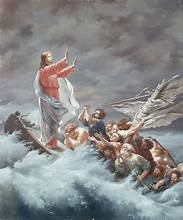
Jesus Christ faced storms in His life. One of them came on the Sea of Gallilee, as Jesus was sleeping in the boat. (See Mark 4: 35-41) A storm came up, and the disciples were terrified. They woke Jesus up, and Jesus calmly rebuked the wind and the waves, and the storm stopped. We often focus on the fact of Jesus being able to control the wind and the waves. But one of the amazing things about this story is that Jesus was IN THE BOAT! His own life was in danger from the storm. The disciples were not alone. Jesus did not let them put out to sea and face the waves, while He was safe on shore.

And so, too, Jesus is WITH US in our storms. We don’t have to wake Him up, and He may not choose to give us a miracle, but He’s right there! He can be trusted, no matter what our circumstances, no matter what dangers or damages we have to face. He knows how the storm ends; He knows how our story ends; He knows when the sun will come out again, just like it did earlier this week, announcing that all will be well.

And that calls for a prayer of Gratitude!

Praying Like Daniel

The Bible tells a story of Daniel, and when I was a child, I always focused on the dramatic part of the story. Daniel was “set up” by some of his rivals, and he ended up being thrown into a den of lions. But God shut the mouths of the lions, and Daniel was rescued. Indeed, his accusers were later given the same sentence and the lions gobbled them up in short order! (See Daniel 6 https://www.biblegateway.com/passage/?search=Daniel%206&version=NIV) Daniel’s miraculous rescue astounded even the king who had sentenced him! And it has served as a testimony of God’s faithfulness and His power to save those who love Him.

But, as in most Bible stories, there is much more going on behind the scenes. Daniel’s enemies were able to set him up because of his very public habit of praying three times a day to the God of Israel. Morning, noon, and night, Daniel fell to his knees, right in front of his open window, and prayed. We don’t know if his prayers were said aloud, shouted out for all the world to hear, but his habit was visible– it was well-known among his neighbors, friends, and enemies and it was unvarying. Daniel did not brag about his habits, or “force his beliefs” on others. But it was clear that his success and his wisdom were directly related to his devotion to God. Daniel’s enemies could find no other way to bring about his downfall, so they resorted to a trick.
Daniel’s enemies devised a clever scheme. While his habits were well-known among most people, they were not known or respected by the new king. Darius had just taken over the land, after the disastrous regency of Belshazzar (see Daniel 5). He was a wise ruler, and he had appointed 120 satraps (officials) to administer the various regions in this kingdom. Over these 120 officials, he had three special administrators, one of whom was Daniel. But Daniel had so distinguished himself, that Darius planned to put him in charge over all the others– second only to the king. Darius knew that Daniel was a brilliant administrator. But he didn’t know about Daniel’s devotion to God. And so, Daniel’s enemies capitalized on this one aspect of Daniel’s character.

Darius was approached by a group of his officials and convinced into signing an edict making it illegal (and punishable by death!) for anyone, anywhere in the kingdom to pray to any god or human being — except King Darius–for an entire month. Like so many such schemes, the object here had nothing to do with honoring King Darius, stamping out religious extremism, or any of the other so-called “reasons” they gave. And nowhere in the text does it mention that anyone else in the kingdom was “charged” under this new edict. In other words, their sole purpose was to “eliminate the threat” of Daniel being given power over them (and, possibly, their corrupt practices).

How easy it might have been for Daniel to avoid getting “caught” praying during that time. In theory, he could have shut his window. He could have taken thirty days “off,” trusting that God would know the circumstances. He could have simply prayed in a different part of his house– standing up, or walking around– and silently, surreptitiously changed his habit every so slightly. He could even have lied, saying that he was following the new law and praying to the King. But he never offered an excuse or tried to justify his disobedience of the corrupt law.

Why did someone as brilliant as Daniel not take a few simple steps to avoid the lion’s den?

The answer to this question requires a look at the context of Daniel’s life. This incident takes place near the end of Daniel’s life. He was likely in his eighties or nineties! He had been in captivity since he was a teenager. He had been ripped from his homeland, and sent to a place with a completely different language, culture, and religion. And he had served at least four different kings over several decades. He had survived other attempts to force him to compromise, blend in, and be like others around him. He had seen other schemes to corrupt worship of the One True God. He had survived other threats to his life. And through all those years, we have every reason to believe that Daniel’s habit of prayer had grown stronger, not weaker. The same teen who prayed fervently that God would allow him to return to his homeland was still on his knees– every day– praying for deliverance. Even while he faithfully served his captors, he prayed. At no time did Daniel ever experience this deliverance. For all we know of the Bible story, Daniel died in Babylon– still a captive.

But Daniel’s prayers reached Heaven. Later in the book that bears his name, Daniel tells of extraordinary visions he received about Babylon, Israel, and other nations and empires that would arise in the future. Daniel’s faithfulness and devotion serve as examples, even for our own age. But Daniel prayed all those years without seeing his hopes fulfilled in his lifetime.

Do I have the courage and conviction of Daniel? Oh, what we might experience if more of us were “guilty” of praying like Daniel prayed! If someone tried to “set me up” like Daniel’s enemies did– would there be enough evidence to convict me of being a Christian? Would someone be able to “catch” me praying at home every day? Without fear or compromise? Would I give up after a year in captivity? Would I stop praying if I were being laughed at? Arrested? Persecuted?

Do I give up when I don’t get an immediate answer to my prayers? Do I decide it’s just too difficult to keep praying for “my impossible?” For unsaved relatives, or unresolved health problems? For peace in war-torn areas, or relief for famine-ravaged regions?

I love Matthew West’s song about this issue, and I have attached a video. I hope it inspires you as it has inspired me to keep praying– knowing that God has “heard every single word you’re sayin’.”

Let’s resolve to pray like Daniel– Don’t stop! Don’t compromise! Don’t give up!

Close to the Broken Hearted

As I write this, I am keenly aware that one year ago, I was at a graveside, saying farewell to my mother. Grieving comes in waves. I rejoice that she is in heaven, and I rejoice that she had a good, long life, and that she didn’t suffer very long at the end. But there is still an ache– wanting to share a memory or a laugh and knowing she isn’t here; questions I didn’t know I had, but now she can’t answer them; just missing her voice and her smile. My father has been gone for 25 years, and the same ache still hits at odd moments.

Sometimes, grieving brings us closer to God. At other times, we can let our grief drive us away from God. But God doesn’t move. He is ever-present. And He reminds us that He is “close to the broken hearted” (Psalm 34:18). When we are grieving, that is a blessed reminder. Grief tends to isolate us. “No one understands…” “Laugh, and the whole world laughs with you; cry, and you cry alone.” We see the “rest of the world” enjoying life, seemingly untouched by sorrow, and we feel abandoned twice over.

As Christians, we are called to follow Jesus’ example, and be close to the broken hearted. We should be the ones ready with a hug, a listening ear, and a shoulder to cry on. We should be the ones who, like the friends of Job (before they offered ill-advised ‘counsel’) are willing to sit with our suffering friends for days at a time, offering the comfort of solidarity and ‘presence.’

My family was blessed with a host of Christian friends and family who comforted us in the days and weeks after Mom’s passing. They still ask. They still share memories. They still pray for us. And in return, we do the same. God does not want any of us to suffer alone.

And this is also true for those who suffer a broken heart for other reasons– divorce, the loss of a home to fire or flood, the loss of a job, a wayward son or daughter– it is important for us to draw strength from others, and offer strength in our turn. But the source of our strength is Jesus, who suffered on our behalf, and rose victorious over death and separation. When “no one” understands, He DOES. When the world leaves us grieving alone, He is THERE. And when we see someone else grieving and suffering, and we don’t know what to do– He gives us the strength and the compassion to reach beyond our own resources and offer comfort.

On our own, we can be like Job’s friends– after awhile, we try to offer solutions, explanations, even judgment about another’s grief. “It’s time to move on.” “Just get over it.” “Well, if only you had…” None of these are helpful. Jesus never said any of those things to the people He came to comfort. Instead, He encouraged them to look to Him as the “resurrection and the life.” (see John 11:25).

Today, let us do the same. There are hurting people all around us. Let’s be an encouragement to others to embrace life– even when we are broken hearted.

Do You Love Me?

15 When they had finished eating, Jesus said to Simon Peter, “Simon son of John, do you love me more than these?”
“Yes, Lord,” he said, “you know that I love you.”
Jesus said, “Feed my lambs.”
16 Again Jesus said, “Simon son of John, do you love me?”
He answered, “Yes, Lord, you know that I love you.”
Jesus said, “Take care of my sheep.”
17 The third time he said to him, “Simon son of John, do you love me?”
Peter was hurt because Jesus asked him the third time, “Do you love me?” 
He said, “Lord, you know all things; you know that I love you.”
Jesus said, “Feed my sheep. 18 Very truly I tell you, when you were younger you dressed yourself and went where you wanted; but when you are old you will stretch out your hands, and someone else will dress you and lead you where you do not want to go.” 19 Jesus said this to indicate the kind of death by which Peter would glorify God. Then he said to him, “Follow me!”

John 21:15-19 (NIV)
Photo by Anna Shvets on Pexels.com

Today is Valentine’s Day, and many people will be saying, “I love you,” or asking, “Do you love me?” And many others will reply, “Yes, I love you,” or “I love you, too!” Cards and gifts may be exchanged; some couples will dine out or have romantic candlelit dinners at home. It is a day to celebrate love. There are thousands of poems and songs about love– ooey, gooey, gushy love; unrequited love; first love; true and lasting love; even “puppy” love.

But Valentine’s Day can also be a painful reminder– of lost love, betrayal, and loneliness. The story of Peter’s betrayal and reinstatement is not a “Valentine” story of romantic love, but it carries some lessons for today about love in general, and the Love of Christ in particular.

  • Love is a choice– freely given and freely accepted (apologies to Elvis Presley and others who have sung about not being able to help falling in love…) When Jesus first called Peter (and in the above passage as well) He simply asked Peter to “Follow me.” He made no demands, offered no bribes, used no intimidation. There is no long list of requirements or expectations; no bargaining; no “quid pro quo.” That said, Love is not a light-hearted or whimsical thing. Peter’s choice to love Christ, and to follow him cost him his life. Christ’s choice to love us led Him to humble Himself to death, even death on the cross (Philippians 2:8). Jesus could have escaped this fate several times over– He CHOSE to die for each of us!
Photo by Criativithy on Pexels.com
  • Love is more than just a feeling. “Follow me” demands an action and a commitment. There are many today who “love” the idea of Jesus; they love the parables, or the gospel story; they are in love with “love.” But the idea that “Love” is all you need (apologies to the Beatles) misses the mark. Feelings change; feelings are transitory and often dependent on circumstances. Love chooses to follow– even when the going gets rough; even when it is not convenient, even when it involves sacrifice.
  • Loving someone involves taking the risk of being hurt, denied, or betrayed. There is no Biblical passage describing the amount of hurt Jesus must have felt when Peter denied Him three times, or when Judas betrayed Him. The Biblical account tells us that Jesus already knew and predicted these two events, but how agonizing–every bit as painful as the nails in His hands and feet! Jesus loved those who spit at Him, abandoned Him, condemned Him, and persecuted Him. And we also see Peter in this passage being hurt at Jesus’ questioning him a third time; Peter was shocked and hurt when Jesus predicted his denial, and when Jesus said to him, “Get behind me, Satan.”(Matthew 16:23) Love is never free from risk– especially the imperfect love we have as humans.
Photo by Design Killer on Pexels.com
  • Love leads to restoration and forgiveness. Peter’s denial of Christ could have haunted him for the rest of his life. Had Jesus said nothing; done nothing to address this hurt, it would not have changed the fact that Peter was forgiven. But in publicly restoring Peter, Jesus made it clear that it was “all good” between them– Peter wasn’t just conditionally forgiven, he was completely restored!
  • Love is stronger than death! It is stronger than sin, or betrayal, denial, or hurt. Love is eternal and limitless, everlasting, and enduring. God IS Love and to know God is to know love. To speak to God and to hear His voice and read His Word is to converse with Love. Whether in the presence of saints on a mountaintop, in the midst of a raging storm, or on a quiet beach– Love is closer than our next breath, and more powerful than our deepest fear. Love never fails (1 Corinthians 13: 8)

And that’s a love worth endless celebration!

Blog at WordPress.com.

Up ↑