For the Beauty of the Earth The United Methodist Hymnal Number 092 Text: Folliot S. Pierpoint Music: Conrad Kocher; Arr. by W.H. Monk Tune: DIX, Meter: 77.77.77
1. For the beauty of the earth, for the glory of the skies, for the love which from our birth over and around us lies; Lord of all, to thee we raise this our hymn of grateful praise.
2. For the beauty of each hour of the day and of the night, hill and vale, and tree and flower, sun and moon, and stars of light; Lord of all, to thee we raise this our hymn of grateful praise.
3. For the joy of ear and eye, for the heart and mind’s delight, for the mystic harmony, linking sense to sound and sight; Lord of all, to thee we raise this our hymn of grateful praise.
.
4. For the joy of human love, brother, sister, parent, child, friends on earth and friends above, for all gentle thoughts and mild; Lord of all, to thee we raise this our hymn of grateful praise.
5. For thy church, that evermore lifteth holy hands above, offering up on every shore her pure sacrifice of love; Lord of all, to thee we raise this our hymn of grateful praise.
6. For thyself, best Gift Divine, to the world so freely given, for that great, great love of thine, peace on earth, and joy in heaven: Lord of all, to thee we raise this our hymn of grateful praise.
This week, may we raise hymns of grateful praise to the creator of all the beauty of the earth.
For by him all things were created: things in heaven and on earth, visible and invisible, whether thrones or powers or rulers or authorities; all tings were created by him and for him.
Colossians 1:16
In the beginning was the Word, and the Word was with God, and the Word was God. 2 He was in the beginning with God. 3 All things were made through him, and without him was not any thing made that was made. 4 In him was life, and the life was the light of men. 5 The light shines in the darkness, and the darkness has not overcome it.
I grew up in an old farmhouse. It had a small room off the kitchen, with a back door leading outside, a place for shoes and boots, a small sink to wash up, and endless shelves. Some people call it a “mudroom,” a place where farmers got rid of the mud and muck from working outdoors. But we didn’t own the farmland surrounding the house, so mom used it as her pantry. She used the shelves to stock up on canned goods, spices, canisters of staples like flour and sugar, and even Tupperware for leftovers. Dad used the sink to wash up when he got home from work at the factory, and we kept boots on a rug off to the side– handy when winter arrived, and out of the way for the rest of the year. Mom also used some of the space as a broom closet– storing a broom and mop and a few cleaning supplies.
I grew up taking this space for granted. But, looking back, it was a luxury to have so much space and to have it filled with food. Sometimes, we would get snowed in for several days, and we never had to worry about running out of food. These days, I have a couple of drawers and a cabinet for storage, and I am so grateful when I “run out” of handy storage space, for it means that we have plenty.
I am so grateful to God for His abundance in my own little ‘pantry.’ And its contents can also prompt my pursuit of prayer and worship! Here are some examples:
I am reminded that “I CAN do all things through Christ, who gives me strength!” (Philippians 4:13)
I have PEAS that “passes all understanding” to guard my heart and mind in Christ Jesus (Philippians 4:7)
Even when the FLOUR “fades and the grass withers”, the word of God stands forever. (Isaiah 40:8)
“A cheerful heart is good MEDICINE..” (Proverbs 17:22) Or maybe sometimes, a CHEERIOS heart?
“How sweet are Your words to my taste, Sweeter than HONEY to my mouth!” (Psalm 119:103)
I am to be the “SALT of the earth” (Matthew 5:13)
If I have the faith of a MUSTARD seed, I can move mountains! (see Matthew 17:20)
“Be KIND to one another, tenderhearted, forgiving one another, as God in Christ forgave you.” Ephesians 4:32 (Kind is a brand of snack bar with nuts and fruit)
I need to keep my heart in TUNA with scripture!
“I was young, and now I am old, yet I have never seen the righteous forsaken or their children begging for BREAD.” (Psalm 37:25)
God is SOUP-ernatural and sovereign over my life!
Even our COFFEE pods remind me of the great heroes of the faith– found in HE BREWS 11!
I am a new creation in Christ; “the old has PASTA way: behold the new has come!” (2 Corinthians 5:17)
“He anoints my head with OIL, my CUP overflows” (Psalm 23:5)
And of course, I have many reasons to thank God for all the other blessings He pours out– in and out of my pantry! And often, I am reminded to share that bounty with others– both the bounty of food, and the bounty of God’s Word! Today, I pray that you have a bounty (BOUNTY, as in paper towels?) in your pantry, and that you have a bounty of scripture to encourage you and guide you through the day.
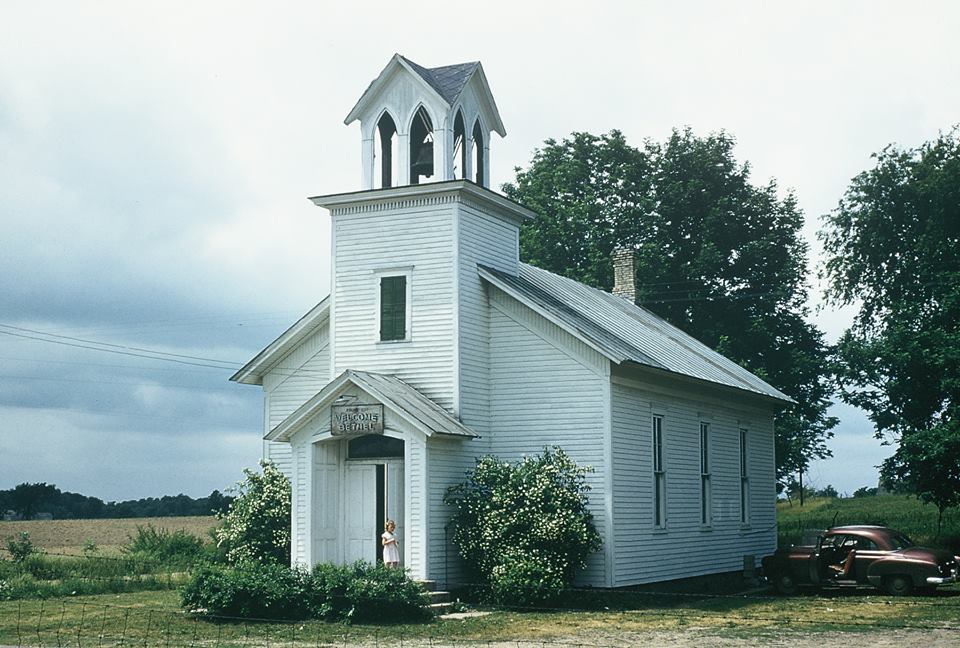
Growing up, I loved going to pot-luck meals at our little country church. Neighbors, family, and friends would bring large dishes of home-cooked deliciousness for all to feast on as we chatted, laughed, and encouraged one another. There were certain dishes we all could count on–homemade yeast rolls, courtesy of Lulu M. Jello with fruit was my mom’s standard. Another lady almost always brought meat loaf. Baked beans, candied carrots, fried chicken, chocolate cake, scalloped potatoes– my mouth still waters just from the memories! The wonderful woman who has since become my mother-in-law brought her famous cookies, and often, a seven-layer salad.
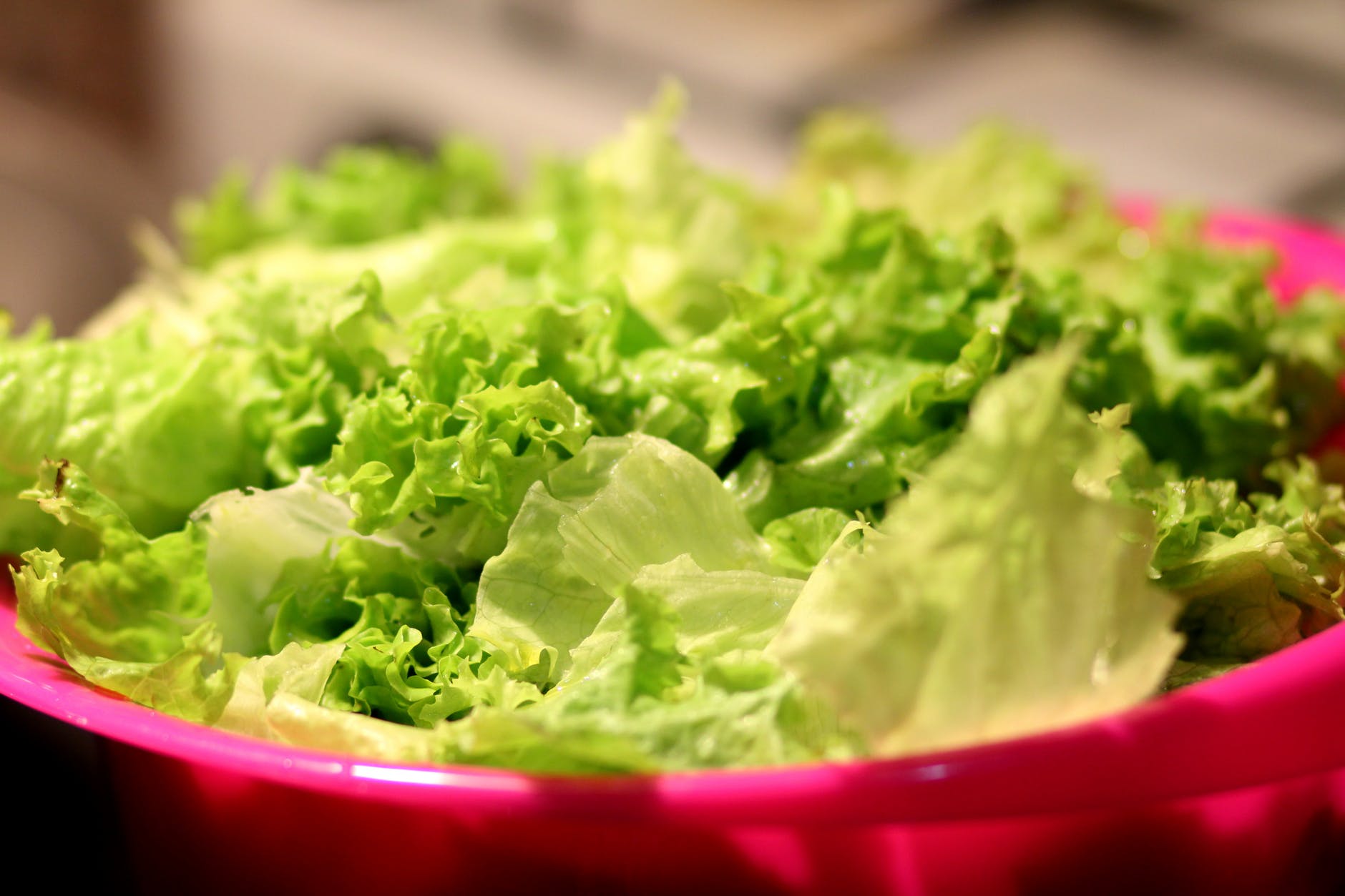
I love Mom’s seven layer salad, and I have learned to make my own variation. It’s easy, it’s delicious, it’s healthful, and it travels well. I’ve seen other recipes that use different vegetables, don’t use eggs or meat or mayo–I’m sure they’re ok, but I’m happy to stick with the basic outline that follows below.
I was thinking about the seven-layer salad the other day, and I realized that you can use a similar “recipe” for prayer. So here’s my modified “Seven-Layer Prayer” recipe:
First, start with a layer of “Let Us”
Prayer doesn’t happen without an act of the will. We must be deliberate about setting aside time and thought for prayer every day. We should “leaf” the busyness and chaos of the day and “romaine” in fellowship with the Father!
Next, add a layer of “Care”-rots (shredded).
1 Peter 5:7New King James Version (NKJV)
7 casting all your care upon Him, for He cares for you.
Give your worries and cares over to the One who cares most about you and all those you love.
Now you can add the “Peas” that passes all understanding
Trust that God is in control.
Trust that God hears and answers prayer.
Trust that God is Good, Wise, and Loving.
Rest in the knowledge that “God’s Got This!”
Here’s where I like to add some “Meet” (usually bacon!, sometimes ham or chicken)
While it’s vital that we spend time in personal, private prayer, God also wants us to meet regularly with others for fellowship, mutual encouragement, accountability, PRAYER, and guidance.
Now it gets a little dicey–diced onion (sometimes I substitute green onions or sliced or diced mushrooms)
Time to peel back the layers, and cut through to the root of anything that is getting in the way of a closer walk with God–confess it and give it over to Him.
Sometimes, this process may cause tears, or involve a little dirt– clean it up before you proceed!
Time for some dressing– mayonnaise or salad dressing. Annoint your salad, and your prayer, with oil. Remember, God has annointed you to spread His love and grace to others. Don’t forget to add this to your prayer life. Just as the dressing will coat all the elements of the salad, so God’s Spirit will surround and influence your words and actions done for Him!
“Cheese!” It’s a “gouda” idea to round out prayer with a time of joyful thanksgiving. Pile it on– God’s given us a LOT for which to be “grate”-ful!
Finally, the garnish– Hard-boiled eggs. These remind me of the new life we have in Christ, the Triune nature of God (we used to have lessons in Sunday School about the egg having three parts but being a single egg. We don’t use the shell in the salad, of course, but you can’t make a boiled egg without all three parts…), and also, the yolk reminds me of Heaven’s streets of gold. In prayer, we should remember God’s faithfulness in fulfilling His promises, and the hope we have in Him.
That’s the basic recipe for a seven layer salad– enough of each ingredient for a healthy “layer”. I’ve added extra layers a couple of times–diced tomatoes or peppers are good if you are planning to eat the salad quickly, but they will cause sogginess if you let the salad sit. (Also, if you use peas, use fresh if you can– drain canned peas, or get rid of any ice crystals if using frozen peas. )
A good seven-layer prayer should also be presented fresh, and savored. It’s delicious, it’s good for you, it feeds others, and it travels well! Try some!
In my pursuit of prayer, I have found it helpful to keep a Prayer Journal. One of the reasons is that I can look back and see what prayer concerns and issues I prayed for weeks, months, or even years ago. I also save space in my journal to go back and fill in how God answered those requests, or what progress has been made in those areas of concern. see also: Proactive Prayer Points
The Bible warns us to be very careful about looking back…the most famous example is the tragedy of Lot’s wife (Genesis 19). In looking back, she lost her chance to rebuild a life after the destruction of Sodom and Gomorrah, and was turned into a pillar of salt. In the book of Exodus, the newly freed Israelites grumbled about their circumstances and looked back with fondness on their lives in Egypt, forgetting their oppression in their homesickness for certain foods (Exodus 16). Spending too much time and energy on the past leaves us with little motivation and energy for the present or future. The past should never become more important to us than moving forward. If we long for the past, if we romanticize it or cling to it, fearing the changes and opportunities to come, we can stagnate, and miss the blessings playing out right before our eyes.
But we should take some time periodically to look back in order to gain perspective. The same Children of Israel who grumbled about leaving Egypt, once they arrived in the Promised Land, were commanded to remember their wandering in the wilderness, and told to teach their children about the past (Deuteronomy 8). Holidays and religious rites were instituted as reminders of the past. But this kind of looking back gives us renewed encouragement, incentive, and momentum to keep going by showing us how far we’ve come, and reminding us of God’s faithfulness.
One of the great benefits of reading through the Bible is that we are reminded of all the times God acted on behalf of His people– from providing for the Israelites in their 40-year desert odyssey, to protecting Christ’s early disciples as they spread the Gospel. God’s faithfulness is demonstrated time and again– for His Glory, and for Our benefit. God was at work then, and He is still at work in our own time! One great old hymn challenges us to “Count (our) blessings– name them one by one. Count (our) many blessings; see what God has done!” It is encouraging and inspiring to call to mind all the times that God has “shown up” in difficult circumstances or protected us from other dire events or losses that we don’t even know about.
I am especially encouraged when I see how God has answered prayer–so often, I’ve forgotten about trials and struggles that have come my way–issues that seemed huge in the moment, but in hindsight look insignificant. Sometimes, God’s answers were immediate and breath-taking. Sometimes, they were subtle and were revealed in several stages. Sometimes, the answers revealed how God was working beyond anything I imagined! Often, the requests reveal how I have grown (or not!) to trust him more or to listen better to those around me.
And, just like that, I also have material to add to today’s prayers– gratitude for prayers answered, hope for new growth, praise for God’s faithfulness, and confession for times I have doubted or looked back in envy or regret.
Pursuing a lifestyle of prayer means more than just coming to God with a list of requests and a couple of scattered “Thank You’s” every now and again. Prayer is a discipline– that means being a disciple of prayer! How can I learn to pray for effectively? Commune with God in a richer and more satisfying way? There are many tools and methods that can help with this. One of them is called the ACTS method.
ACTS is an acronym for Adoration, Confession, Thanksgiving, Supplication. And praying in this order can radically transform the way we enter into prayer and the way we respond to God’s answers. On a busy day, I often start prayer with my supplications– my requests, my needs, my hopes and desires. I may be approaching God, but my thoughts and heart are all about “what’s in this relationship for me!” “I want healing for ______, and protection for my family, and a resolution to this problem at work, and…”
But the ACTS method flips this order–it starts with Adoration. It begins by coming to God and acknowledging who HE IS. Worship will outweigh worry. Adoration accentuates God’s Ability and His Authority over whatever is on our mind. It also leads naturally into
Confession. Not the kind that masks false humility– “Woe is me, I’m so unworthy. I am a worm, and I don’t deserve to be happy or free or victorious in Christ.” Rather, confession comes as we recognize who we are in relation to God. We are not worthy of God’s blessings in our own righteousness, but IN CHRIST, we are able to come boldly before God in dependence and joyful acceptance of HIS righteousness. And we can’t accept it if we are still hanging on to old habits and sinful ways of thinking. We must agree with God, let go of whatever is holding us back, and gladly prepare to move forward!
Now we are in Thanksgiving mode. We are reminded of God’s mercy, and His faithful care of us. He has been faithful to answer prayers in the past, and to be with us, even in times of trouble and seeming silence. He IS there. He DOES listen. His mercies are new every morning! (Lamentations 2:22-23)
NOW, we are ready to present our Supplications. In fact, we are ready to follow the direction of the Apostle Paul, when he told the Philippian believers: “Do not be anxious about anything, but in every situation, by prayer and petition, with thanksgiving, present your requests to God. And the peace of God, which transcends all understanding, will guard your hearts and your minds in Christ Jesus.” Philippians 4:6-7 (NIV).
There are many times when we pray in desperation or in a hurry about a specific need, when this approach can be modified. But for deep prayers during a quiet time, or in a small group, the ACTS method can really boost our connection with the Holy Spirit. We begin by thinking we are praying about “something,” and are amazed to re-discover that prayer is really about “someone!”
I have found that such prayers also cause me to more readily ACT in the matters I bring up for request. I’m not just turning them over to God because I am helpless and He is my last resort. Even when I “know” that is not the case, when I focus on the problem and not the Provider and Protector, I forget that He can give me the power to “do all things” (see Philippians 4:13) in Christ’s strength and for His Glory!
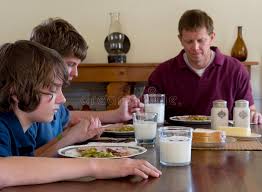
“God is great, God is Good…” “Come, Lord Jesus, be our guest…” “For what we are about to receive…” “Bless us, O Lord, and these, Thy gifts…”
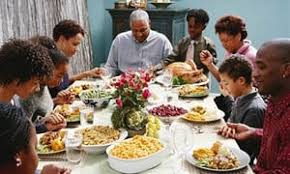
Saying grace at the family dinner table used to be a tradition. So much so, that it has been made fun of several times in the movies and on television. Some families recited a favorite prayer; others selected a family member to do the honors. Some families held hands; some closed their eyes; some stood. But NOBODY touched their plate until the Amen.
Grace has fallen out of favor in recent years. Some families still practice it for the holidays or special occasions, but many of us have lost the art of saying grace. In fact, many of us no longer have a family dinner table. Some of us eat, sleep, and live alone; others share a house, but rarely a meal, and never a grace. I would like to think that many of us WOULD say grace more often if we made time and effort for it, but many others actually hold grace in contempt, calling it old-fashioned; a senseless ritual, or a meaningless tradition.
I want to look a little more closely at grace– how and why we say it, and what it means (or should mean) as part of our daily walk with God. Calling grace a meaningless tradition may sound harsh, but it may also be a valid criticism. If “Come, Lord Jesus…” could be replaced with “Gentlemen, start your engines…”, then it might be time to rethink the entire practice. Similarly, if we dust off grace, only to say it for company, or to show that we still acknowledge tradition and have “good manners”, we’re missing the point. Grace should be more than just a moment to bow our heads, say a few familiar words, and dig in…grace has become laughable and spoof-able precisely because it has become senseless, formulaic, awkward, and grudging.
I am a big fan of Jimmy Stewart. And this short clip from the beginning of the movie Shenandoah is a prayer said sarcastically by a bitter man who lost his wife and promised her that he would continue to raise their children in a “Christian” home, in spite of his own anger against God. (He later has a change of heart in the movie.) There are many other film and TV scenes that make fun of saying grace without any remorse, repentance, but with a heavy dose of disdain.
I read a tragic statement by someone who claimed that saying grace is actually “graceless”– tactless and inane. The writer suggested that when we thank God for food, we are really thanking him for feeding us, and choosing to bless us, as he allows others to starve– that saying grace makes us feel more special/less guilty in light of social and economic inequities, which he blithely allows. In other words, saying grace, in this person’s opinion, makes us arrogant and apathetic to the condition of others, while giving an unjust God undeserved thanks.
I would posit that it should be just the opposite. I suppose there are many who pray with the arrogant mindset suggested above, but their mindsets and their hearts are not mine to judge. True grace is not about the recipient of the grace, or the other potential recipients of grace, but about the giver–God– and his worthiness to receive our sincere thanks. If I believe that God is indeed unjust, then it makes little sense to feel “blessed” or “special” at all– an unjust God is also capricious and unreasonable is not likely to be impressed or swayed by my smug “thank you,” anyway. So not praying doesn’t make me any less arrogant or apathetic toward others, nor does it move me to be more grateful or more generous than one who prays. It merely passes the blame for all injustice to God, leaving me off the hook, and making me feel more just than God.
However, if God is loving and gracious, promising perfect justice in his time, and forgiveness to those who seek him; a God who promises to be close to the poor in spirit, those who hunger and thirst for righteousness, and who are broken and contrite; I am not thanking him for who I am, for what I have, or for what I think he should do. I am thanking him for who he is and for what he has chosen to give. Some days, I may NOT have a lot to eat, or pleasant surroundings. I may be the victim of injustice done by evil people. But I can still thank God for what I DO have and for who HE is. And on those other days, in thanking him for the very things I would take for granted, I am reminded that blessings are not given for me to boast about or hoard, but to share with others. That’s what saying grace SHOULD do–cause us to reflect on God’s goodness, our true neediness, and our call to share God’s blessings with a needy world.
Grace is also an invitation– asking God to be part of every moment of our day. According to his Word, he’s always present, anyway. But grace is a way of acknowledging and welcoming that presence. And that invitation isn’t limited to Thanksgiving or Sunday dinner with the whole gang. That invitation can be made anywhere, by anyone, at any meal (or snack, or midnight raid on the fridge!)
Is God welcome at our dinner table? Does he share in our drive-thru breakfast, or our trip to the deli? Do we allow him to join us at the restaurant, where others might overhear and find us quaint and old-fashioned? Does he sit with us in front of the TV or computer as we absent-mindedly munch on a sandwich? Grace isn’t about our goodness, our riches, or worthiness to enjoy God’s blessings. Grace is about a gracious God who has poured out blessings on a graceless and fallen world; a God who loves us all equally and offers to give us something more precious than food– freedom, forgiveness, and family–forevermore.
“God IS great; God IS good; Now we thank him for our food.” “Come, Lord Jesus, be our Guest; let this food to us be BLESSED” “For what we are about to receive, may the Lord make us TRULY grateful.” “Bless us, O Lord, and these, THY gifts, which we are about to receive from THY bounty. Through Christ, our Lord. Amen.” “Dear Heavenly Father, thank you for this day and this food. Bless it to our good and to your glory. May all we say and do bring honor to Your Name. Amen.”
So many times my prayers do not reflect a grateful heart, but a needy one. Giving thanks is easy in those miraculous moments, and those special times of reflection and rejoicing. It is not so easy during times of stress, suffering, and waiting.
God blesses those who are “poor in spirit”; he is close to the broken-hearted, the weary, and the afflicted. Yet he asks us to give thanks always and in all circumstances. Many people see this as unreasonable, egotistical, and tyrannical on the part of God– that somehow, he needs our constant and abject praise. But what if this command is for OUR benefit? Let’s break this down:
IN everything– Not for everything. We don’t thank God FOR the death of a loved one, or the loss of a home, or an injustice done to us. But we can and should thank God for being sovereign throughout all the circumstances of life; for conquering death, for providing help and hope in our times of need; for promising both justice when we have been wronged, and grace when we have been unjust in our turn. There is never a time when we CANNOT be thankful–though there are many times when it is difficult, or when we choose not look beyond our pain.
EVERYTHING–Not just the “big” things– everything. We can be thankful for teeth, for dishes to wash, for traffic, for the way the moon hangs in the misty darkness, for a puppy’s eager greeting, for finally understanding our math homework, for the memory of a loved one, for the song that keeps playing in our head. Sometimes it’s not the actual thing, but what it represents that causes gratitude to well up and turn our hearts back to God. If we wait for “something to be thankful for”, we’ll often miss those things right in front of us. GIVE– Giving thanks is an action, not just a reaction. It is a choice; a mindset. We learn to say “Thank you” as children. Our parents pound it into our training as “etiquette” or “manners”, but everyone can tell when a thank you is genuine. Saying “Thanks” is not the same as giving Thanks. Actions speak much louder than mere words, and our choices in the moment are a reflection of our true character and not just “good training.”
THANKS– not just the word, but the concept. Even in my neediest moments, as I pour out a suffering, exhausted, wounded, and broken heart, I do so because I have a God who is THERE– a God who listens, who cares, who never leaves me alone and hopeless. I may feel overwhelmed, abandoned, even battered in those moments. But those awful moments do not define my life, nor do they characterize my walk with God.
This morning, I woke up–a small and underappreciated miracle– I am alive! I opened my eyes– I can see! I looked up and saw a roof over my head–I have shelter! I turned over and got out of bed– I can move! I have a bed, mattress, pillows, sheets…a bedroom! I brushed my teeth and washed my face– running water! Teeth! A toothbrush! A wash cloth! Skin! A bathroom–indoor plumbing! I saw a stack of bills on the table– I have electricity! Heat and air conditioning! A table! Money to pay bills!…I’m writing this on a computer with wireless internet in my apartment! All these things are precious gifts from God. I can be grateful, and give Him the thanks He deserves, or I can choose to ignore the blessings, or take the credit myself.
And what if I wake up tomorrow and I can’t see? What if my blessings all disappear– no house, no running water, no food or internet; no money, no family? Giving thanks is still a choice. I can choose to be thankful for who God is, and for what he has chosen to give me– or I can choose to be angry and envious and bitter. Some of the most grateful people I have ever met are those who have struggled with difficult circumstances– poverty, pain, loss, injustice–and yet they have chosen to look beyond those circumstances to give praise to God. Some of the most miserable people I’ve met are those who choose to look at their blessings with contempt; those who deny God’s goodness and choose to see only what they want but don’t have.
David and I recently closed our store. We had been open for 12 years, and we enjoyed having a business. But times change; our circumstances have changed; the economy has changed, including shopping patterns. After 12 years, this feels like a great loss. Yet, God is faithful. We met a lot of wonderful people, and we were able to provide goods and services to many within our community.
What happens next is uncertain– to us. But God knows exactly what options we have, and we trust that He will give us wisdom as we move forward.
And in everything, we will give thanks. And I’m so grateful that we can offer prayers of praise, of petition, of pain; prayers for people and places and priorities; prayers in the uncertainty, and in the unfolding of what is to come.
Near the end of 2020, my mother took a bad fall and broke her hip. Because of COVID, we were not allowed to visit her while she was recuperating. Thankfully, she had her cell phone and was able to make and receive phone calls. My mom was a very independent sort, but she loved to be “in the know” about all that was happening in the neighborhood and among our family members– births, deaths, hospitalizations, relocations, etc.. But, for all her interest in “what’s new,” Mom was completely computer-illiterate. She didn’t text, she didn’t have e-mail, and she knew nothing of social media. She relied on her phone and her desk calendar and notepad. Being trapped in a nursing home for six weeks was torture for her, even though she needed to recover and do physical therapy there. I tried to call her every day, and each time, she would ask, “Do you have any news?”
Sometimes, I had “news” for her; someone had tested positive for COVID, or a new baby had been born. But most days, I had to tell her– “I just called to say I love you, and I’m thinking of you.” And I could “hear” her smile on the other end of the line as she replied, “well, that means a lot. I just love to hear your voice.”
I don’t know why, but it struck me the other day how often we pray about circumstances– we “call” on God because we have “news”– situations that we want to bring to His attention– as if He didn’t already know! We pray because we want to lift up someone who is ill or suffering; we pray because we need to make a confession and ask forgiveness; we pray because we are facing an unknown future, and we desire God’s guidance and wisdom. Other times, we pray because we have a specific praise or thanks to offer. These are all legitimate reasons to reach out to God in prayer, and we certainly SHOULD pray in all circumstances, but how often do we call on God just to say, “I love you and I am thinking of you!” In fact, how often do we take the time to disconnect from social media and all the other distractions of our day to really focus on spending time with God?
Mom went back in a nursing home a couple of years after her first fall…she fell again and broke her other leg! So, I called her nearly every day– with or without “news.”
I marvel that God is every bit as eager to hear from me– even me– every day, “just because.” I’m so glad that I had the ability to talk to Mom; to hear her voice–and yes, even to share the “news.” She has been gone almost two years now, but what precious memories of our time together on the phone! How much greater my joy that I can talk to my creator; that I don’t have to worry about a busy signal or dropped call; that I can read His words to me any time of day; that His presence–even though I can’t see Him or hear His voice–follows me everywhere. And that He sends special people to call me, or text, or e-mail– “just because.” And no matter how I feel about my circumstances, God is so very glad to hear from me. And you!
This isn’t a hymn, but the music was running through my head as I wrote this. How often to we hear a ballad or a love song, and suddenly realize that God sings love songs over us?! (See Zephaniah 3:17!)
Every year at about this time, people come up with lists of “Things For Which I Am Thankful.” Some lists are elaborate. Some are short. Some are earnest; others are tongue-in-cheek– “Thanks for nothing.”
A few years back, one of my former students started posting on Facebook about her “thanks” list. She started on November first and listed one thing for every day of the month. I liked the idea, so I began doing the same. I’ve done it for a few years now. It’s not really difficult to find things to be thankful for– but it can be frustrating trying to come up with 30 different things that don’t end up overlapping or repeating. I could list individual family members on different days, but if I’ve already listed “Family” or “Grandkids” (as I did this year), it seems repetitive to list them separately. Also, what if I list some family members and leave others out? Won’t someone be hurt?
I began to realize, as well, that posting every day can become somewhat self-indulgent. What about those who are alone in the world? My rhapsodizing about family, good food, good health– isn’t that really just a subtle way of bragging about my blessings? The real goal of Thanksgiving shouldn’t be about WHAT, but about WHO? WHO is the source of all these blessings? WHO deserves to be thanked for any of the wonderful people, things, and situations in my life?
In the middle of all this second-guessing and self-righteous reflection one year, I was suddenly struck with a strange and ridiculous thought. I am really thankful for fuzzy socks! I used to run around barefoot every chance I got. But in the past few years, I’ve developed neuropathy in my feet from diabetes. My feet are often numb and cold. They aren’t so painful that I can’t walk, but sometimes the least little thing on the rug or floor can suddenly feel painful to my bare feet. Fuzzy socks are a treasure to me. They keep my feet warm, and cushion against some of the tiny antagonists– the pile of the carpet, the mote of dust on the floor, or the early morning temperature of the bathroom tile.
And it hit me. Thanksgiving is not just about the “important” things in life– though it’s wonderful to take the time to evaluate how much God has given me, and how many “big” things I often take for granted. But Thanksgiving is also about the little things– like fuzzy socks– that touch our lives. God cares about my neuropathy. He cares about my likes and dislikes, my comforts and my aches and pains.
And Thanksgiving is not just about “fun” or “pleasant” things. I am thankful for the times when God has disciplined me; when I have had to struggle to find the answers, when I have had to ask for help. I am thankful that God is with me in every situation. I am grateful to remember how much He REALLY cares about me. And in remembering all this, I want to share with as many people as I can reach how truly thank-full we ALL can be for the Love, Mercy, and Grace that is showered on us by God every day. Even when we are not aware; even when it involves something as simple as “fuzzy socks.”
So, I still post about 30 things every November. I discuss my thankfulness for family and friends, for vision and mobility, for a roof over my head, and for transportation, and the freedom to come and go. I list “Godly” things like prayer and my Bible or my Church. But I also list “fuzzy socks.” And pizza, and crossword puzzles, bird song, snowflakes, and books. Such things truly make me grateful.
I love to cook. I’ve been cooking for most of my life, and sometimes, I don’t use a recipe. Often, it’s a dish I’ve made so many times, I make it from memory. Other times, I’m adapting for ingredients I have, or substituting one cooking technique for another.
But I don’t recommend creating a new dish without a recipe or guideline. Cooking is a lot like chemistry– too much of one ingredient, or leaving out another one entirely, can result in disaster! You can’t just throw together a little of this and a little of that, cook it for who knows how long, and expect good results.
The same can be said for pursuing prayer as a lifestyle. I use a “recipe” for prayer. And yes, there are times when I vary from it. But a good, healthy prayer LIFE should contain the following four ingredients:
Praise/Worship/Adoration: After all, we are not praying to an unknown being with unknown qualities. We are praying to the One True God, whose marvelous attributes are worthy of unending praise. If I am praying regularly, and NOT praising God, what is the purpose of my prayer? It can devolve into a laundry list of my complaints, worries, wishes, and whims, instead of being a conversation between a child and her Beloved and Faithful Father.
Confession/Repentance/Review: This ingredient is a stumbling block for many people. If we have been forgiven, why do we need to confess or repent? God already knows our deeds, and Jesus’ death and resurrection have already removed our sins as far as the East is from the West, right? Right. But Confession is not about beating ourselves up over wrongs we cannot undo. Rather, it is simply agreeing with God about our condition and actions. Yes, Jesus has forgiven me. But I need to acknowledge who I am before Him. I am forgiven, not by being better than someone else, or even better than I was before, but because God has extended His Grace and Mercy. And if I don’t remind myself of this fundamental truth, I may forget, and begin to believe that I no longer “need” God’s mercy in my life.
Asking/Requests/Supplication: Supplication is an old word that means asking or pleading. Once again, this can be a stumbling block in a couple of different ways. As with confession, God already knows what we are going to ask. He already knows our needs. Saying them isn’t about making God aware; it’s about giving us a chance to seek HIS mercy, HIS will, and HIS answer. And it’s about acknowledging HIS sovereignty in all aspects of our life. I can’t count the number of times I have asked God for something, and realized that I was not really asking, but rather trying to dictate to God what I wanted to have happen. If I’ve started with the first two ingredients above, I quickly realize that, while God knows what is in my heart, He also knows what is best– and often that is much larger or better than I can imagine!
Thanksgiving/Responding/Yielding: The last ingredient in a healthy prayer life is a heart bursting with Thanksgiving and willing response to God’s Love and Care in my life. Prayer is, at heart, a conversation we have with God. And part of any good relationship is affirming that bond. If I talk with my friend, and even ask a favor, or share some of my burdens, I don’t just walk away without acknowledging how much their friendship and love mean to me– regardless of whether they respond immediately to my request. And I don’t listen to their loving advice and support and walk away as though they never spoke. Prayer should include a time of saying, “YES!” to our relationship with Jesus. YES, I trust you. YES, I gladly accept Your will and all the blessings You have provided in my life. YES, I will obey you and follow you!
Of course, every prayer and every pray-er is unique. Some prayers will have more asking than confessing; others will be “heavy” on Thanksgiving (especially those coming up later this month!). But it is good to stop and consider how the “ingredients” of prayer are producing a harvest in the way we live and the way we pursue a Godly lifestyle. For more about this topic, see https://www.dailyeffectiveprayer.org/prayer-acronym/ and also https://proverbs31mentor.com/acts-prayer/.