O Come, O Come, Emmanuel!

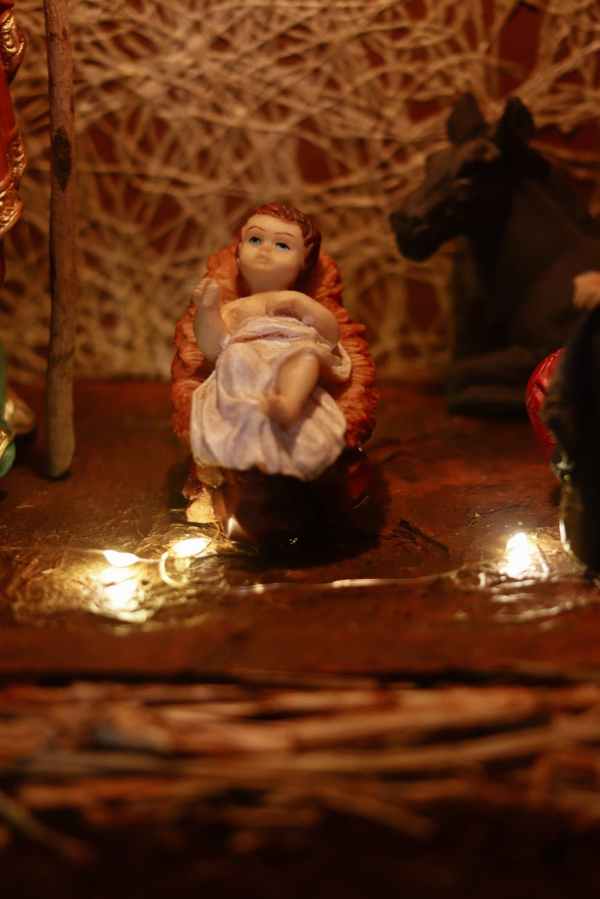
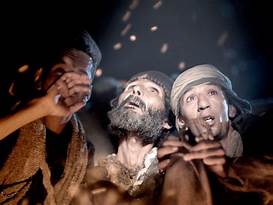
It is Advent season. We celebrate in four weeks an event that was anticipated for four hundred years! For four centuries, the people of Israel waited for the coming Messiah without ever hearing a word from God. Oh, there were prophecies– some stretching back centuries– that promised he would arrive. But when?!

Imagine praying earnestly for an event that would not happen for another three or four hundred years? Imagine praying into silence for an entire lifetime for an event that even your great-grandchildren would never witness?

We live in a fast world. Fast food, high-speed internet, overnight delivery of packages, instant communication, bullet trains– we have lost the skill of waiting. Yet Advent celebrates the waiting, the anticipation of a birth so amazing and so consequential, that we look back over 2,000 years in wonder!

The birth of Emmanuel was worth the wait. “God With Us” came into the world “at just the right time.” (Galatians 4:4). He was not a moment too early or too late to fulfill all the prophecies and bring Salvation to mankind. Those who prayed faithfully over the centuries may not have lived to see the fulfillment, but they put their hope and trust in the prophets and in the God they served.

We are in another Advent season– we await the return of Christ! We have no way of knowing the exact hour or day (or year or even century) of His return. But with the same wonder and hope of those faithful men and women of old, we should pray for His coming again! We should share the glorious story of His first coming. We should celebrate and worship the Faithfulness of God. He keeps all His promises “at just the right time.”

And as we wait, we must not give up hope or lose our passion for the Mission that Christ left with us. “Go, and make disciples of all nations” (Matthew 28:19-20). As wonderful as Christ’s birth was, it pales in comparison to His triumphant return to judge and rule the earth. May we look back in wonder and forward in joy as we celebrate this season.

Full Disclosure

I like to know things–I like to solve puzzles, figure out mysteries, learn trivial facts.  I want answers.  So when I go before God in prayer, I often ask questions.  Why is this person suffering?  When will their suffering end, and how?  Where were you in this disaster (as though God had stepped out for a minute and wasn’t aware of what happened)?

silhouette of fireman holding hose

God stays silent.

I can grow frustrated in the silence or I can learn to trust.  That doesn’t mean that I no longer want answers; just that I am willing to wait on God’s sovereign timing.  It also means that I am need to more about God’s nature–God doesn’t keep secrets or withhold knowledge because He wants to torment me, or frustrate me, or play some cosmic mind game (though some people accuse Him of doing just that).  God withholds full disclosure of His plans, His reasoning, and His nature out of love and compassion.  Suppose I could see into the future, even give out warnings, but had no power to stop disaster from coming.  Not only would I be haunted by the disaster itself, but by the full knowledge of its coming.  Suppose I could see a miracle in advance; know when and how it would unfold.  There would still be joy, but it would be muted by the foreknowledge– of course there would be a happy ending; of course there would be a miracle– I saw it all from afar off.

photo of person holding ball

The Apostle Paul touches on this in 1 Corinthians, chapter 13.  This is commonly known as the “Love Chapter”, and the first half is frequently quoted at weddings and church sermons.  But the end of the chapter is a wonderful message of hope and faith, ending with Paul’s triumphant statement about all three:

1 Corinthians 13:8-13 English Standard Version (ESV)

Love never ends. As for prophecies, they will pass away; as for tongues, they will cease; as for knowledge, it will pass away. For we know in part and we prophesy in part, 10 but when the perfect comes, the partial will pass away. 11 When I was a child, I spoke like a child, I thought like a child, I reasoned like a child. When I became a man, I gave up childish ways. 12 For now we see in a mirror dimly, but then face to face. Now I know in part; then I shall know fully, even as I have been fully known.

13 So now faith, hope, and love abide, these three; but the greatest of these is love.

monochrome photography of a man looking in front of mirror

God loves us with a perfect love.  Because of that, I can trust Him, and have hope in the midst of my questioning.  So when I pray with questions, I can know that God has “filed them away”– He is fully aware of my situation, questions and all, and He is fully faithful to answer them all in His perfect wisdom and timing.  Someday, I will know– not only all that I don’t know now, but why I had to wait.

God will provide full disclosure. with compassion, love, and wisdom that only He can give.

What Would Jesus Pray?

Several years ago, it became incredibly fashionable (literally) to wear t-shirts, necklaces, and especially bracelets with the four letters, WWJD– which stood for “What Would Jesus Do?”  This was supposed to serve as a reminder that the wearer was an ambassador of the Kingdom of God, and was supposed to be a follower of Jesus, and thus should act in accordance with what Jesus would do in any given situation.  Stuck in traffic–What would Jesus do?  Presumably, we would not lose his temper, honk and scream obscenities, or rudely try to cut or push others off the road.  Tempted by the scantily clad actors and actresses in a new R-rated movie– What would Jesus do?  Presumably, he would not attend R-rated movies filled with sexual situations in the first place, or, finding himself tempted, he would leave the movie.

I think the intention was good in the beginning– even scriptural in a sense.  The Children of Israel were commanded, in Deuteronomy 6: 8 to “tie them (God’s commandments, laws, and decrees) as symbols on your hands and bind them on your foreheads.  Write them on the door frames of your houses and on your gates.”  Throughout the Bible, the patriarchs, prophets, Jesus, and the apostles, often spoke of keeping God’s Word in our hearts and on our minds as we go through our daily routines.  This short reminder should help us do just that– redirect our thoughts to the One we are to follow.  As far as it achieved that goal, it was a good thing.

The problem is that it didn’t work that way for most people.  The jewelry or the t-shirt didn’t serve as a reminder to the wearer, but as a symbol to everyone else.  “Hey, look at me!  I’m wearing a fashionable accessory with a cryptic message that lets you know that my thoughts and actions represent Jesus here on earth!”  Ironically, Jesus would have been the last person to wear such an item– not only because he wouldn’t have to ask the question (BEING Jesus, and all), but because his focus was on others–Jesus didn’t wear his heart on his sleeve, or his wrist, and he didn’t call attention to his own righteousness.  Instead, he spoke to outcasts, and touched lepers.  He acted in accordance with God’s wishes, not because he had decided what he thought God would want him to do, but because he knew who God wanted him to become.

One of the worst casualties of the WWJD craze is that many people substituted their own wisdom for a study of God’s word– in other words, they imagined what Jesus would (or might) have done, instead of learning and following what he DID.  Of course, Jesus was never stuck in a traffic jam.  But he did face demands on his time, and stressful situations.  He was never tempted by movies or internet porn, but he was surrounded by a culture that had “religious”  “temple” prostitutes, along with sexual immorality not that different from what we see today.  The Bible doesn’t give us a picture of Jesus planning and executing a strategy for specific temptations– it DOES give us specific examples of people over a long period of time who failed or triumphed over temptations, big and small, and of people who turned to God for strength to overcome temptation and grace when they had fallen.  It also gives us a picture of Jesus living a life that was perfectly pleasing to God– including a life of prayer.

What would Jesus pray?  Look at John 17.  Look at Luke 11:1-4 or Luke 22: 39-48.  Look at Mark 14: 32-42.  There are many examples of Jesus’ prayers– prayers that pour out his heart to his Father– in faith, in pain, in grief, and in hope.  In fact, it would be appropriate to say in answer to the question, “What would Jesus do?”– Jesus would take it to God in Prayer! Look at the way He taught His disciples to pray:

“And when you pray, do not be like the hypocrites, for they love to pray standing in the synagogues and on the street corners to be seen by others. Truly I tell you, they have received their reward in full. But when you pray, go into your room, close the door and pray to your Father, who is unseen. Then your Father, who sees what is done in secret, will reward you. And when you pray, do not keep on babbling like pagans, for they think they will be heard because of their many words. Do not be like them, for your Father knows what you need before you ask him.
“This, then, is how you should pray:

“‘Our Father in heaven,
hallowed be your name,
your kingdom come,
your will be done,
    on earth as it is in heaven.
Give us today our daily bread.
And forgive us our debts,
    as we also have forgiven our debtors.
And lead us not into temptation,
    but deliver us from the evil one.
For if you forgive other people when they sin against you, your heavenly Father will also forgive you. But if you do not forgive others their sins, your Father will not forgive your sins. (Matthew 6:5-15 NIV)

Jesus did not ask the Father to give His disciples a blueprint of “Holy” activities or attitudes. He asked for fundamentals– that God’s Kingdom would come; that God would meet our daily needs; that God would forgive us as we forgive others; and that God would steer us away from temptations and evil. For everything else, Jesus directed His disciples to DO what He did, not ask what He would do. Reach out to those who are needy and hurting with love and practical help. Forgive. Tell the Truth. Worship God above all else, and go to Him in prayer.

Jesus didn’t come to earth and live his life to make us great, or successful, powerful or popular by the world’s standards.  He came to seek and to save those who were lost.  He asks us to do the same– not in our own strength or success, but in the overflow of the grace and power he has poured into us.  T-shirts and jewelry are nice, but Jesus used his life–his time, his love, his talents, his words and his actions in accordance with God’s will and God’s wise commands to bring people to himself.  Then he did what none of us could do– he fulfilled God’s law, becoming the perfect sacrifice for our sins, and conquering Sin and death.  What would Jesus do?  He DID IT!  It is FINISHED!  Our part is not to do what only God can do, but to what he has asked of us and trust him to do the rest.

bow down

This is also true in our pursuit of prayer.  I often get side-tracked in wondering if my prayers match up to what Jesus might have prayed in the same situation– and that shouldn’t be my immediate focus.  Prayer is, as I have to keep reminding myself, a pursuit.  It is a process and a journey, and an ongoing, deepening conversation with the one who loves me best.  And it is not a one-sided conversation– God answers my prayers, not just by meeting immediate needs or changing circumstances.  He speaks through his law, through the Psalms and prophets, through the Gospels and the Epistles, and through the godly wisdom of friends and counselors and ministers of his Grace.  And in doing so, he teaches me to pray.

May I stop worrying so much about the length or the style or the “worthiness” of my prayers.  May I instead listen, and learn, and continue the pursuit.

Just a Second…

A few years ago, I published a blog entry called Just a Minute… , which spoke of an effort to get everyone to spend one minute each day praying for their country.  I think this is a good idea, and I hope many people are doing it. The world needs more prayer, and more people coming together to pray!

four men seated on rocks facing mountain

While corporate prayer is a valuable exercise, and setting aside a particular time to pray with others (whether in person or in spirit) is also a great idea, the thought of a short, minute-long prayer seems inadequate, sometimes.  I suppose (indeed I hope) that most people spend more than a minute in prayer if they take this challenge.  It’s easy to do– there are a LOT of things to pray for!

sign open

But it struck me as I reviewed this earlier post that God is above, and beyond, time.  A single minute can be as rich and telling of our relationship with him as an entire hour.  And scheduling a particular time to pray is beneficial to us, but it is immaterial to our Father.  He doesn’t keep “office hours.”  There is no need for an “open” sign at the throne of grace– it never closes.  God is never unavailable, or “more” available.  It only takes a split second for us to recognize his omnipresence, and connect to it.

There is no need for us to wait for Sunday, or a High Holy Day, or a certain hour to pray.  And our prayers may only last a few seconds or a minute– “God, I need help!”  “Thank you, Jesus!”  “God, please help my neighbor today.”  There is no need to wait until a crisis or miracle, either.  We can pray about things that may seem insignificant to others, but God is honored when we share our thoughts with him first, and throughout the day.

It is wonderful to spend long hours alone with God– when we have the opportunity, and when we have made time to honor him above all.  But he is always present.  Even in chaos and crisis, we can take a split second to remember the one who calms the storms.

time lapse photography of road during golden hour

Not Enough Prayer..

There is a dangerous idea that sometimes appears in Christian circles.  If we are struggling with circumstances, someone, usually with good intentions, will ask us if we have prayed.  Then they may suggest that we haven’t prayed “enough” or that maybe we haven’t prayed the “right” way.

We want to see results– immediate, dramatic, positive results.  It’s what we expect from everything else in life; from the drive-thru fast food place, the vacation resort, weight loss program, graduation, manicure, even marriage.  When results are not evident, or slow in coming, we think we can and must do something to speed up the process.  We begin looking around for what else we can try– what else we “should have” done– to get the results we want.  We even say to ourselves that God wants more from us before he will provide blessing or healing or a breakthrough.

But that’s not always the case.  God makes everything good–IN HIS TIME.  He has the power to bring about immediate change, but he frequently chooses to walk with us through the times of stress and shadows, when we can’t see the end from the beginning, and we are tempted to turn back or doubt.  He doesn’t do this because he enjoys seeing us go through struggles, but because he knows that we learn to lean on him, to trust him, and to find our strength in him by traveling the narrow road.

13423899_10206741318640863_20981142957496268_n

Our prayers need to focus on God’s love and faithfulness.  He knows our need, sees our situation, and hears our prayers.  Our job is to know His word, look for his hand in our situation, and listen for his counsel as we trust him.  We should not grow weary of praying or give up in our efforts.  But neither should we doubt God’s wisdom or try to manipulate his timing with empty gestures or endless repetition.

Sometimes, we may find that God changes our desires, or opens our eyes to habits we need to change or worries we need to give over to him.  Hear out those well-meaning folks–some of them may carry God’s wisdom.  But in the end, our prayers– our life’s struggles and triumphs– are in God’s hands, not theirs.  It’s not the quantity or the quality of your prayer that makes the difference.  It’s the perfect love and timing of God.

Remember that even Jesus prayed in the Garden of Gethsemane– he prayed with so much intensity that he sweat blood drops.  He prayed more than once that God might let the burden of death and separation pass from him.  It wasn’t that Jesus didn’t pray “enough”, or that his prayers weren’t valid.  It wasn’t that God didn’t listen or care about his own son.  But God sent the assurance that Jesus needed to end his prayers with “Thy will be done.”  So it should be with our prayers.

pexels-photo-576926.jpeg

That Voice in Your Head

Most days, I post about Pursuing Prayer from the “praying” end…how do I pray, what attitude do I have about praying, why do I pray, etc.

Today, I want to explore the “responding” end…how do I know when God is answering my prayer, or what he’s asking me to do in response to his will?  While I don’t have a complete answer, I do want to share some wisdom– some from experience and some from Biblical principles and others’ testimony.

Isaiah 55:8-9 English Standard Version (ESV)

8 For my thoughts are not your thoughts,
    neither are your ways my ways, declares the Lord.
9 For as the heavens are higher than the earth,
    so are my ways higher than your ways
    and my thoughts than your thoughts.

God moves in a mysterious way, His wonders to perform. He plants his footsteps in the sea, and rides upon the storm. William Cowper

It often surprises people to learn that “God works in mysterious ways” is not actually in the Bible.  God’s ways are NOT our ways, and his thoughts are not our thoughts, but his answers to prayer are not always obscure and unknowable.  God does not delight in vexing us and making us guess and second-guess his will.  It would be easy if God always answered our prayers with a flashing neon sign that gave a simple, one-sentence directive– “Take two aspirin and call me in the morning.”  “Click your heels together and say, ‘There’s no place like home.'” “Hakuna Matata.”  But pithy platitudes and easy answers are not God’s way, either.  God created each of us as a unique reflection of his divine image– his answers will be uniquely designed to fulfill his will and meet our deepest needs, not always in ways we expect or understand.

pexels-photo-942317.jpeg

So how do we discern God’s will when there is no neon sign or simple answer to our prayers?  Here are a few guiding principles:

  • God will NEVER answer your prayer by contradicting himself or compromising his holiness.
    • God will not answer your prayer for money by giving you an opportunity to cheat or steal.  He will not answer your prayer for a husband by throwing you into the arms of someone else’s.
    • Just because God doesn’t send a lightning bolt or physically stop you from doing something doesn’t mean that he has given his OK.  If he ALLOWS you to sin, that doesn’t mean that he APPROVES of your sin or that it is his answer to your prayer.
    • God will never ask you to do harm to yourself or others as an answer to your prayer.  Vengeance, sacrifice, atonement, and retribution are the province of God alone.  I believe that God asks us to be vigilant in defense, and allows us to take up arms in defense, but to initiate a feud, to seek personal vengeance, or to act out vigilante justice is to flout both God’s authority and the authority of the powers God has set in place over us.
  • God MAY use circumstances or people to answer your prayer.  But the same principle above applies– circumstances that lead to sinful actions are NOT God’s answer to your prayer; people who advise you to do what you know is contrary to God’s holiness are not sent from God– no matter how appealing the prospect, no matter how powerful the person or persons.  That being said, God may choose to use the most unlikely of persons or events to bring about a resolution to your need–LET HIM!  Don’t judge a gift by the size, the shape, or the wrapping paper!

gift-made-surprise-loop-39006.jpeg

  • God may use time to answer your prayer.  I prayed for a husband from the time I was a young girl– I married at age 46.  Waiting doesn’t mean that God has forgotten about you; it doesn’t mean that you aren’t worthy of an answer or ready for an answer– sometimes your answer isn’t ready for you!  There are two caveats I want to share from my own experience of waiting for an answer:
    • Don’t give up!  God knows the desires of your heart– but keep praying anyway.  Well-meaning people will say awful, hurtful things– that you aren’t praying enough, or praying the “right” way; that you must be hiding un-confessed sin; that you need to try some other way to get what you want, or to hurry God along.  In my case, I had people trying to fix me up, suggest dating services, remind me that my “clock” was ticking (it was broken, but they didn’t know that), or suggest that it just wasn’t God’s will that I marry, and I should pray for him to take away the desire for a husband.  Listen to folks like this (if you must) with half an ear and less than 10% of your heart– let them cause you to re-examine your heart and your desires, but don’t let them cause you to give up or doubt God.  That was not their intention, but it can often be the result of their ill-considered words.
    • Do the next right thing.  Doing nothing while you wait for the perfect answer gets you nowhere.  Wringing your hands and pacing gets you nowhere.  God wants our trust and our obedience.  As we wait for more specific direction, we need to trust that doing the next right thing IS the RIGHT thing to do.  This was the hardest lesson for me, but the one I most needed to learn.  So while I waited, I moved ahead step-by-step.  I made a lot of friends, gained a lot of experiences, and learned about marriage by watching the examples of others (both good and bad).  I got involved working with children, first as a secondary teacher, and then as a librarian.  I got to spend nearly thirty years of my working life surrounded by young people.  I got to laugh with them, love on them, mentor them, dream with them, discipline them, and cry over them (and send them home).  I didn’t just “settle for” a single lifestyle– I learned to embrace it.  I learned to be grateful for the wonderful opportunities I had as a single woman, and to anticipate the changes that marriage would bring, should it come along.  I learned that marriage should be a means to an end, not the end itself– that marriage done right is not about my growth and fulfillment; not even about his growth and fulfillment; but about OUR growth together and toward Godliness.
  • Trust “that voice in your head”– (not the one that speaks out loud and gets you strange looks!) –but your God-given conscience, and the guidance of the Holy Spirit.  “That still, small voice” is often the most personal way God speaks to us.  In my own life, it was taking the risk to leave a career I loved (teaching) to reach for a deeper dependence on God.  I left the security of my teaching position for three part-time jobs (at one point), no health insurance, and a move to a new community where I knew virtually no one.  I had other choices, other more appealing options, chances to reconsider.  I wasn’t being pushed out of teaching–in fact, I left just as my options at the school were opening up for bigger and better things.  Yet I felt compelled to leave.  I had no safety net waiting– I ended up in libraries, but that wasn’t my original plan.  There were many people counseling me to reconsider– and their reasons were compelling.  But as I stood firm, other voices came along to encourage me.  I believe they were sent by God to confirm that this risk was from him and for my good.
  • Don’t trust “that voice in your head”–No, I’m not trying to confuse you or contradict what I just said.  But this is another caveat (see above).  We are told to “test the spirits”, and sometimes, that voice in your head is NOT the Holy Spirit.  In the case I mentioned above, I had to follow all the other principles of discerning God’s will.  In my case, leaving teaching did not violate God’s holiness or come about because I wasn’t willing to follow God’s leading–I wasn’t leaving teaching to try my hand at a get-rich-quick scheme, or because I had lost my desire to work with students, or had lost faith in God’s sovereignty in my life.  God DID use circumstances and people to confirm my decision and help me grow through the experiences that followed.  God used time to help me transition from schools to libraries, and prepare me for other opportunities, including short-term missions trips and marriage.  I can’t even begin to list all the ways I tested and examined what I felt God was leading me to do before I made the leap.  That much testing may not always be necessary, but we need to be careful not to rely on our own understanding (Proverbs 3:5-6), but to Trust in the Lord with all our hearts.  He WILL direct our paths when we do that.

pexels-photo-618955.jpeg

  • Finally, Pray for it– pray for discernment, for wisdom, for strength to do the right thing!  Won’t God DO IT!

The “Fake” Good News

I keep hearing about, and seeing reports of “Fake” News.  Even the term “Fake” News is somewhat misleading–is it news?  Is it False News?  Is it “fake” because it never happened, or because it has been exaggerated or taken out of context?  Or because it doesn’t say what I want it to say?  How do I know what is “real” news anymore?

The biggest problem with “Fake” news is that it “feels” real, true, and important.  In reality, it may be none of those things.  Yet there if often a kernel of fact, or a dusting of truth that makes it hard to disprove or dispel.  And, if it had already been accepted as legitimate news by thousands, it’s even harder to stop it from being spread.

But the more insidious problem with “fake” news is the time wasted trying to sort truth from fiction, and plain fact from exaggeration and distortion.  If my friend sends me an article, or a video, or a photo, I may accept it as true on the strength of my friendship.  But what if they’re just passing it on from another source?  What if I see it from a recognized news source?  Do I dare question it?  And if so, where do I turn to verify it?  There are several fact-checking websites, but even they have biases that cause them to weigh facts differently in various situations.  Whatever assumptions we used to hold about “neutral” reporting have been proved wrong.  We are being conditioned to trust none of what we hear and less than half of what we see!

pexels-photo-256868.jpeg

What about the “Good” News that Christians carry into the world?  Is it like the “Fake” news we see on TV or read about on our tablets?  And if someone challenges our faith in God’s word, how can we prove that the Gospel is not “Fake”, and that our Faith is not just more hype with smoke and mirrors?  If we are pursuing prayer, shouldn’t we be confident that our prayers are not in vain and that our faith is sound?

The claim of “Fake” news makes an assumption that there is such a thing as “True” news.  Similarly, saying the Gospel is “Fake” assumes that there is an alternate truth.  But the real burden of proof is on those who want to push for the alternative.  The truths of the Bible have been time-tested, and shown to be real.  The challenges I hear most often are to the exceptions, not the rule.  I don’t hear anyone saying that “Thou shalt not steal” is a “fake” morality.  Instead, I hear that, “Christianity is fake because I know Christians who cheat and steal.”  I don’t hear people claim that “it is not morally wrong to kill.”  Instead I hear them justify exceptions.  “I’m not promoting abortion as a good thing.  I don’t think it’s right to kill another human being, but this is just a fetus, and anyway, I’m just protecting a woman’s right to her own body.”  “I don’t think it’s ethical to force someone to stay alive if they are in pain and they want to die.”  “You can’t go around just killing anybody, but I think it would be better for everyone else if ___________________ (insert the name of a group– Down’s Syndrome children, Jews, Sunnis, Hutu/Tutsi) didn’t exist.”  “I don’t believe the morals found in the Bible are wrong.  I just don’t think you need to believe the rest of it to “be moral.”

People point to single passages, single verses, even single words to “prove” that the Bible is racist, sexist,  intolerant, and promotes violence.  The Bible includes many examples of people NOT following God’s laws, and yes, the results are grisly.  And there are difficult passages when God calls for a wicked city to be destroyed completely.  Critics are not wrong to point out that the Bible is not about perfect people behaving perfectly.  And the same Loving God who frees the slaves from Egypt is the God who destroys Jericho, and Sodom and Gomorrah.  Taken out of context, these few examples may seem to cast doubt on the authority of God’s word.  Yet the same critics who pound away at the same few examples in the Bible discount hundreds of instances of  historical events that highlight human sacrifice, genocide, mass infanticide, slavery, torture, and all sorts of other evil that occurred without the Bible’s influence.  Moreover, I hear a lot about claims against “Christians” who fought in the Crusades or owned slaves–I hear a lot less about Christians who worked to end slavery and the slave trade, or Christians who founded universities, charitable institutions, or brought revivals that sparked decades of social progress throughout countries and continents.

pexels-photo-305530.jpeg mlkjr

I don’t hear many people claim that there was no such person as Abraham, or King David, or Solomon, or Nebuchadnezzar, or Pontius Pilate or Caesar Augustus.  But they want to deny the historical reality of Adam and Eve, Jesus of Nazareth, and the Apostle Paul, who are found in the same Bible.  Why?  Because if Adam and Eve are real, there must be a creation and a creator.  If Jesus really lived and said the things that are attributed to him, we must deal with the claim that he was Messiah.  If the Apostle Paul really lived and wrote his letters to the churches of Asia Minor, we must deal with his claim that he encountered the risen Christ and his life was dramatically and eternally changed.

However, there is a “Fake” gospel– Good news that doesn’t match the Biblical account–a “Fake” Christ that only said or did or “would do” what we want him to say or do; a Christ that isn’t holy or righteous, but just loves us because it’s the “zen” thing to do; a Christ who is without power to save or to sanctify; a Christ who is without mercy and loves only those who look the part or say the right things.  How do you spot a “Fake” Christ and a “Fake” Gospel?  Get to know the real ones of the Bible.  You’ll soon be able to spot an “imposter.”

“Fake” News will always fail the test of time and the challenges of real evidence.  Good News will transcend the test of time and the challenges of faulty evidence.

person-clinic-cross-religion-54333.jpeg

Christ Has Died, Christ Is Risen, Christ Will Come Again!  THAT’s the Good News!


Just a Vacation?

There is an old joke about a church that invited a visiting pastor to speak.  The church secretary called him to ask the title of his sermon, and he very pompously announced that he would be speaking about “Justification by Faith, and Not of Works.”  He was astonished to find, when he arrived to preach, that his pronouncement had been misinterpreted.  The sign outside read, “Come this Sunday– Just a Vacation by Faith, and No Work!”

Christians often give the impression, and sometimes operate under the false belief, that we are on vacation– permanently; that our lives are, or should be, ones of carefree enjoyment and counting our blessings.  We say things like “Let, go, and Let God!”; “This world is not my home!”, and “Won’t God Do It!”  We wait for God or someone else to “fix” the problems around us, saying that “I’m praying about it.” It’s not wrong to say any of these things in context– we SHOULD let go of our needless worry and our constant running after the things of this world.  We should remember that our citizenship is in Heaven.  We should remember that  it is God working all things together for good, and that “He who began a good work (in us) will be faithful to complete it.”  And prayer should always be the first step we take.  But that doesn’t excuse us from action.  The Bible never paints a picture of saints on vacation.  We have a race to run, seeds to plant, and battles to fight.  We are not tourists in our neighborhoods and communities.  We have a job to do.  God gave us hands, and feet, and voices, and brains.  He intends that we use them for his service.

clasped-hands-comfort-hands-people-45842.jpeg


We must remember this in our prayer life, as well.  We need to “carry everything to God in Prayer,” the little things, the tough things, the awkward things.  We must speak words of truth and encouragement, and challenge, to ourselves as well as others.  We must not grow weary of doing good.  God has promised an abundant life, with an easy yoke and rest for our souls.  He promises to strengthen and encourage us in the work we do.  Best of all, he promises that we will be “Justified” by our faith in HIS finished work.  Our work will not be in vain, and our faith will be rewarded– not with a splendid vacation, but with eternal life with our Creator.  Now that’s a trip worth working for!

Puzzling Prayers

Note: This is a re-post from seven years ago, but I thought it was worth revisiting…

Have you ever had one of those days where things just don’t seem to make sense?  It doesn’t have to be a “bad” day, necessarily–just a day when things don’t seem to “fit.”  I had one of those days yesterday.

I journal my prayer life– I have notebooks with names and places for each day of the year.  Yesterday, my notebook included the city where my daughter lives and the names of three people celebrating birthdays, among other needs.  One of the names was a complete mystery to me.  I couldn’t remember who this person was, or how I knew either her or her name…I was drawing a blank and didn’t know how I should pray for her.  Was she a former classmate? Was she a daughter or mother or sister of someone I knew better?  I ended up praying a very general prayer– for her health, her family, etc., but it bothered me.

newspaper-news-media-spectacles-53209.jpeg


Hours later, speaking with someone on the phone, another name came up, along with a prayer request– a man suffering with an illness who happened to have the same surname.  Coincidence?  Possibly, but the name stood out, and I prayed again– for both.  Now I was really curious.  I did some digging.  The first person WAS the sister of someone I knew, and their father is the one suffering from an illness.

God is amazing, and one way is how he gives us the opportunity for “a-ha!” moments like the one I had yesterday.  I have spoken to several Christians who are sometimes separated by several time zones from those they normally call on for help or advice.  In crisis moments, they have cried out to God.  Thousands of miles away, someone will be awakened from a sound sleep with a sudden urge to pray for their distant friend, or another will be stopped in their tracks and send up a random prayer as their mind wanders.  Often, this will be in the exact moment of the crisis, and God will intervene with a miraculous healing or rescue or provision.  Days later, the two parties will connect and be astonished at the timing.

What used to puzzle me about such prayers was this– if God already knows the need, and plans to act, why involve the second (or third) party?  Because stories like this, while impressive and inspiring for those who believe, rarely cause a skeptic to come to faith, and aren’t necessary for those who already believe.

I think God has many answers, and I know I don’t have all of them, but here are three things I believe God is doing through such puzzling circumstances and outcomes:

  • While it doesn’t turn a skeptic into a believer, it DOES give the skeptic something to explain away– one such instance might be ignored as coincidence, but five?  two hundred?  And we have a Biblical precedent in the book of Acts, chapter 12, when Peter is rescued from prison and shows up at the very house where believers are praying for his release!  Even they didn’t believe at first, and left Peter out in the cold!
  • It IS an inspiration and an encouragement as a follower of Christ to know that he not only hears our prayers, but he recruits others to think about us, bear our burdens, and share in our trials.
  • Last (on my short list; I’m sure God has many other wonderful answers I haven’t imagined yet), I believe that God’s purpose for us involves communion– eternally living, sharing, and loving together with Him and with each other.  It is one of the highest honors and greatest privileges to be involved in God’s work through prayer…it is something we all can do, anywhere, anytime, but it requires being humble and willing to stop what we’re doing, commit our moments and our hearts in prayer for others (sometimes without knowing why!), and trust God to do all that we cannot.

Prayer sometimes seems puzzling, but that’s because we don’t see all the answers– yet.  Someday, what a marvelous and miraculous picture will unfold– and we have the opportunity to fill in the gap; to be the answer to 34-down; to be the missing piece of the pine tree in the upper right corner– to answer the call and finish the puzzle!

pexels-photo.jpg

“Little” Prayers

Do you ever wonder if your prayers are “too little?”  Are you bothering God, pestering him with requests to help you find your misplaced keys, or help you make the green light on your way through a busy part of town?  After all, God is the ruler of galaxies– there are over six billion people, let alone the cattle on thousands of hills, sparrows, and lilies of the field for him to consider just on our planet.

I know many people who find it awkward, or even impossible, to offer up “little” prayers.  They believe that God is too busy, too important, and “too Holy” to be concerned with their petty wishes.  I know others who pray about almost everything– what flavor of ice cream to choose; what color nail polish to wear; whether to join  their friends for a game of Monopoly or a trip to McDonald’s…  Is there a happy medium; a guideline on what constitutes an “appropriate” subject for prayer?  Is there such a thing as a prayer that is “too” little to bring to our Father?

I don’t think so.  I think there are prayers that exasperate God because they are selfish and prideful.  I think there are prayers that come to God with disrespect and disbelief, and a lack of consideration for who he is.  But I think those who come to God asking for his help, his wisdom, his grace, and his protection– no matter how small their request may seem–bless the heart of God and receive his full attention.

God constantly uses the small and seemingly unimportant things of this world to make huge statements of great value.  Consider sand.  Sand is almost everywhere– it is under our feet, blowing in the wind, all along the beach; it gets in our shoes, between our toes, even in our hair!  Sand seems unimportant, even annoying sometimes.  We use it for all kinds of things, most of which we consider unimportant– sandbags for weight, sand to play in, or build a temporary sand castle.  We use sand to make glass, or to polish stones, or to keep time.  A single grain of sand has no value to us, except in the rarest of circumstances, when it becomes the nucleus of a pearl.  But God sees each grain of sand.  He knows the value of sand.  In explaining to Abram about his promise, God said that he would make Abram’s descendants like the grains of sand– beyond counting!

sosua.jpg

God uses tiny seeds to produce and reproduce big harvests.  God uses bugs and insects to create amazing (and sometimes terrifying) structures–giant anthills, enormous beehives and hornet nests, spider webs and more.  He uses the simple and even foolish things of this world to confound the wise.

Moreover, God delights in the little things– the details and minutiae.  King David, and later Jesus, would be moved to compare our day-to-day living to that of grass, and common birds, and flowers– not because we are not important to God, but because THEY ARE– if the things we take for grated are under God’s constant care, how much more are we!?

Lastly, God ASKS us to be faithful in the little things–to care for the grass and sand and flowers in our midst– to offer up the little prayers and share our “small” concerns with him.  I like to remember childhood, and the shared delight of my parents when we made “little” discoveries on nature walks, or learned to make cookies, or grew another inch.  It was much easier for them to tie our shoes, but they loved watching us learn to do it.  God doesn’t want us to hide in a corner and try to figure out all of life before we come to him.  He wants to teach us, help us, and celebrate the small victories with us– as well as the great triumphs.

I think our society has lost its appreciation for the “small” moments and the “stuff” of life.  We try to cram our lives full of importance and purpose, only to find it slipping through our fingers like sand.

“Father, thank you for being a God of galaxies and grains of sand. Thank you that no detail is too small for you to notice; that you care about each one. Help me to see the blessings in the “little things” and to seek you first– with my praise and with my ponderings, life’s triumphs and its trials.”


Blog at WordPress.com.

Up ↑