Prayer and Fasting

I had to fast overnight for some bloodwork I had done this morning. No food for 12 hours; no water for 8 hours before the blood draw. It shouldn’t seem like such a difficult thing, but at 9 or 10 p.m., I imagined I smelled food. My mouth watered– and then it felt dry. I felt woozy and weak. Surely I could have just a cracker or some orange juice, right? But no, I finished the fast and rejoiced to eat breakfast after the blood draw was complete. And simple scrambled eggs tasted sooo good! Oddly, I have often gone several hours without food and without all the imagined side effects I felt last night. The actions were the same, but the focus was on what I was doing, not what I was missing.

Fasting has become popular in recent years. I know several people who practice intermittent fasting for weight loss and other health benefits. Others fast for religious reasons (other than prayer); some people give up certain foods ritually, for Lent or other festivals. Some even fast in dangerous ways (anorexia, etc.) Fasting is usually about our relationship (sometimes an unhealthy relationship) with food.

Prayer, on the other hand, is all about our relationship with God. And when the Bible speaks of Prayer and Fasting, it is also about our relationship with God. The Bible gives many examples of fasting– even “extreme” fasting. Moses, King David, Jesus, and the Apostles all practiced it. Sometimes entire groups (churches), cities (Nineveh–see Jonah, chapter 3), and nations (Israel/Judah) fasted. The Bible also gives us many reasons to do fasting, including repentance of personal or national sin, deep personal struggles, and focusing on a single issue, such as the unsaved, the persecution of fellow Christians, seasons of famine, or ongoing injustices. But the Bible isn’t specific with guidelines and rules about fasting, because, like prayer, it is primarily a pursuit. It’s not about the extremes or the number of days, or the amount of food we “give up.” It is about the pure pursuit of God’s sufficiency. God is not impressed by whether we fast for one day or forty; He does not count the number of calories we might have consumed or the amount of weight we lost. He doesn’t measure the strength of our will power or our “success.” He isn’t impressed by posturing and virtue signaling. What He does ask is that we pray with complete focus and integrity, without the distractions that food, entertainment, and even sleep can sometimes become.

We can fast for hours or days– miss one meal or fifteen–and still “miss” the blessing of prayer, because we are focused on what we are doing (or not doing) instead of focusing on what God is doing. We can also “fast” in ways that have nothing to do with food– turn off the TV or phone, retreat from crowds and busyness, even “fast” from sleep! The point is not that WE are “better” for fasting, but that fasting is “better” for US!

Today, consider a small “fast”– replace a coffee break, snack, meal, hour of social media, or that extra 15 minutes of sleep with some time alone and wholly abandoned to God. Not only will we come away refreshed and not “missing” whatever we traded, but we will more fully enjoy those same activities or foods when they take their rightful priorities. Remember, prayer and fasting is not a contest or a ritual, it is a pursuit and an adventure! Enjoy it!

Some thoughts:

  • 1) Fasting is as individualized as praying. There is no perfect “formula.” But there are several helpful suggestions. You can set a time limit (one day; 12 hours, etc. without food or a certain activity) or a food/activity limit (only one meal a day for seven days, only one television program per night for a week). You can plan days or weeks ahead to fast for a definite period, or you can decide spontaneously to start fasting until you feel led to stop. One caveat– Fasting is not a game. It IS a commitment, and shouldn’t be done without a real desire to get closer to God.
  • 2) Having said that, fasting isn’t about your will power, or success/failure. Sometimes, circumstances will prevent you from completing a planned fast. Certain health issues or family situations may prevent you from fasting for a day or more. Sometimes you will fall short of the goal you set. Don’t let that stop you from trying again, or trying differently. God isn’t about perfection on your part– He IS about helping you grow stronger and more complete as you continue to walk with Him.
  • 3) Fasting is personal. It isn’t about looking virtuous, posting about your struggles, or comparing yourself to others. (See Matthew 6:16-18) That doesn’t mean it can’t be done as a group. But group fasting should be about a single focus or topic, not about making everyone in the group conform to a preconceived expectation. There is great encouragement to be found in praying as a group, and some encouragement in fasting as a group, but remember, fasting is between you and God, not you and the group, or you and all your Facebook friends.

  • NOTE: At least once a month this year, I want to offer some practical suggestions on how we can better pursue a life of Prayer and living the Christian Life. I hope this post gives each reader something to consider.


Now I Lay Me Down to Sleep..

Now I lay me down to sleep;
I pray the Lord my soul to keep.
If I should die before I wake,
I pray the Lord my soul to take.

I learned this prayer as a child. It seemed very grim, and pessimistic. As a child, I spent very little time (as little as possible) thinking of my own mortality, or the state of my soul after a day of playing with dolls or running around outside. I was blessed with a safe and easy childhood. Of course, I had days of sickness, a bout of chicken pox, the loss of a pet, news of neighbors who had died in war, fallen to cancer, or been killed in accidents–moments that caused me to reflect a bit more. But I didn’t want to think about serious things. I wanted peace and happiness.

As a younger adult, I came to the conclusion that prayers like this were old-fashioned, and designed to scare vulnerable children into a false faith based on fear and gloom. Shouldn’t children learn about the Love of Jesus and the Mercy of the Father, instead of worrying about death and eternal doom of their soul? Prayers like this would be “bad” for young children; traumatic and disturbing. Better to teach them prayers that were sweet and light, and full of only the goodness of God.

Lately, however, I remember things a bit differently. Yes, there is gloom and doom in this old children’s prayer, but there is also comfort, Love, and Mercy. As a child, I could “lay me down” to sleep in peace, knowing that God would, indeed, keep my soul from harm. I didn’t expect to die, but when I woke up dreaming of monsters, or suddenly became aware of mortality, I didn’t have to stay fearful. God is bigger than any monster; bigger then Death. I could not trust anyone better, mightier, or more capable than the Lord to keep my soul, or to “take” it safely to its final destination. I learned about the Goodness of God, but I also learned about stark realities– the persecuted Church, war, famine, injustice–things that God wants me to confront, and endure, and lift to Him in prayer. And for every “gloomy” reality, there are stories of victory and joy, faith and resilience, love and grace– because God is standing by, ready to rescue and reassure and redeem.

Bedtime prayers are a great comfort to me now. And they are also important prayers in my Christian Walk. It is at bedtime that I can reflect on God’s goodness throughout the day. I can be thankful for all the blessings God has given me, and for all the ways He has guided me and protected me– often without my knowledge and in spite of myself! Instead of worrying, tossing and turning, trying to “figure out” tomorrow, I can lift my burdens to God, knowing that I won’t face anything tomorrow alone! I can reflect on all the times I thought I couldn’t make it, but God made a way! And I can confidently rest in the hope that nothing can separate me from God’s loving care. Not yesterday’s guilt, nor today’s failures, nor tomorrow’s unknown (or imagined) trials– not even death!

I am old enough now that mortality plays a bigger role in my thoughts. I have lost my parents, my grandparents, aunts and uncles, classmates, co-workers, neighbors, and friends. I’ve experienced both great joy and great sorrow. But I need not be afraid of disease, dilemmas, or death. I need not worry about the state of my soul. I may have griefs, aches and pains, and worries about tomorrow. But I can “lay me down” in peace and patience, knowing I have a Good, Good Father whose love has surrounded me for over half a century. I can “Hush” all my fears, and sleep like a baby, knowing my God is always standing right by my side.

Who Are We Feeding?

“An old Cherokee man told his grandson, ‘..My boy, there is a great battle between two wolves that live inside us all. One is evil–it is anger, jealousy, greed, lies, resentment, regret, and arrogance. The other is good– it is joy, love, peace, hope, kindness, humility, empathy, and truth.’ The boy thought for awhile, and then he asked, ‘ Grandfather, which wolf wins the great battle?’ The wise old man replied quietly, ‘The one you feed.'”

The Story of the Two Wolves– a Cherokee legend

 “Don’t store up treasures here on earth, where moths eat them and rust destroys them, and where thieves break in and steal. 20 Store your treasures in heaven, where moths and rust cannot destroy, and thieves do not break in and steal. 21 Wherever your treasure is, there the desires of your heart will also be. 22 “Your eye is like a lamp that provides light for your body. When your eye is healthy, your whole body is filled with light. 23 But when your eye is unhealthy, your whole body is filled with darkness. And if the light you think you have is actually darkness, how deep that darkness is! 24 “No one can serve two masters. For you will hate one and love the other; you will be devoted to one and despise the other. You cannot serve God and be enslaved to money. 25 “That is why I tell you not to worry about everyday life—whether you have enough food and drink, or enough clothes to wear. Isn’t life more than food, and your body more than clothing? 26 Look at the birds. They don’t plant or harvest or store food in barns, for your heavenly Father feeds them. And aren’t you far more valuable to him than they are? 27 Can all your worries add a single moment to your life?28 “And why worry about your clothing? Look at the lilies of the field and how they grow. They don’t work or make their clothing, 29 yet Solomon in all his glory was not dressed as beautifully as they are. 30 And if God cares so wonderfully for wildflowers that are here today and thrown into the fire tomorrow, he will certainly care for you. Why do you have so little faith? 31 “So don’t worry about these things, saying, ‘What will we eat? What will we drink? What will we wear?’ 32 These things dominate the thoughts of unbelievers, but your heavenly Father already knows all your needs. 33 Seek the Kingdom of God above all else, and live righteously, and he will give you everything you need.

Matthew 6:19-33 NLT

Just a short while ago, I published a blog entry called, “You Are Not What You Eat.” But sometimes, you DO become what you consume. I’m not talking literally about food, but figuratively you become what you read, and listen to, and spend time and money on– what you consume can end up consuming You!

“Watch your thoughts, they become your words; watch your words, they become your actions; watch your actions, they become your habits; watch your habits, they become your character; watch your character, it becomes your destiny.”

― Lao Tzu

Just like the two wolves in the Cherokee legend, there are two forces at work inside us. The Bible calls them “flesh” and “spirit.” The Apostle Paul also writes about this great battle:

15 For I do not understand my own actions. For I do not do what I want, but I do the very thing I hate. 16 Now if I do what I do not want, I agree with the law, that it is good. 17 So now it is no longer I who do it, but sin that dwells within me. 18 For I know that nothing good dwells in me, that is, in my flesh. For I have the desire to do what is right, but not the ability to carry it out. 19 For I do not do the good I want, but the evil I do not want is what I keep on doing. 20 Now if I do what I do not want, it is no longer I who do it, but sin that dwells within me.

Romans 7:15-20 ESV

We all start with “good intentions.” We want to be known as a “good person.” We want to have healthy relationships. We want the trust and respect of others. But Sin works in us against our own good intentions. We get hurt, so we lash out in anger. We see others achieving success or enjoying benefits we think we should have, and we become envious or resentful. We allow fear, greed, or bitterness to overpower us. We lie, or we isolate ourselves from others. We give up in despair, or reject the help and advice of those who want what’s best for us. We rely on our own resources and “will power” to achieve success, even to lose weight– but we always seem to fall short! We compare ourselves to others– sometimes ending in arrogance and apathy, sometimes ending in shame and humiliation.

But the battleground is not always so obvious as arrogance or despair, hurting others or being victimized. Who are we feeding in those moments of relaxation and ease? Are we scrolling through websites that waste our valuable time or encourage us to devalue others around us? Are we listening to music that encourages us to anger and pleasing ourselves at any expense? Are we reading books or watching movies that honor God? Are we spending money in ways that please Him? Are we spending our “down” time on our knees? Who are we feeding when times are tough? Are we spending time worrying or scurrying around trying to “make things happen” a certain way? Are we grateful, or fearful? Are we terrified or trusting? Our small choices in things that don’t seem to matter can start to change the way we think, and speak, act, and live.

There IS a great battle. But there are also tiny battles in the little moments of our day: opportunities to inch closer to God or to lose ground to the distractions and temptations of the world. And on our own, we will lose the battle, for the “flesh” will conspire to steal even the “good” food we think we are feeding ourselves. Thankfully, Christ came to feed the “good wolf.” In following Christ; in developing a relationship with Him, we allow His Spirit to nourish us. He is the “bread of life.” He is the “living water.” He alone provides the power to win the battle. Paul follows up in Romans by saying:

Likewise the Spirit helps us in our weakness. For we do not know what to pray for as we ought, but the Spirit himself intercedes for us with groanings too deep for words. 27 And he who searches hearts knows what is the mind of the Spirit, because the Spirit intercedes for the saints according to the will of God. 28 And we know that for those who love God all things work together for good, for those who are called according to his purpose. 29 For those whom he foreknew he also predestined to be conformed to the image of his Son, in order that he might be the firstborn among many brothers. 30 And those whom he predestined he also called, and those whom he called he also justified, and those whom he justified he also glorified.

Romans 8 26-30 ESV

So who are we feeding today? Or rather, who is feeding us? What are we consuming, and is it consuming us in turn? I hope we are feeding on God’s Word today, and walking with Him in each moment– whether in quiet reflection or in desperate need. May we be nourished and satisfied as we walk forward with Him!

My Father’s Heart

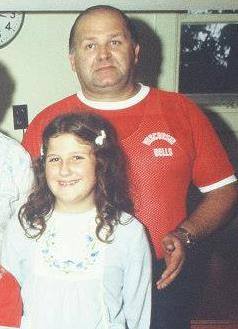
I can still remember as a small child of 3 or 4, after my Dad came in from mowing the lawn, climbing up and snuggling close to his chest to listen to the beat of his heart. Dad smelled of new-mown grass and honest sweat, and his heart was beating—thumpity, THUMP-Thump, thumpity THUMP-thump–I could almost feel it beating through his chest. It would start out racing, and gradually slow to a steady Thump-thump Thump-thump.

Looking back, I marvel at my Dad’s patience. Here he was, fresh from working on the lawn, hot, sweat-covered, and exhausted, only to be met with a wiggly child, intent on chattering, and interrupting his precious “relaxation” time. But as I wiggled, Dad’s tender arms would come around me, and both of us would become quiet and just enjoy being together, listening to the beat of his heart. They were precious moments.

My dad worked long hours at a mind-numbingly boring job. He worked for a large pharmaceutical company, but he wasn’t a chemist, or an engineer. He was a “bagger.” His company produced anhydrous citric acid for industrial and commercial use. As the name implies, citric acid is caustic, even in powder form, and Dad had to wear special gloves and shoes, plastic glasses with side shields, and other gear to protect his skin, hair, and eyes from the possibility of burns. He worked, sometimes 16-18 hour shifts (overtime, or time-and-a-half) at a station in a small, hot room. His job was to fit a bag to the end of a chute, push a button, and stand there as 50 or 100 pounds of citric acid filled the bag. He then carefully took the bag off the end of the chute and moved it to another machine, where the top edge would be stitched closed. Finally, he would lift and carry the full bag to a conveyer belt, so it could travel to the shipping room to be loaded on to skids and sent all over the world. Sometimes, he would cover someone else’s shift in the shipping room, loading the bags onto the skids or even loading the skids onto trucks or train cars, but most of the time, he was alone in a drab, overheated, powder-filled room.

I once asked my father how he could stand to do what he did every day. It was hot, heavy, boring, and mostly thankless work. Fit the bag, push a button, move the bag, push a button, move the bag again, and start all over. Always on his feet, always lifting his arms. No one to talk to; nothing to watch or listen to but the machinery around him. But my dad was content. He didn’t find his identity in his work, although he was proud to have a good-paying, steady job. He was thankful for his ability to be consistent and productive. He was proud of his good attendance record and his dedication. But he wasn’t married to his work, and he wasn’t working for money or fame or status. He was a Christian first, and a husband and father next. He was as steady as his heartbeat. Always reliable, even-tempered, trustworthy– solid.

My father worked at the same company for over 28 years (in fact, the company changed names twice while my dad worked there!). When he retired, we threw him a surprise birthday party/retirement party. But Dad’s heart was wearing out. All those years of work were taking their toll Dad spent two years of retirement enjoying some travel and relaxation, but his last two years were spent in and out of the hospital with surgeries and complications, physical limitations, and chronic pain.

Finally, the day came when Dad’s heart broke. He had been in the hospital overnight, and the surgeons had done all they could. They had “zapped” dad with the defibrillator. They had done compressions until his breastbone was broken and each compression was pressing shards of bone into his chest and close to his lungs. One last time, I stood, with my mom and sister, watching Dad’s heartbeat on the monitor. It was steady, but so, so weak. Dad’s once-solid arms were too weak to reach up from the bed; his blue eyes were dim, and he struggled to breathe. We said a last prayer and told Dad that all was ready for him to go Home at last. And his heartbeat faded to a straight line on the monitor.

Dad’s heart was huge in life– steady and strong, patient and solid. His faithfulness gave us all a glimpse of our Father’s heart in Heaven. Dad was a humble man. He was a man who sacrificed the life he could have lived to take on a thankless, boring, demanding job so we could have nice things and opportunities as his children. He also took the job so that, after those long hours, he would have time off during the week, so he could come to some of our school programs, and take family day-trips, and just “hang out” with friends and neighbors in the community. He mowed our lawn, but he also mowed lawns all around the neighborhood– for shut-ins, elderly couples, and those who were sick or didn’t have a mower. His heart was not only strong, it was incredibly tender. Dad cared about the little things…he loved children and animals; he cried for the National Anthem, and at prayer meetings. When I read about Jesus welcoming little children, it made perfect sense, because it is exactly what my own father would have done and said.

Dad wasn’t perfect, of course. He was only human. He made mistakes. And he died. But he made a profound impact on those who knew him, and he lived a life that drew people to Faith and Hope in Jesus. The Bible doesn’t make clear whether or not we will have “hearts” like our present human hearts when we are with the Father in eternity. But I know my Father’s Heart. It’s even better than my Dad’s. Some days, even here on earth, I can hear its steadfast, solid rhythm in the greetings of neighbors, in birdsong, or on the wind. And I can stop wiggling, and just be held in His tender arms.

No More Goodbyes

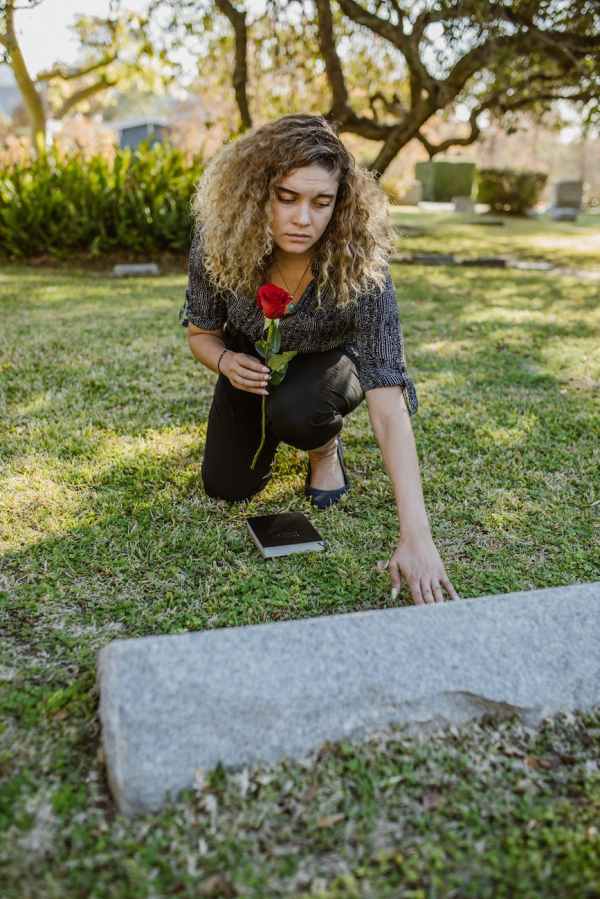
Today marks 25 years since I said “goodbye” to my father. My mother, sister, and I stood by his bedside at the hospital. The doctors had tried numerous times to re-start his heart. In the process, they had broken his sternum, and each new effort was causing additional pain and putting his lungs in danger of being punctured by bone fragments. His time was running out. We were allowed to come in and say our last words to him, before his worn-out heart finally stopped for good. I held his hand one last time, whispered that I loved him and that I would help take care of Mom. I kissed his forehead, and said a prayer. Mom and my sister did the same.


Earlier this year, I had to say goodbye to Mom as well. My sister and I were with her, and had read her mail aloud to her, as she had fallen into a coma. I was preparing to return home. I said, “goodbye;” I held her hand, kissed her cheek and turned to my sister. When I turned back around, Mom was gone–her oxygen machine was still running, but her heart had stopped beating, and she was peaceful and still. In that moment, I became an orphan.


Death is part of the curse of a fallen world. God is the source of all Life. In a fallen world, we are cut off from our life-source. Our mortal bodies must taste death. It is the consequence of Sin– our sin, and the sins of others. Disease, violence, aging, disasters, grieving, work, abuse– all conspire to drain the life out of our bodies. Life is a gift– we can’t “earn” it, and we can’t “hold on” to it indefinitely. Nor can we hold on to the lives of others–even those we love. Some day, I will lose my sister. Or she will lose me. Some day, I will lose, or be lost to my husband, my brother, my step-children, mother-in-law, grandchildren, cousins, friends, and neighbors.


And, just like leaves on the trees later this month, all of us will grow old, be changed, and fall into decay. Some will fall gently; others will be torn away by the winds of war, or crime, or cancer, or accidents. Some will fall early; others will cling to life until the last moment, but all will eventually die. More goodbyes. More grieving. More death.


But. God is the author of Life, not Death.


Death is not the end for those who have trusted their souls to God. Our bodies must still taste death. We must still say, “Goodbye” to those we love on earth. But our goodbyes are tempered with the promise that the One who conquered Death did so for US. Because Jesus was willing to die and able to rise again, we will also live again. And THIS life will be untainted and eternal. No more goodbyes. No more grieving and separation. No more fear of an unknown future that includes death. No more waiting. No more living without a father. Our Heavenly Father will never leave, never die, never suffer the ravages of age or disease, never fall. In fact, Jesus never said “Goodbye” to His disciples– it wasn’t in His vocabulary! He said that He would “Go to prepare a place…(John 14:2-3)”, and He charged His disciples to “Go into all the world…(Mark 16:15)” But He never said, “Goodbye!”

I had to say, “Goodbye,” to my wonderful parents. And I have the joy of knowing that our “goodbyes” are temporary. That I will see them again, even as I will see my Heavenly Father someday. So, while today holds in it the sadness of watching my Dad suffer in his last minutes of earthly life, it also holds the promise of reunion and restoration. My Dad will never again have to suffer; neither will my Mom. My future probably holds a few more “goodbyes.” But it also holds “Hello!” “Welcome Home!” and “I’m so happy to see you again!”

Photo by Polina Zimmerman on Pexels.com

I thank God for the lives of both my parents– for their testimonies of faith, for their good examples, and for the wisdom, laughter, and love they shared. And I thank God that their deaths were not the end of that love and joy. In fact, it will be even better to share someday what we could never have here on earth–eternal peace and freedom from grief and loss.

Twenty-five years seems like a long time, but it is a drop in the bucket of time, and nothing in light of eternity. That truth brings me great comfort as I face today. I hope you will be encouraged and comforted as well. Heaven is a place with no more “goodbyes.” And that radically changes the way I say “Goodbye” here on earth!

Processed Prayer

I love to cook. I love looking at new recipes, and finding new ways to use fresh ingredient, use up that last bit of leftovers, or stretch staple foods like beans, flour, or rice. And I love to pray. I love being able to lift up praises, requests, and even questions. I love knowing that I can confess even my most shameful thoughts or deeds to a God who already knows, loves me more than I can imagine, and stands eager to forgive me and strengthen me to make wiser choices.

Cooking can be exciting, challenging, and creative. But it doesn’t have to be. I don’t have to cook at all in our culture. I can (at some expense) dine out every day, and let someone else do all the work. Or, I can buy pre-made meals, “processed” foods and “instant” mixes– “just add water,” “cooks in 6 minutes,” “ready to eat.” I can pray “processed” prayers, too. I can recite prayers of others, mumble graces by rote, and even read off a list of requests with little or no effort or emotion.

But processed prayer isn’t healthy– no more than processed food. Oh, it won’t seem much different– at first. And it isn’t “bad”–every once in a while. But a steady diet of praying someone else’s words and thoughts doesn’t build a personal relationship. We miss out on the “process” of praying, and the end result is not as fresh and healthful.

When I cook from scratch, I have to follow a process:

  • I need to make sure I have the proper ingredients.
  • Some ingredients need to be seeded, skinned, peeled, chopped, or otherwise readied before they can be used.
  • Ingredients need to be added in the proper order.
  • Measurements are important. 1 teaspoon of salt is not the same as 1/2 cup of salt!
  • I need to use the proper methods– simmer, boil, chill, bake, etc.
  • Timing is crucial, too. Cookies may take 10 minutes to bake– a roast may take 3 hours.
Photo by Gary Barnes on Pexels.com

Praying “from scratch” also follows a process:

  • I have to have the right heart attitude.
  • Distractions need to be put aside.
  • I want to include all the “ingredients” of a deep prayer– Adoration and Praise; Acknowledging God’s Sovereignty and Power; Confession and Repentance; Thankfulness; Presenting my requests; Lifting up the needs of others; and Committing to Listen and Obey God.
  • Timing is important–I need to make time to visit with God in Prayer. It shouldn’t be an afterthought or another activity to squeeze in IF I have a chance!

That doesn’t mean that we can’t (or shouldn’t) pray “in the moment” or recite The Lord’s Prayer, or the Prayer of St. Francis, or another written prayer. It doesn’t mean that we should make all our prayers from a “recipe” or a formula. But if our prayer “diet” is becoming dependent on “processed” prayers, we may need to go back to the kitchen!

I Already Prayed About That…

Have you ever been in a season where you felt like you were praying about the same situation over and over with no results? No answers, and no indication that God has even heard? And you feel frustrated and even guilty about praying AGAIN about it?

Photo by SHVETS production on Pexels.com

We live in an “instant” culture. Instant banking, instant coffee, drive-through fast food, and 24-hour news cycles give us the expectation that we can get whatever we want or need with the push of a button or flip of a switch. Just yesterday, I pulled into the grocery store parking lot, and, seeing how full the parking lot was, I drove two miles away to a different store, because I anticipated long lines at the checkout! I don’t like waiting. I don’t like “wasting” time.

Photo by RODNAE Productions on Pexels.com

But God often puts us in a “holding pattern.” He may seem silent or distant, non-responsive or even absent. And in our impatience, we may stop bringing our burden to God, and seek elsewhere for answers or relief. Even when we know that God has promised to hear us, and never leave us alone, we long for instant gratification. And when we don’t get it, we start to wonder and doubt.

Photo by Liza Summer on Pexels.com

Sometimes, I feel angry in my impatience. I want answers! I want to know the next step forward! Other times, I feel hurt. Does God not hear me? Does He not understand my need? Sometimes, I even feel guilty. I know that God “knows” everything. Why do I keep bothering Him with the same thing? Am I asking for the wrong thing? Am I asking in the wrong way?

Photo by Nathan Cowley on Pexels.com

It is okay to have questions. It is normal to wonder. And I don’t have a “quick fix” answer for times like this. I think most of us experience these questions at some point. And the Bible has many examples throughout history of others who waited– some patiently, and others not so much…

Abraham and Sarah waited years for a family. In their impatience, they tried to do it in their own wisdom with heart-breaking results that echo down through thousands of years. Hannah prayed for years while enduring the taunts of her rival, Peninnah, before God gave her a son. A woman who touched Jesus’s robe had prayed and waited years for healing from her constant bleeding and pain. I know of parents who prayed for years that their wayward son or daughter would return home– some kept praying until they died, never seeing an answer.

But one comforting takeaway from all these Biblical and real-life examples– God DOES see and hear us. He left all those stories for us to read, knowing that we, too, would face trying and overwhelming circumstances. God doesn’t always give us an immediate or conclusive answer in our struggles. If He did, we would never develop a real and solid faith. God is less interested in answering our questions than He is in sharing our struggles. He does not want to walk ahead of us and smooth out our every path. Instead, He wants to walk beside us in the hills and the valleys of life.

Photo by Ivan Samkov on Pexels.com

So even if “I already prayed about that..” I can keep praying with confidence. God hears. He knows. And He cares enough to slog it out right by my side. And yours.

When I Can’t Do “All Things…”

10-14 I’m glad in God, far happier than you would ever guess—happy that you’re again showing such strong concern for me. Not that you ever quit praying and thinking about me. You just had no chance to show it. Actually, I don’t have a sense of needing anything personally. I’ve learned by now to be quite content whatever my circumstances. I’m just as happy with little as with much, with much as with little. I’ve found the recipe for being happy whether full or hungry, hands full or hands empty. Whatever I have, wherever I am, I can make it through anything in the One who makes me who I am. I don’t mean that your help didn’t mean a lot to me—it did. It was a beautiful thing that you came alongside me in my troubles.

Philippians 4:10-14 (The Message)

I know many Christians who quote Philippians 4:13–generally in the King James or New King James versions: “I can do all things through Christ, who strengthens (strengtheneth) me.” It is a powerful verse, but taken out of context, it can become twisted and lead to unrealistic expectations. In context, Paul is not talking about achievement, but about endurance. “I can endure all things…” or “I can cope with all circumstances…” is a better understanding, which is why I chose to quote from The Message, instead of another translation. Many times, however, we co-opt this familiar verse to fill our calendar with busy plans for our own achievements, trusting in God to give us the strength to multi-task our way past exhaustion. We end up frustrated, disappointed, and even questioning our faith.

God never meant for any of us to do “all things..” In fact, He wants us to trust Him to direct our paths– even when He directs us away from achievement and into rest or even need. Paul was a doer. He loved to be on the road, preaching and teaching, building up churches, and making new converts. But the letter to the Philippian believers was written from a jail cell. Paul could not be there to minister to them, but they had ministered to him, instead! Paul was thanking his friends for the help they gave him, not because he was abandoned or starving, but because their gifts reminded him of their care for him, and of God’s care for all of us. God had given Paul a season of rest from the road– imposed rest, but rest that gave him time to reflect on God’s goodness in solitude.

When we set ourselves up to “do all things,” it usually means “all the things I think I can or ought to do,” or “all the things I am asked or expected to do as a volunteer or a friend or neighbor or parent…” God is more concerned with our “being” than our “doing.” He wants us to be seeking after righteousness, not self-righteousness. He wants us to be growing in our love for others– even if we can’t “do it all.” He wants us to follow Him, not impress Him!

Photo by Karolina Grabowska on Pexels.com

I’m in a season of “can’t” right now. It’s not that I can’t do anything, but I can’t do “all things.” That’s not a result of my lacking faith or having a wrong view of God– God CAN do anything and “everything.” But I can’t. And God’s plan isn’t to empower me to be autonomous, self-sustaining, or self-righteous. I NEED others! And I NEED Him! What I CAN do, is trust in His timing and His resources to be sufficient for my daily needs. I can get “enough” done today, with God’s wisdom and strength. I can do “enough” to overcome anxiety or depression– with the help that God provides. That may mean allowing someone else to do simple tasks that I can’t do today. It may mean accepting medical help. It may mean changing my schedule or my expectations for today. But I can endure all the setbacks, and the moments of grief or weakness that keep me from “doing” what I had planned. I can weather it all in the power of Christ. And so can you! If you are finding yourself in a season of “can’t,” don’t skim over Philippians 4– study it. Claim it! Christ’s power isn’t for those who “can.” It’s for those who ask!

Photo by Luis Quintero on Pexels.com

It’s a great thing to have a “can-do” attitude. But sometimes, we need a season of “can’t do” in order to step back and see what we “can BE” in the power of Christ!

10,000!

A few years ago, singer and songwriter Matt Redman came out with a worship tune that has become a favorite for many. It’s called “10,000 Reasons.” But, while the song is recent, the idea and sentiment is not. In fact, it reminds me of at least two older hymns I remember from my childhood.

There is nothing particularly “magical” or spiritually significant about the number 10,000–it appears several times throughout the Bible, and usually signifies a large number or amount–it’s a number big enough to be impressive; it is difficult for most of us to imagine having 10,000 cattle on a farm, or 10,000 trees in an orchard, or 10,000 children to feed and clothe and house! It would be difficult to remember 10,000 names or 10,000 different passwords, or phone numbers– we can write them down or store them, but to remember them all on our own? Nearly impossible. And try to sit down and write out the titles of 10,000 books or movies of songs–or 10,000 people you have met in your lifetime. It might take days (unless you cheat and use a database), and even then, you probably would end up listing items that wouldn’t “count”– people you had not actually met or titles that were unfamiliar to you.

Photo by Mike Chai on Pexels.com

We live in a world of huge numbers– millions and billions and trillions– numbers so huge that they don’t really seem “real.” The Bible doesn’t use a lot of these numbers; instead, God uses pictures and metaphors, like “stars in the sky” or “grains of sand on the seashore:” objects beyond counting and beyond comprehension. Yet there are large numbers in the Bible– specific numbers of warriors, priests, and people in the nation of Israel at various times in their history; large amounts of money owed or gifts given; large distances…and God is a God of them all. God knows the exact number of hairs on each head (sometimes many thousands, and sometimes just a handful!); He knows the number of grains of sand on each beach on every seashore and lake shore, and the amount of water in each lake and pond and sea. He knows the name and size and position of every star and every planet and all their satellites.

Photo by Miro Alt on Pexels.com

If we were to list all the many reasons that God is great, and good; kind and loving; powerful and majestic and holy– if we found one new reason every day, it would take more than 27 years to find 10,000 reasons! And we would only be getting started!

But here’s the catch: we will never find 10,000 reasons if we never begin to search for them. God will still be the “fairest of 10,000;” He will still be majestic and faithful; sovereign and glorious– but we can miss it all, and waste our life on 10,000 trivialities, or 10,000 complaints, or 100,000 lesser things.

God doesn’t publish a list of 10,000 (or 100,000 or a million) reasons to worship Him– but He gives us the opportunity to discover new reasons each and every day. And He invites us– all of us– to come and discover “10,000 charms” in the loving embrace of His Son! We are never more than a prayer away from another reason to sing His praises!

Reflections on the “Big Game”

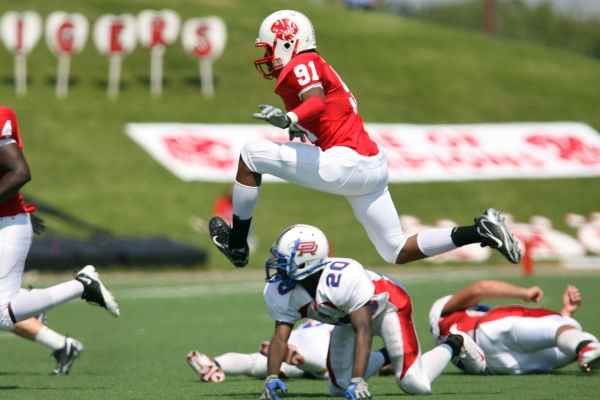
I missed this year’s Super Bowl. For anyone who is unfamiliar with this tradition, the Super Bowl is the name given (and trade-marked– that’s why this post’s title is the “Big Game”) to the national championship game for American Football each year. The tradition is as old as I am– 57 years–and each year, it gets nearly as much hype as the World Cup (Football in most of the rest of the world!)

Photo by Joe Calomeni on Pexels.com

Though I missed watching the game, I have some reflections to share about it:

  • While it is an important sporting event for anyone interested in American Football, it is not (for most of us) a life-changing, “Super” anything. I have not watched a Super Bowl game in many years, and my life is every bit as rich and full as it was in years when I did watch. The teams come and go, the players change, and the even the most exciting plays will be largely forgotten in the coming years (except for what gets re-played on “highlights”). It is a Big game. But it is not real life, and it is not THE Big event of anyone’s life– even the players will have other events (marriage, the birth of a child, the death of a parent, etc.) that will compete with the three hours spent one Sunday in February on a football field.
  • Football is divided into two halves (four quarters, to be exact). In between the two halves is a period known as “Half Time.” This is a curious ritual. The two teams get about a half hour to rest, reflect, strategize, and regroup before the second half of the game. Meanwhile, the fans get treated to an entertainment. In high school and college football, this is usually a chance for the marching band to show off. It has a military flavor, with drums, flags, formations, and cheerleaders all getting the crowd enthused for the “home team.” But there is no “Home” team for a Super Bowl. The teams play in a neutral location. So the “halftime” entertainment is like a condensed rock concert. The entertainment has nothing to do with the game at hand, and has no clear purpose.
  • The Super Bowl is televised, and corporations, public service groups, and other interests spend millions of dollars to buy advertising rites, and millions more dollars creating what they hope will be memorable ads to be shown during this window of high visibility. Tickets for the live event are expensive, but millions of people are watching on TV from their homes, or at sports bars or special “Super Bowl” parties.
  • Super Bowl Parties are a huge “thing.” Fans spend hundreds and even thousands of dollars on special food, decorations, venues, team-related clothing and other “gear.”

I am not a big football fan, so I don’t understand a lot of the hype. I don’t begrudge anyone the fun of watching and enjoying sporting events, but I wonder about some of the emphasis placed on this event. What would happen if:

  • People spent the same kind of energy, time, or money on strengthening their family, or building up their community, or spreading the gospel?..There are “Real life” events that are far more important and urgent than a football game– especially one in which we are mere spectators–that should cause us to clear our schedule, make preparations, and keep us riveted. How many people can recall cheering on a new bride and groom, or a high school graduate or a recovering addict or a new Christian with even a tenth of the excitement they give to a groups of players they’ve never met or spoken to, for a game that has no lasting impact on their own life, their family or community?
  • Only those people who were actual football fans attended the Super Bowl or Super Bowl Parties? How many people are spending money, time, and energy on something they don’t even really care about, because of the “shiny” extras on the periphery– the snacks, the Halftime Show, being the “first” to see the newest ads, being part of “the fun”, going along with the “in” crowd?”
  • Churches, schools, charities, etc., could garner similar commitment and excitement from their members and communities? What if we could generate the same kind of money and enthusiasm to fill food banks or send relief to those impacted by hurricanes or earthquakes? What if prayer meetings and tent revivals broke attendance records? What if graduation parties and anniversary parties were as elaborate as Super Bowl Parties?
Photo by August de Richelieu on Pexels.com

Just some thoughts. As I said above, I missed the Super Bowl this year…I don’t know what I might have enjoyed, or what memories I might have had. I much prefer the memories I have of spending time with grandkids, or celebrating special birthdays with friends and family, or helping plan a graduation party for my niece and nephew, or sharing the joy of a baptism. To me, that is Super way to spend a day.

Blog at WordPress.com.

Up ↑