I heard a riddle a few years ago, that went something like this: ”What kind of car would Jesus drive? A Honda–it says in the Bible that Jesus and his disciples were all in one Accord!”
While that pun may raise some groans, it also hints at a valid principle. Those who follow Christ should be “in one accord.” Whether we are riding together in a car, or sitting together in a service, or serving together on the mission field, we should be of one mind. But what does that actually mean in a practical sense? How does it relate to a pursuit of prayer?
To be “in accord” is to be unified, in agreement, in consensus, in harmony, with all the others of a group. It is the act of blending together for a single purpose– to match up with others in a single focus–to unite in one glorious expression. Think of a harmonic musical chord– three or more single notes being played together to make a fuller, richer, more complete burst of sound. The notes must act together– they must be in harmony within the scale, and they must be played at the same time. There is even such a concept in music of “resolving” a chord– first playing a chord in a minor key, then changing one or more of the notes to form a similar chord in a major key. The human ear is drawn to chords that “resolve”– music that ends on a “positive note.”
In human relationships, we also like resolution and harmony. As Christians, we are strongly encouraged to live in harmony and unity, living for others, so that we may “glorify the God and Father of our Lord Jesus Christ with one mind and one voice.” (Romans 15:6 CSB) We are not to insist on having things “our way,” to resist those who offer Godly correction, or to be part of creating divisions. Instead, we are to refrain from selfish ambition, to remain faithful to Christ’s teachings, and to “resolve” conflict whenever possible.
Likewise in prayer. We should echo the prayers of others, as we seek God’s will to triumph over situations and circumstances. That doesn’t mean that we all have to intone the same rote words whenever we are together. But it does mean that we should support each other in prayer, just as we would in speaking to each other and about each other.
And that involves seriously evaluating how we speak and act and think about our fellow Christians. If we gossip or spread complaints about our Brothers and Sisters in Christ, we are NOT in accord, and our prayers cannot be in harmony with theirs. If we are waiting for others to see things “our way,” we should be very careful about how we pray– it may be that WE are the ones who need to reconsider, or it may be that we need to listen before we presume to judge. Being “in one accord” involves humility, kindness, gentleness, and a willingness to accept (and sometimes to give) difficult Godly correction. The goal is not for others to see things “my way,” but for all of us to see things God’s way!
And when that happens, our prayers will be like a symphony, built of gloriously harmonious chords. Just imagine how delightful it is to pray “in one accord,” knowing that our prayers not only reach heaven, but fill it with music!
10 If one falls, the other pulls him up; but if a man falls when he is alone, he’s in trouble.11 Also, on a cold night, two under the same blanket gain warmth from each other, but how can one be warm alone? 12 And one standing alone can be attacked and defeated, but two can stand back-to-back and conquer; three is even better, for a triple-braided cord is not easily broken.
Ecclesiastes 4:10-12
At least once each month this year, I want to write about practical ways to develop our Pursuit of Prayer. Today, I want to focus on seeking out a partner or prayer group.
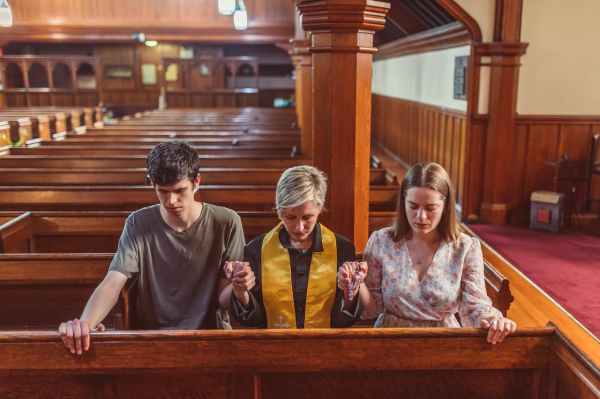
There are many benefits of adding corporate or communal prayer to our lives. Most of our prayers will take place between just ourselves and God. We may pray during our quiet time, early in the morning, or just before bedtime. Our prayers may be short or long; full of joy or sorrow; silent or even mumbled. But when we pray with at least one other person, the following should happen:
We should be more focused. It may sound shallow or presumptuous, but praying aloud in front of a “human” audience has a tendency to keep us focused on the words we use and the thoughts we are sharing. And, while we can fall victim to the temptation to show off our eloquence, or say what we think others want to hear, we can also be sharpened by the reality that God AND others are listening! Have you ever “caught” yourself praying without really “hearing” your own thoughts? Sometimes, prayers can become rote or stale. We can pray on “automatic pilot”– repeating requests or phrases without really meaning them. Praying aloud in front of others won’t necessarily stop that from happening, but it should make us more focused.
We should learn from the prayers of others. Listening to others pray gives us insight into THEIR thoughts and hearts. It can also give us insight into how others communicate with the Father. Sometimes others have knowledge of issues and requests of which I am unaware or unburdened. Sometimes, they have a different way of relating to the Father– not “better,” but different in perspective or experience. I have been startled, convicted, encouraged, and emboldened by listening to the prayers of my brothers and sisters in Christ. And there is a “flip-side” to this, namely
We should allow others to learn from our prayers. I know many people who feel their prayers are somehow “inferior.” They use simple words, or their words don’t flow smoothly. They are ashamed to pray in public. And yet, thousands have been inspired and humbled by so-called “simple” prayers. They teach faith and humility; trust and caring; and even courage and strength. If everyone’s prayers were the same, or if everyone’s prayers were about their own abilities or eloquence, they would lose much of their power– because prayer is not about US; it is about God working THROUGH us.
We can agree in prayer. As one of us prays aloud, the other(s) can pray along silently in agreement. This may seem like a simple truth, or a trivial point, but it is not. Prayer, like the rest of our life, is meant to be done in communion with others–we are not meant to be solitary and self-sufficient. There is exponential power in communal prayer, as we come together in agreement on various issues. It is one of the reasons that so many revival experiences begin with a small group of people who pray fervently. This isn’t just a metaphysical phenomenon. Hearing others pray about the things weighing on my heart encourages me to keep praying when I am alone again. Hearing others pray with the same heart encourages my faith and resolve. Hearing others agree in prayer may even plant a seed that wasn’t there before. Conversely, hearing others pray may cause me to reevaluate my own thinking, or help us better hear faulty thinking and disagreement over certain issues, causing us to seek resolution and truth over long-held but unquestioned beliefs. Praying aloud can help bring us closer toward unity!
Our prayers become more powerful. “Where two or three are gathered…” Matthew 18:20 says that where two or three are gathered together in my (Jesus’) name, he will there in the midst of them. This verse is often taken out of context. It does NOT mean that Jesus will ONLY be with groups of two or more. Jesus promises never to leave or forsake ANYONE who puts their trust in Him. Others have taken this promise (along with its preceding verse) to mean that where two or three people pray together, Jesus is obligated to give them whatever they ask for. This is also misleading. Jesus is with us, not to give us a particular outcome or answer, but to guide us into truth and faith. It means that Jesus is with each person, AND with everyone who gathers together in HIS name. His presence is magnified; His power is magnified (if such a thing is possible…) Just as in the passage in Ecclesiastes, the power of a united group– even a small group of two or three PLUS JESUS– cannot be over-emphasized. Remember the story of Shadrach, Meshach, and Abednego? Satan does not worry when Christians gather together to protest or complain. It warms his heart to see a small group of Christians come together to gossip, boast, or argue. But he shudders when Christians meet together in Faith to pray! It is much more difficult for him to distract, distort, and discourage us when we pray together–for each other, with each other, beside each other!
We become more accountable. This happens best when we meet regularly for prayer with another/others. It doesn’t have to be daily or even weekly, but when we meet consistently, we challenge one another to be faithful, active, and accountable in our prayers and in our living. I pray more often alone when I pray more often with a friend or group! I pray with more focus and purpose. I pray more intentionally.
If you don’t have a regular prayer partner or prayer group, I encourage you to seek out a friend or a group of people who will meet regularly. Even if it is not a “Prayer” group– it may be a Bible Study group, a group of friends meeting for lunch once a month, or a neighbor who carpools or commutes with you. Make prayer part of your friendship or group on a regular basis.
9 Love must be sincere. Hate what is evil; cling to what is good. 10 Be devoted to one another in love. Honor one another above yourselves. 11 Never be lacking in zeal, but keep your spiritual fervor, serving the Lord. 12 Be joyful in hope, patient in affliction, faithful in prayer. 13 Share with the Lord’s people who are in need. Practice hospitality.14 Bless those who persecute you; bless and do not curse. 15 Rejoice with those who rejoice; mourn with those who mourn. 16 Live in harmony with one another. Do not be proud, but be willing to associate with people of low position. Do not be conceited.
My mother died a couple of weeks ago. It is a season of mourning for me. And I know many others who have recently lost loved ones– husbands, fathers, mothers, and children. It is very easy for me to mourn with those who mourn right now. My heart aches with empathy. I know that mourning feels like, even if I don’t understand the exact nature of another person’s grieving. We are called upon to mourn with those who mourn. We want to share the burden of grief– to come alongside, to show support and sympathy. It is not just a “Christian” reaction to share sorrow. Yet, as Christians, we are commanded to truly participate in the grieving process with our sisters and brothers as they mourn. It is more than a simple expression of sorrow, or a kind word at the funeral home. It may involve “checking in” with someone weeks later, to see how they are coping with grief. It may be providing practical assistance– meals, help with funeral arrangements, etc.. Often, it involves speaking words of remembrance– providing the comfort of hearing familiar memories, and keeping loved ones “alive.” Even though we know our loved ones are “home,” or “in a better place,” or “at peace,” there is something chilling about their absence, and more so when they seem to be forgotten by those around us. Most of all, we can share our steadfast love and encouragement through dark days, through prayer, visits, listening, and providing hospitality.
We chose to have a friend read Romans 12:9-21 at Mom’s funeral. It summed up so much of who she was and what she had tried to instill in us as her children. And I was intrigued anew by verse 15: “Rejoice with those who rejoice; mourn with those who mourn.” It always seems like the first part of the verse should be the easiest, and the last phrase more difficult– more bitter. But in reality, I find it can be almost the opposite.
I don’t much feel like rejoicing lately. I’m not trying to be morose, but grieving is a long and painful process. There are moments of happy memories, and even relief that Mom no longer has to suffer. There is also reason for hope in the resurrection of the dead, and eternal life with Jesus. But the daily reality right now is of loss. Painful, heart-wrenching separation. It hits in quiet, unexpected moments with paralyzing, mind-fogging numbness. And I don’t much feel like being surrounded by the noise and gaiety of celebration. My laughter sometimes rings hollow, and my tears are often close at hand.
But God’s word says that I am to rejoice with those who rejoice. I am to help them celebrate their blessings, just as they are to comfort me in my sorrow. And this is part of God’s perfect plan! Bitterness and isolation can come if we choose to stay away from the happiness of others, or refuse to acknowledge our own grief. We can become resentful, even angry, as we listen to laughter from a distance, or compare our grief to someone else’s joy. Life is sure to bring both into our path at some point in our journey. There is no escape from grief, and no guarantee of ease and delight around every corner. God Himself is close to the brokenhearted (Psalm 34:18), and yet He calls us to make a joyful noise (Psalm 100:1). Even Jesus attended feasts and funerals. He wept (John 11:35), and He cried out in anguish from the Cross (Matthew 27:46). But He also rejoiced with those He healed, and with His disciples as they traveled, ate, and talked together.
There is healing in laughter. There is refreshment in rejoicing. And even in our grief, we need to allow for moments of shared praise and congratulations for those who are in a season of blessing. It is equally true that we should not allow our rejoicing to blind us to the suffering of others. We need both–sorrow makes us slow down a bit, contemplate, and prioritize; joy heals and gives us energy to keep running the race.
Today, my prayer is that God would open my eyes to the blessings of others, and the joy that He brings in all situations! And that He would refresh my soul to bring comfort to others who are grieving, and additional joy to those who are rejoicing.
I grew up in a church that made prayer a priority. I know many churches that still do this, but I know that some churches today just leave prayer up to the individual Christian. They may open the service with a prayer, and close with a prayer, and even offer a prayer service in the mid-week, but they do not focus on prayer as a congregation. With many churches, corporate prayer doesn’t seem very practical– they are just too large, or too focused on spending their time in worship. But I think something of value is lost when the church doesn’t come together in prayer.
Prayer IS an individual pursuit. It should be part of each Christian’s daily walk. And most of what I write (and practice) about prayer happens personally. But Jesus practiced both personal and corporate prayer. Even in His agonizing prayer in the Garden of Gethsemane, He wanted close friends to be nearby praying, rather than sleeping (see Matthew 26:36-46 and Luke 22: 39-46). When instructing His disciples in how to pray, He used the term, “Our Father,” not “My Father.” Christianity , including prayer, cannot be practiced in isolation. We need to pray for others, and with others, and be prayed for by others!
In the small country church where I grew up, prayer was woven into the service. Prayer requests would be shared, and people would take turns praying aloud, until one prayer leader would close the prayer time with an “Amen!” In the church where I currently attend, we still share prayer requests on-line, and a list of requests gets sent out once a week. Occasionally, we will break into small groups during service to pray for particular focus or a specific request. Additionally, we have a mid-week prayer meeting, where we spend an hour just praying as a small group.
Why do I emphasize the need for group or corporate prayer? Over the years, I have seen many benefits:
I love “hearing” the hearts of others. We don’t all pray exactly the same. Even if we are reciting a prayer (like The Lord’s Prayer) there are different voices, different inflections, different tones, that bring a richness and diversity to prayer. And that is a great reminder that God is the God of ALL of us, even as He is the God of EACH of us. He is OUR God, every bit as much as He is MY God.
There is comfort and even power in praying together. My personal prayer may be sincere, but it is usually silent, and may be influenced by my surroundings, my mood, my distracting thoughts, etc.. But there is a different atmosphere when two or three (or more) are taking turns praying, adding to the thoughts and prayers of others, and pouring out their hearts in concert with other believers. I get a broader perspective when I pray with others. I hear more than just my own voice and my own thoughts. It doesn’t change whether or not God listens to my prayer, but it changes the way I think and feel– it isn’t just “MY” prayer– it is “OUR” prayer.
I learn more about prayer by practicing with others. I know many people who will not pray in a group, because they feel their prayers are “lacking” somehow. And this is a dangerous way to think! I have learned amazing lessons of faith from simple prayers; amazing lessons of doctrine from eloquent prayers; amazing insight from broken and contrite prayers; and even lessons from “runaway” prayers that go on and on. And praying in a group is not about how much you say, but by how much you are present in the moment.
Corporate prayer is a rich tradition. Jewish priests would lead the entire nation of Israel in prayer during various festivals. Many of the psalms are written as prayer-songs for a congregation to sing together. The early church made prayer a part of their meeting together (see Matthew 18:20, Acts 2:40-47, Romans 15:6, others…)
Corporate prayer strengthens my faith and the faith of others. Intellectually, I “know” that God listens to and answers my prayers, but when I pray with others, it strengthens my experiential knowledge that God is listening– because I am listening, and being listened to!
Corporate prayer challenges my perspective in relation to my own sinfulness and God’s grace. Corporate prayer should not be used as a “True Confessions” session, where we try to outdo each other in confessing secret sins or wallowing in self-righteous recitations. But it should bring us into a realistic awareness of our very human nature, and of God’s amazing Grace. Corporate prayer takes us out of our “self” and focuses on God’s sovereignty in ways that personal prayer sometimes misses. Corporate prayer tends to focus on gratitude, humility, and thinking of others more highly than yourself. And that is often a stepping stone to confession and the awareness of God’s forgiveness.
Corporate prayer lends itself to structure. That’s not to take away from unstructured and spontaneous prayer, but corporate prayer tends to have a stated purpose, and sometimes a stated format. From “round robin” prayer, where people pray in a particular order around a circle; to “popcorn” prayer, where people jump in and take turns until a certain time has elapsed; to structured prayer, where people pray in a strict order and with definite purpose for a slotted time, corporate prayer tends to be more disciplined that personal prayer. That doesn’t make it better or worse, but it is a different way to pray, which can help foster discipline in other areas.
Are you part of a prayer group at your church or in your community? If so, cherish this rich opportunity. If not, make a point of connecting with other believers– at church, in your community, or even on-line. Share requests. Set aside time to pray together, or even separately, but at the same time. Live stream prayer. Pray with someone over the phone, if you don’t have a prayer group or congregation nearby.
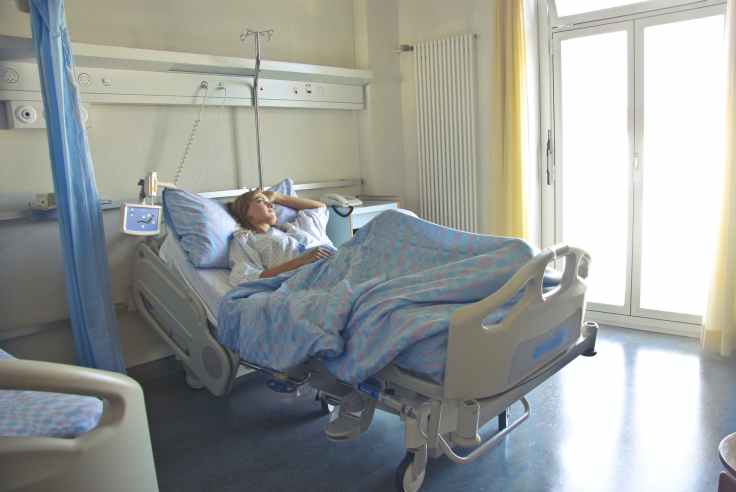
As I write this, my mom is dying. We don’t know how much longer she has, but we’ve asked for prayers as she takes this journey toward death and resurrection. These are sometimes difficult prayers to make. We don’t like to see Mom suffering, but we don’t like the thought of separation through death, either. Our initial prayer would be for complete healing. But that’s not realistic, given that Mom has heart failure and is almost 90 years old. That doesn’t mean that God cannot or would not grant total healing. But we aren’t expecting that kind of miracle when we pray today.
For some people, our prayers seem meaningless. One of my classmates from school reacted to my request for prayer by saying, “I just wish that prayer DID something…” I take this to mean that if we don’t get a miraculous outcome, she believes our prayers are wasted. I hope I’m misinterpreting here, but I know that this is a common criticism of prayer in tough times. It seems that every time there is a natural disaster, or a mass shooting, people who offer “thoughts and prayers” are roundly criticized for praying “instead” of “doing.” As though the two are mutually exclusive. As though prayer is an empty gesture in the face of disaster and distress. As though there is no hope, no comfort, and no help in praying.
There are others who will assert with complete confidence their belief that God will answer any prayer for a miracle, simply because they ask it “in Jesus’ Name” or because many people are praying for the same outcome. I call these kinds of prayers, and attitudes about prayer, “Vending Machine Prayers.” It is the belief that prayer must produce an immediate and positive outcome, or it is “broken” or invalid. If you don’t get what you were expecting, you must have prayed “wrong,” or didn’t have “enough” faith. Or your prayer just didn’t “work.” When someone puts money into a vending machine, and presses a button or punches in a code or pulls a knob, and they don’t get the expected item, some of them will kick the machine, or curse. Or they will try again, carefully trying to get the “right” result. Vending machines are inanimate objects designed to give a satisfactory consumer experience. If the coins or bills “jam,” if the knobs or buttons malfunction, if the product gets “stuck,” or isn’t available, the consumer feels cheated. Sometimes, they can get their money returned, but most often, they go away angry and unfulfilled.
God is not a vending machine. He is not “designed” to serve us or give us satisfaction. There is nothing we can “insert” in our relationship with God –even sincere prayer–that obligates Him to give us what we desire. God chooses to answer prayers in whatever way He knows is best for our eternal and overall well-being. God still gives miracles. I’ve seen it and experienced it. In fact, we could have lost Mom several years ago, when her heart failure put her in a similar state. God provided a miracle in the form of heart valve replacement surgery–and a cancellation that moved her surgery schedule forward before her condition was too far gone. I’ve seen people healed of cancer– and people whose prayers for healing ended in their rapid decline and death. But none of those prayers were wasted. Not one. God was working– sometimes on the sidelines, strengthening family members to deal with grief; sometimes providing testimonies to those with doubts and questions; sometimes planting seeds that would bear fruit years later in the lives of those left behind–sometimes God was working “sideways,” as He did with Mom years ago to give her several more years of life, even though she wasn’t completely healed, to grow and prepare for this next step and testify to God’s sustaining power.
God is not apathetic, and He certainly isn’t “happy” about Mom’s decline and her impending death. He shares our sufferings and our sorrows. But God knows and sees the “rest of the story!” Jesus wept over the death of His friend Lazarus, even though He knew that Lazarus would be raised back to life. Jesus was sharing the deep grief over the loss and sorrow felt by all of His friends, just as He rejoiced with them as Lazarus walked home from the tomb! (See John 11 for the whole story.) God doesn’t delight in death. He is the author of LIFE. But He is very present through every stage of life– even that last bitter taste of death we all must experience. And just as we pray for God’s miraculous presence, we pray for His guiding, comforting, and hopeful presence in ALL situations.
Prayer DOES something! Even if we don’t see immediate changes in situations; prayer changes US. It changes OTHERS. It changes our priorities and perspectives. It draws us close– to each other and to the One whose Love is Eternal and unchanging.
116 I love the Lord, because he hath heard my voice and my supplications.
2 Because he hath inclined his ear unto me, therefore will I call upon him as long as I live.
3 The sorrows of death compassed me, and the pains of hell gat hold upon me: I found trouble and sorrow.
4 Then called I upon the name of the Lord; O Lord, I beseech thee, deliver my soul.
5 Gracious is the Lord, and righteous; yea, our God is merciful.
6 The Lord preserveth the simple: I was brought low, and he helped me.
7 Return unto thy rest, O my soul; for the Lord hath dealt bountifully with thee.
8 For thou hast delivered my soul from death, mine eyes from tears, and my feet from falling.
9 I will walk before the Lord in the land of the living.
10 I believed, therefore have I spoken: I was greatly afflicted:
11 I said in my haste, All men are liars.
12 What shall I render unto the Lord for all his benefits toward me?
13 I will take the cup of salvation, and call upon the name of the Lord.
14 I will pay my vows unto the Lord now in the presence of all his people.
15 Precious in the sight of the Lord is the death of his saints.
16 O Lord, truly I am thy servant; I am thy servant, and the son of thine handmaid: thou hast loosed my bonds.
17 I will offer to thee the sacrifice of thanksgiving, and will call upon the name of the Lord.
18 I will pay my vows unto the Lord now in the presence of all his people.
19 In the courts of the Lord’s house, in the midst of thee, O Jerusalem. Praise ye the Lord.
There are dozens, if not hundreds, of people praying for my Mom (and all of us who love her so very much). And probably, there are some “vending machine” prayers among them. That’s ok. God hears them all. And I am so very blessed by them all. Because prayers DO SOMETHING AMAZING. They rise to a God who sees, who hears, and who LOVES unconditionally, eternally, and perfectly! We’re actively trying to do what we can do to make Mom comfortable and seeking treatment that will ease her last days, but we depend on God’s touch, His healing, His timing, and His good will to see us all through and keep us in perfect peace.
Sunday will be Mother’s Day. People are already talking about how this year will be “different” because of COVID-19. They say it will be more difficult because of the social distancing measures in place. And it will be for many families. There will be few family gatherings, few long and happy discussions around a dinner table, fewer flowers, fewer hugs…Many will still have the opportunity to see their mothers/children via skype or zoom or through a window. Many can still hear a familiar and much-loved voice over the phone, and send messages via text, email or even a letter or card. But it’s not the same. There is something about a mother’s presence– her touch, her voice, her smile, the subtle scent that belongs to no one else– that we cherish and celebrate.
But for many people, this Mother’s Day will be no different. Sadly, there are many who will spend Mother’s Day alone. There is a visceral, painful place– a gaping wound– where there is no “Mother” on Mother’s Day. Maybe it’s caused by death–either the death of our mother, or the death of our child/children. Maybe it’s some other wrenching separation– Alzheimer’s, a ruptured relationship, addiction, mental illness, abandonment, deployment, rejection… We miss what once was, or we miss what we never had. COVID-19 may bring this horror to some this year, and it may leave some with that horror for years to come, but the pain and loss is no different for being caused by a virus. The pain of losing (or not having) a Mother runs deep. It may be felt more keenly on this day, but it aches and gnaws every day. Mothers give life. They nurture. They are the safe arms in which babies find peaceful rest (..eventually). They are the kissers of boo-boos; the proud recipients of our first attempts at writing, and drawing; our first audience for concerts and dances; our first teachers and nurses, police officers, drill sergeants, and life coaches; often our first playmates, too.
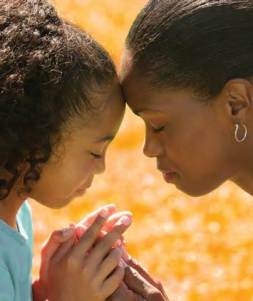
For many years, I have lived on “the other side” of motherhood. I am a daughter– blessed with an amazing, kind, strong, wise and Godly mother. I cherish the relationship we have, and look forward to the time when I can visit with her in person, instead of over the phone. She spent long nights rocking me to sleep; hours praying and crying by my hospital bed when I almost died as a toddler; listened patiently while I ranted and railed in teenage rebellion; encouraged me when I was exhausted from work and frustrated about living alone; and taught me the joy of spending time with God and loving others. And I want to honor her every day for the Godly example she has been to me and to others.
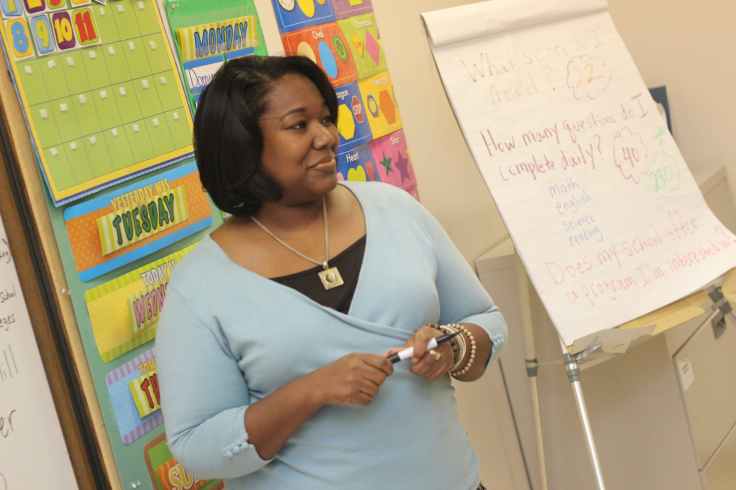
But I have spent most of my adult life outside the experience of motherhood, watching others with tiny arms wrapped around their necks, others kissing boo-boos and receiving artwork, others taking pictures of their graduating seniors and swapping stories with other moms. And, I have been reminded– sometimes in subtle ways, sometimes with contempt–that I do not “belong.” “You don’t know what I go through.” “You don’t understand.” “Who do you think you are to tell me about my daughter? You’re just her teacher. I’m her MOTHER!” “You can’t tell my children what to do.” None of these statements are wrong– but they hurt. And most of them come from someone else’s pain– their fear of failure, their frustration, their guilt, even a lack of sleep or a migraine…
Because of my experience, however, I have learned two things– a greater appreciation for my own excellent mother; and a new appreciation for the role I have been allowed to play as an “Other.”
Mothers are vital, but they are not perfect, and, especially where they are missing or rejected or removed, the world needs Others. Women (and men) who will stand as surrogates, substitutes, and valued helpers. Sometimes it is a thankless job; often it is temporary, even momentary, and unexpected. Throughout our lives, there are Others who inspire us, who have our backs, who cheer for us through track meets, or at dance recitals, or spelling bees. Others who may not kiss boo-boos, but patch them up in the moment. There are Others who are the first to spot our hidden potential, or warn us of dangers that no one else has spotted. Others who pray for us, cry with us, and share our smiles. Others who buy Girl Scout cookies, or magazine subscriptions, lemonade, or raffle tickets.
It was not God’s will for me to be a Mother. I have been blessed in recent years to be a step-mother and -grandmother, and I adore my kids and grandkids. I am so grateful for the mothers and others who shaped their lives, and the honor of being part of their families. But God has also given me a lifetime of being an Other. I may not have the “normal” experience of Motherhood, but I’ve had my share of doubts, failures, “bad” days, and sleepless nights. And I’ve been blessed to get to know hundreds of children– through school, Bible School, Sunday School, mission trips, Story Hours, school visits, Summer Reading, camps, baby sitting, extended family, and more.
If you are a mother– celebrate Mother’s Day this year. There are millions who have been denied the honor. And many who have lost the privilege.
If your Mother is still alive, but you can’t be with her– celebrate Mother’s Day this year. If you can’t be together in person, make an effort to be together in word and spirit. Flowers are nice; a fancy meal is fine, too, but your time– listening, sharing laughter and memories–it priceless. There will come another year when you won’t be able to be with her– and no phone line or video chat will be able to bring her closer. If your mother is alive, but your relationship is strained, you can still celebrate Mother’s Day. Use this day as a starting point to move forward– some relationships can be repaired if you are willing to take a first step. Others need closure. All relationships need forgiveness– for YOUR sake.
If you are missing your mother or have no mother–celebrate Other’s Day this year. Look for the people who have encouraged or uplifted you– aunts, neighbors, teachers, college roommates–let them know they’ve made a difference.
If you are not a mother– and even if you are– you are someone’s Other. Celebrate the opportunity to be the best Other you can be. Someone needs an Other today!














 Pursuing Prayer