The Ghost of Christmas Past

Charles Dickens wrote “A Christmas Carol”– a (literally) haunting tale of greed, bitterness, and, in the end, redemption. Set in Victorian England, the story involves a miser named Scrooge, his business partner, Marley, who has been dead for seven years, and three mysterious spirits: The Ghost of Christmas Past, the Ghost of Christmas Present, and the Ghost of Christmas Yet to Come…

Scrooge and Marley

Scrooge doesn’t really hate Christmas. He considers it a Humbug– an annoying and worthless distraction from the “reality” of making money. What bothers Scrooge– what eats at him and rules his actions– is the fear of poverty and powerlessness. He avoids relationships so that he cannot be hurt or abandoned. He avoids spending money– even for common comforts like coal to heat his office–for fear that he will fall into poverty. He does not like people because he will not trust anyone enough to risk getting hurt or used.

Scrooge’s only “friend,” his former partner Marley, lived by similar principles during his lifetime. He “visits” Scrooge on Christmas Eve to warn him of the fate that awaits those who fail to realize that there is more to life than making and keeping money. “Mankind was my business. The common welfare was my business; charity, mercy, forbearance, benevolence, were all my business. The dealings of my trade were but a drop of water in the comprehensive ocean of my business!” Marley has managed to arrange for Scrooge to be haunted by memories of the past, visions of the present, and shadows of what may be in the future.

The first of these “spirits” reminds Scrooge of Christmases from his childhood and early adulthood. Some of the memories are sad– Scrooge is left to spend the holiday alone at school, as his cold and distant father refuses to show him love, mercy, or guidance. Later, Scrooge is reminded of how his decision to pursue wealth alienated the woman he could have married. But there are happier memories, too. His first boss, Mr. Fezziwig, brought happiness and a sense of camaraderie and purpose to Scrooge’s early employment. He celebrated both hard work and the joy of fellowship with his employees. Scrooge sees visions of his beloved sister and is reminded that he has a family (his sister’s son) with whom he could make and share happy memories– if only he would choose to do so.

I will write about the other visitations later, but I want to camp out here for a little bit.

What memories would the Ghost of Christmas Past bring to me? To you? Are there sad or painful memories of Christmases without loved ones? Christmases that included anger or rejection? Christmases spent with poverty, uncertainty, or sickness? Would you feel bitterness? Fear? Guilt? Regret? Or would there be nostalgia for days gone by? Longing for family members who have passed? Questions about what might have been?

It is tempting sometimes to shove our memories of Christmas past in a closet or an old trunk and try to forget them. In Dickens’ story, Scrooge ends up desperately trying to snuff out the light of Truth that the spirit is holding. He doesn’t want to remember; doesn’t want to know or deal with the pain and loss of his past.

But before we can truly live in the present, we must confront the past. We do not have to live there. Our memories– good and bad– are but shadows of the things that have been. But they can cast long and devastating shadows if we let them. Denying past pain or trauma can give us a false sense of control. Burying ourselves in work or pleasure or entertainment may feel like a solution. Being cautious and angry and cynical may seem like wisdom. We can blame others, blame ourselves, even blame God for our feelings of hurt and fear of being hurt again and again. OR we can, with the light of truth, revisit our past. We can discover the healing power of redemption and forgiveness. We can– we must– still acknowledge the pain, the injustice, the grief that lies on our past. But we also must see that the shadows of the past only fall behind us. However the past may have shaped us, damaged us, challenged us, or forged us, the present and the future can be turned in a new direction.

And that is possible because of Christmas– because of Christ!
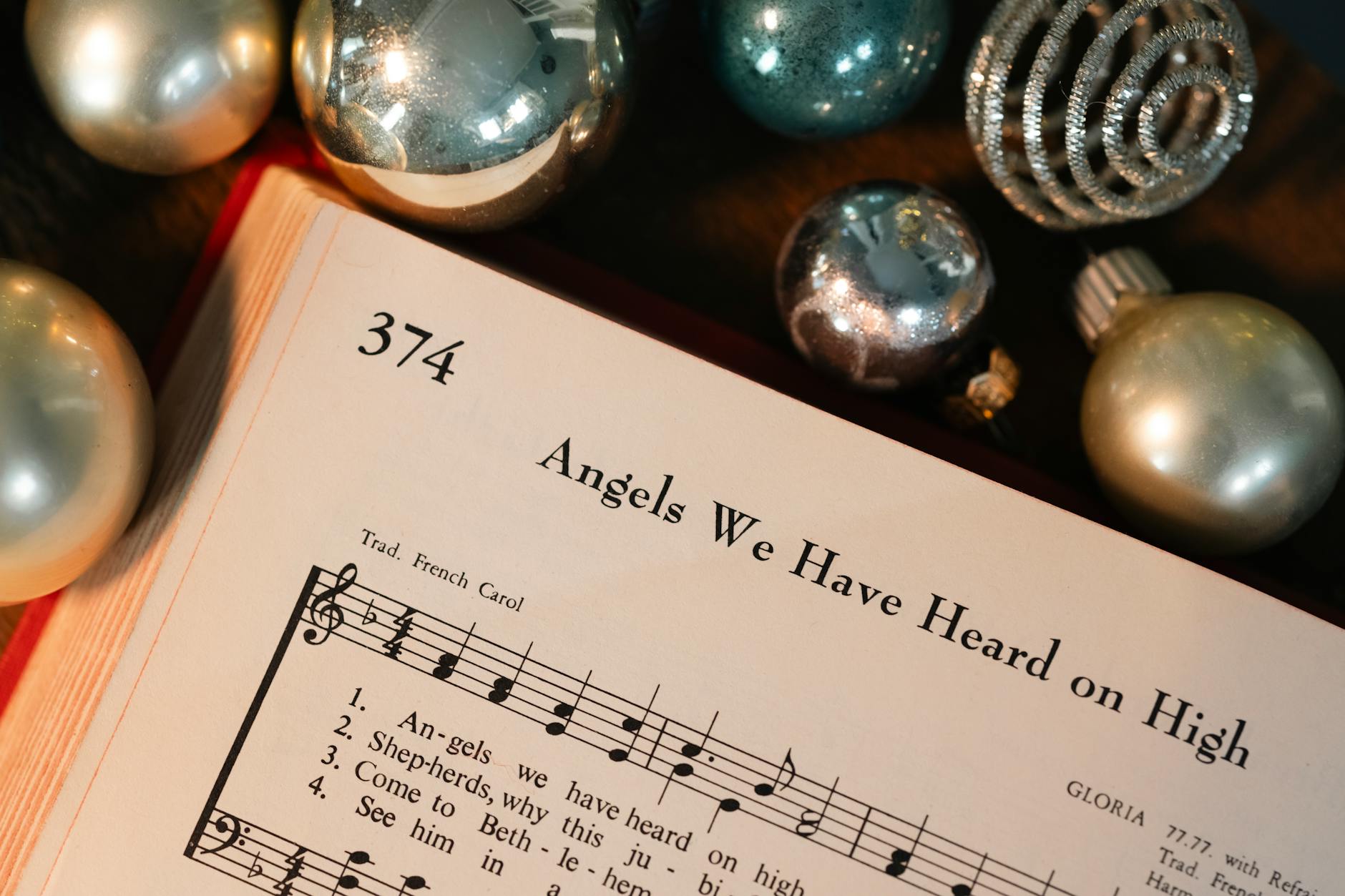
When Scrooge first visits his past with the Ghost of Christmas Past, the first image he experiences is of his classmates from school riding in sleighs and wagons singing Christmas carols. Singing! He could not join in. As an adult he has chosen not to join others as they sing of the wonder of Christ’s birth. But the carols echo– their message endures! Christ is Born! Glory to the Newborn King!

My prayer today is that Christmas past holds some happy memories for you. But the very Good News of Christmas is that it isn’t just about the past. And our past Christmases don’t have to haunt us. Because the Light of Truth– The True Light of the World (John 1:9) –that came on that first Christmas so long ago leads the way forward!

“Now I Lay Me Down To Sleep…”

When I was still a young child, and a new believer in Christ, I learned this bedtime prayer:


“Now I lay me down to sleep.
I pray the LORD my soul to keep.
If I should die before I wake;
I pray the LORD my soul to take.”

I didn’t use this bedtime prayer every night; my parents taught me to say more personal prayers, whether at bedtime or throughout the day. In fact, I found this prayer to be somewhat morbid– praying about death before lying down for sleep. Still, it was an easy prayer to learn, with its rhyme scheme and easy rhythm.

As an adult, I look at this prayer from a very different perspective. I learned it from books, which had included it from revisions of earlier books, including old Mother Goose rhymes. The prayer (or a version of it) dates back to the 17th century https://www.dailyeffectiveprayer.org/now-i-lay-me-down-to-sleep-prayer/, and I imagine the thought of dying in the night was far more persistent than it is now for most children. This prayer offered comfort, not just about one’s own death, but the sudden death of a baby brother or sister, or the death of a neighbor, or one’s parent. Death, which often came in the night, was not to be feared, because God was bigger than both the night and the grave.

But as a adult, I also appreciate the simple trust that is expressed in such a short prayer. I often find myself at night fretting and praying about details and issues that I have tried to rationalize or “fix” in my own power. This prayer puts things in perspective– I pray the LORD my soul to keep. Basically, I lay everything, including my very soul, into God’s hands. Thus, I CAN “lay me down to sleep,” rather than stay up reciting a litany of little worries about which I can do nothing, or have already done what I could.

“If I should die before I wake…” The older I get, the more this line resonates. Not that I believe I am at death’s door, or anything, but death is less of a “monster under the bed” sort of concept than it was as a child. Death is a reality, and yet I can trust God to “take” my soul, snatching it out of the grave and raising me to eternal life with Him. Not because I know better than I did as a five-year-old, or because I have done “good” things over the past half-century and more– but because God said so in His Word, and I can trust Him to do what He says. Just like I learned to do when I was five!

Why Say Grace?

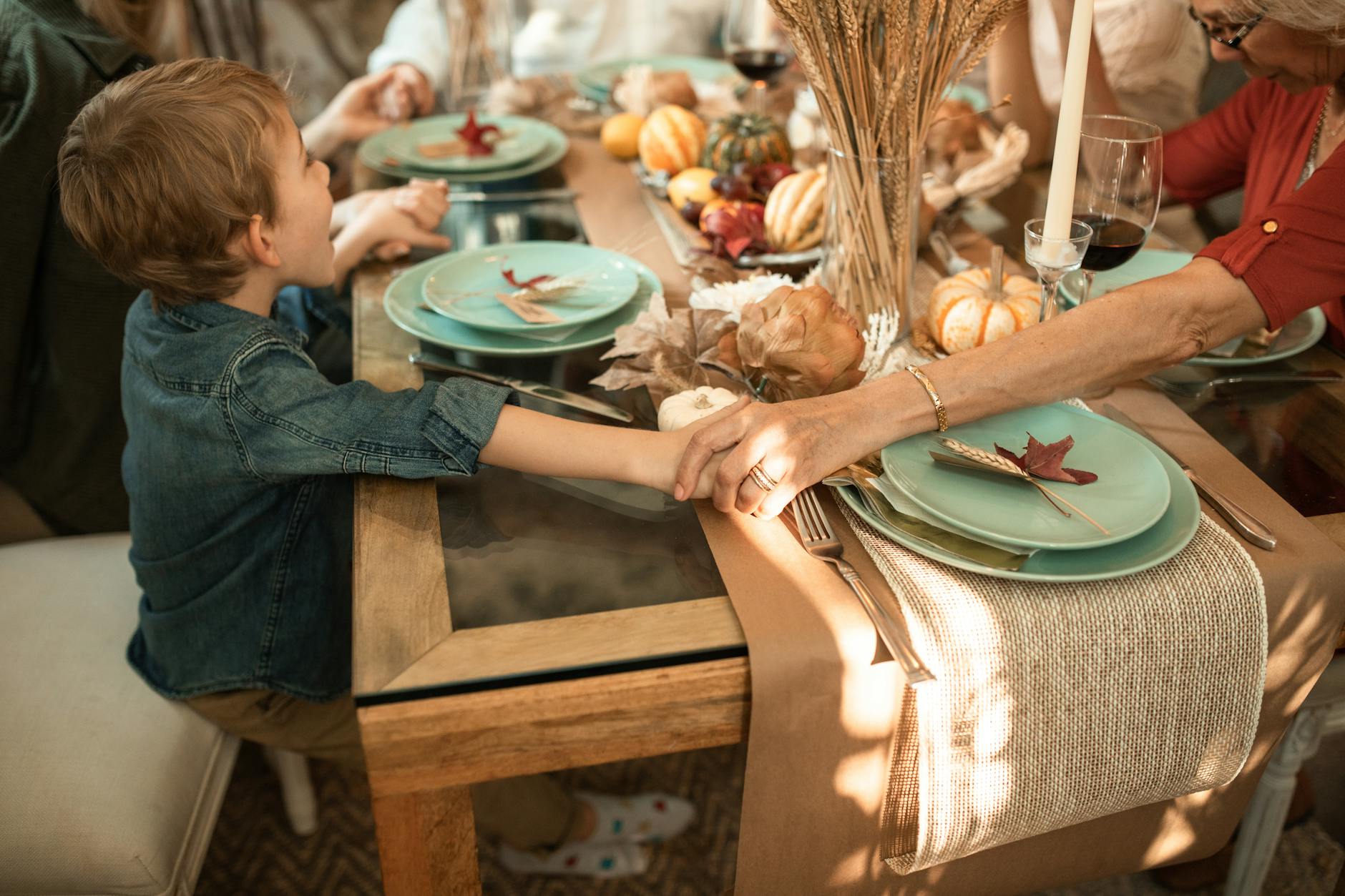
When I was growing up, we always said grace before our meals. It wasn’t an afterthought; it wasn’t an affectation. It was just part of the meal. We sat down, said grace, and started eating. Sometimes, Dad did the honors; sometimes, it was Mom. And sometimes, my sister or I were asked to say it. It was usually something simple, though it wasn’t always the same. We would say grace at home, around our own table, and we would say grace at restaurants– wherever and whenever our family was together for a meal.

Today, my husband and I have the same tradition. We don’t have children in the house, but he and I take turns saying grace, and if one of the grandkids happens to visit, they know they may be asked to take a turn, as well. If David and I are eating out, we still take a quiet moment to hold hands, close our eyes, and say grace. Some times, other diners or wait staff will stare (or glare) or comment, but most of the time, they don’t even notice.

So why do we do it? Is it no more than force of habit? Are we just “holier” than other diners? Do we really think it impresses God if we say grace, or that God will be angry if we don’t say it?

No. But we believe saying grace is important. Here are some reasons why:

  • Grace is about gratitude. In our busy lives, it can be tempting to take things for granted– even things like food and family. We are BLESSED to have food to eat, and family with whom to share it. We are blessed when we go out to eat to have others cook and clean up for us. We are blessed whenever our family or neighbors can share a meal with us. God is a loving and gracious God, and grace is a time to remember our blessings.
  • Grace slows us down for just a minute to REMEMBER who we are, and who God is! All our blessings– including food and family and time to share them– come from God. Grace reminds us to be humble as well as thankful. It reminds us to see God’s hand at work in even the smallest and most mundane happenings in our lives. And it reminds us that God is faithful in all things, big and small.

  • Grace also helps us to remember to thank the people involved in our meals– the ability to buy groceries; the work it takes to prepare our food; friends and family who share our meals; neighbors who have given or traded with us for food; the cooks and wait staff that serve us at restaurants. Saying grace helps us SEE how we are interconnected; how we depend on God and on others in every area of our lives.
  • Grace gives us the opportunity to lift up our immediate worries and give them to God, instead of holding on to them. Grace is more than just a quick word about food. It is a time for us as a couple (or a family) to pray together about worries that are on our minds. Then, instead of being stressed as we eat, we can stay “in the moment” with each other, and enjoy mealtime together! It’s also a great way to share our thoughts, feelings, and concerns in a safe and informal environment. How much better mealtime is when stress and frustration are diminished, and joy and peace are given a seat at the table, instead!

Saying grace is much more than just a quaint habit from a bygone era. It is a vital part of our growth as individual Christians, and as a Christian couple. I believe it is a simple and quiet witness to others. I believe it has benefits for our digestion, our attitudes, and our emotions, as well.

Grace– not just the mealtime prayer, but the concept of Grace– is not loud or showy. It is, however, consistent, lovely, and powerful. May we say grace; may we show grace; may we live in the power of Grace today!
May Day Mishaps

Today is the first of May– May Day. May Day has a long history, with pagan origins tied to the celebration of late spring or early summer. In many European nations, there would be dancing around a May Pole, or May bush, floral garlands, and floral bouquets offered at various shrines, including to the Virgin Mary. In some communities, girls vied to be crowned the “May Queen,” while stories were told of fairies. May Day was popular in the United States for many years around the turn of the 20th century– with parades, flower baskets, and more. It is less popular in modern times, and many of the floral parades and festive outings take place around Memorial Day, instead.

When I was a child in elementary school, we made paper “flowers” and a small paper coronet with a loop handle for May Day. I remember making daffodils, hyacinths, and tulips out of construction paper and other craft materials, and making the coronet “baskets” out of decorated paper cones. We glued or stapled the pieces together to take home. Then, we were encouraged to loop the handle over the door knob at the front door of our house when we got home, knock, and run and hide around the corner. Presumably, our mothers or babysitters would see the gift of flowers and wonder who could have left them there. It was a fun game to play, and a way to celebrate the season of wonderful spring flowers.

Unfortunately, when we did this in kindergarten, my flowers got trampled on the bus. It was a rainy day, and my flowers fell in the aisle, where a boy stepped on them with muddy sneakers. They were ruined. I cried and cried, and another boy on the bus gave me the flowers he had made. It was a thoughtful gesture– one I’ve never forgotten– but I remained desolate. I told my mother the whole sordid story, and she told me that, in her day, they had picked wildflowers, such as violets and even clovers, and tied them with a string to leave on someone’s porch. Then she took me outside, and we made a small bunch of violets with a couple of “Dutchman’s Breeches.” I didn’t get to surprise her, but we had such fun looking for wildflowers together.

I loved this game so much, I decided to go a step further the next year. We made paper “bouquets” at school, just like the previous year. Mine stayed clean and dry, and I hung it on the doorknob and mom pretended to be surprised. But later, I took one of our juice glasses from the cupboard, and picked a nice bunch of my mom’s live daffodils and hyacinths, a couple of her irises, and a tulip. I tried to arrange them in the juice glass, but it was too short and small to hold all the flowers I had picked. I left it on the porch, near the door, and knocked and hid, waiting to see my mom’s delight at her “surprise” bouquet. But instead of delight, I heard her wail– “Oh, no! My flowers!” The glass had tipped over, the flowers lay limply all over the porch, and the glass had rolled onto the ground. I thought I had made a wonderful surprise. Instead, I had made a mess. I had picked almost all of Mom’s best daffodils, and all of her pink hyacinths. I had trampled some of her other irises to get to the one I wanted. She only had a few tulips, and I had picked the only red one.

My intentions were good, but my execution was poor. And the result was disappointing and hurtful to us both. Mom didn’t realize I was right around the corner hearing her dismay, and I didn’t realize my “gift” would fall so flat.

It’s been over 50 years since my “May Day Mishap,” but there are some lessons I have never forgotten:

  • Picked flowers die! Mom wasn’t angry with me for wanting to pick flowers, but she knew that picked flowers would wilt and die. In later years, Mom loved receiving hanging flower baskets, and planters with live flowers. And we had many memories of planting live annuals in the front yard or at graves near Memorial Day– flowers that might take root and spread joy throughout the summer months. In the same way, there are so many “showy” projects that vie for our attention– projects that may seem urgent or offer quick rewards like status or money. We are tempted to “pick” projects that will make us look good or feel good in the moment. But the really important projects are those that have lasting impact, even if they don’t “show” as well. We are wise to invest in “little” things that have lasting impact over “big” but fleeting activities and investments.
  • When giving gifts, it really is the thought that counts! My mom was just as delighted by the “second-hand” flowers I got from my classmate as she was by the the ones I made the next year. Not because his were “better” than mine, but because they demonstrated that I had a good friend at school with a kind heart. My “mishap” gift came, in part, because I wanted to give a “better” gift, not because I wanted to delight my mom, but I wanted to impress her. My mom was a saver– she saved all my old school papers, old valentines, birthday cards, and more. And she saved letters from her friends and family– over eighty years of them! Not because the cards and letters themselves were so wonderful, but because each one came with good wishes. She had an entire farmhouse of good wishes and thoughtful memories when she passed away in 2023.
  • Relationships are more important and more valuable than resources. I loved looking for wildflowers with my Mom that year of kindergarten. It’s one of my favorite memories of May Day. And I still remember the kindness of my friend, Ken, whose heart has since led him to the mission field on more than one occasion. No May Day flowers will last over fifty years, but friendships and relationships can and do!
  • Forgiveness is sweeter than flowers. I was so astonished to think that my error in judgment had caused my mother pain– and yet, when she found me, she hugged me tight and gently offered both forgiveness and correction. She demonstrated exactly the way our Father loves us. So often, I want to come to God with a bouquet of praise, or a basket of good works, leave it before His Throne and run away and hide. But God isn’t impressed by my flowers or my grand gestures. He wants to spend time with ME. Every year, he sends fields of wild flowers; in every season of life He sends friends, helpers, and other blessings. And, more than anything, He wants to share all of it with me. Not because I deserve it, but because He is so full of love and forgiveness. He wants to remind me to “come home” to His gracious arms. He is not waiting to scold me, punish me, or make me feel small. He wants to hug me, and with patience and gentleness, He will offer His Love, and correction. No matter what “May Day Mishaps” I may have.

This May Day, I am encouraged by God’s faithfulness, His forgiveness, and the power of His love. I hope you are, too!

Let Heaven And Nature Sing!

Christmas is so much bigger than just us. That struck me afresh as I was listening to Christmas Carols earlier this week. It is more than just preparing our individual hearts, as crucial as that is, to accept the wonder and miracle that the God of the Universe would empty Himself of all His Royal Prerogative; all His Glory, to become, not just a human being, but a baby! To grow up among His flawed and rebellious creation; to know hunger and exhaustion; to wait in lines, to obey His “elders.”

His coming was not just a quiet birth in the night– though it was that, too. Such a paradox. His birth split the heavens, and divided all time into “before” and “after.” And yet, it went unnoticed by so many people crowded into Bethlehem that night. People living outside of Judea had no idea (other than some wise men from the East) that their King and Savior; their Creator and Redeemer, had just burst into history and humanity with a tiny mewling cry and covered in placenta.

But the Heavens knew! Angels marveled and shouted His Praise! Rocks and hills thrummed with the joy of it. The oceans may have danced, mountains skipped, trees cheered, frosty air molecules jumped up and down, and the stars– the suns of millions of galaxies– laughed in delight! For this was Their Savior, too! Jesus came to redeem all of creation–to fulfill God’s perfect plan!

Photo by Felix Mittermeier on Pexels.com

How can this be? After all, we still have earthquakes and tidal waves; we still have forest fires and smog. Nature is still unpredictable and untamed. And yet, Christ’s coming was the sign that the “groaning” of all creation would certainly come to an end. The promise was true! The Hope of Heaven, the Light of the World, the Word of God, was HERE. Living ON the earth. Able to climb a tree, step into (or walk on top of) the water, breathe the scent of flowers, and look up at all the stars He Himself had placed in the reaches of space. Able to enjoy– as He meant for US to enjoy– all the bounty of the Earth. 

And this same Savior has prepared another place– one that is already perfect and needs no redemption, no taming or saving or reclaiming–for those who put their Trust in Him. This tiny Babe, held in the arms of an ordinary girl in a grubby little stable in a tiny corner of the world He holds in His own arms. He is Lord of ALL Nature– that we can see on the Earth, and that which awaits us in a New Heaven and a New Earth!

Christmas is bigger than you and I. It is bigger than our lights and traditions. It is bigger than all of history. Bigger than the night sky; bigger than all we can imagine or dream. Because Christmas is the Advent of Christ– the one who encompasses everything. Let ALL Heaven and Nature Sing! Let the Angels announce His Glory! And let us Repeat the sounding JOY!

Father, I marvel at your Creation. I marvel at your desire to enter into it; to teach us how to have Joy in our journey through it. And I bow in Awe that You would include me in the bigger picture of eternity. Help me to carry this marvel into each moment, as I seek to Honor You and Enjoy the Wonder of Your Nature– both Your Creation, and Your Character! Amen!

O, Christmas Tree

As I look out my window today, the sun is shining on hundreds of bare branches. The sky is blue-gray, and the branches are brown and mostly lifeless. Occasionally, a breeze will stir the thin upper branches, or the very last of the dead-looking leaves. When the snows come, the branches and twigs will glisten and stand out against the white-covered ground and slate-gray skies above.

But elsewhere in town, and in the forests and woods just outside of town, there are evergreens! Their green needles and sturdy, squat shapes may go unnoticed in spring and fall, when the other trees show off their glorious changing colors and elegant branches. Soon it will be their time to stand out. Their low branches help break the snow drifts, and increase visibility. Their greenery reminds us that life endures and continues.

I hesitated to write about Christmas Trees. There are no Christmas Trees in the Bible story of the Nativity. Decorated trees have a connection with pagan rituals from long ago. It wasn’t until the first half of the 19th century that Christmas Trees really became a tradition throughout most of Europe and spread to America. What connection do they really have with pursuing a Christian Walk? Only the ones we choose to apply…

  • Evergreen trees are a symbol of eternal faithfulness. They stay green year-round. They do not lose “leaves” like other trees (though they drop needles and cones). This can be a reminder to us of God’s faithfulness and His unchanging nature.
  • Evergreen trees are generally the “newest” trees. After a fire, for instance, pine and fir trees will be the first trees to spring up. Hardwoods take longer to recover and regenerate after a disaster. Just as the birth of Jesus represented the coming of new life and hope, an evergreen tree can symbolize new, fresh growth.
  • While there is no “Christmas” Tree in the birth of Christ, there is a tree in His death on a wooden cross. Hidden in the greenery and lushness of a Christmas Tree is the solid trunk that symbolizes the Cross that Jesus bore, and the Cross that bore Him. Even the needles on the tree call to mind the crown of thorns– sharp, painful, prickly. Jesus came to serve; He came to bear the shame and humiliation, the pain and suffering that WE deserve.
  • Christmas Trees “point” upwards. Unlike many other trees, they get narrower as you look up, and are broad near the bottom. This is a reminder that here on earth, we are to spread out–spread the Gospel, spread the Love of Christ to as many as we can. And our focus should be drawn up to God in Heaven. That is why we traditionally “crown” our trees with stars or angels– to remind us that Heaven should be our “top” focus.

This year, if you are putting up a Christmas Tree, I pray that your focus would not be on the tree itself. It may be real or artificial; green or white or some other metallic color. It may be decorated with glass bulbs, funky home-made crafts, expensive, individualized ornaments, chains of cranberries or popcorn, bright ribbons or twinkle-lights, paper chains, or even photos of loved ones. But all that can be distracting from the true meaning of a Christmas Tree and WHO it represents. And I pray that your focus would not be on the gifts placed in or around the tree, but that those gifts would truly remind us of the greatest Gift of all– Jesus! I pray that the tree would be another wonderful reminder of the one who created trees, knowing He would one day die on one! I pray that you would be encouraged to share new and enduring life and growth to others. I pray that you would be encouraged that God’s plans are eternal, and His Promises faithful and sure.

Where Are the Altars?

In the Biblical books of the prophets (Isaiah, Jeremiah, Ezekiel, etc.), there are many references to altars and sacrifices–both the ones built to honor Jehovah God, and those designed for idols.

Israel and Judah were guilty of building thousands of altars and shrines to false gods. Some of them were found even inside the Holy area of God’s own temple! As part of God’s judgment, He repeated that He would no longer accept the empty sacrifices of His people–He would no longer hear their prayers, unless they repented.

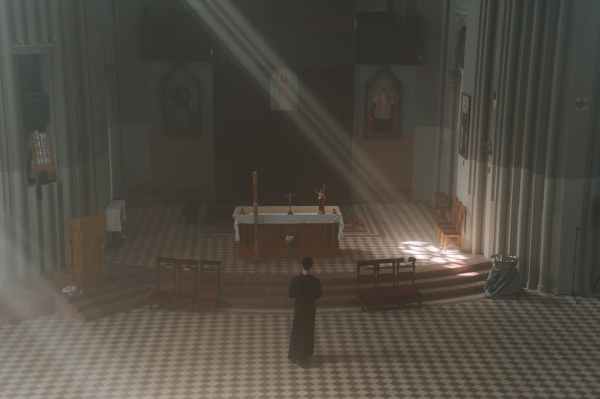
I read these words and wondered– Where are our altars today? When I was a child, many of the older churches had what we called an Altar. It was usually a raised platform, with a podium for the minister, and possibly a “host table” for communion. My childhood church also had a small table that held a large Bible. Sometimes, the platform would have a railing around the edge, with a couple of stairs on either side. And, while many churches “passed the plate” for offerings, some had a special plate on the railing of the altar, where people would march up and place their offerings for the week. There it would sit for the rest of the service–random dollar bills of random denominations in random states of being crumpled, folded, and worn, along with checks, and, sometimes even coins. All of them brought forward and placed on the altar.

In many churches, the altar was where congregants would come to receive communion. The most important church events happened “at the altar.” Weddings, baby dedications, Bible readings and sermons, even funerals– all happened at the altar.

And often, we would have an “altar call.” The pastor, or a guest evangelist would urge people from the congregation to meet at the altar– to repent, to receive forgiveness, to be renewed and refreshed as we offered ourselves to God. There we were– random denominations of people, in random stages of obedience or rebellion, all answering the call to follow Christ as Lord. Some stayed there for a few minutes, praying silently. Others might be there for an hour, crying out, trying to find the words to express pain, guilt, or gratitude and awe, that GOD would meet with US there! Sometimes, we would form small groups to pray and give encouragement; sometimes we would disperse, too moved to speak at all. The Altar was the focus of the service– the place where God met with us; where He received our worship and our offerings; where we were challenged and made ready for spiritual battle.

Today, many churches have stages, like any large theater or event center. There is no railing, but there are hundreds of spotlights and fog machines. There is no podium for the pastor–just a headset and maybe a small stand for notes. Sometimes, the pastor reads from a teleprompter. Often, he or she is joined by a full band or orchestra, and dozens of singers, actors, or other assistants. No one from the congregation approaches the stage– why would they get up from their comfortable reclining padded seat? No one even “needs” to bring a Bible– the sermon text is printed out on the giant screens hanging above the stage. Our worship is comfortable, and entertaining. Many of us don’t even go to a church building, anymore. We can livestream worship services, or watch from a satellite location. We don’t even have to change out of our pajamas! And we feel blessed, and filled with excitement to be part of something dynamic and spiritually uplifting.

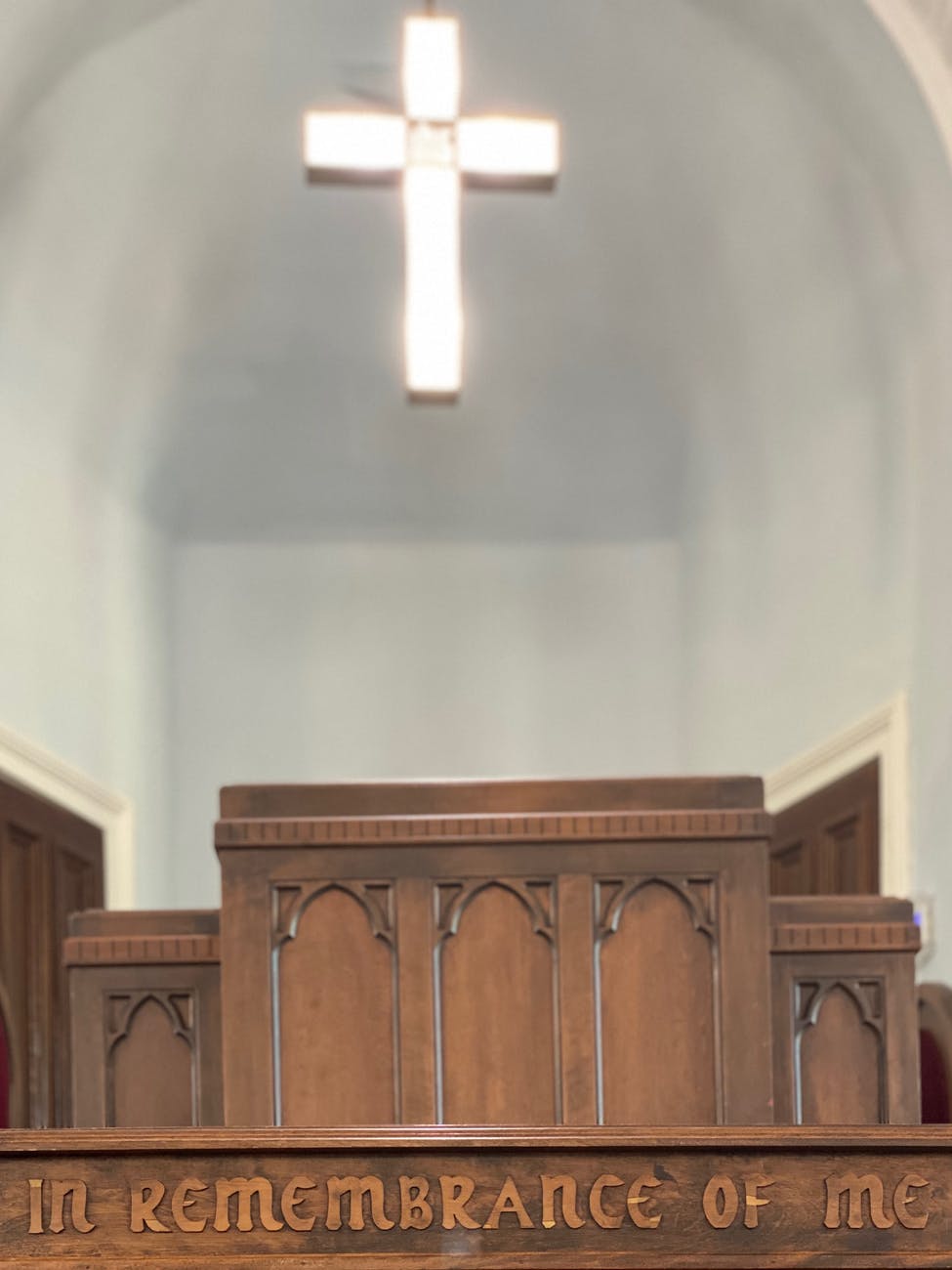
But we have no altars. There is no place for someone to lay their offering before God; no place to meet with Him in repentance or revival. There is no place to remind us of sacrifice and atonement. Oh, to be sure, many churches have a large cross on display somewhere. Some even have the “host table” for communion– somewhere in the wings, just in case–but the concept of an “altar” has all but disappeared from churches in the West. It is an anachronism–something ancient and uncomfortably part of the distant mists of tradition.

I miss the altar. I believe God misses it, too.

You Aren’t What You Eat…

There is a common English saying, “You are what you eat.” It suggests that if you eat a lot of fatty foods or sugary foods, you will suffer the consequences– you will become fat or develop health problems associated with sugar, cholesterol, etc. There is some truth to the saying, especially if a person eats such foods to excess, and does not eat a balanced diet that also includes foods high in fiber, vitamins and minerals, and other nutrients.

But the saying also suggests that a person’s diet determines their identity, which is not true, and often involves labeling and unfair judgment. And the judgment comes, not just based on what a person eats, but sometimes how, when, and where a person eats:
“couch potato”
“gourmand”
“junk food junkie”
“vegan”
“carnivore”
“gluten-free”
“keto”
“midnight snacker”
“carboholic”
“power foods”
“see-food diet (if I see it, I eat it!)”
“fitness diet– I’m all about fitness –(fittin’this) whole pizza in my mouth!”
“picky eater”
“fast food”
“five-second rule”
etc.

The truth is, our relationship to food can indicate aspects of our personality or character, but it is not “who we are,” unless our entire life is about food. (Even for those with conditions like anorexia or bulimia that turn food and/or eating into an obsession, it is one aspect of their life–a diagnosis, not an epitaph.)

Our world today is filled with opportunities to make an idol of food and eating, diets, nutritional fads, supplements, etc. We end up ashamed of every meal– counting calories, pointing fingers at those whose eating habits don’t live up to our standards (while secretly envying them), trying to excuse (or hide) any trip through the fast food drive-thru window, feeling guilty over a candy bar, or feeling depressed when we cannot afford to eat like the people we see in magazines, in movies, or on TV. In religious circles, we champion “God-given” diets, some of which are not given by God. “What would Jesus eat?” The Daniel Diet, or The Shepherd’s Diet– these may be good principles and even helpful nutritionally, but they won’t “save” you or make God love you better than He already does.

Jesus himself addressed this question. His disciples were being singled out by the religious leaders of their day because they ate without performing the ritual handwashing ceremonies. They were declared “unclean” for eating in this manner. But Jesus saw through this criticism. It wasn’t based on God’s law, but on the human traditions that had been added over the centuries. What God had said about cleanliness and hygiene was meant for general health AND to distinguish the nation of Israel from other cultures whose eating practices were sometimes part of their worship of idols. After chastising the Pharisees for their hypocrisy, Jesus turned to the crowd:

Matthew 15:10-20 English Standard Version (ESV)

10 And he called the people to him and said to them, “Hear and understand: 11 it is not what goes into the mouth that defiles a person, but what comes out of the mouth; this defiles a person.” 12 Then the disciples came and said to him, “Do you know that the Pharisees were offended when they heard this saying?” 13 He answered, “Every plant that my heavenly Father has not planted will be rooted up. 14 Let them alone; they are blind guides. And if the blind lead the blind, both will fall into a pit.” 15 But Peter said to him, “Explain the parable to us.” 16 And he said, “Are you also still without understanding? 17 Do you not see that whatever goes into the mouth passes into the stomach and is expelled? 18 But what comes out of the mouth proceeds from the heart, and this defiles a person. 19 For out of the heart come evil thoughts, murder, adultery, sexual immorality, theft, false witness, slander. 20 These are what defile a person. But to eat with unwashed hands does not defile anyone.”
https://www.biblegateway.com/passage/?search=Matthew+15%3A10-20&version=ESV

Notice that Jesus did not say that it is healthier or better to eat with unwashed hands, nor did He say that people should eat without washing– instead, He was speaking common sense about obsessive and judgmental practices. Jesus himself followed the traditional kosher diet of His people, as did His disciples. Jesus also fasted, and recommended it as a companion to disciplined and earnest prayer.

It isn’t what we eat, or when or where that makes us who we are. Our eating habits and diets may help our bodies, but they won’t save our souls, or make us better than our neighbor. In fact, if our eating habits are more important than our neighbor–if we use them to try to manipulate, control, shame, or label our neighbor–we need to reconsider how “healthy” they really are.

Diets are not bad. Food is not bad. Pride, envy, self-righteousness– these are bad for the heart, the stomach, and the soul. Let’s be grateful for food, but even more, let’s be grateful for a God who knows us intimately and thoroughly– a God who knows that we are NOT “what we eat!”

Take My Life..

We have entered the Lenten season, and many of us have made plans to “give up” something for the 40 days leading up to Easter–chocolate, or certain meats, or a certain habit. It is traditional to use this time leading up to Holy Week to focus on preparing our hearts to receive the Gift of salvation that comes from Christ’s resurrection on Easter.

But, in a larger sense, there is nothing we can do to prepare for Grace– it is completely unmerited favor. My willingness to deny my sweet tooth for six weeks cannot make me ready for God to allow His wrath to fall on His Holy Son, so that I can be declared righteous for all eternity. It is no more than a gesture.

Photo by Francesco Paggiaro on Pexels.com

God is not impressed by our Lenten traditions. This doesn’t mean that we should not make the gesture; it doesn’t mean that we cannot grow closer to God by such observances. But we must not place too much reliance on them. Jesus Christ is the Author and Finisher of our faith (Hebrews 12:2). He gave up far more than we can imagine in order to rescue us from all that we deserve. Jesus not only gave up His human life on the Cross, He gave up His throne, His status, His omnipresence, and His omnipotence. He allowed Himself to be subject to human authorities, and He served those He had created.

Photo by Pixabay on Pexels.com

Jesus didn’t just “give up” something on His way to the Cross. He offered everything He was! May we seek to do the same. May we pray, along with Jesus in the Garden, “..not my will, but Yours be done..” (Luke 22:42)

Consider the Lilies..

We just celebrated a most unusual Easter– traditions, like gathering at church for sunrise services or grand cantatas, big family meals, Easter Egg hunts, and parades had to be re-imagined, or cancelled. And one Easter tradition that didn’t get a lot of press attention was the damage done to the Easter flower market. Lilies, hyacinths, daffodils, and other spring flowers–some grown locally, others imported from around the world–were unable to be shipped or sold as people are in quarantine. Churches and restaurants, two of the largest consumers of Easter Lilies, had to cancel their orders for this year. People who normally buy lilies from garden centers or florists were unable to do so, and those who grow them were unable to ship them out or sell them. Literally millions of flowers had to be burned, composted, and destroyed during this season of “new life.” Flowers for funerals, weddings, and birthdays were also lost, and millions more will be lost as we approach Mother’s Day next month. What a waste of beauty and life!

Photo by Alena Koval on Pexels.com

And yet..

Some will say that it is a waste of time to mourn the loss of flowers when we should be mourning the loss of human life to COVID-19. I don’t think it is an “either/or” kind of mourning. There is a lot to mourn during these days, and we should not be ashamed to mourn–loss of connection, loss of beauty in the form of flowers, loss of jobs and prosperity, loss of opportunities– many of which we take for granted.

Photo by Italo Melo on Pexels.com

But Easter is not about our loss– in fact, it is not about loss at all. It is about victory and hope and ETERNAL life– not the life of a lily or even a human body– eternal, joyful, victorious life given to us as a gift for all who will receive it! If we are missing a beautiful symbol of that victory this year, we can never be deprived of the reality the Lilies represent!

Photo by Pixabay on Pexels.com

I am reminded that Jesus (and others in the Bible) had a lot to say about Lilies..and grass, and other plants, and their relation to human life. https://www.biblegateway.com/passage/?search=Matthew+6%3A25-34%2CLuke+12%3A22-32&version=ASV https://www.biblegateway.com/passage/?search=Psalm+103%3A15-17&version=ESV
https://www.biblegateway.com/passage/?search=1+peter+1%3A22-25&version=ESV

Photo by Simon Matzinger on Pexels.com

In this season, many of us are feeling very much like the “lilies of the field.” Our lives seem uncertain, our days unproductive, even futile as we wait for this crisis to pass. We miss these symbols of beauty and new life, but we must not place our hope in the symbols. We must not place our hope in what we know or what we do or what we own. Jesus reminds us that we are– our souls, our lives, our hopes, our thoughts, and our longings– worth far more than lilies or sparrows– God knows what we need, and His love for us doesn’t depend on our being “essential”, or healthy, or having all the answers.

Photo by Porapak Apichodilok on Pexels.com

This season reminds us that our lives here are precious, and temporary as the grass. But our existence is both precious and eternal–and thanks to the very God who clothes the lilies of the field, we need not worry or fear what lies ahead. All who turn to Him will be saved. We are not destined to be burned or composted or forgotten. We may face uncertain days ahead, but God has a purpose and a plan for us to bloom– not just for a season, and not just to adorn a building or a home, but to bloom for eternity in His very presence!

Blog at WordPress.com.

Up ↑